Feature

Wed 6 Jan 2010, 8:45 am UTC

Skills Q&A: How to ride in the snow

By Chris Ford, CycleActive

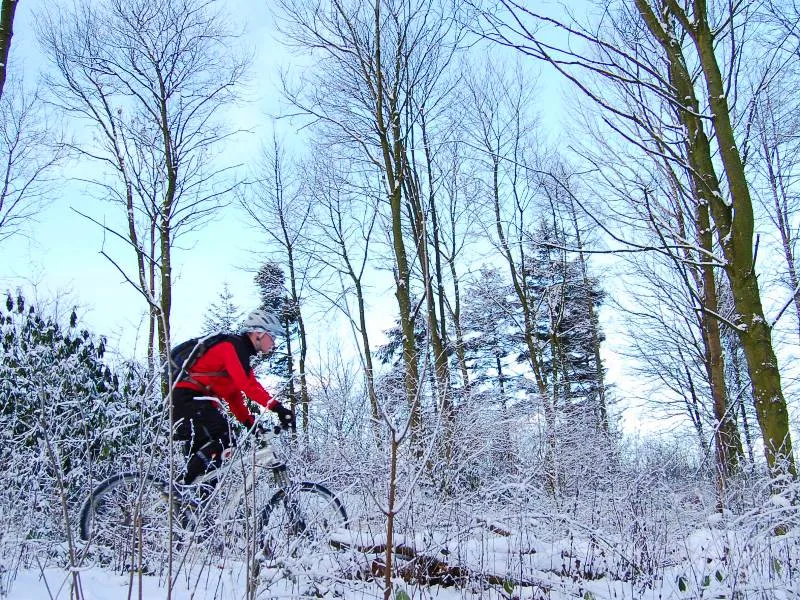
We’ve been snowed under (groan) with requests for advice about riding in the white stuff, so Chris Ford of CycleActive, our skills Q&A expert, has kitted up and ridden out in sub-zero temperatures to bring you this guide.

Based in England's Lake District, the CycleActive coaching team are no strangers to riding in snow and ice. They say the secret is to stay light on your bike, be ready for the unpredictable and react quickly to stay in control. Here's some practical advice on how to turn these ideas into a riding reality.

Straight line speed

When you descend in snow you need to be sure your front wheel flies smoothly over the trail, and never digs in or stalls. You also need to know that if the front wheel does drop away from you suddenly it won’t pull you forwards.

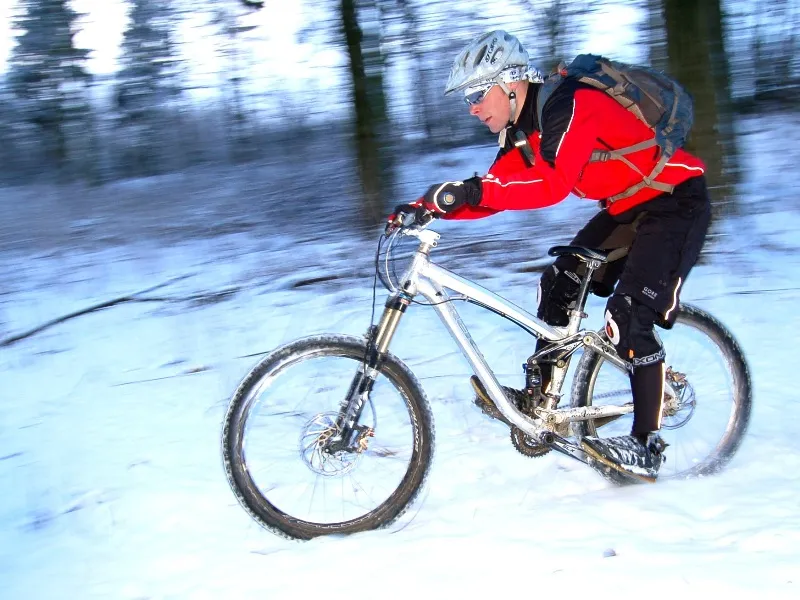
To make this work in practice you need to stay low on the bike – far lower than you would normally for even a gentle slope – and ensure that you’re riding with your hips behind the saddle and your heels down.

Being low gives you a lot of flex in your elbows, so if the front wheel dives you can hold your body position and just let your arms extend. This avoids putting more weight forwards onto the wheel as it goes. With hips back and heels down you can push forwards through your feet and the bottom bracket to generate lift and keep things moving if the front wheel starts to dip.

Skills q&a: how to ride in the snow: skills q&a: how to ride in the snow

Vision is also incredibly important in the snow and ice.  Look as far ahead as you can down the trail – scanning forwards for anything jutting out or any well worn icy patches where riders have gone before.  Sometimes a well worn grove is a real bonus, but it can become a slippery trench so use virgin powder on the edge of trails for grip and deceleration if you need it.

Turning at speed

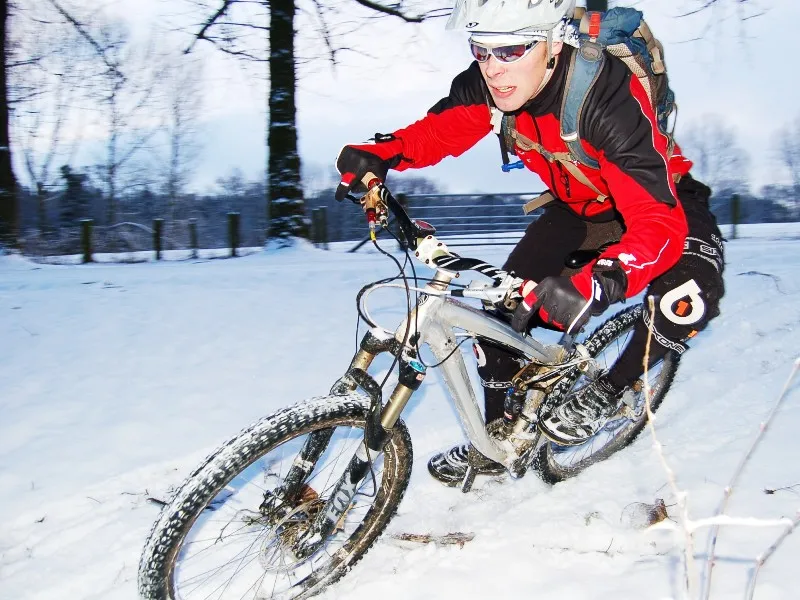
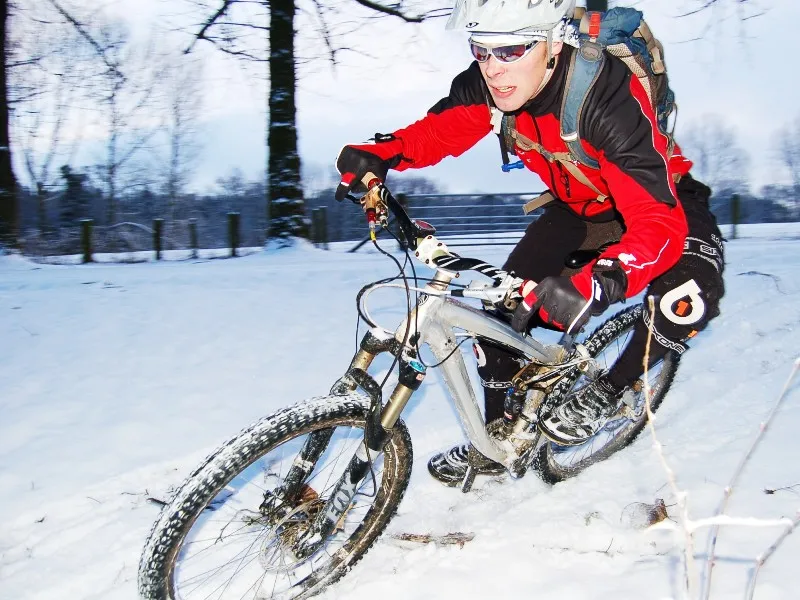
Attacking a turn in the snow may not seem like a smart thing to do, but if you get it right it can be fast, exhilarating and leave other riders far behind. The key is to accentuate everything you do in a normal high-speed turn. 

Get lower over the bike so you can absorb unpredictable bumps through the increased flex in arms and legs; drop the outside foot but still with flex in that outside knee, and point your inside knee right into the apex of the turn; look as far round the turn as possible for maximum planning time; crank the bike right over onto the big, grippy knobs that run down the side of the tyres.

Skills q&a: how to ride in the snow: skills q&a: how to ride in the snow

Leaning the bike into a snowy turn is really important if you are travelling fast.  Even if the tyres slip out for a second they push a small bank of snow up behind them which can act as a kind of self-styled berm. Practise throwing the bike into a hard turn on a bit of flat ground or a gentle slope covered in snow and feel the bite of the tyres in the powder – it can be surprisingly grippy.

Skid turns and singletrack

Of course, sometimes you don’t want too much grip in a turn.  If you’re coming into a tight corner and there’s not much traction then you can slam on the back brakes, flick your hips as you lay over the bike and drive the back wheel out through the snow and slush.  

You’ll see downhillers doing this in the dust of midsummer and it’s the same technique – you just need to get used to the feeling of letting the back wheel break out . It helps if you stay low and loose, but centred over the bike as you lean it hard into the turn.

Skills q&a: how to ride in the snow: skills q&a: how to ride in the snow

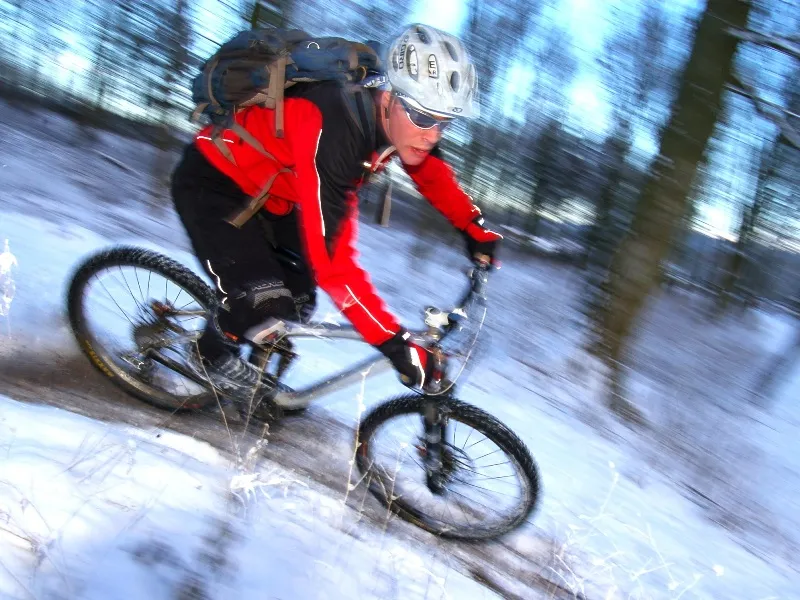
If you’re riding fast on singletrack and the turns are coming at you quickly, you won’t have time to drop your outside foot. In this case just keep the cranks level, heels down in case you need to pump forwards for lift, and keep your knees wide and “baggy”.

This position lets you lean the bike quickly from side to side for the turns, keeping your body central over it as you go from edge to edge like a slalom skier.

Journeys in the snow

At CycleActive we run leadership courses for the SMBLA (Scottish Mountain Bike Leaders Association) and one of the big issues we have to address is how to stay safe with a group, or on your own, in all conditions. This feature covers some skills that are great fun and can be applied on all kinds of trails, but it doesn’t mean we want you to throw caution to the wind as you head out into the snow. 

Skills q&a: how to ride in the snow: skills q&a: how to ride in the snow

If you have local trails where you can work on snow cornering skills as part of a fast blast then get out and try it. See how far you can push the wheels out with a flick of the hips or a push through your outside foot. But don’t practise at the furthest corner of a big journey in The Lakes or the Peak District, for example. 

Finally, if you’re getting kitted up for winter riding, be sure to carry a blizzard survival jacket or a small group shelter – both cost about £30 and will genuinely keep you warm if you need to use them.

Also, be sure to wear a couple of Buff-type scarfs around your neck to keep the warm air inside your jacket, and check the weather carefully – not just temperatures but also wind direction and strength. Sub-zero conditions make for amazing biking but need to be treated with caution.

You can follow BikeRadar on Twitter at twitter.com/bikeradar.

User Comments

There are 37 comments on this post

Showing 1 - 30 of 37 comments

  • On Monday evening, I went out on my cyclocross bike with 35mm wide studded tires through forest trails with up to 6" of fresh snow. It was awesome! I couldn't believe how much grip I had even though my tires almost never cut all the way down to the dirt underneath. Pedaling took a lot more effort than normal, and it had to be kept very smooth. It required a whole new style of riding and different feel on the bike, and I loved it. I'm hoping the snow is still as good when I head out this evening.

  • Great article....If you're a mountain biker or cyclo-cross rider in a forest.

    How about a "How to cycle in the snow on UK roads" which will affect a lot more riders, i'm sure.

  • In streets

    * don't have cleats, you need to get out

    * elbow pads are surprisingly useful

    * regularly put a food down to check the surface friction

    * opt out of downills. Don't be afraid to walk.

    The elbow pads protected me on the second day of commuting this week, but my wrist is a bit sore.

  • +1 for not descending!

    Must get some elbow pads.

  • Slicks are bad! Why didn't I take a mtb this morning?

    Flats are good because you can put your feet down, spds tend to ball up with snow if you have to walk.

    Watch out for drifts, you have no idea how deep the snow is untill you hit it.

    Watch out for ice.

  • easy on the brakes....

  • simonaspinall......... you wouldn't take your car out in this weather if it had no tread on its' tyres - why would you even CONTEMPLATE riding a road bike in the snow and ice?

    Unless you have touring tyres (28mm or more) with grip then leave the road bike on the turbo and get out your MTB or 'cross bike out - better to get there in one piece, and late, than not at all!

  • All I can add to this is

    Assume there is going to be grip and you're done for!

    Bank on there been none and it'll either hurt less when you fall or beam with relief when there is.

    Try and stay relaxed

    Try your hardest to stay off the front brakes for all but gentle pulls

    Don't ride so fast!

    Don't ride so fast!

    Don't ride so fast!

    Oh if only I'd had that little chat with myself this morning before I set off!

  • Tyre selection is hugely important, forget the considering using a road bike with normal road tyre in ice ( did this once and went down hard, once is enough to learn) and snow. For the last three weeks we’ve had snow on the ground (Scotland ) and I’ve had to revert to the mountain bike for the commute to work through rural Aberdeenshire. Its 30 mile round trip on untreated back roads, so plenty of snow , ice and the occasional drift to contend with.

    As I mentioned tyre selection is perhaps the most important thing to consider, I ve been using Schwalbe Ice Spikers on the mountain bike. Each tyre has a 304 spikes ( buttons ) that give you grip in ice and snow conditions, I would not even consider using the road bike ( currently fitted with Continental GP 4 seasons road tyres ) in these conditions, no grip and equally important no confidence that you get when using the Ice Spiker.

    The other thing to perhaps to bear in mind is that you will be on the road longer when travelling through snow conditions, perhaps 30% ( my experience at least) longer depending upon snow conditions. So your light batteries will suffer since (a) journey times are longer (b) the batteries discharge quicker when used in sub zero temps ( I’ ve taken to insulating my main battery ( have a back up front light) with bubble wrap to protect it from the cold, we’ had temps as low as -15 deg ). It goes without saying that its harder work pedaling through snow.

    Finally be aware that cars all though they will perhaps be driving slower, they will almost certainly have less ability to slow or stop in a hurry, particularly when going downhill. Worth being that little bit more cautious around them than normal, ( assume the worst ). Although saying that on the roads I travel in on at least the traffic is quite low normally and even more so during snow conditions, so on balance the risk is perhaps the same.

  • Haven't got a mountain bike! Not all of us can afford a cross-bike, mountain bike, road bike, touring bike - a 'stable' of bikes if you like!

    I have a sunny day and hack road bike.

    The roads were ok out of leeds - It was in the satellite towns in West Yorkshire it was crap - Even a MTB would've struggled as the snow is st the side of the road and compacted so its uber slippy and hard...more like ice, even.

    I was on course for a record time for the first half of the journey as the main roads were largely clear - I walked on the descents as it was a brakes issue and traffic and impassable built-up snow on the sides on the road that was stopping me.

    It's stopped snowing now so am hopeful for the journey home.

  • I'm using a Ritchey SpeedMax cross tyre on the back, and a Schwalbe CX tyre (with the same tread pattern, but much cheaper) on the front.

    I live in Montreal, Quebec, and we've got a tonne of snow here right now. I've never used studded tyres, and I've never needed them until the spring or the fall; they're a waste of time until you've got patches of ice to negotiate.

    Semi-pack snow (snow that's only been walked on a couple times, for instance) is harder to ride in than fresh snow, even if the fresh snow is a few cm deeper. The semi-pack sets up two layers, and those two layers slide over one another. It means that when YOU ride over it, you're likely to have to compensate for some wheel deflection.

    You want to square your turns as much as possible. Always keep your front wheel pointed in the direction that you want to go. That means if the back wheel starts sliding out, you're going to have to counter-steer.

    Look for patches where you can brake hard, if you're trying to be fast. Snow is surprisingly grippy if it's packed but not frozen. Otherwise, look for a patch of clear ground if possible.

    Deep snow will stop you in a hurry, which can be good and bad. In emergency situations, head for a snowbank. Not only will it stop your forward progress, it's soft in the event that you crash.

    Lastly: riding in the snow is better when it's cold enough that the snow isn't melting at all, so around -5C and colder makes for the best conditions. Get up around 0C, and the melt can be impassable. Deep slush may as well be deep cement.

  • PJRay - Great advice.

    The extra time and temperatures have given my light batteries a beating. It's rank getting home in the dark with failing lights - especially as you need all the illumination you can get to give some definition amongst all that white.

  • Small ride in this morning 4 miles , thankfully kept my old mountain bike as decide the roady was not suitable. Was all confident taking it easy etc, 200 yards to go hit black ice and gone, me one direction bike the other.

    Wish I had read about elbow pads, .... knee pads too. However still managed to overtake many a softroader on the way into work.

  • Something I found out to my cost recently when having to dismount and remount due to deep snow is that SPD cleats and pedals get clogged with ice.

    Might be worth swapping to flats.

  • You could do all of that, or you could just get some ice spikers instead, I prefer the latter idea.

  • live in NW UK and have been out in the snow several times so far. I havent had any problems with spds just bang them sideways on/against the pedals and any bailed up snow should drop away. Biggrst tip i can give is ensure you have the right gear with you to stay warm and that someone knows were your going; when your due back and what to do if your not back by a given time.

  • Get some Look Quartz pedals, work just as well as XT/XTR, cost less, weigh less and from my 3 hour MTB ride through thick snow at the weekend they were the only pedals in our group not to clog up, literally not one problem with clearance!

    Watch out for the ice hiding under the packed snow.

    A road that gave my Nobby Nic's plenty of grip on the way out spat me onto the floor twice on the way home. As soon as the packed snow melted back a little it left a nice lot of black ice under the surface for my front tyre to slide right off.

    My hips are bruised and very sore, take care all!

    Dz

  • I've been trying Schwalbe Marathon Winter tyres (with spikes, but not so knobbly tread) for my commute. I've found they're great when it's just icy, but on snow and especially slush all the above advice still applies.

  • i've been singlespeeding into work on mitchelin country rock road tyres (1.25) and i've been fine. you just have to take it easy and feather the brakes loads before you pull on to stop. dont let yourself get harrassed by motorists, they wont be wanting to drive fast either. The hardest thing i find is concentrating on your speed, i hammer it on my singlespeed because it makes it easier, it feels un-natural riding slowly, so i have to keep reminding myself to take it easy! nice tip about the elbow pads steve_i !!

  • @simonaspinall - it's clearly an article written for Mountain biking, get over it!

    If you live in an area with less extreme snow fall, I ve found that my normal mud tyres (Bonty MudX's) have certainly been an improvement over my usual tyres, and much cheaper than a specific set of spikes that may never be used again

  • ddraver

    Yes i'm aware that it's an article for MTBers which is exactly the point i was making - Why produce an article like this when there is clearly a more pressing need for an article written for commuting cyclists on the roads this week?

  • Some great comments , I'm a shift worker in the North East and been to work every day nearly since before Christmas on my Specialized commuter, just seeing peoples faces when you arrive on your bike is fantastic! Nearly came a cropper this morning but I got my foot down and pushed the back wheel into the slide and came to an instant stop , just like when I was 7 on my old Raleigh Chopper! As the guy from Montreal said the frozen layered stuff is the worst. Stu...

  • its just pure silly to ride in this weather on the road.

    if you're silly enough to try it, just avoid your brakes and pedal slowly!

  • well as far as i'm concerned commuting in the snow is all fun. Grab the singlespeed MTB (flat pedals of course) and just blast. we have a complete cycle way network here in Milton Keynes so no roads necessary and no huge hills so its clear snowy paths with loads of blind corners through underpasses. keep the power down skid round every corner you can speedway style .....it's the most fun i've had on the way to work all year...love it, commuting doesn't get better than this.

  • This is how we do it in Finland, without spiked tires...

    http://www.youtube.com/watch?v=l4rQf1IRueM

  • I've done alot of mud and snow riding over 20 years of mountain biking, and thoroughly enjoy riding in the snow!

    The article had some great tips on bike handling in the snow

    I'm currently using a Devinci full-suspension "all mountain" bike with flat pedals and Specialized Purgatory front / Specialized Eskar rear tires running at 25psi with Stan's No-Tubes, and the suspension setup soft front and rear

    I've had NO issues with grip either on or off road, and have been happy blasting along in the snow whilst trains, buses and cars have broken down everywhere

    its harder work which means you burn more energy, so eat a little more and make sure you have the right equipment in case you have a mechanical / accident and have to stay outside for the night!

    also watch out for out of control cars on the road!!

    Whilst going up a snow / ice covered hill on the road earlier, I noticed a car 50 yds in front of me that was sliding backwards out of control and went into a spin after I changed my line and went up onto the pavement

    have fun in the snow, but stay safe!

    Rob Cole

    Esher Shore

  • Im using Conti mountain king 2.4" tires and so far they've seen me through the snow ok, ive dropped the pressure a little but nothin too extreme and they seem ok with the white stuff.

  • It certainly is harder work :(

  • I agree with all of the above, but depth of snow is important - whilst 6-8 inches of fresh snow and even slightly-packed snow is great fun - trying to negotiate in excess of 12 inches of anything but fresh powder is nigh-on impossible - the deep snow interferes with the pedal stroke and it's very difficult to maintain momentum. Another hazard to be aware of it that the heavy snow load is causing a lot of trees and branches to break off - quite a few of the country lanes and trails are littered with quite major tree collapses - we had go down next to us yesterday - it was very sudden and could have caused a major injury to anyone underneath.

  • Monty Dog - anyone dropping a log on the road is just disgusting!

Post comment:

You need to login or register to post comments.

Please confirm you are a person by entering the words in the box below:

Related Links

Also on BikeRadar