$10,000 bikes – What's the point?

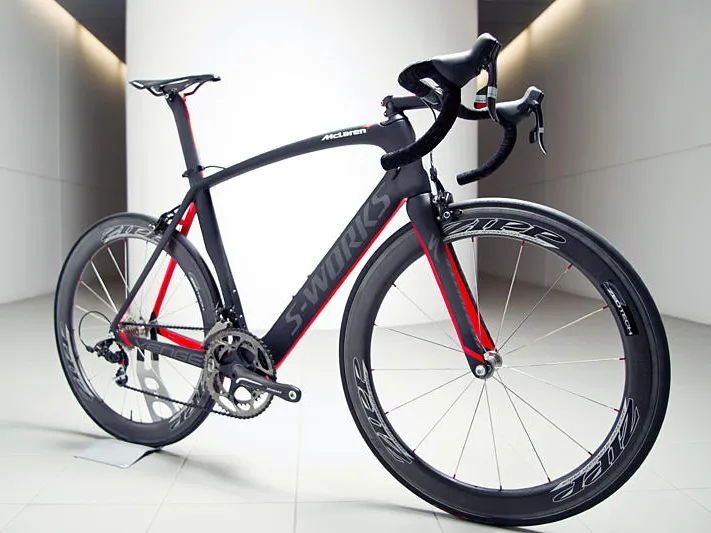
Specialized's top-end S-Works + McLaren Venge carries an enormous $18,000 retail price - and yet the company say the entire stock is pre-sold (VeloDramatic)
We've all seen or read about them, and some have even been lucky enough to ride (or better yet, own) one: those ultra-premium 'halo' bikes that are cycling's equivalent of that old Lamborghini Countach poster on your childhood bedroom's wall. These days, nearly every company has at least one in their range – but if only a handful of people can afford them, what's the point?
Consider the following examples:
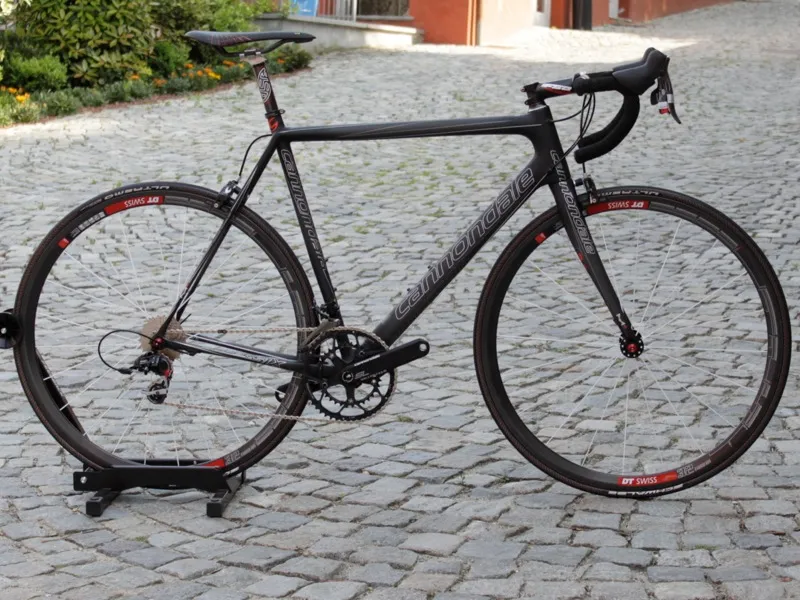
- Cannondale SuperSix Evo Ultimate: US$12,100 (£8,800)
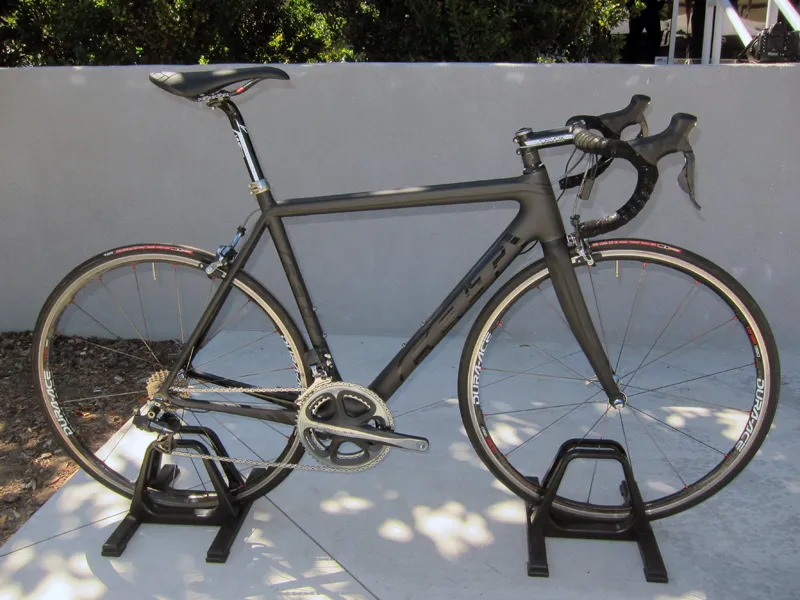
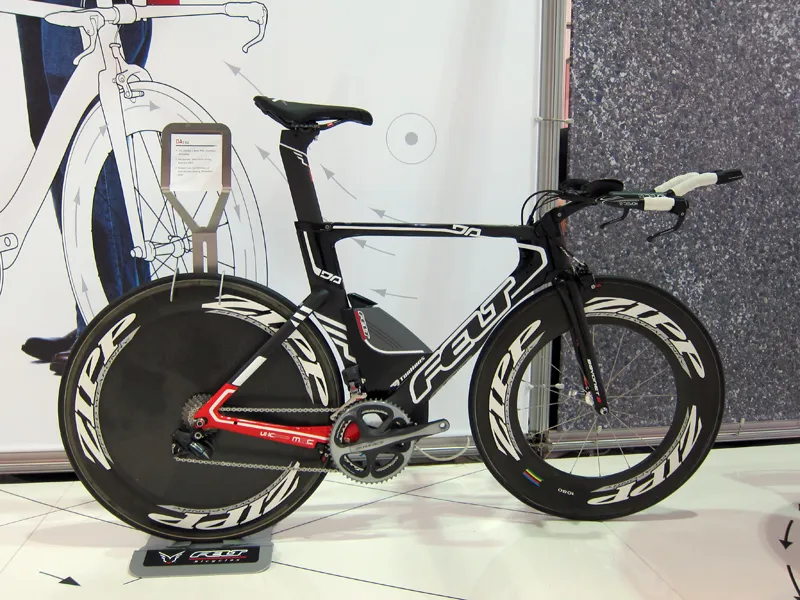
- Felt DA1 Di2: $12,999 (£6,599)
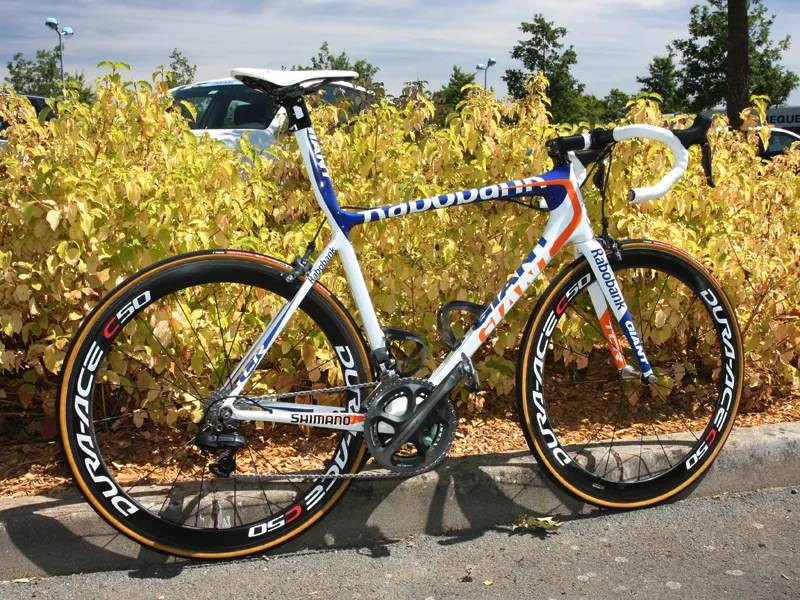
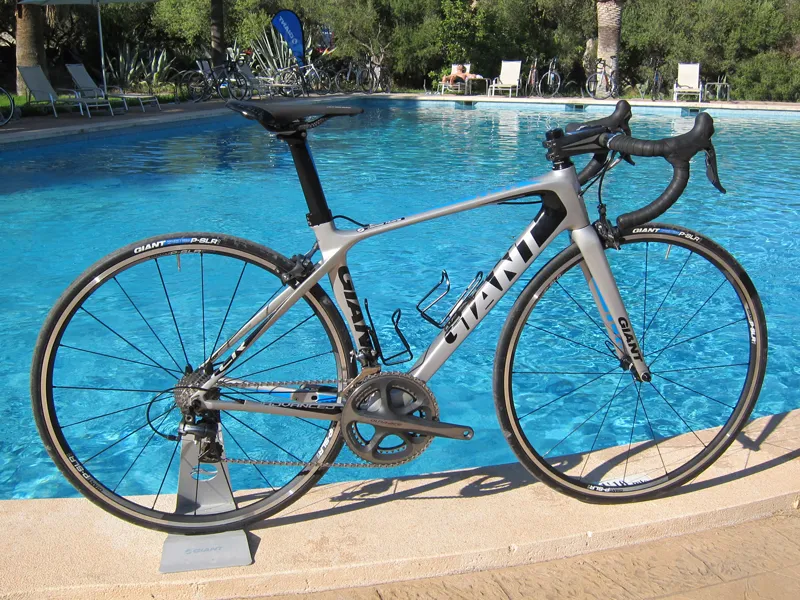
- Giant TCR Advanced SL 0: $10,300 (£7,499)
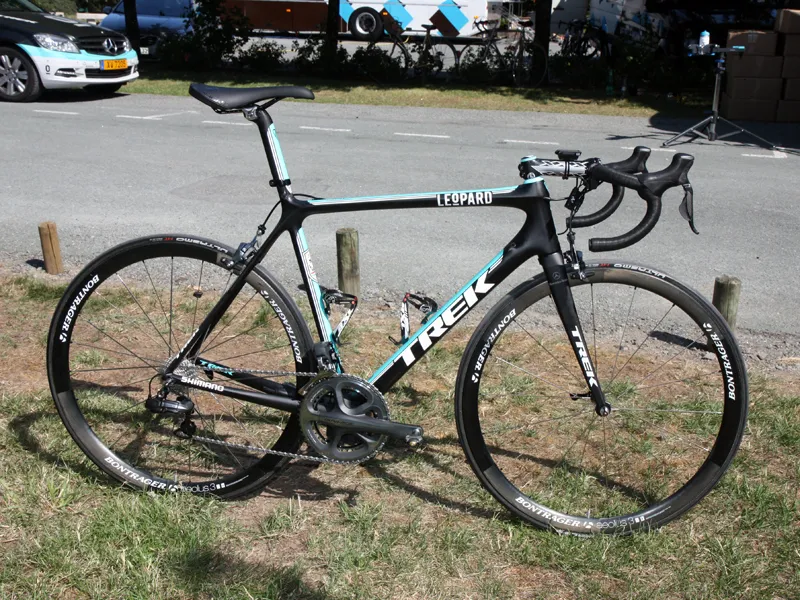
- Trek Madone 6.9 SSL Leopard/Schleck Edition: $11,623.47 (£8,500)
- Specialized S-Works Tarmac SL4 Di2: $11,000 (non-Di2 UK version is £6,000)
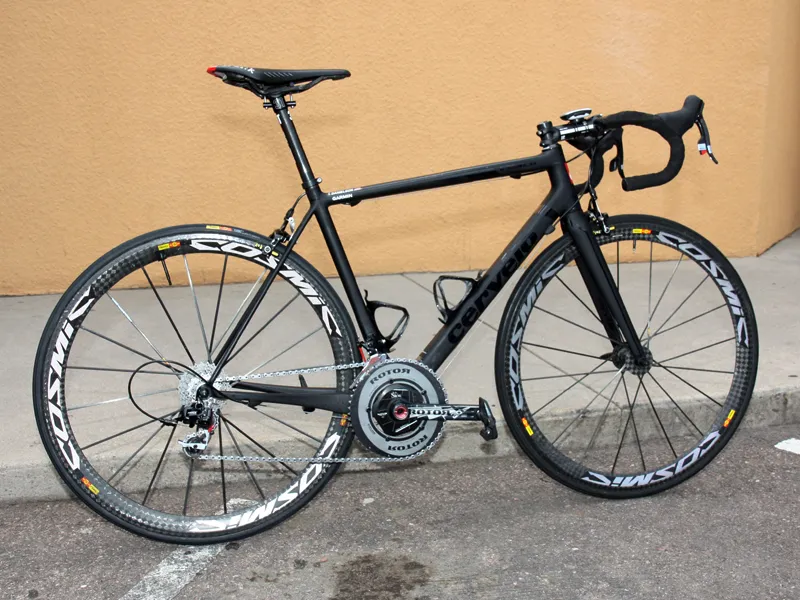
- Cervélo R5ca: $9,800, frameset only (£7,500)
Fantasy for some; reality for others
Halo bikes cost roughly one-fifth of the average US household income – meaning they're the stuff of dreams for most. But as unattainable as those bikes seem, there are people who can and do buy them. BikeRadar spoke with several of the top companies in the industry and all of them reported that flagship bike sales – while low in total number – are still ticking along, global economic issues be damned.
"We find it’s more of the affluent (doctor, investor, lawyer), performance-minded customer that purchases a bike at this price range," said Andrew Juskaitis, global product marketing manager for Giant. "Because of their price, the number of halo bikes produced is dwarfed by that of their more-affordable counterparts – the ratio is about 40:1."
"I won't disclose how many total we make," said Scott PR and marketing director Adrian Montgomery. "But for the US market it's a 1:10 ratio of sales of halo bikes versus our value bikes, like Ultegra CR1s. We entered the market at the high end and there's still considerable demand for our premium bikes even after we've focused on value for the US market."
Even industry powerhouse Specialized – no strangers to mass production and huge volume – say sales of their impressively broad range of halo bikes are better than expected. The company's top-end road bike, the S-Works + McLaren Venge, is a joint collaboration with the heralded automaker of the same name and costs $18,000 (£12,000). Their most expensive mountain bike, the S-Works Epic Carbon 29, isn't quite as outrageous but still commands a whopping $10,500 (£7,200) – and the company can't keep either one in stock.

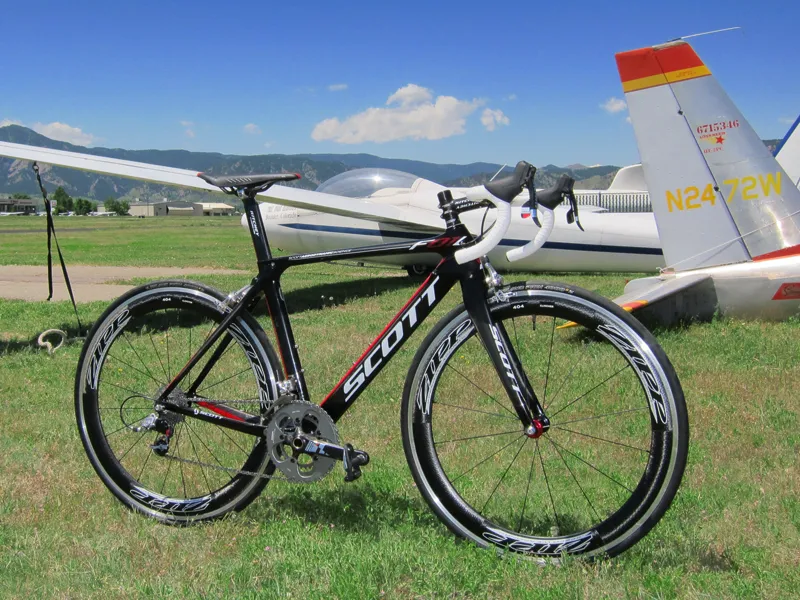
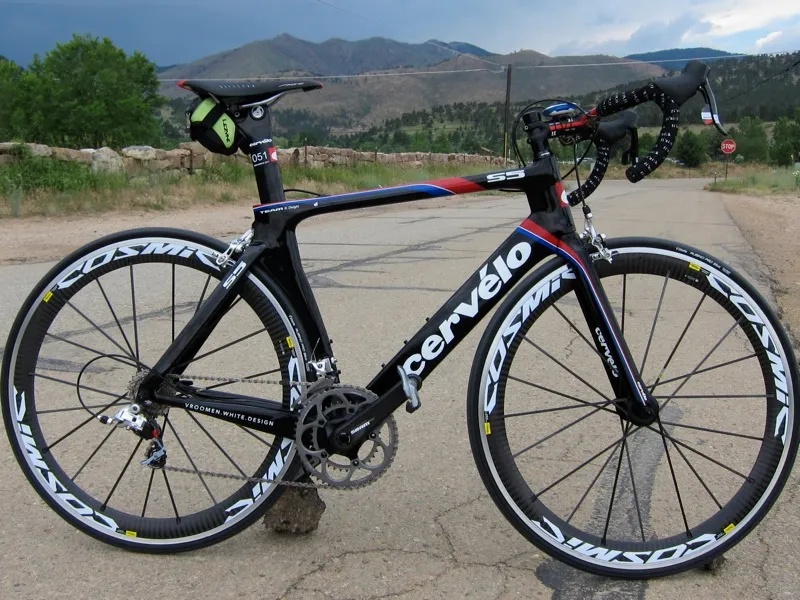
Scott offer a full range of their impressive Foil aero carbon road bikes. Top-end ones get premium kit and the highest grade carbon fibers while midrange ones use a more economical spec and a slightly heavier fiber blend that doesn't detract too much from performance but saves an enormous amount of cash
It's not always about volume
Halo bikes don't always make economic sense but manufacturers still feel they hold a valuable spot in the marketplace. Their lofty prices (and presumably, the associated impressive performance) can raise the perceived status of the brand, bikes developed for sponsored teams can earn prized competition credibility, and developers learn valuable lessons while pushing the envelope of technology.
"We build halo bikes to see how far we can push our product line – literally building what we feel are the best bikes in the world for that one to two percent of riders who desire the very best, to see exactly how light, how stiff and how aerodynamic we can push our overall bike designs," said Juskaitis. "Every time we produce one of these bikes we learn something new. Sure, the great majority of us can’t afford them, but these are the products we aspire to."
Flagship bikes are also developed to cater to sponsored world-class riders and teams. Their physical demands far exceed the daily rigors of most everyday riders and as is always the case in sport, teams are looking for every possible advantage over their rivals. That unique microcosm provides an ideal testing environment and continually forces everyone involved to push the envelope instead of contently settling for the status quo.
"Working with our teams and athletes is how we build better products," said Sims. "The average person on the street will not have the power of a Mark Cavendish so we need their numbers and feedback. As a company, I think we've built a great reputation for being able to interpret that feedback and put it to good use to build the next great bike."
"There absolutely needs to be halo bikes in order to push the limits of what's possible," insisted Cervélo media liaison Mark Riedy. "It's not realistic for a manufacturer to be able to come out with a frame that weighs 25 percent less and is stiffer than the current base production models without rolling it out as a super-limited production model. We just can't jump into massive production right away with cutting-edge technology."
"One thing that might be getting lost these days is the sense of how special a carbon frame is," Riedy added. "We make very few R5ca frames and they're all just as fussed over as an artisan-made steel frame. They're handmade and are as cutting edge as anything you'd see in F1 or Moto GP racing."

Cervélo's ultra-exclusive R5ca is one of the lightest road frames currently available and is built in the US by company engineers – not factory workers. Unfortunately, it's also one of the most expensive at $9,800 for just the frameset
Why halo bikes help all of us
There are probably regular riders out there who can churn out as many watts as a Tour de France pro but odds are the average rider's power output wouldn’t even run your washing machine. That person might not be able to extract all the performance potential from a halo bike but that doesn't mean we don't all still stand to benefit from their existence anyway.
Invariably, those new technologies trickle down to more attainable pricepoints as manufacturers figure out ways to reproduce those features at lower costs and amortize development expenses over a wider volume of product.
"Halo bikes are where the latest technology comes from and these are the product used by our athletes and teams," Sims told us. "Ultimately, what gets developed on the halo bikes will trickle down to the more affordable models. If you take for example our Allez bikes, they're entry-level but these frames are stiffer than the frame that Levi Leipheimer used to win the Tour of Germany a few years ago."
"Many of the technological benefits that our engineers develop can be carried down to non-halo bikes," said Felt communications manager Bill Childers. "The more that we can pull down to the rest of the line, the better the bikes are for our customers. We developed the InsideOut process [for the F1] and reverted to a more efficient round tube design but we were also able to utilize the same process and round tube design for the F2-F5. So, as a result of seeking to produce the fastest bike possible, we're also able to raise the performance of all the bikes in our line."
"The dream bike we offered five years ago is now a value bike – without carbon tubulars," added Montgomery. "[Customers] find they can own the Addict with Ultegra and it rides so close to the Di2 bike that it's a great value and half the money."
You can buy a car for that money! I can go faster on my old Huffy!
Any discussion of such high-end exotica invariably elicits the usual laundry list of comments from the peanut gallery:
- "That $10,000 bike isn't twice as good as a $5,000 one"
- "I can go just as fast on my 1980 Peugeot – only the legs matter"
- "The average rider has way more weight to lose on their body"
- "That bike isn't UCI-legal anyway"
- "You could buy a motorcycle for that money"

A team replica Trek Madone 6.9 SSL Leopard/Schleck Edition similar to this one will cost you $11,623.47 at full retail
Guess what – it's all true. But so what. This end of the price spectrum brings sharply diminishing returns, no bike is a substitute for true fitness, few of us are as fit as we could be, most of these 'superbikes' (on the road, at least) fall well south of the UCI weight limit and yes, the same amount of money will buy either a top-end Cannondale or a Ducati 848 Evo.
As with any gear-oriented sport, people just like to have the best – if only for the illusion of competitive advantage – and some of those people have the money to spend. Moreover, many buyers don't make their bicycle purchases based on how well it suits their abilities. Truth be told, we often buy based on what we want to be and the image we want to project. Just like many people own cars that can go 240km/h in a world that rarely lets them go half that, it's the idea that it's capable of such a feat that we find so compelling.
Top-end bikes are also cheap in the grand scheme of expensive playthings. Consider that one typically needs less than $10,000 to buy the exact same machine as top pros are using and then compare that to motorsports, where that same amount of money gets you a used Honda Civic. Sure, that Ducati nets a heck of a lot more speed per dollar than any bicycle but it's not the best. If you're truly after the exact same equipment as the pros, we dare say that Valentino Rossi's machine might cost just a little extra.
Where we go from here
There's some indication that we're approaching the glass ceiling – but limits are meant to be broken. "At about $12,000, the bikes don't lose much weight and just look more exotic," Montgomery admitted. "I remember someone asking why our RED Equipped LTD a few years ago didn't include ceramic bearings. Well, we drew the line – $13,000 was too much and a ceramic bearing is invisible."
"In 2010, the $14,000 TCR Advanced SL Limited was the most expensive bike we'd ever produced," said Juskaitis. "We sold out of these bikes in less than a month [but] for the foreseeable future, this is as high as we'll venture."
Specialized, on the other hand, won't artificially limit themselves but say any price increase will have to come with a real gain. "We'll always look to the next great piece of technology and that generally comes at a premium, so as long as we keep riding and pushing ourselves to develop better bikes we'll keep going," said Sims. "Obviously frames are just one part of the equation, so if parts prices go up then bike prices go up, too."
As with anything that lies out of our financial reach, halo bikes aren't there to taunt us, mock us or remind us of what we want but can't have – they exist simply because they can. Moreover, no one's forcing anyone to buy anything and whether directly or indirectly, we all benefit. So go ahead and rightfully take pride in your current machine, knowing full well that you'll eke out its full potential. When it's time, though, rest assured that there'll be always something better waiting for you when you're ready.

Giant Bicycles once built their business model on offering primarily mainstream bikes with exceptionally high value. Now the company also offer top-end race bikes costing upwards of $10,000 like this Rabobank team-issued machine
You can follow BikeRadar on Twitter at twitter.com/bikeradar and on Facebook at facebook.com/BikeRadar.
User Comments
There are 38 comments on this post
Showing 1 - 30 of 38 comments
-
tanneryboy
Posted Sat 19 Nov, 8:23 am GMT Flag as inappropriate
Why not..? If I was into nice cars, $10,000 probably wouldn't even cover the leather seat / pimp wheels upgrade...
-
neeb
Posted Sat 19 Nov, 10:51 am GMT Flag as inappropriate
No harm in it of course, although it seems to be getting increasing expensive to own exactly the same bikes that the pros use, which is a pity in a way. The irony is that for me at least, the reason for not considering spending that amount of money on a bike is exactly the same as one of the positive reasons for doing so - these are cutting edge machines in a technologically fast-moving market, so why spend £8000 on something that you will be able to get for £3000 in two years' time and will be old hat next season? It's not so much that the cost is completely unattainable, but the cost of doing it every 2 years certainly is!
-
waterford123
Posted Sat 19 Nov, 12:59 pm GMT Flag as inappropriate
I wouldn't matter which one I got, some whippet like 18 year old will still be dropping me on the climb up old Winchester Hill.
-
waterford123
Posted Sat 19 Nov, 1:01 pm GMT Flag as inappropriate
It, not I wouldn't matter
-
ak-77
Posted Sat 19 Nov, 1:16 pm GMT Flag as inappropriate
"odds are the average rider's power output wouldn’t even run your washing machine"
I bet most pro's couldn't run it much longer than 30 seconds either. That takes 2200 Watts.
This article misses a very important point of why bikes likes this are produced. It makes the 2nd bike in the line-up seem cheap. There's plenty of marketing research that shows people will most likely buy something in the middle of the range, almost independent of what the range is. You'll sell more Ultegra level bikes (relative to 105) if you have a Di2 in the range too. But that's not something manufacturers or shop owners will readily admit.
-
Monty Dog
Posted Sat 19 Nov, 1:21 pm GMT Flag as inappropriate
What makes it worse is when they drop 10k on one of these things and then process to stick 4 inches of spacers under the stem, fit an inline seatpost and completely destroy the handling and aesthetic of the bike.
-
tomisitt
Posted Sat 19 Nov, 1:41 pm GMT Flag as inappropriate
This Article...What's the Point? Nearly 2000 words devoted to the bleedin' obvious.
-
RollingThunder
Posted Sat 19 Nov, 2:07 pm GMT Flag as inappropriate
The point is that people can pay, and will pay for each big name brand's flagship model.
Personally, I don't fancy any of the bikes shown, but I wouldn't hesitate to buy a Van Nicholas Atsraeus or a Ridley Noah Fast kitted with Super Record, if I could comfortably afford it.
-
thegreatdivide
Posted Sat 19 Nov, 7:54 pm GMT Flag as inappropriate
If the rate of cyclists getting hit by cars continues to increase, chances are everyone reading this will be able to buy a superbike. It happened to me.
-
azi
Posted Sat 19 Nov, 8:47 pm GMT Flag as inappropriate
$10000 is peanuts for a middle class individual looking for a hobby or sport to be passionate about. A half decent pro-level camera system with several good lenses will set you back at least $8000 if not more; motorcyclists will happily pay $20000+ every few years for the latest supersport bike; amateur pilots will blow wads on aeroplane rentals and fuel just to maintain their required logbook hours; and keen auto enthusiasts will commonly have a money pit well into five figures from restoration work, tyres (if doing circuit racing), annual registration, insurance, and so on.
-
azi
Posted Sat 19 Nov, 8:56 pm GMT Flag as inappropriate
Also check out the price of upper level musical instruments too, such as saxophones, trumpets, and guitars/amplifiers. You're unlikely to get change from $10000 with those as well!
-
lauandruss
Posted Sat 19 Nov, 10:39 pm GMT Flag as inappropriate
come on! if we all could afford these things we would. and as the artical says eventually the tech roles down to lower priced bikes. and as azi says you can spend 20k on a guitar. im looking at a max of 1500-2000 for my next bike and went to a shop which had a 9k htc venge and a 3k 'normal' one beside it and really there was nothing to distinguish them really but thats great as someone will buy the 9k bike and i will pass them on the cheaper one and thanks to the fat banker who buys the htc machine in 2 years i will buy all that tech for peanuts. without inivation nothing moves on, bring on 15k bikes is what i say
-
haromania
Posted Sun 20 Nov, 12:29 pm GMT Flag as inappropriate
While this type of bike is out of my league, I love that companies make 'em because I love bikes and love reading about them, I love wishing about them, I love talking about them, and when I spend half of that on their "second tier" model I feel really smart about myself.
Having said that, what's the point of $43K minivans? Etc, etc. the point is the same across the entire high end spectrum of life and that is; It's there if you want it and can afford it, and if that's your thing then have at it. Life is short, enjoy it.
Full disclosure, I just dumped a grand on a new light set-up from Exposure, because like I said, I love bikes. My Toyota Camry has 200K and the motor needs work, but priorities man..... that can wait because I have some riding to do first.
-
bkkrider
Posted Sun 20 Nov, 1:48 pm GMT Flag as inappropriate
A friend of mine commented this via Facebook:
"I think the writer of this article does not know any Thais or Asians - when my dot.com millionaire friend of a friend visited us in Thailand, he told us his luxury reward to himself was a 200K USD Bentley - when he found out how much the 4S's Cayenne's, 600SL's, Bentley's, Lambo's, etc. cost here and how prevalent those cars were here, he was shocked by how rich Thais were - the value of my interior decorator's cars cost 4 times the amount of his house - to each his own.
Wine nuts regularly drink 10,000 USD bottles of wine and have 100's if not 1000's of such bottles in their collection - watch collectors usually have several 30-40,000 USD watches - car enthusiasts have thus been mentioned - come to think about it, I agree with the article - biking may be only sport where mere affluent mortals can afford the best - how much does a Lamborghini or F1 cost? - how much does a Patek cost? - well, as was once said, if you have to ask how much, you can not afford it - not so for these halo bikes."
-
ihazon303
Posted Sun 20 Nov, 4:48 pm GMT Flag as inappropriate
As I understood, all the gear used in the pro peloton has to be commercially available, so I'd have thought that's another factor in this.
Partly there because people do buy them and partly because they have to be available to Joe Public.
-
karpkg
Posted Sun 20 Nov, 6:19 pm GMT Flag as inappropriate
If we comparing all satisfactions which money can buy, the ultimate bike is among the cheapest.
Unfortunentally, if we talking strictly about ultimate road "beasts", with exeptions of high budget sponsored teams, allmost never these bikes come into the right hands: young guys with road competition in his hearts and poor money in pockets.
-
fabini
Posted Sun 20 Nov, 10:03 pm GMT Flag as inappropriate
those companies do a great job at keeping the hype above ridiculous levels. it is obvious but not necessarily true that anyone who works for those companies would tell you that they can't keep up with the demand since its very easy to say it and perhaps even easier to probe it ( even if sales don't add up ). here in the states no one until 3 yrs ago would pay more than us $100 for a pair of headphones unless they were for studio work,nowadays dr dre its selling them for $300 with annual sales of $500 million!!!!!! talk about hype!!!!!!!, this bikes are made by machines probably in china and people think that a high tag price means better product. PT Barnum said it best " a sucker is born every minute".
-
jehannum5
Posted Sun 20 Nov, 11:43 pm GMT Flag as inappropriate
yeah interesting article and commentary, I tried explaining to a colleague why I had shelled out $3000 AUD on a bike and I framed it that it would last me 8-10 years, I don't need gym membership (probably a grand or so a year) I don't need a second car....and it's my hobby. It's a better bike than I am a rider but it's an 8 year investment for me....
A $15k bike using the same maths would still come out about even against the cost of a second car/gym membership blah blah blah..
admittedly the 'value' of a superbike is questionable, but what about $6-7k on a titanium or steel custom that lasts 20 years? seems reasonable to me...
-
ubercurmudgeon
Posted Mon 21 Nov, 9:24 am GMT Flag as inappropriate
The "trickle-down effect" works about as well as for product development as it does in economics. Which is to say, as we've all learnt from the recession of the last few years, not very well. Not if your aim is a healthy, sustainable, customer-serving industry (or a healthy, sustainable, democratic economy for that matter.)
Yes, a few good things are occasionally passed down from the rich to the masses. But what really happens is that what the rich want becomes preeminent. And rich people often want the stupidest things. Many of them have an over-inflated sense of self-worth, just because they have had the luck to acquire some significant level of wealth, and consider themselves entitled to not just the best quality, but capabilities that far exceeds their needs. As the article mentions, they want overpowered cars, and anyone who has cycled regularly throughout the last couple of decades, as overpowered engine technology has trickled down, knows that it has led to more aggression on the roads, and more gas-guzzling SUVs taking up all the road space.
The effects of the increasing aspirational focus of the bicycle industry is nowhere near as widespread or significant. But still, it is leading to all kinds of irrelevant boondoggles such as electric shifting, oversized handlebars, internal cable routing, integrated seat masts, and a hundred different marketing-driven buzzword-heavy methods of supposedly providing "vertical compliance with lateral stiffness." The bicycle is difficult to fundamentally improve upon, so many manufacturers resort to superfluous gimmickry, which is actually better for them than marginal improvements, because it gives them something to point to, and that people will see on the superbikes and want on the middle and lower ends of the ranges, because they think that if the rich get it then they should too. But what the performance-minded, average-income cyclist really wants, if he or she really thinks about it, is lightness (with enough stiffness to not be noodley, but not as an aim in itself.) Bicycle companies, however, know this, and keep weight differences across their ranges constant, as a means to differentiate the more expensive models. In fact, the weight of, say, a 750 or 1000 pound bike has gone up in recent years, because of the Pound's weakness against all the currencies where groupsets are made. No amount of "halo" effect can compensate for that.
I'm not saying top-of-the-range models should be banned, by the UCI or anyone. But the notion espoused in this article, that we should be grateful for superbikes, and by extension to those who are rich enough to buy them, is as nauseating as the picture of manufacturers' motives it presents is naive. While individual designers and engineers might be interested in producing the ultimate bicycle, the companies they work for, like most manufacturers these days, are scrambling to avoid commoditization, while at the same time seeking to maximise profit from off-shoring production to the Far East. However, it isn't surprising to hear such simplistic arguments coming from a cycling industry journalist. After all, who benefits more from luxury products than those who review them. Many car makers came close to edge when recession made their overpowered, tricked-down products unaffordable by those who couldn't get credit anymore. But Jeremy Clarkson will never need government bailouts, and gets to drive "halo" cars without any of the long-term disadvantages.
-
ubercurmudgeon
Posted Mon 21 Nov, 9:27 am GMT Flag as inappropriate
Or, to quote the considerably more concise Charlie Brooker, on the subject of aspirational television, "Balls to aspiration, it's a t*sser's mirage."
-
richardspooner
Posted Mon 21 Nov, 12:48 pm GMT Flag as inappropriate
Put simply, if I had the money I would buy one of these most top of the top end bikes. And if I did it would be my choice, my money and my prerogative in doing so.
Naysayers outside of or within cycling circles can get fked and that should be the bottom line attitude of anyone here.
-
Goodtwist
Posted Mon 21 Nov, 12:57 pm GMT Flag as inappropriate
I am the 99% : (
-
CarKiller
Posted Mon 21 Nov, 1:32 pm GMT Flag as inappropriate
Fat, rich idiots buy these so that they can pose like their favourite dopehead hero.
They make absolutely no difference, and the rest of us weekend warriors who train hard and race on $2000 bikes thrash them!
-
FransJacques
Posted Mon 21 Nov, 1:50 pm GMT Flag as inappropriate
you guys are such beginners, how could you write this article and ignore the Factor 001?
http://www.factor001.com/
Please fire your researchers and hire me! :-)
-
bkkrider
Posted Mon 21 Nov, 2:16 pm GMT Flag as inappropriate
@ubercurmudgeon very good comment from you.
-
thejinji
Posted Mon 21 Nov, 2:36 pm GMT Flag as inappropriate
just wanted to say that I really enjoyed reading this one and I always appreciate how balanced and level headed Huang's stuff is. that is all.
-
RobertPaulson
Posted Mon 21 Nov, 3:33 pm GMT Flag as inappropriate
I always find it strange how bitter and envious cyclists seem to be about expensive kit (or at least those who get wound up enough to post on comments threads about it). I ride a bog standard bike, but love hearing about cutting edge kit, to my mind moaning about it is a bit like saying formula 1 should be banned/is a joke because someone on an average wage can't afford the cars.
-
MaaseyRacer
Posted Mon 21 Nov, 4:47 pm GMT Flag as inappropriate
It is a total joke you can buy a new Triumph motorcycle for less than these bicycles.
-
richardspooner
Posted Tue 22 Nov, 8:19 am GMT Flag as inappropriate
MaaseyRacer, then go buy one instead.
-
MaaseyRacer
Posted Tue 22 Nov, 8:35 pm GMT Flag as inappropriate
@richardspooner I did.


