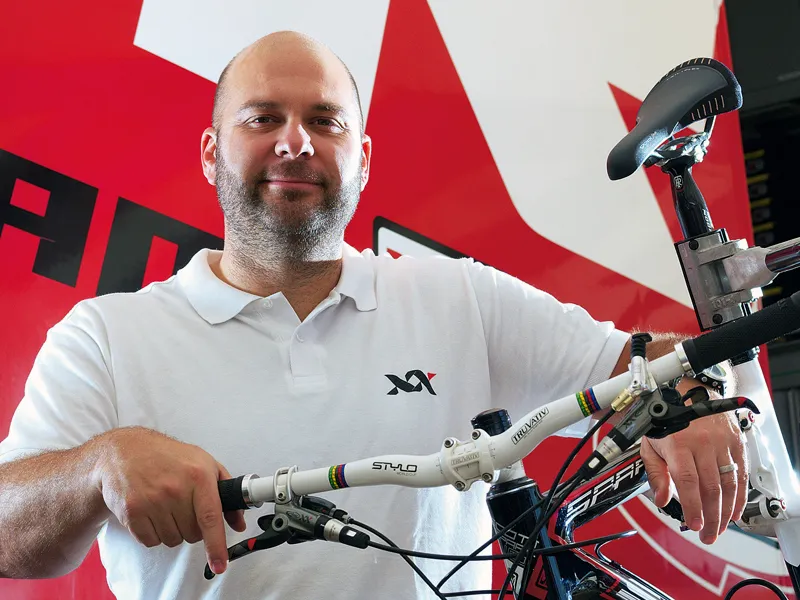
Interview: Avid product manager Paul Kantor

By James Huang, in Colorado Springs, USA | Saturday, Feb 5, 2011 9.00am

The International Cycling Union (UCI) lifted its ban on disc brakes for cyclo-cross bikes last year and while most of the buzz surrounding the decision relates to how the change will affect life in the mud, ultimately it's likely to have a far greater impact on the road bike market. After all, the two genres share nearly all of their DNA and new technologies and problems solved for one can carry over into the other. 

We sat down for a chat with Avid product manager Paul Kantor to get his thoughts on these latest developments, plus his take on the current and future state of mountain bike discs. His industry insider crystal ball tells us that we'll definitely see discs on road bikes sooner rather than later. Apparently, the wave is still out at sea but building fast – and it might soon be time to think about getting on top and riding it into shore.

BikeRadar: How would you describe the current state of mountain bike disc brakes? And where do you want them to be – what's your ultimate goal?

Paul Kantor: I have to give Hayes credit – that first brake [the HFX Mag] was really good for 1997. Brakes today are a lot better, in terms of performance, consistency and definitely lever feel. I've spent the last 13 years working on brakes and when I think about how hard it is, that was a really good brake.

Weights are pretty good now and I don't think we need to get much lighter. We've seen a real maturity as the technology has improved. I really like how we've finally stabilized in terms of mounting standards – it’s mostly direct [post mount] now; direct rear is coming on a lot. I still don't think brakes are as consistent as they should be. Roll back, or pad clearance, is something we can all improve on as well. 

There's also this weird harmonic vibration issue that goes on with frames and brakes – we have it, our competitors have it – so that's something we need to work on because that detracts from your mountain biking experience. Brakes get blamed 100 percent but it's a shared phenomenon. 

And then reliability [has to be worked on]... For most people who buy a bike, they want to ride it on the weekends, they put it away dirty – so I think less frequent maintenance cycles and more robust product over time is really what I'd like to see improved.

Are there things that the high-end market is still specifically asking for?

For me it would fall in the realm of heat management, where they want to run smaller rotors and more compact designs but in more aggressive terrain. There's this emerging lightweight 140-150mm bike – the Scott Geniuses of the world – that to me seems to be the most exciting, enjoyable part of mountain biking right now.

Those guys are asking for cross-country weight product but it needs to be robust. So finding that magic balance between running small rotors, having good power and being able to heat – it's that classic Bontrager argument [Keith Bontrager famously said of bike components: “Light, strong, cheap – pick any two!”].

Have Avid thought about an active, rather than passive, cooling system?

We've done that before where we've physically put waffles in the caliper surface or some ducting in there. [The problem is that we don't have much] air passing over the caliper. The caliper is behind the fork and it'd be a really hard sell to get people to change that around. And a lot of the time we don't maintain those high speeds that would have a good effect there so that becomes challenging. 

We've got some ideas on ways to manage that more actively but they're still about heat management and dissipating heat rather than just preventing things from getting hot in the first place. But you want a certain amount of heat anyway because that's where friction materials start to work really well. Everything feels better at a certain temperature, but it's a narrow edge – you reach a certain point and suddenly everything comes apart. 

We have a super-challenging environment relative to cars and motorcycles because we're so weight-restricted – you're powering yourself and you don't want to add that weight – and we have such a small area to work in and such a high performance requirement. It's a super-fun place to work relative to motorcycles because their brakes just haven't evolved that much.

With this latest UCI ruling on disc brakes for 'cross bikes, it seems that you're going up against a much more traditionalist culture relative to the mountain bike boom. What's your outlook on that?

The funny thing about the cyclo-cross community is that they're less traditional than the classic road community and more traditional all at the same time. There are certain areas where they seem fully open to trying new things – like with wheels at the moment – and then they'll want to run lightweight cantilever brakes so there's a weird balance there. The UCI ruling is encouraging for sure, and it's something I've pondered for four or five years. It's an idea whose time has finally arrived. 

I don't think the long-term benefits for disc brakes on 700c bikes are in cyclo-cross, though. It's hopefully a gateway to the ProTour, and the general consumer, more importantly. It'll resolve a bunch of challenges for us as a disc brake manufacturer. In cyclo-cross I think we can make something that works well and then get the weight down pretty quickly. It'll be a couple of years for that to evolve and I think you'll see the cyclo-cross community take that on once we get the weights down.

I'm super-focused on a sealed system. I think there's a certain price and threshold for mechanicals just because they're a little less expensive to make in some areas but for the elite level, they need a system that's less exposed to the environment. One of the big advantages is taking the brake surface off the rim itself – that's a huge advantage for wheel manufacturers, too. 

I think the weights will be super-comparable in a year or two [after 'cross disc brakes are introduced] and there'll be much better braking power from the hoods. So it's a lot of small things that you don't think of initially – it's that collective package of improvements that people are really going to enjoy. When you pose the question to them in the short-term, they don't have the advantage of having ridden one so they're [either] not really comparing it to anything or they're comparing it to a mountain bike.

Have you guys talked to the UCI about what this might lead to? Do you ultimately want disc brake technology to make its way onto the road?

Yeah, without a doubt. It's good for cycling, it's good for the consumer, it's safer. At the ProTour level they have excellent mechanics that hyper-maintain their product but they're all riding tubulars. It takes that whole dynamic about the glue, the heat, the temperature on the braking surface... I know the guys at Zipp have some ideas on how the wheels can be improved by not having to worry about the braking surface. I think the challenge would be those long 45-minute descents in Europe where you get back to heat management. 

We haven't had that conversation with the UCI but we'd love to. Brakes on road bikes just haven't improved and we have the opportunity now to really move that forward. It'll be an expensive transition. There are all those wheels, there's all that support system in place that's built around these current hub standards. So there's some stuff to figure out and it'll be challenging, but the benefits are well worth it. 

In how many years do you think disc brakes across the board will be the norm rather than the exception?

My hope is four to five years, that it'll move that quickly. We've already been working on stuff and we've talked to OEs [original equipment manufacturers, ie. bike companies]. Companies are putting a lot of brainpower to it already. There's an excitement for it and I think it could be one of those few instances where the public may have the opportunity to buy a more advanced technology than what the ProTour guys are riding instead of the other way around. The consumer could buy a UCI-legal weight limit bike that has a power meter and disc brakes that works better than what Contador or the Schlecks are riding.

So, do you anticipate that road bike disc brakes will be mechanical or hydraulic in nature?

We've always had strong demand for a high-end mountain mechanical, surprisingly. It's not going to set the world on fire but there's definitely a market – there's no question. I think the long-term path to success is everything that's good about a hydraulic – the sealed system and the longevity – and then there's cable routing as well.

If you have a nice straight line for a mechanical, it feels good, but if you don't… hydraulics really aren't affected that much. We don't have full-suspension road bikes and complex suspension designs to work around, but if you look at how they're pushing to integrate cables inside the frame, there might be some weird bends in there and hydraulics would accommodate that better for sure.

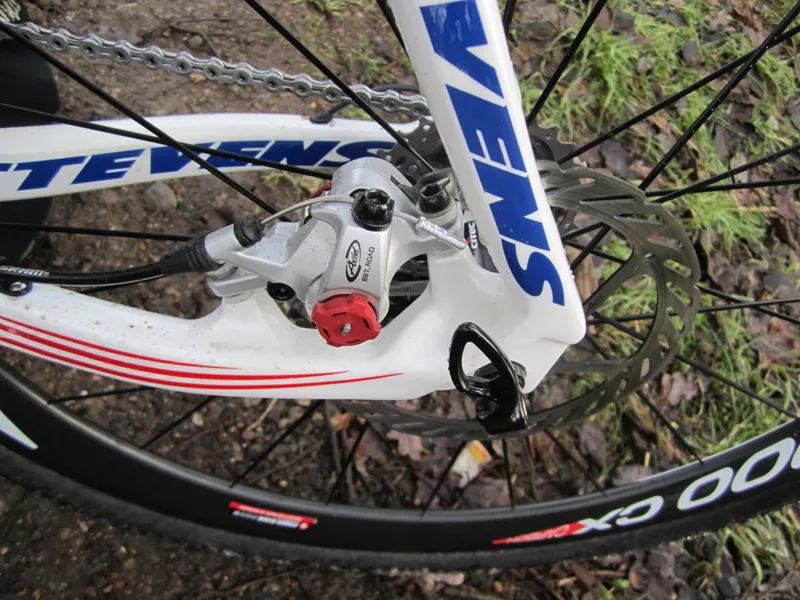
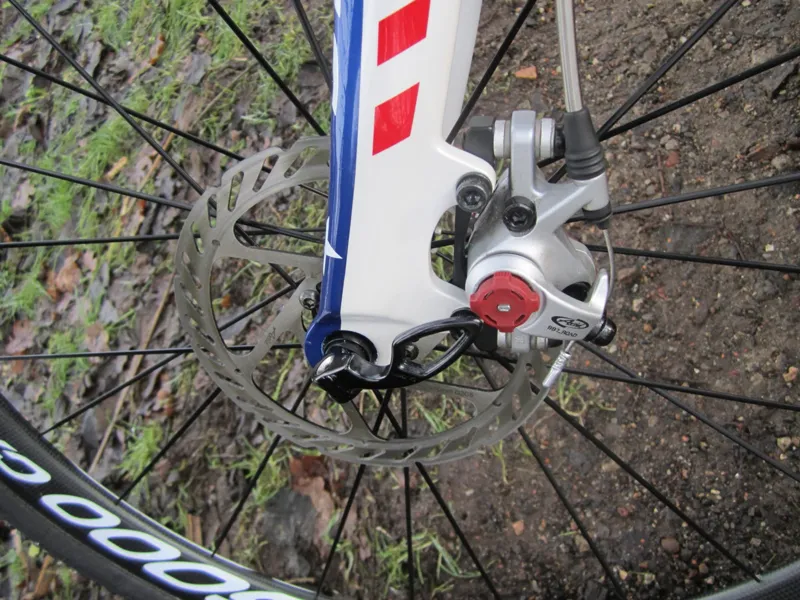
Get used to seeing stuff like this on road bikes if avid's paul kantor is correct:

Get used to seeing stuff like this on road bikes (albeit hydraulic rather than cable-operated) if Avid's Paul Kantor is correct

You can follow BikeRadar on Twitter at twitter.com/bikeradar and on Facebook at facebook.com/BikeRadar.

User Comments

There are 36 comments on this post

Showing 1 - 30 of 36 comments

  • oops! Mr kantor may be miffed that you have used a picture of a shimano cable operated disc. Avid cable discs are very good (especially on the front where there's less cable stretch) and of course can be used with standard road levers, using a disc system also means that varied wheel sizes can be used on the same bike so 700x23 for the lighweight road option and 26xwhatever for offroad or dodgy winter conditions.

  • I remain unconvinced - the old engineering adage - Keep It Simple stands out here. This is just somebody talking up their own personal agenda - I feel disc brakes will add a new layer of unwanted complexity. At the moment all my wheels can be changed between all my bikes - I just don't see this happening if there starts being new and complex disc systems. On the road I hardly touch my brakes - I want the simplest, lightest and most standardised system. This chap is just trying to sell, sell, sell and so far I am unconvinced that the engineering is up to it or that it will be simple or that it will work. Everybody is looking for a piece of the cycling pie.

    Tom

  • I want discs ... so many advantages over rim brakes ... and hydraulic discs even better. Discs are simple, durable, don't wear out your rims and are very safe and powerful. I don't mind mechanical discs either, but hydraulics are much smoother at the lever and lower maintenance.

  • I'm not convinced that disc brakes would make descending on a proper road bike any better on anything other than a perfect surface. it's the tyre widths that usually cause you to back off on the brakes even with the limited power of a rim brake. disc brakes would lead to a lot of lock ups imo and the fork would be unlikely to handle the change in momentum and resulting force. but hey, i'm no expert. i'd like to have these questions answered by someone like Paul Kantor?

  • please ask mr kantor why avid brakes are not really any good, yes they work when new but dont stay that way. sticky pistons easily rounded bolts, fragile lever clamps and a pain to bleed when compared to other brakes. of all the brakes ive come across my spares box is mostly full of broken avids followed by hayes and then formulas although formula have now got their act together.

  • He failed to mention the aero drag involved in disc brakes. Add that to the weight and it just doesn't make sense. Oh and the fact that your racing hub to hub in a final sprint . I have a friend who used to road race he saw far to many crashes due to QR levers getting caught together in the sprints ; having a rotor there is only one more thing to catch on .

    to make the rotor more aerodynamic you would need to cover it with a shroud like on motor bikes , guess what that adds. yeah weight . Now hydraulic rim brakes, now they make more sense than discs.

  • From what I've heard, some of these carbon rims with rim brakes are downright dangerous in the wet. Fair play to you roadies who ride with no protection and these rim brakes on busy roads. Personally I run a HT with 2.3 slicks and the power and predictability of decent discs has saved me many a time.

  • @enoughgear - there is a *major* problem when descending with rim brakes - the rim heats up, and either the tube blows up from the heat (tube tyres) or the tubular glue melts and the tyre rolls. Neither is fun. You won't get that here in the UK but on those big passes in Europe it is a significant problem.

    The Avid idea of a disc brake you can use with roadie levers is great. Pity the ones Avid makes are total cr*p - with only one moving piston they will never work right, you either get drag or your braking force goes into bending the disc. As a result they aren't any stronger than good rim brakes.

  • mountainbikers used to go on about suspension and disc brakes being over complicated, heavy and unreliable - it'll never catch on - just like roadies used to say mountainbikes would never catch on, and I'm sure loads of pessimists used to say electric bikes would never catch on.

    road bike calipers are weak, outdated and primitive - I mean, using your rim as a braking surface - wearing it away until it splits - how daft is that?

    and don't go on about aerodynamics etc, like most riders are good enough for it to make a difference - what a joke.

    you'll go faster if you know you can leave the braking until later - it's having confidence in your equipment - anybody who races any vehicle will perform better if they can leave braking later

    and the weight penalty argument is a load of bollox too - most MTB brands have a sub 20lb front suspension forked carbon bike with disc brakes - replace the forks with carbon rigid ones and you've knocked that down to sub 18lbs, replace the knobbly treads with slicks and you're at 17lbs - the same as most carbon road bikes! - and most of these MTBs cost less than equivalently specced road bikes too!

    as soon as shrampagnolo bring out hydraulic sti levers, discs will be the norm on road bikes - there'll be no weight penalty because the rims can be made lighter, and you'll all wonder why you put up with duff rim brakes for so long.

    ,,,it's about time road bikes had suspension too...if your wheels are constantly deflected upwards by undulations/potholes/rough tarmac etc, you're losing speed and increasing fatigue by having to absorb all shocks through your muscles - using "virtual" pivots in carbon chainstays and a lightweight air spring, it's possible to have a sub 18lb suspended road bike....

    awaits backlash from luddites....

  • I find it interesting how many of these arguments are echoes of when discs were first making inroads in the mountain bike market over ten years ago. For whatever reason many riders continue to push for ultralight carbon frames and super aero components yet just take it for granted that it should be perfectly acceptable to reign in the weight of a bike and rider from very high speeds (100km/h isn't unheard of) with two little blocks of rubber squeezed on an aluminum or carbon rim with a lever and steel cable.

    True, absolute braking power is limited by tire traction as always but just as on the trail, the appeal of discs on the road lies in how more control you have leading up to that point. And while some have no major problems with rim brakes in their own locales, it's a different story for anyone who rides bigger terrain on a regular basis. And yes, then there's the heat issue for extended descents.

    Weight: yep, they're likely going to be heavier but by exactly how much remains to be seen. When all is said and done I'm guessing it could be less than 300g total.

    Compatibility: Barring additional axle standards, I'd argue it'd be easier to swap different disc-equipped wheels than before. Rotor location is a more closely controlled standard than rim width, which can vary wildly.

    Rotors and sprinting: rotors aren't going to protrude any further than spokes do already.

    Does everyone *need* disc brakes on the road? Of course not. But it'd be nice to have the option.

  • I agree, the option would be nice.

    It's unfortunate that the UCI gets in the way of product development sometimes.

    This was a nice feature and it's good to hear from someone in the industry on what products may be coming in the near future.

  • Super-fun? Super-focused? Super-comparable? Is this guy an engineer or an American teen at the mall with her friends? He probably says "OMG" too...

  • @NatoED - rotors are inside the forks, i.e. it would take something spectacular for another rider to get their bike caught on another riders rotor

    I'm all for disc brakes on CX bikes, when I build one up this year I will definatly put disc brakes on it as allows you to brake so much later into the corners!! I know from experience of racing my XC bike in a XC race; I could dive up the inside at corners very easily due to my increased stopping power (I know the big tyres helped as well)

    Rich

  • That's a sales job, not an informational piece.

    Does Kantor even ride bicycles?

  • good piece angryasian. as for sprinting, top riders go shoulder to shoulder and pedal to pedal already, don't see a disc causing any issues as it'll be inside the fork and well inside pedal and handle bar width.

    anyone think this would be taking some of the skill out of road racing? right now you've got situations where Contador gets dropped by Sanchez in paris nIce, Frank Schleck loses a corner and the tour of switzerland, cancellara taking lengths out of people on every corner at the worlds 2009 etc etc. I'd hate to see them all riding around glued to the road unable to gain an advantage. yea, rim brakes suck but There's something exciting about it all the same.

  • but isn't the rim just a bigger diameter disc?

  • frames and forks will have to be beefed up to cope with disc brakes especially around the fork crown and dropouts. bonded components will have to be revised due to the heat generated. a bit of weight can be saved on rims but will be cancelled out by disc compatible hubs. also wheel dish will be more severe thus leading to weaker wheels. spokes will have to be stronger due to higher wheel tension and braking forces. if the designers can build a disc equipped bike thats safe and strong and weighs the same as current bikes then i will be very impressed and i look forward to seeing just how innovative a solution they can come up with.

  • I've Been wanting a road bike for a while - I think discs would push me to actually get one. I hope they get on with it. A disc equipped Pinarello Yummmmm

  • Volagi bikes at Volagi.com/ bikes, have two models with discs up and running, they seem to have done their homework. Just a pity they are over the pond....

  • I would definitely take disk brakes over rim anytime.

    @ daviesee: no, a rim is for holding the tire, a disc is to provide a brake surface. True, you can use the rim for both (and for historical reasons that is the standard in road bikes) but you'll have a lot of design compromises in both the brake caliper and the rim.

  • Hmmm... I'm undecided on this.

    pros - solves the problem of carbon rims being a poor braking surface, means that rims last longer and/or can be lighter (rotating mass on the perimeter of the wheel, not insignificant). No tyre overheating problems on alpine descents (but isn't disk overheating going to be almost as big a problem just as in MTB, unless the disks are big and heavy?).

    Not convinced by the other arguments - the power of hydraulic disks simply isn't necessary on road bikes and could even be dangerous, it's all about tyre traction and control with road bikes. Also, your average roadie+bike probably weights about half of what your average beer-bellied Mountain Biker on full suspension bike weighs, MTB braking power just isn't needed.

    cons - Weight (300g + !!? that's nearly a whole pound!) Greatly increased complexity, huge potential compatibility problems with current frames / forks / hubs etc, not to mention increased cost. If this is coming in the next few years a lot of people are going to think twice about buying a 1000 quid set of really good wheels in the mean time.

  • @ak-77

    A compromise that seems to have worked fine on my bikes for over 30 years. Putting discs on won't improve my braking as it will just throw me off and add complexity.

    If you are going through mud then I can see very definite advantages but not for a road bike.

  • I am convinced that disc brakes can have benefic efect for common road riders (by example for commuting) and for cyclo cross; but I am not when it goes to sportive road bike.

    As long as professionnals don't use disc brakes, it is unlikely you see a lot of disc on sportive amateurs'road bikes. And unless they are forced to by their sponsors, I don't see any capital improvement disc brakes may give to professionnal cyclists.

    Disc brakes will bring weight to wheels, frame and fork, will complicate fast wheel replacement, and may add more compatibility issues when cyclists receive help from non team staff.

    Rememeber that some riders tried suspended forks during Paris-Roubaix race several years ago. Observe bikes currently used: suspended forks have not invaded professionnal peloton... Something good for mountain bike is not necesseraly good for every king of bikes pratices.

  • it can be quite easy to catch a QR skewer on the rotor as your sprinting . in a tight group. for me personally i won't feel the aero difference but i'm thinking of the pro or sportif side of road cycling.

    weight side your adding more than a Lb in weight when you add in redesigned hubs , stronger forks , longer cabling, frame reinforcing . It would take you thousands of miles to wear down your rims.

    Yes tubs are vulnerable to heat build up but to how likely are we to get that problem unless it's alp size descents and even then they will be a problem for disc brakes that are light weight enough for road use with brake fade of even pump up causing possible locking up of brakes (like when closed systems were used.

  • remember that the rotor extends out from the forks from 100mm + meaning you would have to brake from behind your draft sooner

  • Wouldn't disk brakes be desirable from a safety perspective? Or am I the only bloke here who rides in the rain? So no-one here's tried slowing on a wet day? Let alone on those silly carbon rims. Face it.. bikes can move-on you know....

  • so you want to increase the the braking force? does that mean you want to increase the traction force as well. im guessing that bikes will lock up the brakes quicker in the wet which is probably worse than no power for other riders in the bunch. unless riders want to run low pressure or wide tyres, both of which affect the effeciency of the bike, I dont see a future for road discs.

  • Disc brakes CAN be more powerful than conventional rim brakes but they don't necessarily have to be. The real appeal of disc brakes is the level of control they provide. Peak stopping occurs just prior to lock-up and with the improved modulation discs are expected to provide, riders will be able to more consistently flirt with that limit, thus reducing stopping distances when needed while also lending greater safety as well. In essence, this will allow racers to enter corners with more speed, dump off that speed more effectively, then exit faster.

    It's been an old adage in motorsports racing for ages: stop better, go faster.

  • Exactly. You can only ride as fast as you can stop.

    I can endo at will on my HT w/slicks, doesn't mean I lock the front wheel every time I slow down. Mountain bikers contend with much looser surfaces than roadies, but we don't all slide off everytime we brake in a corner. Even skinny xc whippets neeb! Just much more predictable, therefore easier to use.

  • I think it is absurd that there aren't disk brakes on road bikes. Switching from rim brakes to disk brakes on my MTB improved braking in the wet greatly. I think it would be of benefit to the cycling community as a whole if there were at least the choice. Pros can use whatever they want, but the consumer should have choice, especially when it comes to a superior product.

Post a Comment:

You need to login or register to post comments.