
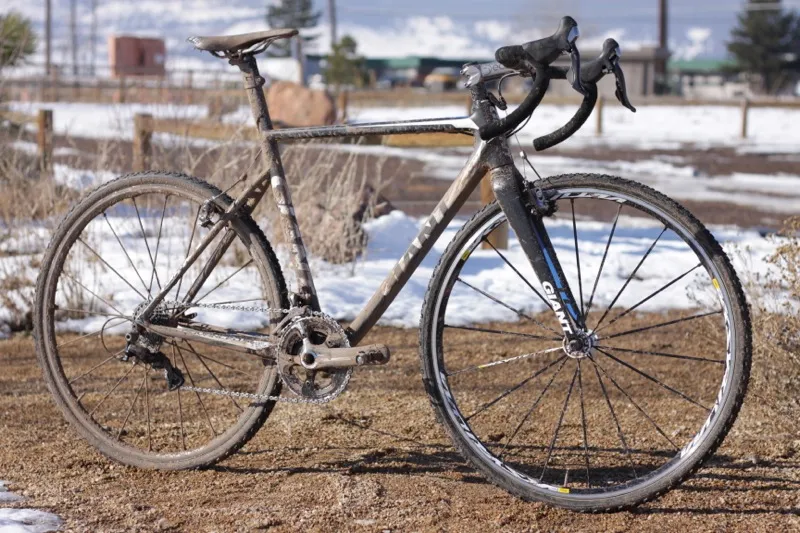
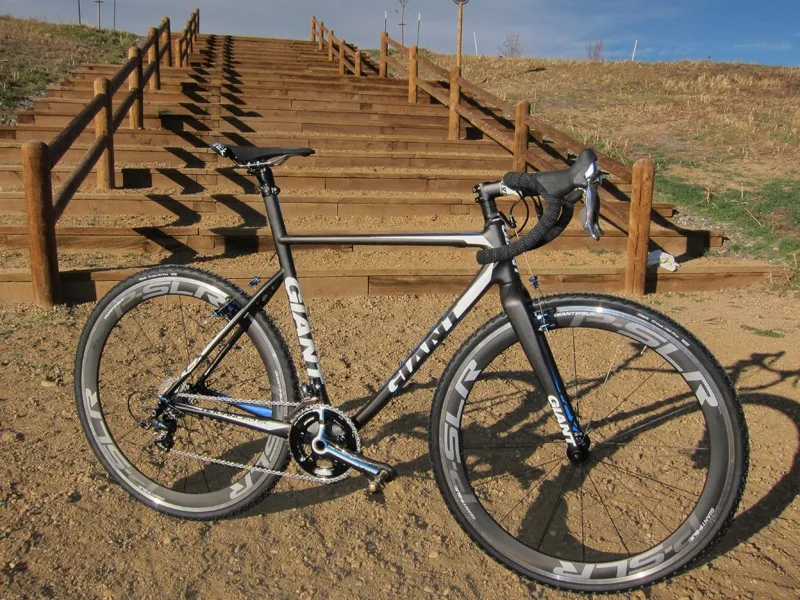
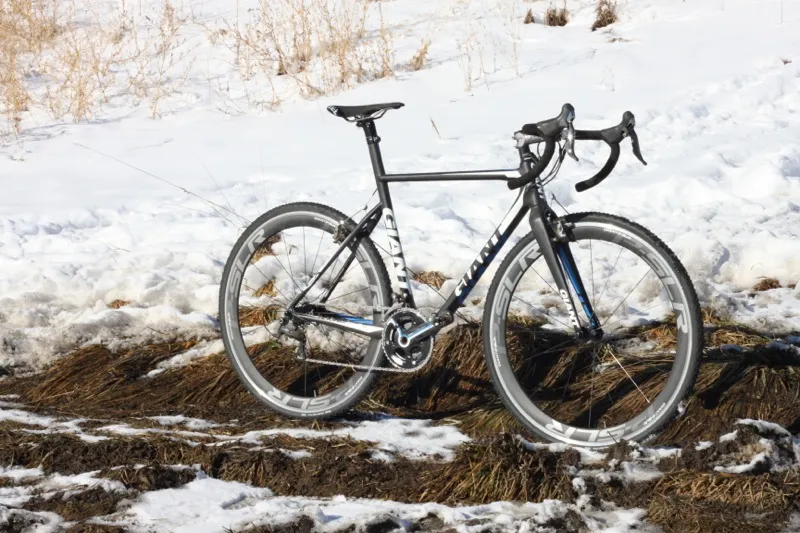
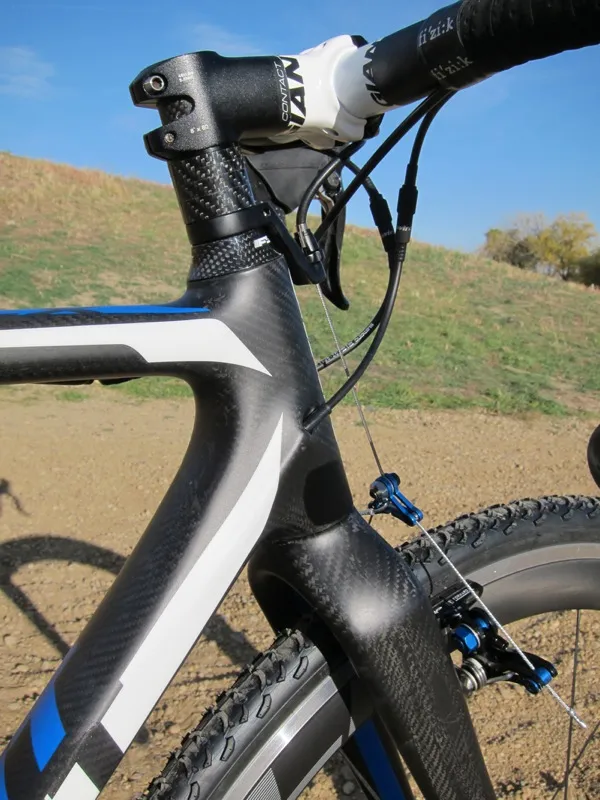
We’ve no doubt that Rabobank’s European cyclo-cross stars – including the likes of Lars Boom and Bart Aernouts – had a heavy hand in molding the geometry and feature set of Giant’s ‘halo model’ TCX Advanced SL cyclo-cross bike. But how well do the Rabobank pros' wants and needs translate to the average cyclo-crosser? That answer depends on where you live, and how deep the mud is there.
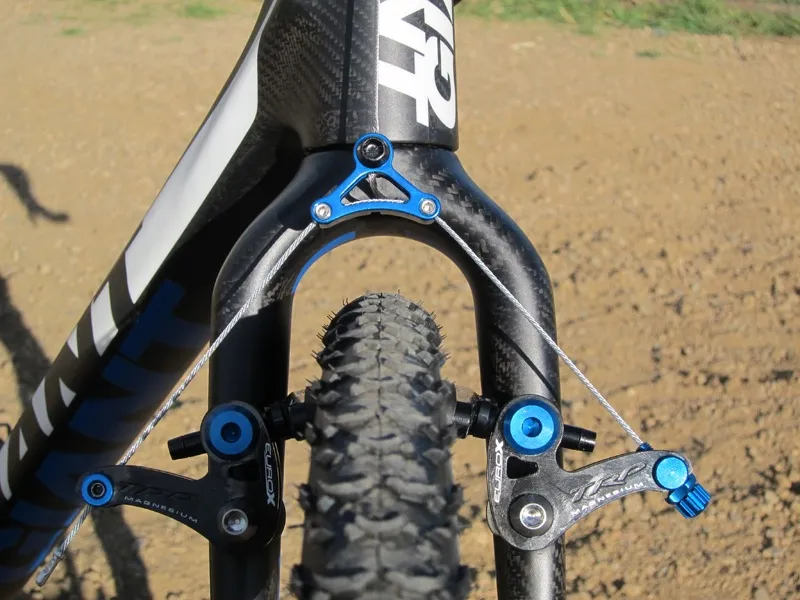
The US$6,900 bike comes with geometry straight out of the very traditional European pro cyclo-cross ranks – short reach, slack angles and a tall bottom bracket – and its kit mirrors the geo for mud racing; it's fitted with wide-profile TRP EuroX brakes and deep-section wheels.
These types of features combine to excel when the mud (or sand) is deep and the turns are flat. But they cater more to making sure a rider will always have the ability to pedal, rather than holding their hand when the terrain becomes technical. The end result is a bike that’s not all that versatile outside of the pro European cyclo-cross ranks.
Ride & handling: A Dutch field racer
Cyclo-cross geometry varies much more widely than that of road bikes and there are many more shades of grey between the black and white of ‘good’ and ‘bad’. This is because course style and weather varies dramatically, according to which region you’re racing in.
The ‘cross fans here at BikeRadar’s US office prefer the more versatile American-style geometry, with lower bottom brackets (that pretty much mirror road metrics), longer cockpits and slacker angles. But we do the majority of our racing in dry conditions and on firm, fast and rocky courses.
In northern France, Belgium and The Netherlands, our preference for low bottom brackets would backfire and have us running more than riding. Those 12in deep troughs of mud and sand that Nys, Pauwels and Stybar can somehow magically power through would see us grind to a halt and have the pedals of our low bottom bracket bikes' smacking dirt.
While our inability to ride those features might not be solely because of our bottom bracket height, it would have some bearing. There we might be able to better appreciate the TCX Advanced SL’s 5.5cm of drop. For comparison, Ridley’s ‘cross bikes have 6cm, and American geometries generally sport 6.5cm or more.
Giant’s TCX Advanced SL in stock form with Giant’s P-SLR1 Aero wheels and TRP EuroX Mag brakes
As expected, the TCX rides tall. It has a tippy feel in some situations but its average angles and compact cockpit help to offset this feeling. Once a rider wraps their head around the geometry, though, some unique advantages present themselves.
For one, there’s the additional clearance for mud and sand riding. This offers an advantage in the dry, too: you almost never have to stop pedaling, even under extreme cornering and on treacherous off-cambers. If you have a big motor, you’ll be able to use this characteristic to your advantage.
One of the major trade-offs with Giant’s unique geometry, however, is the bike’s lack of versatility. We found the TCX Advanced SL too short and tall to double as a comfortable road/commuter bike, both in terms of rider position and handling, despite Lars Boom opting to ride it at last year’s Paris-Roubaix.
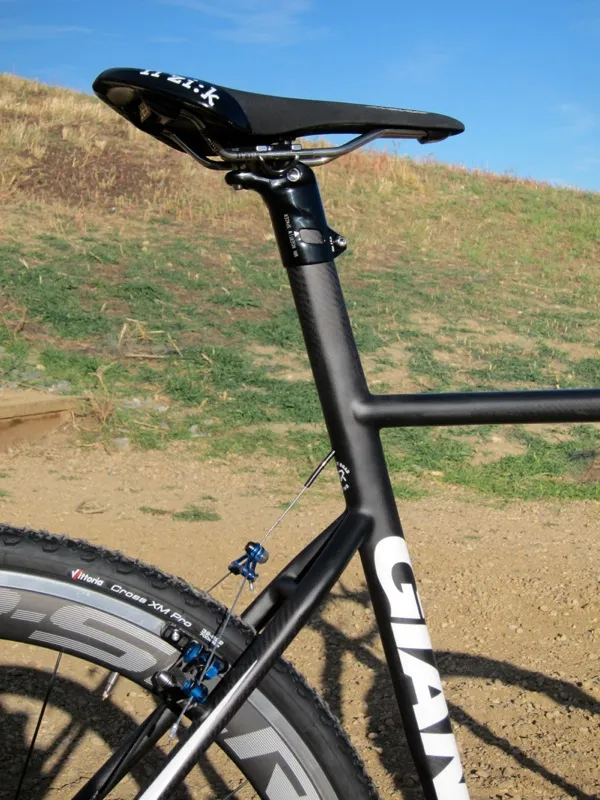
After a rider gets past – or comes to terms with – the tall bottom bracket, a second beneficial feature becomes apparent: the TCX Advanced SL is incredibly smooth. Giant have taken advantage of the seatmast design to engineer lots of comfort creating flex, without impacting the efficiency of the drivetrain or the precision of the steering. The trade-off is that the mast makes it trickier to pack the bike for travelling.
The seatmast, along with the offset connection of the seatstays and top tube, aids in producing the bike’s compliant ride
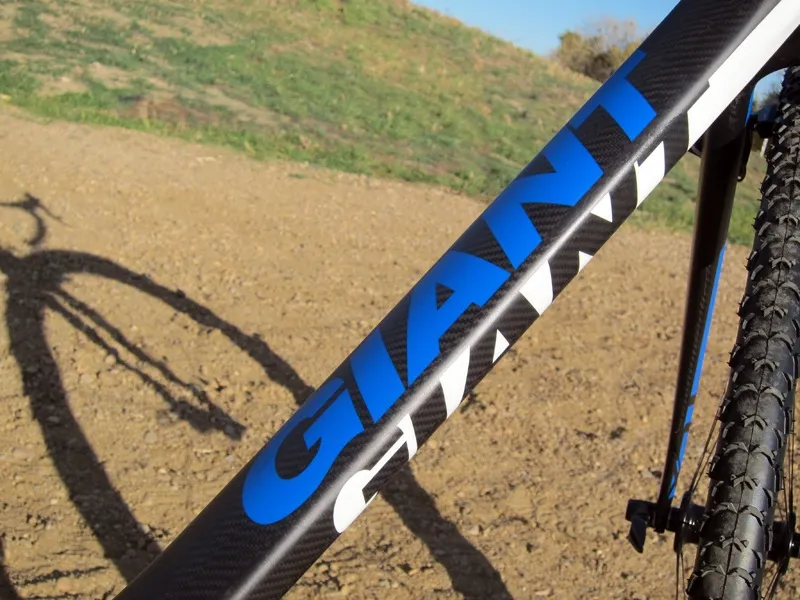
Frame: Carbon fiber from one of the best in the business
Before we cut the mast of our medium sample TCX Advanced SL frame it weighed just 1,193g – making it one of the lightest ‘cross chassis we’ve tested – and the fork follows suit, at 450g with a 215mm steerer. On the race course, this light weight (the complete medium bike is 16.09lb/7.3kg, with uncut mast and without pedals) translates into bullet-like acceleration.
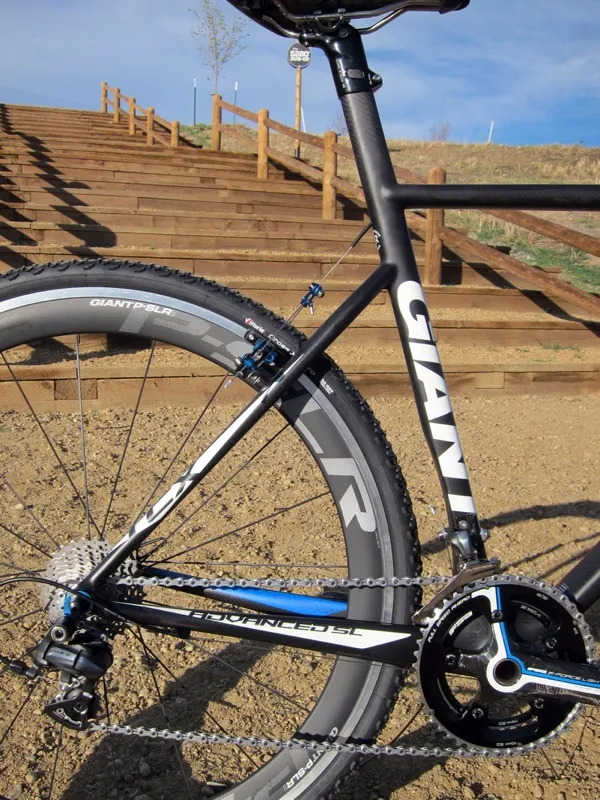
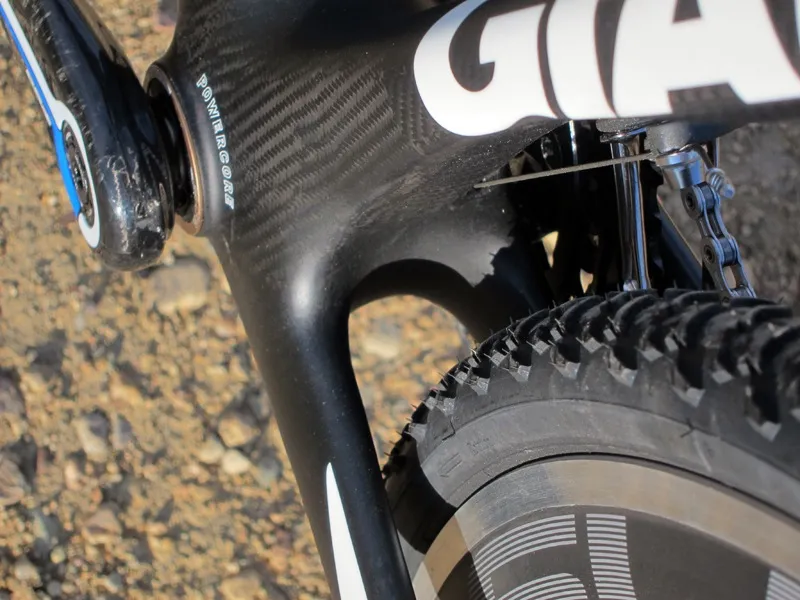
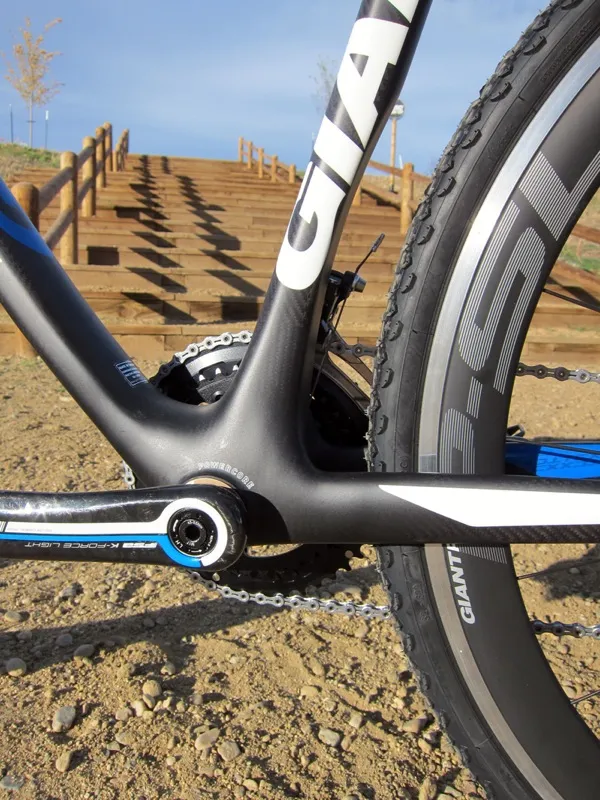
The TCX Advanced SL’s snappy acceleration is also aided by frame features like the MegaDrive down tube – which is rectangular, to give good lateral stiffness with a hint of vertical flex – and the PowerCore bottom bracket shell, which takes PressFit BB86 style BBs and allows for a wide down tube and wider stance to the chainstays. Giant have paid special attention to the smooth molding of the seat tube, bottom bracket and bridgeless chainstay connection, so as to make the area as slippery as possible and give it the best possible mud shedding ability.
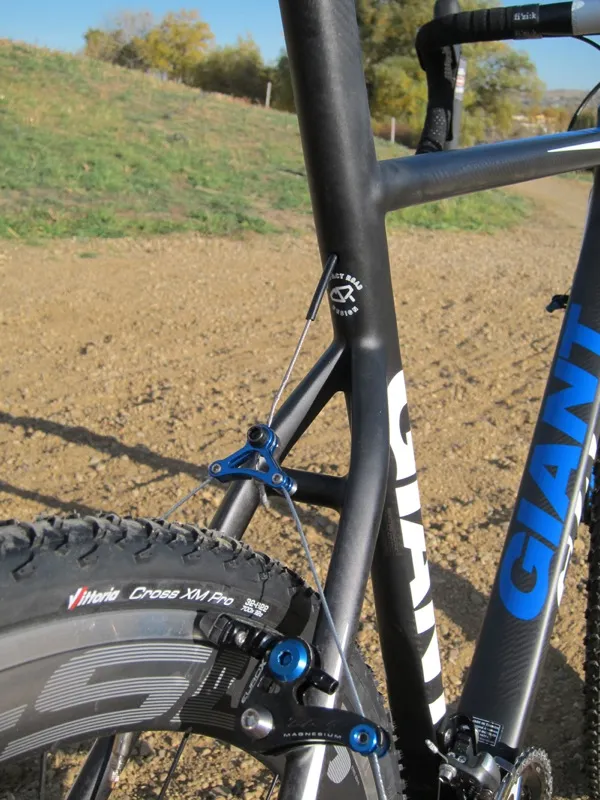
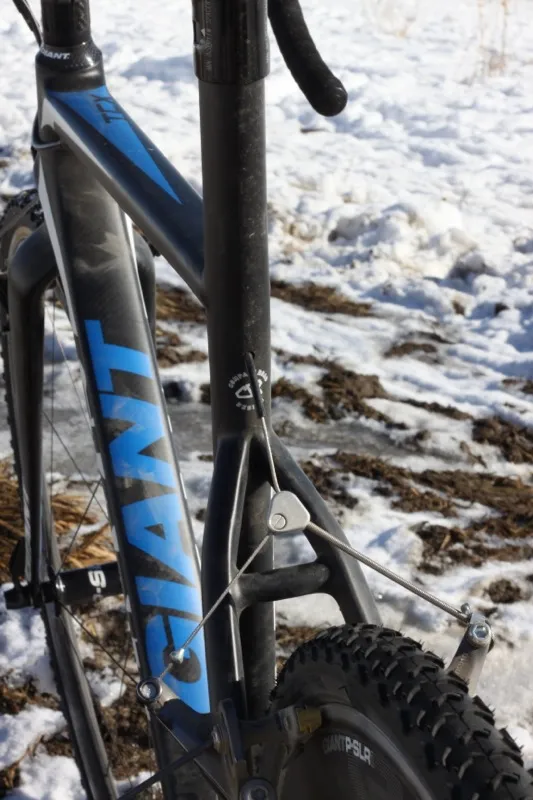
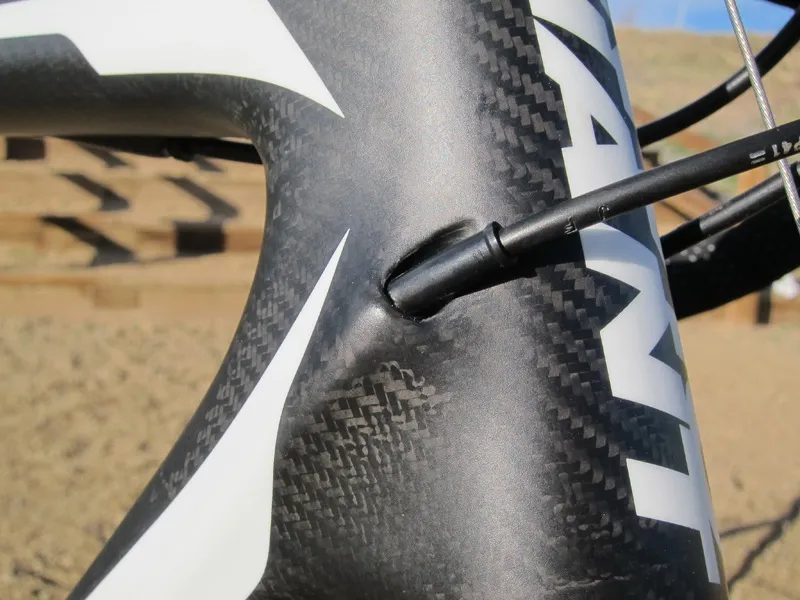
The quality of the carbon finish and molding is excellent, though we have two nit-picks when it comes to cable fitments. First, the head tube entry points for the internally routed gear cables are just primitive, countersunk holes; we’d expect something a bit more refined on a bike of this stature. Second, the internally routed rear brake cable simply exits the back of the seat tube, leaving no good provision for the use of linear-pull brakes.
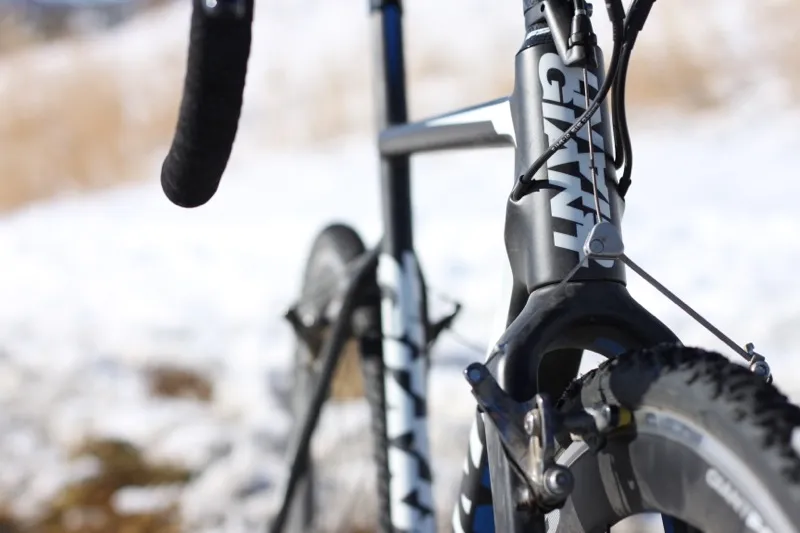
The fork follows the frame’s lead. It’s beefy and stiff in steering and offers massive mud clearance. We didn’t find it quite as comfortable as the rear of the bike but it’s by no means harsh. We didn’t experience any issues with brake shudder and we tested with both low- and high-profile cantilevers.
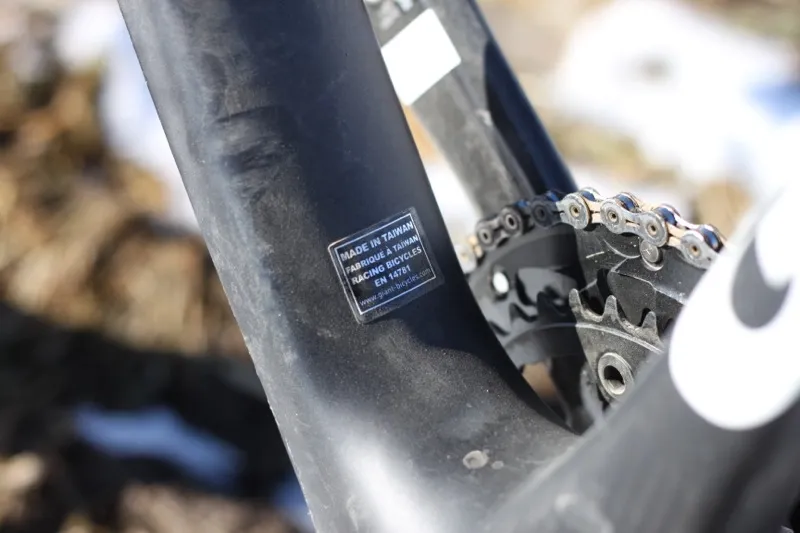
The TCX Advanced SL has massive, shaped clearances at the bridgeless chainstay-bottom bracket connection to promote mud shedding
Equipment: A matter of preference
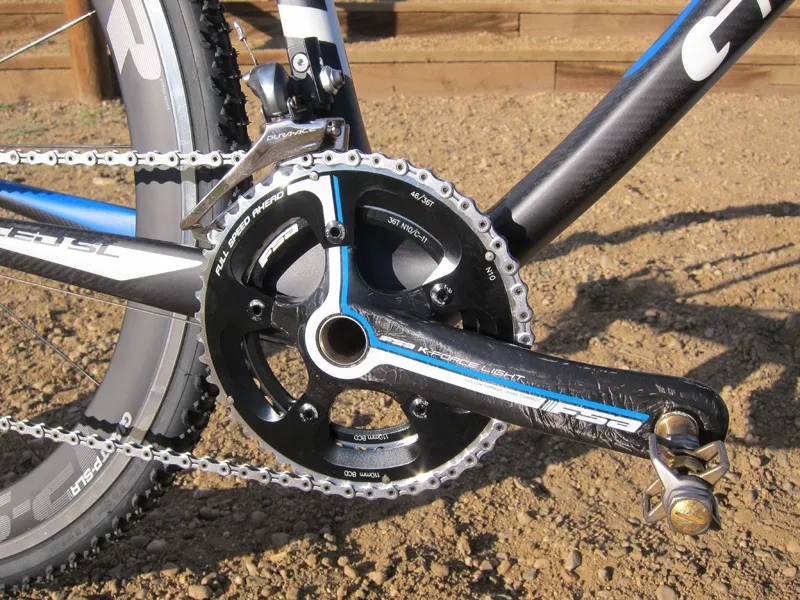
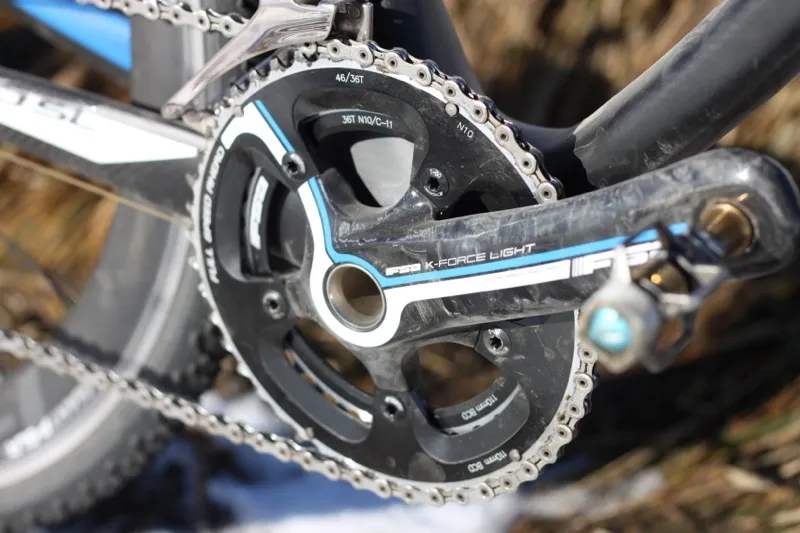
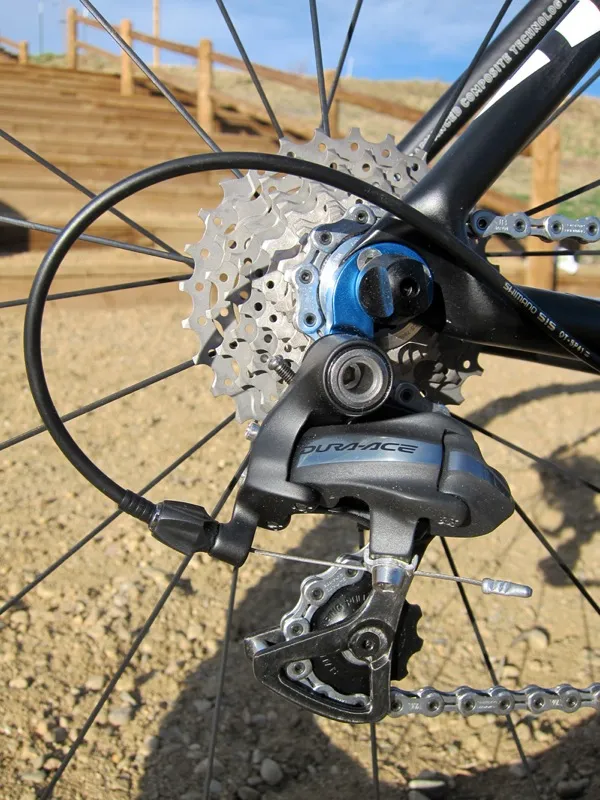
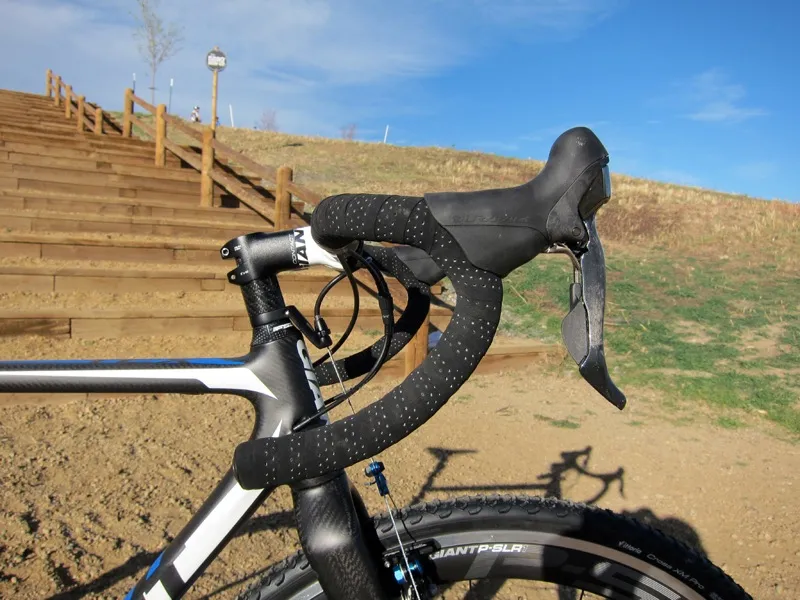
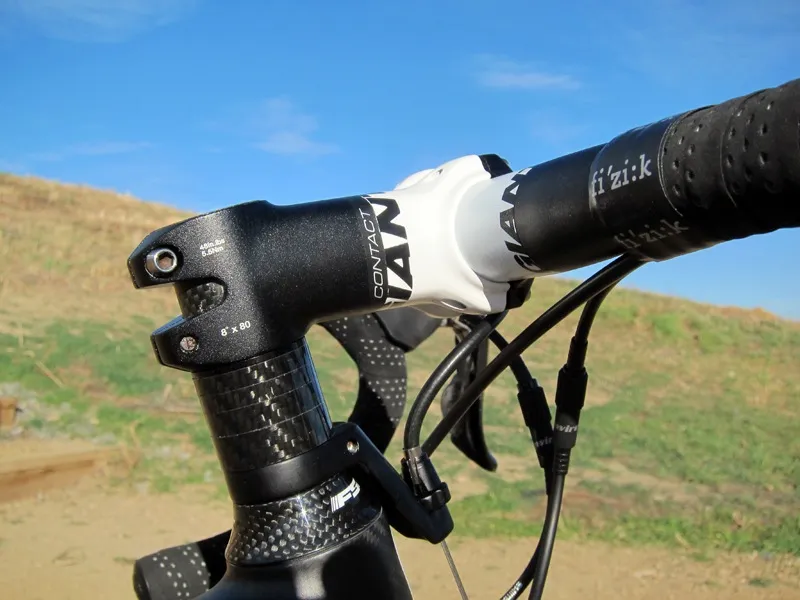
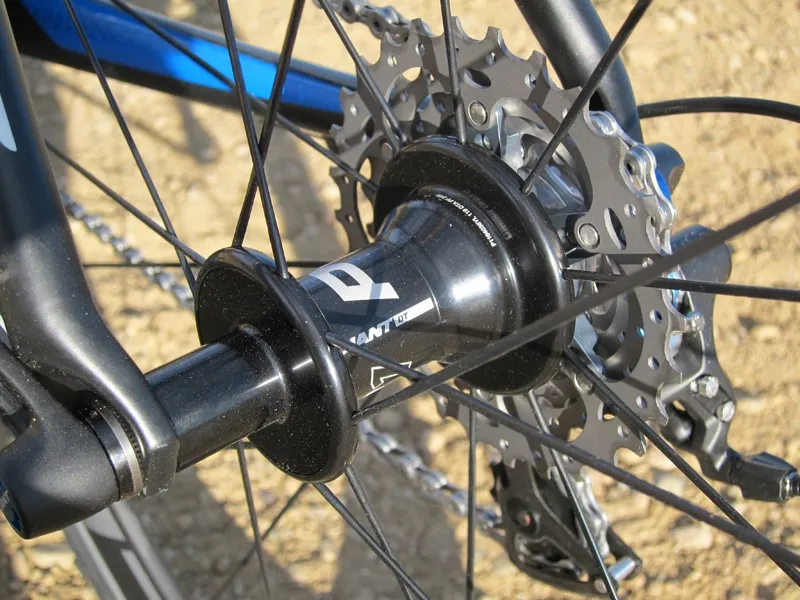
Giant equip the TCX Advanced SL with a Shimano Dura-Ace mechanical transmission that’s paired to FSA’s top K-Force Light MegaExo crank and TRP’s EuroX Magnesium wide-profile brakes in a custom black and blue color. The wheelset is Giant’s own P-SLR1 Aero set, made up of a hybrid carbon-alloy rim and Giant-branded DT Swiss hubs. The cockpit is from Giant’s Contact house brand, while the saddle is Fi’zi:k’s Antares with K:ium (titanium alloy) rails.
All of the components worked as expected but the TCX Advanced SL’s $6,900 pricetag brings with it high expectations and we came away seriously wanting in three areas: shifting, braking and wheels. We didn’t have any issue with the Shimano/FSA package’s very good front shifting performance (although we'd prefer a 38- or 39-tooth inner ring to the 36t specified). In fact, the combo worked flawlessly even in ultra muddy race conditions.
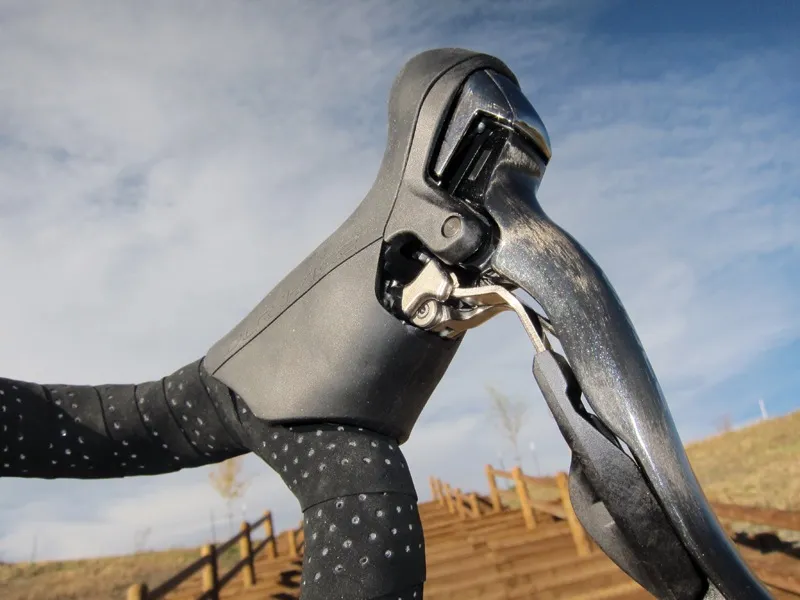
The rear shifter, however, would misshift roughly three times per hour, and this was an issue we had whether training or racing, in wet or dry conditions. We traced the problem to the inner cable release lever, which fails to engage the inner gear to release the cable and allow a downshift when a rider puts any lateral pressure on the outer shift/brake lever.
This is a bummer on any bike, much less one costing almost $7k, and it's a particularly noticeable problem in the dynamic conditions of cyclo-cross. Shimano are aware of the issue, which relates directly to the disengagement of the cable release lever when the cable pull lever is even partly engaged. They hope to remedy the issue in their next generation shifters.
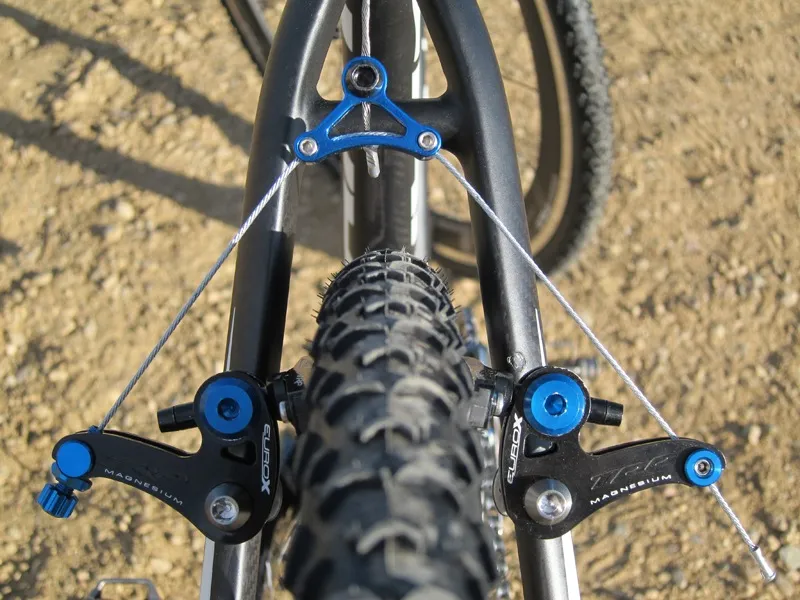
We were also let down by the stopping power of the TRP EuroX brakes, which we had to change before racing on the TCX. Braking power comes down to personal preference, however, and we can see their worth on a flat muddy course, where they offer greater rim clearance than other, more powerful cantilever or linear-pull brakes. If we were spec’ing Giant’s flagship we’d swap the TRP brakes for, either, the Dutch-made custom orange cantilever brakes used by the Rabobank team or something more powerful. The former option would up the ‘pro cachet’ of the package and would nicely complement the spirit in which the TCX Advanced SL was developed.
TRP’s wide-profile EuroX Mag brakes come in custom colors for Giant’s halo ’crosser
While the P-SLR1 Aero wheelset is of very high quality and we’d be happy with it on a comparably equipped road machine, we don’t think it’s the best choice for the TCX Advanced SL. Anyone buying a $6,900 ‘cross bike is likely to already have a quiver of tubular wheels. This means the P-SLR1s will be relegated to training use, where a cheaper set of wheels would be perfectly adequate.
For that purpose, lower profile rims would also be a better option. While the deep section of the P-SLR1 Aeros might provide an advantage in the mud and sand of Europe, a lower profile would offer more comfort and alleviate the need to carry tubes with long valve stems or valve stem adaptors off the race track. We’d swap the deep aero wheels, which cost $1,600, for Giant’s P-SLR1 low-profile model, with a listed price of $1,000. This would benefit the ride of the bike and also knock several hundred dollars off the price.
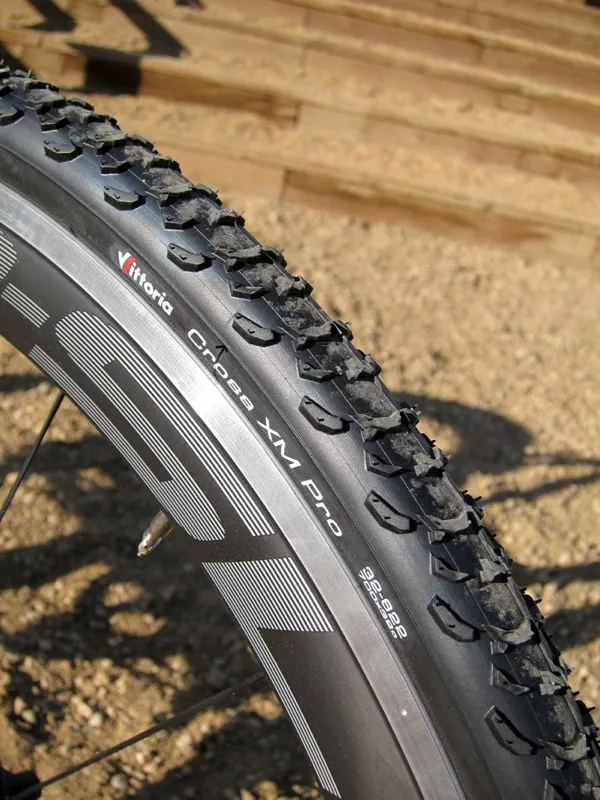
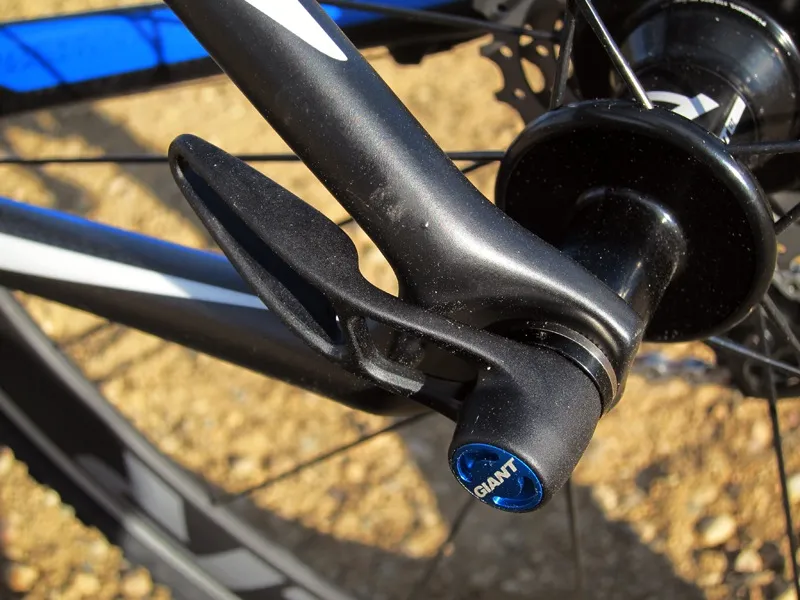
We're also not fans of the wheelset's hard-to-use DT Swiss RWS style screw-and-manual-ratchet quick-releases. On a positive finishing note, the Vittoria XM tires impressed us. The casings proved very supple, and their grip is good for a clincher. While they hold no water to tubulars for racing, they proved adequate for hard training, though the rear wore quickly.
We found the Vittoria XM clinchers to be pleasantly supple and offer good grip when training