Yeti ASR 5 Alloy review

|

$1900

Change Currency What's this?
This is the alloy version of the carbon racing snake

BikeRadar verdict

4.5 out of 5 stars

"5in-travel bikes just don’t get much quicker or more desirable"

Sat 6 Mar 2010, 8:00 am GMTBy

The new Yeti ASR 5 Alloy comes hot on the heels of its full-carbon bigger brother, with a cheaper pricetag and hard-hitting alloy construction.

Ride & handling: Lightweight trail-tamer

The minute you swing a leg over a Yeti there’s always a special feeling and the ASR 5 is no exception. Like eating out at a Michelin-starred restaurant with Megan Fox, there’s a sneaking suspicion that this could be as good as it gets.

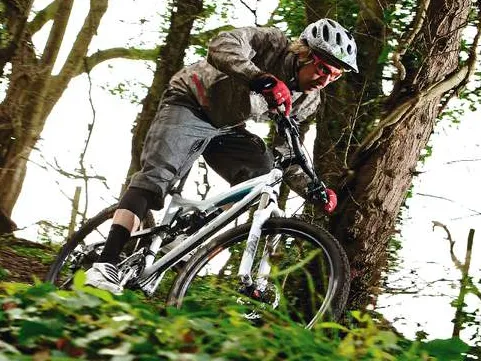
And it is good, bloody good. In terms of climbing this is one of the best 5in bikes in the game. It’s stiff, responsive and comfortable. Technical ascents are a breeze. On the descents the ASR5 alloy forces you to ride it, but in a fantastic way. It doesn’t flatten trails, it skips through them. The bike is light and accurate without ever feeling twitchy or skittish, largely thanks to that slack head angle.

Once you get past that stiffer mid-travel it’s quickly apparent that the Yeti doesn’t mind hitting corners hard either. In fact, running the suspension with slightly more sag than normal brings a whole new edge to the ASR5’s game and turns a competent descender into a head-buzzingly brilliant trail-tamer.

There are limits though, and it’s easy to get carried away on the ASR5. If Alpine descents are your thing then the excellent 575 might be more your cup of tea but for pure trail centre fun and £800 worth of carbon fibre change in our pockets we know which we would choose.

The yeti’s control is superb, thanks to the slack head angle : the yeti’s control is superb, thanks to the slack head angle

Frame: 5in-travel boutique dream machine

The new ASR 5 is designed with versatility in mind. First and foremost it’s a trail bike, but its carbon back end and 2.5kg (5.5lb) frame weight (the full-carbon is 0.34kg – 12oz – lighter) result in a bike that won’t mind the odd race or enduro either.

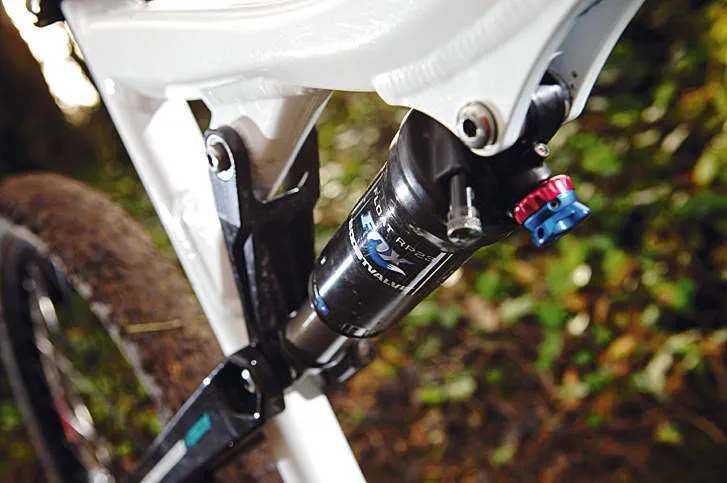
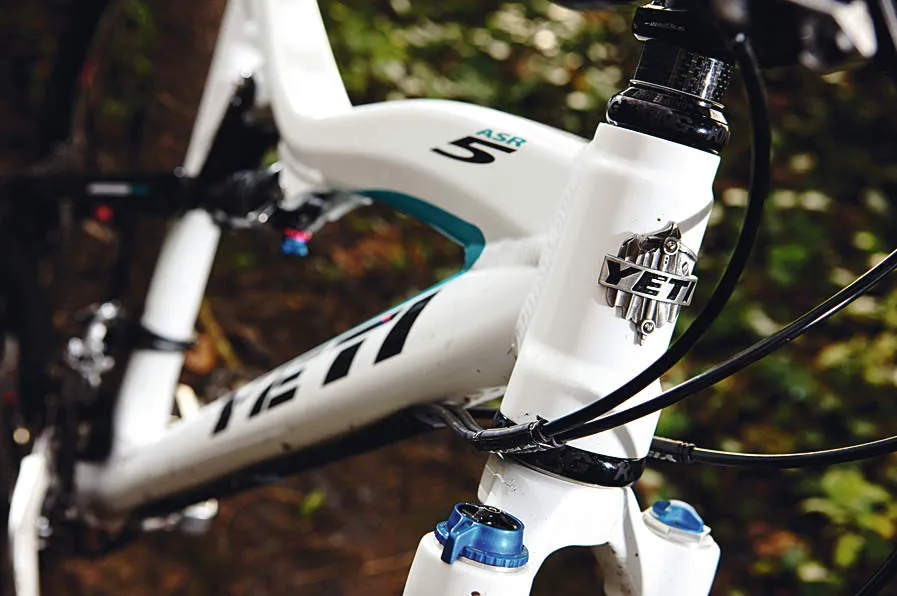
The Fox RP23 rear shock is tuned to stay slightly stiffer in its mid-stroke to allow the ASR 5 to feel nimble and to stop it bogging down. To keep things equally stiff up front the head tube is tapered and there are interchangeable dropouts out back.

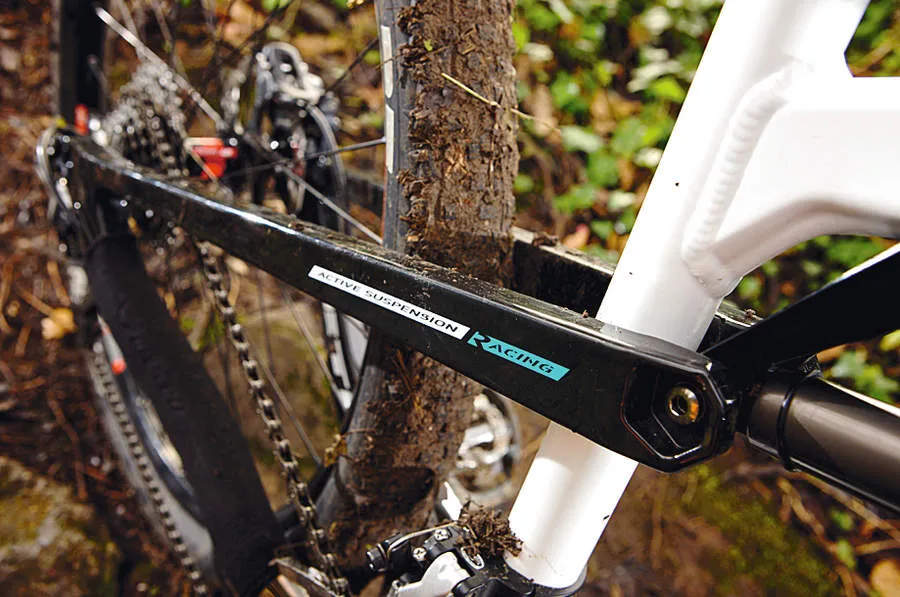
The bottom bracket is low, at 13in, and the ASR5 gets a relaxed 68-degree head angle. The detail is superb, with titanium hardware and ‘Yeti’ embossed rubber frame-savers on the cabling. The rear mech cable is also routed through the chainstay to keep things neat and tidy.

Equipment: Quality kit from Shimano, Easton and Thomson

Buying a Yeti is a bit like buying a Ferrari – you don’t scrimp on the extras. Our Race model came custom decked out with almost telepathic Shimano XT/XTR shifting and power-packed XT brakes. The Easton and Thomson steering combo is excellent too.

The bars are wide and the stem is short enough to inspire a bit of aggression but they never detract from climbing efforts. We reckon that this spec is exactly right for the ASR5 Alloy – it’s neither a full-on fragile racehead nor is it a heavy-handed trail hooligan and it works brilliantly as a result.

The fox rp23 shock  adds to theyeti’s nimbleness: the fox rp23 shock  adds to theyeti’s nimbleness

What's the score with BikeRadar reviews? You can find a full explanation of our ratings here.

User Reviews

There are 6 reviews on this post

Showing 1 - 6 of 6 comments

  • Any words on how it compares to the Trek Fuel EX - I am choosing between those two for my next bike.

  • thinking of swapping my 575 for the asr 5 but really dont know if its worth the bother, dont think the .75 makes that much diffrence, had a go on one and does ride very similar to the 575 with propedal on, can feel the extra stiffness.

    a trek ex? not even in the same postcode. the treks way to lazy and sloppy like riding through mushy peas. yeti all the way.

  • Basically the question is - 5 or 575? I have decided that I am going to join the full suspension club in style and am after a Yeti, a brand I have long admired. Having always ridden hard tail I decided that 5 inches of travel is more than enough and set off to nearest Yeti retailer to have a look at ASR 5 alloy. The man at the shop put me on my back foot slightly. He suggested I buy a 575 instead as its only .75 inches more travel and can also be built very light and a well reviewed bike so long as you go for the aluminium rear. I left the shop a bit confused and have since formed this opinion. The ASR 5 is less than a year old and obviously the way forward for Yeti. The rear end also differs from the 575 which must sort out the issue of flex. The AS-R7 is also a new model offering even more travel. Where does this leave the 575. Yetis best selling bike. It would appear to me that 575 sits uncomfortably close to the 5 and with reported problems on rear end flex on full carbon rear are yeti going to change the rear end to match 5 or 7 or is it end of the line for 575. Your thoughts please.

  • Bike looks amazing, perfect trail toy.

    Would you go alloy or carbon?

  • I'm looking for a replacement for my 2010 Trek EX8, which I haven't really gelled with, and demo'd an ASR5 last week. The demo bike I tried was the same weight as my EX and was fitted with similar tyres, but had heavier wheels. It also had a 140mm fork. IME, the ASR5 was in a different league to the EX on climbs (which I have always found very 'dead' feeling on climbs). Don't get me wrong, the Trek is by no means a duffer, and it's a brilliant all-rounder - it's just that the Yeti felt livelier and more entertaining...in a very fast way! (has a similar 'mentalist' speed freak character as my Anthem X)

    I did find one rather strange thing on the Yeti though. On one very techy, but not steep ascent, it had a wierd suspension compression in a small hollow and spat me off the back of the bike! I had experimented with the sag on the rear shock, and this odd behaviour was with it at the firmer end of Yetis recommended sag - I think part of this might have been the 140mm fork which did make the front end a bit wandery on ascents (even with a shortish, low rise stem and no spacers). The other thing I noticed was that on anything other than descents, or very rough ground, the bike I tried seemed much happier left in Propedal 1 - it climbed very well with PP off but was very sensitive to weight shifts, much more so than other single pivots I've ridden.

    er...so in summary, IMO, it's a much more entertaining ride than a Trek EX, and if I was limited to owning one bike, I'd be very happy with it. (think I'd stick a shorter, or U-turn fork on there though)

  • Awesome bike. Got to demo it and it felt absolutely better than the MojoSL I rode before it. Huge confidence, great acceleration, great handling, super fast and efficient up climbs. Was hitting 3' drops to flat, but I tore the casing on the tubeless tire so it looked like the wheel was out of true (but it was only the tire) and it cut my demo short. The white paint job looked beautiful. Only downsides are the price and frame weight, but I believe that extra frame weight all goes into the ride feel and none of it is truly excess fat.

Submit Your Review:

You need to login or register to post comments.

Specification

Name:
ASR5 Alloy (frame only) (10)
Built by:
Yeti
Price:
$1900.00


Frame & Fork:

 
Frame Material:
7005 Alloy mainframe with carbon rear triangle, 127mm (5in) travel
Fork Model:
Fox F120 RLC FIT QR15
Rear Shock Model:
Fox RP23

Geometry:

 
Head Angle:
68 Degrees

Brakes:

 
Brakes Model:
Shimano XT

Transmission:

 
Cranks Model:
Shimano XT/XTR
Rear Derailleur Model:
Shimano XT
Front Derailleur Model:
Shimano XT
Shifters Model:
Shimano XT

Contact Points:

 
Saddle Model:
SDG Yeti
Seatpost Model:
Thomson Elite
Stem Model:
Thomson Elite X4
Handlebar Model:
Easton Monkey Lite XC

:

 
Wheelbase (in):
13 in
Front Wheel:
DT Swiss X1800
Rear Wheel:
DT Swiss X1800

Related links

Also on BikeRadar