

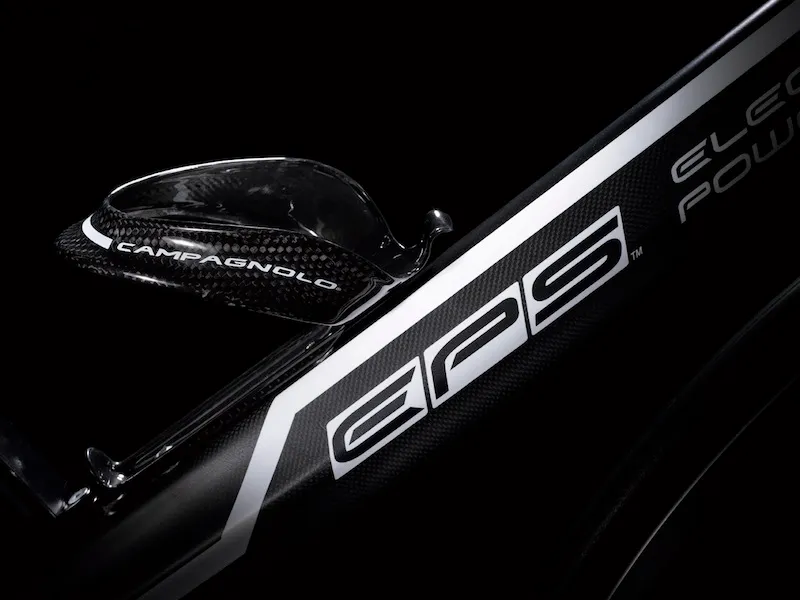
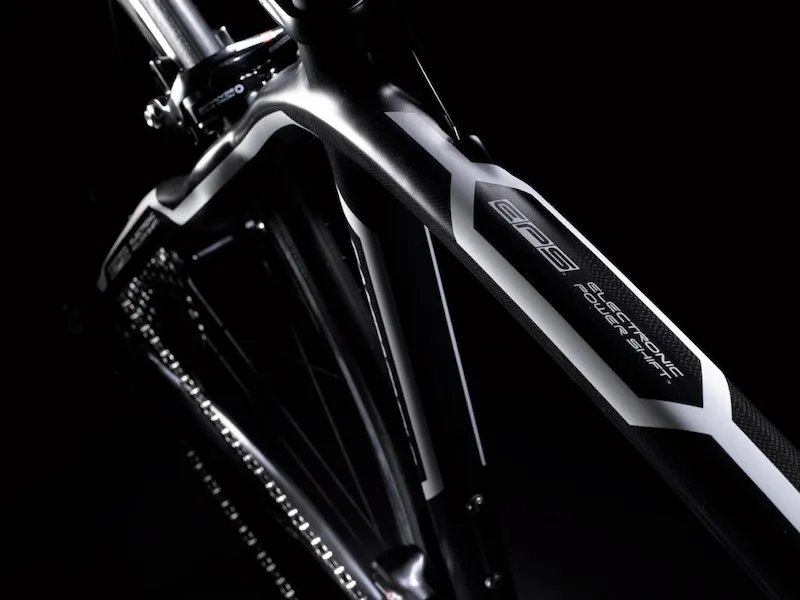
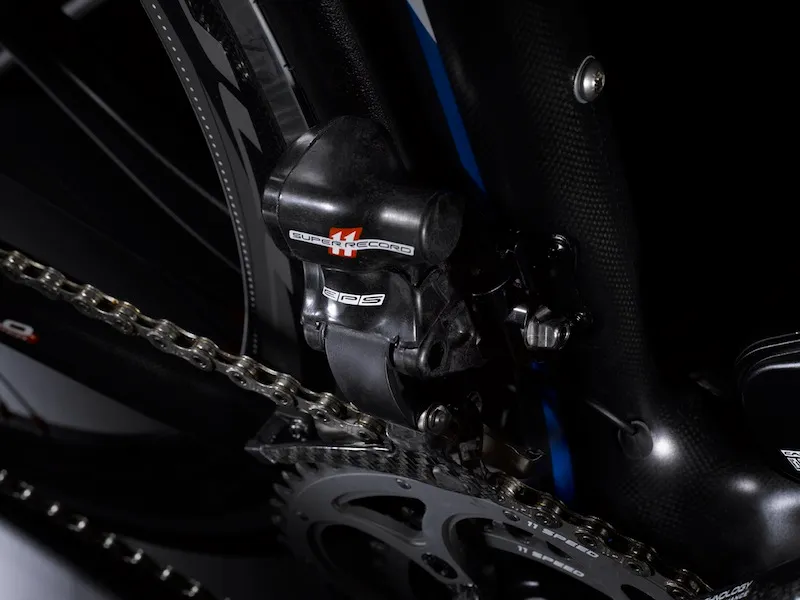
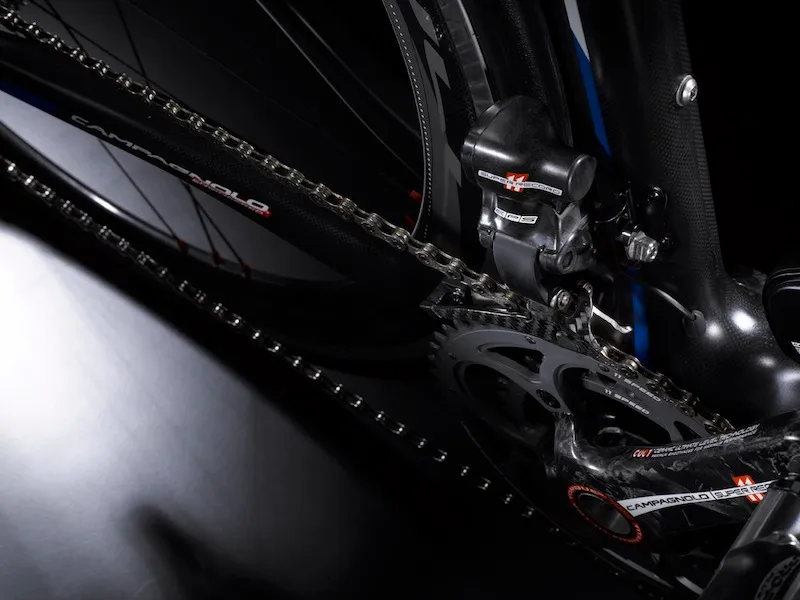
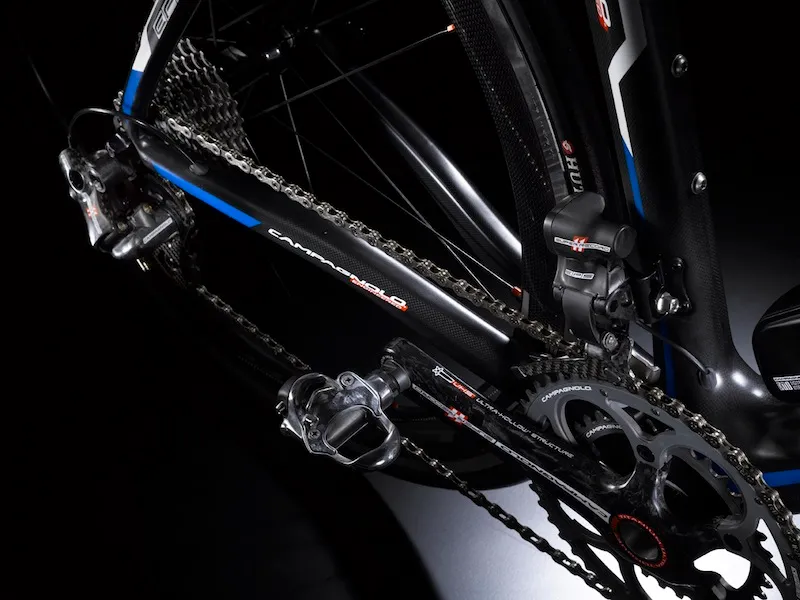
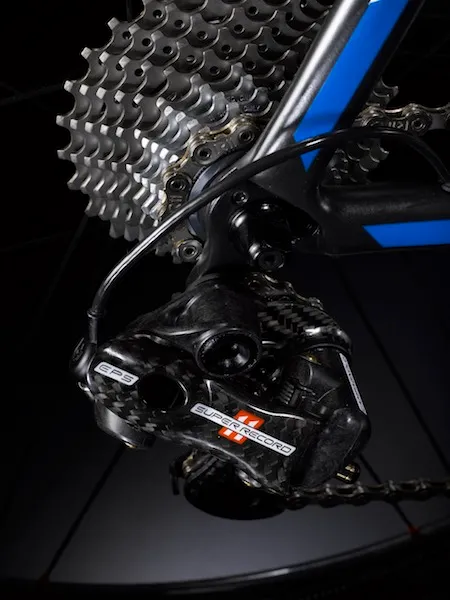
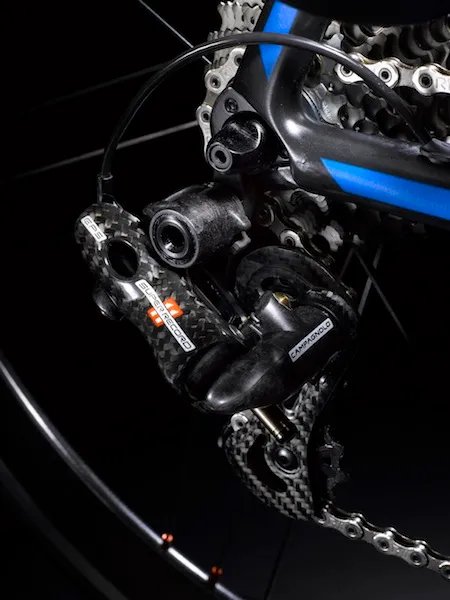
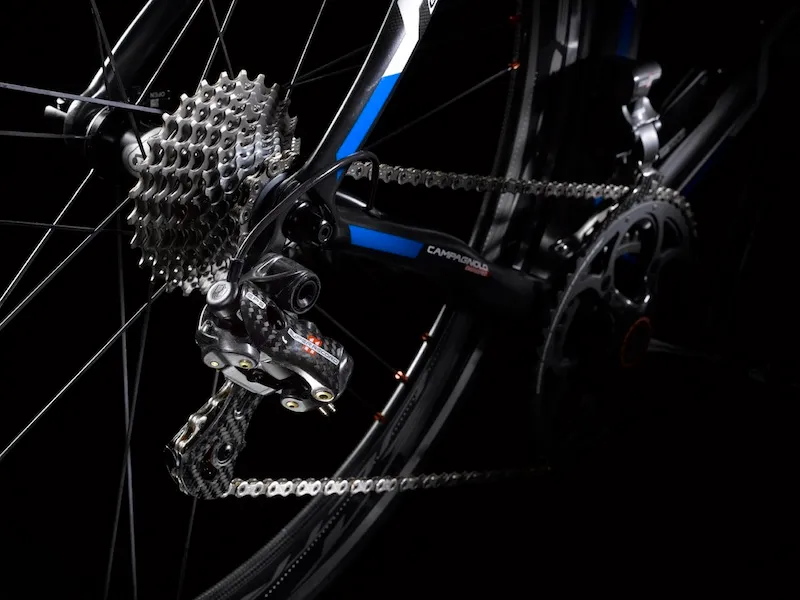
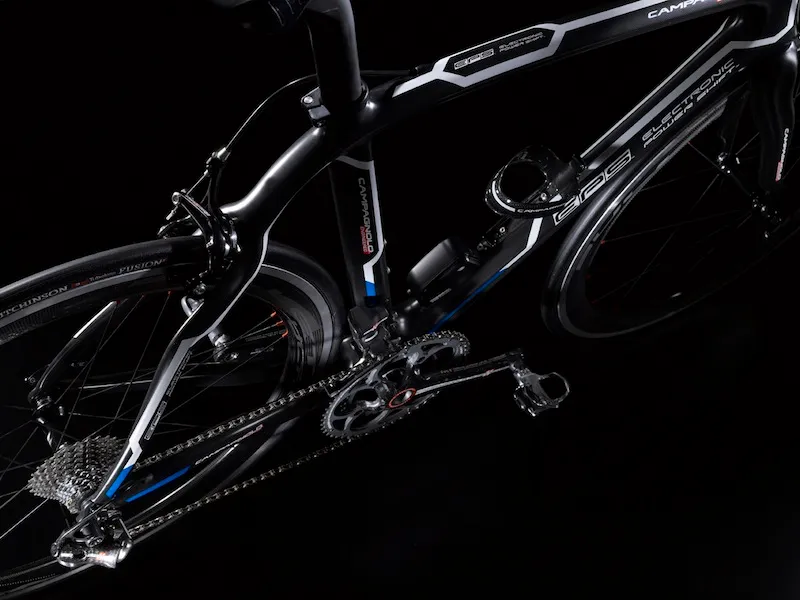


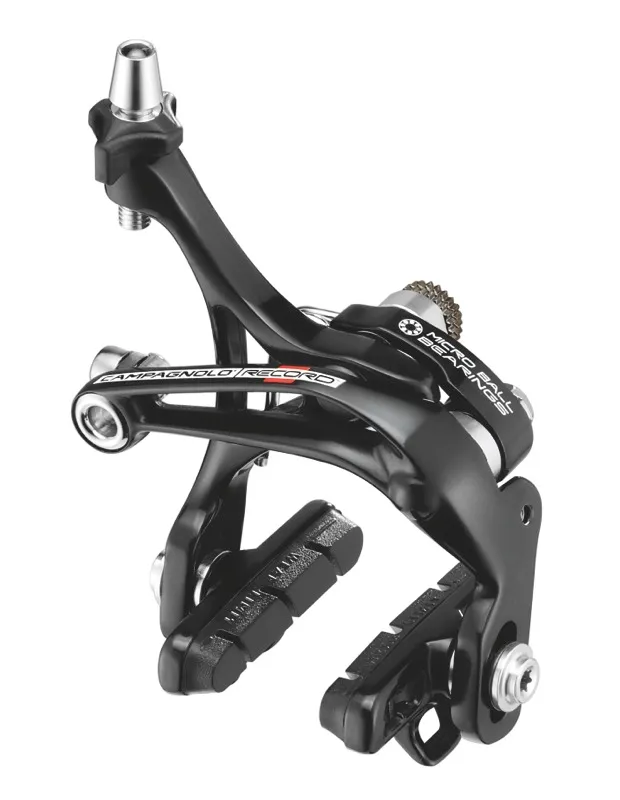
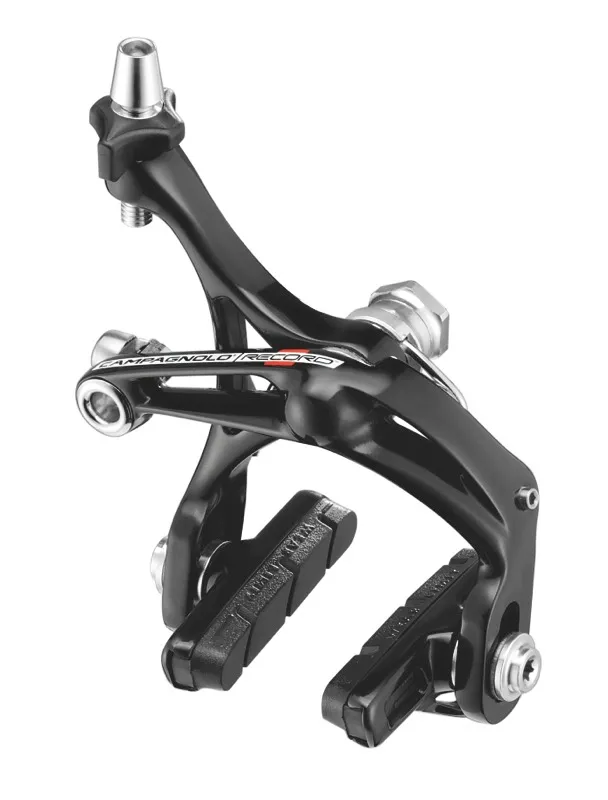
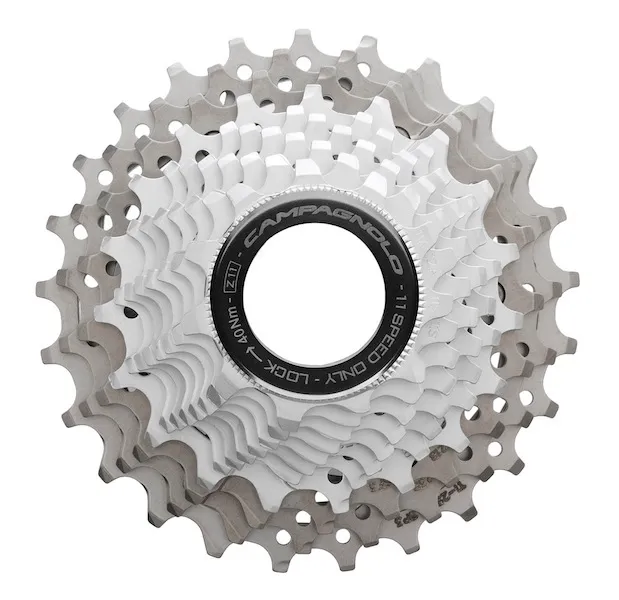

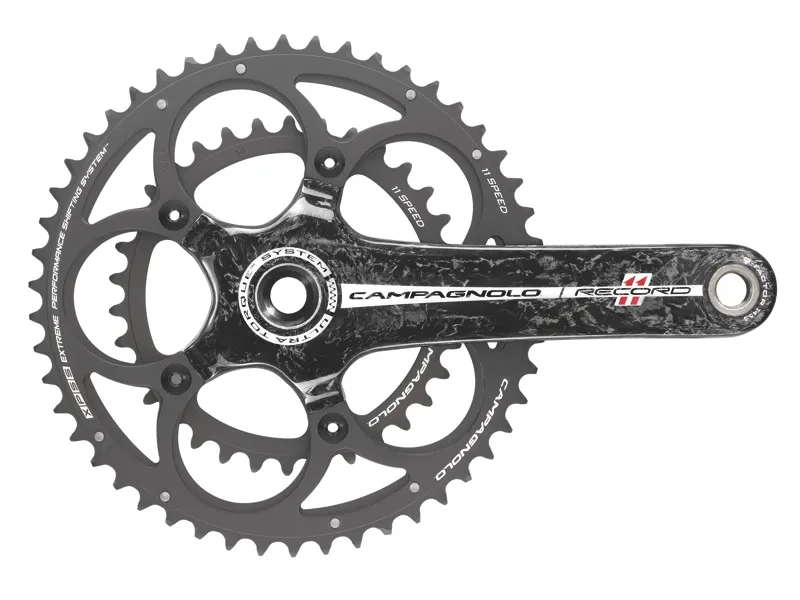
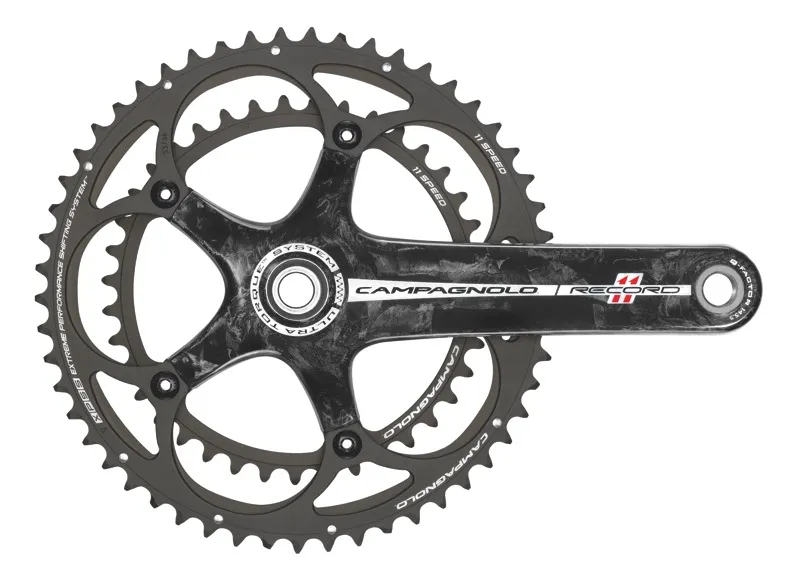



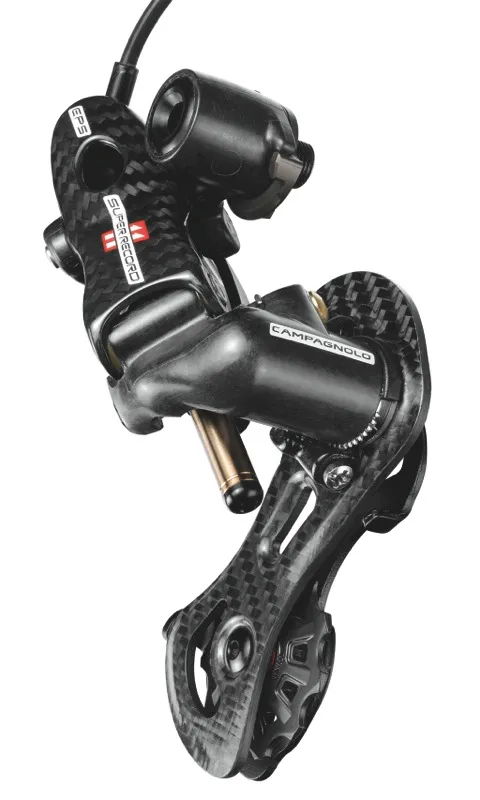

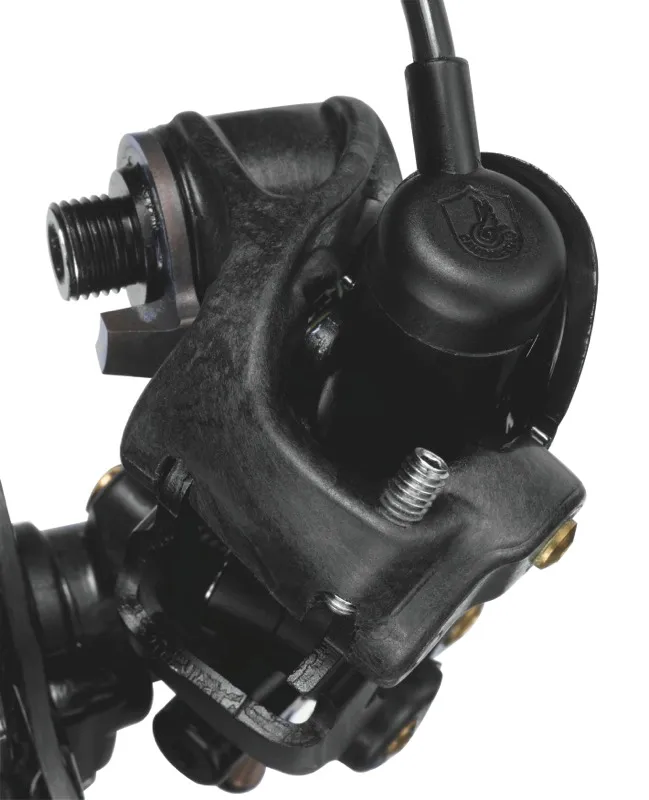
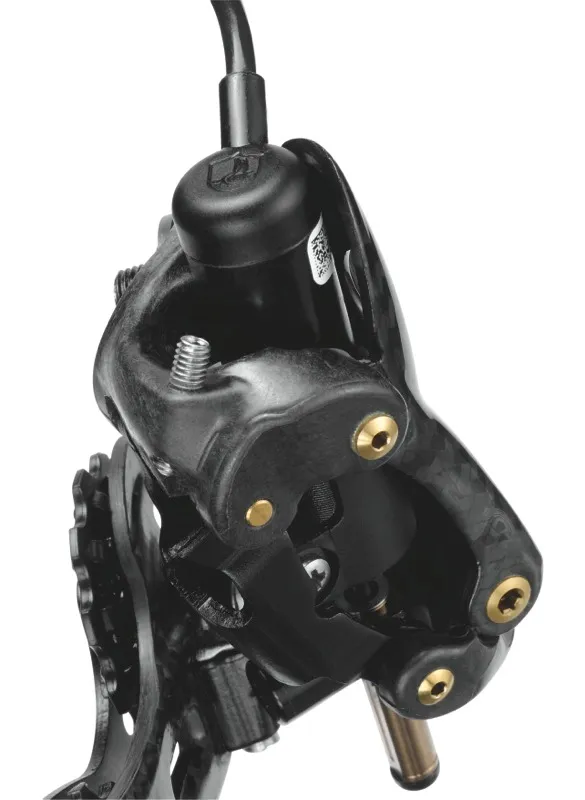
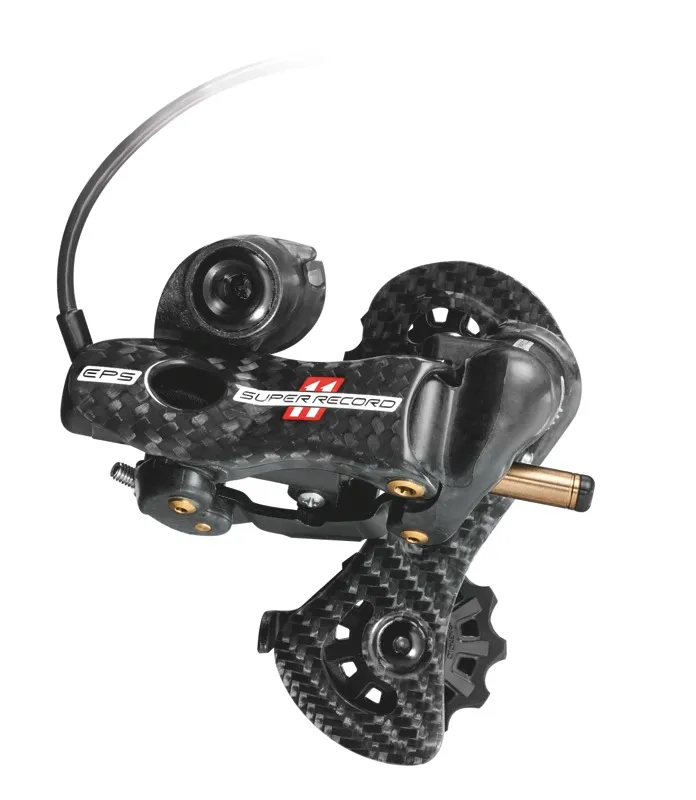

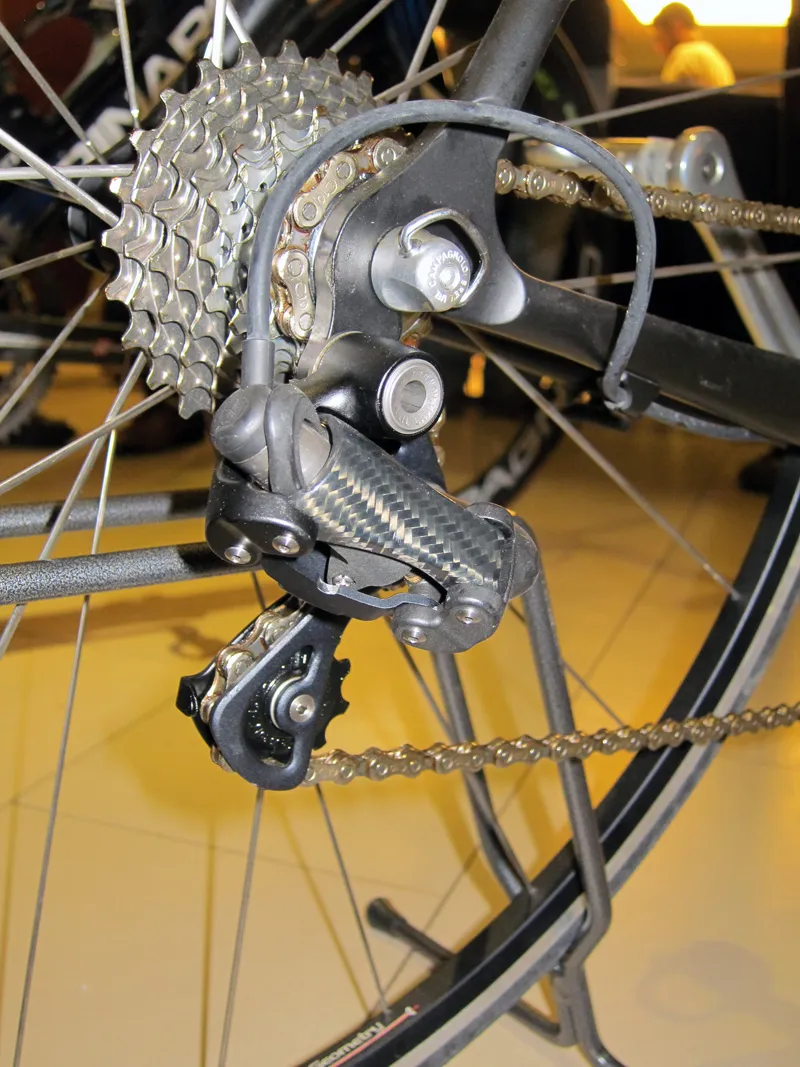
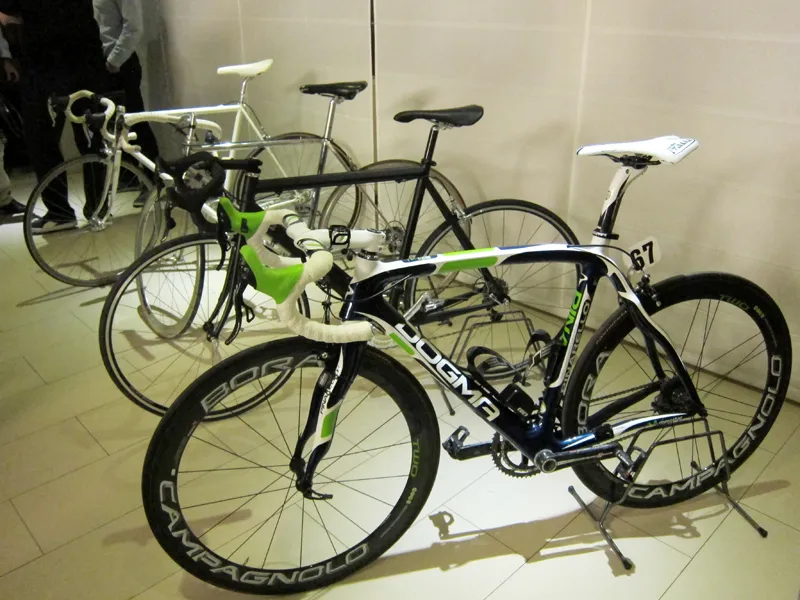

Twenty years and four generations in the making, Campagnolo have finally presented not just one but two electronic groupsets: Record EPS (Electronic Power Shift) and Super Record EPS. Both have identical functionality but slight differences in weight and bearing performance, just like the mechanical analogues.
Like Shimano's Dura-Ace and Ultegra Di2 electronic systems, Campagnolo promise foolproof shifting accuracy and reliability plus faster gear changes than with mechanical groups. But Campagnolo's EPS will also uniquely offer riders a lever feel that more closely mimics mechanical systems for genuine tactile – and audible – feedback, not to mention even better multi-shift capability than the current Record and Super Record groups, all at a weight penalty of around 200g.
Electronic guts paired with pseudo-mechanical feel and multiple shift capability
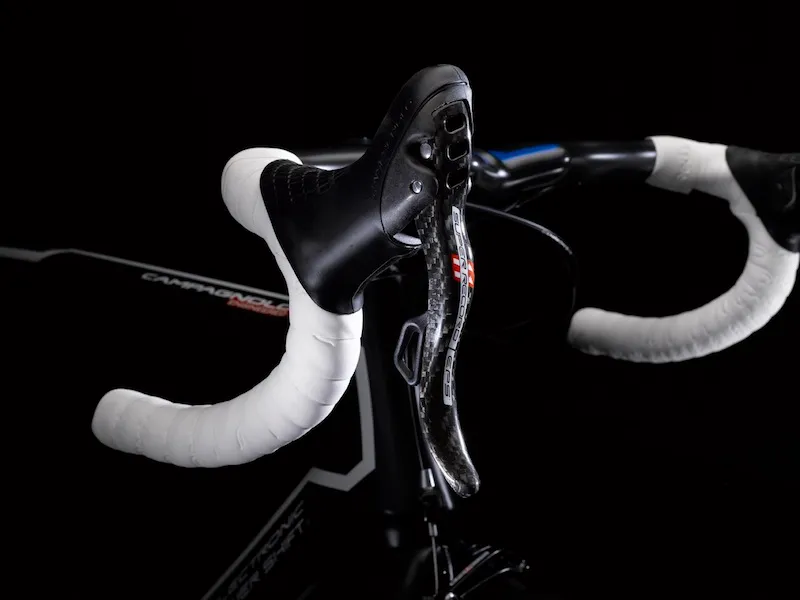
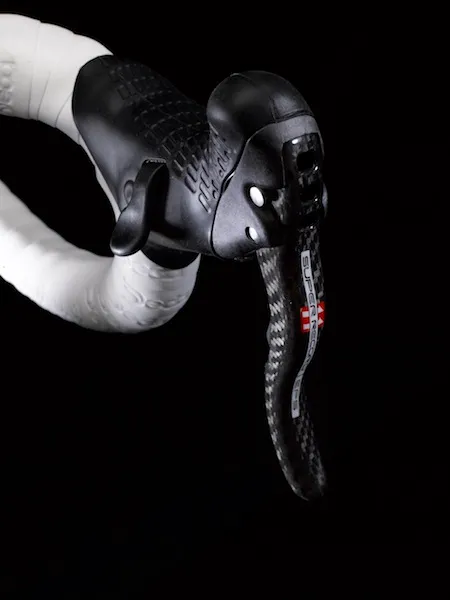
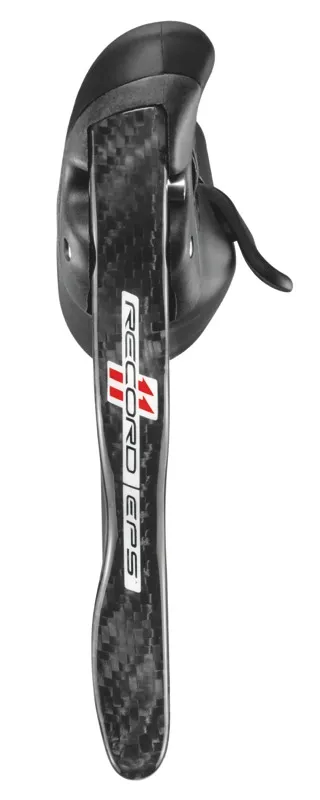
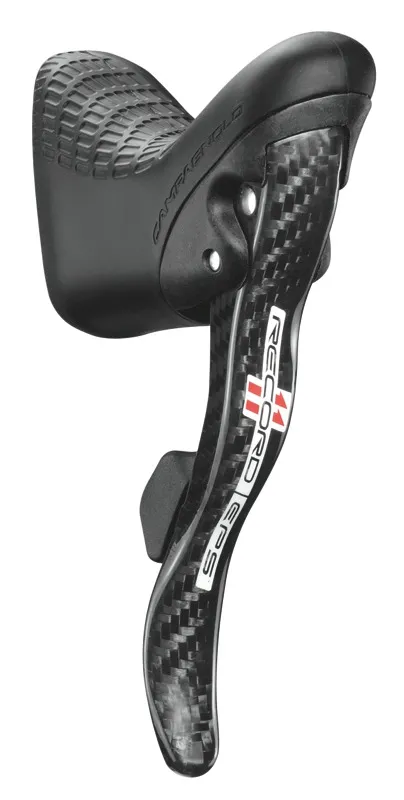
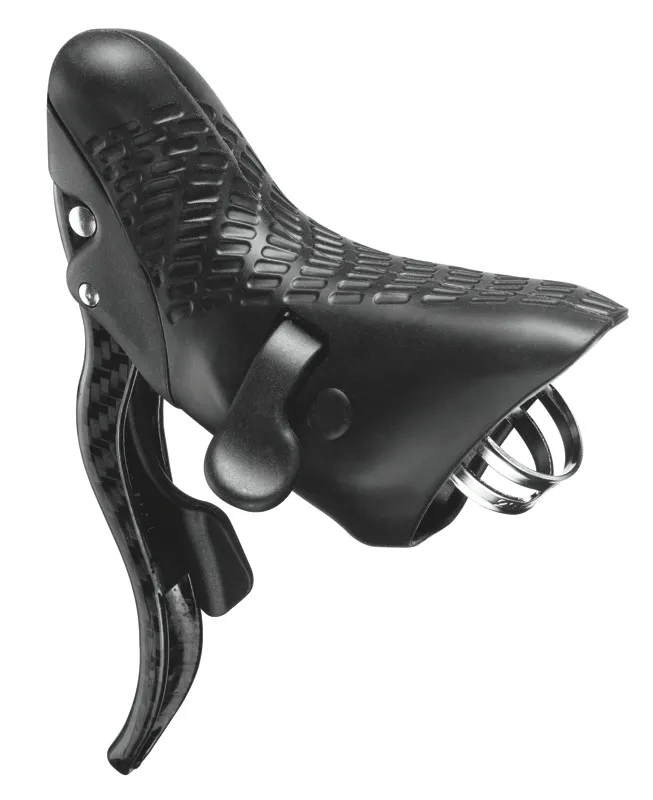
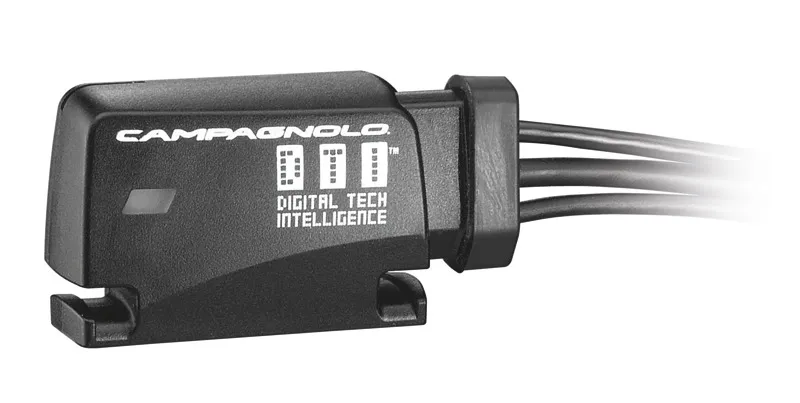
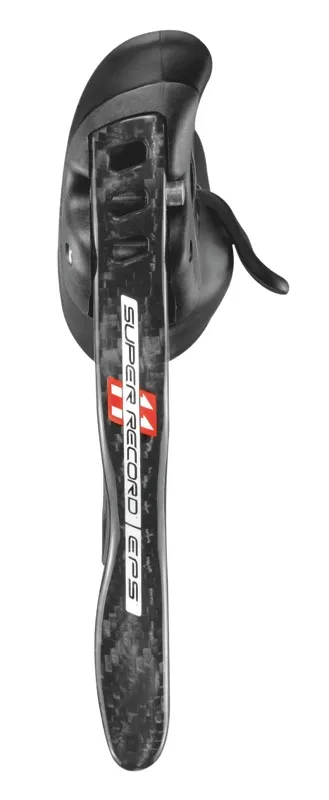
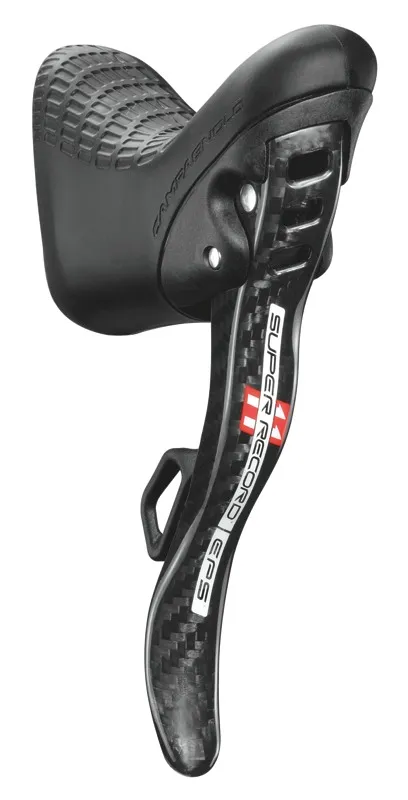
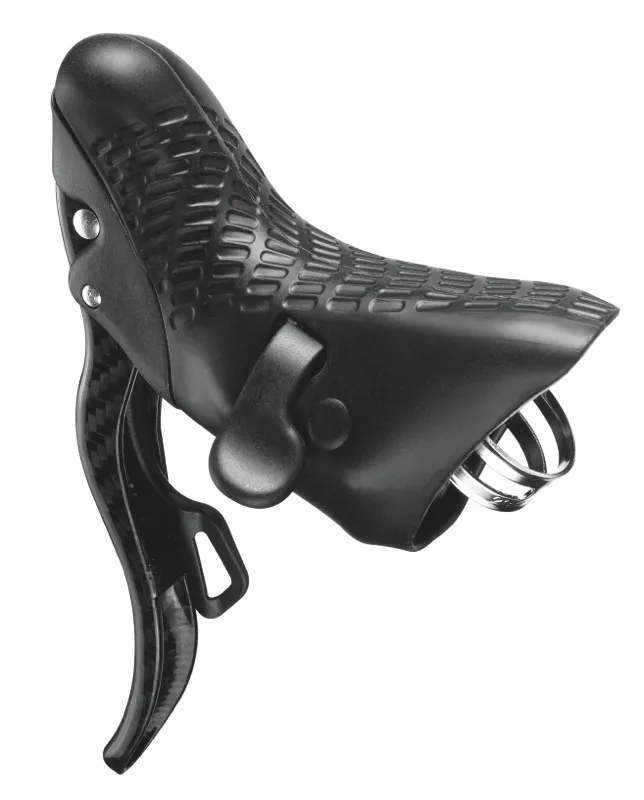
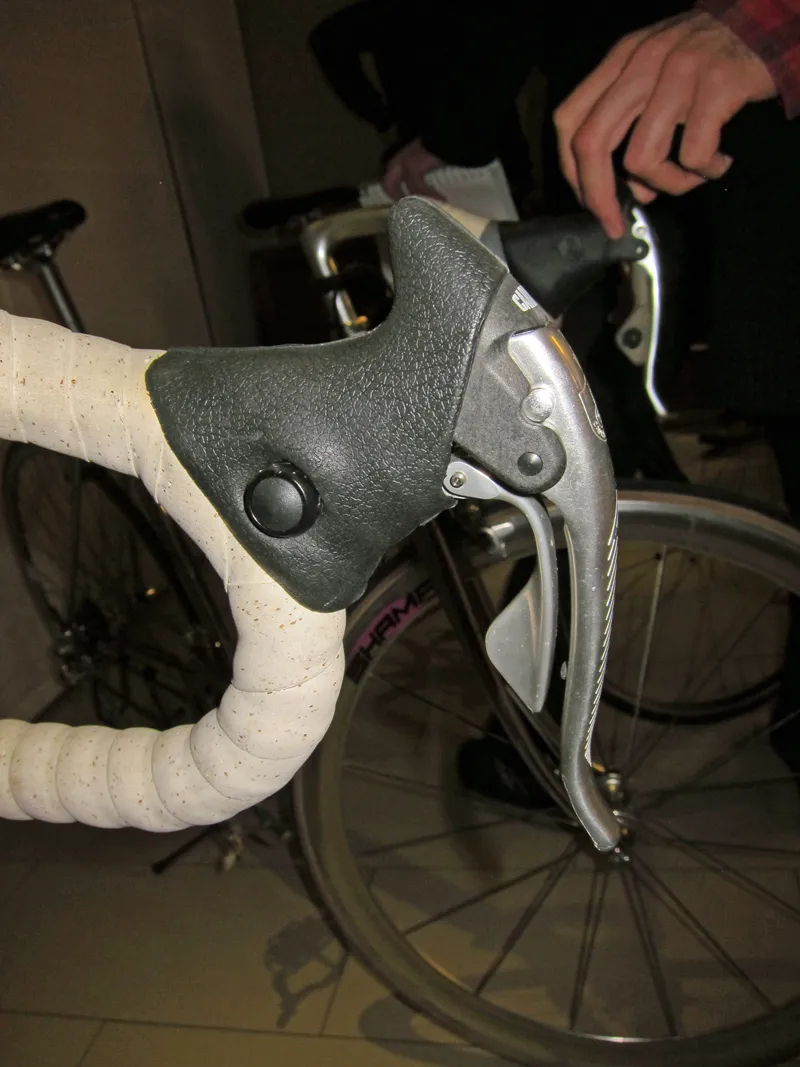
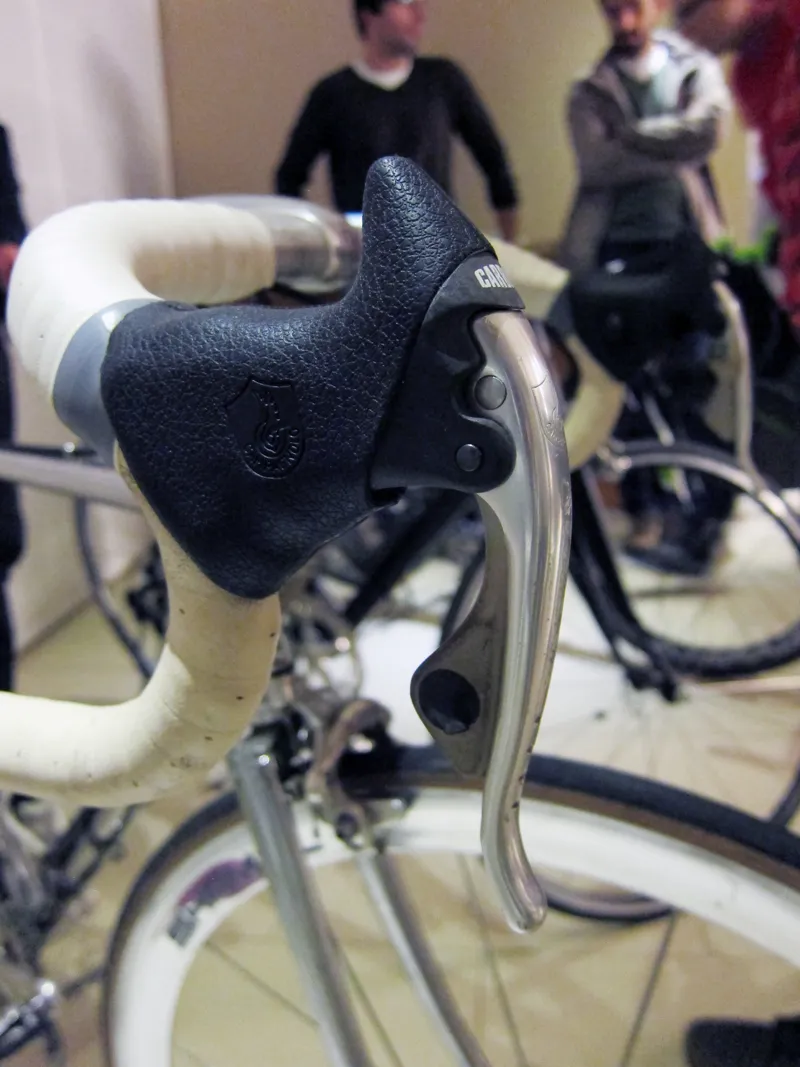
Campagnolo's new EPS groups share some basic characteristics with Shimano's next-generation Di2 systems: dedicated switches in the levers sending signals to a centrally located 'brain' that then relays those messages to the motor-equipped front and rear derailleurs. Campagnolo, however, have done a better job of mimicking the feel of their much-loved – and virtually identically shaped – mechanical Ergopower brake/shift levers. The throws are very short, as was expected, but the high spring force is more akin to a cable-actuated system and there's a very tactile and audible click each time a button is depressed.
Campagnolo's EPS levers are almost identical to the mechanical units in both ergonomics and feel
Granted, that tactile and audible feedback is different for the upshift and downshift paddles but it's feedback nonetheless – something we've always found lacking in Shimano's otherwise functionally refined system. The EPS downshift paddle is in the same familiar spot as on the mechanical Ergopower levers, too, but Campagnolo have moved the thumb-actuated upshift paddle lower down for easier shifts from the drops.
Campagnolo have also managed to actually improve on Ergopower's Multi-Shift capability. Whereas current Super Record and Record levers can downshift up to three cogs and upshift up to five, EPS can move the chain across the entire cassette with one command. Instead of having to repeatedly push the button, EPS's switches are time-sensitive, meaning the rear derailleur will move more positions depending on how long the rider holds down the button and you only need a 1.5-second-long push to move across all 11 rear cogs.
There's unfortunately no feedback mechanism to let riders know exactly how many gears they've selected, though – Campagnolo's marketing and communications director Lorenzo Taxis told BikeRadar that riders will quickly learn "with their legs and brains" once they use it.
Unable to load media
While certainly technically more advanced than the company's current mechanical systems, Campagnolo stress that EPS isn't merely an engineering exercise but offers tangibly better performance, especially under the demanding racing conditions for which it was designed. According to in-house testing, EPS groups can successfully execute a front shift (in either direction) with nearly 70 percent higher chain load than Super Record while rear shifts are completed on average in just 0.352 seconds vs. 0.469 seconds – a small difference for sure, but one that's still within the human range of detection.
Just like Di2, EPS should need no adjustments whatsoever after the initial setup. Unlike with conventional cables and housing, whose performance can change over time, EPS's digital signals will remain consistent for more predictable performance and reduced maintenance.
Record EPS versus Super Record EPS
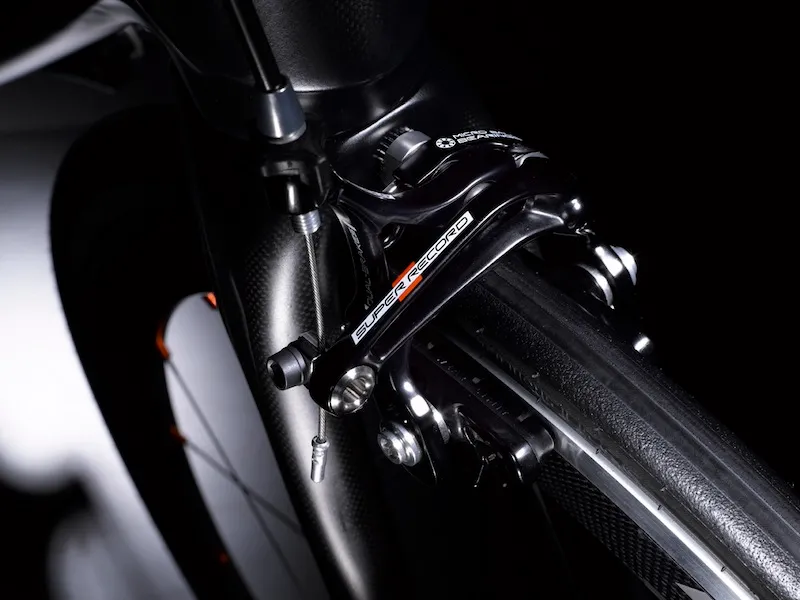
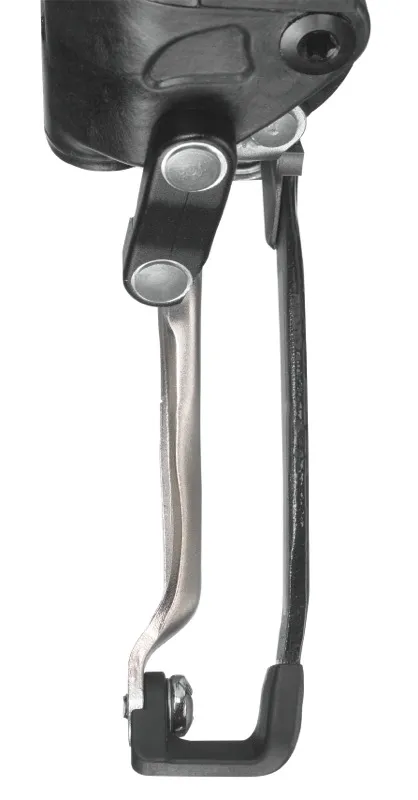
Much like the mechanical groups, the Record EPS and Super Record EPS groups differ by way of materials and small design details. For example, the Super Record EPS ErgoPower levers feature additional sculpting and engineered relief to further shave weight.
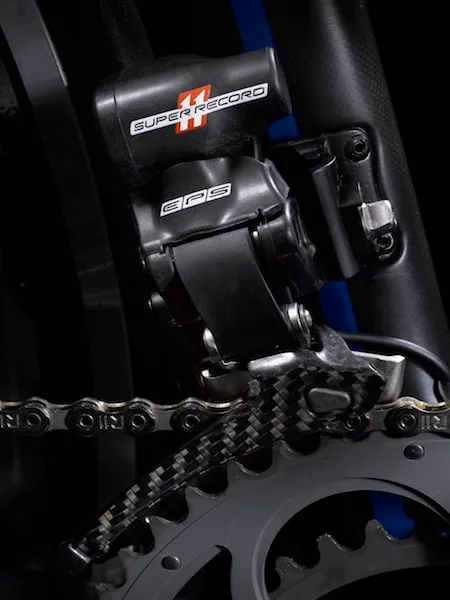
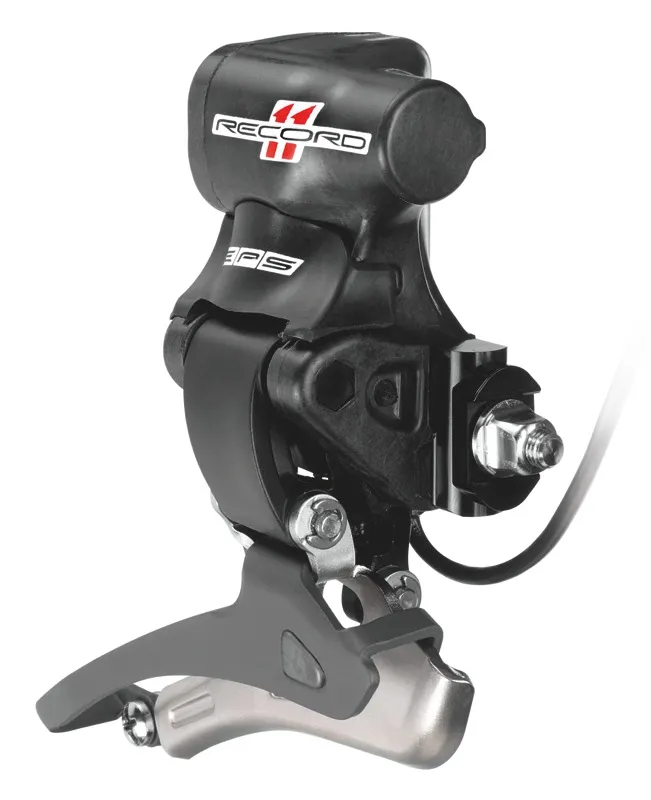
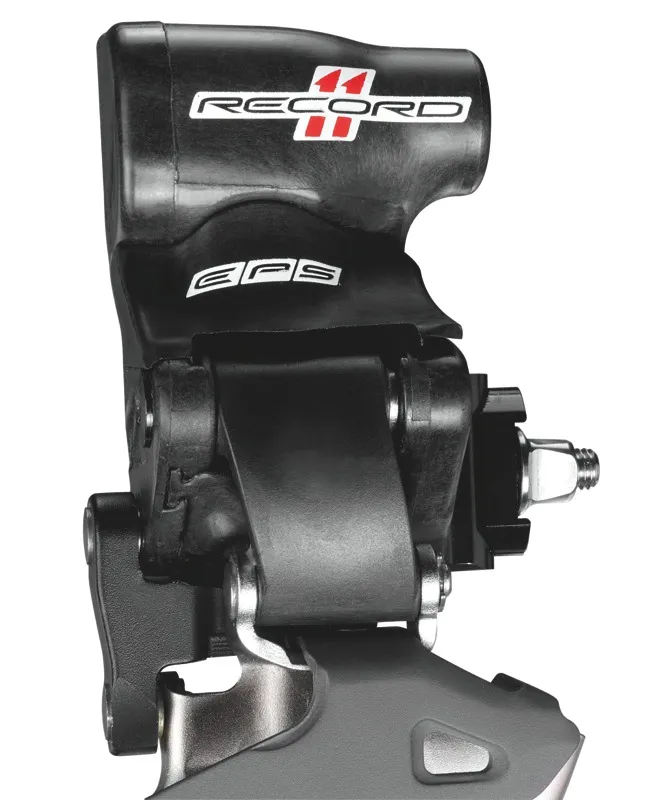
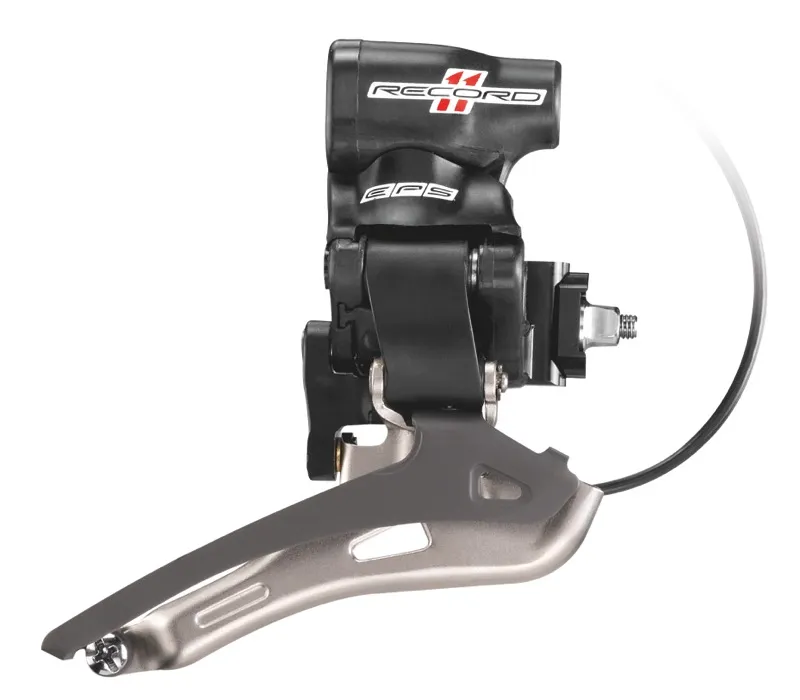
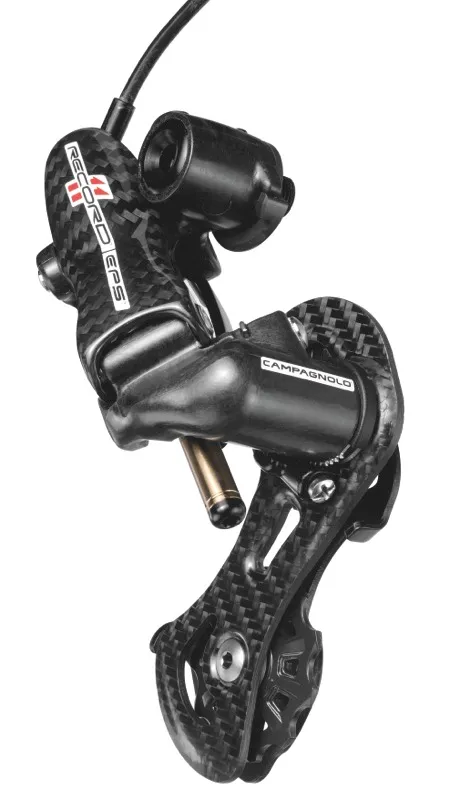
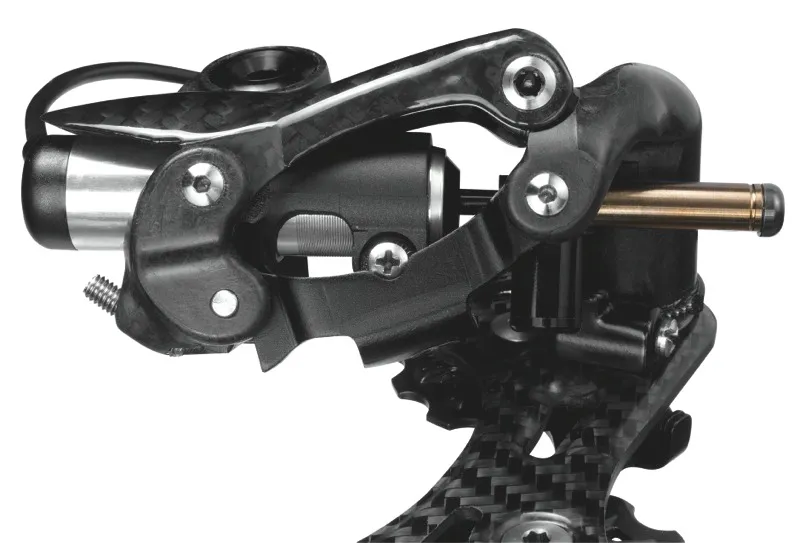
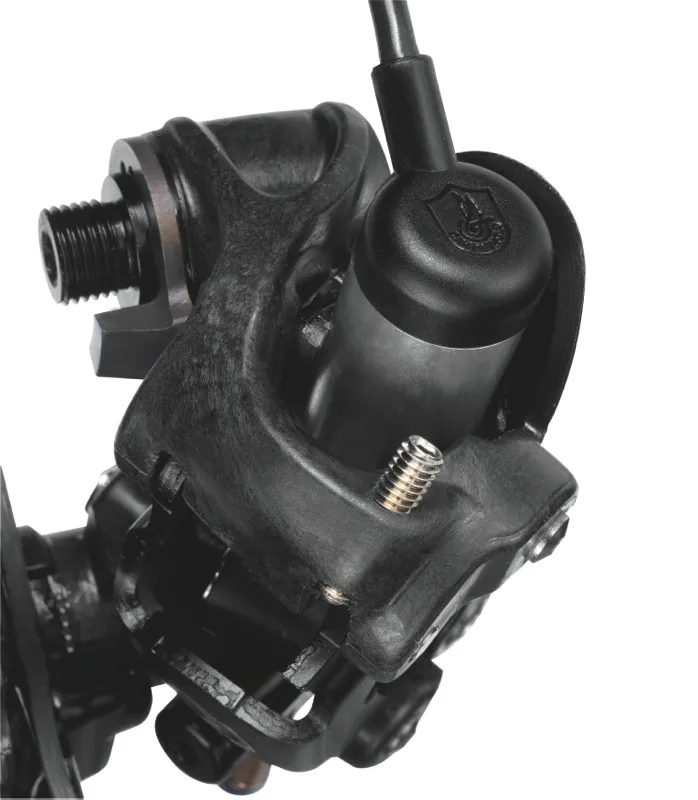
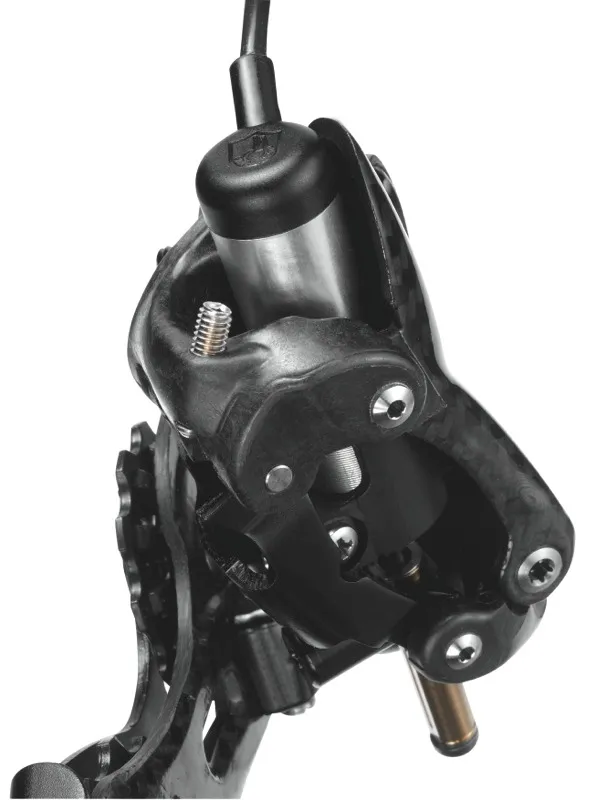
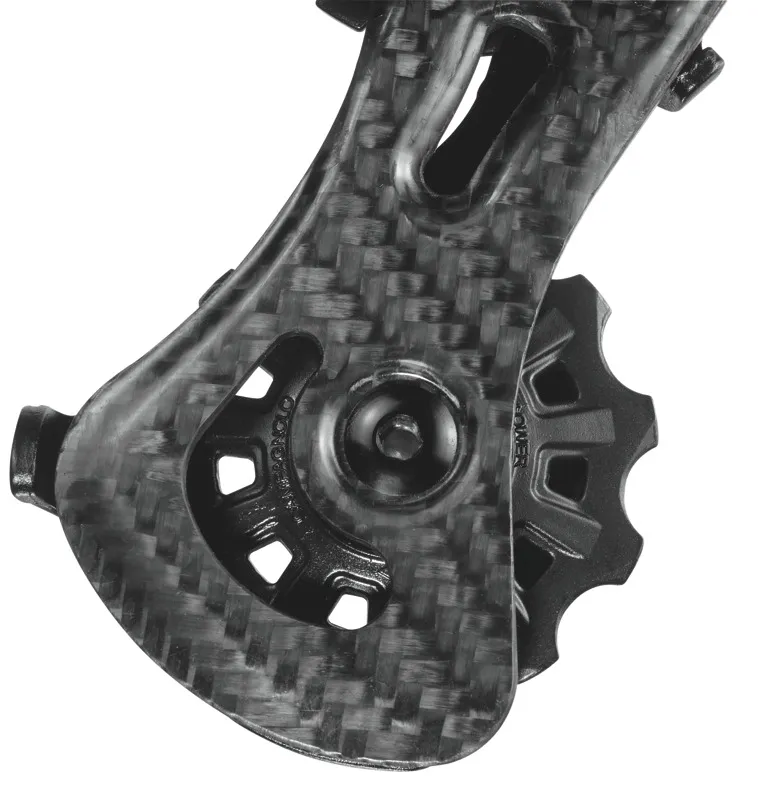
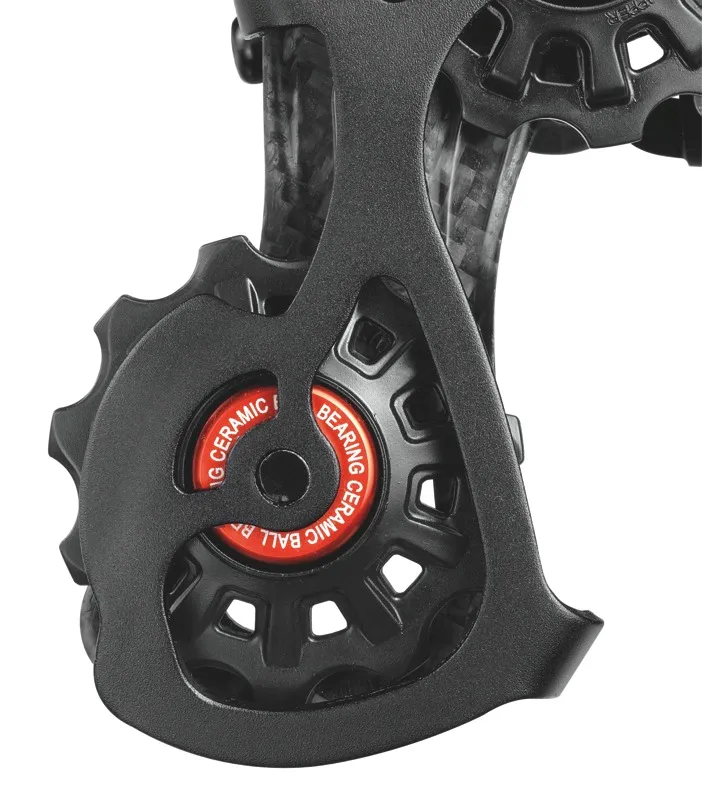
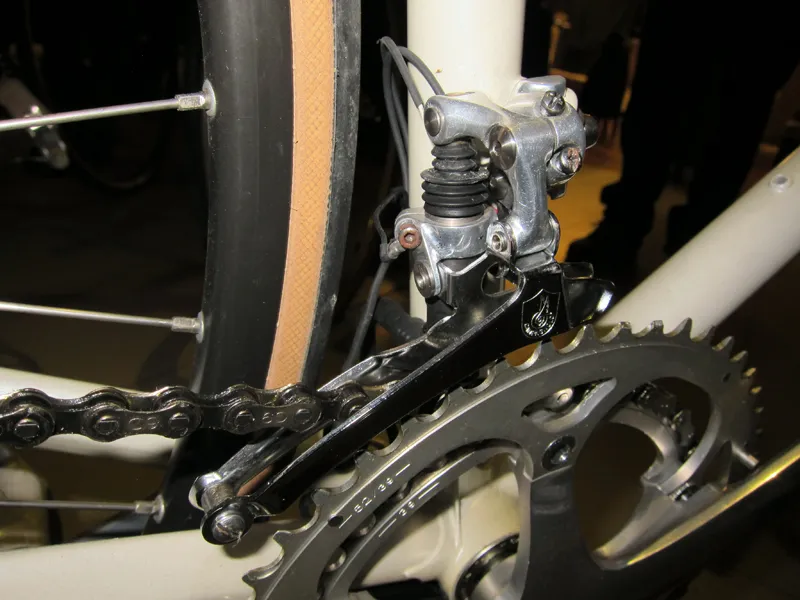
These design differences carry on throughout the components, where carbon is replaced for alloy in the outer half of the front derailleur cage when comparing Super Record to Record. Likewise, the front derailleur motor and gear housings are alloy and steel, respectively. Out back, the Super Record rear derailleur employs aluminum gear housing and ceramic pulleys, whereas the Record version uses a steel gear housing and standard pulleys.
The Record front derailleur uses an alloy outer cage
The Super Record model substitutes carbon for its outer cage
Then, of course, there are the differences between the mechanical support components, which are the same found when comparing the mechanical groups. One of the biggest performance differences is that Super Record uses Campagnolo’s CULT greaseless ceramic bearings, while Record employs USB bearings.
Battery life, weatherproofing and wiring
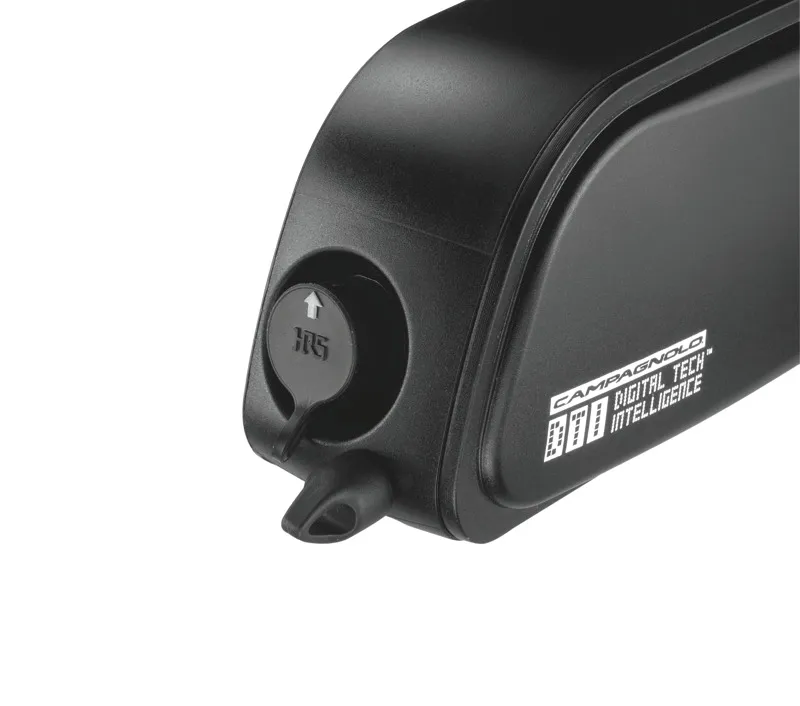
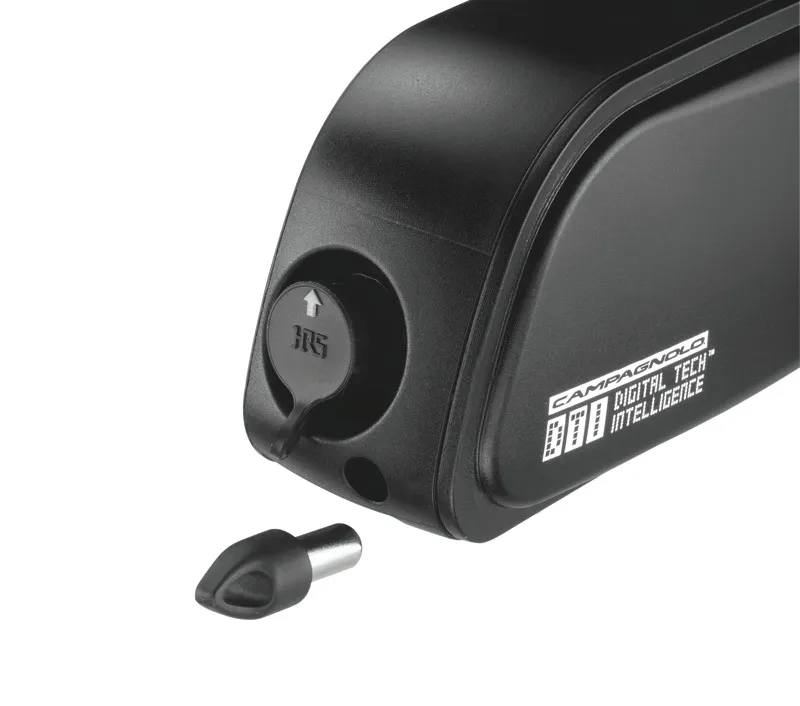
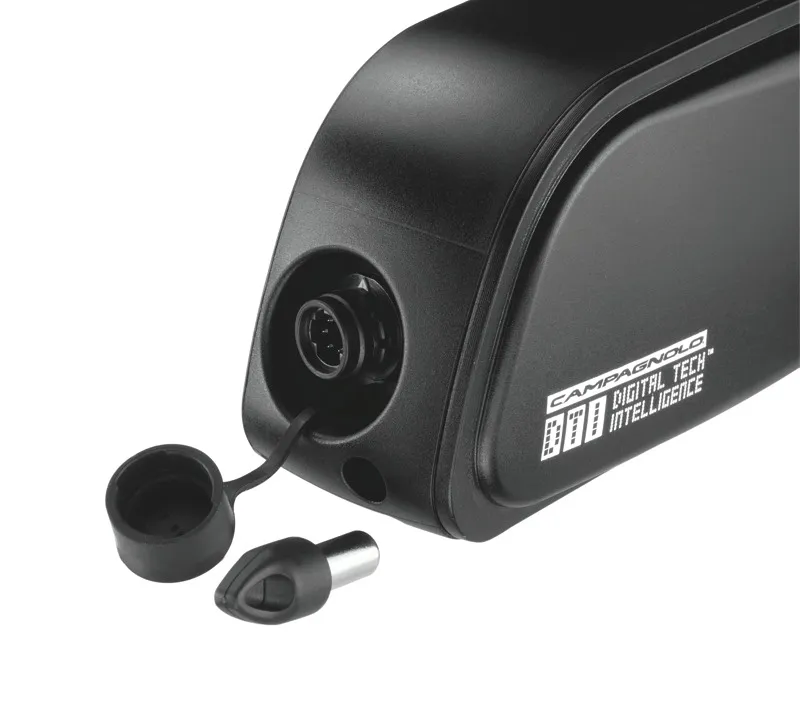
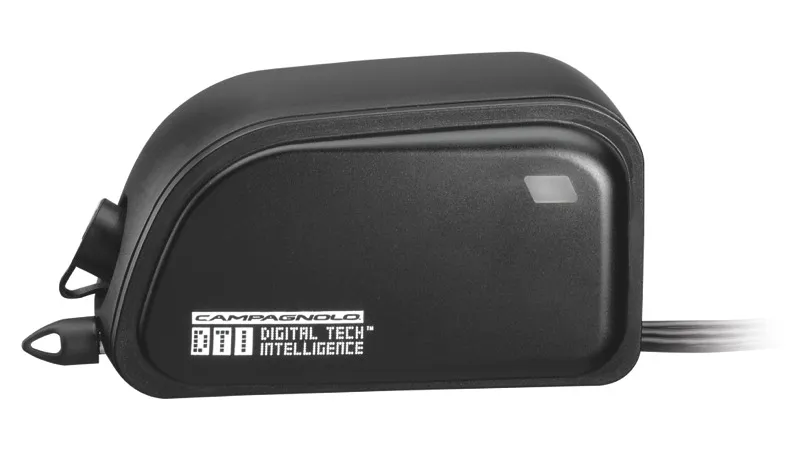
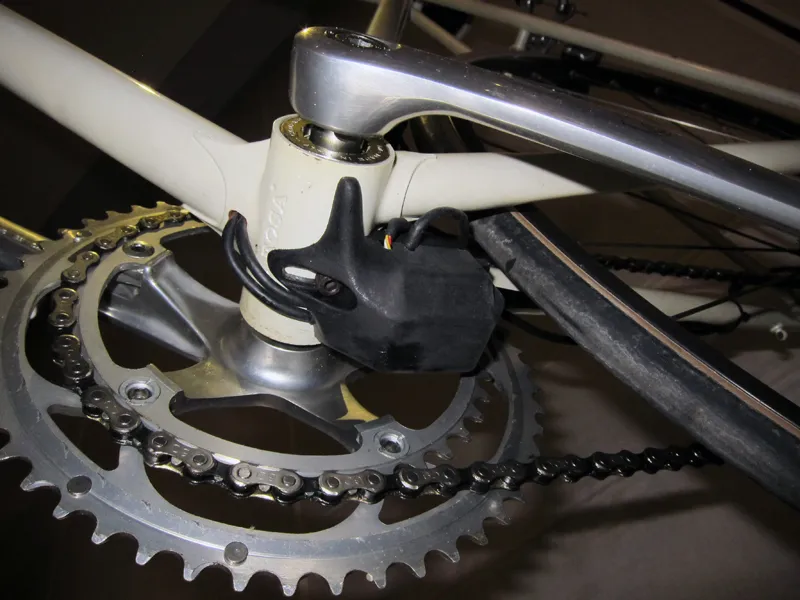
One major configuration difference with EPS as compared to Di2 is the battery and wiring. Whereas Shimano opt for a removable li-ion rechargeable battery, the EPS's power is permanently housed with the system's 'brain' and isn't easily removable. As we suspected back in April, recharging is done via a small port located on the bottom of the power pack.
Some users will regard this as being less convenient but Campagnolo argue that their one-piece, ultrasonically sealed unit is more resistant to weather. In fact, the company certify all of the EPS components to be waterproof to a depth of one meter and we witnessed Movistar team mechanics subjecting the components to point-blank pressure washings during this season's races.
The battery unit is ultrasonic welded to keep the elements out
Also, Campagnolo say their EPS battery will last longer. Whereas Shimano claim roughly 1,600km of battery life under average conditions (we've experienced much longer lifetimes in practice), Campagnolo quote roughly 2,000km when ridden about 2,000km per month. Less frequent use (500km per month) will bring that figure down to about 1,500km, which reflects a certain degree of power drawdown when the system is just standing by.
Campagnolo certify the EPS battery for 500 charge cycles, at which point the complete power pack (and the associated wiring) will have to be replaced. That sounds short on paper until you consider that 500 charge cycles equates to about 40 years if you consistently ride 2,000km a month year-round. Charge time for a fully depleted battery is said to be 1.5 hours.
Speaking of wiring, EPS will thankfully use the same port sizes and positions as Shimano's Di2 system. Even better, Campagnolo won't have multiple wiring kits depending on how the system is installed – the leads from the power pack to the individual components are supposedly all long enough to accommodate a wide range of fitments and extra wiring will just need to be tucked inside the frame (assuming internal wiring, of course).
The battery's charging port and magnetic on/off plug
Weight and cost: Lighter than Di2, with final prices TBD
Campagnolo’s pro teams are scheduled to be on the production components in the next few weeks, while manufacturers will have OE components in December. Riders looking to buy the parts in the aftermarket should be able to find them for sale around springtime. The cost of the Record EPS group is said to be in-line with Shimano’s Dura-Ace Di2, while Super Record EPS is simply stated to cost "more". How much more we don’t know, as final prices have yet to be determined.
With weights claimed at 2,184g for Record and 2,098g for Super Record, EPS is lighter than Shimano's Dura-Ace Di2 (which we’ve weighed at 2,262g) – if Campagnolo’s figures are accurate.
So here we have it: EPS promises to raise the bar yet again for what we consider to be state-of-the-art for bicycle transmissions. And while we don't think electronic transmissions will ever completely supplant mechanical ones, now that the second of the ‘big three’ manufacturers has entered the fray, the increased competition will assuredly up the development ante, with all riders standing to benefit.
Campagnolo are the second major component manufacturer to bring contemporary electronic shifting to market
Why did it take so long?
While we’re only now seeing the production version of Campagnolo's electronic group, the company began their first development work in 1992 – back when eight-speed drivetrains and integrated brake/shift levers were still considered state-of-the-art and about a year before Mavic's first ill-fated commercial attempt.
Campagnolo’s first working prototype was – like everything else in those days – an eight-speed system and the company's developers tucked the electronics and battery inside a gutted water bottle. The derailleur motors and actuators were quickly deemed too heavy and bulky to be practical, though, and the idea was relegated to indefinite development status.
While the company were convinced that a motorized transmission represented the next logical step in terms of performance, they felt no pressure to bring a system to market on a specific timeline. And so we waited.
Campagnolo's earliest experiment with an electronic drivetrain was actually an electro-mechanical hybrid
Come 2005, Campagnolo were actually on the edge of launching an electronic group. System performance was excellent in real-world and lab testing, and even the prototypes spotted on pro team bikes back then looked remarkably finished.
However, according to Taxis, one system failed after being treated to an unusually rigorous water resistance test atop a fast-moving team car after a stage of that year's Giro d'Italia and since Campagnolo intended for their electronic group to be their premier package for racing, development was again halted.
In the meantime, Campagnolo's mechanical division unveiled a new Ergopower lever shape and an upgrade to 11 rear cogs and naturally, the electronic group had to follow suit – back to the drawing board yet again, which pushed the tecnology to today's long-awaited release.
Campagnolo's previous-generation electronic group looked ready for production and was in fact nearly deemed so until a system failure occurred after a high-speed drive atop a team car after a rainy Giro d'Italia stage in 2005
Company president Valentino Campagnolo admits that while dearly loved by their fans, Campagnolo's future depends on the success of cutting-edge products like this and can't afford a high-profile hit to their well-earned reputation.
"We want to develop this technology even more in the future," he said. "These are very tough days, with the economic crisis also affecting bicyclists. Also, we suffer from this. But we try to manage the company while keeping costs under control. We’re pushing hard to develop and invest for our future and in fact, never in the past have Campagnolo developed such a tremendous number of new products because we invest in our future.”
"There is a part of the market that’s willing to accept very advanced products – not just aiming for the best performance but also reliability and long lasting during the use, which is a traditional characteristic of Campagnolo production," he continued. "We’re sure that the future – our future – will be with mechanical products but with important emphasis on product development with electronic technology."
Company president Valentino Campagnolo admits that a lot is riding on the success of Record and Super Record EPS – let's hope the systems are all they're made out to be, for Campagnolo's sake and ours
Unable to load media