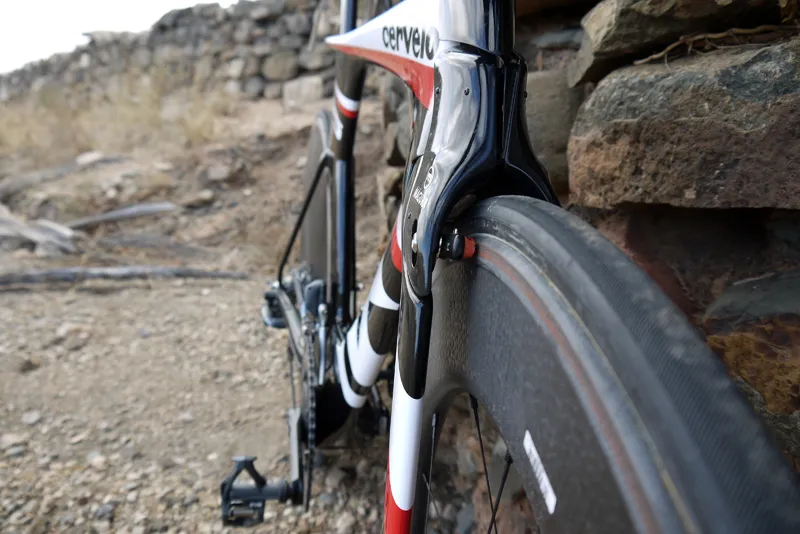
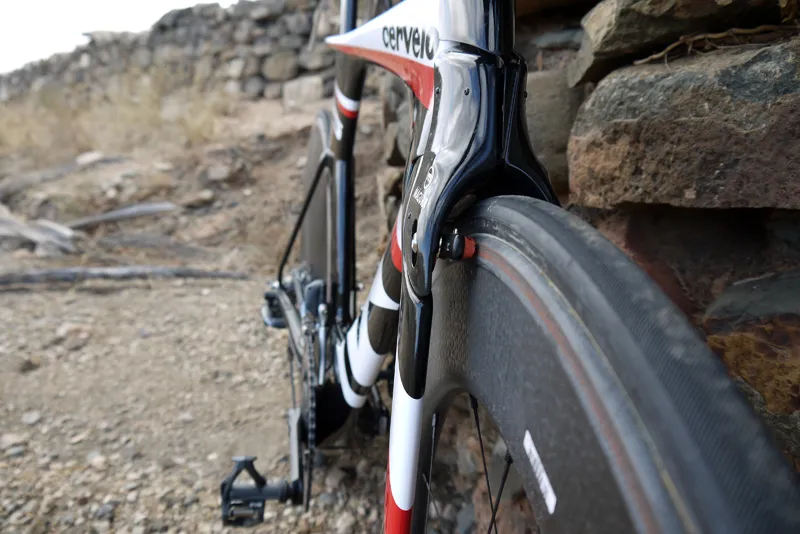
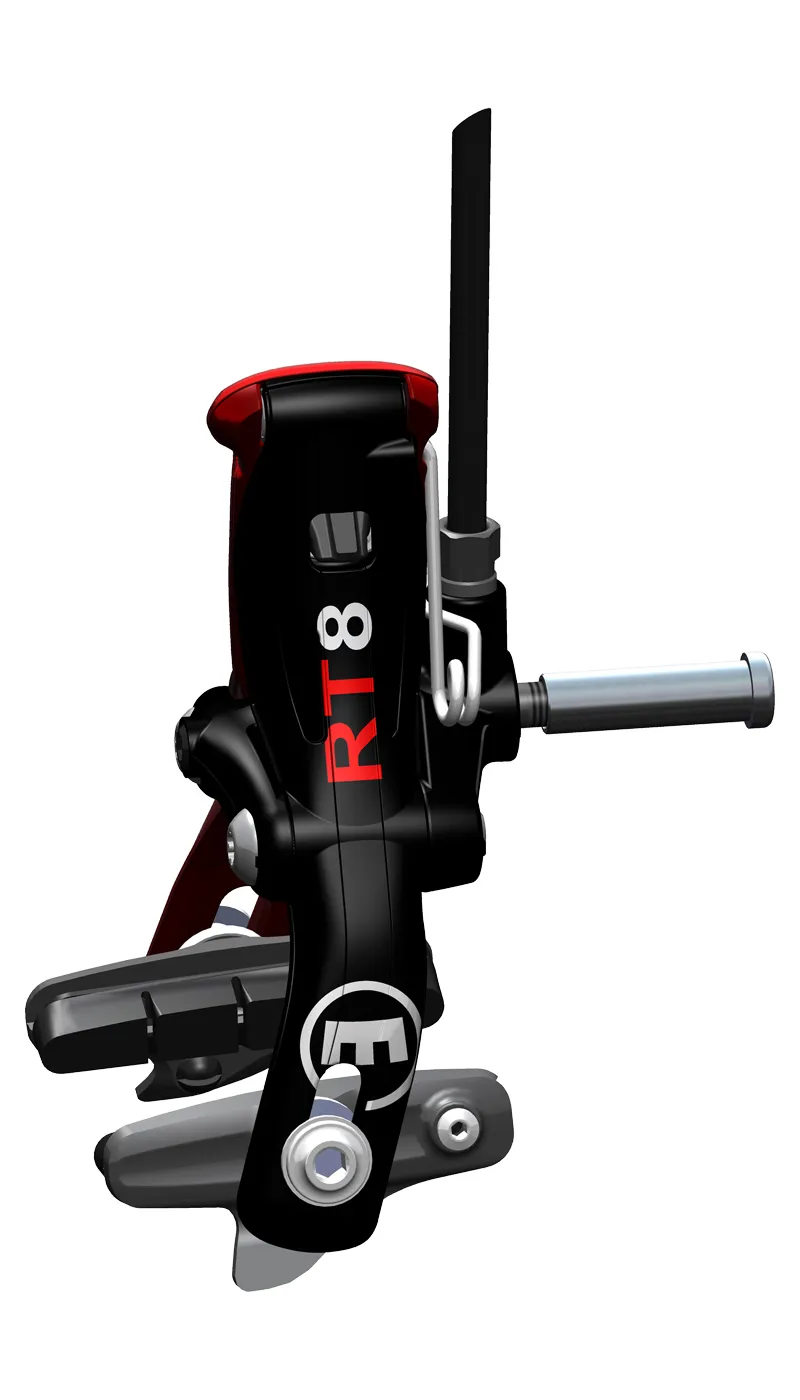
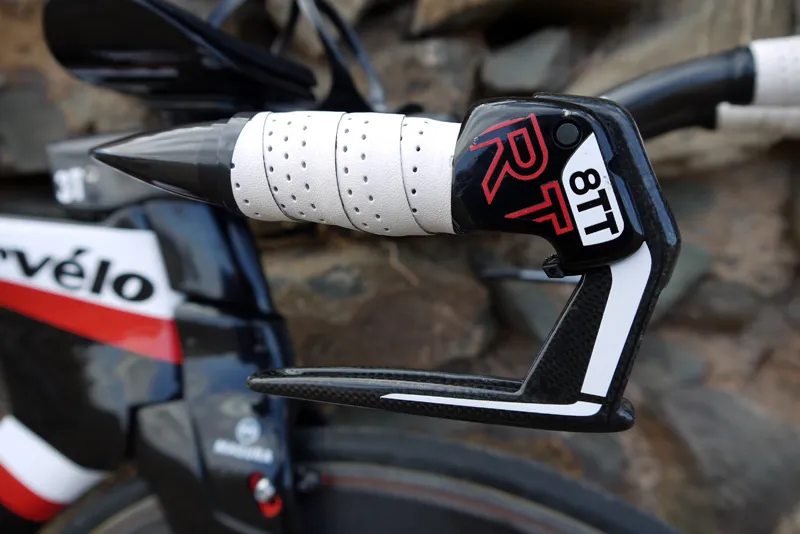
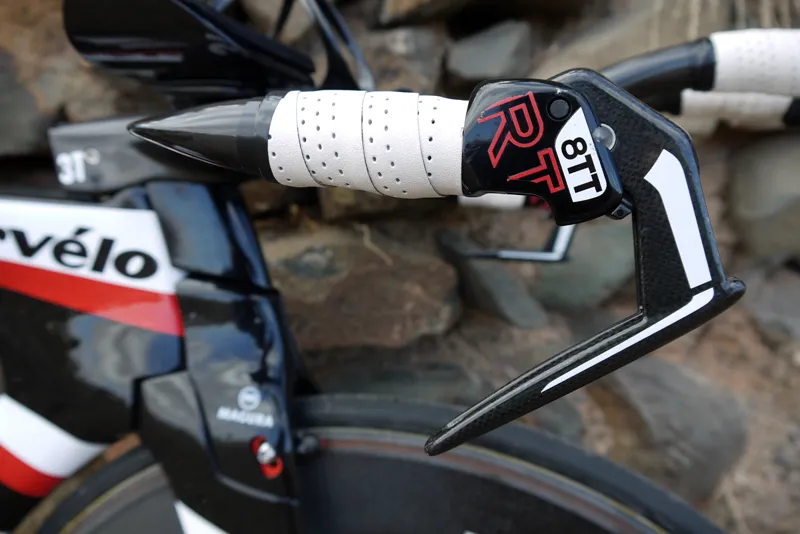
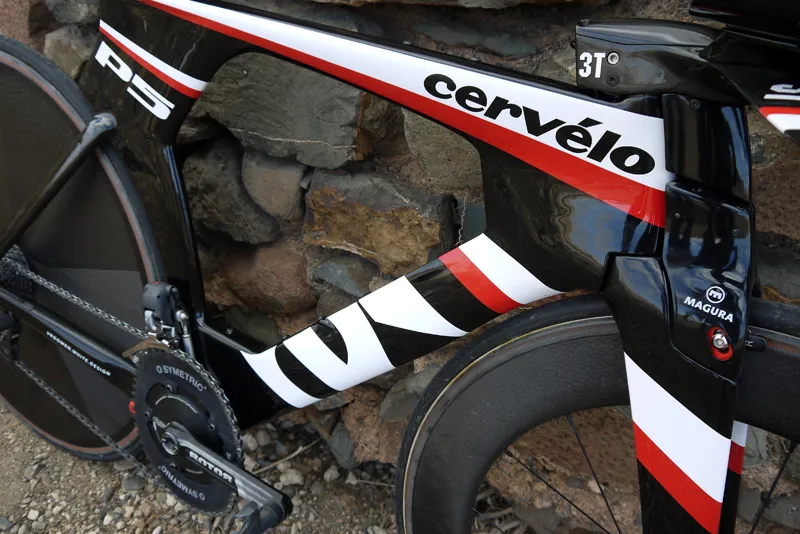
It's official, Magura, in collaboration with Cervélo, have developed a fully hydraulic rim brake system called RT8 TT that promises to be a game changer in the time trial and triathlon world. Cervélo will incorporate it into the triathlon-specific version of their new P5 and has 1 year of exclusive spec of the new brake.
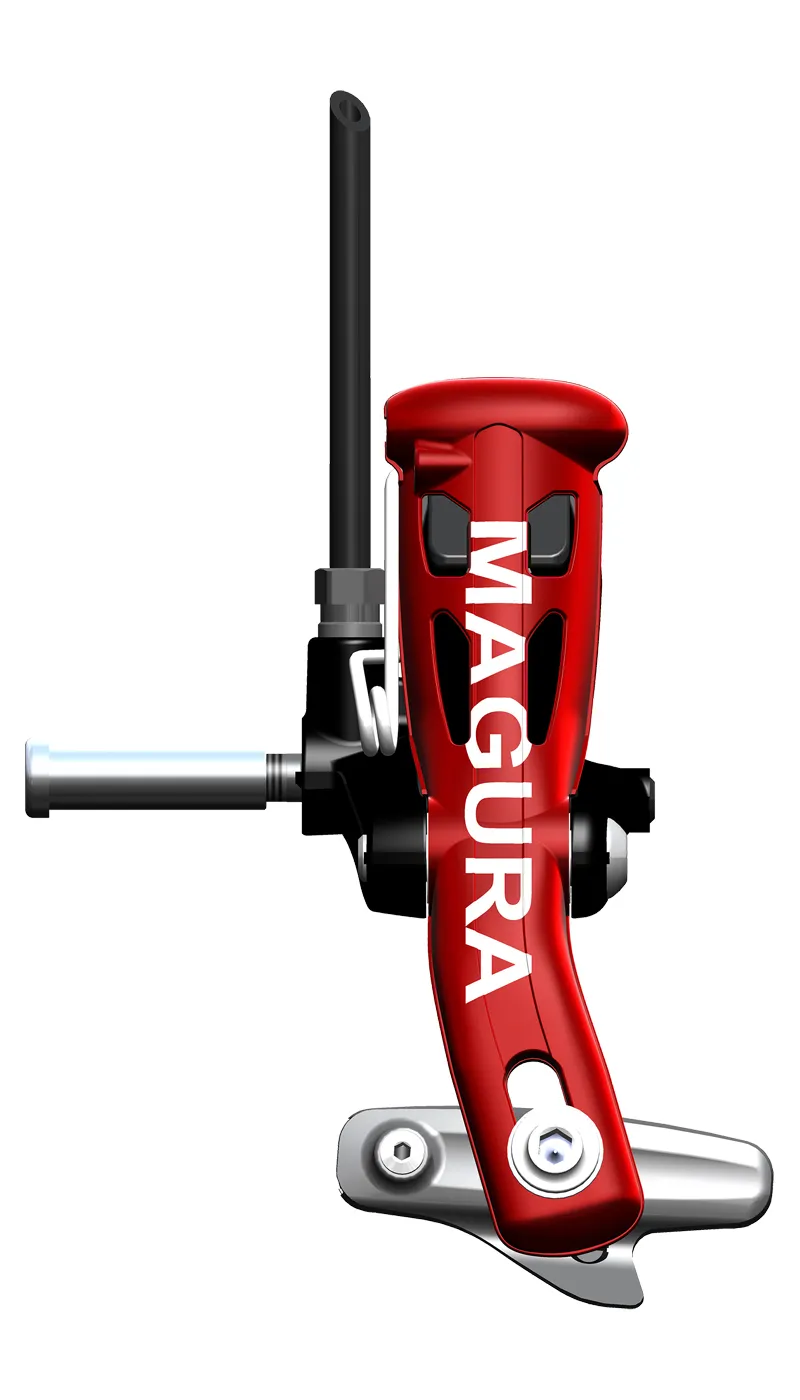
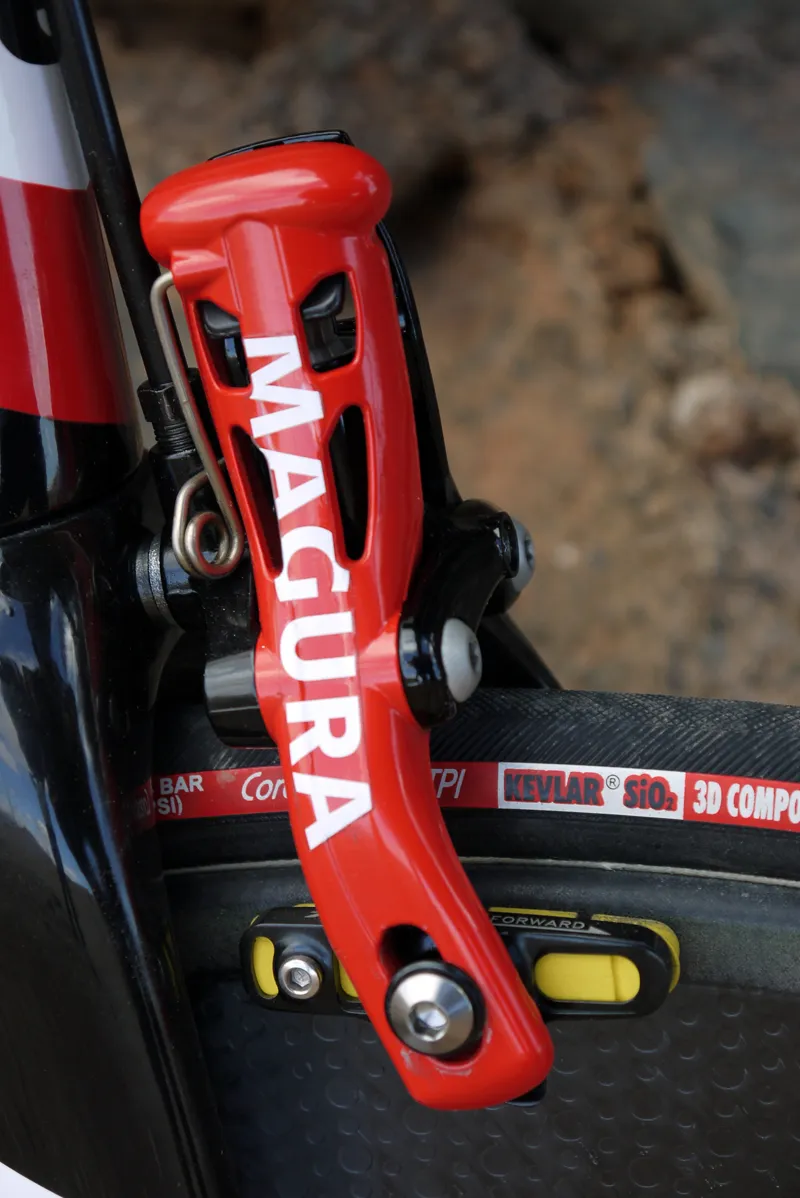
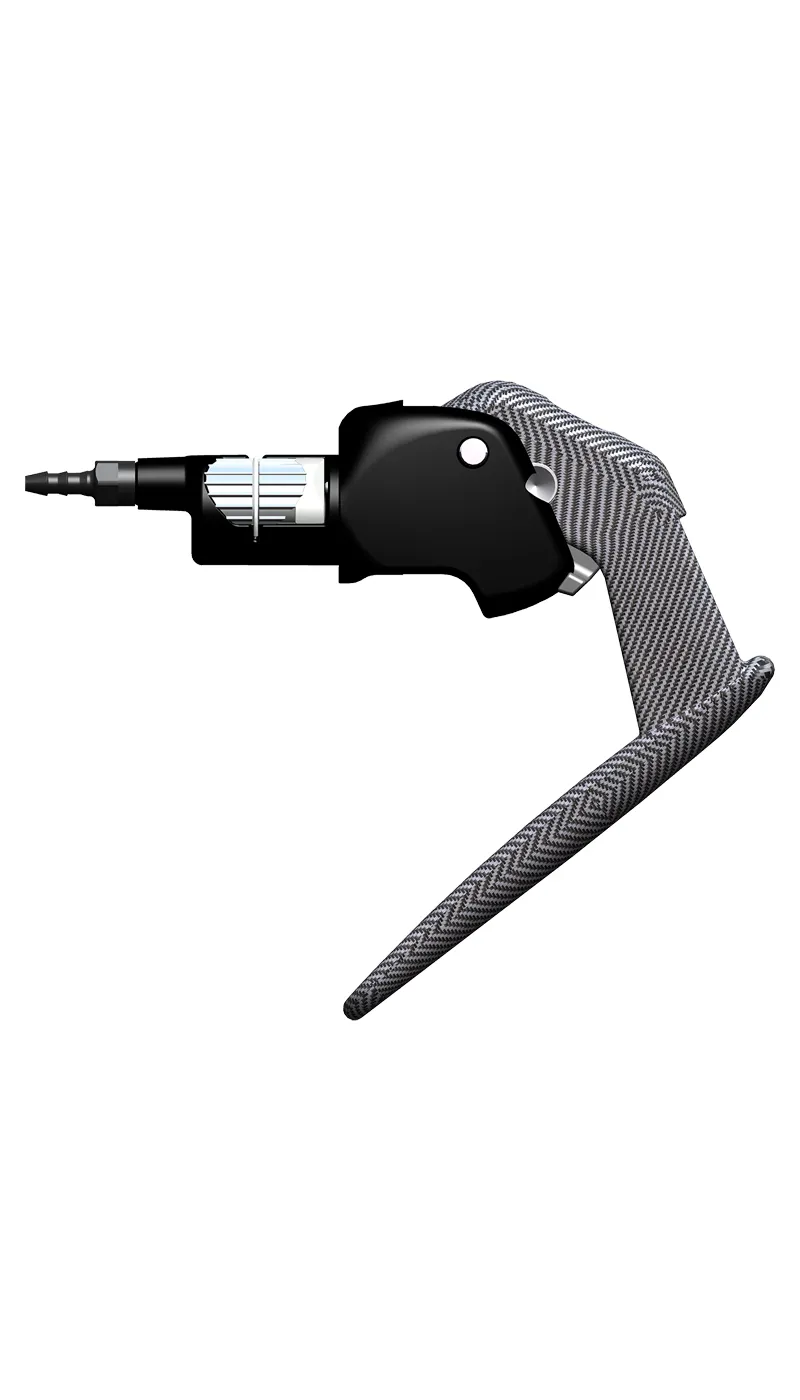
The RT8 TT may be on the cutting edge of technology, but fundamentally the caliper is a curious juxtaposition of two decades-old road brake designs: Magura's own HS77 and Campagnolo's cherished Delta. Like the HS77, the RT8 neatly tucks a hydraulic master cylinder into the lever body while the slave cylinder pushes apart a pair of aluminum arms that, in turn, press standard pads against a conventional rim.
Magura have, however, flipped the slave cylinder 90-degrees relative to the HS77, which results in an overall layout and look that's more like the Delta. This essentially makes the RT8 TT more of a hydraulically actuated mechanical caliper than a purely hydraulic one like mountain bike disc brakes, which have no moving parts per se and instead rely on piston seal 'rollback' to pull the pads away from the rotor.
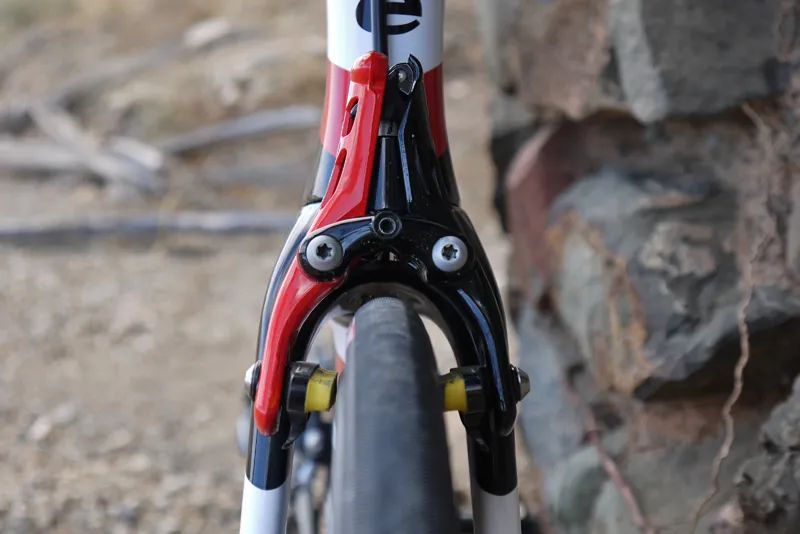
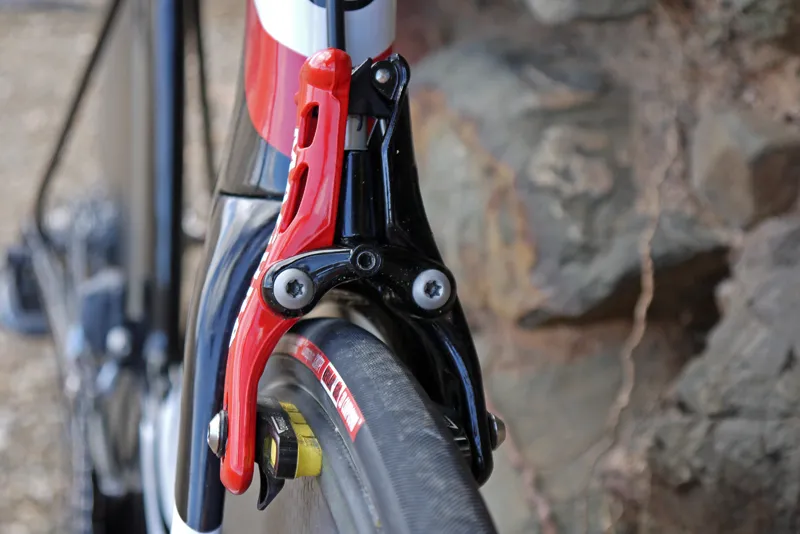
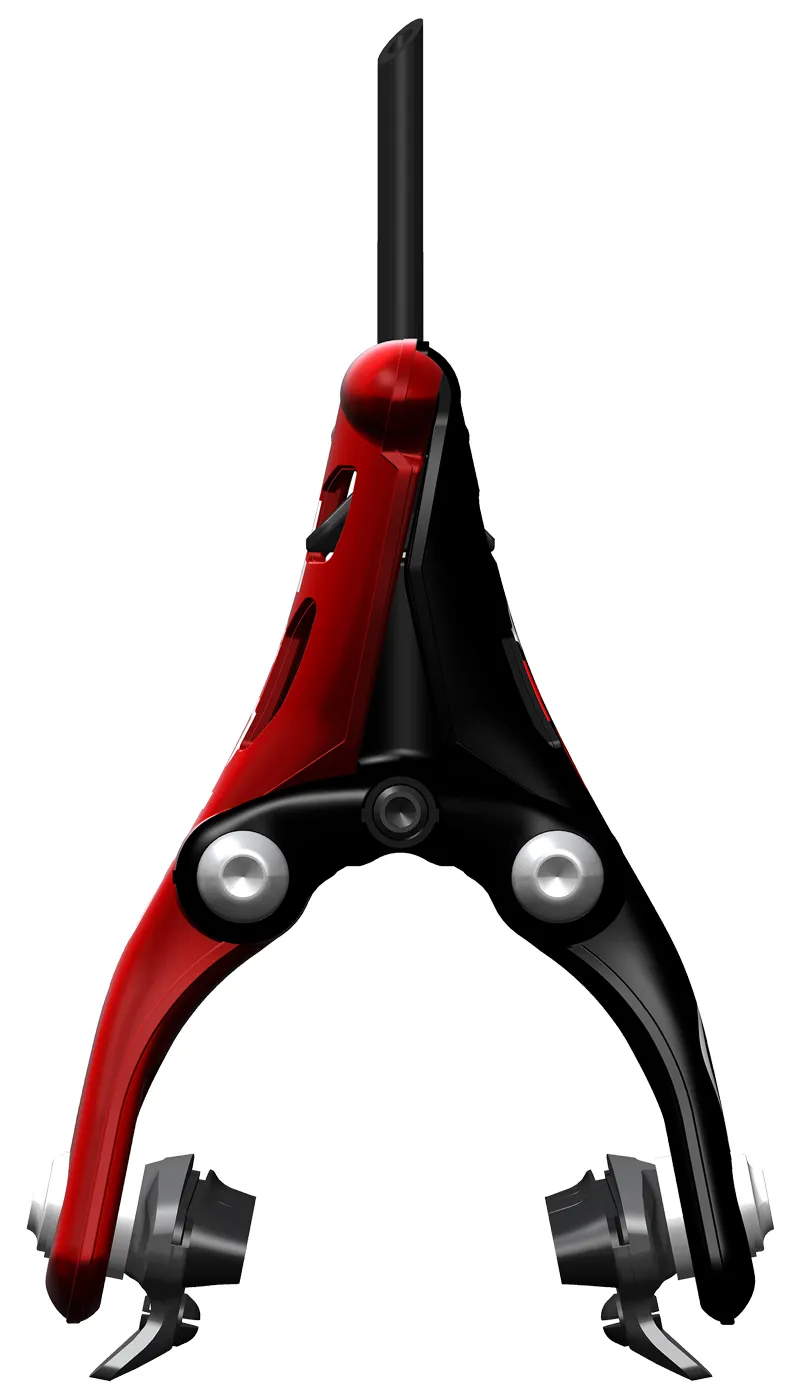
The RT8 TT's shape is highly reminiscent of Campagnolo's old Delta design
A side benefit to the mechanical-hydraulic design is a properly functional quick-release, which will speed wheel changes. Flipping a switch opens the lever blades further, which then retracts the slave cylinder and allows the arms to spring out away from the rim — easy as pie, at least on paper. The symmetrical caliper shape should also be good for aerodynamic performance.
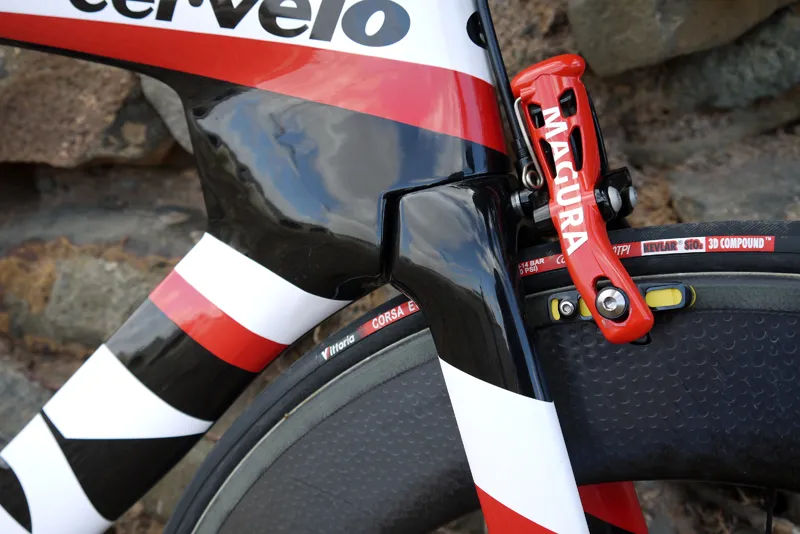
While Cervélo has fully hidden the RT8 TT caliper inside streamlined shrouds front and rear, the brakes will mount to most frames with standard caliper fittings. The sleek caliper arms themselves boast a slippery cross-section when mounted upright like on a fork crown but we expect the triangular profile to work well beneath a bottom bracket, too. In addition, the symmetrical and center-oriented caliper keeps everything inline with the frame and even the lever blades are cut out for minimal frontal area.
Like Magura's other hydraulic brakes, the RT8 TT will use mineral oil instead of DOT fluid. Tech pundits will quickly point out that the former has a lower boiling point than DOT, but it also won't absorb atmospheric moisture and it's also non-corrosive. Time trial and triathlon bikes' generally lesser demands in terms of extended braking should make heat capacity a non-issue, anyway. To calm durability critics, Magura is taking a proactive stance with a five-year warranty against leaking.
Not surprisingly, the RT8 TT is impressively light with a claimed total system weight of just 495g —comparable to a Shimano Dura-Ace mechanical setup when factoring in cables and housing.
A simple flick of a switch opens up the brakes for fast wheel changes
Pricing for the complete Magura RT8 TT brake system is set at €599, but Magura also plans to release a less expensive RT6 TT — likely with aluminum instead of carbon fiber lever blades — along with an RT6 mechanical-to-hydraulic converter for road riders that want to retain their current brake-shift levers. Cervélo has a one-year exclusive on the RT8 TT for its own P5, but we expect other brands will quickly follow suit once that deal has expired.
Why the RT8 TT is a big deal
While it's true that road bike brakes have gotten highly advanced in recent years and work quite well, time trial and triathlon bikes are often a different story what with their convoluted cable routing and occasionally proprietary brake caliper designs that sometimes sacrifice functionality for aerodynamics. In this sense, Magura's RT8 TT hydraulic brakes could be a genuine game changer.
Hydraulic lines are lighter and generate less friction than conventional steel cables and housing, and they're also far more tolerant of tight bends. Therefore, a hydraulic brake — and a frame designed around them — can offer a lighter lever feel while producing more clamping force and greater sensitivity, along with all-weather durability that's fully sealed and won't degrade after a rainy time trial or a few rounds with a power washer.
The Magura RT8 TT hydraulic rim brake will mount to standard holes, meaning it will also work with other time trial and triathlon frames
There's even the possibility of faster initial setup, even when accounting for trimming lines and re-bleeding. Unlike cables and housing that need a take as smooth a path a possible from end to end for optimal functionality, it almost doesn't matter at all with a hydraulic line — just connect the ends together however which way is convenient and the performance should be hardly affected.
Where we go from here
According to Magura, the RT8 TT system has received UCI approval and will be debuted by the Garmin-Barracuda team at this year's Tour de France. Will this be the beginning of a major trend? Barring some sort of reliability catastrophe, perhaps. But it remains to be seen how well the system will be received by other frame manufacturers and in fairness, some frame manufacturers have already figured out how to make proprietary cable actuated aero brakes work reasonably well.
Time trial and triathlon frames often incorporate convoluted routing for the rear brake. Magura's RT8 TT hydraulic system should be much more tolerant of tight bends than conventional cables and housing
Magura will still have to contend with how to integrate some sort of shifter into the design, too. Currently, the RT8 TT has no shifter provisions whatsoever, meaning Garmin-Barracuda riders will be trading the multiple shift positions of a full Di2 setup for hydraulic power and control and interested road riders will have to resort to Magura's pending RT6 converter, which we expect will be heavier, bulkier, and not nearly as elegant as a fully integrated setup.
Regardless, Magura's new RT8 TT represents a significant step forward in road brake technology, but where it goes from here remains to be seen.