Garmin Edge bike computers are one of the most popular choices for cyclists to navigate, record their rides and train more scientifically.
Over time, Garmin has upgraded the capabilities of its GPS bike computers. Advanced tech, including full mapping and voice control, has trickled down to all but its entry-level models.
So what does the Garmin Edge range offer and which head unit is right for you?
This list includes all of Garmin's current models, along with a full listing of older models, some of which are still available to purchase, with links to reviews of those we've tested.
Editor's note: this list was updated on 26 October 2026 with links to our latest Garmin bike computer news and reviews, including the Edge 1060, Edge 550, Edge 850 and Edge MTB.
Garmin Edge range explained
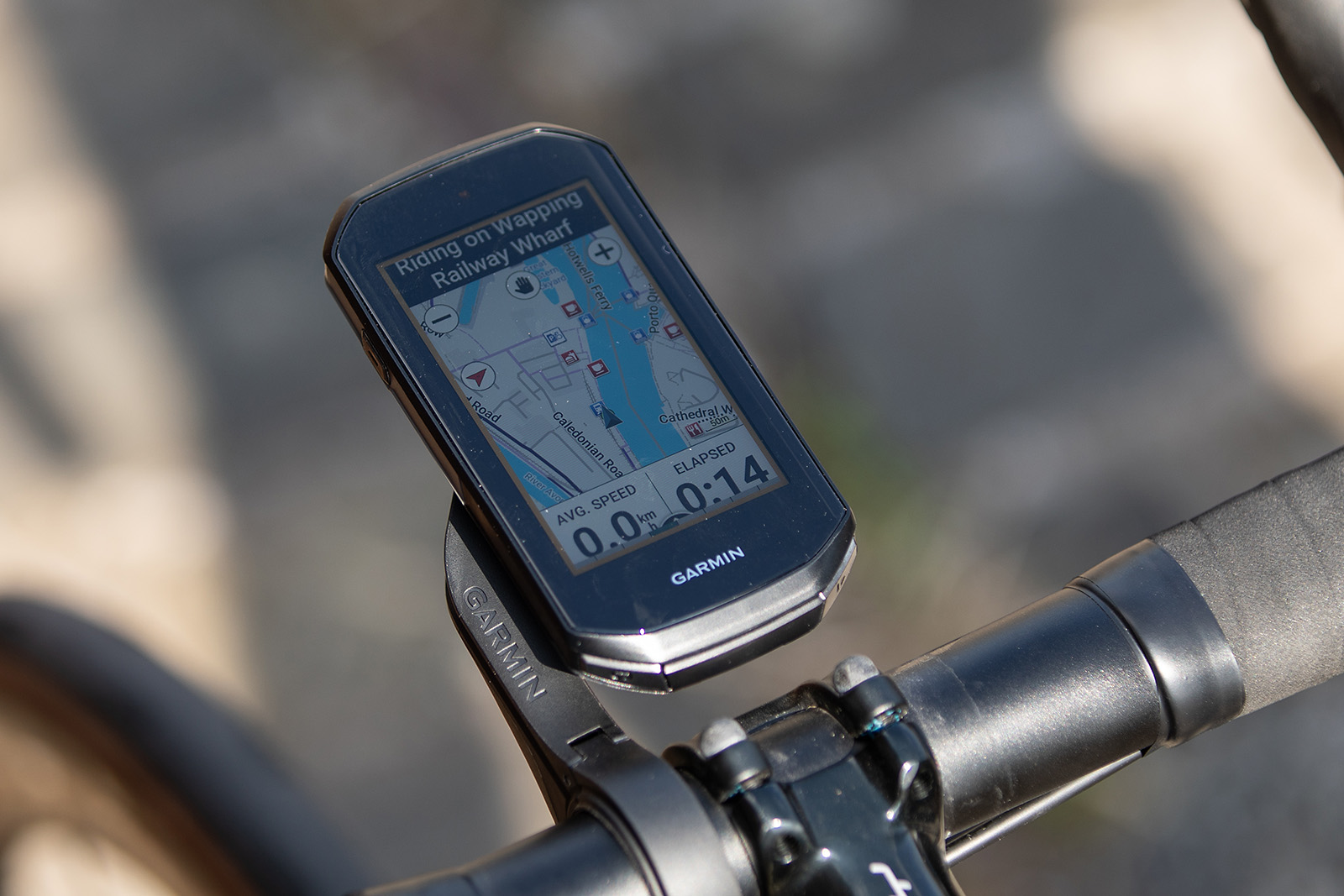
The Garmin Edge range now all includes a colour screen with a basemap. Moving up the range gets you increasingly larger devices with larger-format touchscreens, voice control and more training data available. That said, even the base models have a lot of Garmin’s features included.
Garmin has recently done some housekeeping on its Edge range, discontinuing some older longstanding models, so you might not see some familiar names below.
We’ll start with the simplest, most affordable Garmin Edge computers, and work up from there.
Current Garmin Edge models
Garmin Edge MTB
SQUIRREL_TEXT_13327112
- Navigation: Multi-band GNSS, including GPS, GLONASS and Galileo; colour screen for map reading
- Training data: Speed, altitude, power, heart rate, cadence, calories, gear selection (for electronic drivetrains), distance, time, temperature, performance monitoring
- Connectivity: USB-C, Bluetooth, ANT+, WiFi
- Compatibility: ANT+ shifting, power meter and smart trainer, heart rate monitor, Shimano Di2, Vector power meter, Garmin Varia and VIRB
- Size: 50.4x77.8x19.8mm
- Screen: 2.13in (54.1mm) diagonal, 240x320 pixels, colour non-touchscreen
- Weight: 59g
- Price: £339.99 / $399.99 / €399.99
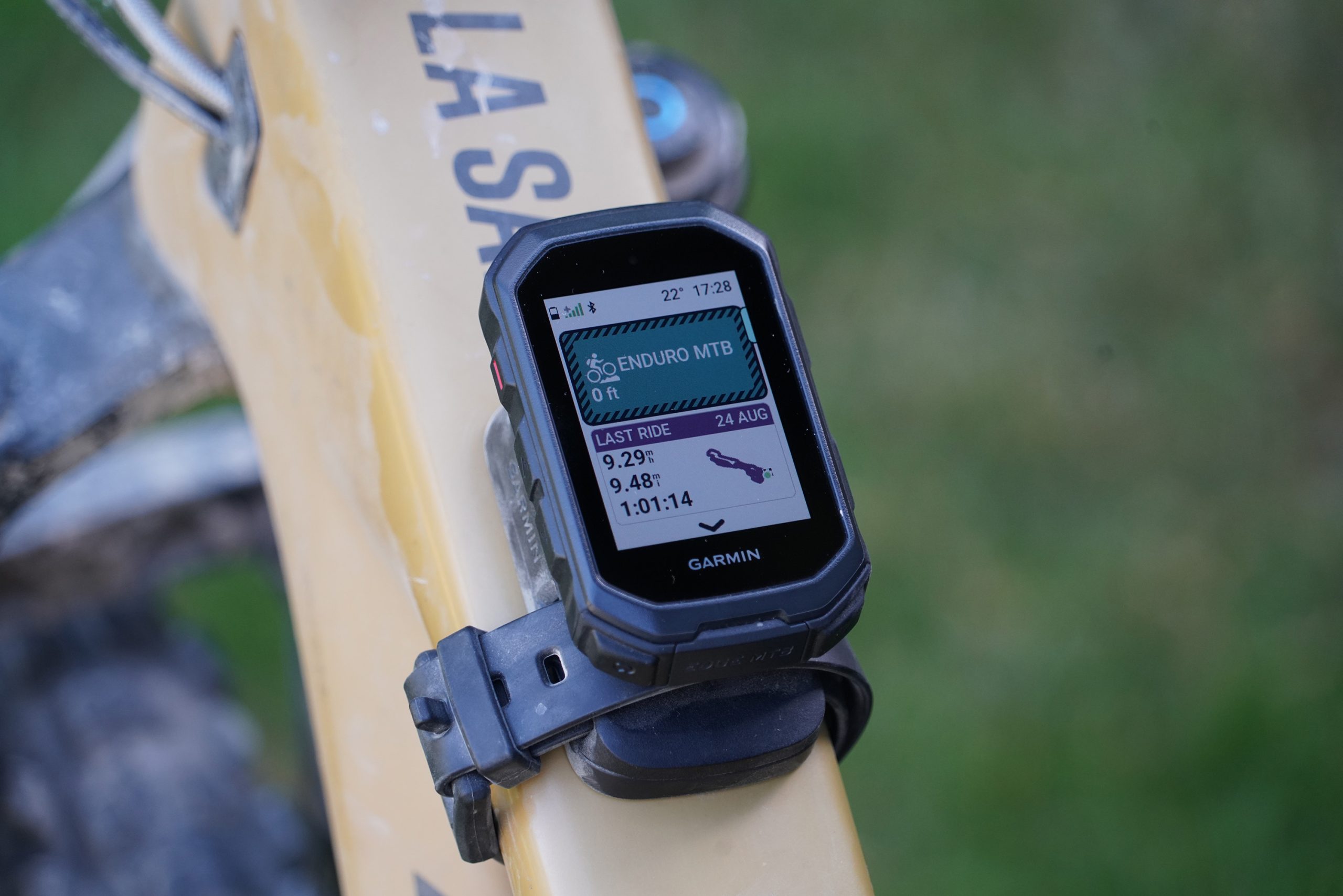
The Edge MTB is Garmin's first MTB-specific bike computer, with a rubberised exterior and Gorilla Glass helping it stay robust in the face of trail abuse.
It was the first model to feature the Enduro and Downhill MTB Activity Profiles, and enables you to set timing gates down trails to see how fast you are through segments.
The computer also has road training features, making it a viable option for those looking for a do-it-all computer – albeit with a small screen.
Trailforks insight is built into the mapping, giving you a look ahead at what's to come on the trail.
Garmin says the Edge MTB is built with long riding days in mind, with up to 14 hours of battery life in demanding use cases – or up to 26 hours in battery saver mode.
- Best for: Those looking for a rugged computer ready for the trails
SQUIRREL_13327112
Garmin Edge Explore 3 / Edge Explore 3 Plus
- Navigation: With GPS, GLONASS and Galileo satellite input, this Garmin is adept at exploring; it can store 100 routes
- Training data: Speed, distance, time, ClimbPro, heart rate, power, but not advanced metrics such as left-right balance or training load
- Connectivity: USB-C, ANT+, Bluetooth, WiFi
- Compatibility: ANT+, Garmin Varia, smart trainer and power meter
- Size: 104.5x53.8x18mm
- Screen: 3in, 360x640 pixels colour touchscreen
- Weight: 122g (claimed)
- Price: £350 / $400 / €400 without voice control, £430 / $500 / €500 with voice control
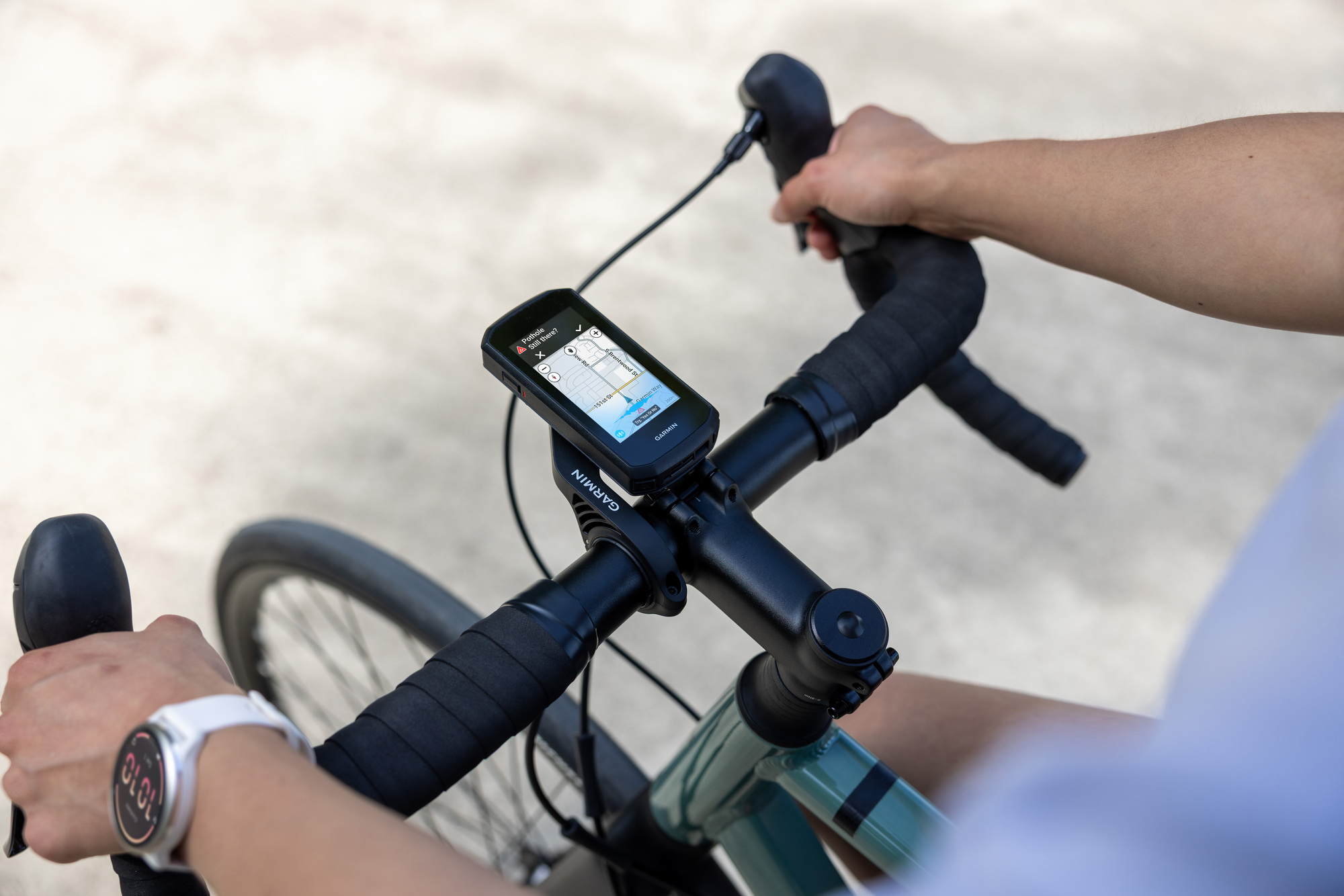
The Garmin Edge Explore 3 majors on navigation and has better routing and mapping features than some of Garmin's deluxe models at less than half the price. The screen is large, high-resolution and rerouting is reliable.
Connectivity options abound, but you lose out on the geekier training analysis, including pedalling efficiency, that its pricier Garmin brethren deliver. The live data the Edge Explore 3 does deliver will satisfy the majority of riders though.
With WiFi connectivity, the Edge Explore 3 can directly upload your activities to Strava or other ride-sharing apps when you get home.
The Edge Explore 3 Plus adds a microphone and a speaker, so you can use voice control to change screens, reroute and send voice and text messages. The Explore 3 Plus will use its speaker to provide audible turn-by-turn navigation instructions, road hazard alerts and more. It also acts as a digital bike bell and alarm.
- Best for: Riders looking for a mid-sized computer for navigation and who aren't too bothered about performance metrics.
SQUIRREL_13079802
Garmin Edge 550
SQUIRREL_TEXT_13327119
- Navigation: Multi-band GNSS, including GPS, GLONASS and Galileo; colour screen for map reading
- Training data: Speed, altitude, power, heart rate, cadence, calories, gear selection (for electronic drivetrains), distance, time, temperature, performance monitoring
- Connectivity: USB-C, Bluetooth, ANT+, WiFi
- Compatibility: ANT+ shifting, power meter and smart trainer, heart rate monitor, Shimano Di2, Vector power meter, Garmin Varia and VIRB
- Size: 54.6x92.2x16.8mm
- Screen: 2.7in (68.58mm) diagonal, 420x600 pixels, colour non-touchscreen
- Weight: 110g
- Price: £379.99
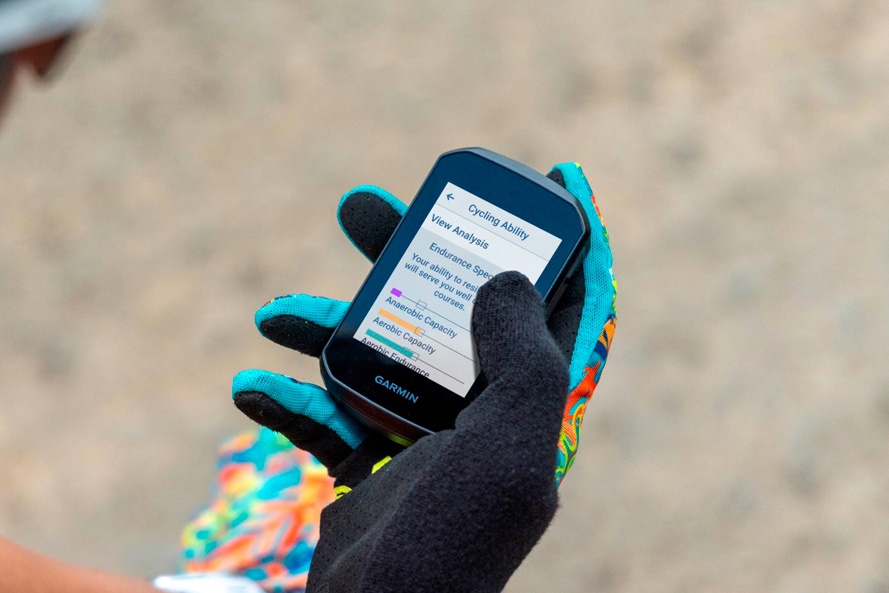
Garmin's Edge 550 is the brand's premium touchscreen-free offering.
The Edge 550 comes with Garmin's Cycling Coach plan, accessed through the Garmin Connect app. The plan is said to "adapt based on specific course demands and the rider’s training and recovery, providing recommended training adjustments”.
Garmin says the Edge 550 has a 12-hour battery life in demanding conditions, and up to 36 hours in battery saver mode.
Like the Edge MTB, the Edge 550 also provides MTB-specific Activity Profiles, including Enduro and Downhill MTB. It's slightly fiddly to operate though, particularly for map navigation, due to the absence of a touchscreen interface.
- Best for: Riders looking for sophisticated tech in a small package, and who don't need a touchscreen.
SQUIRREL_13327119
Garmin Edge 850
SQUIRREL_TEXT_13327122
- Navigation: Multi-band GNSS, including GPS, GLONASS and Galileo; touchscreen for easy map navigation
- Training data: Speed, altitude, power, heart rate, cadence, calories, gear selection (for electronic drivetrains), distance, time, temperature, performance monitoring
- Connectivity: USB-C, Bluetooth, ANT+, WiFi
- Compatibility: ANT+ shifting, power meter and smart trainer, heart rate monitor, Shimano Di2, Vector power meter, Garmin Varia and VIRB
- Size: 54.6x92.2x16.8mm
- Screen: 2.7in (68.58mm) diagonal, 420x600 pixels, colour touchscreen
- Weight: 113g (claimed)
- Price: £469.99 / $599.99
Garmin's Edge 850 features a brighter screen than the previous model and greater training insights.
Like the Edge 550, the Edge 850 comes with access to Garmin's Cycling Coach plans.
The Edge 850 also features a speaker that enables the computer to act as an alarm when parked or as a bike bell when on the road.
Its touchscreen makes navigating menus and the map easier than the 550, with pinch zoom and panning similar to on a smartphone.
Garmin says the Edge 850 has a 12-hour battery life in demanding conditions, and up to 36 hours in battery saver mode.
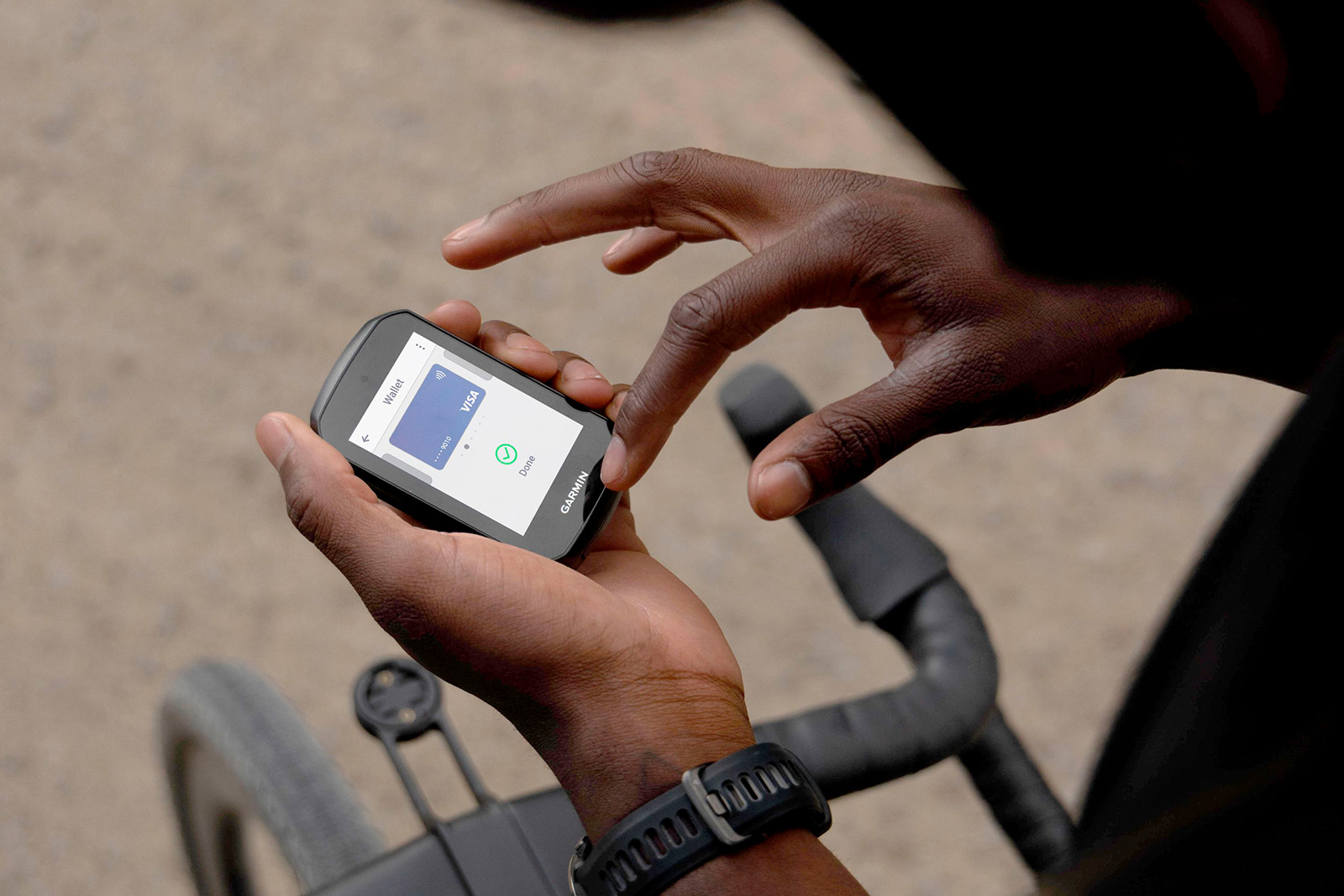
The Edge 850 supports contactless payments, so you can pay for your coffee if you forget your wallet, although few UK banks support Garmin Pay.
- Best for: Riders looking for a training-orientated companion that also has a focus on navigation.
SQUIRREL_13327122
Garmin Edge 1040 Solar
- Navigation: Detailed, fast navigation and
- Training data: A bewildering number of training metrics that can be customised to your heart's content
- Connectivity: ANT+, Bluetooth, WiFi, USB-C
- Compatibility: ANT+, Shimano Di2, SRAM eTap, Campagnolo EPS, Garmin Varia
- Size: 59x118x20mm
- Screen: 3.5in/89mm colour touchscreen, 282x470 pixels
- Weight: 132g
- Price: £519.99 / $699.99 / €599.99
The Edge 1040 Solar is now two generations older than Garmin's flagship Edge 1060, but remains in the range as the only solar charged model. Solar charging was an option across the entire x40 computer range, but Garmin subsequently withdrew it from its newer computers, although it's still available for its premium smartwatches.
The solar charging is claimed to extend the runtime to as much as 100 hours. But our testing in UK conditions revealed minimal additional battery life from solar charging, particularly in the winter, and the solar coating reduced screen visibility. It may still be a useful option in sunnier climes though.
The ride settings on the 1040 models can be adjusted via the Garmin Connect app – a feature long requested by users and carried over into newer computers – and there's a wealth of data and analytics available.
- Best for: Riders looking for long runtimes who live somewhere consistently sunny.
SQUIRREL_13076478
Garmin Edge 1060
- Navigation: On-device route planning and easy toggling between overlays
- Training data: More training metrics than you will ever know what to do with
- Connectivity: ANT+, Bluetooth, WiFi, USB-C
- Compatibility: ANT+, Shimano Di2, SRAM eTap, Campagnolo EPS, Garmin Varia
- Size: 58.5x107.0x16.3mm
- Screen: 3.5in/89mm colour touchscreen, 480x800 pixels
- Weight: 142g (claimed)
- Price: £699.99 / $799.99 / €799.99 / AU$TBA
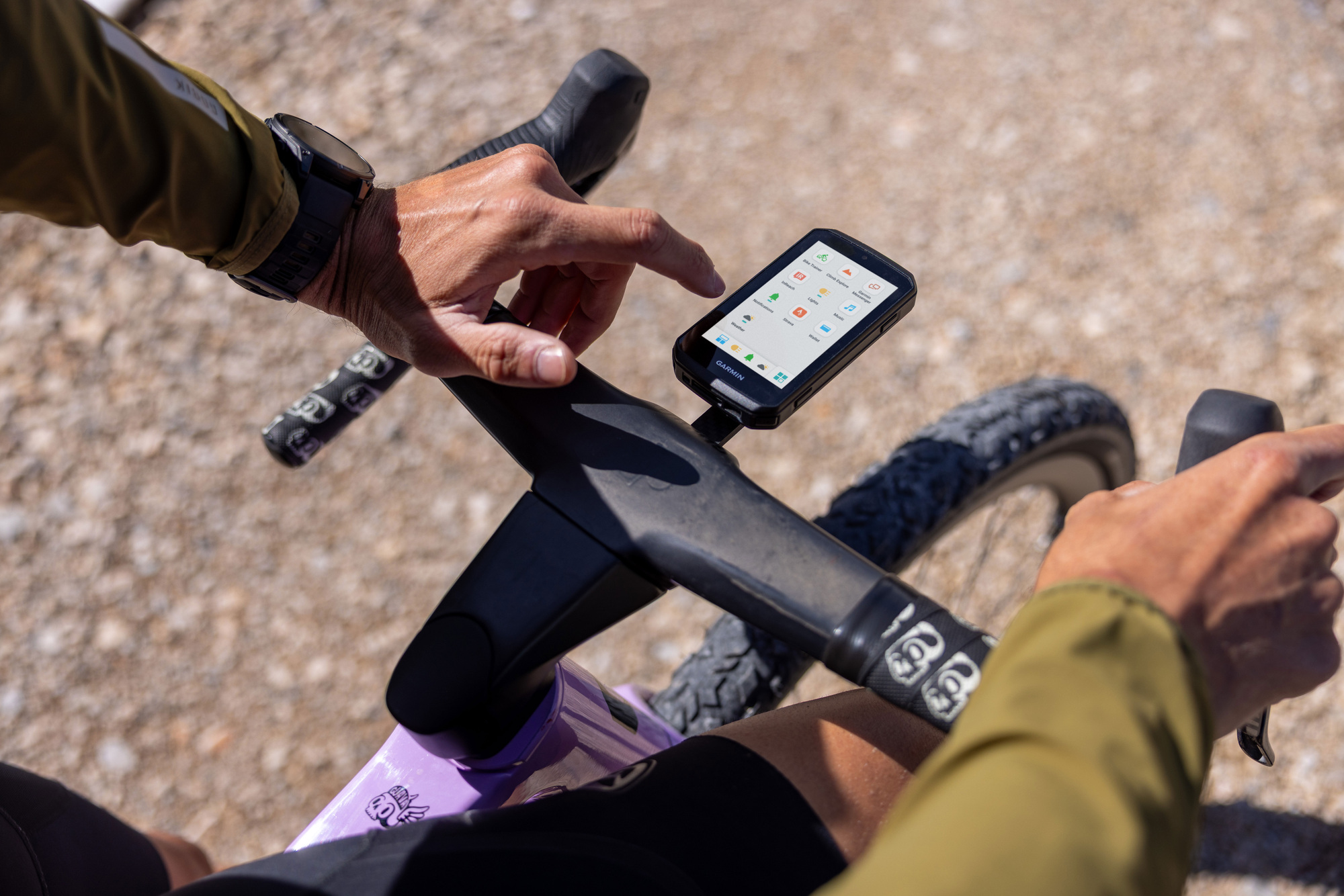
At the top of the tree, the Edge 1060 adds voice control to the previous-generation Edge 1050's feature list. As with the Edge Explore 3 Plus, this enables riders to change screens, request a route, communicate with others and more, while the built-in speaker will read back selected ride stats.
In addition, the Edge 1060 offers route options to a destination, route previews and points of interest en route. There are enhanced group ride features and an interactive workout screen, while the Edge 1060 can be used to charge a phone, light or other device.
Battery life is claimed at 20 hours, extending to 60 hours in battery saver mode.
Best for: Dedicated cyclists who want Garmin's most sophisticated feature set and a large screen
SQUIRREL_13086848
What can a Garmin GPS computer do?
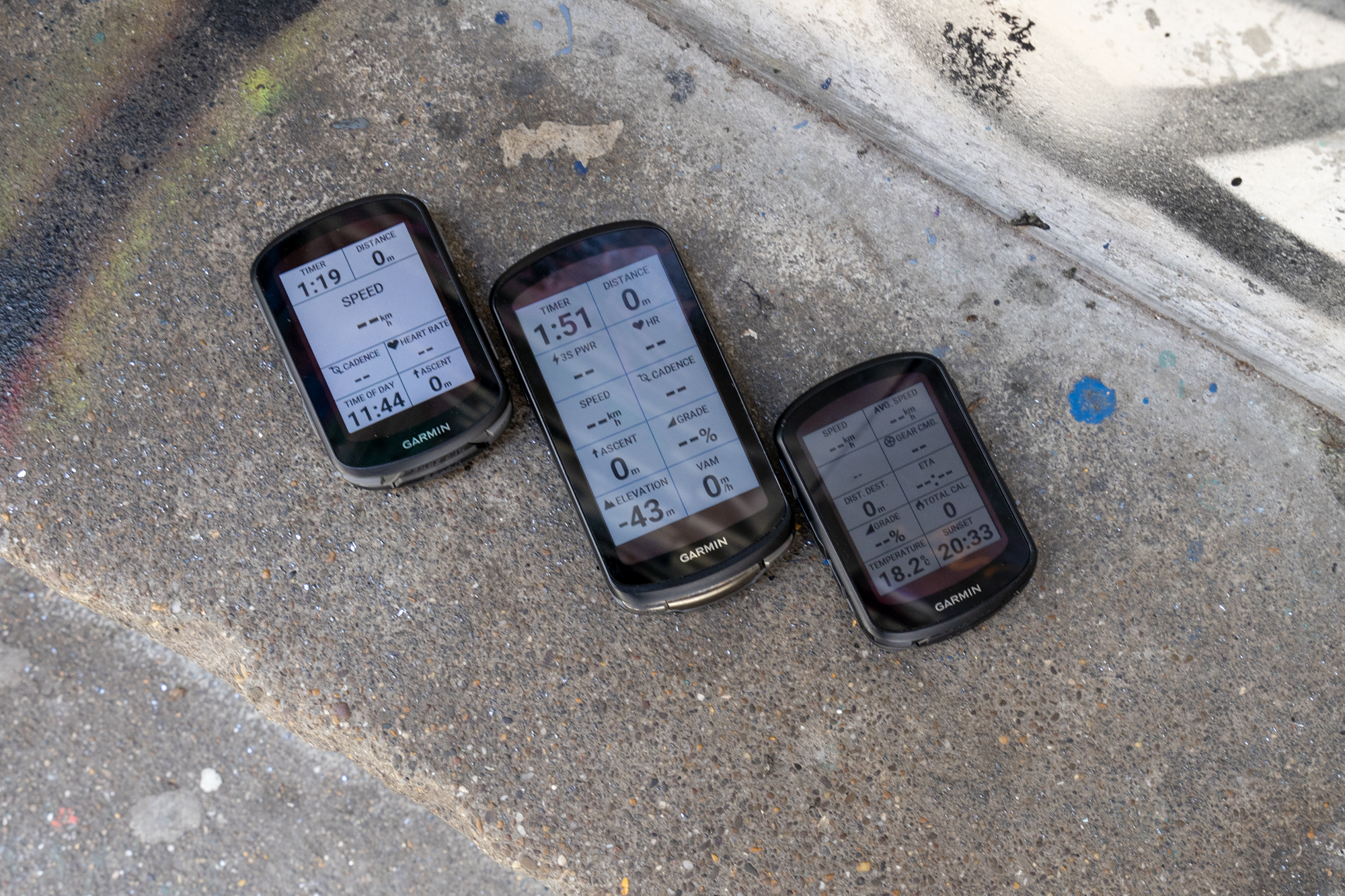
At a bare minimum, Garmin bike computers use GPS tracking to log where you’ve been, how far and how fast.
They get position data from the GLONASS, Galileo and standard GPS satellite constellations, with dual band reception increasing positional accuracy.
That basic data can be augmented with a raft of extras.
All will give you mapping, enabling you to plan and follow a route, with turn-by-turn navigation. Their ability to re-route if you willingly or unwillingly go off track has greatly improved.
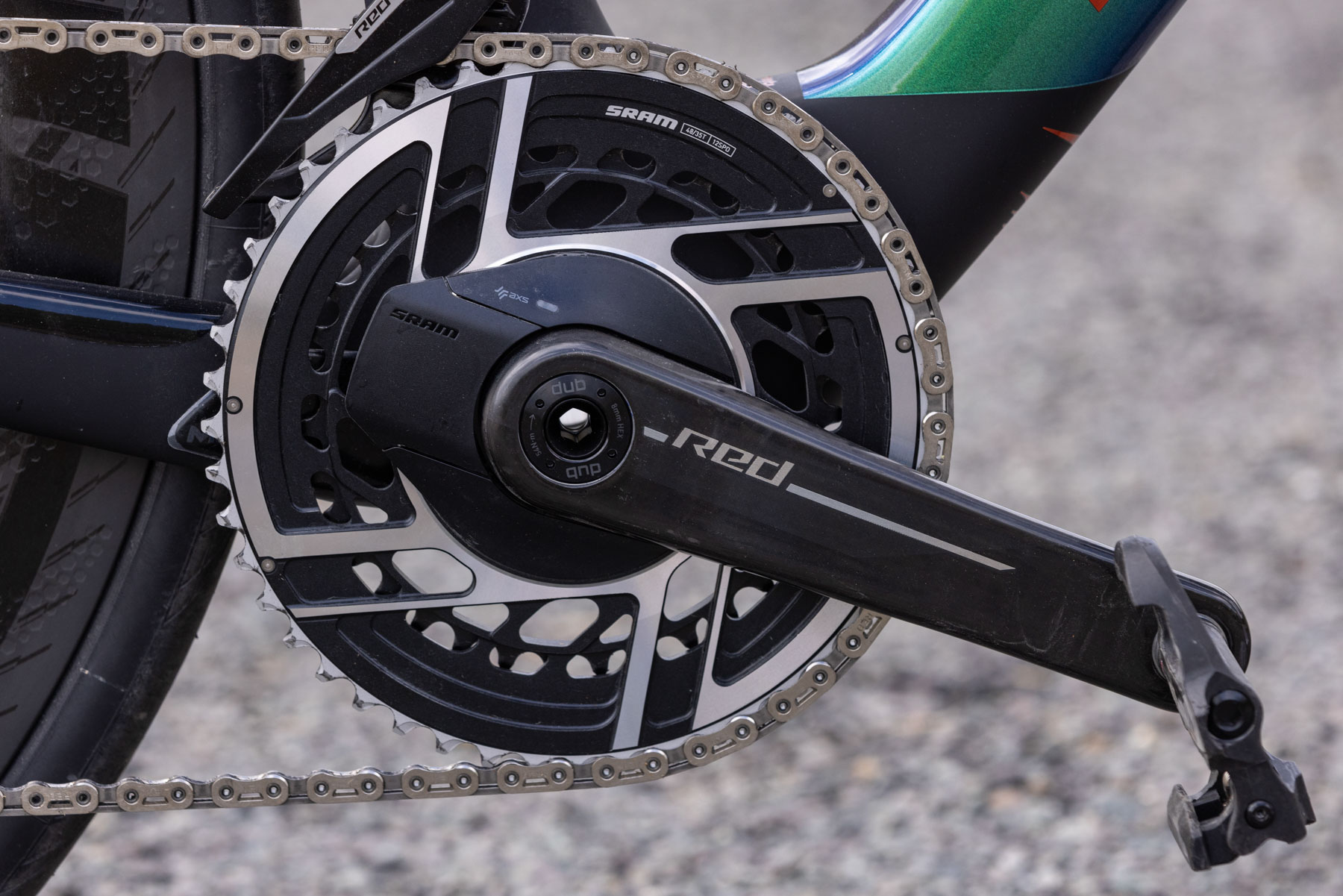
You can also pair your computer wirelessly with peripheral devices such as a heart rate monitor strap, speed and cadence sensors and a power meter to get more information on your performance.
Entry-level Edge models are controlled using buttons on the sides of the unit, whereas more expensive ones include a touchscreen. The screen gets larger and sharper as you move up the range too.
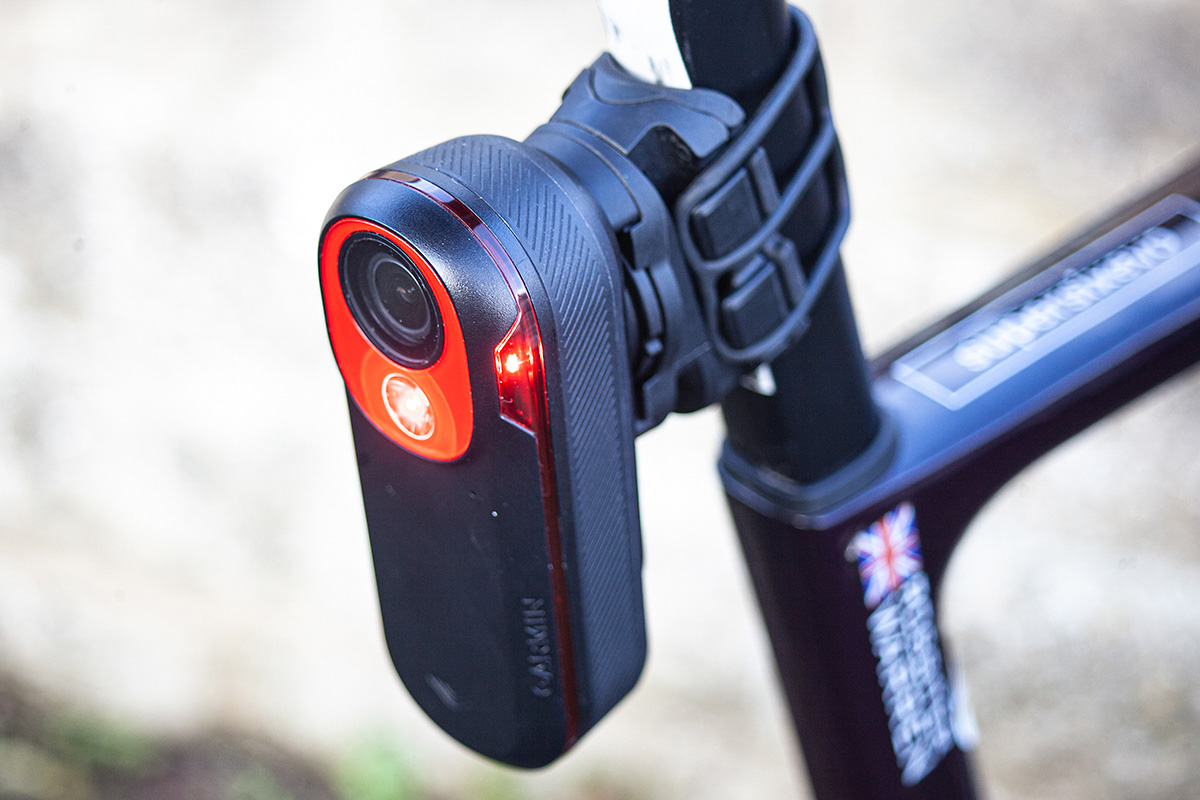
All Garmin Edge computers enable you to control Garmin’s Varia front and rearview radar lights, with the rear-facing units using radar to alert you via your computer of approaching vehicles. You can also link up other brands' rearview radars.
The Edge bike computers link to the Garmin Connect web or smartphone app, where you can view and analyse your data and plan routes.
The smartphone app enables you to pair your Edge to your mobile, and they will 'talk' to one another, with the computer showing you notifications of incoming calls and texts as you ride. The app can also share your position and other metrics with other riders and family at home.
Free-to-download apps in Connect IQ store enable you to personalise your Edge with, for example, a wind direction indicator. Integration with route planning and tracking apps, such as Strava or Komoot, are also available.
Discontinued Garmin Edge bike computer models
Here’s a full list of discontinued Garmin Edge models as of October 2026:
- Garmin Edge 20 review
- Garmin Edge 25 review
- Garmin Edge 130 review
- Garmin Edge 130 Plus
- Garmin Edge 200 review
- Garmin Edge 205
- Garmin Edge 305 review
- Garmin Edge 500 review
- Garmin Edge 510 review
- Garmin Edge 520 review
- Garmin Edge 520 Plus review
- Garmin Edge 530
- Garmin Edge 540
- Garmin Edge 540 Solar
- Garmin Edge 605
- Garmin Edge 705 review
- Garmin Edge 800 review
- Garmin Edge 810 review
- Garmin Edge 820 review
- Garmin Edge Explore 820 review
- Garmin Edge Explore 2 review
- Garmin Edge 830
- Garmin Edge 840
- Garmin Edge 840 Solar review
- Garmin Edge 1000 review
- Garmin Edge Explore 1000 review
- Garmin Edge 1030 review
- Garmin Edge 1030 Plus
- Garmin Edge 1050 review
Are there other options to consider?
Whereas five years ago, a bike computer was a Garmin, there are now alternatives. It's not all about Wahoo vs Garmin either.
Some of the best bike computers we've recently reviewed come from rivals to the big two. For example, we like the Hammerhead Karoo 3, which has an Android-based operating system, which gives it the feel and responsiveness of a smartphone. The Coros Dura 2 has a more modern-looking design than the Edge computers, plus it offers long battery life and solar charging.
You can also get a lot of the functionality of a bike computer in a GPS watch/smartwatch, with more versatility if you’re into other sports besides cycling. Again, Garmin is the leading brand for cycling-oriented watches, but others are snapping at its heels.