
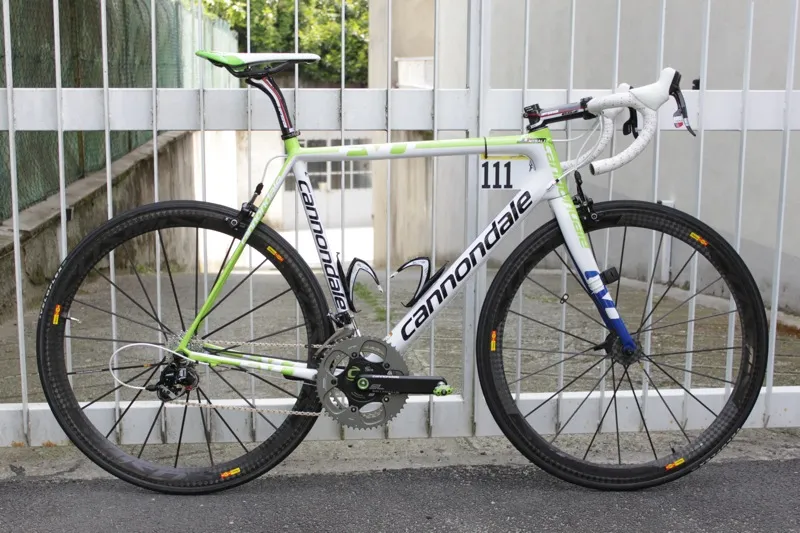


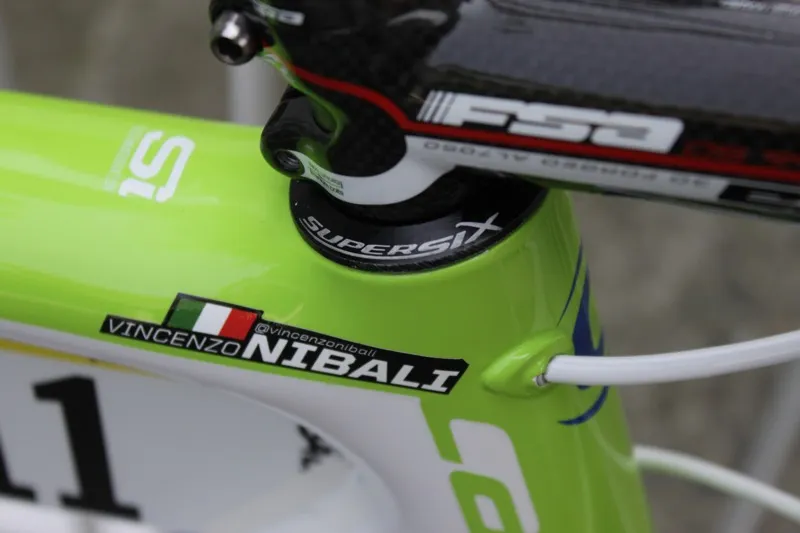
Liquigas team leader Vincenzo Nibali is on board a 56cm Cannondale SuperSix Evo frame for this year's Giro d'Italia. The bike is so light that it comes with its own weights to keep it above the UCI weight limit of 6.8kg. The frame alone weighs a claimed (and verified) 695g, and even when equipped with an SRM power meter and the Evo model’s most elaborate and heaviest paint scheme, the bike is nearly half a kilo under the limit. That means a special set of weights have to be inserted within the frame's seat tube to make it 'legal'.
Cannondale are famous for their "too light for the UCI" frames; a trait that goes back to the 2003 Tour de France and the manufacturer’s first foray into carbon fiber with the Six13 model, which Gilberto Simoni rode with weights glued on the top tube behind the stem. That bike was introduced with an advertising campaign called: ‘Legalize my Cannondale,’ but at the time only Simoni’s 50cm size was out of compliance.
We’re close to 10 years on since Cannondale first broke the UCI’s weight barrier and it shows. For one, as we’ve mentioned, Nibali rides a 56cm frame and it’s too light even with the additional weight of a power meter, conventional SRAM Red components and a saddle that can be realistically ridden for the whole three weeks of a grand tour.
Aside from this, the frame offers plenty of stiffness to a pro who is known as one of the best descenders in the modern day peloton; not one you would expect to sacrifice weight over ride quality.
Nibali, known for his descending prowess, claims he has yet to find the bike's limit
Cannondale’s SuperSix Evo is said to pass some of the industry’s most stringent testing. The manufacturer claims to have finished the bike last year, but withheld it from both the team and retail markets, because it wasn’t able to pass a single internal lab-executed pedaling fatigue test, which is devised to simulate 10 years of usage in less than a week.
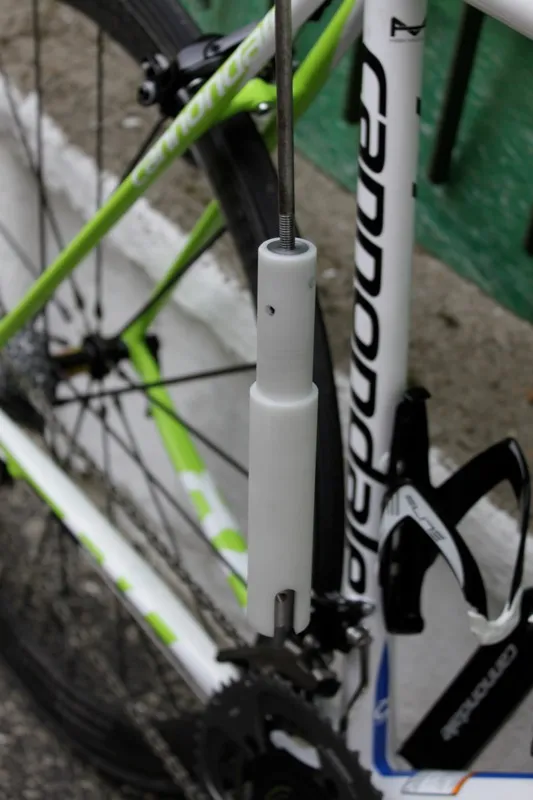
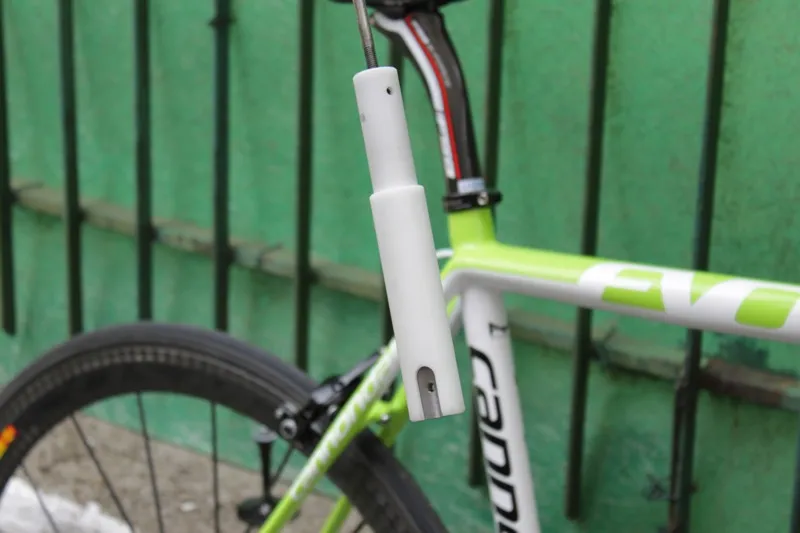
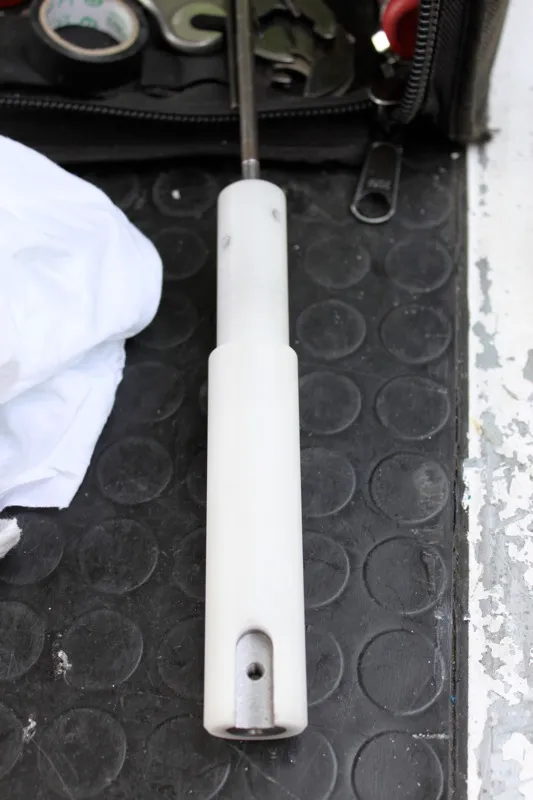
To Liquigas-Cannondale, the bike’s ultra-light weight is likely seen as more of an issue than it is a benefit due to the 6.8kg weight limit imposed by the UCI; for the team had to devise a system to make the bikes legal to race. To achieve this, Cannondale created a set of weights — with different masses — so that just the right amount can be added to underweight bikes, keeping in mind that frame sizes and wheel choices create subsequent weight differences. In essence, mechanics ‘tune’ the amount of weight they add depending on the rider or wheel choice.
The lower notch in the plastic gives way to a threaded hole that fixes the weight within the seat tube using the top bottle cage bolt
The weights are steel slugs, which are plastic coated and inserted to the seat tube using a threaded rode where they are then fixed using extra long water bottle cage bolts. The system keeps the added weight low, just over the bottom bracket, and when considering that upwards of three-quarters of a pound needs to be added — again depending on wheel choice — the advantage to the downhill handling of Nibali’s Evo is assumed to be bettered.
On the eve of the start of this year’s Giro d’ Italia, Nibali offered his impressions of the new bike, in Italian through Rory Mason, Cannondale’s sports marketing director. He finds the bike to be very smooth. He also said that it leaves him fresher at the end of races than the old SuperSix and he has yet to find its limit on downhills. When asked how he would know when he finds the limit, he responded, that a broken collarbone signified the limit of the old bike.
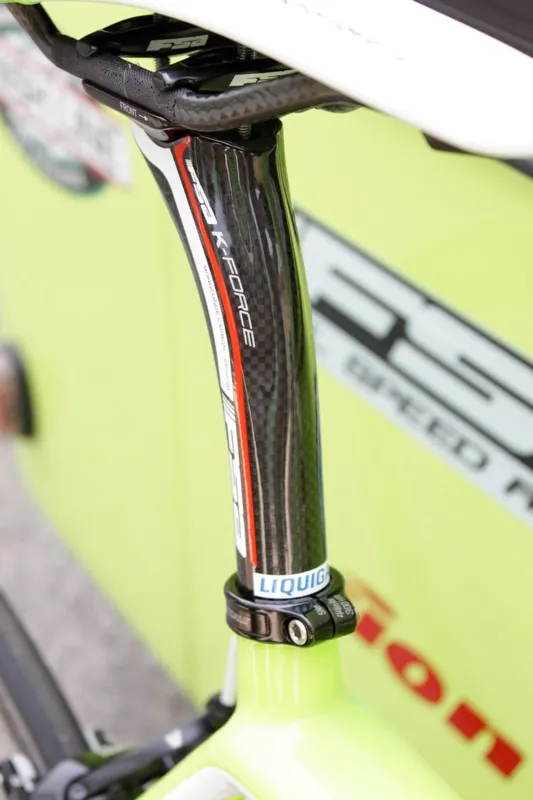
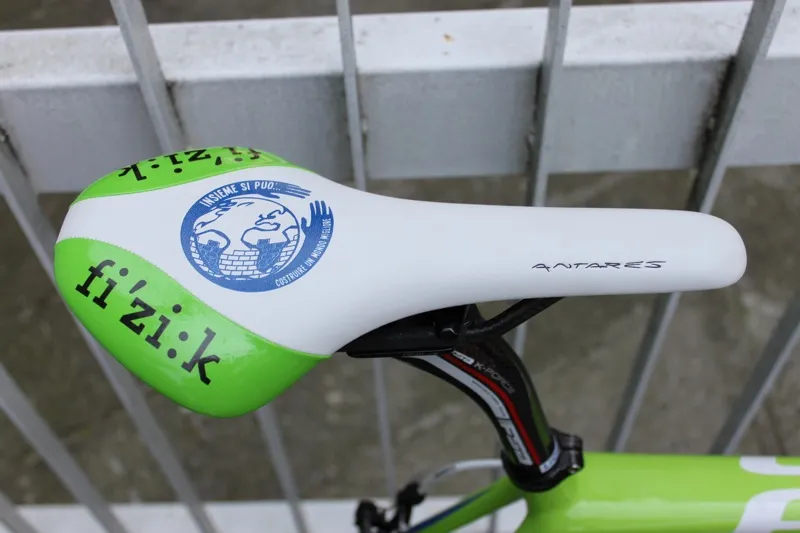
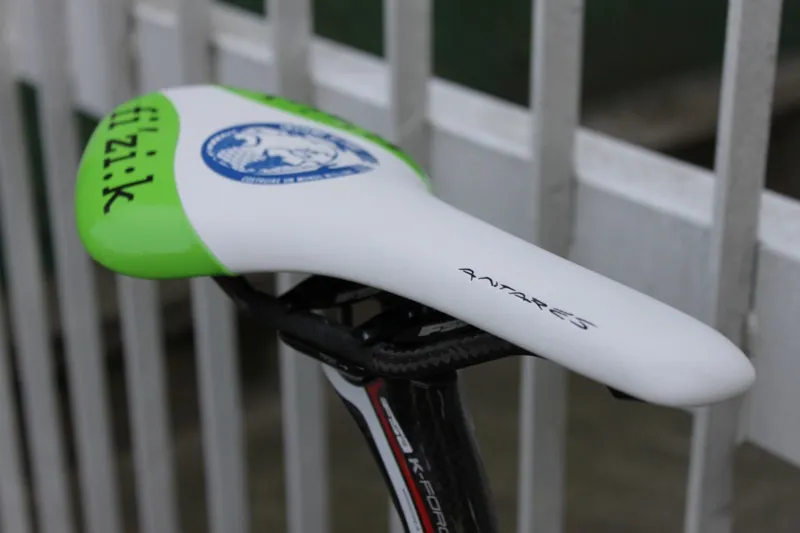
Aside from the new frame, Nibali’s bike is decidedly standard, save for his custom fi’zi:k Antares saddle emblazoned with the logo of the charity Insieme si può and the words: Insieme si puo costruire un mondo migliore (Together we can build a better world). The custom saddle is mounted to a carbon K-Force Light seatpost.
Nibali's custom Insieme si può Antares saddle, which represents a charitable organization that fights hunger, poverty and underdevelopment in Africa
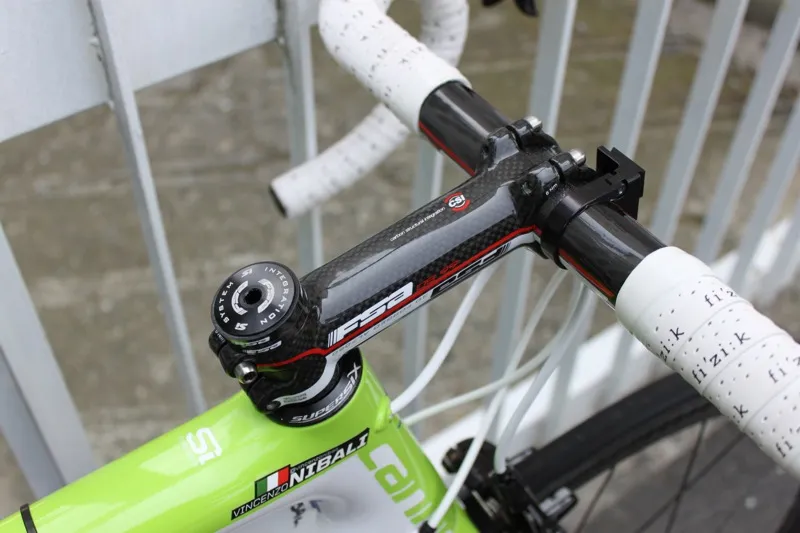
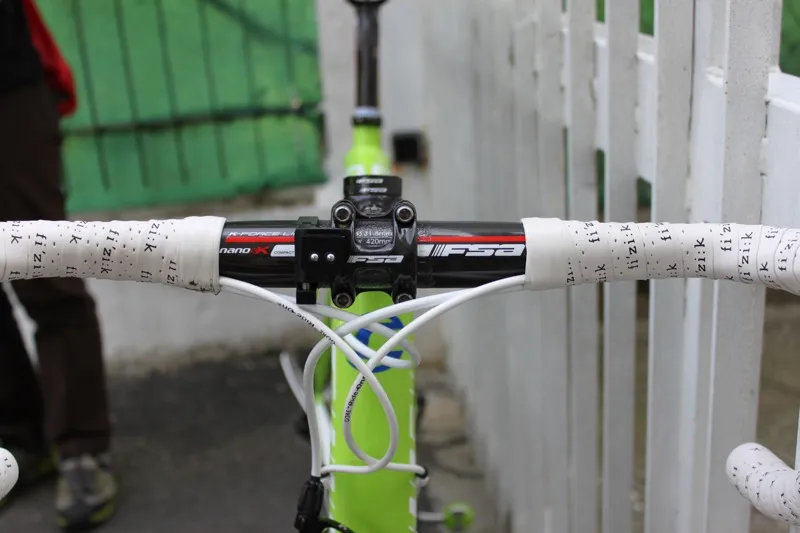
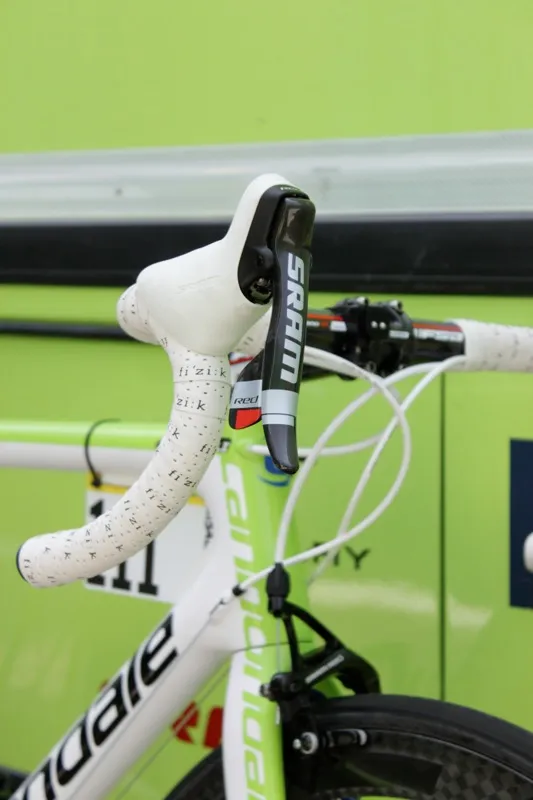
His cockpit is made of a resonable length (120mm) FSA OS99 stem and 42cm K-Force light carbon handlebars, which is significant since many pros still prefer alloy handlebars.
Nibali's K-Force Light carbon handlebar
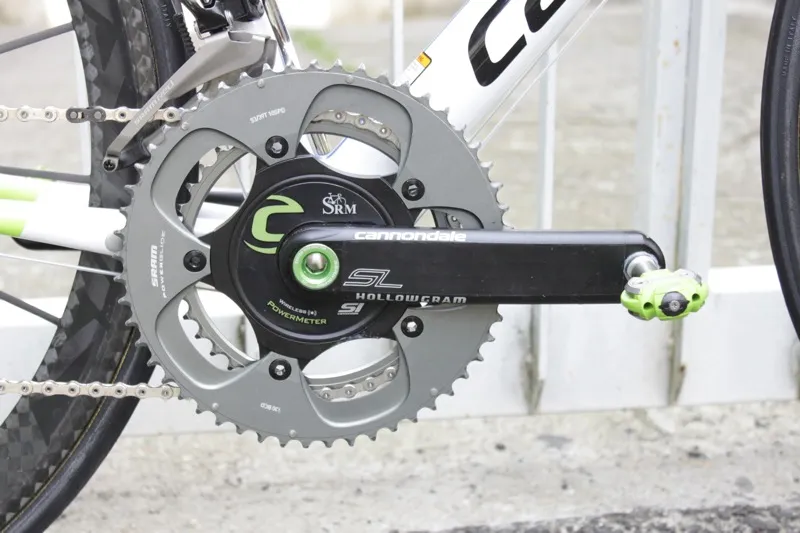
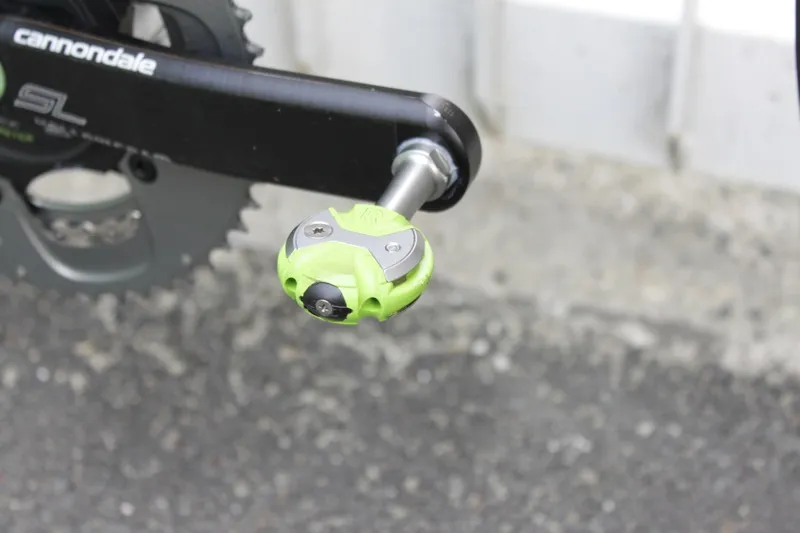
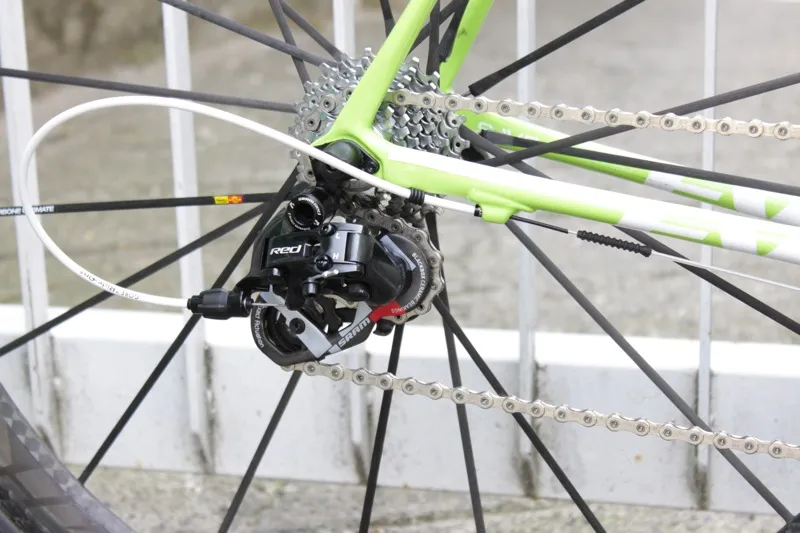
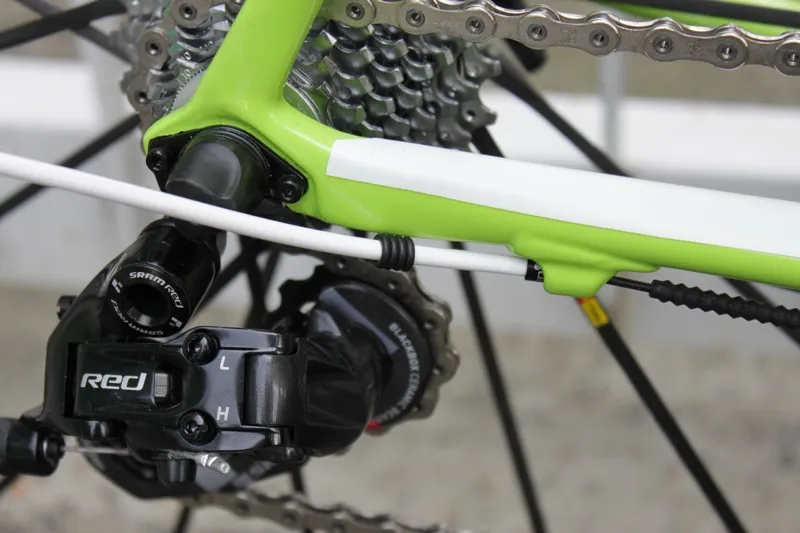
SRAM used the Giro to push its new Black Red group (with a LTE — Limited Tour Edition — front derailleur); Nibali along with the majority of SRAM sponsored teams were on the new finish. The Liquigas team does make one substitution to the drivetrain in the form of Cannondale’s Hollowgram 2 SRM crankset.
Nibali's bike sports a LTE front derailleur, which, interestingly, features a titanium cage when generally pros seem to gravitate toward the custom steel caged models; the derailleur's precision is supplemented with an additional chain watcher
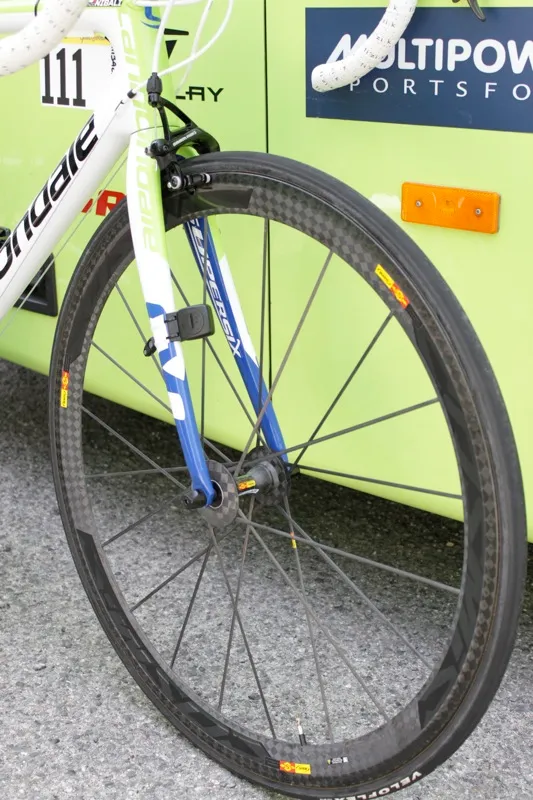
Wheels are supplied by Mavic; while the Cosmic Carbone Ultimate model is the general ‘go to’ for the team, the Cosmic Carbone 80 as well as the Exalith rimmed CC SLR and R-SYS wheels are all also in their quiver.
Complete bike specifications
- Frame: Cannodale SuperSix Evo, 56cm
- Fork: Cannondale, tapered 1 1/8"-to-1 3/8"
- Headset: Integrated SuperSix carbon cap
- Stem: FSA OS99 CSI, 120mm x -6°
- Handlebars: FSA K-Force Light, 42cm (c-c)
- Tape/grips: fi’zi:k Microtex
- Front brake: SRAM Black Red
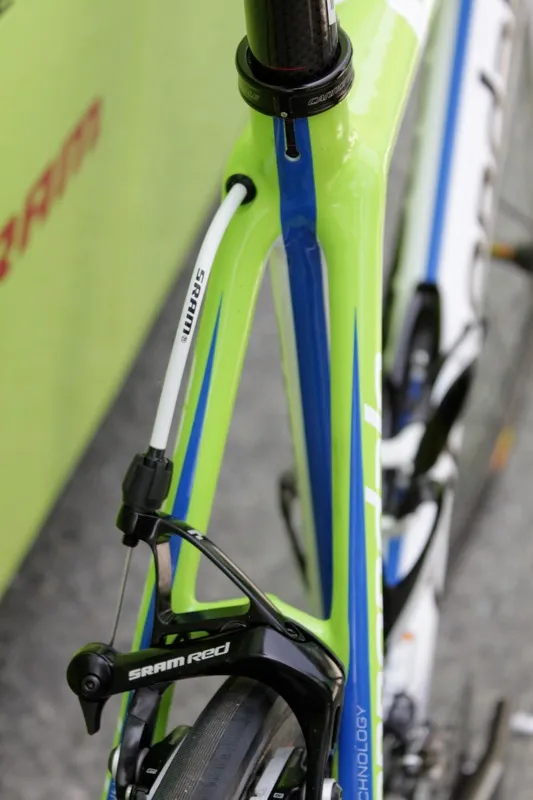
- Rear brake: SRAM Black Red
- Brake levers: SRAM Black Red (large logo)
- Front derailleur: SRAM Red LTE, titanium cage
- Rear derailleur: SRAM Black Red
- Shift levers: SRAM Black Red (large logo)
- Cassette: SRAM PowerDome OG 1090, 11-23T
- Chain: SRAM PC1090R
- Crankset: Cannondale Hollowgram 2 SRM wireless, 172.5mm, 53/39T
- Bottom bracket: Press Fit w/ SRAM shell and ceramic bearings
- Pedals: Speedplay Zero Titanium
- Wheelset: Mavic Cosmic Carbone Ultimate
- Front tyre: Veloflex Carbon tubular, 22mm
- Rear tyre: Veloflex Carbon tubular, 22mm
- Saddle: fi’zi:k Antares with custom logo
- Seat post: FSA K-Force Light, 27.2
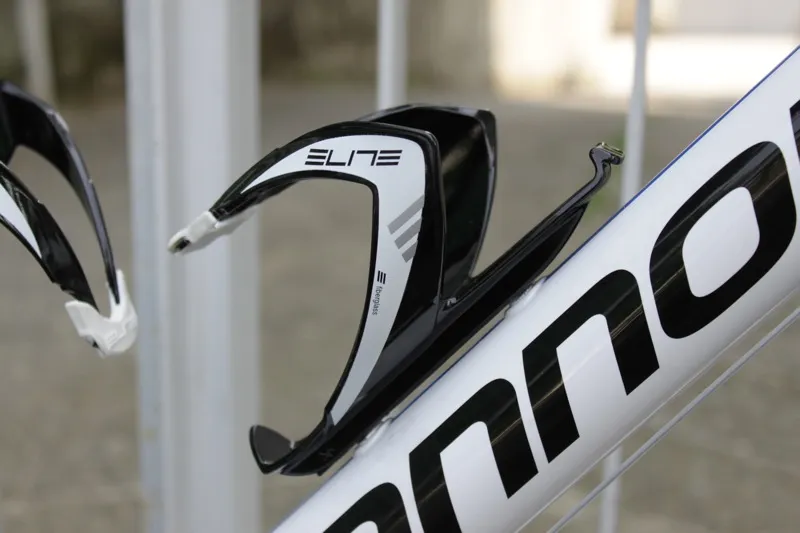
- Bottle cages: Elite Custom Race Glossy
- Computer: SRM PowerControl 7
Critical measurements
- Rider's height: 1.80m (5' 11")
- Rider's weight: 63kg (138lb)
- Saddle height, from BB (c-t): 759mm
- Seat tube length, c-t: 580mm
- Tip of saddle to center bars: 600mm
- Saddle-to-bar drop: 150mm
- Head tube length: 155mm
- Top tube length: 560mm (horizontal)
- Total bicycle weight: 6.86kg (15.12lb) w/o computer head