A saddle bag is a piece of fit-and-forget kit that you hope to rarely use. It's somewhere to stash a multi-tool, spare tube, CO2 cartridges and tubeless plugs. If you’re rummaging around in a saddle bag on the road or trailside, you’ve probably succumbed to a dreaded puncture or worse.
When it is the saddle bag’s time to shine, you need a design that’s quick and easy to use, and that doesn’t add to your unplanned delay. The reality can be quite the opposite.
Roll-type models can require you to unpack everything to retrieve the one thing you need before having to reassemble it all post-repair; larger designs can fall down on their bulky look and side-to-side swagger while riding. Nearly all designs can be a pain to refit to the saddle rails, particularly when wearing gloves in the depths of the winter.
The Redshift Sports team had this realisation, but rather than accept it as a way of life, they applied the product design approach that has led to innovations such as the ShockStop Suspension Stem and LED-integrated Arclight Pedals. The result is a completely new design – the Quickdraw Saddle Bag – that is functional, fun and ultimately easy to use.
Redshift’s Quickdraw Saddle Bag is secured using a strap and includes an innovative magnetic mount that enables single-hand attachment to, and removal from, the saddle rails.
The bag itself is available in two sizes and opens luggage-style to ensure easy access to the contents. It’s also easy to swap between bikes.
Solving an unmet need
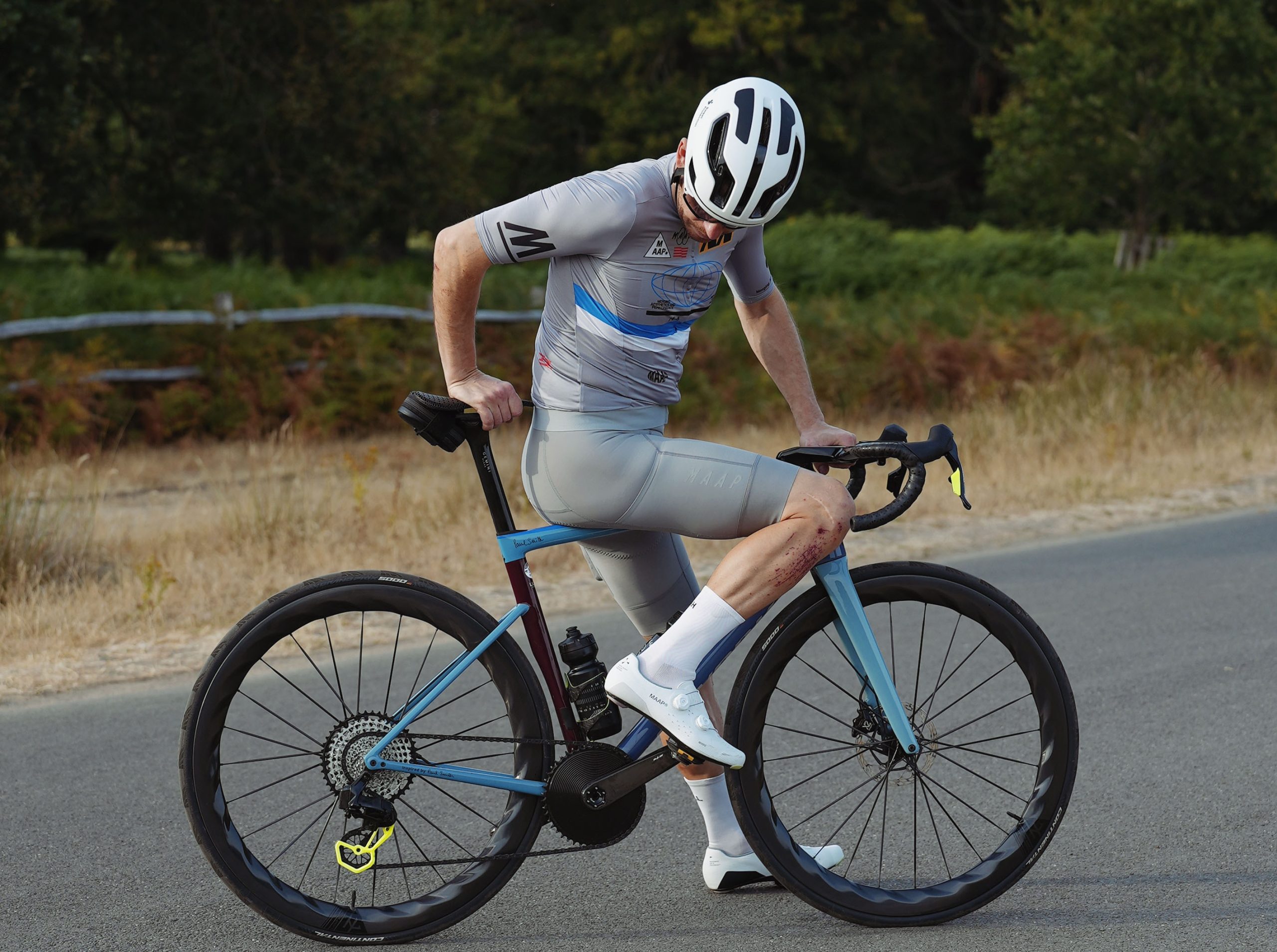
The Quickdraw Saddle Bag is the latest innovation from Redshift and is representative of the company’s rider-focused approach to product design.
“We have a long list of ideas that we've cultivated, but usually what happens is someone will go on a ride and they will come back and put something in Slack like, ‘Can you guys believe this thing that happened?’,” says Redshift co-founder Erik de Brun. “That will lead to a conversation that will often uncover an interesting, unmet need.
“In this case, someone likely flatted on a ride and needed to take their seat pack off, but it became an ordeal to find what they needed or to reattach the bag. We instantly wondered, ‘Could we make a saddle bag that was more convenient?’.”
The new design didn’t just need to be functionally sound, but also had to look and feel like a saddle bag that riders would want to fit to their bike, de Brun explains.
“Cycling is much more than getting on a bike and riding,” he says. “For many of us, the aesthetics and design of accessories and components are just as important as their function,” says de Brun.
Philosophical approach
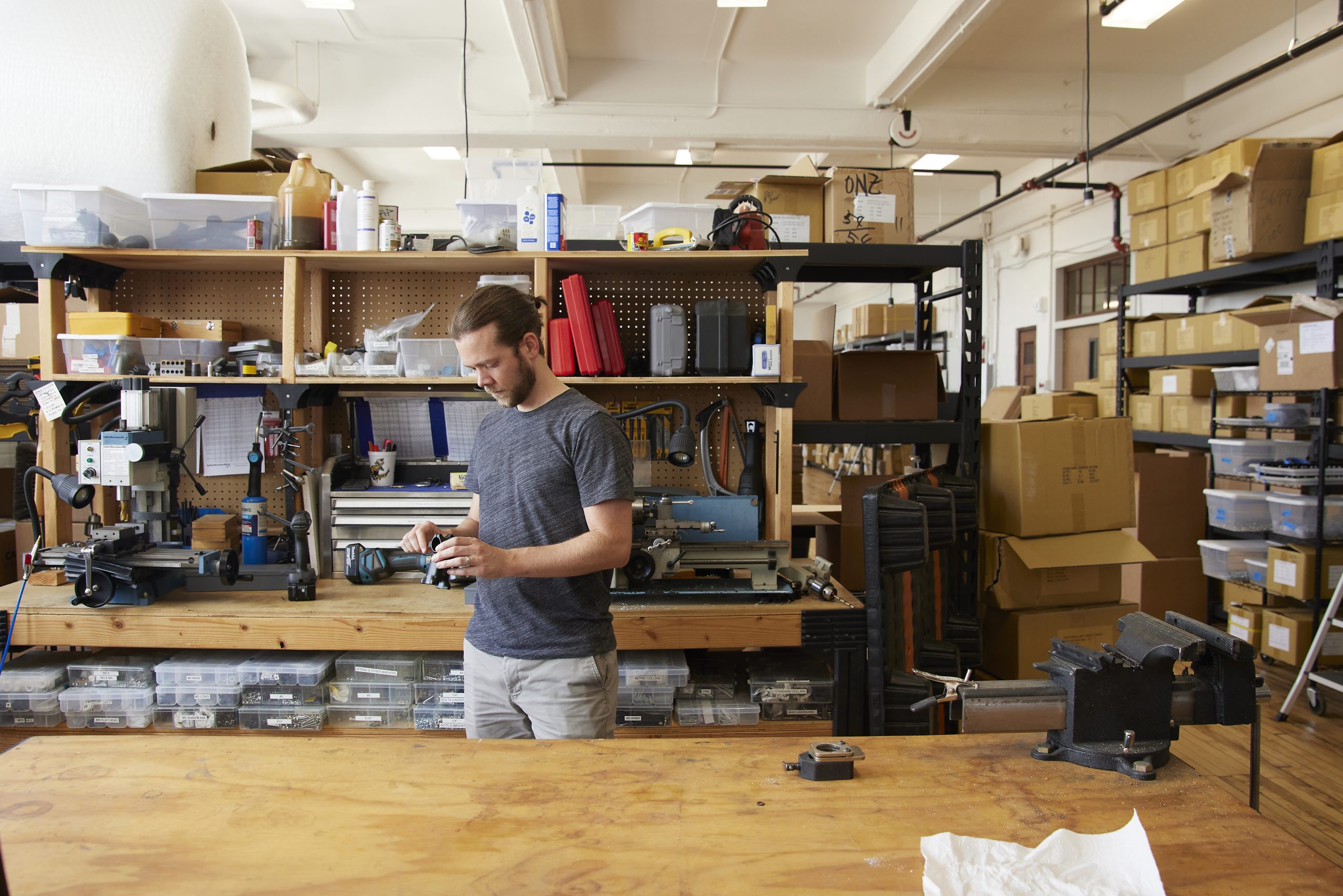
For the design of the saddlebag, the team at Redshift Sports adopted the same approach that has already led them to creating a range of useful and meaningful products for riders.
"We believe that if you start with a genuine need and then find a great solution, it’s always much better than saying to yourself, 'I’ve got this great widget or design – how can we use it on something?’.”
It’s this solutions-led philosophy that sets Redshift apart from the competition – and a bold, innovative approach to product design has been evident in the Pennsylvania-based company’s products since 2013.
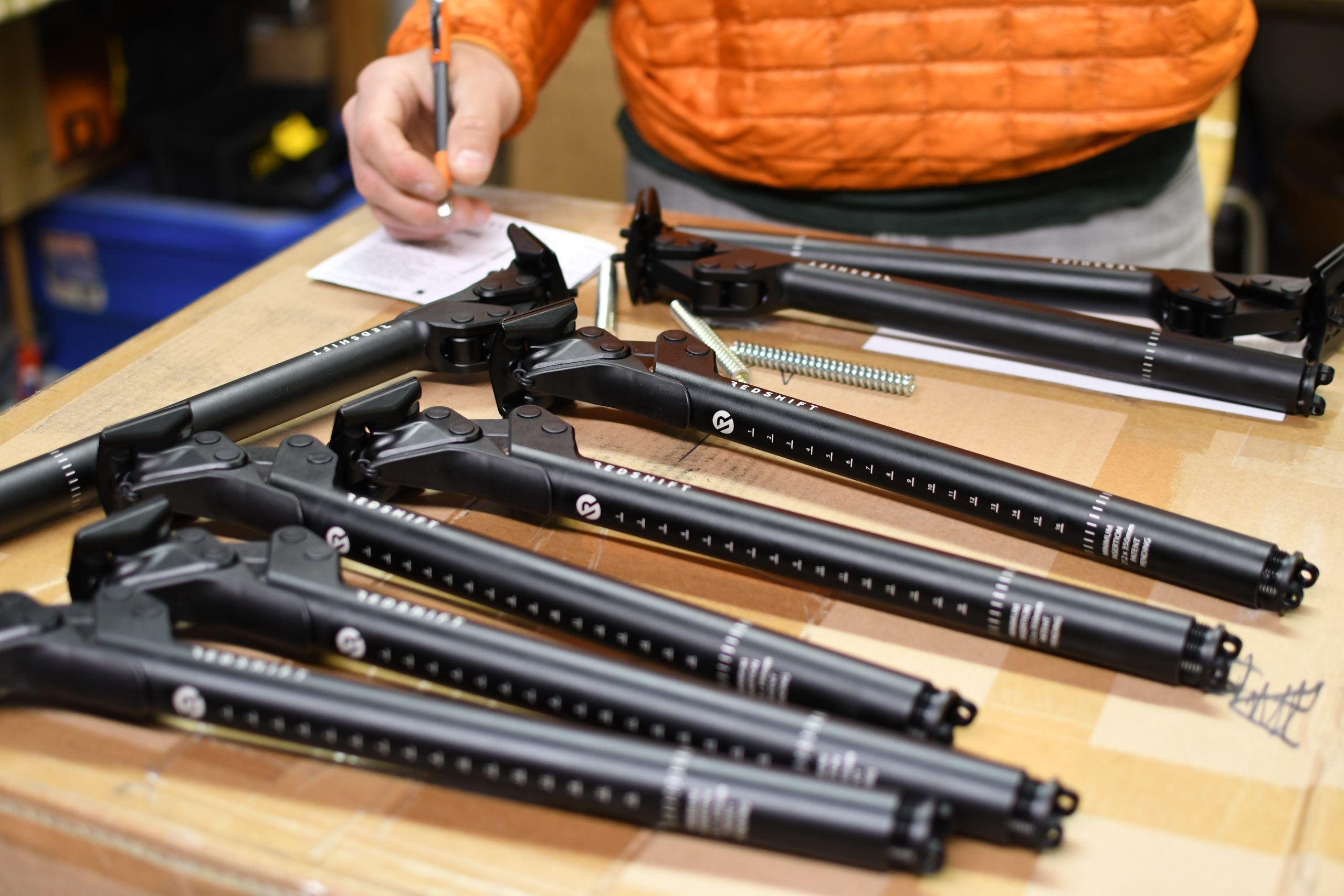
Redshift strives to design products that provide truly meaningful solutions to the needs of real riders and do it in a way that's satisfying or fun. Their goal is to create an 'ah ha' moment for riders where their experience on the bike is improved beyond expectations.
Redshift’s first products included a set of quick-release aerobars and a dual-position seatpost, designed to help triathletes convert a regular road bike into an aero-ready ride. Since then, the aerobars have been heavily adopted by bikepackers and ultra-riders as well as gravel and road riders who want a comfortable alternative position that can quickly be removed.
More recently, Redshift’s suspension stem and seatpost have helped gravel riders take the sting out of rough terrain without having to resort to complicated suspension systems. Meanwhile, its Mousetrap Pedal Adapters evolved from the need to pop out to the grocery store or cafe on your favourite clipless-equipped bike with casual shoes, and the fact that existing products that tried to enable this created more issues than they solved.
Assessing the competition
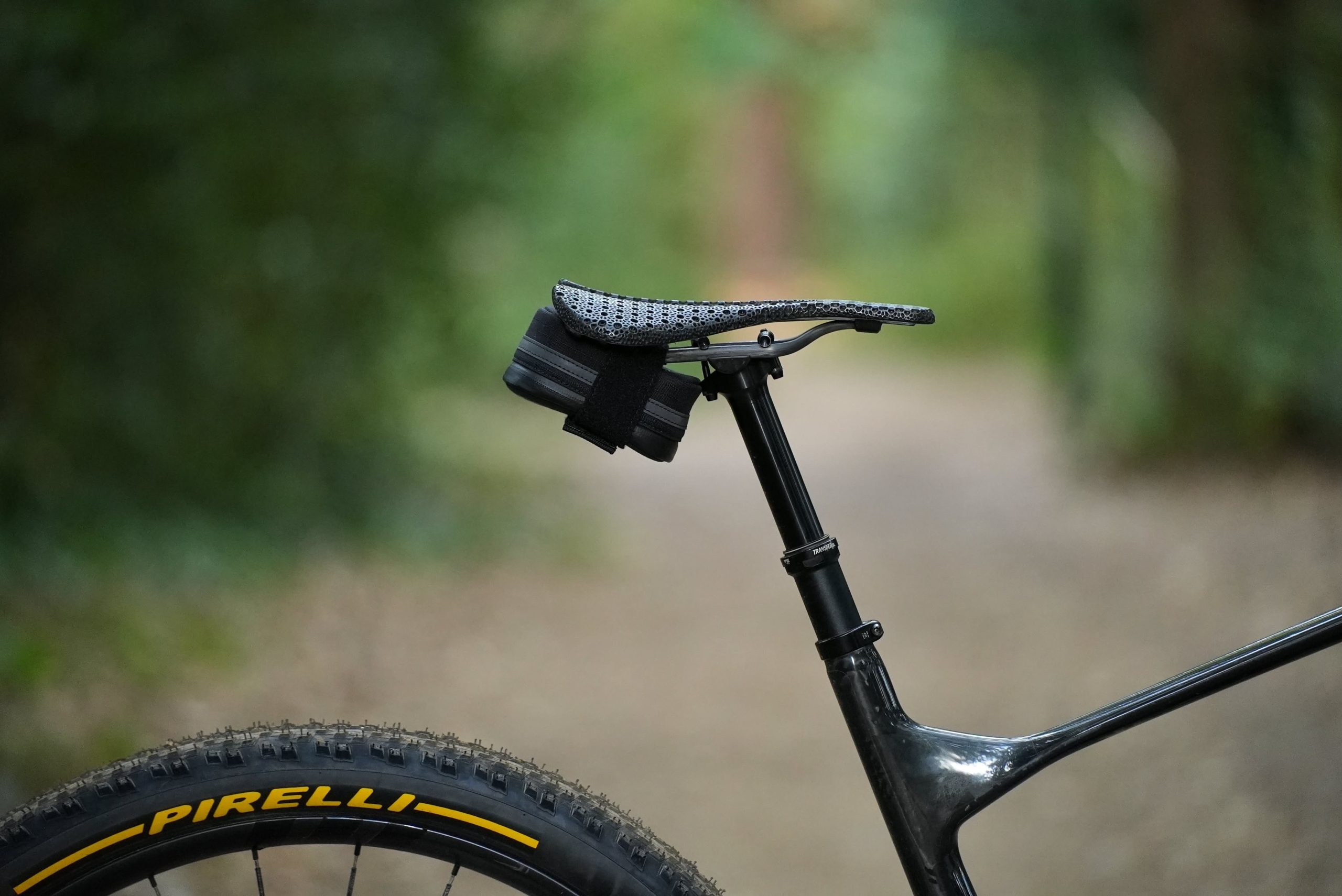
When it came to designing the Quickdraw bag, de Brun and the team found there were three different types of bags: larger designs that remain on the bike at all times, performance-focused seat rolls and quick-release bags.
“An old-school bag is always shaking around, seat rolls require you to undo the whole thing, and quick-release bags are often bulky and hang far below the saddle,” he says.
“Each type of saddle bag has a pretty significant inconvenience. We started to evaluate what's out there and the shortcomings. We quickly identified that we wanted our bag to be a one-handed, snap-in, snap-out design with a strap that would secure and cinch it tight into place.”
Straightforward solution, efficient execution
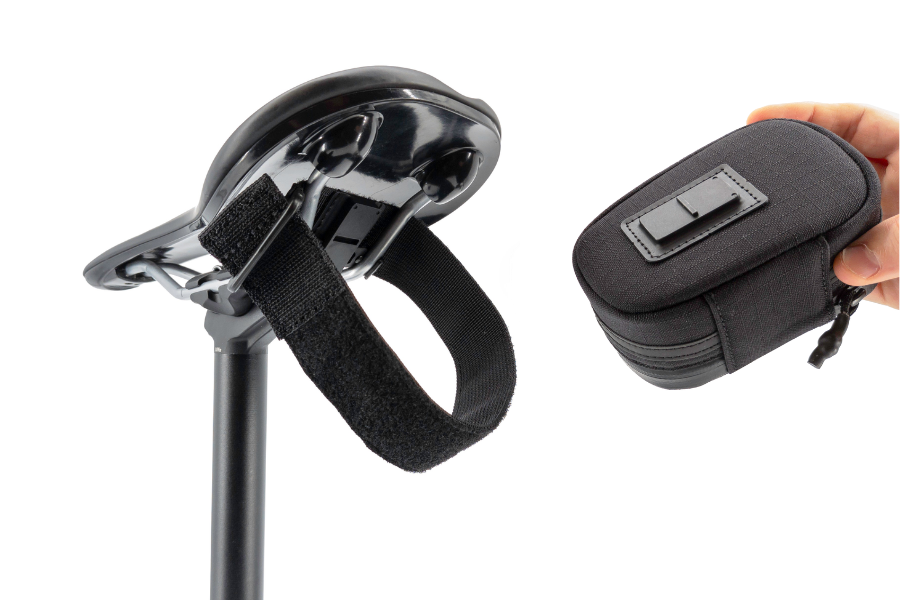
The resulting saddle bag comes in two parts. A strap fits to the saddle rails with two clips and features a magnetic plate. The actual saddle bag has a corresponding magnetic feature sewn inside, which aligns with the plate on the strap.
“The magnet in the strap will hold the fully-loaded bag without the strap being fully secured. Once the strap is tightened it cinches everything down and holds the bag in place,” de Brun explains.
The Quickdraw comes in two sizes – small and medium – that are geared towards a minimalist roadie and the needs of a wide-tyre gravel or mountain bike rider respectively.
Compatible with round saddle rails and able to work with dropper and suspension posts, the bag should work for the majority of riders, but de Brun adds that it’s not designed to be able to store everything you’d ever need on a ride.
“We tried to find a balance between having a useful amount of storage in a compact design,” he says.
The bag itself has a high-visibility inner liner, making it easy to see its contents without having to rummage around, and it opens luggage-style. You can also purchase a second strap for another bike and swap the Quickdraw bag seamlessly between bikes.
"If the bag isn’t bursting at the seams, the strap can be used to compress it further, providing an even more compact design," de Brun adds.
Most importantly, the bag underwent extensive testing during a hard winter in Philadelphia, and using it with thick winter gloves is no problem.
The Redshift Quickdraw Saddle Bag is available now from Redshift Sports.