The North Shore holds an almost mythical hold over the mountain bike world. Legendary trails lay in its dank forest landscape, often shrouded in swirling mist, ridden by legendary riders on bikes built by legendary brands.
Ask any rider who cut their teeth on mountain biking in the 1990s and early 2000s, and they’ll almost certainly have had a poster on their bedroom wall of a Canadian rider hucking off a cliff, carving through some scree, or balancing precariously on some wooden features that made this stretch of mountains on Vancouver’s outskirts world famous.
As one of those riders whose childhood was time-stamped by MBUK’s monthly arrival through the letterbox, the North Shore has always held a place in my imagination. Its distance from home and, frankly, my aversion to get my wheels too far off the ground (regardless of whether there’s woodwork or air underneath them), meant I always assumed it would be one of those places seen from afar, on magazine pages or VHS tapes.
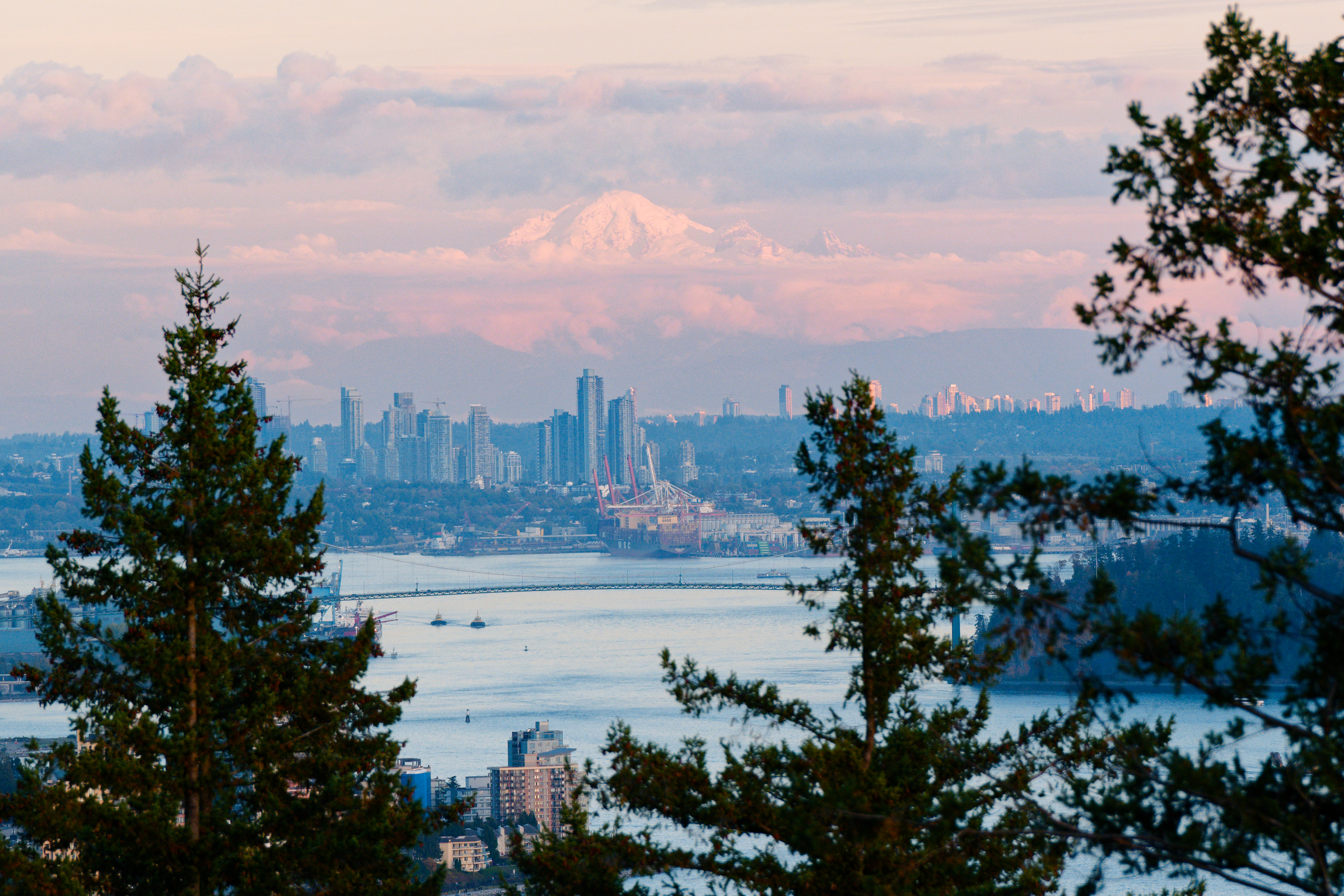
That changed this summer when an offer came through via email – travel to Canada and spend the day with the team at the rejuvenated Rocky Mountain Cycles brand with Wade Simmons, their long-time ambassador and freeride pioneer.
Not only would I get to find out what’s going on with one of the industry’s oldest brands, I’d get to head out onto the North Shore trails (only a stone's throw away from their HQ) with Wade, Andreas ‘Dre’ Hestler (the brand’s figurehead) and some of the Rocky Mountain team.
It didn’t take long for me to reply with an emphatic ‘yes’.
From the ashes
In any other situation, I’d have been gutted to wake up to a wet and grey day when visiting a new riding spot. But this is the North Shore, and if I’m truly living my childhood dream, a bright sunny day just wouldn’t have fitted my internal narrative.
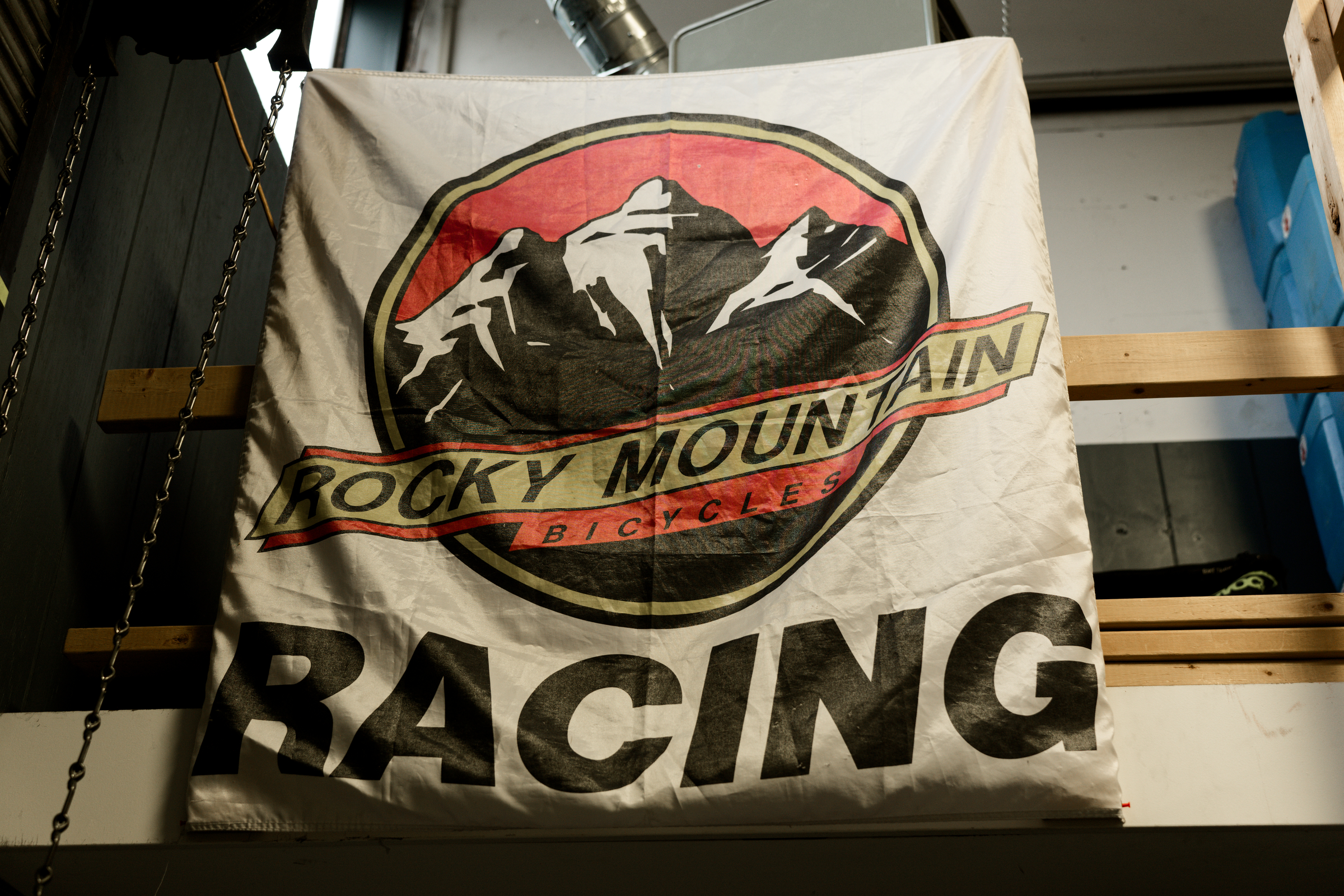
We kick the day off at the new Rocky Mountain HQ. The brand started way back in 1981 and has produced some of the most iconic mountain bikes around over the years, from the Slayer, Altitude and Element models to today’s Powerplay eMTB range.
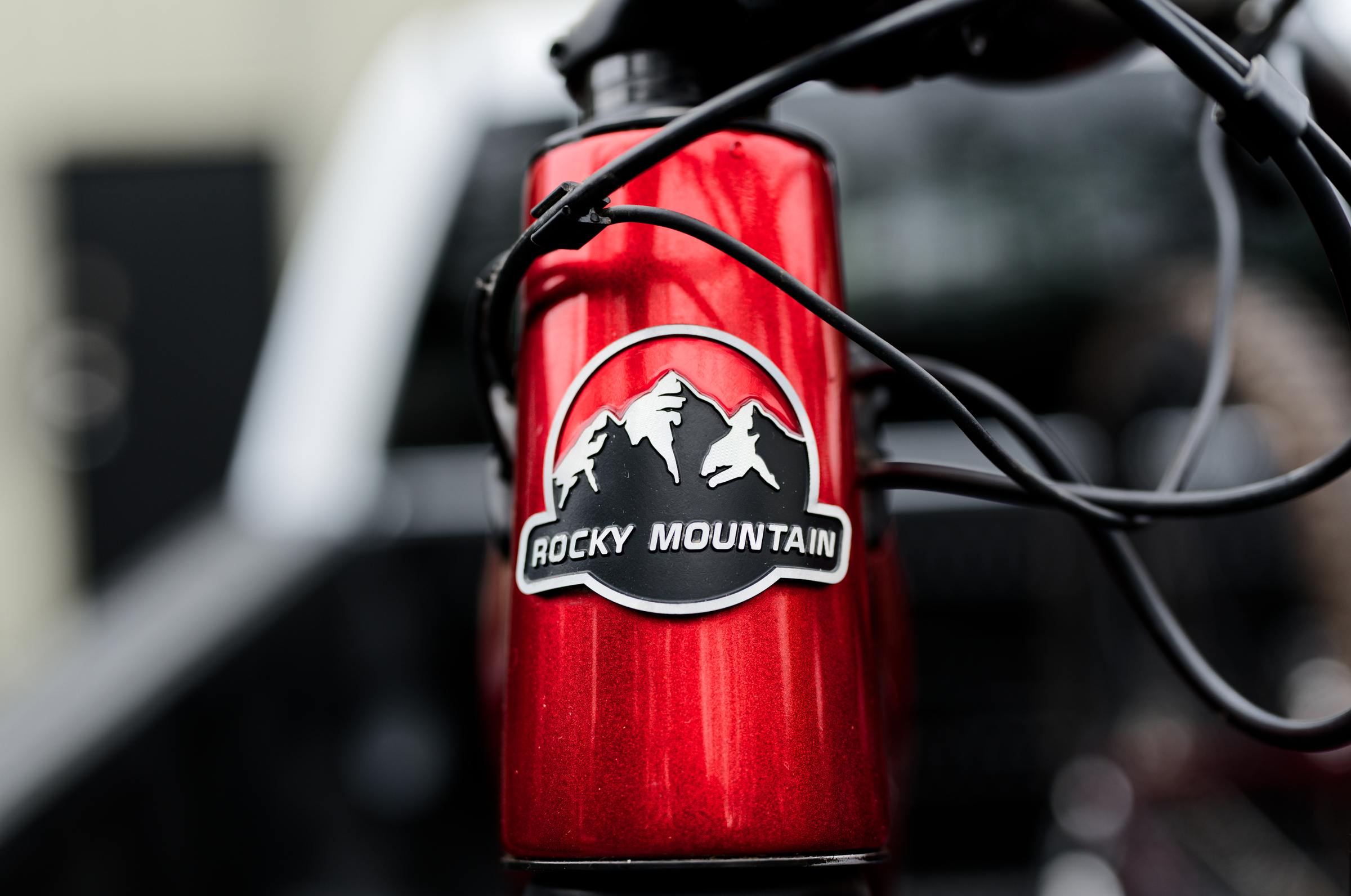
But, in 2024, the brand was on the verge of bankruptcy, with the team cut and the company wound down. However, in early 2025, a group of Canadian investors stepped in, purchased the brand and set about rebuilding one of mountain biking’s most legendary companies.
A few of the old hands were kept on, including Dre and Ken Perras, who have been hard at work creating the next generation of Rocky Mountain.
Espressos were on hand as I took in some of the classic frames saved from the restructure’s turbulent days, while we sussed out a plan and lined up a special guest we’d bump into later in the day.
Into the mist
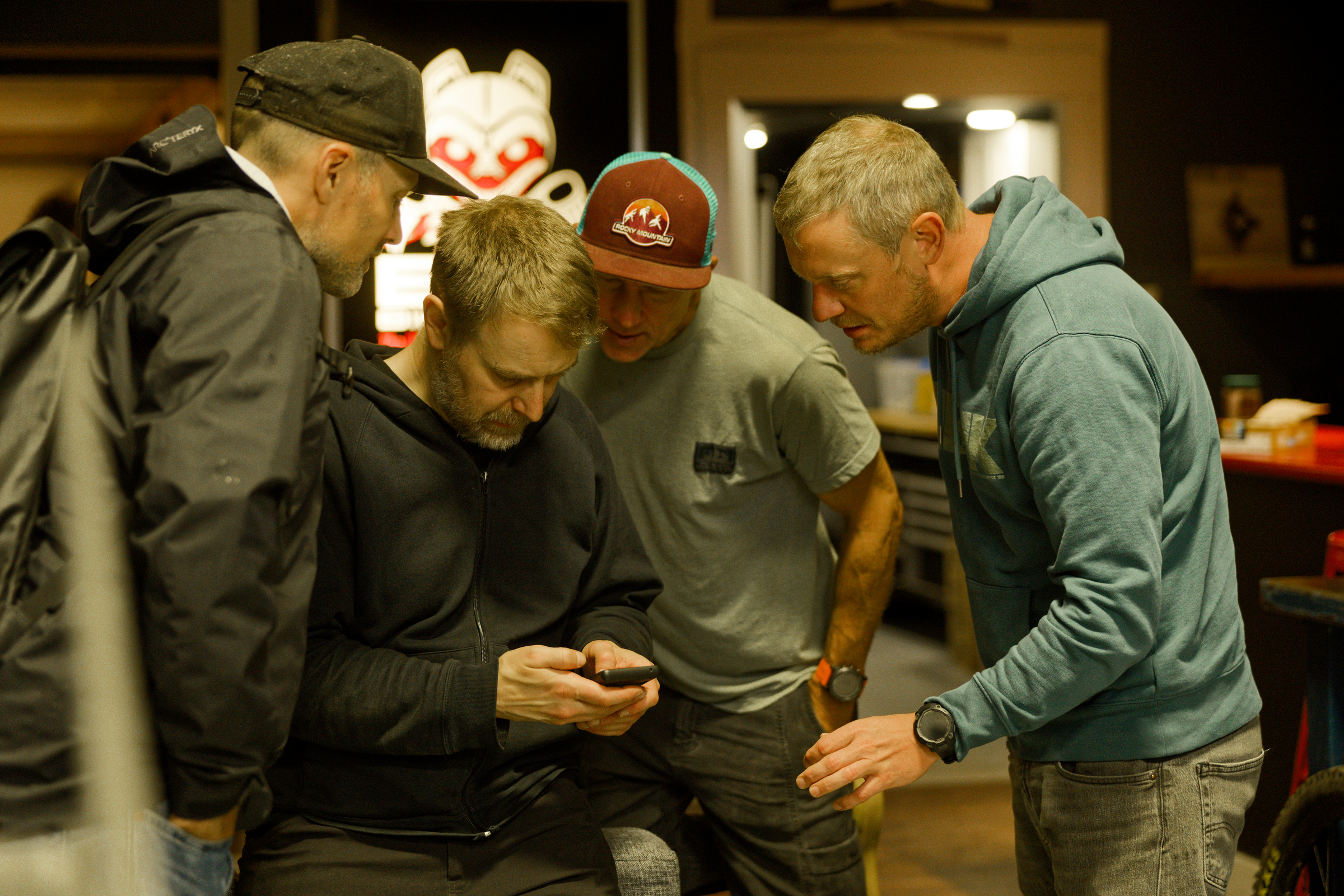
Caffeine consumed, it’s just a short hop in the truck to Mount Seymour, home of the Shore and one of the birthplaces of the freeride movement back in the early 90s. Wade Simmons, long-time Rocky Mountain rider and the Godfather of Freeride himself, is ready and waiting to take us on a loop that would merely scratch the North Shore’s surface, but would give me a feel for the riding in the area that has shaped the entire sport.
We start with a climb, which gently winds us through the lower slopes of Mount Seymour, away from the houses and dog walkers that exist in the forest’s margins.
The trees are typically Canadian – huge monsters reaching for the sky, wrapped in a coat of moss and footed in ferns. With the mist hugging the ground, it’s as typical a scene as one could have imagined.
The higher we go, the narrower the trails, and it’s not long before we spy the odd taste of what’s to come. Fallen logs alongside the trail have had their tops shaved off to leave a tyre-width wide surface asking to be wobbled along, while some tight corners have clearly been shaped to make it more mountain-bike friendly.
Before we’ve hit any descents, Wade’s infectious excitement for riding, along with the motor bolted to my bike, make the climbs enjoyable. Techy features, whether they be tight lines up through tree roots, or rocky steps, start littering the trail as we go.
A non-assisted bike would be fun, but it’d definitely be more of a physical challenge that would have left me sweating in my full waterproofs.
Meeting your heroes
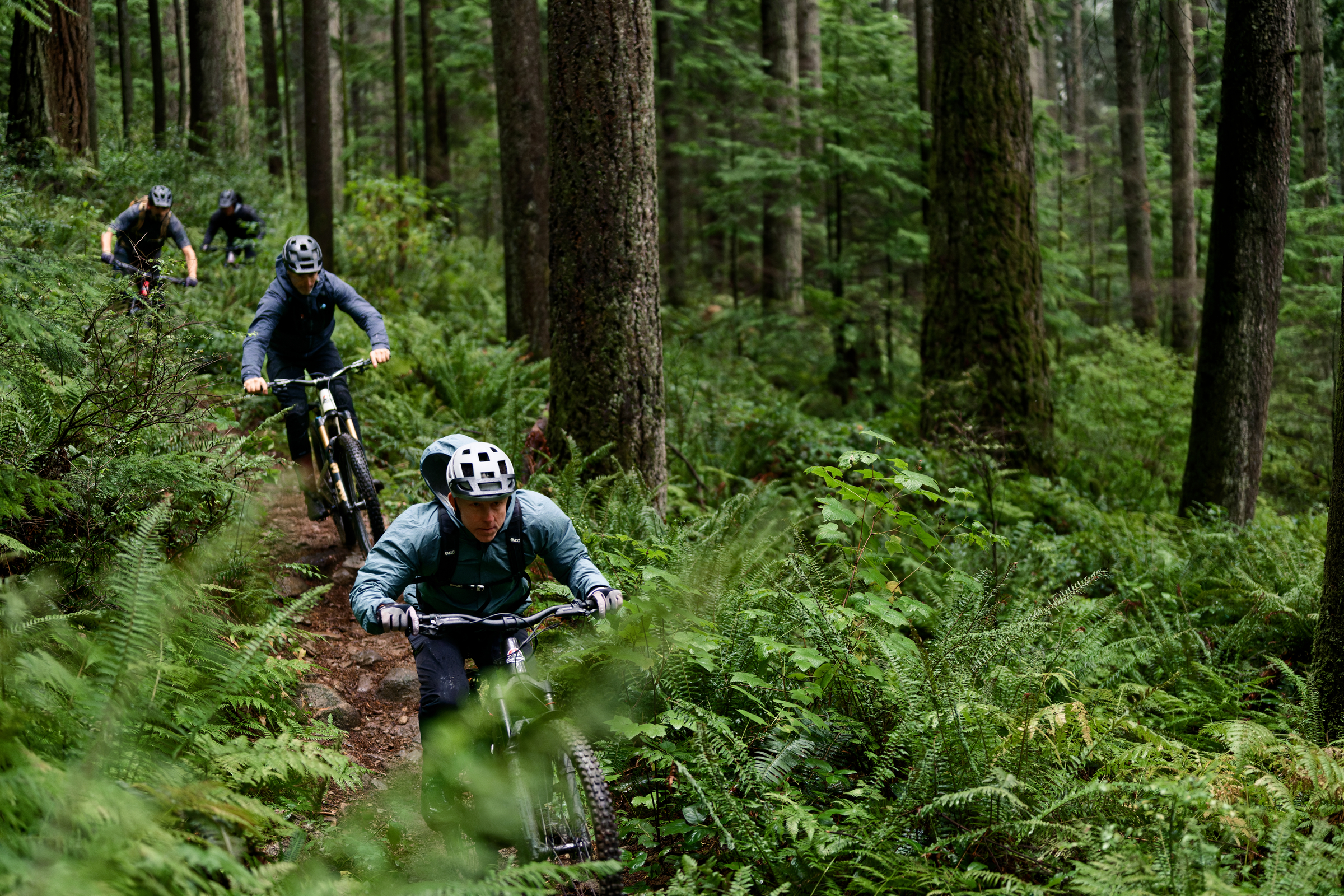
As much as this ride is about experiencing the North Shore, it’s also a chance to chat to the Rocky Mountain team to learn more about their past, present and future.
Wade and I stop midway up the climb to chat to Dre – he’s been at Rocky Mountain since 1996, when he competed at the Atlanta Olympics in mountain biking’s debut at the games, so he’s certainly seen a lot of the company’s history!
From the initial Sherpa mountain bike, through XC, DH, and freeride, the brand has been a part of the picture. Rocky Mountain was one of the first to bring out a full-suspension XC race bike (the Element), was an early adopter of 27.5in wheels, and even developed its own eMTB motor that had some distinct performance attributes over the competition.
While the brand originally welded bikes locally, growth meant overseas manufacturing. But the R&D team was always based in the North Shore, and Dre asserts that the North Shore is in Rocky Mountain’s DNA. Wade chimes in: “Bikes that work here work anywhere. Bikes that work anywhere won’t necessarily work here!”
Looking forward
With Dre and Wade showing the way, there’s another stop to make before the day’s first descent. This time, it’s with Ken Perras, Rocky Mountain’s director of product.
With 45 years of history behind the brand, Ken is responsible for looking into what the future holds. There’s definitely a shake-up on the cards, with the whole line-up getting a refresh in time. However, the classic lines – the Altitude, Element, Instinct, and Slayer – will still be part of that future.
While Ken can’t tell me too much about the bike I’m riding, it’s a project the brand has been working on for a while, and I’d expect to see it break cover properly in 2027.
The weather has eased as we’ve climbed, although the ground is still sopping wet following some heavy overnight rain.
We’re about to drop into our trail down Seymour – Forever After. Ken tells me that this trail is maintained, with a license to do so, by Rocky Mountain’s director of R&D, Tom Ferenc – testament to how involved Rocky Mountain is in the area.
Mind-blowing
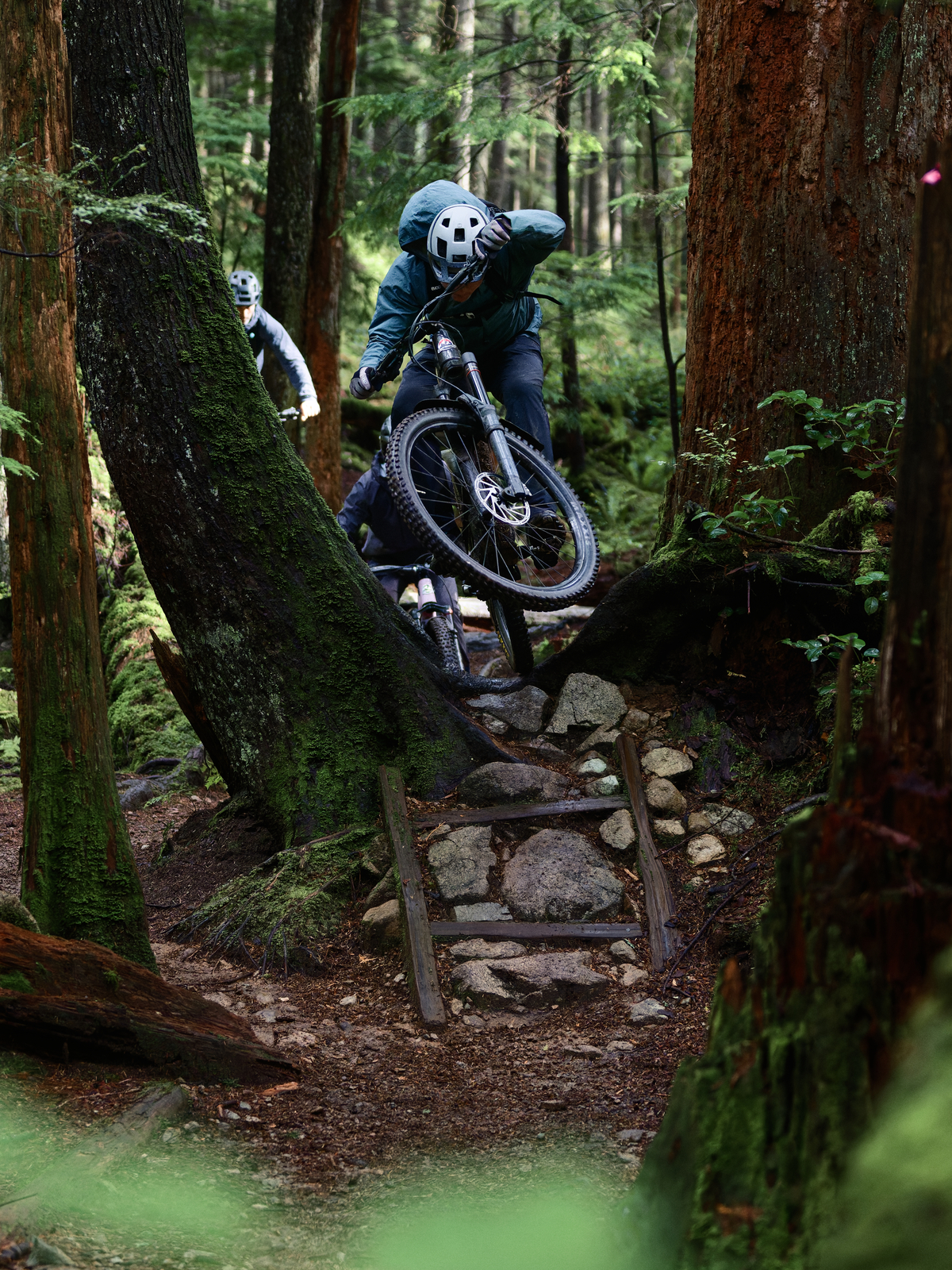
Without a doubt, this trail is one of the most fun I’ve ridden in a long time. Dropping in behind Wade, Ken and Dre, I’m catapulted up to their speeds, trusting the lines that these guys are taking and putting all my brain power into the twists and turns, rock rolls and root steps.
There’s a pop between two trees that comes out of nowhere, and some huge wet boulders that, if the guys in front are to be believed, rely on some high lines before dropping into the unknown behind them. While exploring new trails is always fun, riding them blind without a guide can leave me frustrated at the speed I carry. Not here though – I’m going full gas.
It wouldn’t be the North Shore without some wooden features, and while more of those were to come at the next spot, I was treated to a little warm-up in the form of a huge boulder that I’m pretty sure I could park my van inside.
The line up onto this room-height block required plenty of momentum to bump up onto the top, before the wet, off-camber rock demanded plenty of braking control. Go straight on and you’d end up below in the ferns; instead, a last-minute turn to the left revealed a steep drop/roll onto a wooden ramp, fading back onto the trail proper.
Dig crew
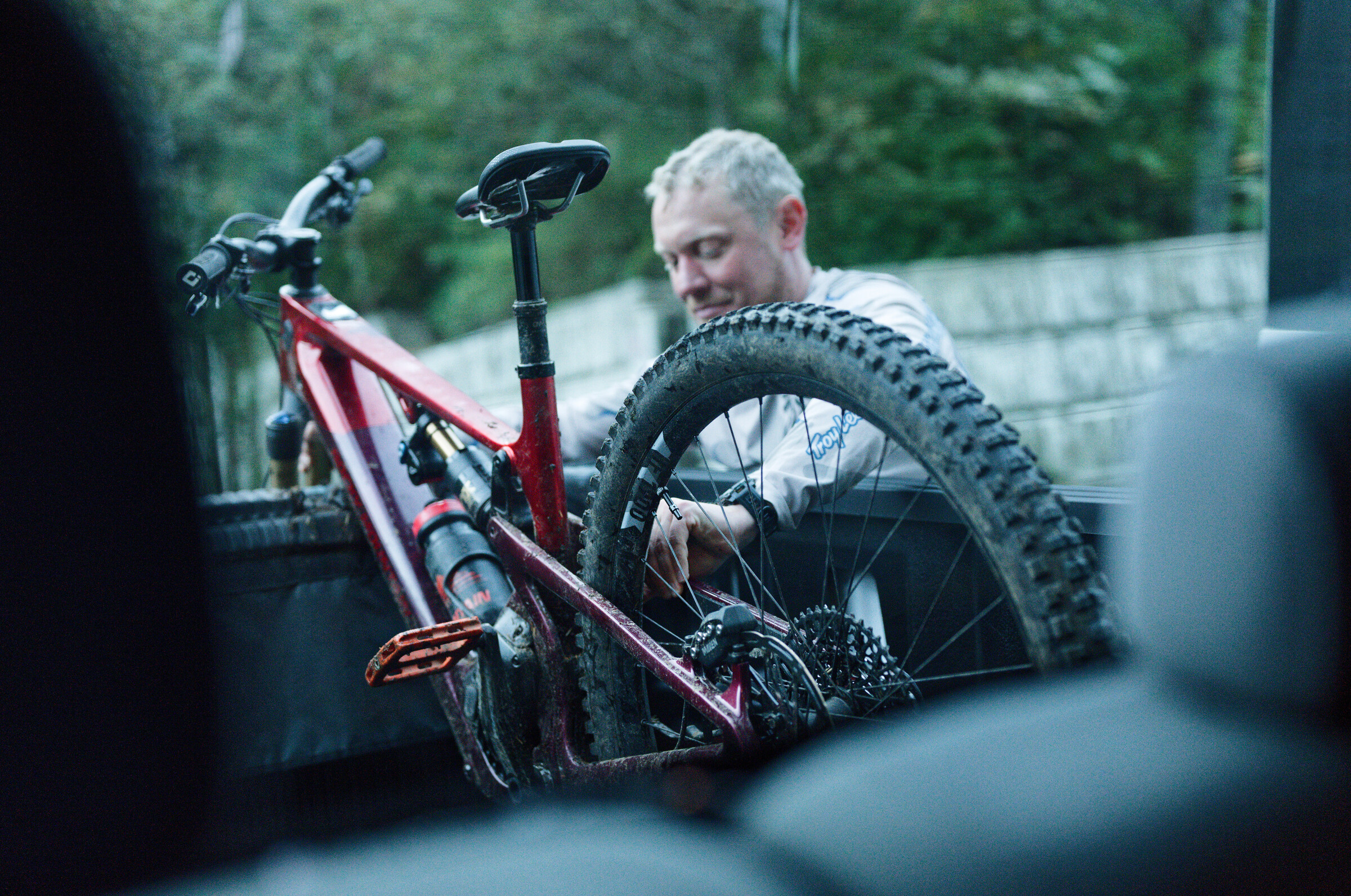
Having dropped back down to the trucks, we were soon back on the road as the weather revealed a sunny afternoon was on its way. We headed to Mount Fromme, the next mountain along the range, to meet Digger.
Todd ‘Digger’ Fiander is a true unsung hero of mountain biking – he’s been building and maintaining trails for 45 years, which have featured in magazines, adverts, videos, films and social media clips since the dawn of mountain bike media.
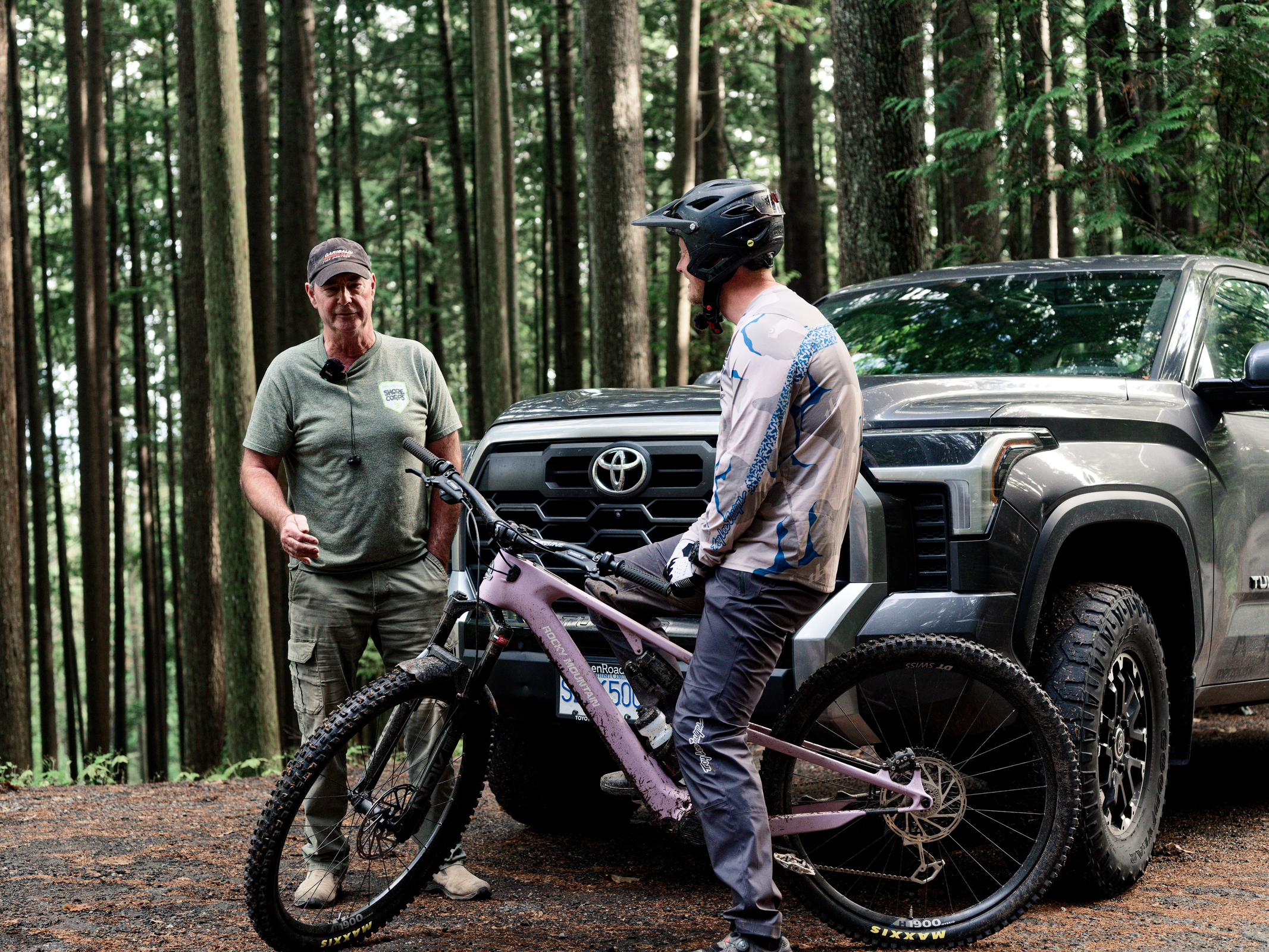
Many of the famous features of Digger’s 47 North Shore trails were born from his imagination.
Take teeter-totters (or see-saws) – this was a way of Digger getting riders across a metre-deep depression in the boggy ground, which blew his riding buddies away when they first saw it. To soften the blow of a crash, he’d fill the depression with water – a less painful crash, and a far more amusing spectacle for his pals!
Digger is still out creating trails, and so we’re heading to one he’s contributed to next. Here will be my first proper section of raised woodwork; its curved lines designed to blend into nature far easier than straight-cut edges would, as is Digger’s style.
Hitting the Shore
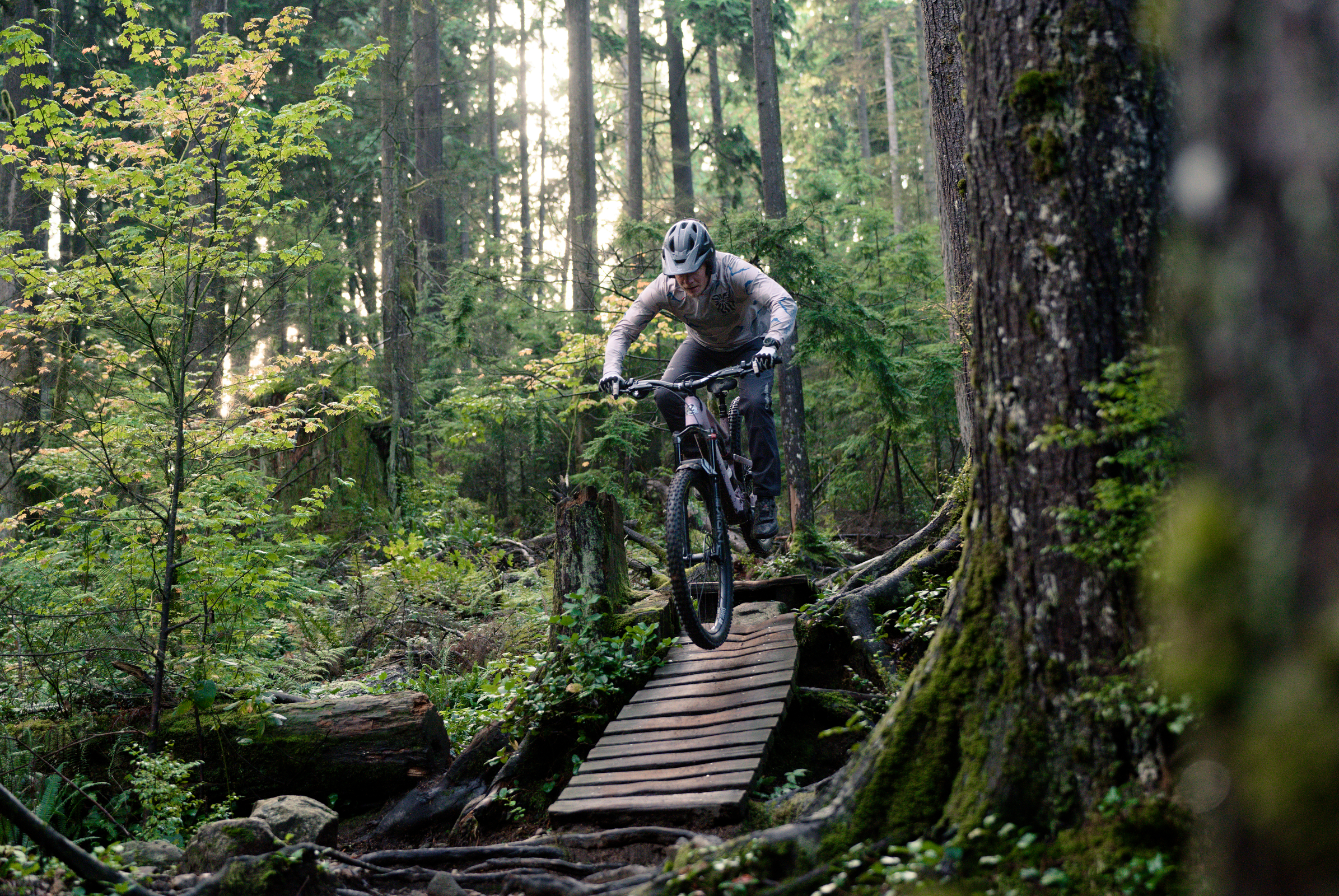
While the twists and turns of the upper section of Natural High would be worth a story of their own, it’s the raised woodwork and skinnies of this trail that make their mark.
My first, proper raised section of North Shore might not have been the narrowest, highest or twistiest on the mountain, but as a rider more accustomed to tyres on dirt than on wood (and well above ground level), it took a few looks before I committed.
Fortunately, if there’s ever a wheel to follow, Wade Simmons’ is probably the one. The broad low-level wooden structure turned right while narrowing to a mere foot-wide entrance, before roller-coasting up and down, then up again before diving between some trees and down three metres to the dirt below.
It might not be grand enough to make a segment in an MTB video I’d have watched back in the 2000s, but there’s little like the buzz of seeing the ground flying back towards you as you drop down a wooden ramp.
From there, the woodwork continues. It’s mostly closer to the ground, but much narrower. At times the planks are barely wider than a modern mountain bike tyre, and the rear derailleur comes perilously close to destruction at one point when I can’t quite keep both wheels on the wood mid-turn.
With the lush forest groundcover being so dense, sight-lines are limited in places – no less than when the planks of wood (a foot wide that I’m eyeing up) disappear into nothing. I’m assured the blind drop is much easier than the balance required to accelerate uphill on the woodwork ahead of it.
History made
Before we end the day, Wade and I have time to take a pew on a particularly narrow and damp bit of woodwork. Wade is a proper legend of the sport, and I wanted to find out a little more from him about what it was like as a freerider back in the day.
“Back in the day, we didn’t plan it – it just happened as we did it, fumbling through it!” he says.
If there was a log there, Wade, Digger and their riding mates would clean it off and give it a go.
Collectively, the riders on the North Shore unintentionally invented this style of riding – mountain biking was becoming cool, so they figured they’d see what they could ride.
Making a living from the sport was barely on the agenda to start with. Digger had a Canon video camera, so they’d film their riding and then watch the footage back in their local bike shop for a laugh. Someone eventually figured they might as well put some music behind the footage and create some of the earliest mountain bike films.
Along the way, Wade was riding with some of the other true legends of mountain biking, and formed the ‘Fro Riders’ team. This consisted of Wade, Brett Tippie and Richie Schley, with Rocky Mountain backing them. In 1998, their iconic first advert went live and the team’s stock went through the roof. This was recognised by the MTB Hall of Fame, into which all three riders were inducted.
Riders of a certain age will have no doubt seen Wade in a whole range of photos and videos. From his iconic drop over the Marzocchi truck in New World Disorder, to winning the inaugral Red Bull Rampage in 2001. “It was a shit show. We were terrible! We didn’t know if riding the cliffs was possible,” Wade tells me.
What is for sure is the mark Wade, Dre, Digger and the wider group of Rocky Mountain riders and engineers have had on mountain biking. Their pioneering riding, digging and engineering have shaped the sport beyond what they ever envisaged, and to go and visit the guys and ride their trails was truly a bucket-list experience.