Not cycling can make you a much stronger cyclist. That’s the counterintuitive message many tunnel-visioned cyclists need to hear.
Yes, you love riding your bike. Yes, the best way to get better at cycling is to do it more often. But cross-training with other activities can deliver a sweeping range of physical and mental advantages that will transform you into a more powerful, durable and rounded cyclist.
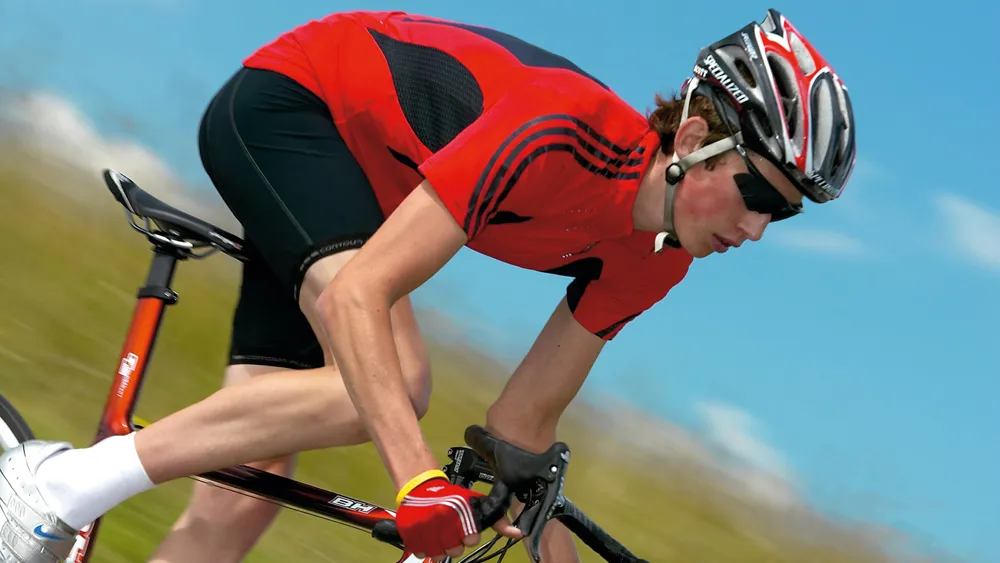
“Remember that cycling is very one-dimensional: it's just one movement pattern in one plane of motion,” warns Luiz Silva, personal trainer and head of fitness and wellbeing at Castle Royle.
“You spend a long time fixed in that locked-up, aerodynamic position. And cycling isn’t weight-bearing, which means you need to consider ways to improve your general bone strength and joint mobility.

"It is possible for athletes to over-specialise. But cross-training will improve your functional fitness, mobility, joint health, bone strength, power, speed and flexibility.”
Whatever activity you do, you’ll notice the benefits on and off the bike. Leg strength crafted in the gym will boost your speed and power during interval efforts on the bike.
Core strength honed by yoga, kayaking or rock climbing will empower you to hold your aero position for longer.
The flexibility and mobility derived from padel or tennis sessions will mean you are less likely to injure yourself lifting luggage out of the car. And Pilates will enhance your posture after another day sat at your desk.
“You can do most of your cross-training in the early season or during periods of recovery, but even in the main cycling season you should find ways to include a wider variety of sessions,” says Silva.
Here are seven areas of fitness cross-training will target.
Strength and balance

Core strength is a hugely neglected skillset for cyclists. But you need good core control and balance to hold an aero position, or to unleash high-power efforts on the bike. Cross-training offers fun ways to remedy this issue.
“Swimming develops really good core control as rotation is required for each stroke,” says Silva. “Doing some MTB rides can also help as you need to engage your core muscles to deal with the unexpected terrain. Pilates works your core and your legs really well, too.”
Racket sports are a great option here. “Padel is the big one at the moment,” suggests Silva. “You don’t need a lot of skill to try it, but you will be working on a lot of rotational movements and planes of motion that cycling just won’t work.”
All these activities are a lot more fun than doing endless planks and crunches, too. “You can have fun playing rounders and other ‘barbecue’ games over the summer,” says Silva.
“Activities like this all develop your core and your hand-eye coordination, which is great for your balance and agility.”
Yoga remains the core-training choice for many pro cyclists. “Yoga is great for your core, your balance and your breathing,” says Silva.
“You need to be able to move well to perform at the highest level. Yoga improves the hyperextension of your back and loosens your hip flexors to restore good movement patterns across your body.”
Upper-body strength

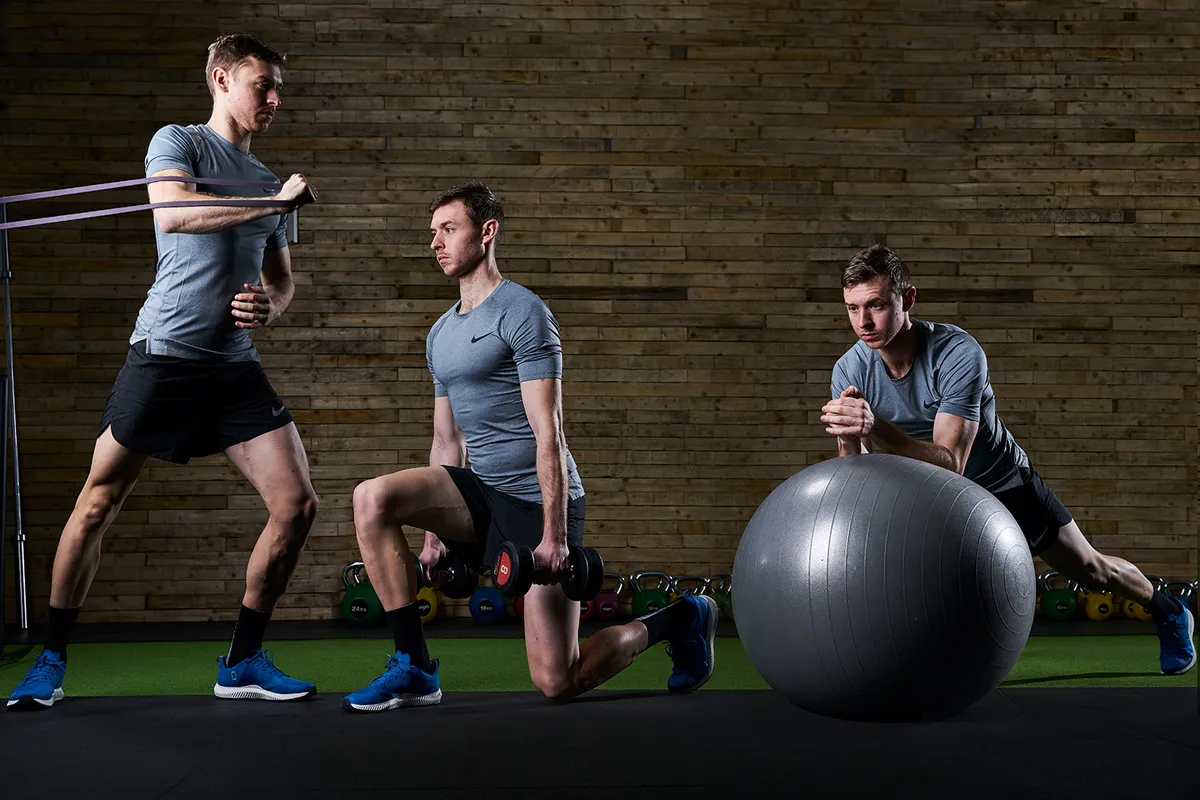
It is easy for road cyclists to ignore their upper-body strength, but this is an important component of your stability on the bike. Don’t think you have to lift dumbbells to get stronger.
“Swimming will really help with the development of your upper-body strength and mobility,” says Silva. “Racket sports, like padel and tennis, develop a nice functional strength in your upper body, too.
"And adventure sports like kayaking are great for upper-body work, because you get that rotation motion which you need when doing a sprint on the bike.
"Paddle boarding works your arms, but as you always have one foot in front and one sideways, you work both sides and your core.
"And MTB rides will take you on uneven downhill and uphill sections, so you will develop a really functional cycling-specific upper-body strength.”
Injury resilience

It doesn’t matter how fit you are on the bike, if you are plagued by niggling injuries your training and performance will soon fall apart. Cross-training can galvanise your physique by conditioning underused muscles, joints and tendons.
“Gym work shouldn’t be missing from any road cyclist’s training plan,” says Silva. “At the beginning, the focus should be on good form and higher reps to strengthen the whole body for long hours on the road.
"Gym stuff will strengthen the joints in a way that riding a bike just won't do. Cycling is about endless repetitions of low resistance.
"But when you load up a barbell, you’re doing powerful moves, so you're working your tendons and muscles in a different way. The key exercises are squats and deadlifts. Get your technique right and then increase the load over time.”
And don’t worry about putting on muscle bulk. Unless you massively increase your daily calorie intake, endurance athletes won’t pack on Schwarzenegger-level beef.
Power and speed
Track cyclists such as Jack Carlin and Katy Marchant develop their raw explosive power in the gym. And resistance training can deliver similar bonuses for road cyclists, too, enabling you to deliver more powerful efforts and sprint intervals. Plyometric training – focusing on explosive bursts of power – is especially productive.
“As your volume of training on the bike increases, switch your gym focus to shorter sessions of a higher intensity to develop explosiveness,” says Silva.
“Try step-ups on a box, while carrying dumbbells on each side, focusing on exploding upwards. You can also do calisthenics at home.
"Try some box jumps and touch jumps (touch the floor, leap up, and reach high above your head), really focusing on your power. Get really low on the squat and really drive that explosive power up.”
Cyclists aren’t usually afraid of hills, so try boosting your power and speed with hill runs, too. “Uphill running will improve glute and hamstring engagement, so it will improve your cycling power and speed,” explains Silva.
“Road cyclists can be quite quad-dominant and we need to get the glutes and hamstrings doing that pushing motion.
"For road cycling specific gains, you don't want to be fatiguing or generating that power for only a few seconds. But hill running conditions you to maintain a higher power wattage for a bit longer, anything from two minutes to 20 minutes.”
Mixing up your bike choice can also help. “MTB is more explosive than road cycling, and that quality crosses over nicely to the road,” says Silva. For proof, just look at the explosive road performances of Olympic MTB champion Tom Pidcock.
Cardiovascular fitness

Doing lots of cycling naturally remains the most efficient way to become a fitter cyclist. But cross-training with other cardio-based sports can help you to increase your training volume without fatiguing the same muscle groups.
“Swimming is great for cardio fitness, as it gives you the opportunity to do cardio while giving your legs more rest,” suggests Silva.
“Running will also deliver cardio benefits, although volume and intensity will have to be considered if you’re doing a lot of cycling.”
Adapting your choices with the seasons is a good way to keep things fresh. During summer holidays, enjoy swims in the ocean and short park jogs.
Over winter, switch to long hikes and cross-country runs. “The benefits will translate to cycling, with an improved cardiorespiratory capacity, VO2 Max and aerobic threshold,” says Silva.
Leg strength and mobility
It is easy to assume that because cycling is a leg-based activity, you don’t need to do supplementary lower-body work. This is wrong.
“Cycling is very one-dimensional, so you need to improve your range of motion and strength,” says Silva.
Challenging your legs with other activities will enhance your leg strength and joint mobility, helping to enhance your power on the bike and improve your general health, from flexibility to bone density.
“Running is good for cyclists,” says Silva. “The impact will improve lower-leg bone density, and help the quads and other muscles to fire.
"Cross-country running, in particular, works the ankle joints, which often get neglected by cyclists.”
If you are new to running, start slowly and build up the volume gradually over time.
Try to think outside of the usual sporting repertoire. “Rock climbing is very leg-dominant and it encourages you to move your legs in different planes of motion,” says Silva.
“And skiing encourages you to use your knees and hip joints and to experience a high degree of rotation around the hips and torso, which will really help when you’re riding your bike.”
Cycling can be a solitary pursuit, but don’t forget the benefits of team sports, too. “It is really beneficial for a cyclist to play a team sport, as you work so many planes of motion,” says Silva.
“Examples could be six-a-side football, tag rugby or a game of rounders. It doesn’t need to be competitive. All those changes of direction and rotational movements will give you everything you don't get from cycling.”
Motivation
Cross-training can boost your mood and motivation by offering you a fresh and fun approach to training.
“Even if you love it, any endurance sport like cycling can feel monotone when you are training hard, which can lead to a lack of effort,” says Silva. “Cross-training makes things a bit more fun and breaks down the repetition.”
Social sports are especially rewarding. Playing five-a-side football gives you a social activity to enjoy on cold winter nights, and meeting a friend for a lunchtime jog over summer is often easier and more productive than doing a short 30-minute bike ride.
“Different sports like swimming or yoga also function as recovery sessions, helping to reduce cortisol levels, accelerate muscle protein synthesis and speed up the removal of lactic acid,” says Silva. “So they all contribute to your success on the bike.”