
Picture the scene. You’re climbing in a group, the pace a solid seven out of 10. Conversation has tapered to expletives and short sentences.
Suddenly you feel your energy and power melt away – you check your head unit and you are now 70 watts adrift. At the same time, you feel dizzy or fatigued.
You may be seeing a confused heart-rate measurement. You have questions that extend way beyond your grupetto’s rear wheels disappearing over the horizon.
You have just had your first brush with atrial fibrillation, A-fib or AF – the world’s most common cardiac arrhythmia.
AF affects about 3% of the general population, but a much higher proportion of endurance enthusiasts; especially midlife cyclists.
- Fit older male cyclists face these hidden heart risks – here's why that shouldn't put you off riding
AF's athletic origins
The incidence of AF in midlife endurance sport, and particularly cyclists, has been a gradually emerging paradox over the last 20 years.
The story arguably begins with a 2008 research paper by Sylvette Baldesberger et al – “Sinus node disease and arrhythmias in the long-term follow-up of former professional cyclists”.
Baldesberger’s research reviewed 62 ex-professional Swiss bike racers (average age 66–67), who had previously competed in the Tour de Suisse.
The comparison group was 62 age-matched male golfers. The conclusion was astonishing – 10% of the cycling group had atrial flutter or fibrillation versus 0% for the golfer group. Golf 1 cycling 0.
This is a paradox story because cycling participation uncontroversially makes us all fitter, stronger and healthier as we age, but it does also seem to encourage cardiac arrhythmias, which golf does not.
But what exactly is AF, why is it more likely to develop in cyclists, what treatment exists and can we prevent it in the first place?
How does AF develop in cyclists?
Like the kitchen in our homes, our hearts have both plumbing and wiring elements. A wondrous coordination of the latter over the former, which enables us to do things such as climb Mont Ventoux into our 60s and beyond.
The heart has four discrete chambers: the left atrium and ventricle, and the right atrium and ventricle. The atria are the heart’s upper chambers and the ventricles the lower chambers.
The right atrium (low-pressure side) receives deoxygenated blood from your exercising muscles (and the rest of your body).
The right atrium passes this blood to the right ventricle, where it is pumped to the lungs for more oxygen. The left atrium (high-pressure side) receives the freshly oxygenated blood and passes it to the left ventricle, where it is then pumped to our screaming muscles.
In more normal times, our heart’s pacemaker, the SA or sinoatrial node, directs the atria to contract, which harmonises with our AV, or atrioventricular node, to organise the most effective pump of the ventricles, in order to respond to the most recent assault we have placed upon our musculoskeletal system.
When we exercise, our hearts can pump at six times the quantity compared to being at rest; half comes from our increased heart rate, the other half from the increased volume of the heart itself.
And this is where the architecture of our hearts becomes important, as cardiologist, Dr Nigel Stephens, observes: “A thick wall like the ventricle will snap back to its normal size, but a thin wall (1mm) structure, like the left atrium, is subject to chronic stress and stretch.”
Why do midlife cyclists get AF?

Decades in the saddle leads to mostly beneficial heart changes that help us perform at a higher rate than the unfit: lower resting pulse, greater capacity and strength.
But it can also leave us with a ballooning left atrium that remains disproportionately enlarged. If you have been riding your bike for decades, this may well be the case.
Zooming in on the structure of our enlarged atrium could reveal scar-like tissue between the heart-muscle fibres themselves. These are thought to be factors in creating the environment for AF to develop.
“AF is essentially millions of tiny micro circuits of electricity,” says Dr Stephens. “And the larger the surface area, the greater the propensity of the atrium to form these tiny circuits.”
The loss of power we feel when we experience AF is the outbreak of chaos within the electrical signalling of the atrium, that make it tremble ineffectively or fibrillate.
The AV node responds by attempting to triage the anarchic signals from the atrium; however, irregular ventricular contractions and a huge wattage drop are inevitable.
Our heart rhythms have now become erratic. This is normally episodic, but in the moment the heart will put us into little-ring and limp-home mode.
The title of this article is a little misleading. AF isn’t disproportionally common in cyclists, so much as it stalks one particular group of cyclists – namely, midlife male cyclists, with thousands of miles in our legs. We are, in fact, an entirely new risk category.
Forty years ago, AF mostly split into two groups: people with a genetic predisposition to AF and older people with heart disease.
Because we – midlife performance cyclists – are a relatively recent medical phenomena, not everything is known. The research is underway as we ride.
Quite why women veteran athletes don’t seem to suffer with AF is yet another unknown. Maybe they benefit from the protective effects of decades of oestrogen production, or the fact that much of the immune system information is encoded on the X-chromosome, of which men only have one, but women have two.
During the writing of my book The Midlife Cyclist (2021), I talked to Philip Goulder about this. He’s a midlife cyclist, on top of his day job as professor of immunology at Oxford University.
“Testosterone makes muscles at the expense of investment in the immune response,” he told me. “Females need to invest more in the quality of their offspring, and hence in themselves, since they are left ‘holding the baby’ in many cases.” Women are, it seems, just better designed. Especially to be midlife athletes.
AF also seems to affect midlife cyclists more than midlife runners. Dr Nigel Stephens says that running regularly into our 50s and 60s is less common because of the muscular-skeletal loads, and why many ageing runners migrate to cycling.
Cai Davies, elite cyclist and PhD student in cardiovascular science at the University of Leicester, is heavily involved in research into AF within endurance exercise and says that it’s more often seen when people exercise beyond 10 hours a week – a volume more easily achieved in cycling than running.
So, is AF more likely to develop by going hard or going long? Stephens and Davies agree that all the evidence is saying long. It is just hours in the saddle.
What are the current treatments?
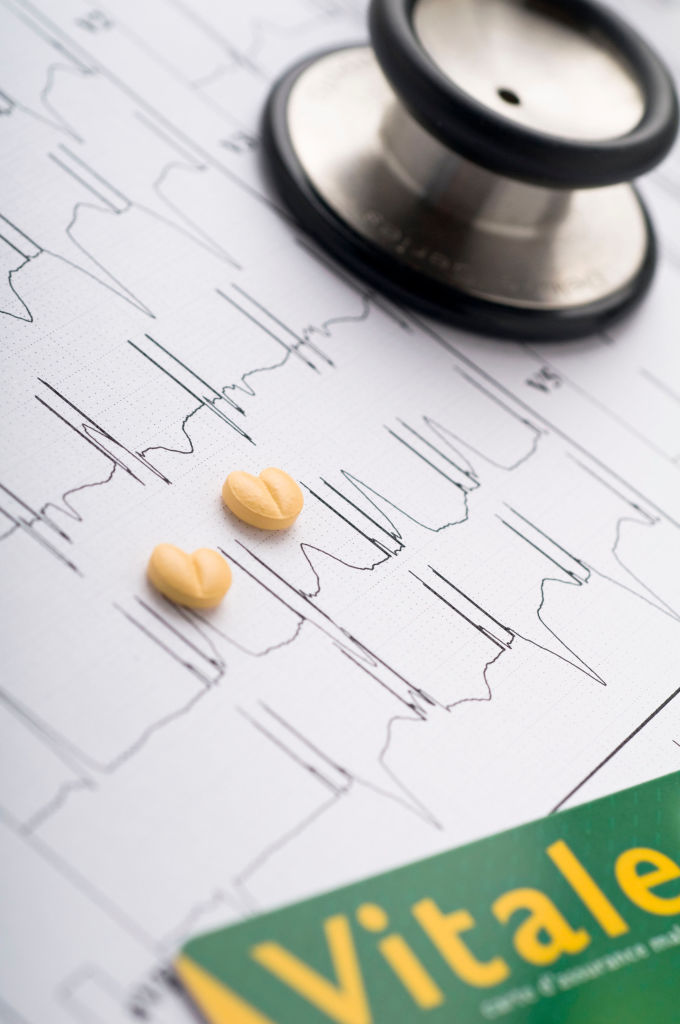
Firstly, anyone who suspects they have had an episode of AF should be assessed quickly by a cardiologist.
AF is generally very treatable, but rapid and accurate diagnosis is essential to dispel confounding conditions such as an overactive thyroid.
AF is a one-way street and will not resolve itself. The risk of it progressing increases with every episode. However, the speed and severity of progression is hugely variable and modifiable.
Common treatments are blood-thinning medication, beta blockers for heart-rate control, rhythm-restoring medications such as Flecainide and ablation (where a catheter uses heat/cold inside the heart to fix the irregular rhythm.)
What’s best for each person will depend upon their circumstances and AF progression. Midlife cyclists who are still racing may not be offered blood-thinners, because the risk of excess bleeding upon trauma may outweigh the small increase in stroke risk.
Neither will your cardiologist necessarily bounce you into an ablation after your first AF event. Ablation surgery is evolving all the time, but is still an invasive procedure, that is not always successful or permanent.
Dr Stephens is “very much in favour of using drugs in people in their 40s, 50s and 60s to mitigate deterioration for a number of years. It is a good thing to do”.
We shouldn’t be disappointed if surgery isn’t immediately prescribed. We should feel reassured – AF is a treatable condition. And we are now on the conveyor belt of evolving care, which will enable us to live a normal life and exercise freely.
Can we prevent the onset of AF?
In a word, no. AF isn’t totally understood yet, but it’s clear enough. It’s mostly a simple product of ageing. Living past 40 is a relatively recent phenomenon in human history and riding for thousands of hours can hasten the ageing process.
In so many ways, however, exercise fights that process: “Less common cancers, less vascular disease, less dementia, which vastly outweigh the nuisance of having AF,” says Dr Stephens.
He uses that word nuisance a lot with AF and it is clearly a nuisance that many of us are going to have to learn to live with. The advice for living with it runs parallel to the advice of avoiding it in the first place.
- Alcohol is a cardiac-toxin. For many cyclists, alcohol can be tracked back to their first episode and subsequent episodes of AF. If you don’t want to stop drinking, at least put as much space between the two activities as possible.
- Live a balanced life. Prudent nutrition, healthy weight, sleep, stress, maintenance of other factors, such as blood pressure and cholesterol. Don’t ignore other conditions such as sleep apnoea.
- If you want to optimise your whole exercise life for general health, but also avoid AF, you should reduce your exercise to a few hours a week, split between resistance and endurance training.
- Avoid overtraining, especially veteran cyclists.
Phil Cavell is the co-founder of Cyclefit and the author of two cycling books: 2021's The Midlife Cyclist and 2026's The Cycling Addiction


