If his blank verse is reflective of his attitude, the poet Philip Larkin was of the belief your parents will mess you up whether they mean to or not.
If that sounds like moral permission to clad yourself in Lycra seven days a week and disappear into the lanes for hours on end, bear in mind Larkin was brought up in Coventry and his father was a Nazi sympathiser.
At the risk of sounding like Bill Clinton in 1998, any answer to the question 'can you be a good cyclist and a good parent?' depends on what the meaning of the word 'good' is.
Indeed, few behaviours can be more subjective than what constitutes 'good' child-rearing. You can spend hours scrolling through a Mumsnet forum and still not come close to stumbling upon a consensus.
Almost as nebulous is the notion of the 'good cyclist', although we all know one when we encounter them. There are plenty of books on great cyclists, but not quite so many on good ones.
The problem many find with being simultaneously a good parent and a good cyclist is one of balance: both activities demand huge chunks of your day. So, is being happy, satisfied – and, yes, good – in both parenting and cycling possible?
Opening new worlds
Better placed to comment than a dead poet – indeed, than perhaps anyone – is Dr Claire Buky-Webster, a clinical psychologist who specialises in parenting. As well as the mother to seven-year-old Ruby and Flo, aged five, Buky-Webster is a Cat 3 racer with Brixton CC.
It wouldn’t be a stretch to say Buky-Webster could write a book of her own on what it is to be 'a good parent', which she distils to “being interested and curious about who your child is and what they want, while bringing experiences to them, opening their horizons, making them see things in a new way.”
Rather than being at odds with her athletic ambitions, she and her husband Ben, who makes clear he does not identify as a cyclist, see these goals as “symbiotic” to her two-wheeled pursuits.
Getting to watch their mum train and race has helped their older daughter build “this kind of belief in herself, in terms of what she can do on a bike, by opening up a world that she wouldn't necessarily have seen otherwise, of people being competitive.”
Even crashes, including one from which Claire emerged unscathed but ended up writing off a wheel, can present learning experiences: “You want to teach your children that it's okay to fall off, it's okay to hurt yourself. You'll still be all right. You can weather this storm.”
Making time for herself and making it clear to their children the importance of that time “has been a good way of setting some boundaries”, helping them see Claire as a person in her own right, beyond being their mum.
“Having this set in stone thing in the family calendar that I go out on a Sunday evening has actually been a real strength,” she says. “It benefits me; it benefits them. They're improving their relationship with Ben.”
On a fundamental level, there’s also the impact on her physical health: “This hobby that keeps me really fit needs to be in place to be able to be a good parent,” Buky-Webster says.
This doesn’t mean it’s all been plain sailing, or that she hasn’t touched the limits of what she can fit in. Until recently, Buky-Webster engaged the services of a coach but has recently relinquished the formalised, five-day-a-week training programme.
“I think if I'm really stressed because I've got so much to try and fit in, then I’m a snappy, grumpy parent. Exercise helps me to stop being snappy and grumpy, but if the exercise is the thing that's causing it because I'm trying to fit it in [that’s a problem].
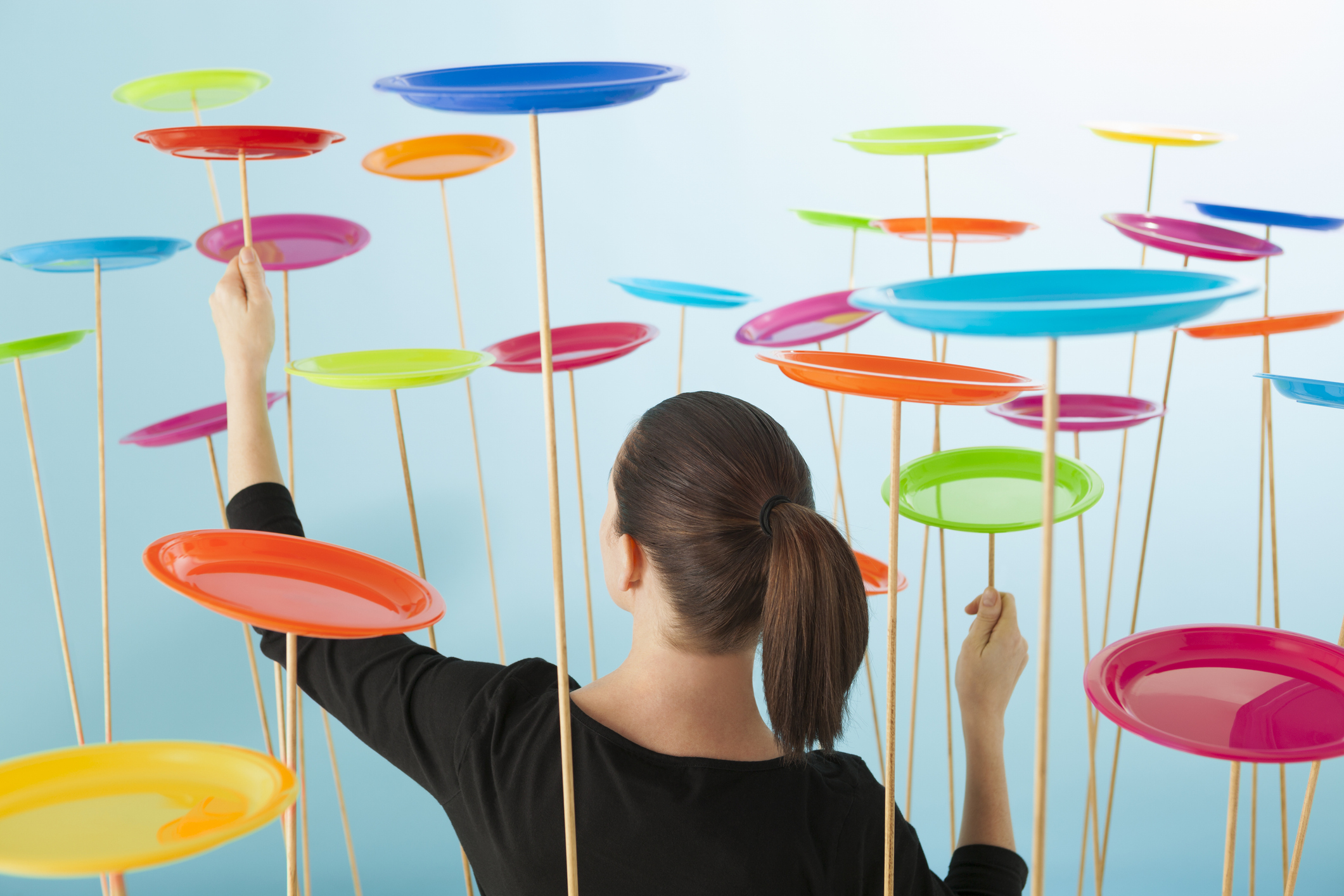
“Although I managed to keep the plates spinning,” she says, “it took me to the edge of what was possible, in terms of keeping my sanity, whilst making sure there’s food in the fridge, a meal to be cooked, getting laundry done, and doing my work.”
Reducing her training load has, she says, allowed her to find “a much better balance. I'm still able to keep up with the group that I want to keep up with, and I'm still able to be competitive – probably because I put those two years of really hard work into training.”
Sharing the load
For his part, Ben denies ever being reduced to the role of “a cycling widower,” and is at pains to point out that “Claire does more than her fair share of parenting. I'm not left picking up the pieces just because Claire has a very full-on hobby”.
They appreciate that their experience is “not the status quo,” that “it's more unusual to have a mum who is the dominant cyclist” in the family, and that “we made this work because there are a number of factors that allow me to be more flexible. If I didn't have those things, it wouldn't be possible in the same way that it might be for a man”.
However much the parenting gender gap might have narrowed over recent generations – especially within middle-class families – it’s still an observable one.
At the same time, the sheer amount of parenting needed to do to be viewed as 'good' has only increased over that same period.
As the cognitive neuroscientist Rebecca Saxe notes in the recent BBC Sounds series, Child: “The cultural acceptability of parenting today is so much more intense than it’s ever been, because how we think about children and how we think about attachment has heaped much more work and labour on the primary attachment figure – normally the mother.”
In other words, a mother of young children who disappears for a five-hour ride on a Saturday morning may be viewed differently from a father who does the same.
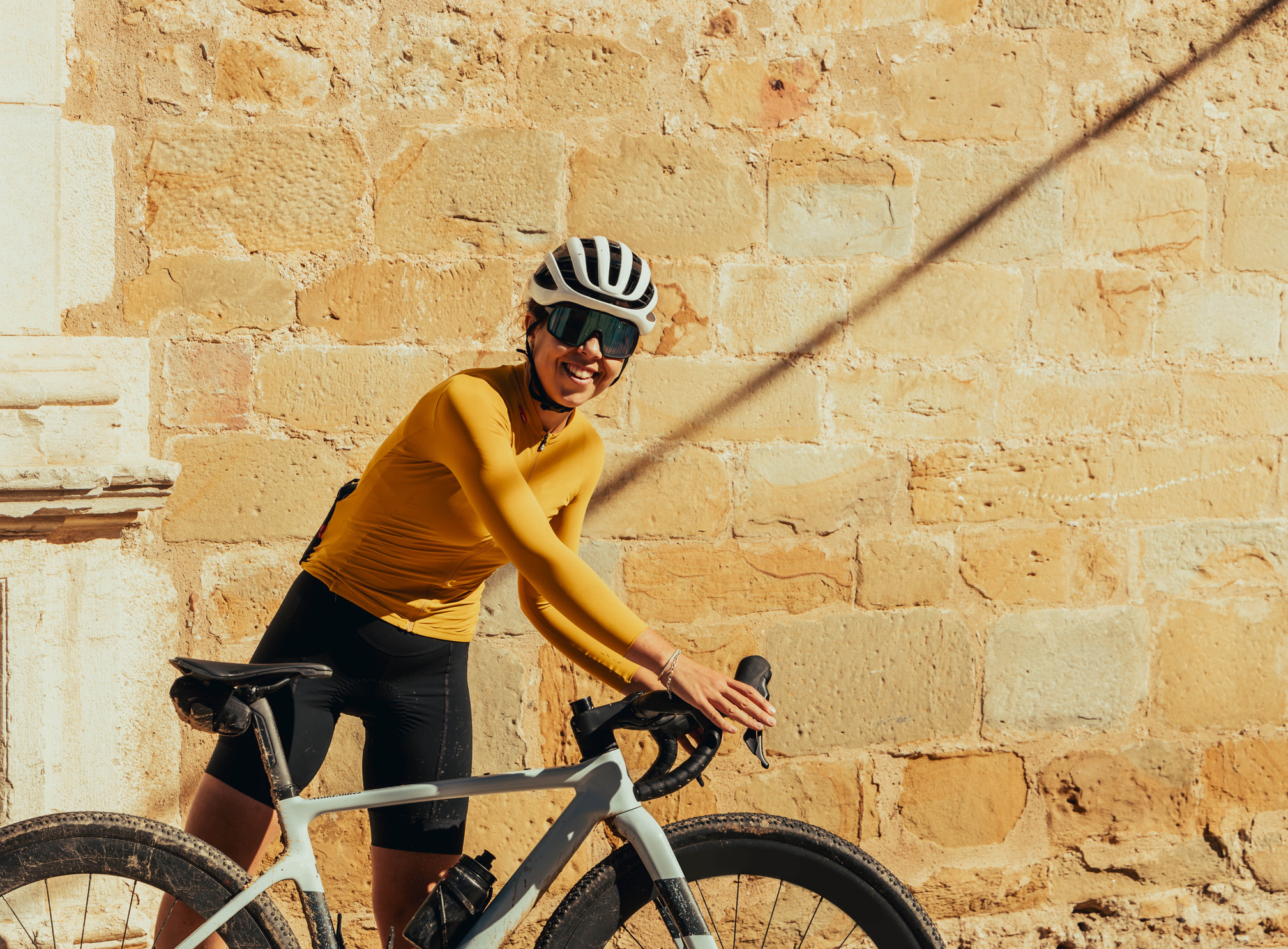
She is also likely to judge herself more harshly, as barrister Tom Coke-Smyth readily acknowledges: “Women feel guiltier, while men feel less guilty about going off and doing exercise,” he says.
Penge CC’s Tom is “a good cyclist” by anyone’s standards. Pressed to put a number on it, he says he recently achieved a goal of holding 1,000W for 30 seconds. Between gym, the track, roller sessions and road rides, he tries to fit in 8 to 12 hours of training a week.
However, he admits “I probably get a bit more latitude for cycling stuff”, with sleep clearly taking more of a hit than his domestic responsibilities.
He and his wife Ellie (also a barrister) aim for “a 50-50 split” when it comes to caring for their three daughters, six-year-old Lara, and four-year-old twins, Robyn and Heidi. The key is communication and planning. He half-jokes the couple operate a form of “shift-based parenting”.
While cycling “can definitely put more pressure on the family as a whole, so there's less overall flex, the plus side is more structure. It forces you to be more organised.
"We have more conversations about who's doing what on weekends, and they get more out of that because they get a proper session with me, a proper session with my wife. They don't get the two of us just sitting around wondering what to do.”
The power of example
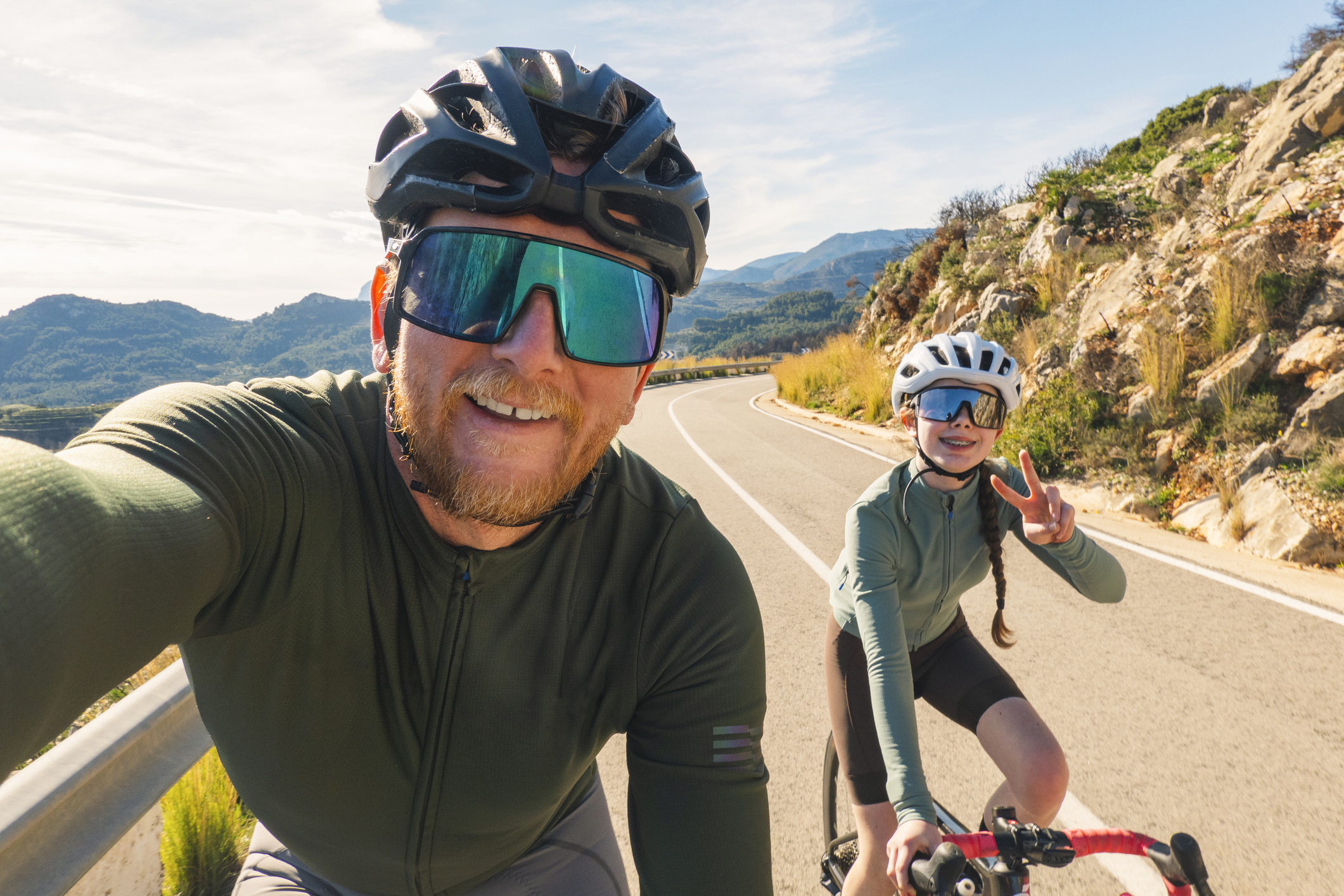
As it does for Claire, Ben and their children, Tom’s cycling nourishes not only his own needs but those of the whole family. “If I wasn't happy, challenged, fulfilled, which I get a lot of from cycling, I’d definitely be a worse parent,” he says.
He’s confident Ellie would agree: “I think she'd say I'd be an absolute pain in the arse if I didn't have cycling!” They both also believe strongly in the power of example, afforded by pushing himself as hard on the bike as he possibly can.
“Doing it well for me means getting better, learning from your mistakes and trying to fulfil as much of your potential as you can,” Tom says.
Cycling helps him to relate to his children’s disappointments, while allowing him to demonstrate he experiences disappointment too.
Coming up short in races, as inevitably happens, presents opportunities “to show it doesn’t matter if you don’t win, it’s about having a go.”
“I couldn't really have a conversation like that with them about work,” he notes.
Similarly, qualities such as “commitment, consistency, and discipline,” which any parent would like their children to pick up, are easier to show than tell.
And by including their children in their hobbies, Claire and Tom are able to be not just good parents, but better ones.
Not everyone has Tom’s laser focus nor Claire’s ability to balance competing demands. And of course, not every parent is in the same practical position, nor has a partner as supportive as Ben, or as accommodating as Ellie.
Timing matters too. “Like everything,” Tom points out, “it gets easier as they get older. I think this would have been really difficult in the newborn phase.”
The Austrian child psychologist Bruno Bettelheim, building on the work of English psychotherapist Donald Winnicott, urged parents to aim not for “good” but “good enough.”
His goal was to free parents from prescriptive methods, “to respond to the individual child rather than relying on a rigid set of rules,” to view parenting as more art than science.
Might the same approach apply to cycling? If you can’t be good, perhaps you can be “good enough”?