“Cyclists live with pain. If you can’t handle it, you will win nothing. The race is won by the rider who can suffer the most.” Those were the words of the greatest rider of all time, Eddy Merckx, when asked about the relationship between cycling and suffering.
Fausto Coppi rolled out an even briefer response: “Cycling is suffering.”
It begs the question: what is suffering? And if it’s such a strong identifier of road cycling, how can we dig deeper to widen our suffering bandwidth and race faster, longer, stronger?
Despite the reams of data churned out by power meters and analysed by sophisticated algorithms, we can’t objectively measure ‘suffering’.
Blood-related metrics such as lactate concentration offer a glimpse, but there’s no one-size-fits-all direct link between lactate and pain (despite the ‘burn’ we often feel ascending that local hill).
“That’s because pain’s subjective,” says retired sprinter Greg Henderson. “The good thing is that pain’s something you can’t remember – on a conscious level anyway. Which is a good thing as, if we did we wouldn’t ride our bikes for very long.”
Arguably the closest gauge of suffering is the Borg Scale. Put simply, it matches how hard you feel you’re working with numbers six to 20.
Six is the equivalent of falling asleep on a turbo trainer; 20 is flat out. Broadly speaking, each category multiplied by 10 equates to your approximate heart rate.
It’s why you or I ticking off five hours on a club ride might, in our deepest moments of dread, register the same Borg Score as a rider, say, breaking the Hour Record.
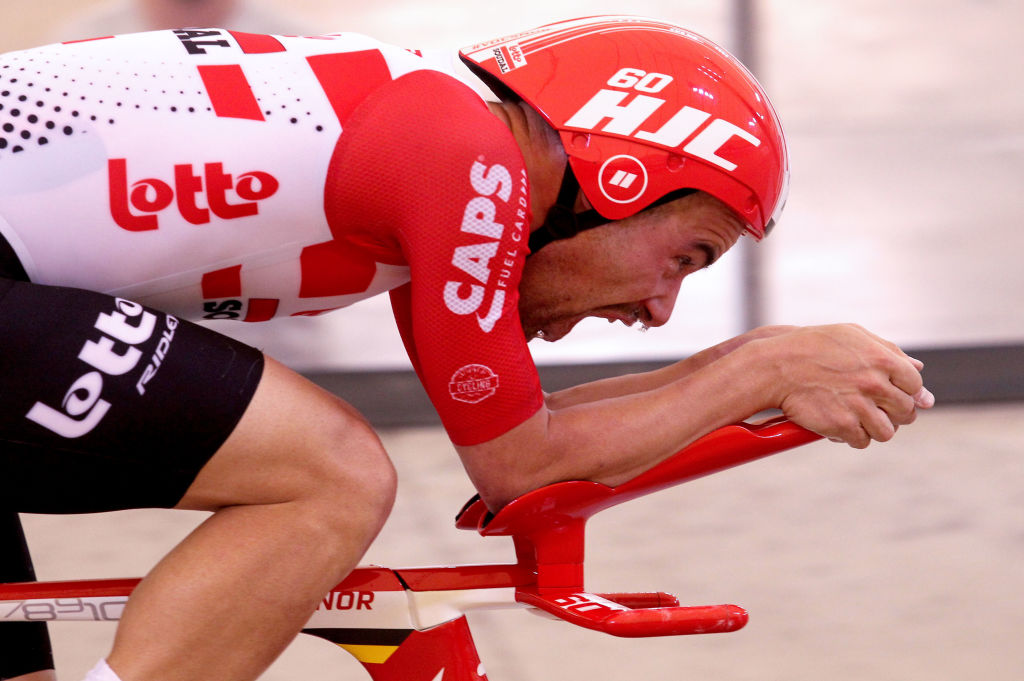
Which brings us onto Belgian pro rider Victor Campenaerts, who in 2019 increased Sir Bradley Wiggins’s 54.526km mark to 55.089km (the men’s record is 56.792km, set by Filippo Ganna in 2022). No event symbolises suffering quite like it.
“The first half was okay, the second much harder,” said Campenaerts. “You push yourself over your limits but you can fall back on all the long time trials you’ve done, all the [Tours de France]. The more you suffer, the more you can cope with pain. I can tolerate more pain than when I was a junior.
"Still, I agree with [Sir Bradley] Wiggins when he said you have the feeling your head is underwater. You can rise above the water to breathe but you’d lose, so you must remain submerged. Not fully being able to breathe summed up the second half. It’s really a mental game.”
Impact of exercise-induced pain
Ahh, a mental game. That adds up because studies have identified athletes have a higher pain tolerance than non-athletes.
But, says Dr Lex Mauger, expert on fatigue and pain tolerance at the University of Kent, the correlation doesn’t confirm causality; in other words, does training boost a rider’s pain tolerance or do people with high pain tolerances naturally gravitate to endurance sport, taking great pleasure from extreme pain?
“We’re still looking into that,” Mauger says, “but we’ve done experiments, including a 10-mile time-trial, where we considered traditional markers of endurance performance, like VO2 max and lactate threshold… and it’s clear that one of the biggest predictors of high performance was pain tolerance.”
Mauger has also dampened pain in search of raising the bar. “There are many reports of elite and recreational cyclists taking analgesics to boost performance, so we took it into the lab,” he continues.
“We gave trained cyclists a paracetamol to see if by reducing pain they’d lift performance. And they did, maintaining a higher power output for longer. That’s led us to where we are now, investigating the direct [or not] link between pain and fatigue.”
Research on the fatiguing effects of exercise-induced pain are scarce, especially because it requires “uncoupling the pain and exercise-intensity relationship” to pinpoint the exact mechanisms at work.
“That’s why we had riders pedal at a low intensity but simulating the pain of high-intensity exercise,” Mauger explains.
“Not an electric shock or heat stimulus as they’re unlike exercise pain. Instead, we injected the muscle with a hypertonic saline – salty water – which creates a pain that’s burning, aching, cramping, tiring, exhausting… words that people use to describe exercise-induced pain.”
Mauger’s team discovered that despite the low-intensity work, the painful stimulus reduced performance. Fairly obvious, perhaps, but Mauger says it’s the first study to demonstrate that an increased level of pain negatively impacts performance.
“Now we need to establish why," he adds. "We’re currently looking at the neurophysiological mechanisms via techniques called ‘peripheral electrical stimulation’ and ‘trans-cranial magnetic stimulation’ to artificially stimulate the nerve to force a muscle to contract.
"By doing that during cycling, we can pin down where the impediment to contraction is occurring. Brain, spinal or muscular level?”
Mind over matter
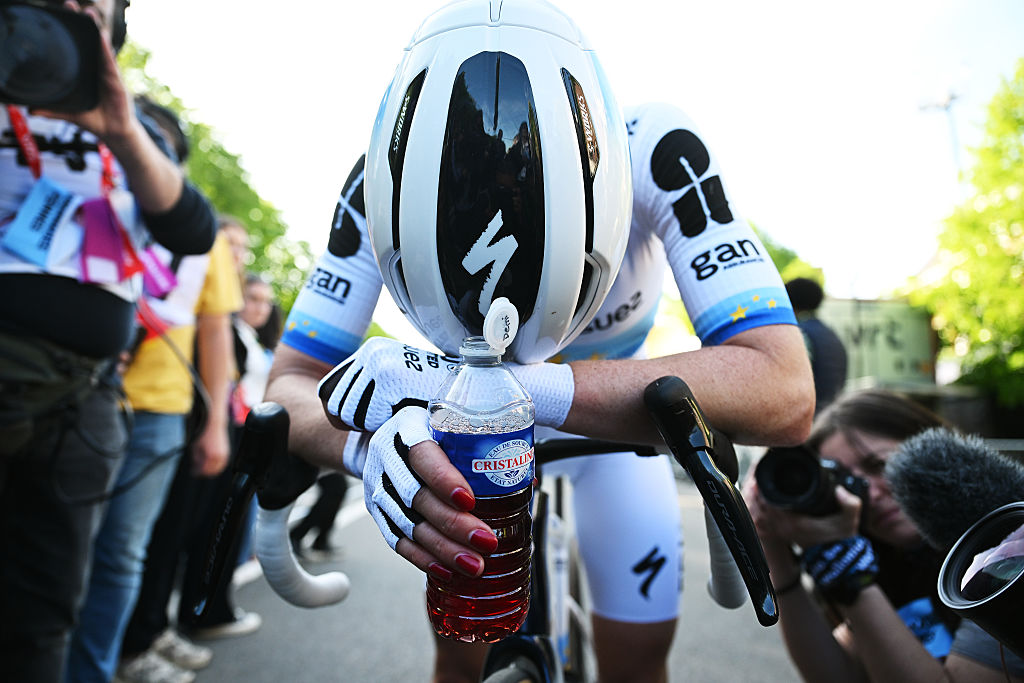
The experiments are ongoing and are a further step removed from historic thinking about limiters of cycling performance, which focused on factors such as glycogen depletion or an increase in lactate concentration.
Over the past 20 years, however, we’ve come to realise that, to a greater extent than imagined, those limits are determined by the brain.
In the late 1990s, South African Tim Noakes suggested the brain holds the brake levers of a subconscious safety mechanism that kicks in to prevent serious damage to vital organs.
This self-preservation mechanism, known as the ‘central governor’, seemed to explain why athletes running on hot days tended to start slower than they would on cool days.
If the subconscious brain perceives a threat to the body’s homeostasis, it reduces muscle recruitment and slows you down to prevent your core temperature rising to dangerous levels.
Noakes’ model ties in with Campenaerts’ comments that constant experience of pain raises this central governor template as the body realises the threat’s not fatal.
Then there’s the more recent work of Professor Samuele Marcora. Marcora had a group of athletes complete a time-to-exhaustion test.
At an average power of 242 watts, which corresponded to 80 per cent of their peak power, the subjects lasted for around 10 minutes until they were fully exhausted.
As soon as they stopped, within four seconds they were asked to see how much power they could generate in a five-second burst of pedalling.
Despite previously saying they were incapable of generating another pedal stroke, they averaged 732 watts. It wasn’t that the muscles were incapable of riding, explains Marcora, but the perception of effort that mattered.
“And how much they’re willing to suffer boils down to motivation,” Marcora says.
It’s that motivation, adds Greg Henderson, that meant he remained in the saddle despite often experiencing the unholy trinity of dehydration, sickness and cramps during mountain stages of the final week of the Tour de France.
“It was miserable,” he recalls. “But I didn’t stop. You’d have to peel me from my bike before I’d stop at the Tour de France.”
Motivation of a new challenge

Like pain, what motivates in cycling is clearly subjective, whether it’s time-, speed- or distance-based. And with respect to ultra-endurance cyclist Mark Beaumont, it’s all three.
In September 2017, he smashed the record for cycling around the world, completing 18,000 miles in 78 days, 14 hours and 40 minutes.
“In the past I’d also ridden the length of the Americas, the length of Africa… My shortest record is 6,000 miles,” Beaumont says.
“It’s why that 2017 expedition motivated. It must be scary, into the unknown, if you’re to really suffer. You can’t suffer to the same extent if you’re aiming for the same time or ticking off the same challenge.”
Beaumont has visited dark places very few have inhabited, certainly in cycling, but says putting the blinkers on and rationalising the suffering helps. He calls it the psychological arc.
“Whether it’s 50 miles, 100 miles or what I do, the psychological arc is the same, it’s just mine is larger. You start fresh, dig deep and, at the end, go, ‘Thank God, I couldn’t carry on’.
"When I finished on day 78 and woke on day 79, you couldn’t have paid me enough money to get back on my bike. I was broken.
"But what was different to any day before where I’d got on my bike at 4am every morning and ridden for 16 hours? Nothing had changed... it was just over.”
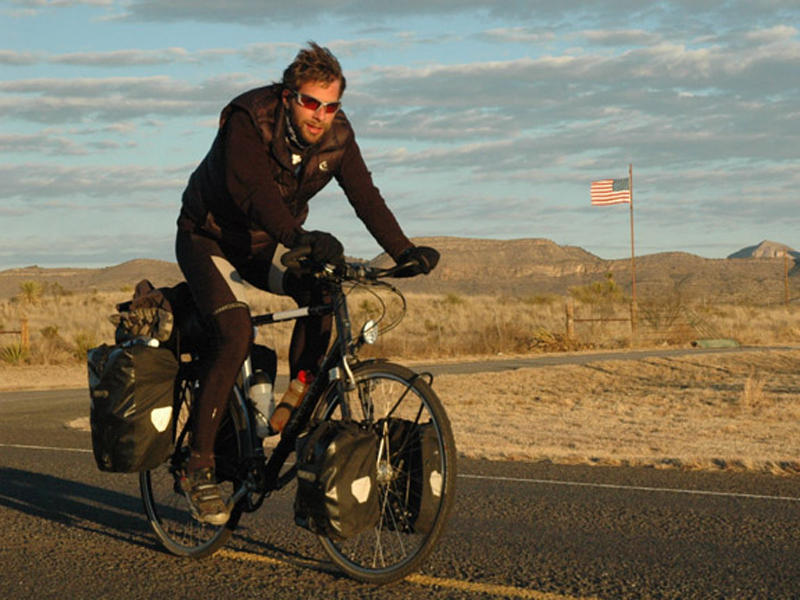
Beaumont’s mind suffered for as long as motivation remained high. With task completed, the mental walls came tumbling down.
But, continues Beaumont, it’s not purely a psychological construct; it’s more psychobiological, which links to Professor Marcora’s work – that your mindset and motivation impacts your biological profile, making you better or worse prepared to achieve your goals.
“Every morning we took saliva swabs and examined my immunology. No one ever had to wake me up at 3.30am as I’d set myself up for that task.
"But I always struggled the most for the first two or three days of each bike leg; I struggled to focus as I hadn’t fully honed in on the next target.
"Those days, my cortisol levels were low [signifying extreme fatigue]. Once honed in, they rose again. For me, the mind and body are inseparable.”
Beaumont also cites an ability to manage his emotions and focus on the job at hand as key to digging deep and achieving his goals.
He always rode for 16 hours in four-hour chunks and never worried about daily mileage – some days he ticked off 200 miles, some days 280, all depending on terrain and weather. “But it averaged around 240 miles, which is what I needed,” he says.
Suffering, of course, isn’t something to be taken lightly. Beaumont carried on despite fracturing an elbow and breaking several teeth on day nine.
Some experts have suggested that the cause of Tom Simpson’s tragic death on Mont Ventoux at the 1967 Tour de France could have been amphetamines overriding his central governor, meaning he pedalled beyond his natural limits.
Pain relief
Thankfully, there are proven, safer methods to ride hard. “Self-talk is one I used and most professionals still use,” says Henderson. “Things like, ‘You’ve done this before,’ or ‘Find your group, safety in numbers’. Also, anything I did on the ergometer induced pain. High intensity is key to boosting physiological and psychological resilience, but comes with a lot of suffering.”
It’s why a social online platform such as Zwift has its benefits. Not only are the sessions aimed heavily at high-intensity efforts, but there’s the competitive aspect, too.
Then again, you could argue that by removing many mentally challenging aspects of cycling (handling, traffic, bad weather) while physical resilience goes up, mental resilience goes down.
Thinking about thinking’s also shown to manage suffering and improve performance. “We call it meta-cognition,” explains Dr Noel Brick, lecturer in sport and exercise physiology at Ulster University.
“Elite athletes are in tune with their thoughts and mental processes, and that’s important to their pacing and effort perception.
“This ties in with techniques like visualisation, relaxation, mindfulness. Simple things like focusing on your cadence, focusing on your technique.
"This ties in with Noakes and Marcora’s work where effort perception is key to pacing strategy, so if you can think strategically, like riding hard for efforts where you know there’s a lower-intensity stretch after, that’s the ideal.”
There is, however, a body-audit balance. “Our research has shown that too much self-monitoring leads to an increase in effort perception and a reduction in movement economy,” adds Brick.
“There’s research to show that focusing too much on breathing patterns, for instance, affects movement economy. Periodically monitor how you’re feeling but don’t overdo it.”