We all have our excuses for not doing the exercise that we want to, or think we should, be doing for our health and wellbeing.
Time – or lack of it – is the major gripe for many of us, in fast-paced lives that demand so much of us.
But having the space to work out, the desired equipment or the friends to work out with can be just as challenging.
Not having a spacious, well-equipped gym or a cutting-edge road bike can be just as big a barrier to getting out there and doing what's actually important: getting the blood pumping around your body.
Perhaps, then, we can take inspiration from this trio of individuals who, in very different but equally challenging environments, have done just that.
The astronaut
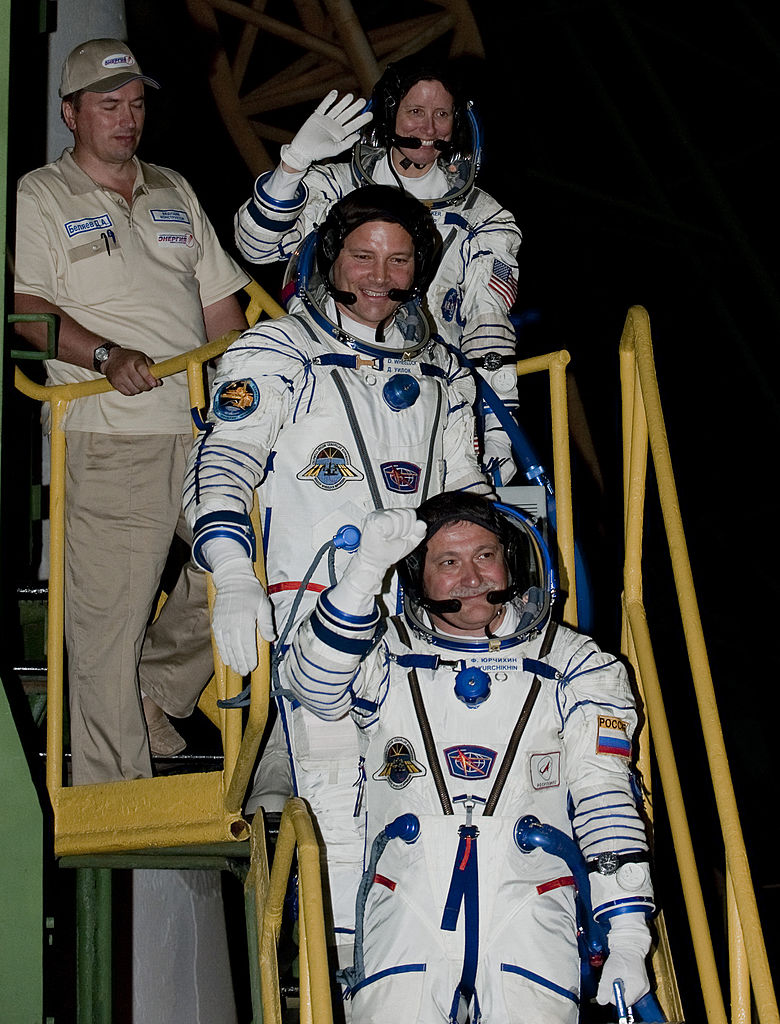
It’s a fact that American Douglas Wheelock has twice been one of the most isolated cyclists on our planet. Well, we say on our planet, but the trim 59-year-old resident of Ohio is an astronaut who first went on a 15-day space mission in 2007.
Three years later, he spent six months on the International Space Station. “Down on Earth, I cycle a fair bit and run or walk with my dog,” Wheelock tells us. “Up in space, well, it’s a similar story.” Without the dog, of course.
Wheelock and his contemporaries exercise between two and two-and-a-half hours daily. That’s about half the 30-hour weekly effort of the pros, although the goal is more important than wearing a form-fitting yellow jersey in Paris.
“It’s a fact that micro-gravity – gravity is found everywhere in space, just in differing amounts – can lead to muscle atrophy,” says Wheelock.
“Your body’s such an efficient machine that it doesn’t take long to think, ‘Hang on, I’m not using these large quadricep muscles, let’s take energy from there and redirect it’.
"Without exercise, bone density also drops, especially in the hips, pelvis and thigh bone regions. Even training this much still results in a 3-4% drop.”
That micro-gravity also leads to prickly feet – floating leaves nerve endings in the soles redundant, so that when you push against a weight it’s as if your feet are on fire and feels like “ants crawling over your skin”.
Thankfully, anecdotal and scientific feedback from previous missions has resulted in a three-pronged exercise attack on the International Space Station.
“We have a treadmill where you’re strapped in with a harness that pulls you down,” says Wheelock. This is what enabled Tim Peake to run his 2016 marathon in space, in a brisk 3hr 35mins.
“We also have a weight-lifting device that simulates gravity using compressed air. Then there’s CEVIS – Cycle Ergometer with Vibration Isolation System – essentially a bicycle mounted to the wall, so you’re sitting on it with your back facing the floor.”
Mind, body and soul
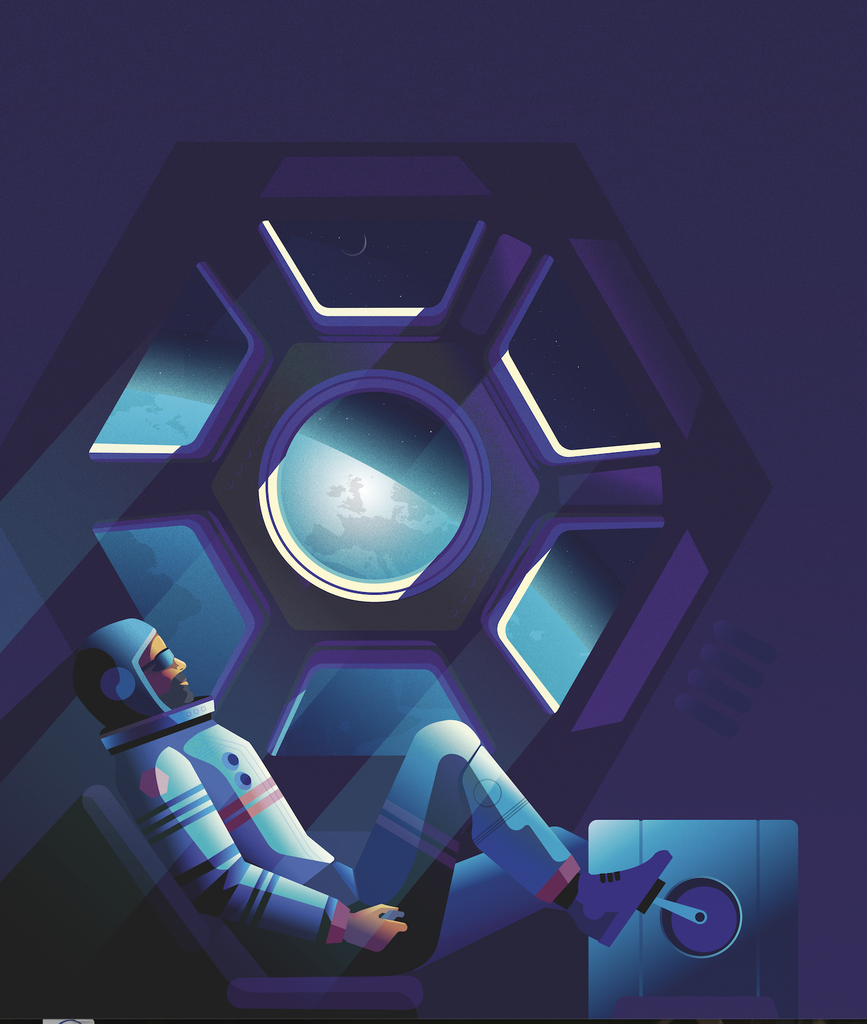
Gravity affects the vestibular system that controls balance, Wheelock continues. This is a sensory system that provides our brain with information about motion, head position and spatial orientation.
And it’s why astronauts shouldn’t run or cycle outdoors for up to 45 days after returning to Earth.
“Your eyes take over in space while your vestibular system lies dormant. This is fine on an indoor bike but dangerous outside," Wheelock says.
"Think of your outdoor cycling and all the subtle signals you pick up, from the camber of a road to poor bits of tarmac. These are detected by the vestibular system.
"That’s why it’s so important you wait until it’s awakened before undertaking activities like cycling and driving.”
Wheelock has experienced a life few individuals have. He understands solitude and isolation, and signs off by stressing to Earth-bound cyclists that it’s not all about training the body.
“The whole-person concept – mind, body and soul – is so important. If one part is in an unhealthy state, the others will suffer as well. Keep busy physically and follow solid, challenging routines.
“Our normal human instinct is to stay in our pyjamas and watch the news for 15 hours.
“We let fear take control then spiral down into this abyss. Take control of your fear and turn off that TV. Make your bed, put some clothes on, read, speak to loved ones and exercise. It’s important for all of us.”
The soldier
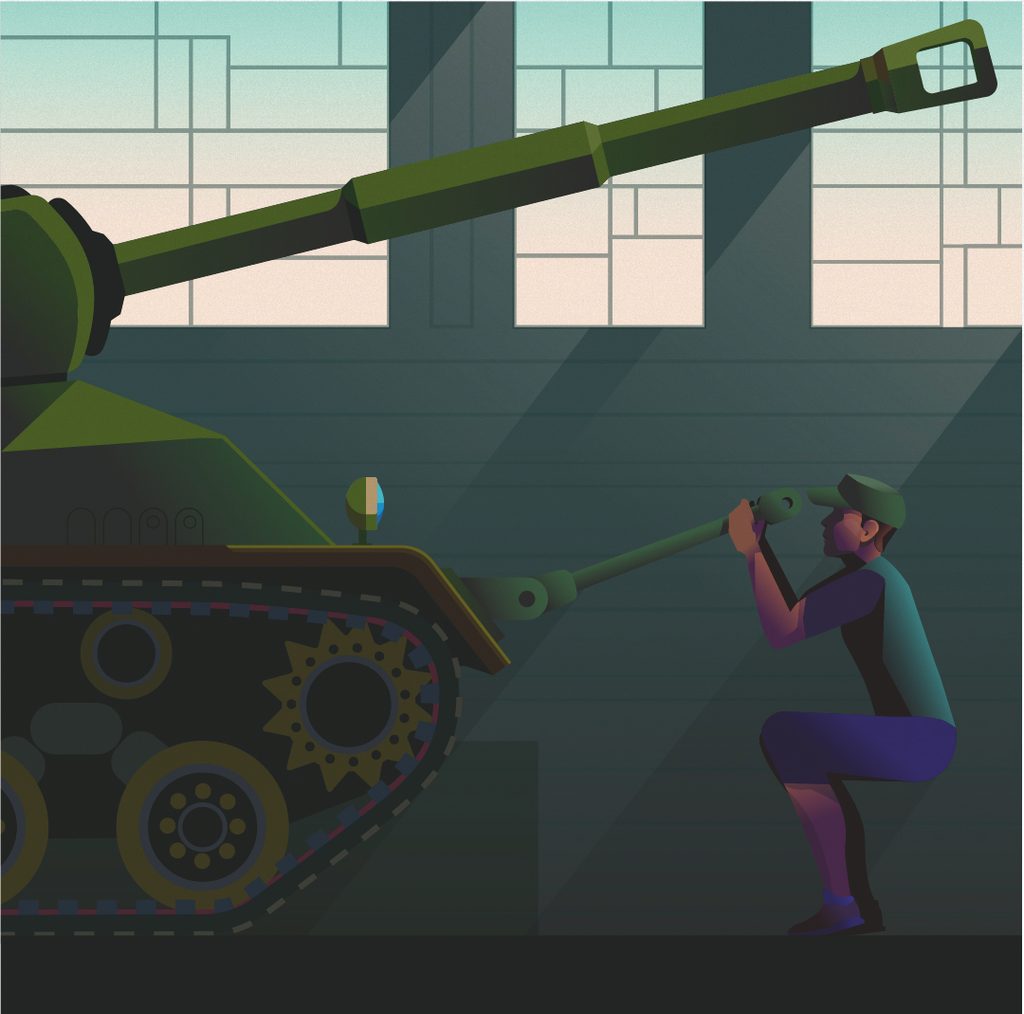
The internet is ablaze with training advice extracted from the elites and delivered to recreational riders. We’re talking about concepts such as fasted rides.
We suck it all in, hoping for a leg up to stand on the shoulders of giants. Sadly, this reductionist approach fails to account for recovery and life stresses that, for cyclists such as Neil Buckley, are far more debilitating than the training itself.
You see, while pro riders slip into compression socks after a five-hour ride in the mountains, Buckley – more precisely, Colour Sergeant Buckley – would slip into heavy military attire in the world’s most dangerous battlefields.
A soldier for over 20 years, he toured Afghanistan and Iraq twice. “Afghanistan was particularly unpleasant, although I took pride in doing my job at the very pointy end. Sadly, 12 people from my battalion came back in coffins. I guess it’s a fact of life with the job I do,” he reflects.
Chester, UK is home for Buckley – cycling country, as he calls it, with Chris Boardman and former Team Sky rider Steve Cummings nearby.
His palmares is impressive, especially over his preferred discipline of time trials. He won the Army 25-mile TT Championships in 2013 and has lifetime 10-mile and 25-mile PBs of 20.40mins and 55.38mins.
“That’s nothing compared to [army officer] Ryan Perry. He’s raced the Tour de Yorkshire and twice finished on the podium at the National Time-Trial Championships,” he says.
What makes the likes of Buckley and Perry’s achievements the more remarkable are the cycling restrictions that come with life on tour.
“The only time I’ve ridden outdoors on tour was in the Falklands,” he says, “but even that was limited due to the gravelly roads and the extreme weather.”
Pushing it
Buckley briefly used a broken spin bike in Afghanistan but the bulk of his training boiled down to an oft-used army mantra: adapt, improvise and overcome.
“When I was in Sangin [Afghanistan], we used these huge steel tow-pins that are used to drag armoured vehicles around as a frame to do squats and functional skills.
“TRX straps [invented by a US Navy Seal] are also vital. You can do punchy all-over workouts with those. And running’s key, too. You can really push it over 40 minutes.”
These short, high-intensity efforts are the norm and why Buckley tends to focus on – and excel at – 10- and 25-mile time trials in the UK.
At home, he’s not monastic about his diet. Food on tour is good – until it comes to ration packs. “We had a huge exercise in Oman where you were self-sufficient for 30 days, so you lived on these 4,000 calories-a-day ration packs," he says.
“Boil-in-the-bag meals dominate. You’re given three main meals and snacks including tuna bean salad and hotpot. They’re passable.”
Thankfully, like his training, Buckley’s tastebuds have adapted, improvised and overcome.
The prisoner
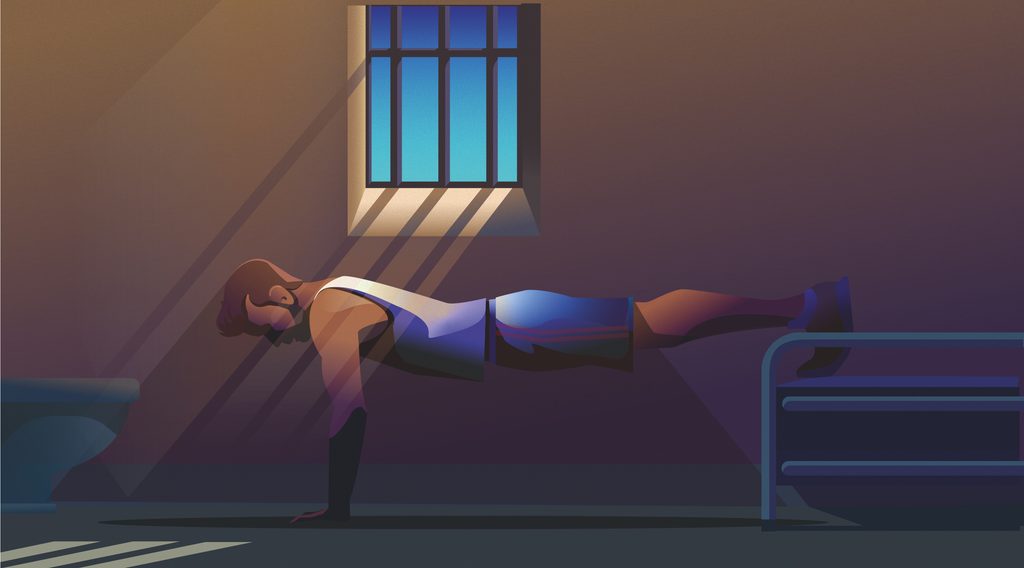
For many, sport is a religion. That’s why many prisoners seek redemption through sport and exercise.
Take Charles Bronson, described as the most violent prisoner in Britain after repeatedly taking guards hostage at high-security hospitals Rampton, Broadmoor and Ashworth. He wasn’t evil, he said, “but sometimes I lost all my senses and became nasty”.
Other times, he’d channel this anger through exercise. Bronson became a fitness fanatic, even writing a book about his experiences: Solitary Fitness.
It’s a backstory that chimes with John McAvoy. McAvoy was born in 1983 and grew up surrounded by organised crime in south London.
His uncle, Mickey, was part of the infamous Brink’s-Mat gang behind one of the biggest gold bullion robberies in British history.
Soon after turning 18, McAvoy received a five-year sentence for possession of a gun. He was released after two, only to be sentenced to life soon after for armed robbery and sent to the maximum-security Belmarsh prison.
Fellow inmates included Abu Hamza and the London 21/7 suicide bombers. He was released in 2012.
Choosing a new path
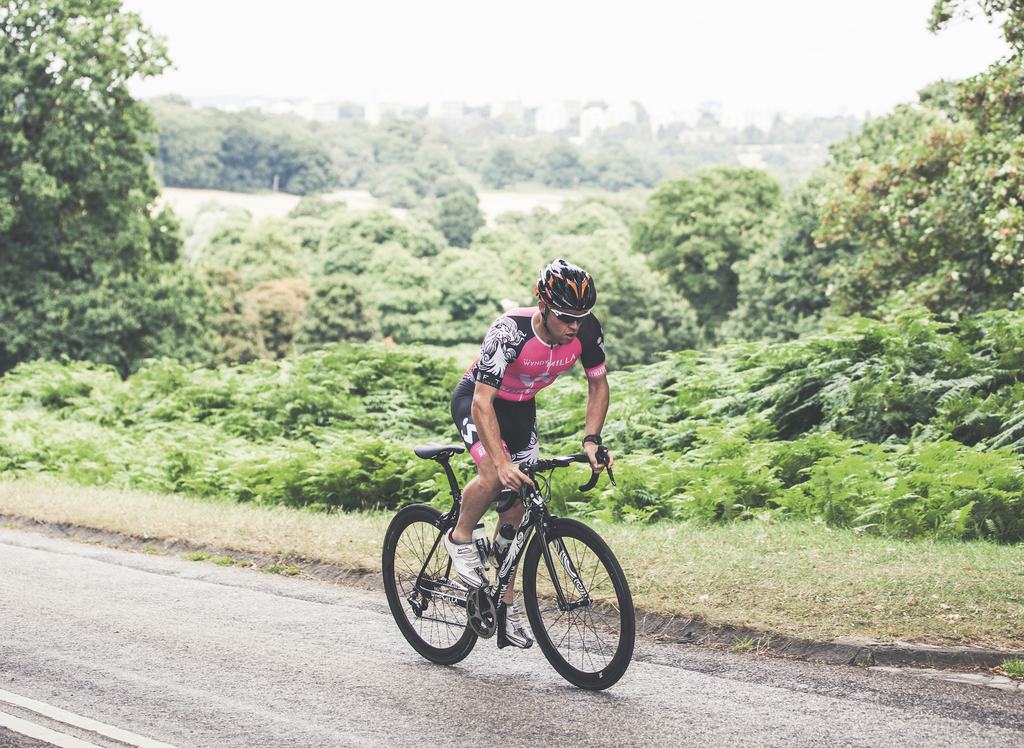
Now McAvoy is an Ironman athlete and sponsored by Nike. “Exercise got me through,” he says. “I was locked up for 22 to 23 hours a day. Before, I’d been taking drugs, was three stone overweight and drinking. But in that cell, I decided to try and better myself.
“I couldn’t control the environment but I could control me. So I started training. All I had in my cell was a bunkbed, chair and cardboard table, so I had to be flexible. I started doing press-ups, burpees and step-ups.
"At the beginning, I did 10 of each. The next day it was 20. I kept building it up until I reached 1,000 of each. I’d wake in the morning, do my cell circuit and then I’d read books from the prison library.”
McAvoy’s flexibility stretched to pushing his prison chair to the end of his cell next to two tiny vents so he’d feel the breeze on his face as he exercised. He also felt the breeze generated from the prison gym’s sole indoor rower.
The 16 months prior to his release saw McAvoy venture on what he called his “record-hunting mission”, setting numerous British and world indoor rowing records, many of which stand today.
His penchant for pain directed him to Ironman and the challenge of swimming 3.8km, cycling 180km and running a marathon.
He peaked with an impressive time of 9hrs, 10mins and 17secs in 2016 at Ironman Frankfurt, putting in a 4.54.42 bike leg where he averaged just under 23mph.
Today, he raises money for a host of charities and lectures youngsters in deprived areas on using sport to keep on the right path.
More than most, McAvoy is adept at doing long stints indoors on the turbo trainer. “I can train for five or six hours at a time,” he says. “I’ve got friends who’ve competed at the Olympics and they can’t comprehend how I can sit on an exercise bike for so long.”