Additive manufacturing, also known as 3D printing, has been around longer than you might think. The first idea for a 3D printer was filed back in 1981 by Hideo Kodama of the Nagoya Municipal Industrial Research Institute, with other inventors developing similar technology later in the decade.
But 3D printing was fairly slow to develop. It wasn’t until the 2000s that it came into its own, with open-source printers and designs making the old-yet-futuristic tech a thing of the present and ushering in an age of custom and modified design.
We’re now used to 3D-printed technology across industries and applications – and cycling is no exception, with people using additive manufacturing to quickly iterate prototype designs or manufacturers printing sections of titanium frames.
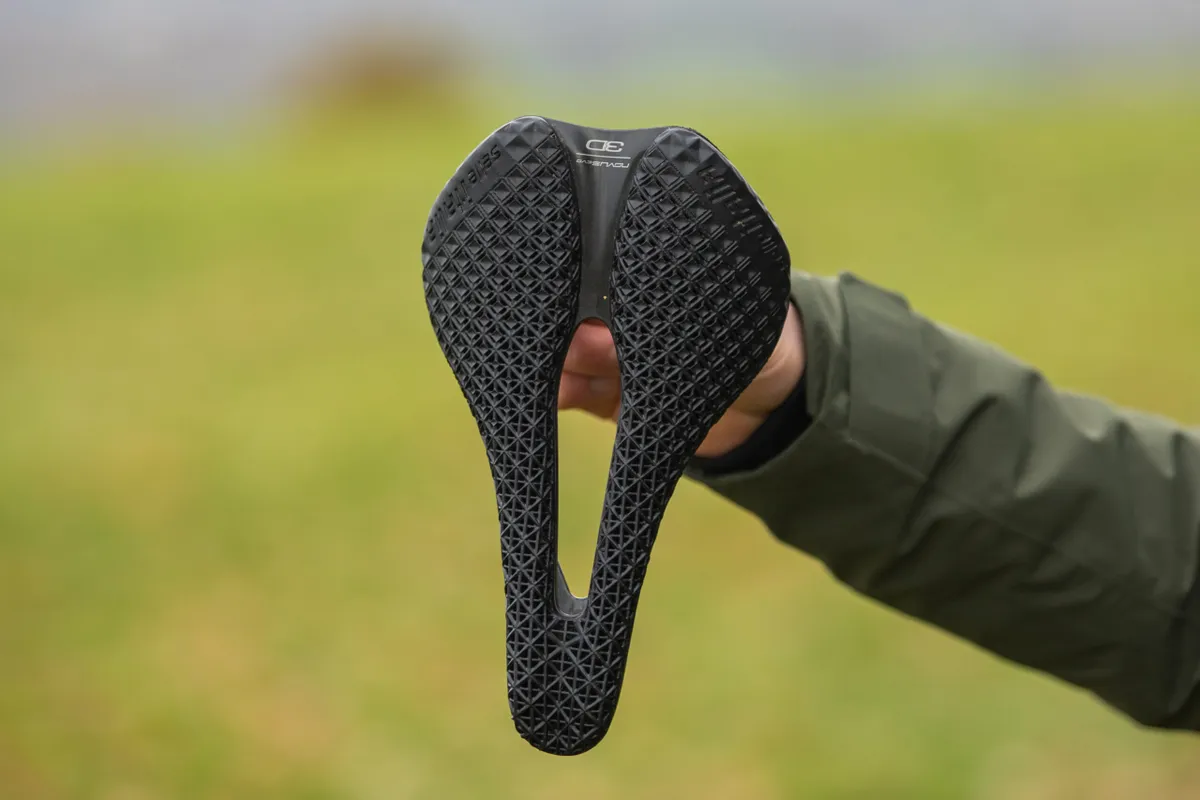
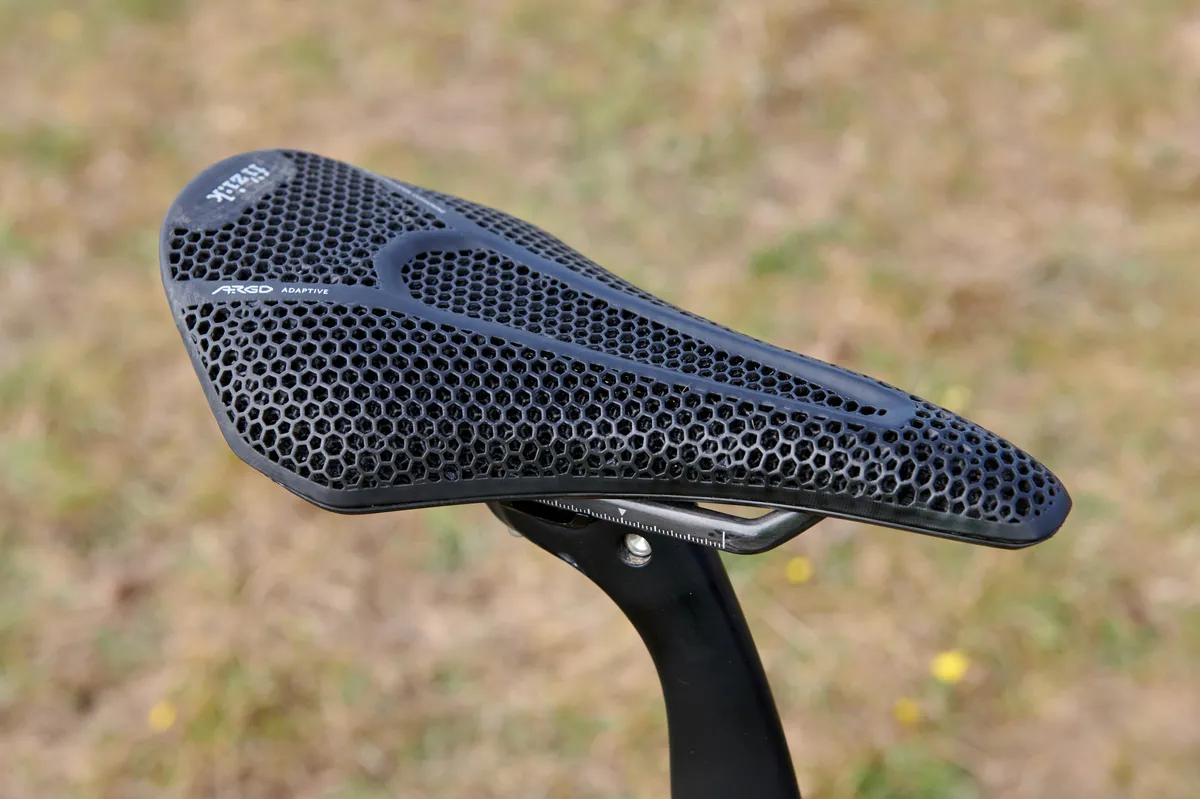
Yet, saddles are probably the area where the technology has become the most commonplace in this sport as 3D printing has become more viable for mass production. In fact, many saddle and bike brands have added 3D-printed saddles to their line-ups, including Fizik, Selle Italia and Specialized.
Pro is the most recent cycling brand to release a 3D-printed saddle, the Stealth 3D, but Trek has also jumped on the additive-manufacturing bandwagon. It launched the top-spec Trek Aeolus RSL AirLoom in September 2025, alongside two more affordable versions.
“Next dimension comfort”

Trek’s Aeolus saddles have long been top performers, and the latest version features a 3D-printed lattice structure for “next dimension comfort”.
Unlike conventional saddles that use foam padding with a cover, the 3D-printed lattice of the Aeolus AirLoom has “zone specific densities” to better support your behind. The saddles are firmer beneath the sit bones and more forgiving on your soft tissue at the nose and tail of the saddle.
The lattice doesn’t only facilitate fine-tuned support. Trek says it allows for side-to-side movement “without creating irritating friction” that could lead to discomfort or, worse, saddle sores.
It also helps the Aeolus RSL AirLoom achieve its “ultra-light” weight of 169g on our scales, in tandem with its carbon shell and oversized carbon rails.

With such a low weight, the RSL AirLoom comes with a high price tag of £329.99. This isn't dissimilar to some of the premium best road bike saddles, but the Aeolus Pro AirLoom and Aeolus Elite AirLoom saddles are a tad more affordable, with slightly heavier constructions.
The Pro AirLoom has a carbon composite shell, weighs 180g and costs £249.99. Meanwhile, the Elite AirLoom has a slightly thicker AirLoom lattice and nylon composite shell, weighs 242g and costs £169.99.
A tweaked shape

Designed for performance cycling, Trek adds that the shape of the Aeolus will rotate your hips forward to help you adopt a more aerodynamic (read: lower) position on the bike.
All three saddles are made for any gender, with size options available for different sit-bone widths. They’re also suitable for use across disciplines, from road racing to cross-country mountain biking.

This is the same as Trek’s foam Aeolus saddles, but Trek has tweaked the shape of its latest Aeolus models. The new design has a slimmer nose and refined middle section for a better fit and improved comfort for a wide range of cyclists.
Many of these claims are in line with those made by other manufacturers about their 3D-printed saddles. Specialized also claims the suitability of its designs across disciplines and genders, with one of its 3D-printed saddles earning a place in the Victoria & Albert Museum because of how it presented a solution to the discomfort women can feel with conventional bike seats.
But 3D-printed saddles could offer the best comfort and performance where hobbyists and enthusiasts began with the technology: customisation. Several brands now offer the option to print a saddle with a 3D structure tailored specifically to you. And, as Warren Rossiter argued recently, that could be the best way to go.
SQUIRREL_13709501