
In the 1990s, Marin was a major player. Its hardtails were a common sight at cross-country races across the world and in school bike sheds throughout the UK, and it was a pioneer in full suspension too.
But by the 2000s, its star had faded, and it wasn’t until 2018 that the controversial Wolf Ridge put the brand back on many riders’ radar.
That bike proved to be an attention-grabbing but short-lived blip for Marin, but its launch marked the start of a new era for the brand, and it has since gone from strength to strength with a succession of top-performing but affordable bikes.
We caught up with Matt ‘Cippy’ Cipes, Marin’s full-suspension and aggro hardtail product manager, on the MBUK Podcast to find out more about this turnaround.
Blazing a trail
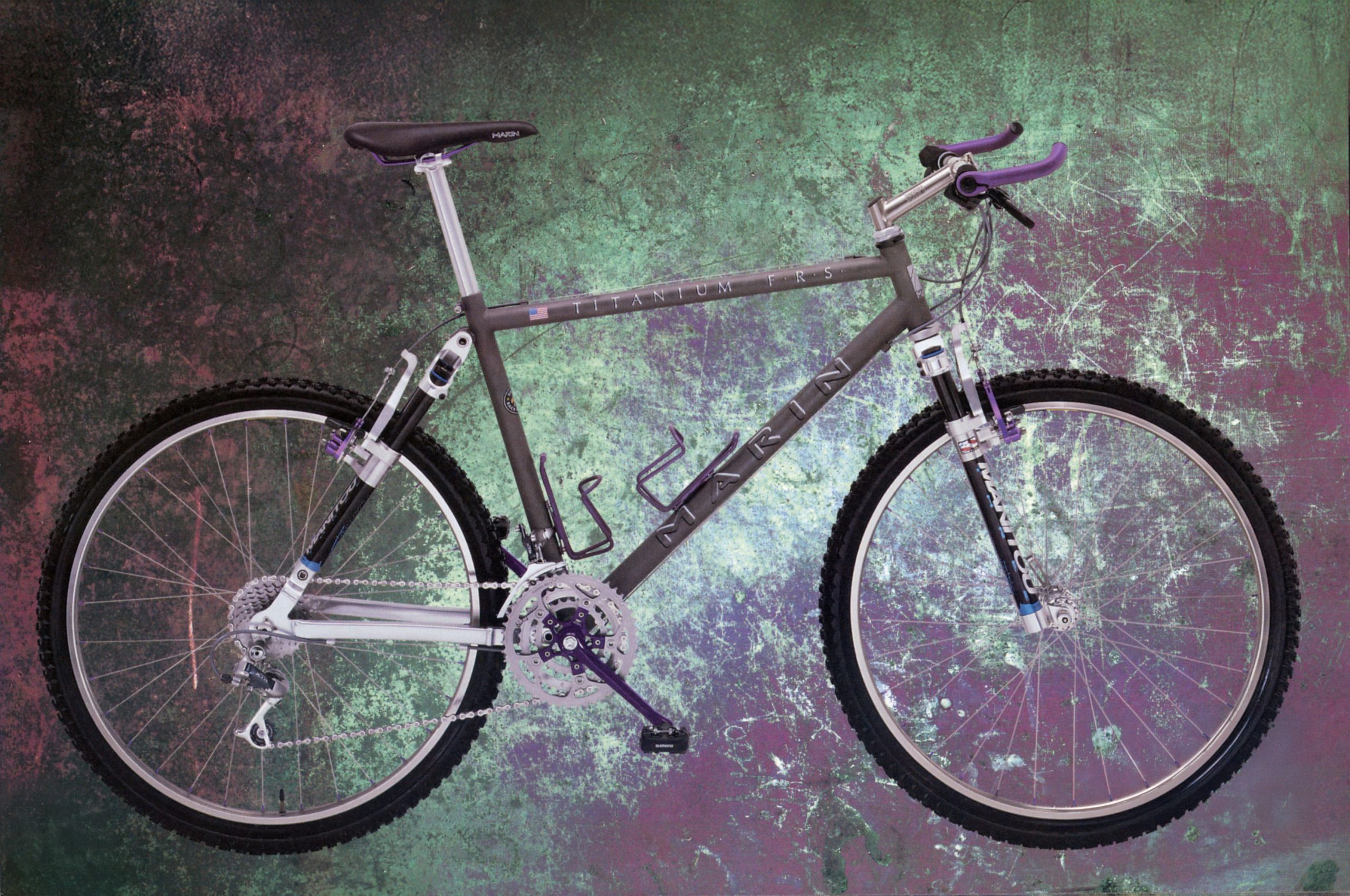
Founded in 1986 in Marin County, California, the brand – correctly pronounced ‘Muh-rin’ – enjoyed immediate success with the steel Madrone Trail, followed two years later by the Team Titanium, which was one of the first production titanium mountain bikes.
Then followed a succession of popular hardtails named after the brand’s home trails – Muirwoods, Pine Mountain, Eldridge Grade and more. It also pushed boundaries with bikes such as the 1993 Titanium FRS, which famously used an adapted Manitou fork to provide rudimentary rear suspension.
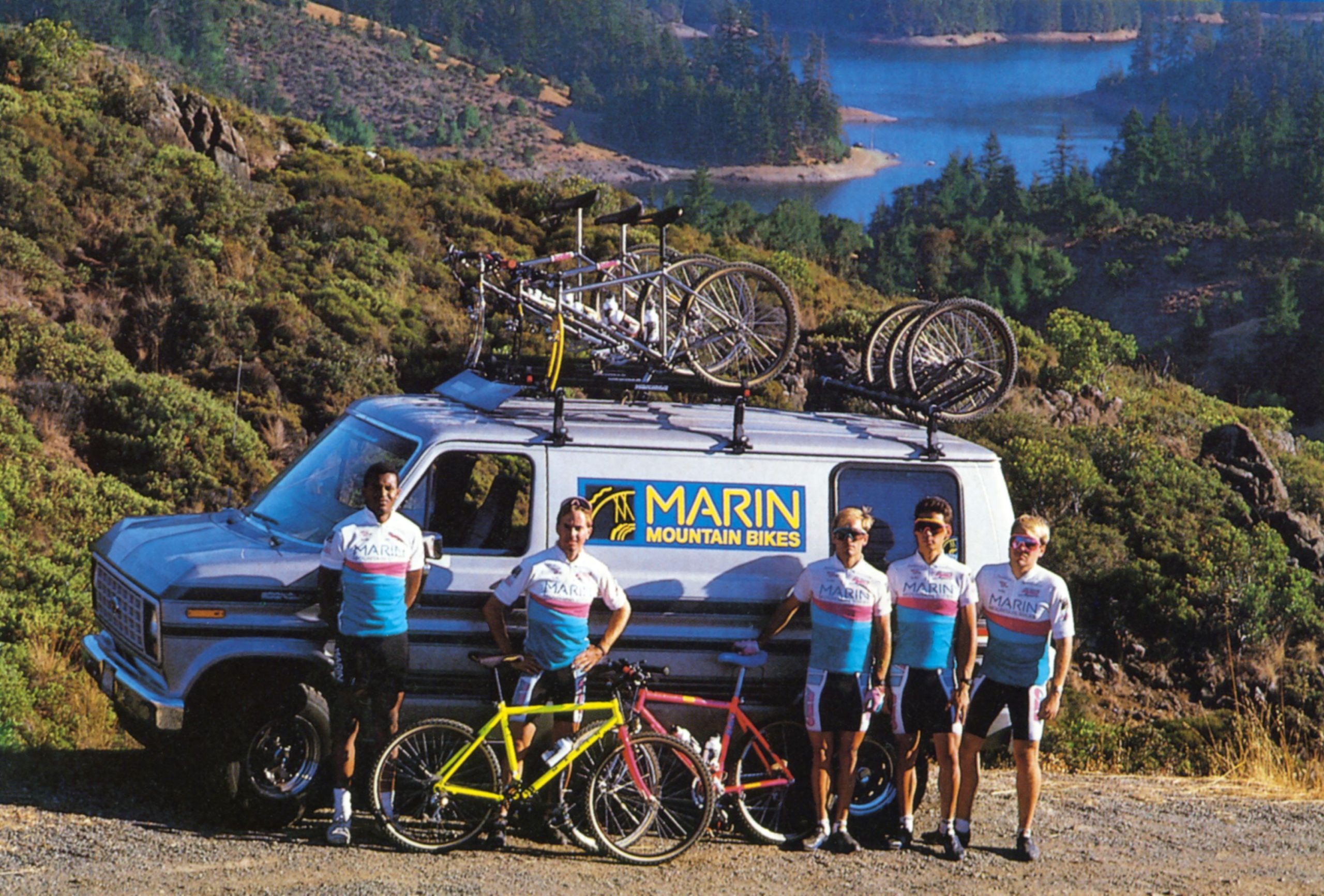
Team riders including Joe Murray, Jurgen Beneke, Myles Rockwell and Jake Roberts kept the brand’s profile high on the world scene, while bikes such as the 1996 Mount Vision – the first full-suspension bike to win the UK XC National Championships, under Paul Lasenby – and the pocket-friendly B-17 downhill/freeride rig earned Marin plenty of sales in Britain.
Marin continued to make decent bikes through the 2000s, moving its full-sus design and development to the UK, working with carbon fibre and introducing its elevated swingarm Quad-Link platform. However, it didn’t have the same impact internationally, with few big-name riders and a lack of iconic bikes or major race wins.
Back from the brink
“When I came into mountain biking, Marin was kind of disappeared in North America. They weren’t on my radar,” admits Cipes.
However, in 2015, he was looking to move on from Specialized, where he’d worked as a suspension technician and then in product development.
“I came on board when we did the Naild R3ACT 2PLAY suspension,” says Cipes, “Which is the six-bar slider mechanism that’s nicely referred to by our UK team as ‘The Anteater’.”
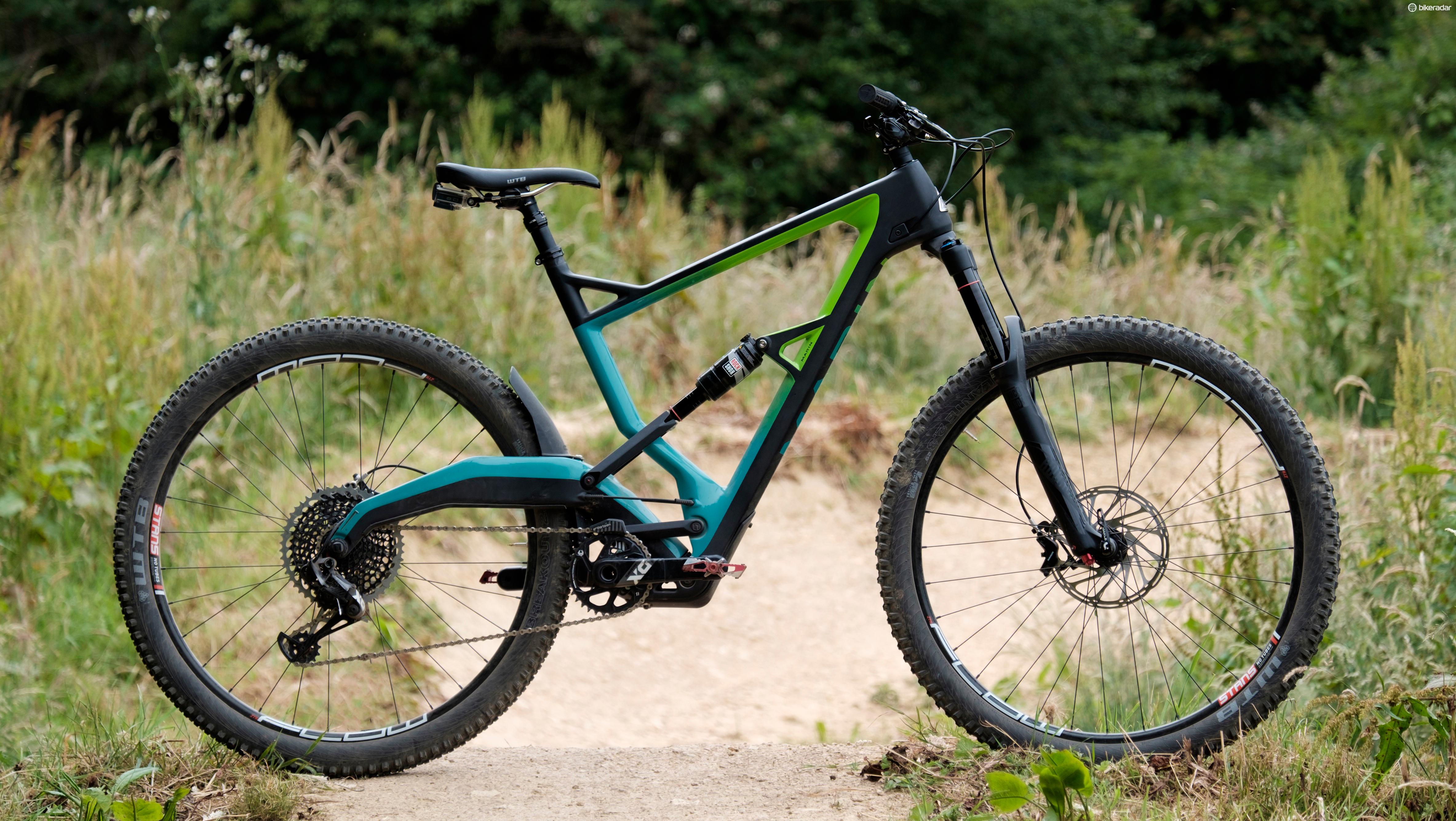
This was the system that debuted on the 2018 Wolf Ridge. Licensed from Italian engineering company Naild and also used by Indonesia’s Polygon Bikes, it had somewhat divisive looks and performance.
“You could maintain it easily, and it had some unique anti-squat and anti-rise characteristics so didn’t require a lot of damping,” says Cipes. “Suspension-wise, it’s one of the best systems, but there were some nuances that made it difficult for the consumer to swallow.”
Boasting a carbon fibre swingarm that slid up and down on a stanchion attached to the main pivot, the Wolf Ridge looked unique, and it had some advantages, including excellent pedalling and good bump absorption. However, our reviewers criticised its pedal kickback, frame flex and dated geometry.
There was another problem too, Cipes admits. “People weren’t ready for a bike of that price point from Marin. We hadn’t been doing a lot of amazing stuff, quite frankly.
“Then we came out [with the Wolf Ridge] and people said, ‘Oh, that’s cool, but I haven’t seen them in a while, I don’t know if I’m ready to go [with them]’. It was a super-high-end bike [prices started from £5,750] from a brand that was known for being a bit more pocket-friendly.”
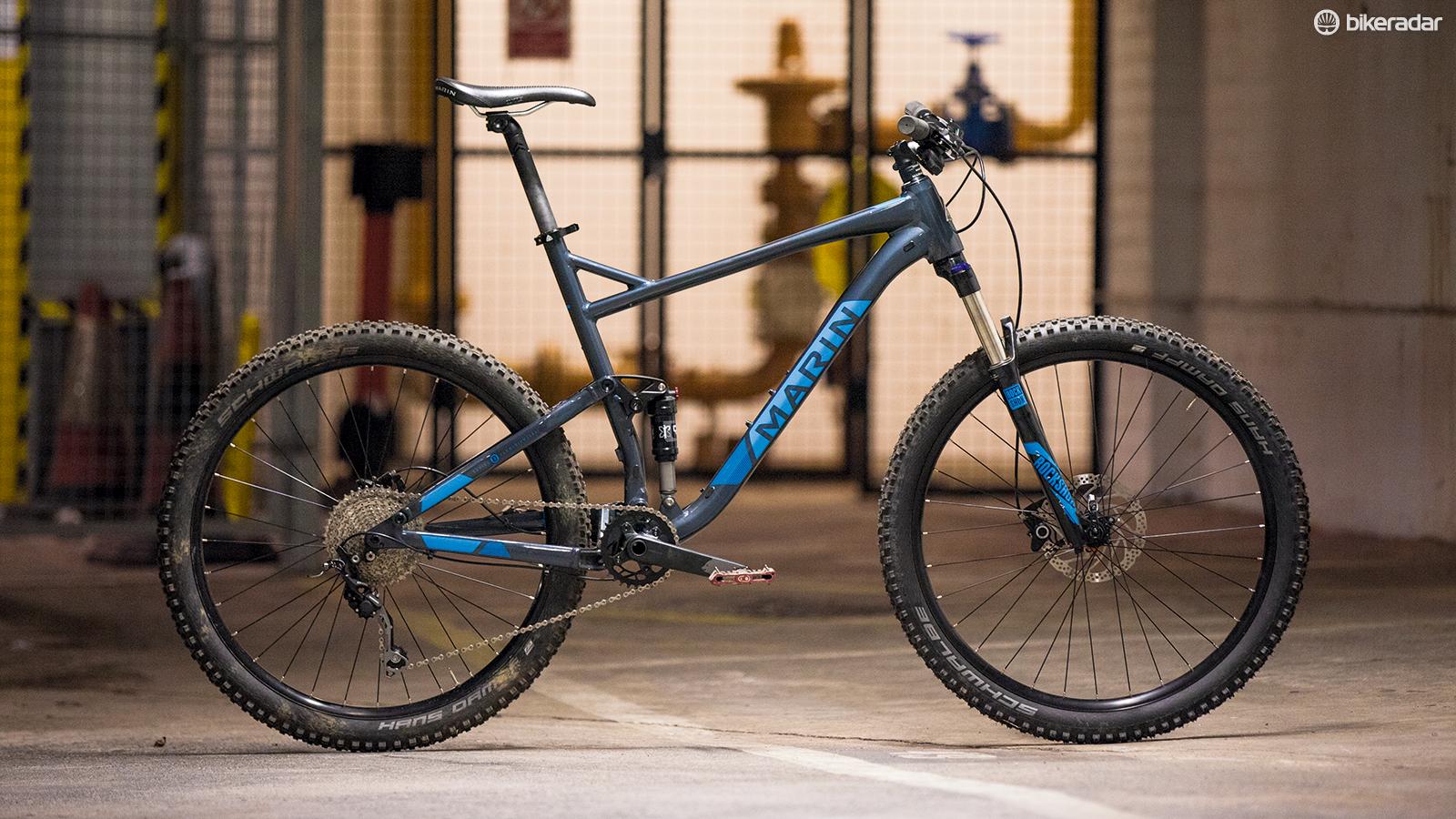
Marin’s unofficial ‘relaunch’ could have been dead in the water, but thankfully, alongside the opinion-dividing 29er and its 650b-wheeled equivalent, the Mount Vision, released in 2019, it had been developing the Hawk Hill trail bike (which came out slightly before the Wolf Ridge).
With its more familiar ‘MultiTrac’ design – a ‘linkage actuated single-pivot’ setup, where the swingarm moves in a simple arc around the main pivot and a shock linkage gives control over the suspension kinematics – and £2,200-£3,000 price range, this was a more palatable proposition. It was simpler, better value and altogether more sorted.
Fee-fi-faux-fum
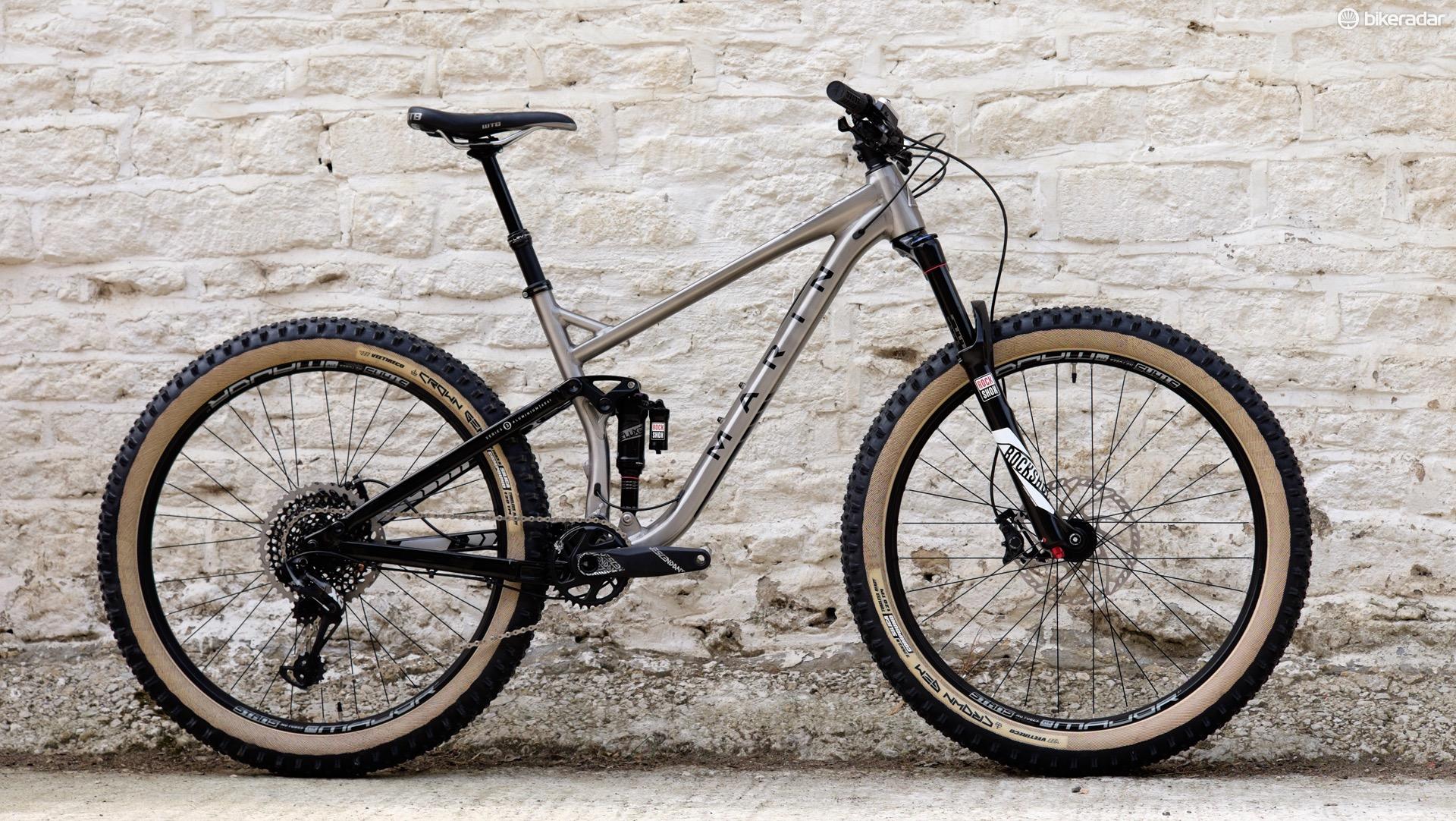
“Like any bike nerd, I find new, advancing technology awesome, but at the same time we wanted to do an entry level bike, and that’s where the MultiTrac came in,” says Cipes.
“[The idea was that good] geometry and kinematics are essentially free, and if we brought [the price] down as far as we could, every rider could enjoy it. The sales team came to me and said, ‘We want an opening-price-point, full-suspension bike that really rocks’.
“We took something we knew – a ‘faux-bar’ design [thus called because it looks similar to a four-bar linkage, but with a pivot on the seatstay instead of the chainstay] – and made that into a great 120mm-travel trail bike.”
After debuting on the Hawk Hill, the MultiTrac system was soon shared with the 29er Rift Zone plus the longer-travel Alpine Trail and B-17.
“What’s funny is the R3ACT 2PLAY bikes didn’t do so good, but the MultiTrac stuff really hit a core [market] and helped establish [our] performance and value proposition,” says Cipes.
Good bikes for everyone
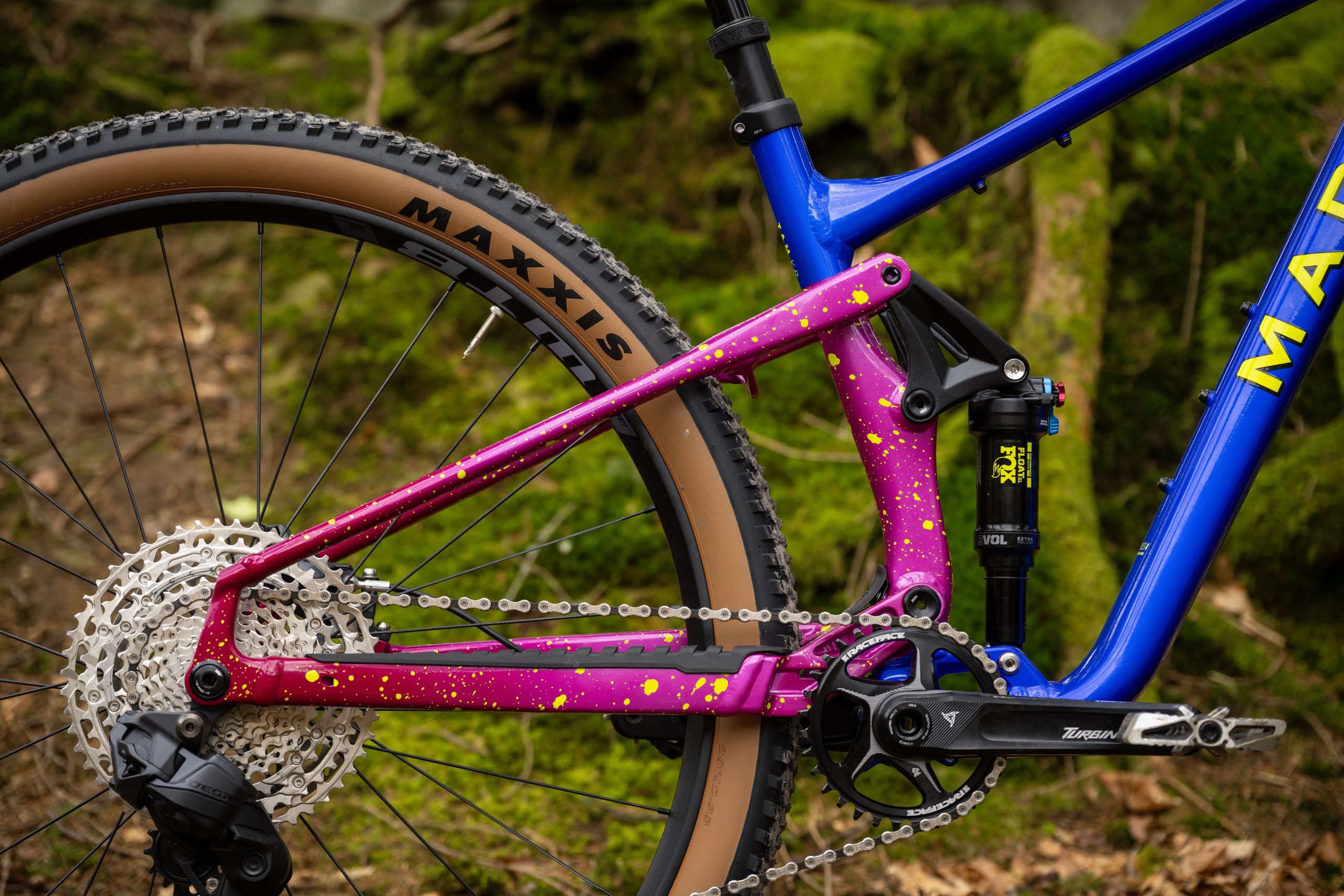
For Cipes, it’s essential that Marin’s bikes represent good value.
“I want people who don’t have a ton of money to spend to experience what a good bike rides like,” he says. “That’s probably the most rewarding thing about Marin – bringing bikes to the table to achieve that.
“Everyone’s making a lot of the same bikes. They’re very expensive, they’re very cool, they’re really neat, but they’re ungodly expensive. I have a fundamental problem with a bike that [costs] five figures – I’d never be able to afford [one]. That was a catalyst for everything we do now.”
Of course, it’s not easy to produce comparable – or even better – bikes than other brands, for less money. Cipes says this comes down to attention to detail.
“Everyone [in the industry] works hard to make good bikes, but I like to think the details we pay attention to are the ones that matter when you’re trying to enjoy the trail, go fast, pop a wheelie, jump a jump or whatever you’re doing,” he says.
“Regardless of your price point, you have the same requirements. You want your bike to ride efficiently, you want it to be smooth, you want some cool bits on it, you want it to look good. So, we try to respect that at every level. It gets much more difficult, as we get down in price ranges, to achieve that. And that’s where the magic really is.”
For Marin, chassis balance is a key consideration – both in terms of geometry and making sure the fork and shock are working in unison.
“We try to make bikes that are predictable and stable, and like your old mate – you can just get on with them and have a good time,” says Cipes.
To this end, every Marin full-sus bike has a custom shock tune.
“We will not spec a shock if we can’t go in there and fine-tune the shims, the compression ratios and the air spring or the coil to get what we need out of it,” says Cipes.
“We also test that with the fork, and that’s how we get that chassis balance. We always tune our bikes to get the most performance, speed and comfort, because [then] you’re going to have confidence. And if you have confidence, you’re riding faster.”
No carbon in sight
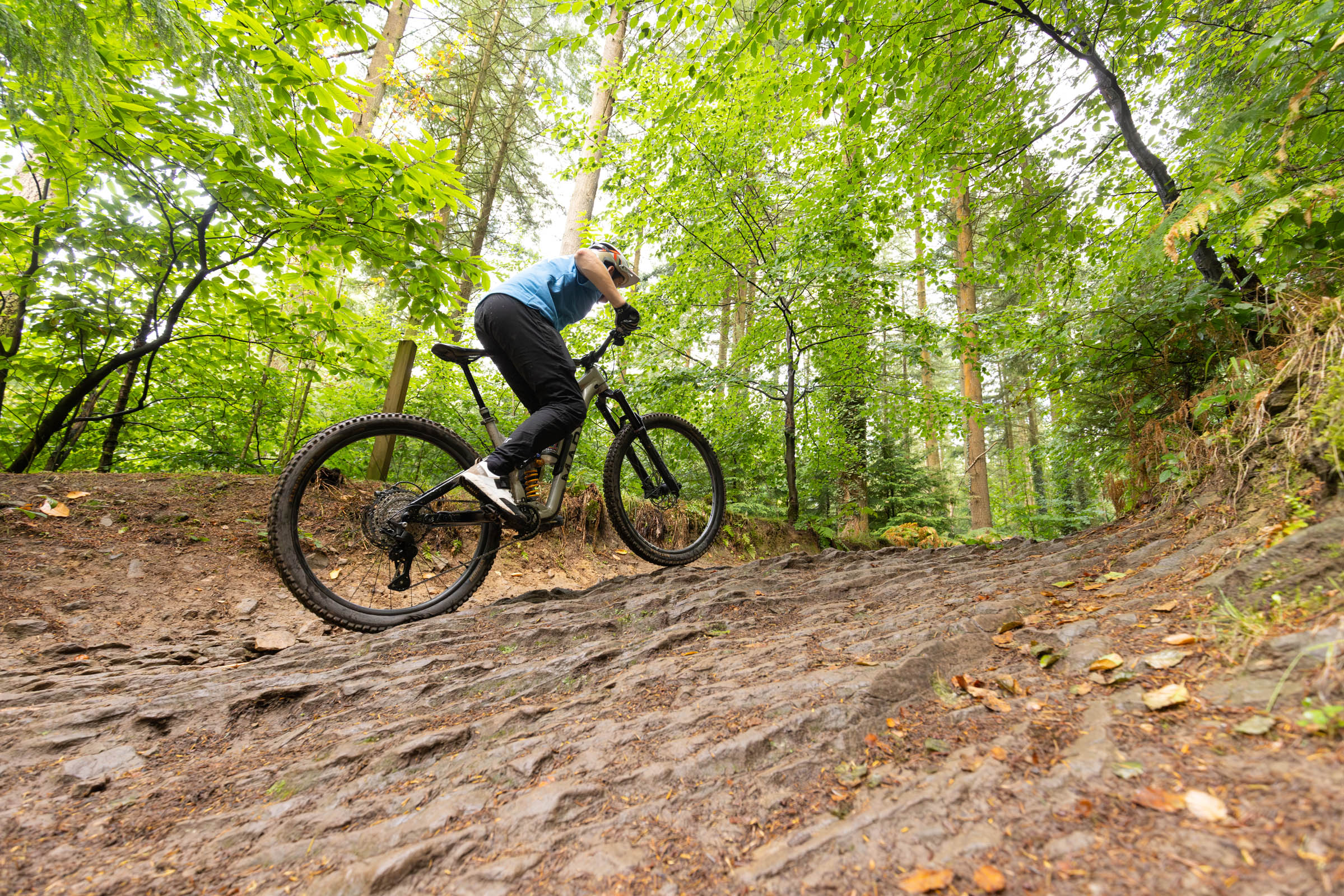
Despite being early adopters of carbon fibre, Marin now shuns the material for its full-suspension bikes, and Cipes says this isn’t solely down to cost.
“We drew a line in the sand a couple of years ago,” he says. “It’s not that carbon’s not great – it’s fantastic for certain applications. We have gravel bikes with carbon forks, we have a full-carbon gravel bike. But for the mountain bike experience, we feel we can deliver a better-riding, more economically priced and better performing product with alloy.
“We feel quite strongly that we can achieve our stiffness and performance goals with an aluminium bike. It’s not going to be as light as carbon, and maybe not as sexy. But guess what? You can crash your bike in the woods and it won’t crack, and you can get on and keep riding. That’s also quite important.”
Alloy construction also means Marin can make tweaks and updates without requiring an expensive new mould, as is needed for carbon frames.
“You can change head angle, you can change reach, based on market feedback,” says Cipes. “We don’t get everything right all the time, and it’s important for us to listen to the shops, the dealers, the riders, our internal staff, and say, ‘Okay, what’s working? What’s not?’.”
There’s another consideration, too.
“The only thing you can do to recycle carbon is basically to grind it up to put in the road. And as someone who rides in forests and likes nature, that doesn’t sit well with me. If we can avoid making carbon bikes for every single application, I think that’s a good thing for the planet.”
Of course, using alloy also saves the brand money, which can be spent on better components.
“It’s a really nice thing for our customers,” says Cipes, “because they get a great-performing bike that doesn’t cost as much, with better brakes and suspension – which, to me, are the most critical parts for control and comfort.”
Stepping back from the edge
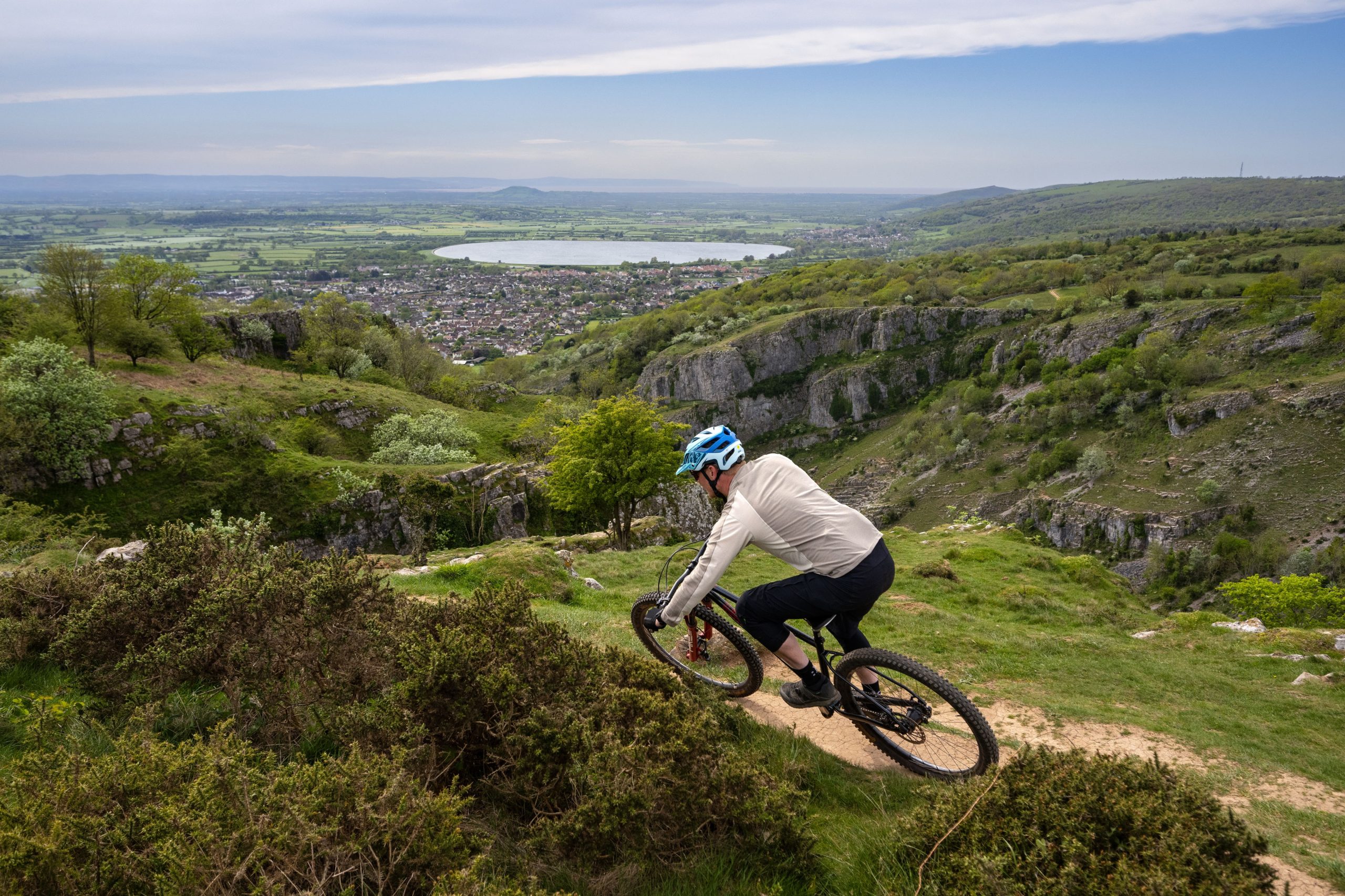
Marin has continued to innovate with bikes such as the El Roy (2021-23) – an ultra-long, super-slack steel hardtail, which our own Tom Marvin had a big soft spot for. This is thanks, in part, to feedback from its testers in the UK.
“Usually, I’m the primary tester,” says Cipes. “Then we have secondary testers, who maybe have a different riding style to me or are a little bigger or smaller. Duncan Nason’s one of my test riders back home – he used to be on the Yeti factory team – and we have guys in different parts of the country, and do a lot of testing in the UK too.
“We try to make sure that once we’ve set the tune, we validate it in other locations with rocks and roots, not just in California where it’s dry and grassy.”
As for the El Roy, he says: “We made, I think, six frames with different bottom bracket heights, reaches and head angles. We shipped them over to the UK, went to BikePark Wales and just traded them and did laps. Through that feedback, we ended up where it ended up.
“Coming from the downhill side of things, I like slack bikes. But it also has to be playful and fun. And I also did a little dirt jumping back in the day, so you’ve got to be able to air it out. It was really important for that bike to do all that stuff. I wouldn’t have considered that we were pushing the limits – we were just making a bike that was correct for the intended use.”
Cipes thinks Marin has hit a sweet spot in terms of geometry.
“It’s really important that a bike rides well, but not be too extreme,” he says. “I’ve ridden some GeoMetrons – they’re very good in certain situations and for certain riders, but for every rider, they’re not great.”
A home from home
Another model made with input from UK staff is the Quake downhill bike, launched at Whistler Bike Park in 2024 and since ridden by Matt Jones at both 2025 Red Bull Hardline events.
“That was a dream of mine, and also John Oldale [Marin’s UK director of marketing],” says Cipes.
“Both John and I are downhill ‘frothers’. That’s our passion. So, when we first came on board, it was our mission to make a downhill bike; we really pushed that one through. They were like, ‘Let’s test it in the open, give it to Matt Jones and people will start asking for it’. It was our own little selfish situation, but it really worked out.”
While Marin retains firm ties to California, the make-up of its team shows how important the UK market is to the brand – alongside slopestyle ace and YouTube favourite Matt (from Milton Keynes), there’s enduro racer Martha Gill (Bolton), Welsh pinner Nikki Whiles (Llantrisant), Scottish trials rider Duncan Shaw (Inverness) and adventure rider Juliet Elliott (Torbay).
These isles can’t claim the praise for Marin’s eye-catching recent paintjobs, though. Those are down to the brand’s Pittsburgh-based ‘graphics guy’, Mike Pfaltzfraff.
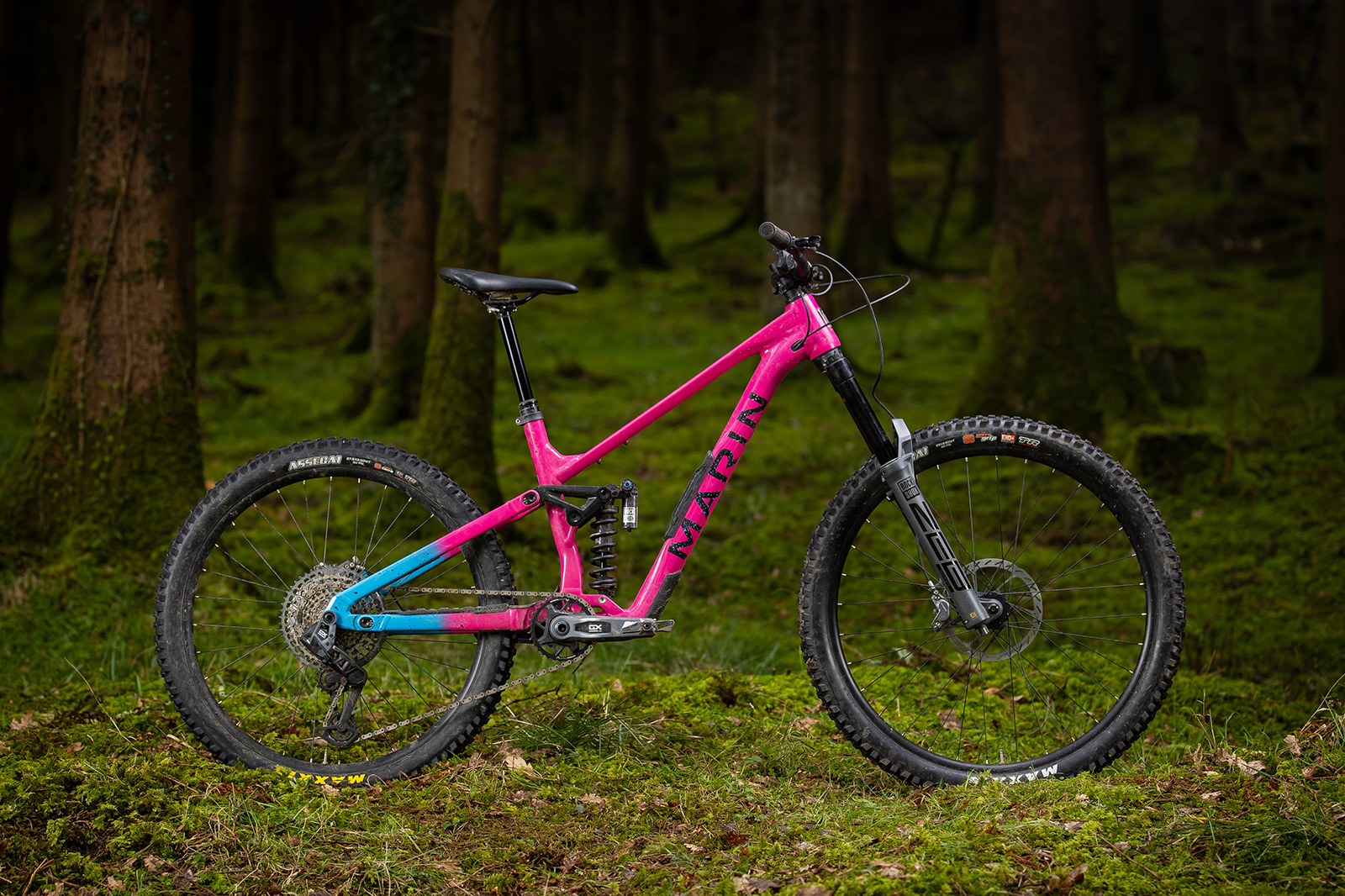
“The Alpine Trail XR AXS in the Miami Vice colourway – bright pink to blue, with speckles – that was a winner,” enthuses Cipes. “I’ve got to shout out Mike – he’s amazing.”
So, what’s next for Marin? It’s moved to using a new ‘MultiTrac 2’ system on its longer-travel bikes – a four-bar Horst-link setup, which gives more control over the suspension kinematics.
“The reason we went to Horst-link is because once we passed 150mm of travel, the physics of how the rear end moved meant that anti-rise [how well the suspension resists compression under braking] became difficult to keep in the place we wanted it to be,” Cipes explains.
“For Marin, that’s somewhere above 70% but below 100%, because we want a neutral feel under braking – we don’t want brake jack, we don’t want an unstable chassis. Another benefit of the Horst-link is the adjustable chainstay length and bottom bracket height, which is a nice feature.”
Marin also continues to hone the ride feel of its bikes.
“What we’re diving into right now is stiffness, and also how the rider integrates with the bike and how their centre of gravity is weighted for climbing and descending,” Cipes says.
“If we get the balance and the ride feel right, when you hop on that bike you’ll feel confident and will have a good time. That also means the weight’s in the right place, it’s not too heavy, yada yada yada. It’s a culmination of all the small details – that’s what’s important to us.”
As for the future, Cipes says: “We’re working on some pretty exciting stuff that I can’t talk about, on the ‘analogue’ side of things. If you look at our line, you can probably guess where there’s some holes. And we’re trying to figure out what motor and technology provider will be where we see our ebikes needing to be in a couple of years.”
For now, he’s happy with how the brand is doing.
“Once you get outside of the Specializeds, Canyons, Treks and Giants, the [bike] industry is quite tiny. And Marin is in a nice place,” he says. “We’re one of the smallest brands that actually has a full line of bikes, from kids’ bikes to city bikes.”
Marin also continues to sell through local bike shops, rather than online – an increasingly unusual approach for a smaller brand, but something Cipes describes as “really important” to Marin. Above all, the focus remains on making bikes that are a blast to ride without blowing a hole in your finances.
“Throughout the entire organisation, our mantra is ‘Made for fun’ and we try not to take ourselves too seriously.”


