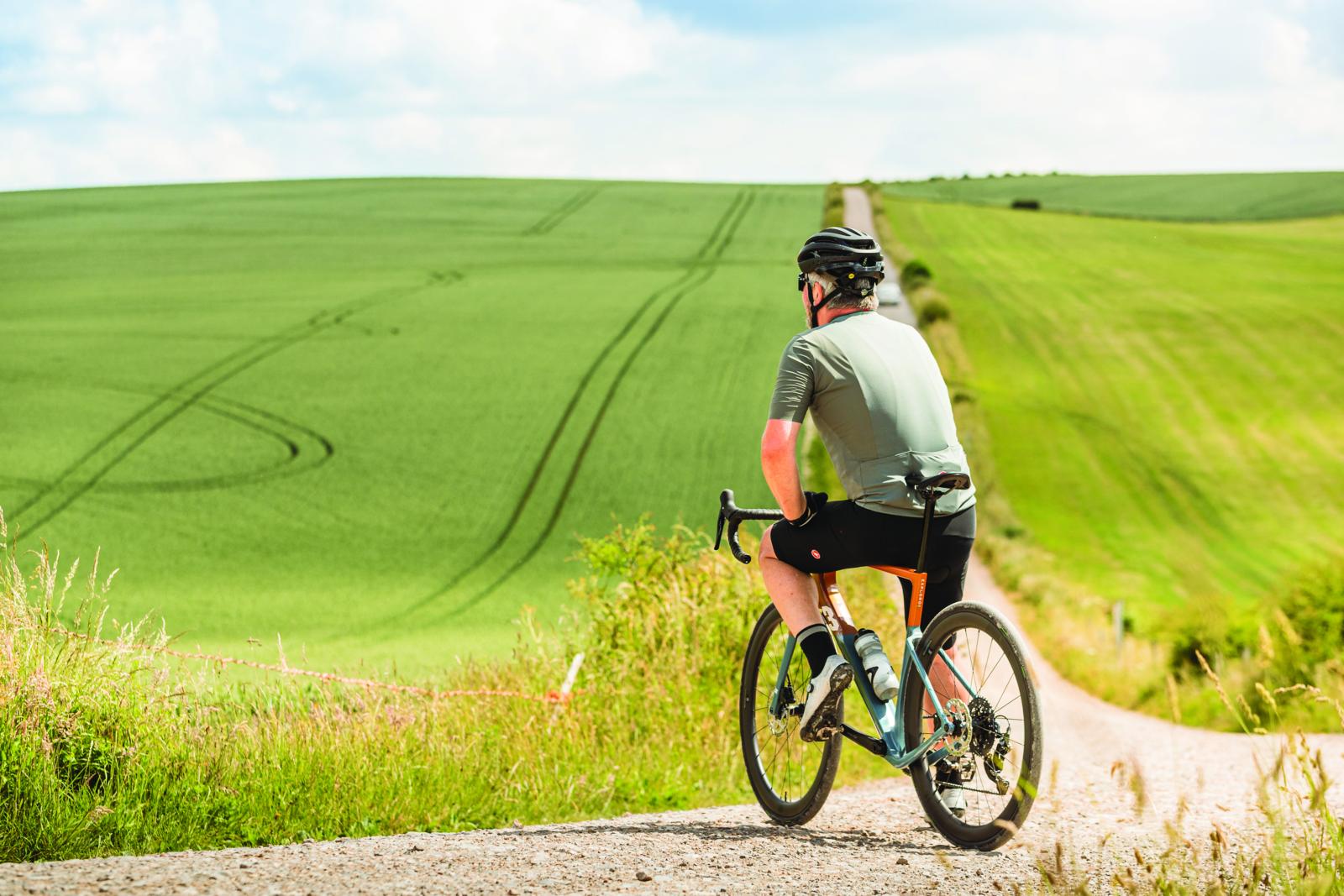
Race organiser Life Time has banned drop handlebars from the Leadville Trail 100 and Little Sugar races as a ‘safety measure’. The claims are that tightly packed racing is dangerous, with different fields of vision for those riding in the drops and on flat mountain bike bars. It’s also said that drop-bar bikes are harder to control on technical terrain.
There’s no denying the gravel-inspired bikes being run at the Leadville 100 and Little Sugar are doing well, taking victory in 2024 under Keegan Swenson.
If the truth is that these drop bars are giving athletes an advantage over standard mountain bikes, that's a reason to exclude them more than for ‘safety’. If the history and reputation of the race are built on its singular bike type, then refine the rules, celebrate them even.

In my eyes, that’s not necessarily a bad thing. I’m certainly no fan of the UCI's restrictive outlook on progress in road racing. But I can't agree with a ban. I wouldn’t bat an eyelid if a singlespeed race reiterated no gears, or a road race said no time trial bikes, for instance.
The basis seems to be because of the highly mixed field, where amateurs and elite pros are riding together. That comes across as tin-eared and elitist.

Saying an amateur turning up at Leadville on a drop-bar bike is inherently more of a risk than a pro choosing to do so does a disservice to plenty of incredibly talented amateurs who ride their bikes for fun rather than as a career.
I heard similar arguments on the road when disc brakes arrived in racing. One Tour de France stage winner told me disc brakes are good for amateurs, but not necessary for pros, because they ‘know how to ride bikes’.
Banned for the wrong reasons

Now, of course, Life Time is free to run its races how it wants. However, surely it would have been simpler to promote the Leadville 100 as a classic, purist mountain bike event.
After all, Leadville has been the premier US mountain bike marathon for more than 30 years. To simply preserve it as such would have made the correct statement in my eyes. If it were a safety issue, then racing on open roads would surely be the biggest safety issue the race faces.
We had a precedent here in the UK. The most prestigious off-road event we have, the Three Peaks, started in 1961 and has run ever since. Back in the 1990s, when mountain bikes exploded onto the scene, calls were made for this new style of bike to be included in the event.
It would have generated lots of press coverage and possibly a wider field of riders. If mountain bikes were allowed, especially in the sometimes atrocious conditions the Three Peaks is run in, they’d probably win. But the race organisers stood fast and have continued to promote the Three Peaks as a cyclocross event for a single bike type. That’s ensured its place in mass-participation legend.
I can’t imagine the organisers of L’Eroica ever allowing modern elements such as STIs and clipless pedals. It’s just not in the spirit of the event.
Life Time should have doubled down on the 100’s status and reputation as a mountain bike marathon.
Mountain bike marathon racing isn’t enjoying the popularity it once did, from its heyday of epic events such as the Red Bull 24, Grand Raid Cristalp and Ironbike. Maybe it is being superseded by epic gravel events, which are made possible, in part, by super-capable gravel bikes.
You have to admit mountain biking has become more about park riding, whereas gravel riding has taken the lead in long-distance races.
Continuing to make the Leadville Trail 100 the event for mountain bikes for this type of competition should ensure its successful continuation with a highly dedicated field of riders and supporters.
The Leadville Trail 100 is a mountain bike race

So, in short, the Leadville 100 should be a mountain-bike only event in celebration of its history. Maintain it as a bucket-list race, held in the same regard as Unbound for gravel, the Three Peaks for cyclocross, L’Etape for the road and L’Eroica for classic bikes.
As it stands, Life Time and the Leadville 100 have created something of a PR fail with the talk of safety issues, when they could have just as easily reinstated the Leadville 100 as the epic mountain bike event it always has been.