Sometimes, a great idea comes too soon. A combination of market conditions, execution that needs refining and a lack of compatible tech can mean a promising innovation fails to take off.
In the time I’ve been involved with bikes professionally, I’ve seen remarkable leaps in technology that either had a false start, took time to get right or just didn’t find any fans.
It’s still happening now. Most of the cycling innovations in the 21st century still have detractors. Electronic drivetrains, tubeless tyres, carbon spokes and even disc brakes are just a few.
While some people question this innovation, and ask who it’s for, I still want brands to be bold, take risks and keep pushing forward.
Shifting gears

In 1990, Shimano made the biggest leap in drivetrain technology since the derailleur. Its Shimano Total Integration (STI) shifters combined gear shifters and brake levers in one unit, which meant racers didn’t need to reach to the down tube to shift gears.
However, when the shifters arrived on the Dura-Ace 7400 groupset, they were criticised heavily. The design was too bulky, not ergonomic for your hands and very heavy compared to down-tube shifters. Braking wasn’t as good and you could brake accidentally when shifting.
People decried the complexity – how could it be fixed? – and some reported failures as the internal grease hardened, breaking fragile internals.
I’m sure some of those criticisms were valid, and road cycling has always been the most conservative of pursuits, but Shimano persisted and Campagnolo followed with its integrated shifting in 1992 in the form of ErgoPower.
Now, virtually all road groupsets use these designs. And if you’ve never ridden with down-tube shifters, which were the only option before STI, you’ll wonder how racers pre-1990 went so fast while having to take a hand from the bar to instigate a shift.
Powered shifting for home electronics enthusiasts
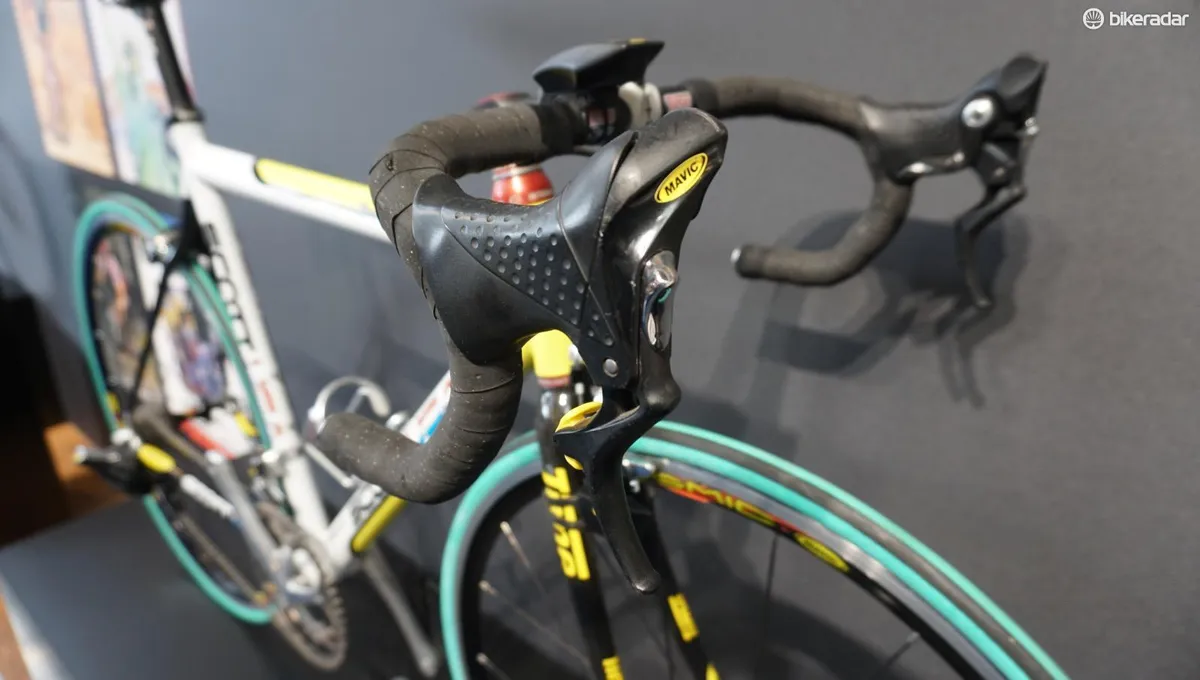
Electronic shifting is another area where ideas took a long time to take off. Mavic’s Zap electronic groupset, from way back in 1992, was the first example.
The Zap groupset worked well enough for Britain’s Chris Boardman to win two Tour de France prologues with it. It didn’t use electronic motors to actuate the shifts, instead it used a toothed shaft controlled by a processor board and pushed with a solenoid.
The power to shift came from the chain’s movement. Mavic even got to wireless shifting years ahead of the competition, with Mektronic in 1999. But Mektronic was plagued with problems around battery life, waterproofing and general unreliability.
Although Shimano brought us the first–generation Di2 in 2009, it didn’t quite get things right, even though the shifting was impressive and the auto-trimming front derailleur was a revelation.
Fitting the groupset was an issue, with where to place the external battery causing headaches for mechanics. The full-canbus wiring loom required heat shrink covers on the connections, and a huge amount of tape to secure the cables around the bike.
At the time, I didn't think my home workshop would need a heat gun and soldering iron, and for me ideally to get a vocational qualification as an electrician.
The price and complexity meant a cool reception, but exposure in racing and the vast improvements of the following updates, along with Campagnolo’s EPS in 2011, and SRAM’s wireless revolution with Etap in 2005, meant electronic shifting became the sole option for top-tier racing and bikes.
Carbon wheels

Carbon wheels had a similarly inauspicious start. The gains in aerodynamics were offset hugely by safety issues.
Carbon simply isn’t a great material for a brake surface on bikes. Unless you had a hybrid wheel, essentially an alloy rim with a carbon fairing such as HED’s brilliant JET 6, Zipp’s pre-Firecrest offerings or the price-pointed 30 or 60 clinchers, you were looking at a carbon brake surface for rim brakes, which was a dreadful combination.
At the time, there were arguments for carbon braking like in Formula One, where carbon disc rotors withstand heat in excess of 1,000˚C. But those cost thousands of pounds and last for a single race weekend.
Even when pad technology improved and brake surfaces got better, with ENVE and Zipp leading the way, braking on carbon wheels still wasn’t as good as even the most basic alloy rim. This was especially true in the wet, and we also heard tales of carbon rims melting after extended braking.
I managed to completely delaminate the rear wheel of a tour-de-France level test bike emergency stopping on a descent. It was a scary situation and a very long walk home in cleats.
Disc brakes will kill you and your friends!
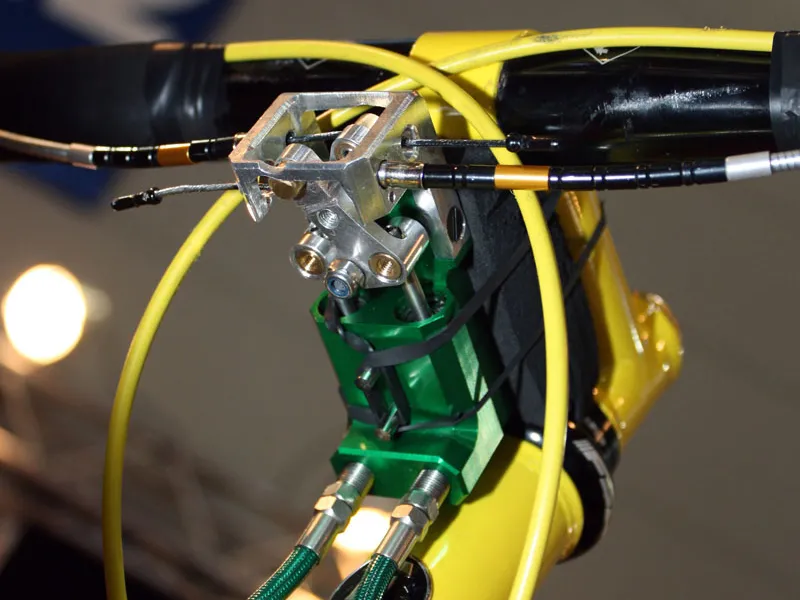
It took another tech innovation to get the very best out of carbon wheels: the disc brake. The same arguments were used against disc brakes as STI shifters and electronic drivetrains. People said they were too complex, that they weren’t needed and that they were too heavy.
There were even scare stories, which never came to fruition, of the rotors being spinning wheels of death, severing fingers or limbs.
Although they still have their detractors, disc brakes freed bike design from the limitations of rim brakes.
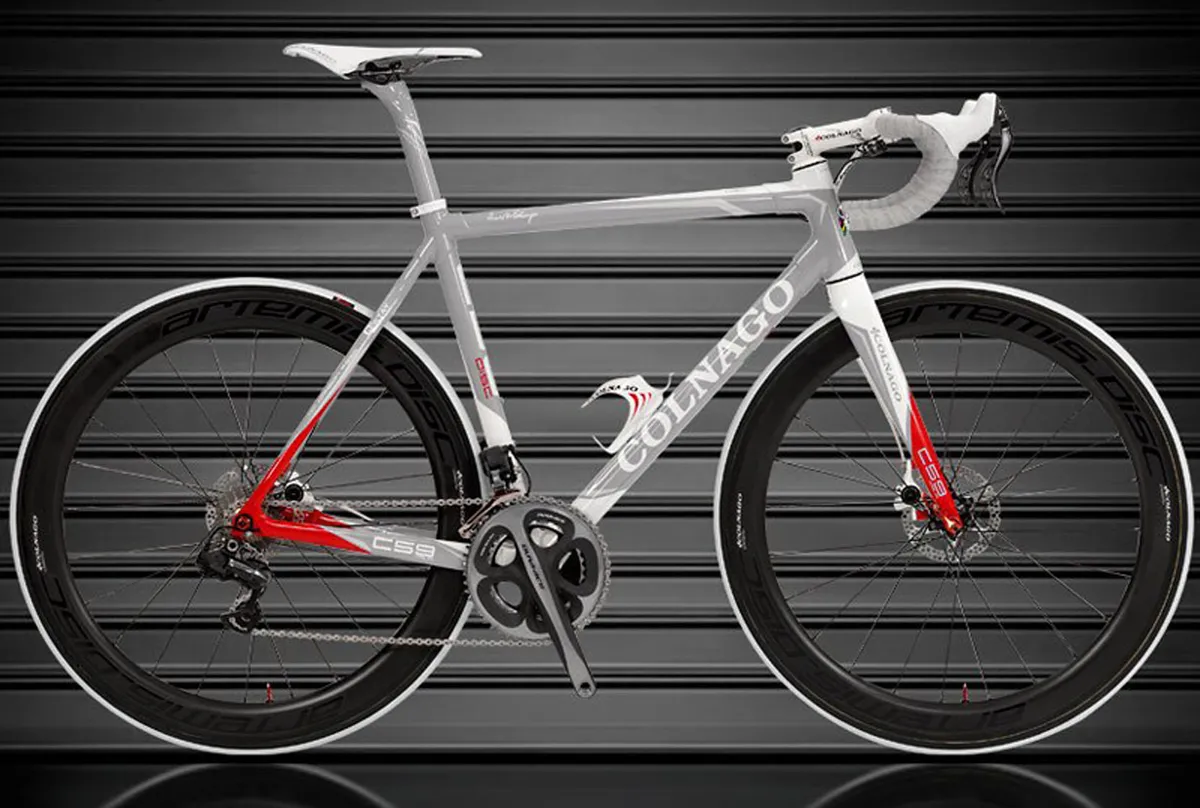
Wheel designers could make faster wheels without having a brake surface that ruined aero profiles.
It unleashed bike designers to do more with frame design. Bikes such as the Factor One and Ridley Noah 3.0 simply couldn’t be achieved if a space-constraining rim brake had to be put in place.
Disc brakes have freed experimentation in tyre sizes, too. With traditional dual-caliper rim brakes, the maximum tyre width is around 30mm. Anything bigger and we’re into the realms of V-brakes – not something that should ever be seen on a road bike.
Now, thanks to disc brakes, we’re seeing tyre widths extend to over 40mm in some instances, creating far more comfortable rides.
The fear of change
I get the fear factor surrounding new technology, and I don’t think the industry helps itself by rushing out new tech before all its ducks are in a row.
Thinking of disc brakes without thru-axles seems odd now, even if axles proved problematic because the industry couldn’t settle on a single standard, which leads to consumer confusion.
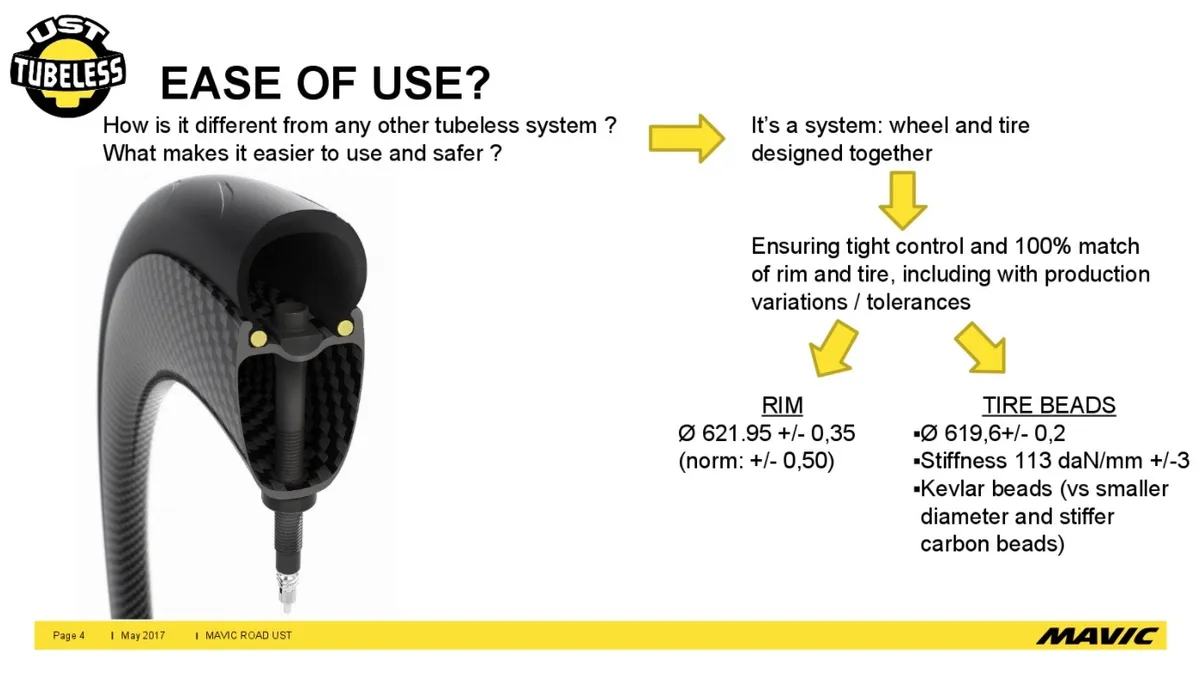
We’re seeing it again with the conundrum around tubeless tyres and hookless or hooked rims, which boils down to poor industry cohesion and bad communication rather than any deficit in the technology.
The litany of mismanaged roll-outs of new tech creates suspicion from riders, leading to a lack of consumer confidence.
Admittedly, I embrace new tech. I was an early adopter of electronic groupsets, disc brakes and GPS computers, and have owned more than one bike with new ‘standards’ that didn’t stick around: speed release thru-axles, disc brakes with quick-release axles, 650b wheels and direct-mount rim brakes, to name a few.
That’s because I believe pushing boundaries and searching for new solutions is vital to making bikes, and our rides, better.

Otherwise, we’d still be using fixed gears, or at best down-tube friction shifters, steel rims with leather-tipped brake pads, impossibly skinny tyres and toe clips with straps.
While that’s fun for a retro-themed day out such as L’Eroica, I couldn’t face that being my daily ride.