Until recently, I used exclusively top-end all-round race and all-season tyres on my own bikes.
The formula will be familiar to many – during the heady summer months, only the fastest, most supple tyres will do, and in the winter, the reassurance of tougher boots is essential.
A broadly warm and dry 2025 notwithstanding, in the UK that generally means I spend most of my riding time using top-spec all-season tyres. But my recent test of four second-tier options from major tyre players has got me thinking: maybe I need to reconsider how much money I’m spending on my tyres.
The bottom line is, I’ve been pleasantly surprised by the best mid-priced road tyres – they’re not the waste of time I’ve heard many decry them to be, and given you can get a set for far less than their RRPs would state, I reckon they’re a great-value alternative.
Here’s why.
You still get race-derived compounds

A tyre’s compound forms the contact interface with the ground, so of course it’s vital for grip and a great deal of confidence building. Thankfully, corners aren’t cut here.
The Continental Grand Prix TR, Pirelli P Zero Road TLR and Vittoria Rubino all include compounds derived from their flagship siblings.
Of course, while the branding is on point – tyre aficionados will be buoyed by the BlackChili, SmartEVO and Graphene + Silica monikers, respectively – none are truly identical to the flagship tyres. Each tyre has been modified to suit the conditions it is designed for, namely: a mix of dry and wet, and perhaps some winter use.

This means they’re not quite as tacky-feeling when you’re pushing hard in the best conditions, but you often get a good balance of performance when you’re not going to be pushing the limits of grip and talent.
Given this is an accurate representation of almost all of us, almost all of the time, why should you spend more on higher-performance tyres when in reality, mid-priced options will do adequately?
What’s a few watts between friends?

Similarly, who really cares about a few watts of rolling resistance?
Some of us do, of course, and we always like to check the excellent resource Bicyclerollingresistance.com for its expert take, as well as dabble in our own experiments from time to time.
And, in fairness, rolling resistance matters whether you’re riding quickly or not. In fact, it can save you more time if you’re a slower rider than if you’re a faster one, all things being equal, because there’s greater opportunity to save time for the longer duration of your ride.

So I shall rephrase: do you care enough about how efficient your tyres are to warrant spending more on top-spec models? I did once, but now I realise, like most other riders I encounter, I just want to enjoy the ride – and it doesn’t matter if I’m a few minutes slower to the coffee stop or getting home.
Plus, the gaps are almost unnoticeable anyway – a mere 3-5 watts separates the Michelin Pro5 Competition Line from the fastest all-round race tyres available, and that’s something I can only sense when I’m really paying attention.
How I tested
I tested the four sets of tyres on a set of Hunt 50 Carbon Disc wheels, chosen for their established performance benchmark. The rims have a 22mm internal width and a hooked bead, enabling me to test the 28mm-wide tyres on rims that should make the most of the nominal size.
I ran an initial tubeless-installation test for each tyre, before installing each set in turn for testing (totalling three setups). I recorded weights and inflated widths at 80psi / 5.5 BAR.
Tyres tested
High-thread-count carcasses? Check

Generally, a tyre’s carcass (the underpinning construction on which the compound is layered) is the most important contributor to suppleness.
This carcass is made of a woven material – typically nylon, but sometimes cotton – and the higher number of threads per inch (TPI), the more supple the tyre will be. You’ll find three to four layers of this material forming the carcass.
Essentially, suppleness enables the tyre to deform and mould itself to the road under you, conferring a tangible sensation of the grip the compound is offering up, plus a level of road-smoothing comfort.
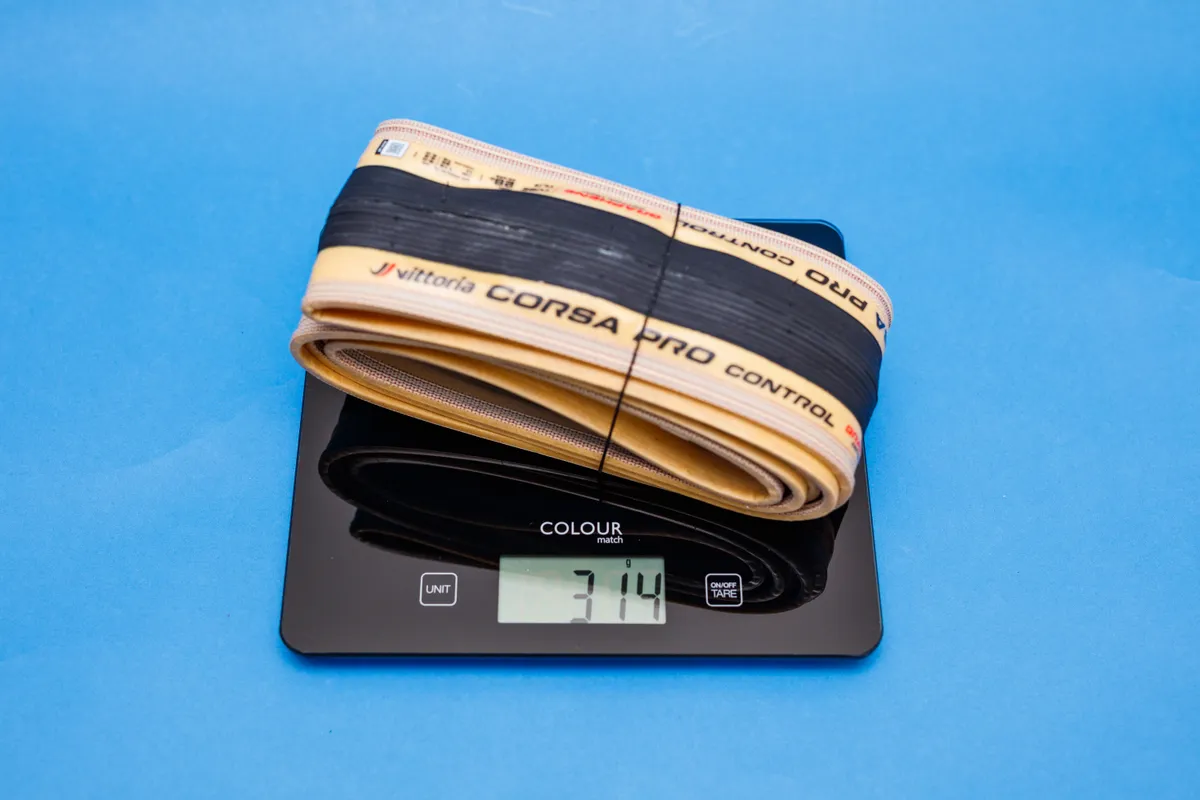
In times gone by, many lower-tier tyres would feature lower thread counts than their racier counterparts – but here that isn’t necessarily true.
Vittoria doesn’t include its venerable 320 TPI cotton casing in the Rubino, but a still-decent 100 TPI nylon casing remains in its place – while the Michelin has a 120 TPI casing (perhaps a driver of its impressive rolling resistance), as does the Pirelli.
Interestingly, the Continental Grand Prix TR proves you don’t necessarily need this – it manages to deliver good road feel, but bear in mind that’s because it doesn’t feature a puncture-protection layer (relying on an extra layer of its carcass to achieve this instead).
Essential puncture protection
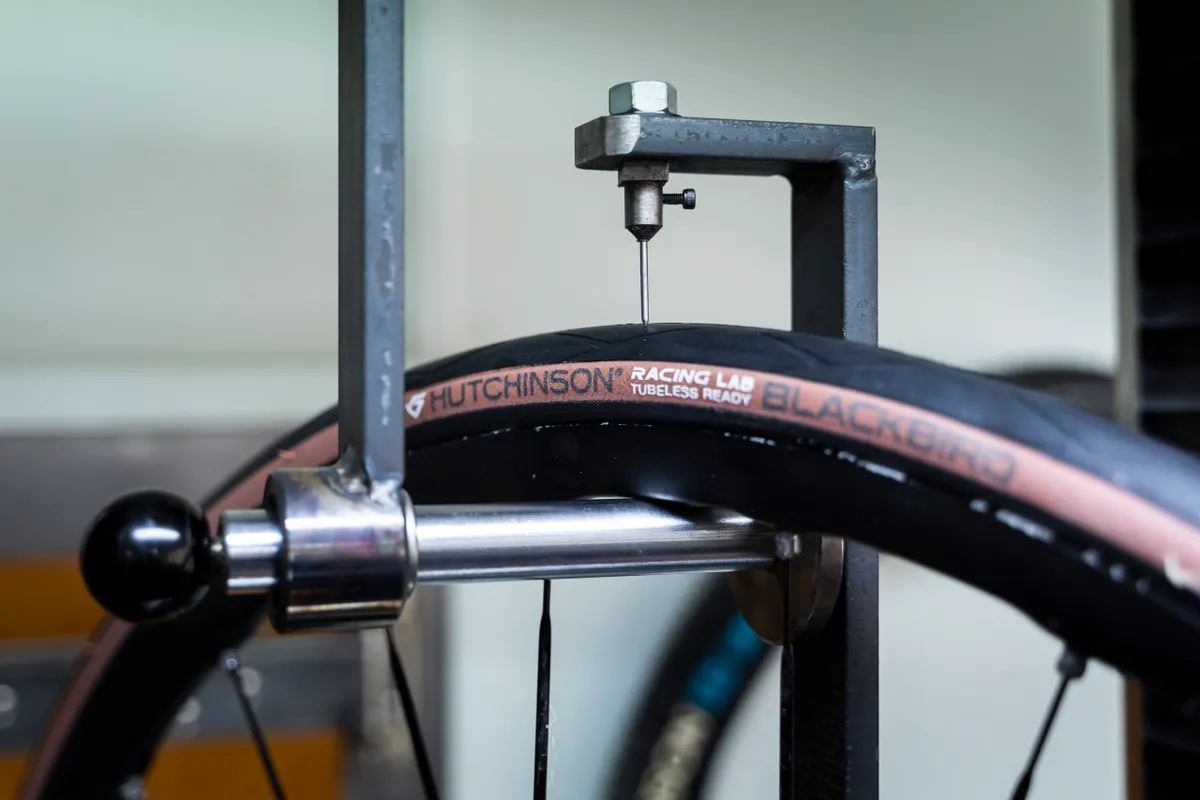
While a certain degree of luck is always part of the equation, I suffered no punctures during my initial 12-week test period, and haven’t suffered any in the two months that have followed.
I like to pick my line carefully and, in my own time at least, purposefully choose cleaner routes. These are behaviours that I’m sure will resonate with many reading this.

However, I’ve been left far more confident in these mid-level tyres than I was when I started testing – so confident that, bearing in mind my previous points, I‘m very content to use up these tyres’ life before I consider moving back to higher-spec rubber.
Of course, part of their resilience could be down to their tubeless construction, which by definition is thicker than a general clincher alternative, even before any sealant has been called into action.
Which is why…
Tubeless is a good thing… even if you don’t want it
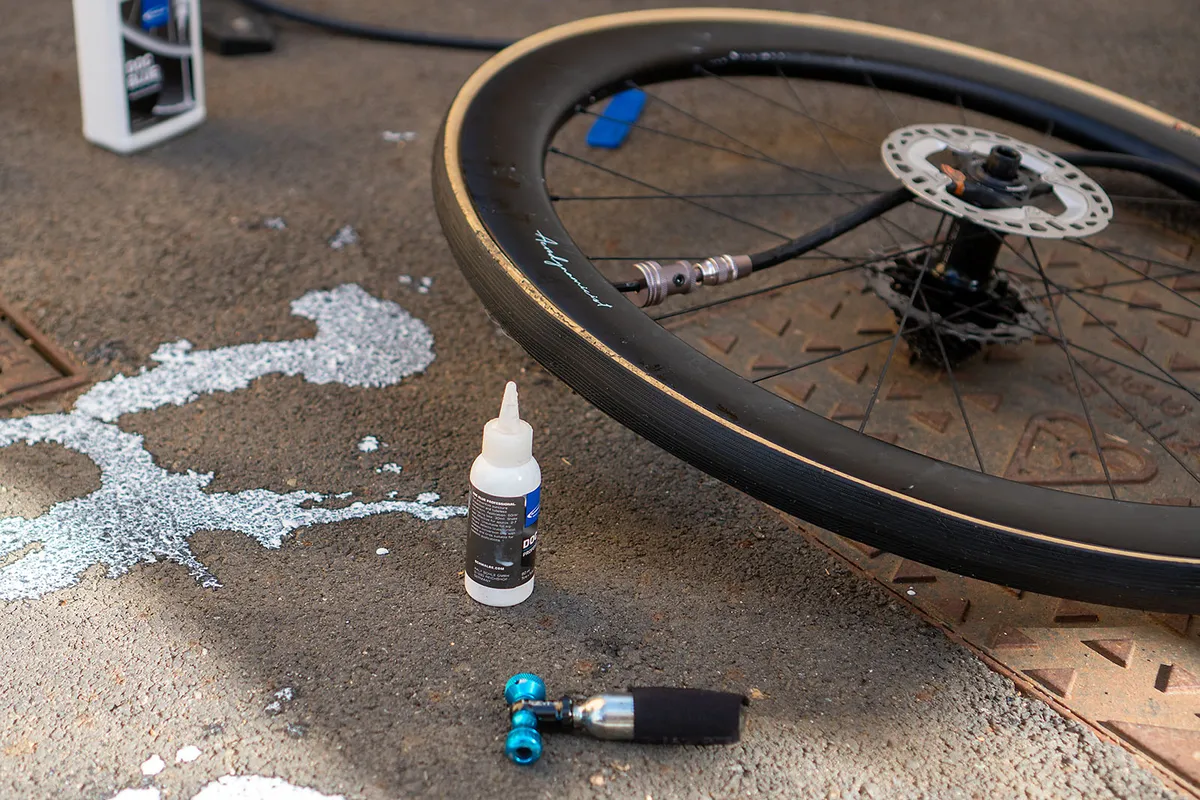
I’m convinced that even if you don’t want to run your tyres tubeless, you should still buy tubeless tyres (even though clincher versions still exist).
With most tyre development now directed towards the tech (I can barely remember the last time a brand made any noise about a new clincher tyre, or indeed a clincher variant of a tubeless tyre), it’s logical to think that the drawbacks of running a tube inside a tubeless tyre have now been – at least partially – mitigated as the technology improves.
I prefer to run TPU inner tubes for my testing after I’ve done my test tubeless setup, while many are converted to running a tubeless set up, and others prefer to stick to standard butyl inner tubes.

Whatever your flavour, any one of these tubeless tyres offers enough performance to not feel unduly hamstrung by a tubed installation. Previously, you either didn’t have the option to go tubeless, or the level of the technology in the design was such that if you added a tube, the setup would feel like the proverbial Wellington Boot.
All in, I’m pleased that tyre brands have now ported some of their learnings from their greatest offerings to their more cost-effective options. In short, you no longer have to choose between a racy tyre and a conservative winter tyre – the compromises you do make are now worth it.