A lot of good products touted as ahead of their time don’t get the mainstream traction they deserve because consumers are afraid of true innovation.
Some may argue that product development is intentionally cyclical – there isn't a better way for the industry to make money than rehashing old ideas.
That perception is clearly a red herring, though. Most products and bikes coming back from the grave do so because first time round, consumer uptake was limited.
Customers weren't ready, even if the product was. I can think of many examples across multiple industries.
Product cycles

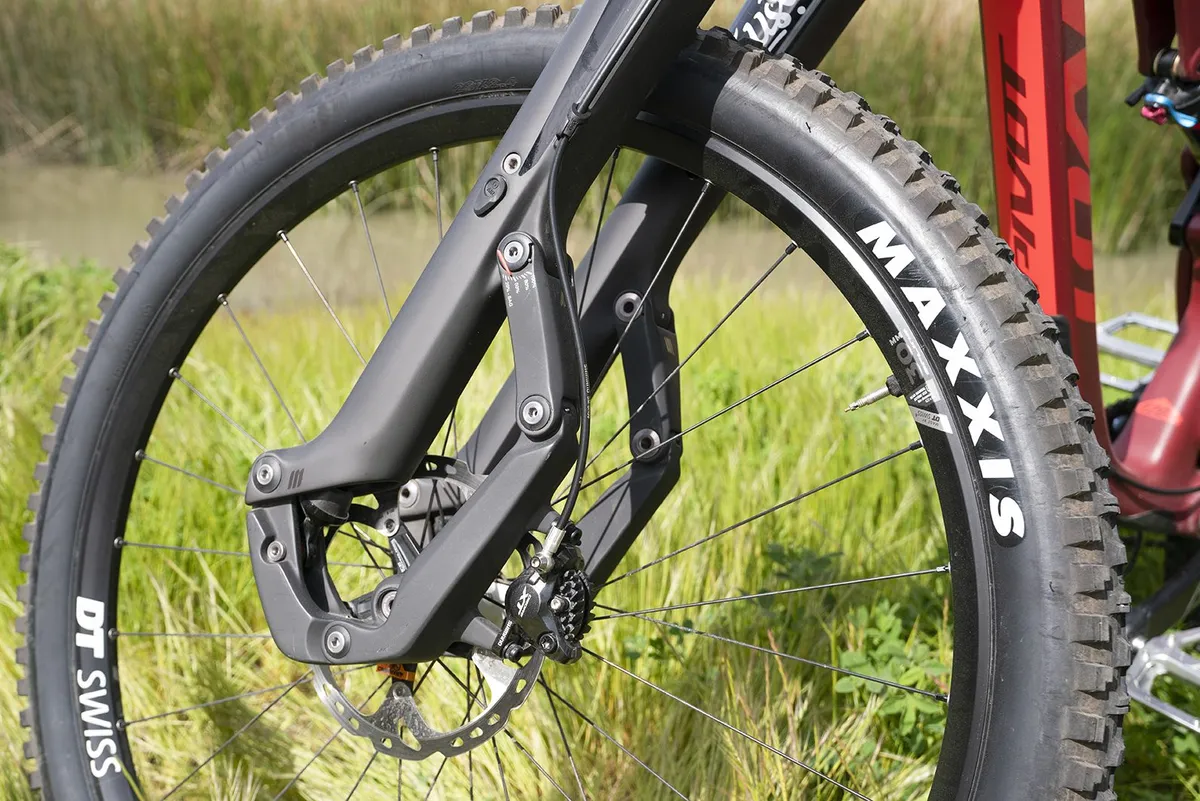
Focusing on mountain biking, the upside-down fork arguably performs better than its right-way-up counterparts.
This design has been around since the early 1990s. There have been plenty of glimmers of brilliance since its debut, but it has taken nearly 35 years for the tech to go mainstream with Fox’s Podium.
We had electronic suspension way back in 1997 thanks to K2’s Smart Shock.
It took until 2012 for RockShox and Lapierre to create a mass-appeal system, however. Called e.i., it used data from a cadence sensor in the cranks to operate a servo on the rear-shock cycling compression settings to reduce pedal bob.
Despite it being made and backed up by big names, it didn’t prove to be a consumer success, even though it was well-received by bike reviewers.
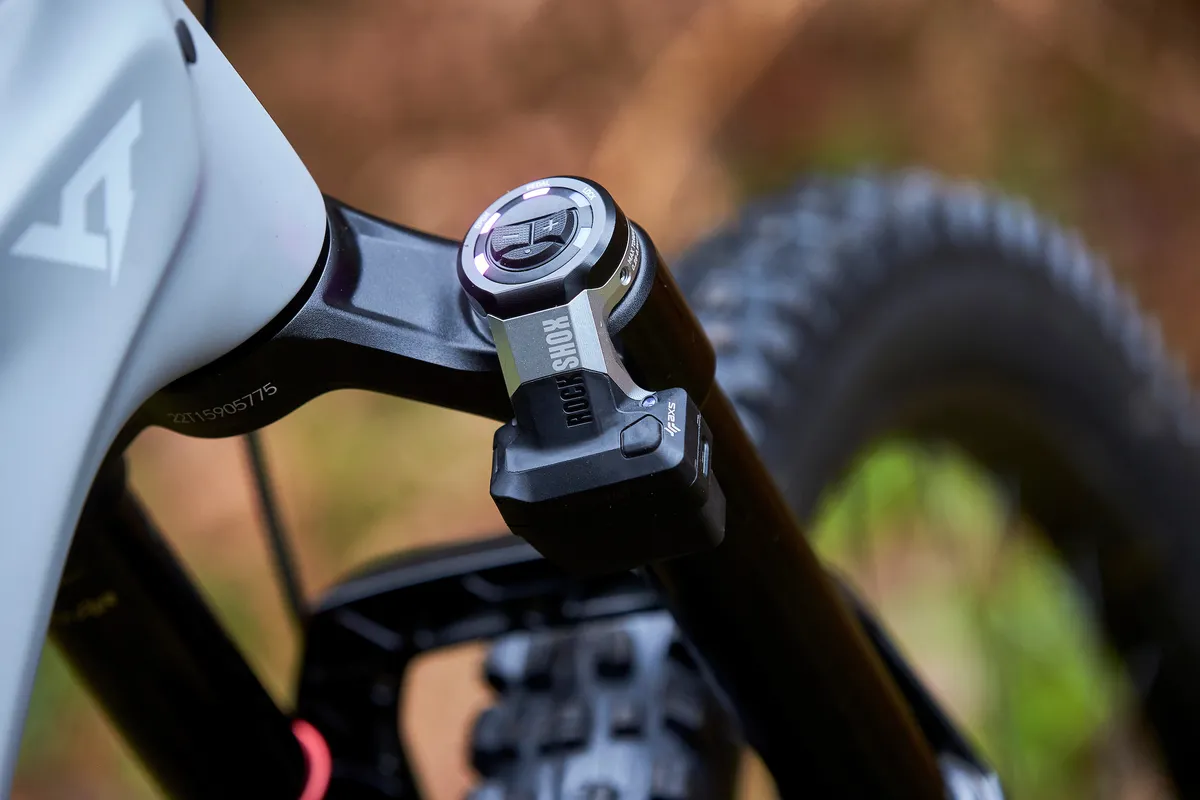
It took until 2018 for Fox to launch Live Valve and RockShox until 2021 to do the same with Flight Attendant. Both are seen as desirable but haven't been widely adopted.
It’s the same story for electronic shifting.
Shimano’s XTR Di2 first came out in 2014, but consumer appetite was limited. XT Di2 launched two years later, then Linkglide Di2 10- and 11-speed were added in 2022.
These product cycles are slow – even by Shimano’s standards – bottlenecked by consumer uptake.

Finally, 11 years after XTR Di2 first appeared, it was updated with M9200 in 2025.
SRAM was slower off the blocks, debuting AXS MTB drivetrains in 2019, but was quicker to update its system with Transmission in 2023.
It wasn’t until these brands' latest versions that consumers were willing to buy fully into electronic derailleurs (and even then, that’s questionable), despite the original XTR Di2 shifting impressively.
Shimano was historically slow in launching 1x drivetrains, waiting until 2015.
The automotive world shares a similar pattern.
Efficient, lightweight vehicles such as Audi’s 8Z A2 (2000-2005), the original Honda Insight Mk1 hybrid (1999-2006), the BMW i3 (2013-2022) and the original Toyota Prius (1997-2004) all had varying initial success.
Although some of them went on to sell very well, they provided the blueprint for modern-day automotive thinking.
Consumer uptake

I’ll admit some of these ideas didn’t catch on right away because they weren’t very well executed, despite the concept being solid.
But a lot of them were done well, and there are few logical reasons why those exceptional products didn’t become popular quicker.
Probably the biggest factor behind anything’s success or failure is consumer uptake.
In many of the above examples, consumers didn’t want to invest in what they perceived as an emerging technology.
This puts the brakes on brands pushing forwards; why risk wasting masses of time, money and effort for little or no return when playing it safe is rewarded?
It's a shame, because we’d probably be riding much better bikes today if brands weren’t scared by tepid consumer response.
Ultimately, a project won’t make sense to pursue if it can’t turn a profit.
Big, innovative designs get put on the back burner, cooking away slowly until the market is ready for them.
This stalls innovation and industry-shaking products that could redefine what's possible on a mountain bike get put on hold.
Instead, we get incremental iPhone-style updates; the differences between the newest model and one from five to seven years ago are so slim the average user wouldn’t be able to tell them apart in a blind test.
The gearbox example

Traditional drivetrains haven’t moved on a great deal since their inception. There’s still a chain, cassette, derailleur and chainring on today’s most advanced models, despite the industry and consumers crying out for mainstream alternatives.
Reading comments sections on forums and social media would make you think any gearbox, belt drive or substitute for a derailleur would be an instant success, but that couldn’t be further from the truth.
Vocal consumers don’t always put their money where their mouths are.
The Pinion gearbox – the most notable model currently on sale – is fitted to a meagre selection of quite niche bikes (some of which are very good).

Why is that? Well, one reason is because – despite consumers often trashing derailleurs literally and figuratively – there aren’t enough people willing to buy bikes fitted with those alternative solutions.
The market responds to consumer demand, and the demand clearly isn’t there.
You could argue it’s because the current generation of gearboxes aren't good enough, and to an extent, you might be right.
But you don’t have to do much research to find out MTB gearboxes were 'a thing' in the late 90s, and they didn’t catch on back then either.
If electronic derailleurs were ready more than 10 years ago and gearboxes nearly 30 years back, it’s not unfathomable to think that somewhere, in a dark basement at a drivetrain brand’s HQ is a ready-to-rip gearbox that’s really, very good.
Consumers aren’t ready to buy them, and the current generation’s modest sales figures prove that.
Gearboxes have failed the litmus test for a second time, so you can bet brands will continue to err on the side of caution by plumping for the 'widely hated' derailleur rather than committing to innovation.
Is it a conspiracy?
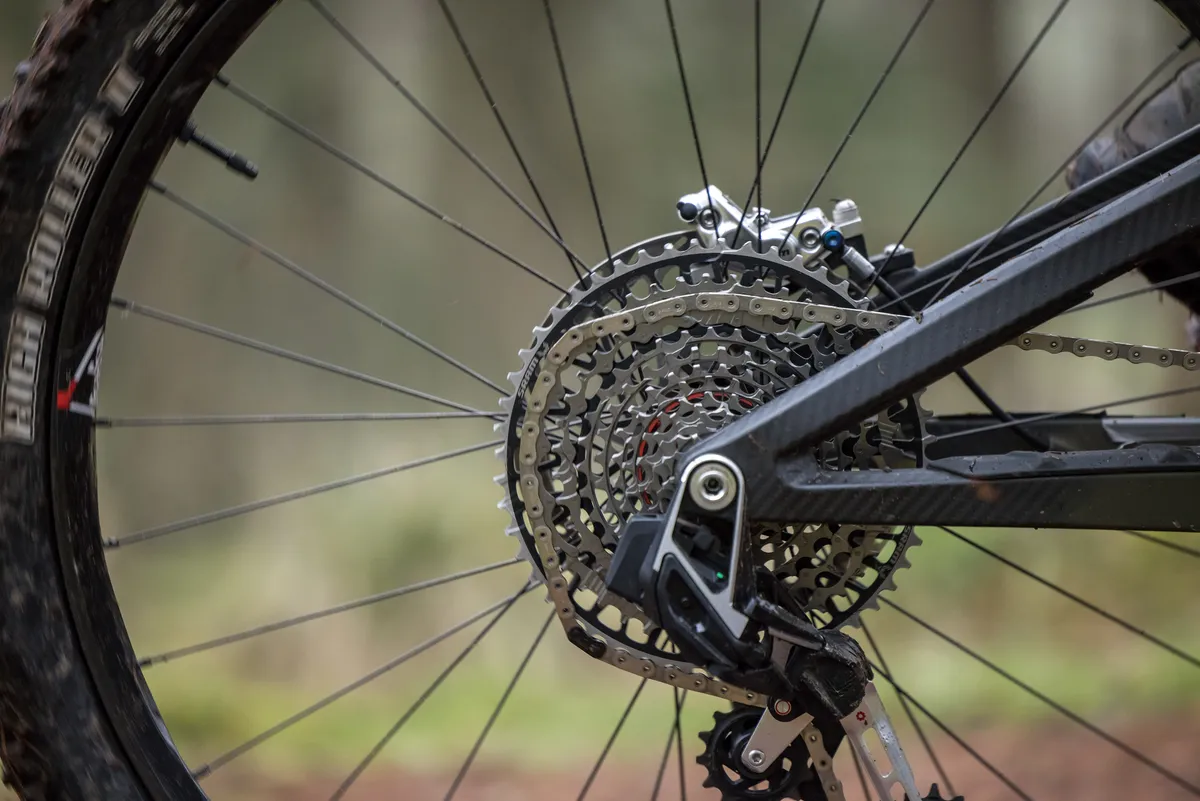
Cynical readers might argue that we haven't seen gearboxes from the biggest drivetrain brands – and fitted to models from big-name bike manufacturers – because they're making too much money selling us cheap-to-make and easy-to-break derailleurs.
Such conspiracists would say drivetrains are designed to die, rather than built to last.
Derailleurs are usually the first thing to get broken or damaged when you're riding. This is a by-product of their design; cue those in charge of the coffers rubbing their hands together with glee.
Replacing a traditional drivetrain with a gearbox that needs only a quick oil change every 10,000km (as per Pinion's recommendation) or a belt drive that can last up to 30,000km (Gates' recommendation) will dry out the predictable revenue stream drivetrain brands rely on.
This conspiracy sounds a little far-fetched to me; the inventor of the original derailleur (Jean Loubeyre) wasn't thinking about company profits in 1895. Neither was Campagnolo in the 1950s – to the same extent companies do now – with the Gran Sport parallelogram design; a layout that's very close to modern-day derailleurs.

So are brands gatekeeping tech to earn more money, or is it a lack of consumer uptake that's causing the issue?
Maybe it's because bike brands are beholden to drivetrain manufacturers releasing a viable alternative to the derailleur, turning the issue into a chicken-and-egg conundrum.
Without a gearbox to fit, bike brands can't commit to making frames designed for them. And if bike brands are mostly using derailleurs, why should drivetrain companies develop gearboxes?
But gearbox bikes already exist and plenty of brands have tried them: GT, Cannondale, BeOne, Rotec, Orange, Honda, Nicolai, Gamux, Zerode, Lahar, Starling, Intense; the list goes on.
The reality is, consumers aren't buying bikes with gearboxes.
That's despite the hate for derailleurs and shouts of 'take my money' in any gearbox bike article's comment section.
Cost is a factor

At this point, I’d like to acknowledge the cost argument.
Each product and bike I’ve talked about is or was expensive.
But imagine how much more affordable technology such as this would be today if a critical mass of people jumped on it the first time round.
Mountain biking is an inherently expensive sport and the number of £10k / $10k bikes mainstream manufacturers have on sale shows there’s money out there.
If those consumers with enough financial headroom took a hit on buying into the emerging technology, the rest of us could benefit when it becomes cheaper.

Fox’s Podium is probably the best example of this – it’s an expensive piece of kit that brings valuable, but marginal, performance benefits over its cheaper regular rivals and is a 'money no object' purchase.
In a few years’ time, if enough people buy it, would Fox develop a more affordable version? Most likely. Would that spur on RockShox to do the same? Probably. Would Manitou up its game to compete with a wider range of products? Almost certainly. Would even more niche brands – beyond Intend and Push – get on board? It’s likely.
The performance once reserved for the most affluent would now be available to all.
Innovation would then move to the next thing and the cycle would repeat, but only if people were willing to ‘risk it’ at the beginning.
What does the future hold?

For now, it feels as if we’re going to continue to be treated to incremental developments.
Current consumer demand is showing that radical products already on sale aren’t the resounding success they should be.
The uncertain economic climate and industry turmoil will also be putting a damper on potentially groundbreaking projects.
As someone whose life is supported by a salary from the cycling industry, I want as many brands and as many people as possible to succeed – not only from the selfish perspective that it keeps a roof over my head, but also because I want everyone to do well from bikes.
But a big part of me wants the people with power to say: “Screw it, let’s launch our game-changing product”.
Until then, each time I hear someone saying “my derailleur is broken”, “I snapped my chain again”, “I forgot to turn my lockout off for the descent” or “my forks feel harsh”, I’m going to wonder why they didn’t take the plunge and buy into the tech that promised to fix those things the first time round.