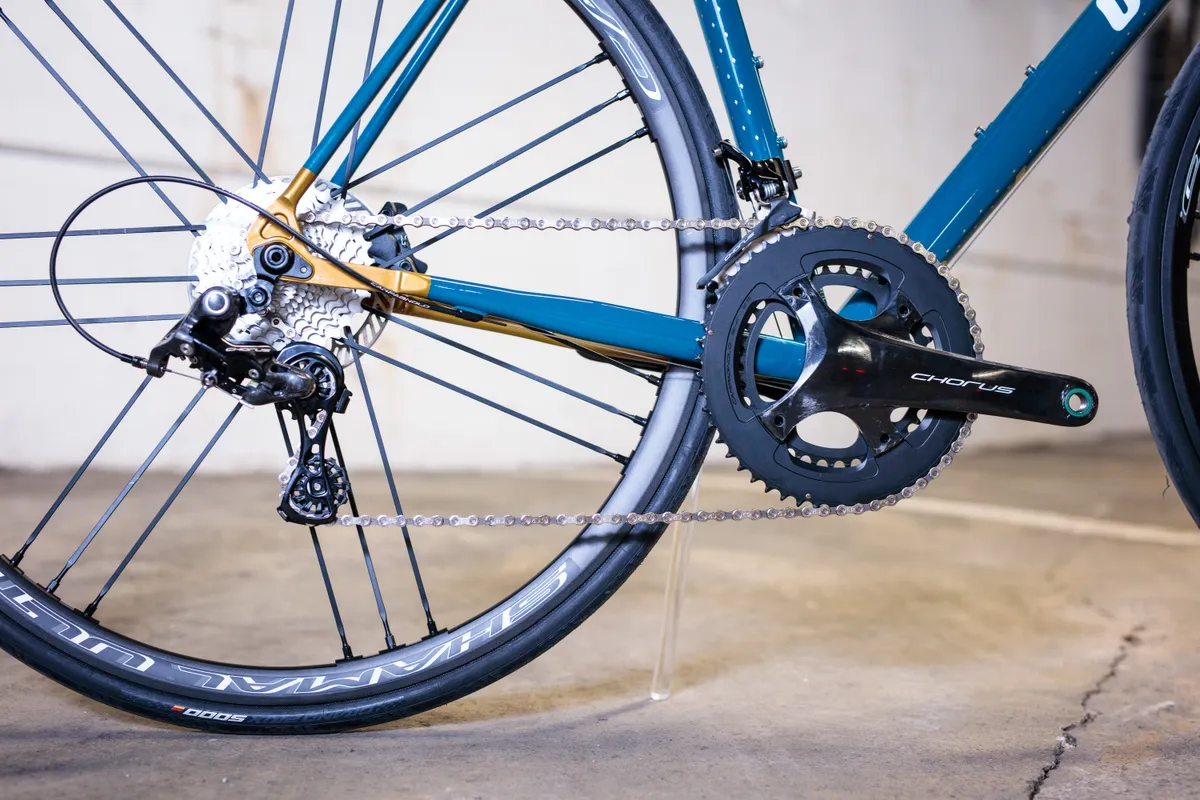
While it will be little relief to the 120 people reportedly at risk of redundancy at its Vicenza HQ, confirmation that Campagnolo is developing more affordable groupsets will be warmly welcomed across the cycling world – with gentle trepidation.
While internal politics will continue to bubble away, the buying public’s perception of Campagnolo is at a decisive moment, and a step in the wrong direction now could put it on the back foot.
As an outsider, the brand’s strategy has felt rudderless in recent years. Campagnolo itself has acknowledged a shift towards a “sports luxury” position, focusing almost exclusively on the top end of the market. This hasn’t delivered the sales, marketing clout, or new brand fans needed to build a credible long-term business.
Recent releases have put the brand on the right track, but it's not enough. While by all accounts, very good, Super Record 13 likely only appeals to older riders with heaps of disposable income who grew up dreaming of owning Campagnolo – an audience already small and only shrinking.
- Read more: I tested new Campagnolo Super Record 13, and Shimano and SRAM should be worried – here's why
Groupset allegiance is strangely tribal, and a new, more affordable range from Campagnolo could capture a new generation of riders who currently enter the sport almost exclusively via Shimano or SRAM.
But how can it do it? It's an unlikely world where Campagnolo challenges the near-duopoly of either in outright market share. As such, leaning into points of difference, while still offering credibly priced, high-performance products, will be essential to the brand’s long-term success.
Here are the six things I want to see from Campagnolo’s upcoming mid-range groupsets that could help it stay relevant, broaden its appeal without neglecting its existing audience, and capture the imaginations of new riders in the years ahead.
More recent news from Campagnolo
- Campagnolo addresses reports of 120 redundancies at Vicenza HQ and confirms mid-range groupsets in development
- Campagnolo reportedly cutting 40% of jobs from Vicenza headquarters, stating “there is no alternative”
- Campagnolo launches 1x13-speed gravel groupset and hints something "more affordable" is on the way
1. A credible mechanical option

If Campagnolo wants to stand apart from SRAM and Shimano, offering a genuinely competitive, relatively affordable mechanical groupset would be a strong statement of intent.
People talk of mechanical Campagnolo shifting with near-saintly reverence – the satisfying ‘snick’ of a downshift, the positive feedback of the luxuriously ergonomic sculpted levers, the gentle chitter of its chains...
Campagnolo should lean into this and satisfy the loud minority of enthusiasts who still view mechanical shifting as a defining part of the riding experience.
A modern mechanical option, executed to the level Campagnolo historically delivered, would appeal to loyalists and provide a real point of difference in a market dominated by electronic systems.
And provided it’s affordable enough to be a credible spec option on entry-level bikes – once a core part of Campagnolo’s business – what’s the harm?
2. Affordable electrics

Still, I cannot ignore the fact that the majority of the enthusiast market wants electronic groupsets. SRAM and Shimano would not be making a wholesale shift to electronic drivetrains – even down to the entry level – if sales didn’t follow.
That may contradict my previous point, but affordable mechanical and electronic groupsets living side by side is not without precedent.
Shimano has far greater manufacturing and OEM sales clout, but 105 Di2 R7100 and 105 mechanical coexist, and are widely specced across all sorts of bikes. The same is true of GRX.
I still genuinely believe a strong mechanical option would be good for the brand, but a solid, sensibly priced electronic option – that, like Shimano and SRAM’s equivalent options, shares tech with its premium siblings – is essential for Campagnolo to stay relevant in the mass enthusiast market.
3. Please the magpies

Campagnolo was once revered for its beautiful alloy components, and any new groupset should celebrate this. Carbon will naturally feature, but alloy will surely remain prevalent at a nominal 105- or Ultegra-level tier.
SRAM highlights polished alloy details to tremendous effect, while Shimano – despite its enviable aluminium manufacturing heritage – often hides its metalwork outside of special editions. Any story we publish on those limited runs is a massive hit, which is evidence enough that cyclists still covet the shiny.
Of course, carbon fibre will continue to play a huge role too. Campagnolo’s carbon cranksets of the early-to-late 2000s and into the 2010s were genuinely beautiful objects – lean, angular and unapologetically high-end, they celebrated every fibre of the brand’s carbon expertise.
Dining out on its Made in Italy provenance, materiality matters even more for Campagnolo than for its rivals. There is no better way to express that than by showing off its manufacturing prowess.
If its point of differentiation is that its components simply look better than everyone else’s, that alone may be enough to win over a new audience. Tl;dr – give us shiny stuff!
4. Strong OEM partnerships

Super Record 13 is almost never seen on complete bikes, limiting Campagnolo’s visibility and ability to attract new riders.
Things were even worse with Super Record Wireless – despite almost unmatched access to new bike tech, I don’t think I’ve ever seen the damn stuff in the flesh.
Ekar made some headway, with major brands such as Specialized offering complete builds with Campagnolo's much-liked gravel groupset, but any mid-tier groupset will need broad OEM uptake – even if it’s only sold in smaller quantities – to succeed.
Consistent availability at scale would get more riders into the Campagnolo ecosystem early and give prospective buyers a genuine choice between Shimano, SRAM and Campagnolo at important price points.
Again, I don’t expect Campagnolo to ever go toe-to-toe with SRAM or Shimano on sheer volume – we’re never going back to the days when you could buy a Ribble 7005 with Veloce – but additional choice for a prospective £2,500-ish Canyon Endurace, Specialized Allez or Giant TCR is surely no bad thing.
At the very least, Campagnolo must capitalise on the increasing proliferation of custom-spec programmes and ensure consumers have the option to choose its components on platforms such as Trek Project One.
5. Rim brakes (yes, really!)
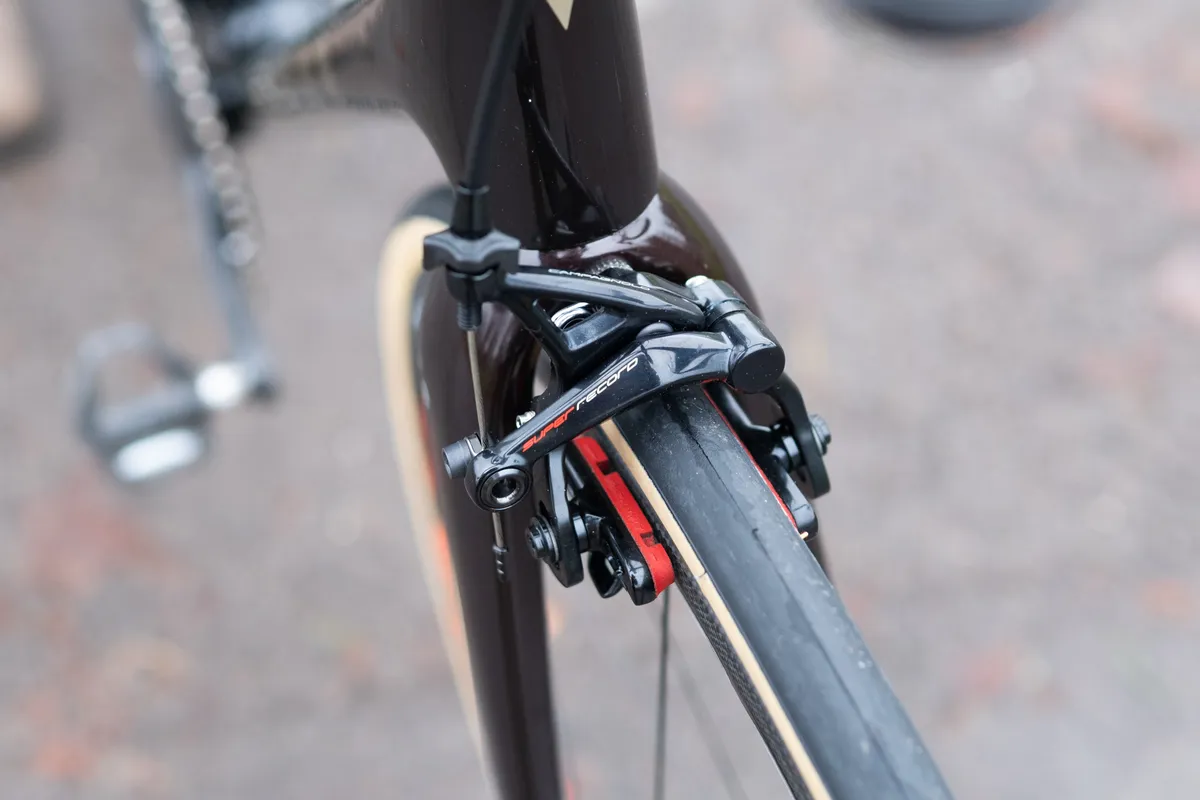
I promise I’m not just flogging a dead horse here for the sake of it, but offering a rim brake option would be a marketing win – and give Campagnolo buyers what they want.
A modern rim brake shifter and caliper set would not only differentiate the groupset from its peers but also appeal to a small but very vocal minority of rim brake die-hards.
I am making assumptions, but I expect many riders who stick with rim brakes – either through bloody-mindedness or personal preference – are precisely the sort of people who gravitate to Campagnolo for its heritage, or for the simple fact it isn’t Shimano or SRAM.
The market will be small, but as a strength compared with behemoths Shimano and SRAM, Campagnolo likely has the agility to meet the demand without committing to enormous minimum orders.
Again, with my editor’s hat on, our data shows there is absolutely still a market for rim brake kit.
At the very least, it will buy Campagnolo reams of column inches across the cycling media world – surely no bad thing.
6. A period of technical consistency
Campagnolo’s engineering independence is part of its charm, but its history of weird compatibility rules and proprietary standards makes life harder for mechanics and consumers.
The good news is that the company’s communications strongly suggest Super Record 13 represents the beginning of a long-term platform approach, and sticking to that philosophy will be vital if Campagnolo wants to win over hearts and minds.
Riders and shops want stability, clarity and cross-compatibility – not another reset in five years’ time.