
Adam Hansen, president of the professional riders’ union, has revealed a new anti-doping scheme is being trialled in the pro peloton that uses rider power data for “longitudinal performance monitoring”.
The scheme, which Hansen says is being trialled with four professional teams this season, requires riders to submit their power data to the International Testing Agency (ITA) for “longitudinal performance monitoring” on behalf of the UCI – with ‘irregularities’ potentially leading to additional, targeted testing or even sanctions.
Hansen recently aired his concerns about the scheme on the Domestique Hotseat podcast and stated he and the riders he represents are “100 per cent against it”.
He also implied that riders have yet to be informed how the data will be handled and interpreted, or what will happen in instances where a rider is unable to provide ride data.
Beyond these issues lies a more fundamental problem with the proposed scheme, however – today’s power meters and bike computers simply aren’t accurate or reliable enough to make such important judgements.
Given that being accused and/or convicted of doping can effectively ruin a professional athlete’s life, the authorities have a huge number of questions to answer about how they intend to overcome the well-documented flaws present in many current devices used to produce and capture power data.
Power-meter accuracy is a huge issue

Aside from the fact that not all professional cyclists choose to train and race with power meters, the most obvious flaw in the UCI / ITA’s power data passport proposal is the fact that today’s power meters are not perfectly accurate.
Shimano power meters are among the most commonly used in professional cycling, but they have a notably poor reputation for accuracy.
Our 2018 review of Shimano’s older FC-R9100-P power meter crankset found it suffered from inaccurate left/right balance data and poor temperature compensation, while respected tester DC Rainmaker called the current Dura-Ace FC-R9200-P “astonishingly inaccurate” in an in-depth review published in 2023.
Shane Millar (known as GP Lama on YouTube) found similar results in his testing of the Dura-Ace and Ultegra power meter cranksets.
Beyond Shimano, I tested Power2Max’s flagship NG Road power meter and found it produced occasional anomalous power spikes.
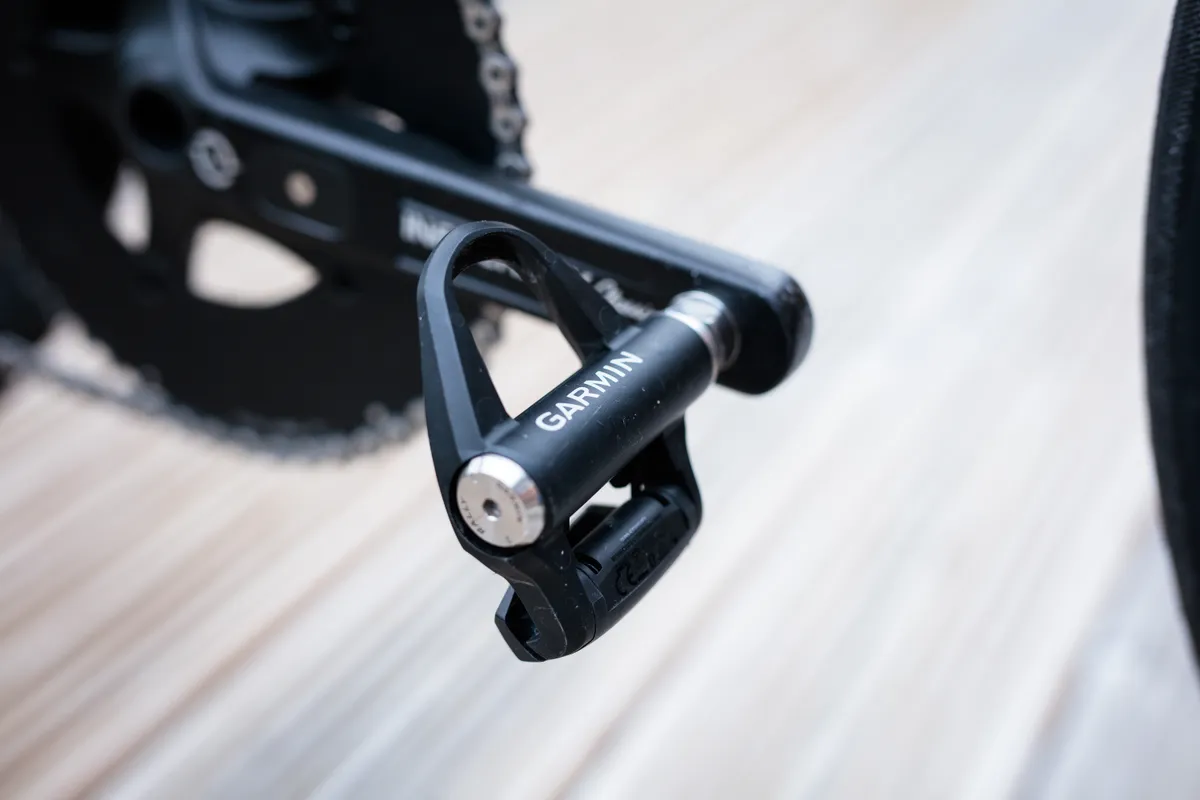
When Garmin sent its previous-generation Rally power meter pedals for testing, they produced inaccurate data (compared to other power meters capturing data from the same ride simultaneously) until the brand released a firmware update just before launch to fix things.
Look’s current Keo Blade Power pedals produced inaccurate data with frequent drop-outs when riding indoors during my testing.
I’ve also tested a power meter, the Limits BIA, that was so laughably inaccurate that I could see the live data swinging wildly on my bike computer as I changed between riding in and out of the saddle.
Independent validation

Even the best power meters, such as Favero’s Assioma PRO pedals or Quarq’s DFour DUB spider, are typically only accurate to +/- 1 or 1.5 per cent, and it’s worth remembering there’s no internationally agreed testing standard to confirm this.
Reviewers such as myself make do by comparing the data captured from new power meters to existing ‘trusted’ ones, as well as data from smart trainers, but it’s hardly a scientific process.
When power meters have been tested in a scientific environment, significant variation among brands has typically been found.
A 2017 study by Thomas Maier et al, for example, states that “power meters used by elite and recreational cyclists vary considerably in their trueness; precision is generally high but differs between manufacturers”.

Likewise, a 2018 test commissioned by 4iiii and carried out by the University of Boulder found that while its Precision Pro power meters were accurate to 1.58 per cent on average, there was notable variation between samples.
One crank was accurate to within 0.7 per cent, for example, while another only managed 2.5 per cent.
Greater accuracy with more up-to-date technology may be possible, given Body Rocket claimed last year to have made a set of power meter pedals accurate to within +/- 0.1 per cent.
However, with there being no standardised system of validating power meters or to account for the variation between individual units, and the fact riders don’t get to choose what equipment they use (because it’s almost always dictated by sponsorship arrangements), it’s remarkable to think the ITA wants to use this technology to determine whether pro cyclists have been doping.
Should an athlete's career really come down to such inaccurate measurements?
It’s not just about the power meters
However, the problems with the proposed power data passport goes further than simply having theoretically perfectly accurate power meters.
Like any precision tool, power meters need to be installed correctly and maintained properly in order to provide accurate data.
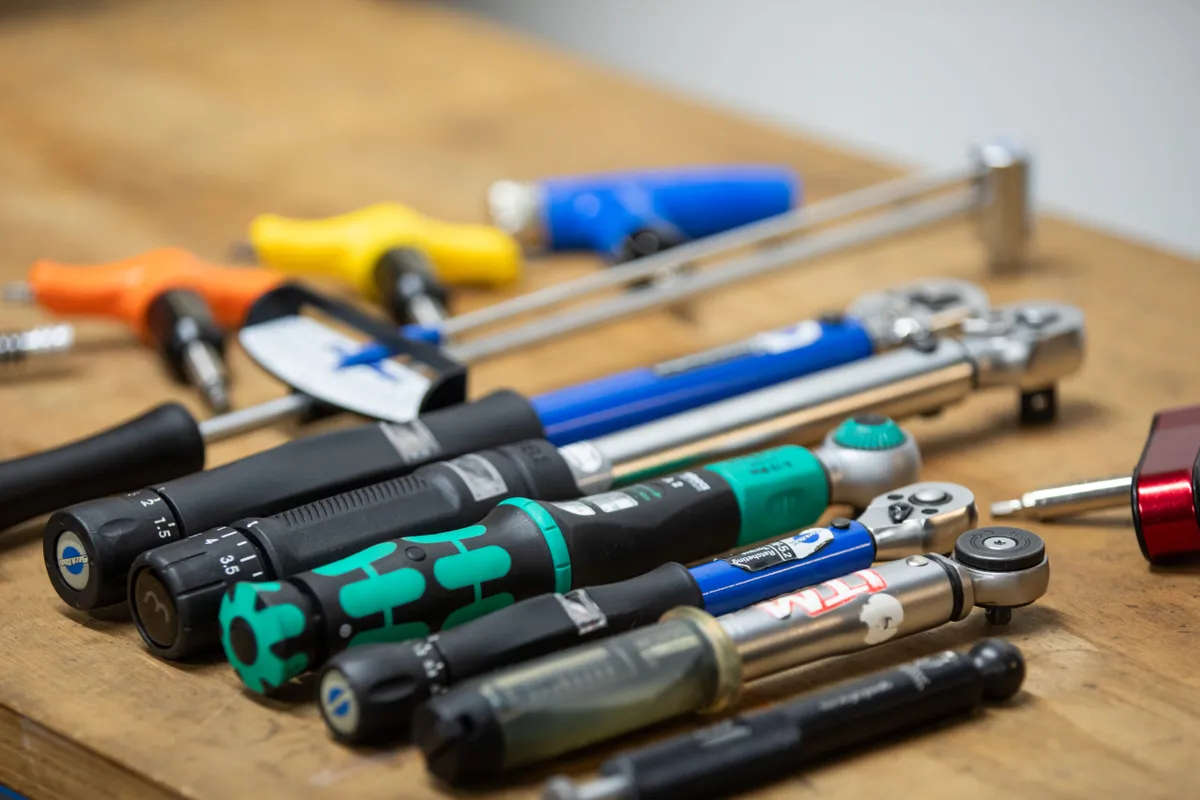
Most manufacturers recommend installing power meters to a specific torque, for example, which therefore requires the use of a torque wrench that is known to be accurate.
From there, riders must zero offset the power meter – equivalent to pressing 'tare' on a scale – to ensure it’s ‘calibrated’ correctly.
Ideally, you’d do this before every ride for the most accurate data, although riders also need to ensure they don’t do this inside a warm house on a cold day, because the change in temperature from inside to outside can trip some power meters up.
Even a low battery can cause some power meters to begin reporting inaccurate data.

Then there are bike computers, which typically only record power data on a once-per-second basis, in an effort to balance accuracy and resolution with battery life.
Given many power meters produce data at faster rates than this (and simply send an average figure in a data packet once per second), it’s possible to get slightly different data when recording from the same power meter with two different head units.
Faster refresh rates and higher data resolution are possible with existing wireless technology, but not commonly implemented on current bike computers.
Drop-outs due to signal interference with wireless protocols are also not uncommon, which can skew data, and – as with power meters – not all bike computers record power data as well as others.
In a video from last August comparing five popular bike computers, Shane Millar dubbed it a “wild west” because certain bike computers have been found to record power data erroneously even in instances where the rider isn’t pedalling, due to a software bug dubbed ‘sticky watts’.
Too much room for error

It’s fair to say we don’t yet know exactly how the ITA means to interpret the data being gathered, or whether the issues mentioned here have already been accounted for. I have contacted it for comment and will update this article if I receive a response.
Ultimately, though, current power-meter and bike-computer technology appears to leave too much room for error when it comes to a topic as serious as accusing riders of cheating.
The ITA may have answers to all of the points raised here, but if the professional riders’ union hasn’t had answers to its questions, even as a trial is ongoing, it raises the worrying possibility that this scheme has not been considered properly, and risks unfairly harming innocent athletes if implemented.
Everyone wants a clean sport, of course, but governing bodies and anti-doping authorities should hold themselves to the same high standards athletes are held to.


