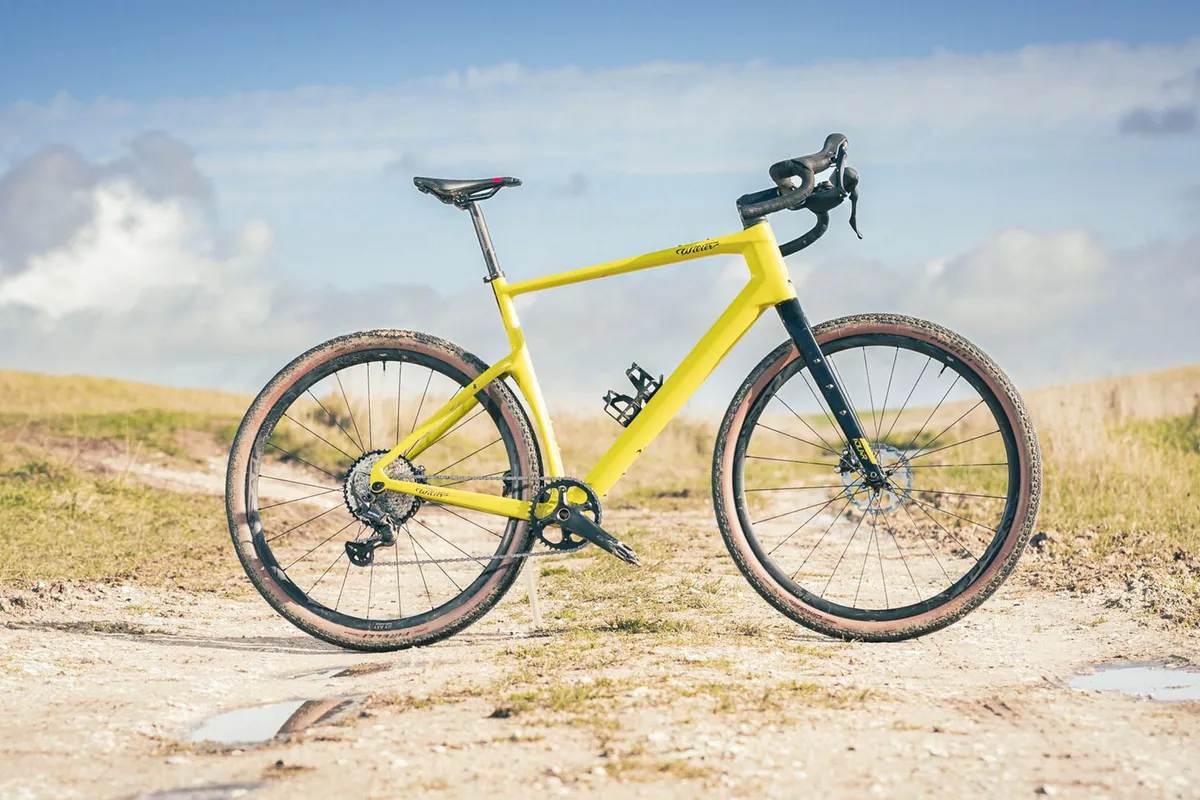
Shimano's new GRX RX717 components should deliver what OEMs have been crying out for – a serious rival to SRAM's 13-speed, wireless electronic, direct-mount Rival XPLR.
GRX RX717 may not have the extra gear, but it will fit any frame. For brands yet to make the switch to UDH, it’s a cost-effective option to get electronic shifting on reasonably priced bikes.
Given Shimano’s following and reputation, I thought a more affordable wireless GRX would be very widely specced.
However, speaking to key brands, initial uptake appears to be very slow.
Few complete bike options

Giant, which has a very close relationship with Shimano, has yet to commit to any GRX RX717-equipped bikes in its 2026 line-up. That's even more surprising when you consider that the Revolt Advanced doesn’t have a UDH dropout because Giant runs a rear flip chip dropout design.
Specialized hasn't committed to RX717 on its standard gravel bike range, although it will be used on the all-road/gravel ebike, the Creo 2 at Comp level. This currently uses SRAM's Apex AXS at £5,000 / $6,999.
When I asked Ridley, it said: “We don't plan to follow this groupset as the cost/benefit ratio is not big enough for a good position in the range compared to other offerings.”
Ribble, which specs Shimano widely on the road, and is a brand I'd expect to opt for a more affordable GRX Di2 option, told me: ”Currently, we only offer SRAM on our gravel bikes. Although we are reviewing the possibility of reintroducing GRX in the future. But nothing planned yet.”

Argon 18, similarly, said it has no GRX RX717-equipped models in its 2026 gravel bike ranges. Cannondale has chosen not to use RX717 in 2026 and has no plans to do so.
Cube, which has plenty of GRX-equipped bikes across its gravel options, told me: “At the moment, we don’t intend to equip any new gravel bikes with the entry-level GRX Di2. We probably will with our new collection.”
Trek, another proponent of a broad range of Shimano-equipped bikes, said: "We’ve no plans for RX717 for 2026, and nothing in the range planned."
So, what’s behind the slow uptake?
Is a 1x 12 GRX Di2 drivetrain enough?
The slow adoption could be down to timing, with Shimano delivering the new group parts after all the major players have already decided on specifications for 2026.
Or it could be down to a 12-speed drivetrain not having the cache of 13 speeds, as both SRAM and Campagnolo now offer. However, I doubt that's the major factor.
Perhaps SRAM is just the cooler option when it comes to gravel groupsets, having got in first and driven the tech harder. Not to mention having a wider range of wireless electronics.
More broadly, Shimano needs more credible competition across all levels of groupsets.
The current 1x 12 RX827 GRX is a Force XPLR AXS equivalent, and the new RX717 is a rival to Rival AXS XPLR – albeit a little more expensive and a little heavier.
While the arrival of this cheaper groupset is positive, there’s still a gap in Shimano’s line-up for an Apex-level gravel groupset. Likewise for a top-end Red/Dura-Ace option.
By comparison, SRAM has Apex XPLR AXS sitting a level below, then Rival, Force and the pro-level Red XPLR AXS, which are all interchangeable. This means riders have a connection to the high end, even when on the lowest electronic rung.
I think that's important, because even if you can’t afford the premium offering initially, having an upgrade path to emulate the pros has been a staple of bike ownership for most of us since we were kids.

Additionally, Shimano is just confusing.
The 2x version of GRX Di2 isn’t compatible with the 1x 12 because it’s semi-wireless, with front and rear derailleurs using the central battery and wires from road-going Di2. RX717 and RX827 are just a collection of electronic parts combined with Shimano’s existing GRX cranks, XT and Deore cassettes and chains.
Beyond that, the 1x 12 GRX Di2 looks very similar in design (to put it mildly) to the mountain bike XT and Deore Di2 components – there really is little to differentiate the two.

SRAM did something similar with the first-generation XPLR AXS components, where you could share AXS components from the mountain bike side, if you wanted a wider set of ratios for off-road adventure riding.
Thus, the ‘mullet’ drivetrain was born. In fact, our Gravel Bike of the Year for 2026 has this very setup, mixing Force XPLR AXS with XO AXS. For 2026, the Taos will have the 1x13 Force XPLR AXS option.
Is something bigger on the way?

However, I think it’s most likely brand product managers are already shifting focus to 2027 and beyond, and see GRX RX717 and RX827 as interim products – placeholders, if you will. Therefore, they haven’t felt a need to commit.
The latest generation of GRX Di2 is still pretty fresh, but there’s ample evidence Shimano is working on a major overhaul of its gravel bike groupset tech.

To start, as we reported in 2023, Shimano has filed a patent showing a new derailleur mount system.
I don’t see Shimano moving to a SRAM-like direct-mount UDH-compatible design – instead, the patent looks to be a hybrid – a new ‘standard’ universal derailleur hanger to mount the derailleur.
Even if it doesn’t use the same tech as SRAM, this needs to be UDH-dropout compatible, because all of the major players have updated their frames for UDH.
Another patent shows Shimano is possibly working on a 13-speed groupset.
I think this could be the major reason that brand product managers are holding off on the new GRX. Standing your bike alongside the competition, which has 13 speeds compared to 12, perhaps makes your offering look dated. This has happened many times to brands. I can still recall the shifts from 9 to 10, 10 to 11 and 11 to 12 – all having an impact on sales.
If 13-speed is imminent, as the patents suggest, perhaps with a different standard committing to associated parts (wheel, freehub and frame standards for starters), product managers are also holding off.
Aside from UDH compatibility, there’s a challenge here to fit a 13th cog; simply put, with the addition of another gear, Shimano will need to find more space. I don’t see it narrowing the chain. SRAM didn’t for its 13 gears, hence you can mix 12- and 13-speed components.
SRAM’s direct-mount configuration made room for a 13th sprocket by removing the derailleur hanger completely.
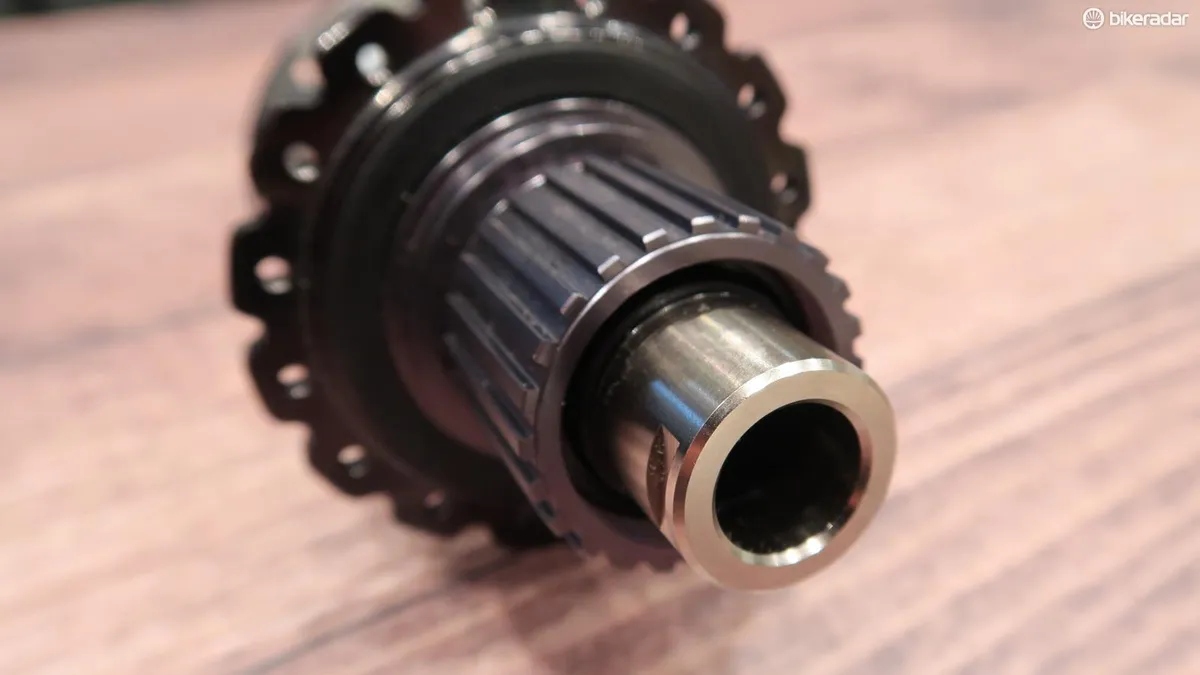
Shimano’s hybrid mount will slim down the hanger, but not remove it entirely. I think that means the design should use the mountain bike Micro Spline freehub. If that's not enough space, it may end up being a modification of that – perhaps a longer freehub body to allow for the extra cog, which could mean another freehub standard.
Aspirations matter

New tech aside, Shimano needs to offer a top-end groupset comparable to SRAM’s Red-level components. SRAM, from day one, had a premium gravel option with Red; the perception is that top-end tech trickles down. Shimano’s take on this new ‘gravel thing’ was different.
When Shimano entered gravel with the original GRX and GRX Di2, the thinking was that gravel was an enthusiast's discipline. Hence, the GRX level topping out as equivalent to Ultegra on the road. Gravel, however, has matured quickly into a top-level, elite sport, with many full-time professionals, which has left Shimano trailing in the wake of pro-level SRAM Red XPLR AXS.
The majority of consumers will buy more affordable groupsets, but the lack of a Dura-Ace or XTR-level gravel option is a notable gap in Shimano’s range. Given it has always offered a full range of price points on mountain bikes with Deore, XT and XTR, I’d wager an XTR/Dura-Ace level GRX is on the cards, alongside updates to or new versions of the current RX717 and RX827.
Where does that leave RX717?
At the moment, it doesn’t look as though RX717 will be the commercial success I expected it to be, with a lack of brand support. All signs point to it being a footnote, going the way of Biopace and Airlines in Shimano’s pantheon. Don't get me wrong, Shimano has had far more hits than misses – that's why Airlines and Biospace stick in the memory.
It’ll take something special for Shimano to win the hearts and minds of the gravel world. SRAM certainly has that captured with its early entry into gravel and continued support, also bringing in other SRAM brands such as RockShox and Zipp to expand the XPLR ecosystem and become a one-stop destination for gravel riders at all budgets.
With the patents implemented and a broadening of the range to cover all levels, I’m sure Shimano’s next GRX Di2 family will give SRAM something serious to think about.
As for RX717, in the meantime, I think that may mean solid discounts for us riders sooner rather than later.
If your gravel bike isn’t UDH and you want to make the switch to simpler, sturdy, wireless electronic shifting, RX717 could well be a bargain option come summer 2026 – especially if any details or sightings of new gravel goodies are seen.