
Paul Seixas is a 19-year-old from Lyon, France and, arguably, the most gifted of a talented generation of young cyclists competing as fully fledged professionals. Sir Matt Busby’s famous asseveration – “If they’re good enough, they’re old enough” – is cycling’s new mantra, in a sport where riders were previously not thought to peak until their late 20s.
In the seven years since Remco Evenepoel ascended to the professional ranks as the reigning junior world road and time-trial champion, bypassing the under-23 category entirely and scoring nine victories in his first season (2019), modern cycling’s obsession with youth has become, arguably, its defining feature.
The sport’s era-defining rider, Tadej Pogačar, is a case in point. When the Slovenian won his first Tour de France title in 2020, he stepped onto the podium in Paris on the day before his 22nd birthday, becoming the youngest winner of the race since a 19-year-old Henri Cornet in 1904. In 2026, Pogačar is gunning for a record-equalling fifth title.
Meanwhile, the fresh-faced Seixas became the youngest Tour de France starter for 89 years – and arrived at the Grand Départ in Barcelona in July backed by French supporters who haven’t celebrated a home winner since Bernard Hinault in 1985.
Cycling’s youth revolution shows no signs of slowing and Seixas is the latest frontman of a sport-wide shift that’s fast-tracking teenagers to the pro ranks.
- Read more: Meet the teenage star who could topple Pogačar – the incredible hype behind Paul Seixas in 5 numbers
Espoir exceptionnel
Seixas, who rides for the Decathlon CMA CGM team, is an exceptional talent, even by the exceptional standards of an exceptional era. Last year, he won the Tour de l’Avenir, the sport’s most prestigious under-23 race and the ultimate predictor of Tour de France success, with four years in hand. It was his final engagement as an under-23 rider.
In his very next race, the World Championships in Rwanda, Seixas chose to compete as an elite, testing himself against the sport’s biggest names. A week later, he finished third at the European Championships in France, beaten only by the now two-time world champion Pogačar, and Evenepoel.
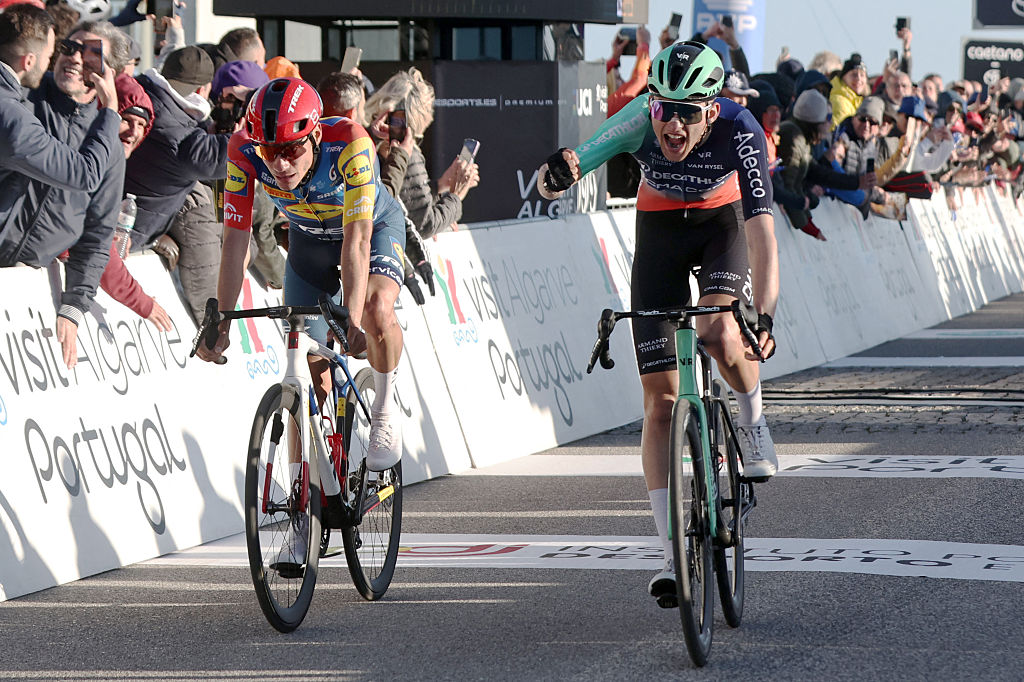
This year, his career has gone supernova. In February, Seixas scored his first pro victory at the Volta ao Algarve, before raising his arms again a week later at the Faun-Ardèche Classic. In March, he finished second to Pogačar at the Strade Bianche.
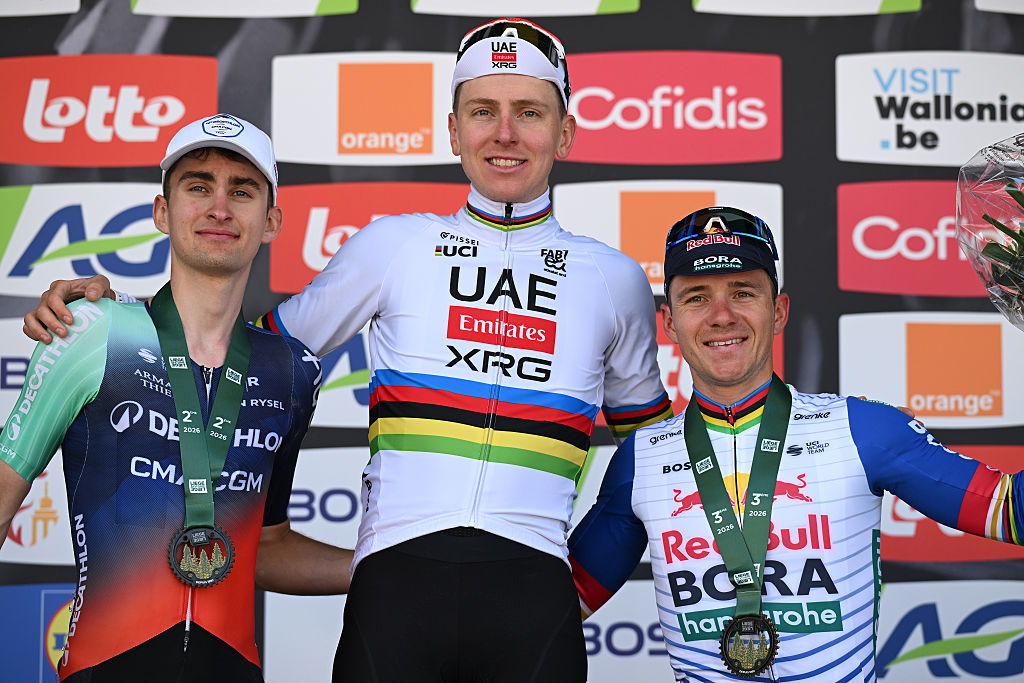
In April, Seixas claimed his first stage race, winning three stages and every jersey competition en route to overall victory at Itzulia Basque Country. For an encore, he won La Flèche Wallonne at his first attempt. Still more impressive was his second place at Liège-Bastogne-Liège, achieved in another extraordinary debut.
His battle with Pogačar on La Redoute will doubtless be replayed endlessly as the Tour unfolds. Ultimately, the Slovenian distanced Seixas on the Rocheaux-Faucons and rode away to a third consecutive victory at Liège-Bastogne-Liège but, by finishing as runner-up – dropping Evenepoel, a two-time winner of the race, in the process – Seixas convinced his team to select him for the Tour.
Such performances have persuaded many in the media to board the Seixas hype train while there is still standing room. Already, he has featured more than once on the cover of L’Équipe, the French sporting paper of renown, and beneath banner headlines that require no translation (“Seixas Master Classe”).
It’s impossible to overstate his importance to France’s sporting psyche. According to Eurosport Spain, even the French president has been working in the wider cause of French sport by trying to ensure Seixas remains at Decathlon CMA CGM. In April, journalist Edgar Saiz Pernía reported that Emmanuel Macron had offered his support to the team’s management and spoken to the rider’s agent.
There seems little doubt that France will succumb to Seixas mania this month. A spotlight will shine brightly not only on his performances, but also on the trajectory of a sport that, increasingly, enables riders who might still be learning to drive to shoulder the burden of leadership.
Paul Seixas | key stats
- Age: 19
- Nationality: French
- Date of birth: 24/09/2006
- Place of birth: Lyon
- Key wins: La Flèche Wallonne; Tour of the Basque Country; Tour de l’Avenir
View from the academy
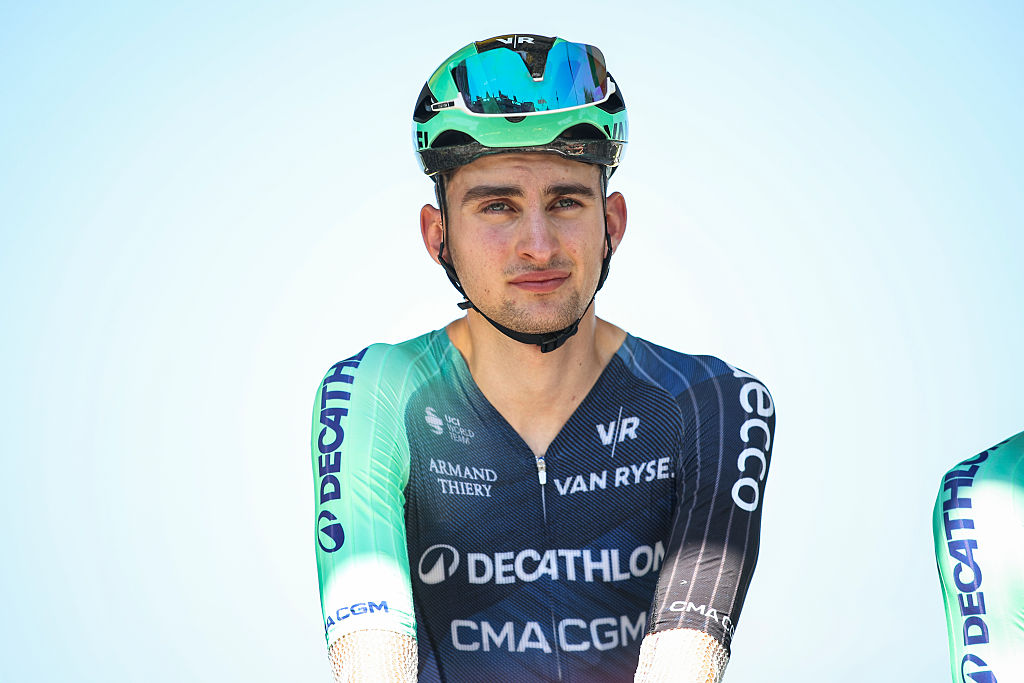
“Seixas is phenomenal,” says Tim Elverson. “He’s been great for years. As a first-year junior, we were monitoring, but he was already locked into Decathlon. He’s not really a big surprise – you could see this coming a long way out if you’d been scouting.”
Elverson is no casual observer. Rather, he is the academy manager at NSN Cycling, a WorldTeam with an impressively high proportion of graduates from their development squad now riding in the senior team. In a previous life, he owned and managed Britain’s most successful UCI Continental team.
Elverson’s primary role at NSN is recruiting young riders. His record speaks for itself. His first signing was the sensational Joe Blackmore, who, aged 21, won his first two races with the team, then called Israel-Premier Tech, by claiming overall victory at the Tour du Rwanda and the Tour de Taiwan.
Ask Elverson how competitive the battle is among WorldTeams to recruit the brightest young talent and he answers in a single word: “Very”. Solicit his opinion on the increasing professionalisation of junior racing and he is equally candid.
“I don’t like it, but if everybody’s doing it, I’d rather get the good riders to me, as I know we’ll look after them,” he says.
“Most of the teams are good, but I know for sure that we really do have [the riders’] welfare at heart. I like the fact that we’ll talk to parents, that we’ll look after riders and won’t put pressure on them, but the reality is, if we don’t talk to anyone until they’re 19, we won’t get any good first-year juniors. It’s as simple as that.”
He’s heard of big teams signing under-16s and acknowledges the concomitant – riders without a contract fearing their careers are over before they reach their twenties. More positively, he knows of agents who refuse to charge their young clients in the early years of their career, and prefers to deal with them.
Elverson is open-minded about the effect that early immersion in the professional ranks will have on longevity. The new generation might enter and leave the sport earlier than their forebears, he suggests, but the duration of their careers could be the same.
“The understanding has changed,” he concludes, after listing various factors that have contributed to cycling’s youth revolution, from nutrition to social media. “That’s what we’re seeing with the whole world. We understand everything in a different way.”
Glorious amateurs
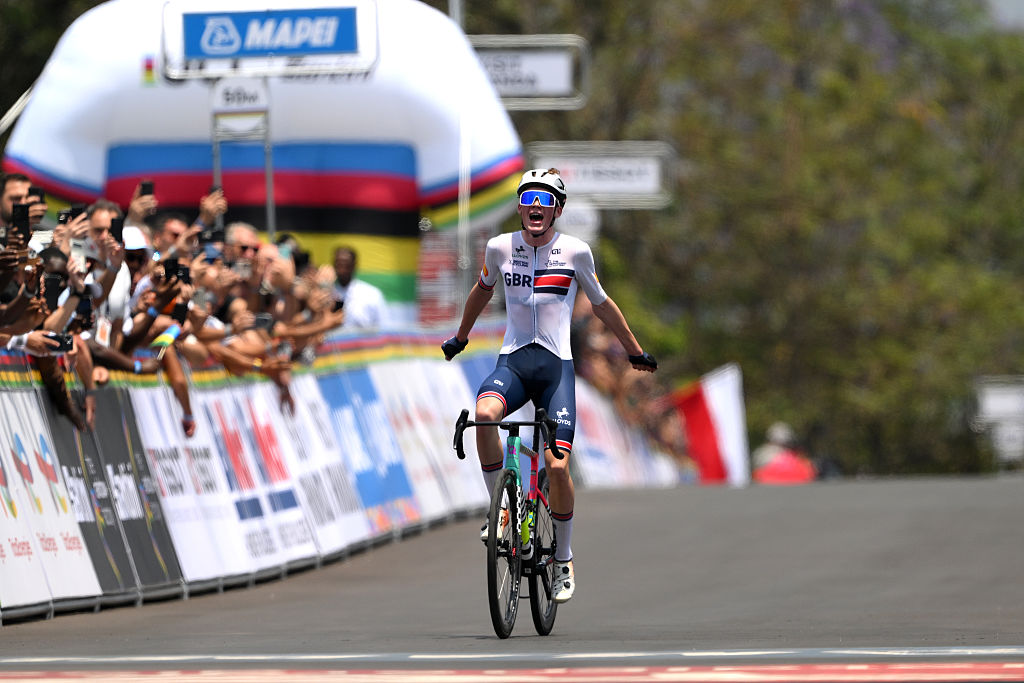
Few are better placed to comment on the challenges and opportunities presented to riders aged 16 to 18 than Tom Denwood, co-manager of Harrogate Nova Race Team, the ambitious junior outfit with solid club foundations that can name Harry Hudson, the reigning junior world road race champion, among its alumni. Knowledge is power, and Denwood sees it every day.
“It’s all of the above,” he replies when asked whether power meters, nutritional gains or online access to the latest training methods have allowed riders young enough still to be studying for exams to perform at a level approaching and, in the case of Seixas, exceeding that of established professionals.
“Smartphones and the internet have created a democratisation of knowledge. All the information I wanted when I was trying to make it as a junior was kept in people’s minds or in very few books. Now it’s freely available online and in the wonderful GCN videos that everyone learns from,” he says.
“Apps like Strava and Training Peaks, which suggest trends and training schedules, and track your data, allow riders to take a very metric-driven approach to training. It’s not unusual for a rider to get a coach at the age of 13 or 14. It’s also not unusual for a rider to do a physiology test in a lab when they’re 14 or 15.”
Following Hudson’s triumph in Kigali, Harrogate Nova RT received rider applications from across the globe and are now seeking a formal relationship with a WorldTeam team to create a pathway to professionalism for their most talented youngsters.
Solid foundation
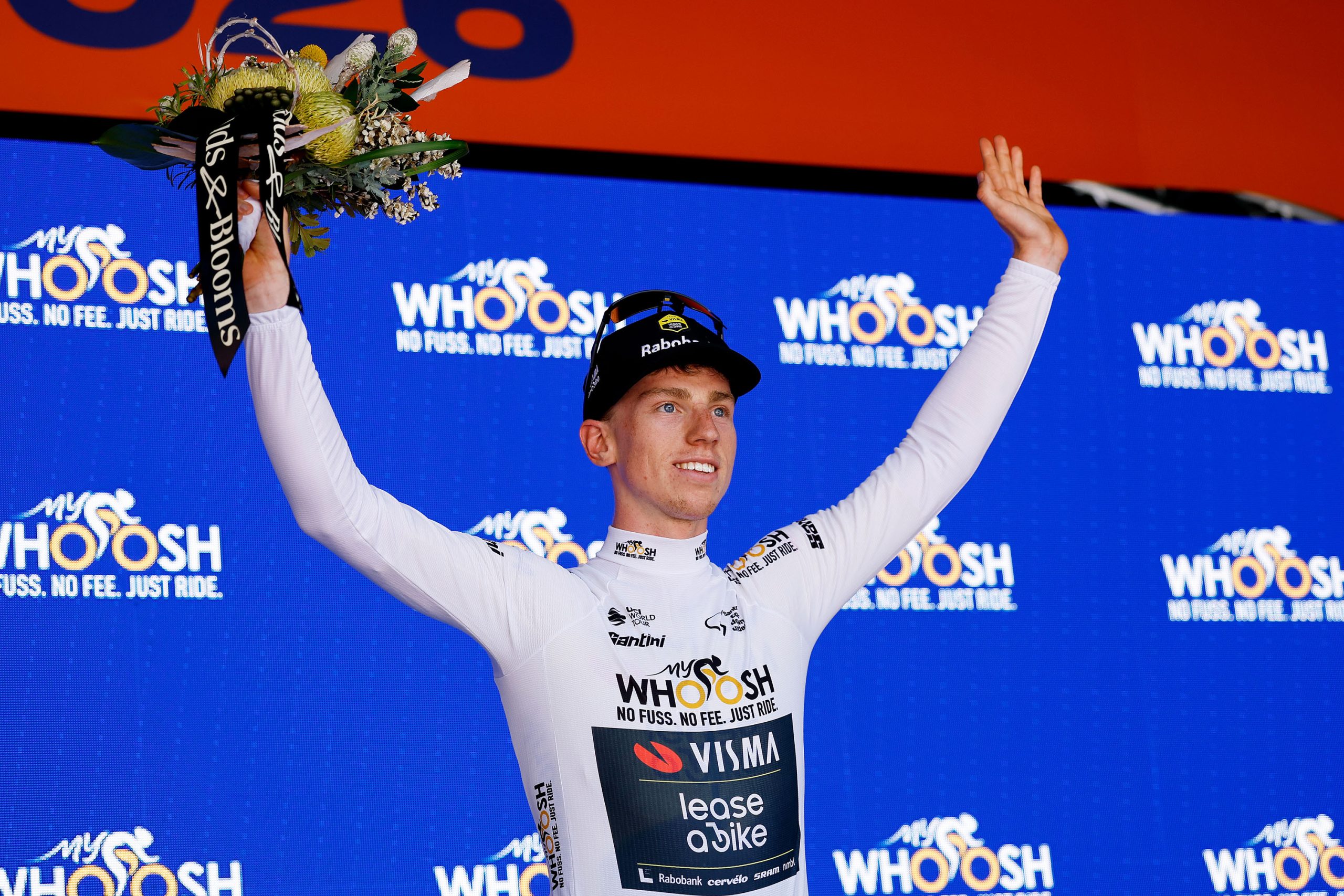
The Rayner Foundation, a respected charity that has helped more than 90 young British riders to turn professional, launched their Gateway Project in 2023 in response to the sport’s increasing focus on the under-19 category, now a beguiling and slightly disconcerting environment in which professional and amateur cycling intersect.
Ten British junior teams receive the Foundation’s support – volunteer-led squads that, between them, have produced Matthew Brennan (Visma-Lease a Bike), Cat Ferguson (Movistar) and Tom Gloag (Pinarello-Q36.5 Pro Cycling), among many other enviable talents.
Jos Ryan, the Foundation’s rider liaison, says Britain’s most ambitious outfits, seeking to establish themselves against the world’s best, have no choice but to compete with wellresourced foreign rivals for the limited places available in the most prestigious junior races, events now barely distinguishable from their WorldTour equivalents.
“There’s always a chance that they might not be able to get into races, and the reason is other teams have come from all over the world, based themselves in Europe and they’re pushing ahead,” Ryan says.
Persistence is key, she maintains, and so, as a consequence, is the Foundation’s support. “Going to races over and over again is what counts. [At] one race, they might not do very well. There might be crashes, illness, or [they might] just not be able to position themselves in the peloton and then get dropped. But if they keep going back, they’re going to improve.”
A text message from Denwood, received two days after our conversation, supports Ryan’s analysis. He informs us that Harrogate Nova have just won the opening stage of the Gipuzkoa Klasikoa, a long-established UCI 2.1 race in the Basque Country. Riders from Cannibal B Victorious, the under-19 feeder for the Bahrain–Victorious WorldTeam, are among those they have beaten.
Vive la révolution?
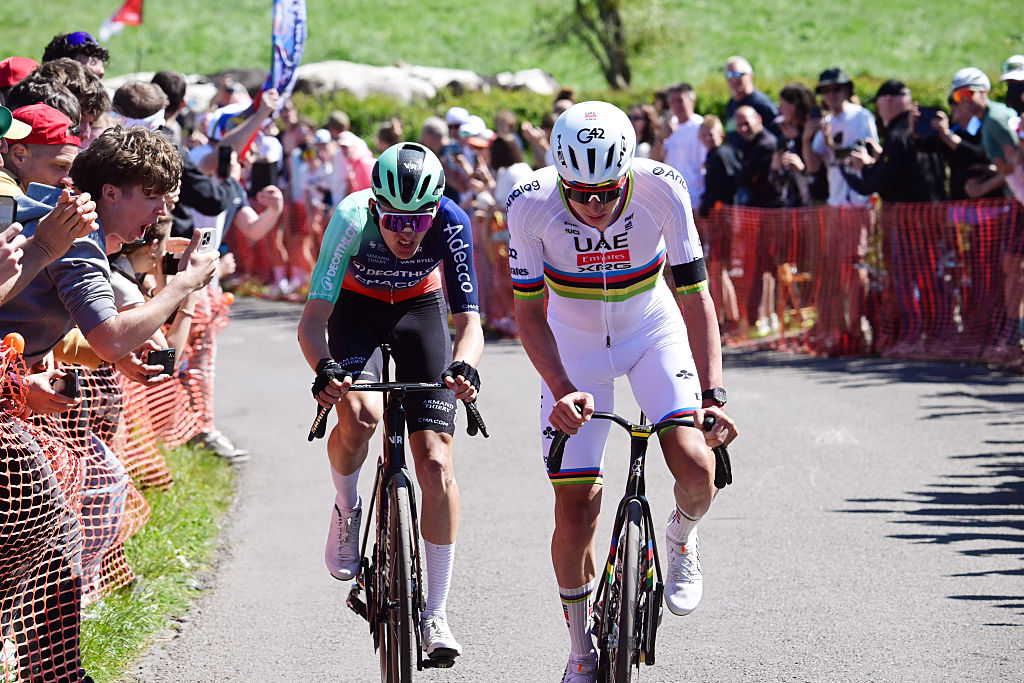
Seixas’s Tour debut will make Frenchness and youth the dominant themes of this sporting summer. The video published by Decathlon-CMA CGM to announce his participation is a sunlit slice of cinema verité that captures the prodigy visiting his grandparents in the Haute-Savoie to share the news. Their reactions are priceless.
Beyond the justifiable pride of one exceptional rider’s relatives, however, a battle is being waged for a place in the professional ranks as intense as any that might unfold this July between Seixas and Pogačar. Cycling’s youth revolution is inspiring – who doesn’t enjoy seeing young people succeed? – but hugely demanding.
Vive le Tour? Naturellement. Vive Paul Seixas? Mais oui. Vive la révolution? Perhaps.
Seixas will carry the hopes of a nation on his shoulders this summer – an onerous burden for a teenager. His ability to withstand the relentless scrutiny will tell us much about cycling’s youth revolution, a generational shift in which life-changing opportunities and intense pressure have become de rigueur for the sport’s most gifted young riders.
5 youngest Tour de France winners
- Henri Cornet,1904: 19 years and 355 days
- François Faber, 1909: 22 years and 187 days
- Octave Lapize, 1910: 22 years and 280 days
- Egan Bernal, 2019: 22 years and 196 days
- Tadej Pogačar, 2020: 21 years and 365 days
More on the 2026 Tour de France
- "We should be testing at all times" – Tour de France's nighttime doping tests reveal a tension at the heart of professional sport
- Pogacar's dominance at the Tour de France reveals cycling's two true loves: uncertainty and the underdog
- An incredibly low heart rate and an unbelievable engine: the physiology of a Tour de France cyclist in numbers
- Every team bike at the 2026 Tour de France


