
As a writer, you’re expected to have detachment – an ability to step back from your lived experience and be objective. Well, let’s forget that, and let me tell you about one of the best things that’s ever happened to me on a bike.
I’m always looking for the next story. It’s the best way I know to keep riding, see the world, meet new people and have as much fun as possible. But it takes imagination, research and a well-tuned antenna to keep things fresh. While ‘middle-aged man rides bike, has lovely time’ is a story I’d love to keep writing, you deserve something more interesting.
So, when a friend in Arizona casually mentioned that Tucson bikepackers were doing multi-day loops to camp at the best stargazing spots, I was intrigued.
Riders in the sky
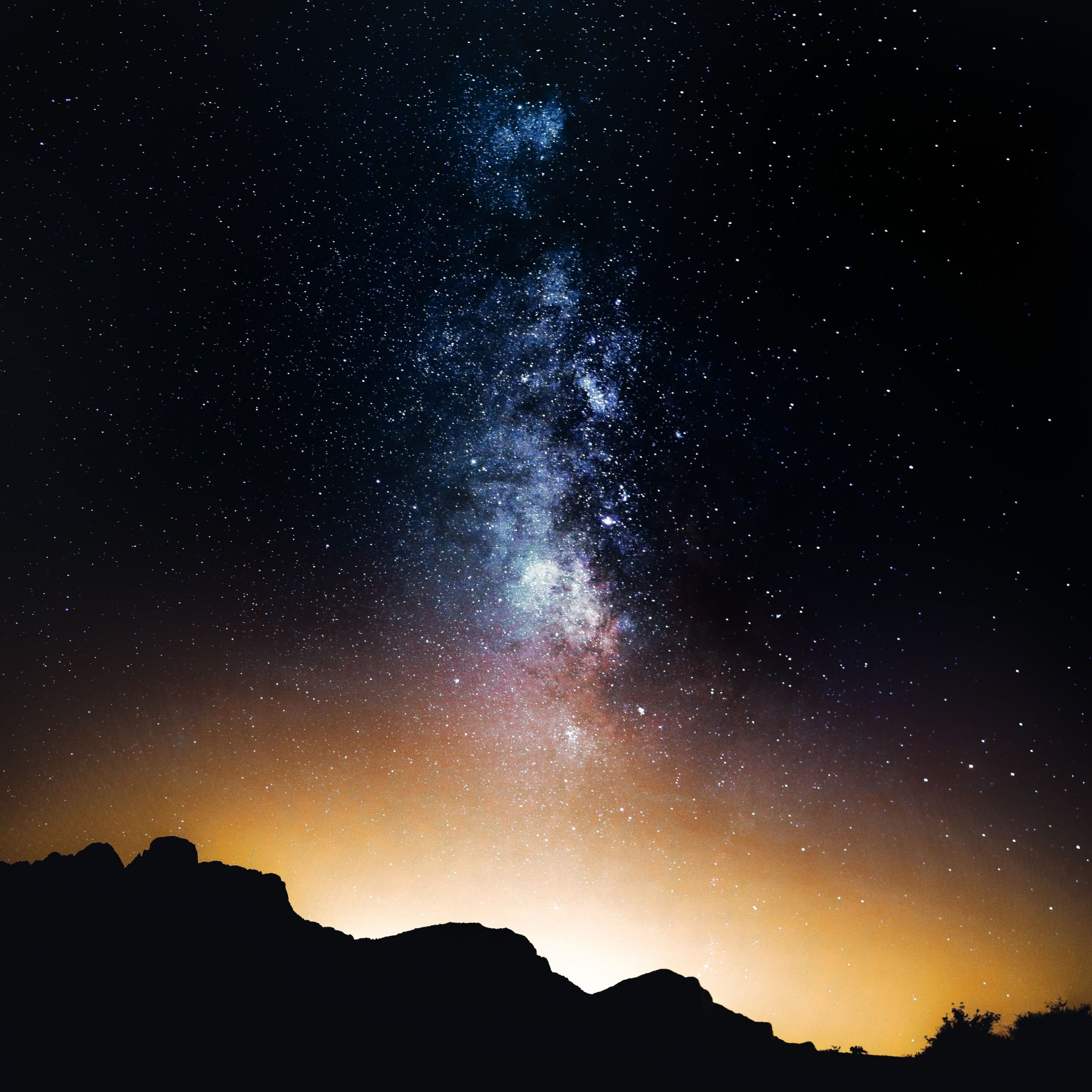
Did you know the term ‘Dark Sky’ was coined in Tucson? The south of Arizona gets more than 300 nights a year without rain or cloud, and the air is extremely dry, which means very little moisture distorts the view of the stars. It’s why the surrounding mountains are dotted with observatories and why the locals call them the ‘Sky Islands’.
So, when Tucson riders seek adventure, they ride miles of stunning, empty desert roads by day and pitch up at night in some of the world’s best dark sky spots for stargazing fun.
I love space, but I don’t like camping. So, with my well-sharpened instinct for a shortcut, I went straight to the source.
The Fred Lawrence Whipple Observatory on the summit of Mount Hopkins is owned and run by the Smithsonian Astrophysical Observatory, in conjunction with Harvard University, and collects vital astronomical data for scientists all over the world.
It’s a serious place. So, when I contacted their team and asked if they’d mind five sweaty bikepackers dropping by, I was honestly expecting to be told to shove my request where the sun doesn’t shine.
I couldn’t have been more wrong. Communications director Amy Stamm was delighted by the prospect and rolled out the red carpet for us. Forget squinting at the sky, trying to remember whether you’re looking at the Bear Paw Galaxy or the handle of the Plough – we were in the hands of the experts.
Country roads
Which is what leads us to a remote car park at 10am, wrestling with more straps and buckles than a professional dominatrix.
The Whipple Observatory is more than 80km from Tucson. That’s way, way too far for this parched Brit to ride, off-road and in brutal heat, in a day. Also, the last part of the ride is a 20km climb with 1,372m of elevation. So, the closer to our destination we can set off, the happier I am.
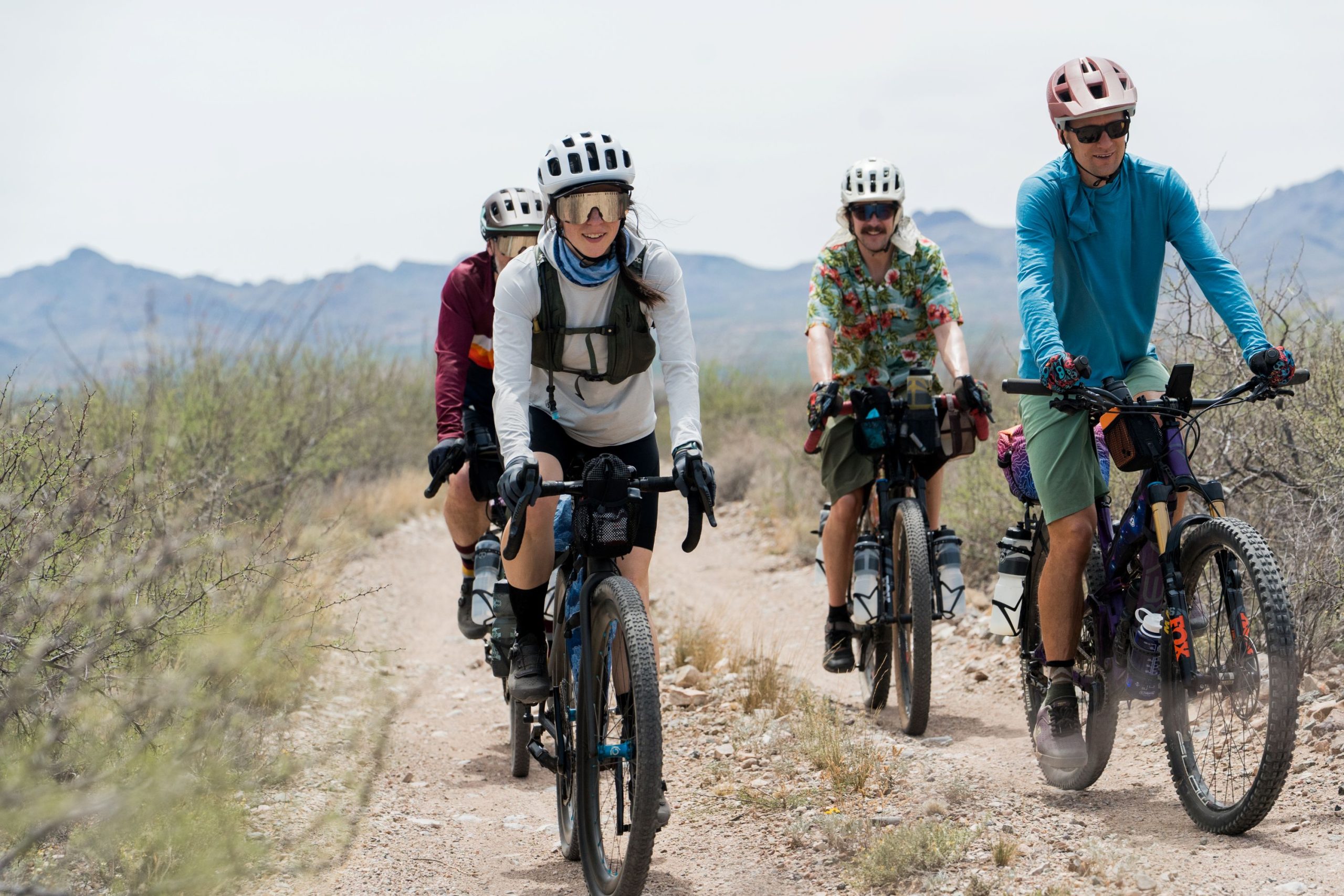
Riding with photographer Eric, Nick (the founder of bikepacking bag company Rogue Panda), Artec (former singlespeed bikepacking racer) and Molly (bike industry veteran), we stage out of Tubac, a tiny town 25km from the mountain.
It doesn’t sound far, but the temperature is already north of 37°C. We each strap 5 litres of water to our bike before we set off. Ahead of us is a climb to over 3,000m, and we need to get there by suppertime.
While Nick, Artec and Eric are all on MTBs, Molly and I opt for gravel bikes, and the frequent stretches of soft sand suck at our heavy front wheels like stones in a lake.
After a couple of hours of sliding, heaving and sudden losses of momentum, we’re less than pleased. Thankfully, Nick miraculously produces ice lollies from his pack, stowed away specifically for just such an occasion.
With spirits lifted, we spend the next few hours inching towards our goal – the space-age white cube of the observatory itself, perched atop Mount Hopkins like a gift. After reaching a two-lane section of blacktop and climbing for 10 minutes, we’re finally at basecamp.
Reach for the stars
Director Gabrelle Saurage is there to meet us, and isn’t fazed by five stinking, starving riders around her conference-room table. We’re on federal land, at a site of key scientific interest and there are rules.
No white light (it interferes with the telescopes), no booze and we’re to watch out for mountain lions. When we explain we’ve been riding for over three hours already, they’re worried we won’t be able to make the 20km climb on a dirt road to the top.
Despite our assurances, facilities manager Tom has packed his truck with cold drinks, snacks and a first aid kit, and insists on following us up. The poor guy spends two hours driving at a crawl, watching our exhausted arses wobble up the steep dirt.
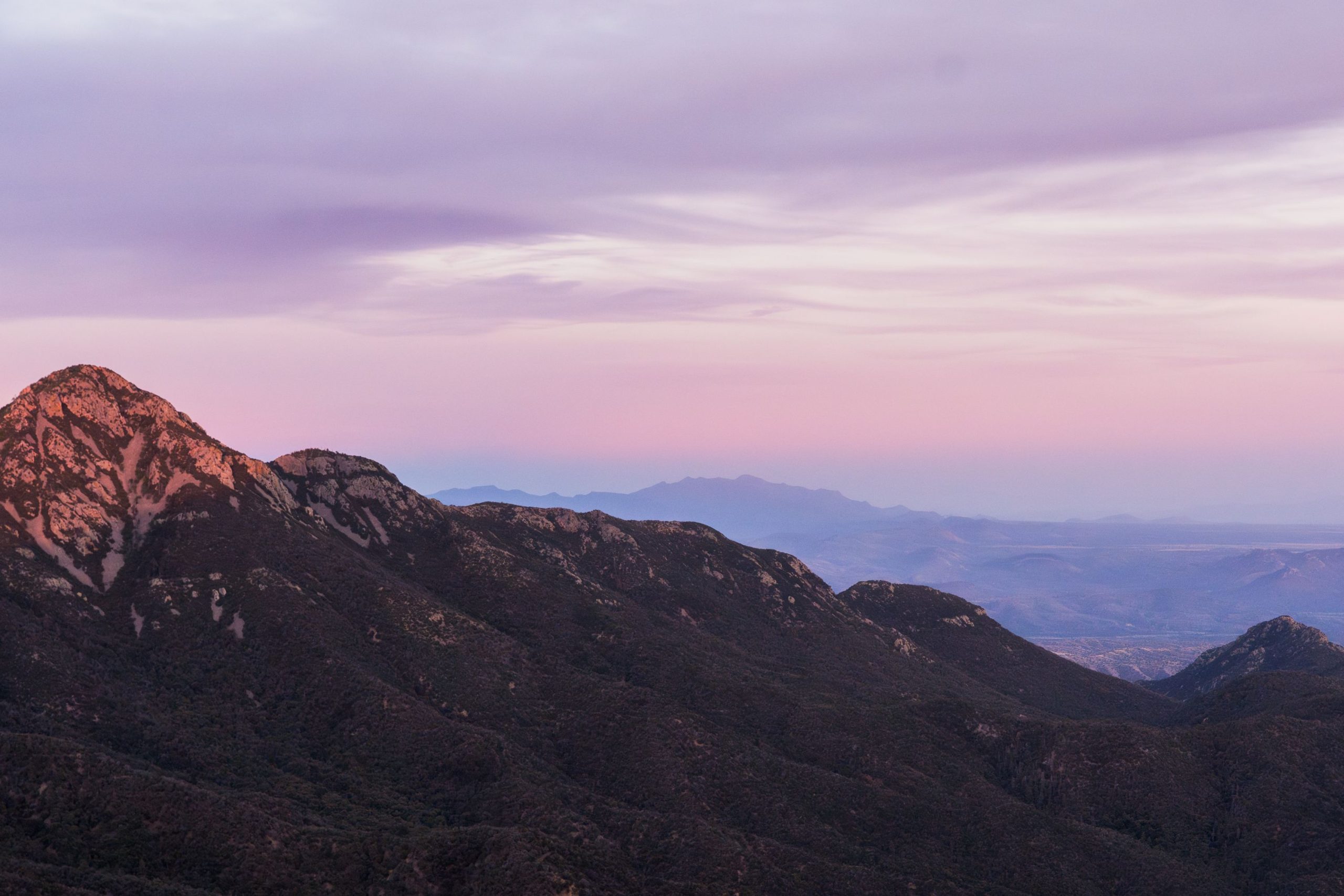
But it’s worth it. As we crest the penultimate turn, the sun is beginning to set, the sky filled with streaks of orange and purple. The last of the light turns surface water into pools of silver, and we can see the lights of Nogales twinkling in the distance, just over the border in Mexico.
While that would be reward enough, the Whipple’s delights are only just beginning. We’re welcomed into a rec room with a kitchen and pool table, before being shown to individual dorm rooms each with a double bed, fresh towels and electricity.
Showered, changed and heartily fed (they ordered food from a local restaurant for us), we’re then taken down the mountain by Tom, where visiting Harvard academic Dr Daniel Eisenstein has assembled a group of grad students and a telescope for us.
Moonstruck
Have you ever seen the moon closely enough to make out the shadow cast by the edge of one of its craters? Me neither, until now. Thank God it’s dark, otherwise all these people would have witnessed me weeping gently at its beauty.
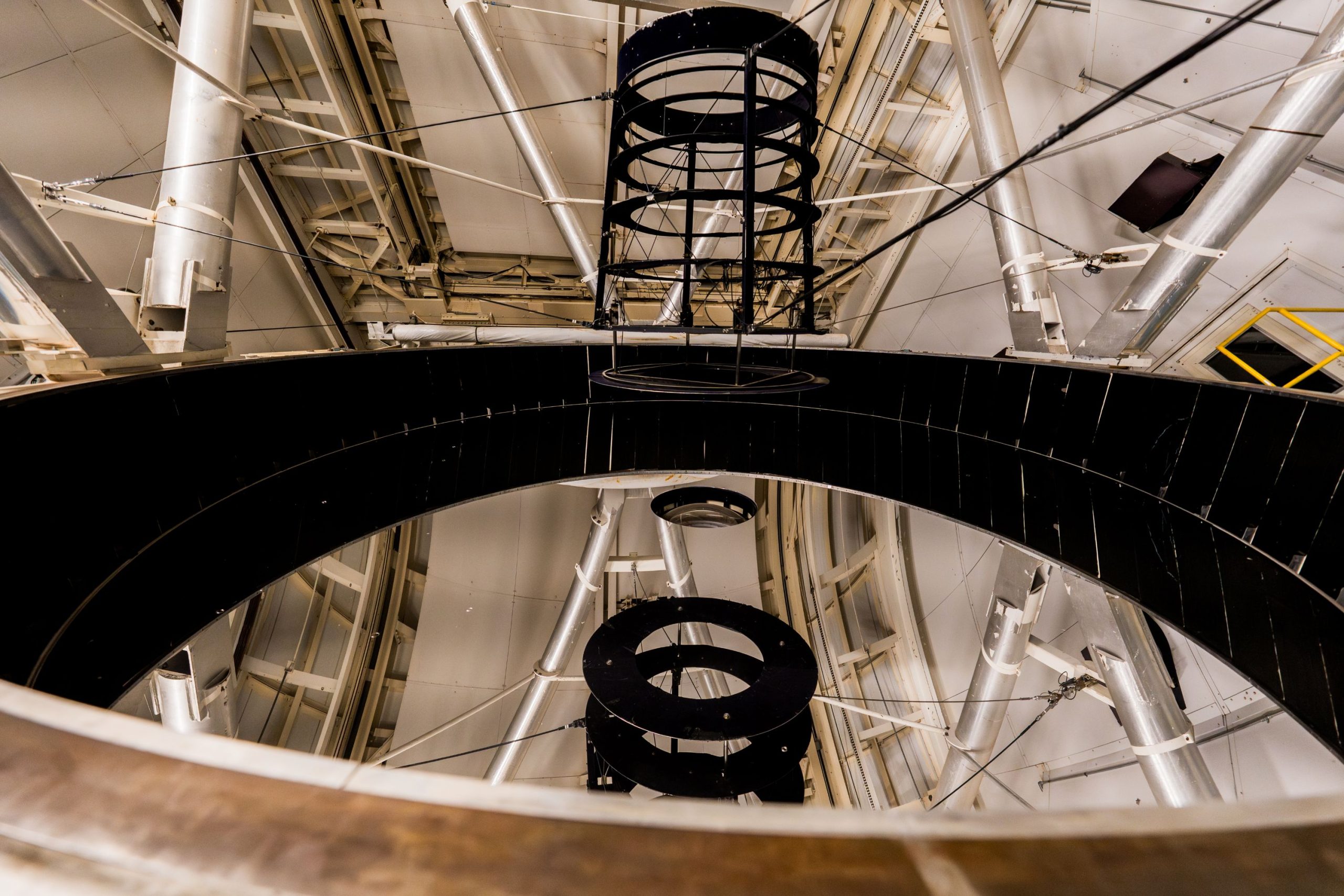
It turns out that’s just the warm-up. Tom drives us back up to the main prize – the MMT Observatory telescope at the top of the mountain, at almost 2,600m.
It’s in a huge sheet-metal building the size of a Georgian townhouse, and the two scientists charged with looking after it couldn’t be more pleased to see us. They’re armed with space jokes, endless facts and a saintly patience with our ignorance of the solar system.
They can put on a show too. Since the telescope’s bay doors are closed while clouds pass over, we’re invited to stand right behind them as, with a flourish, the scientists crank them open on huge rollers, revealing the Scorpio star system right there.
It’s crystal clear, as if we could reach out and touch it. Then the giant altazimuth holding the telescope’s mirror rotates downward behind us and we all think the same thing – please let this thing be a space laser.
It’s not, but our hosts have one more cool thing up their sleeves. The entire building we’re standing in is designed to rotate, so they let us stand on the steps and watch the clear night sky move above us as we spin slowly through the night.
Big numbers
By now, it’s past 1am, there are still two more telescopes to see, and Eric isn’t leaving without photographing the Milky Way. So Eric, Molly and I head down the hill to meet Mike, who operates two smaller telescopes. He’s a delight and has stories for days. I learn more about space in 10 minutes than I’ve learned in my entire life up to this point.
There’s hardly room in our brains for the scale and specifics of the astronomical numbers involved, and we’re barely able to keep our eyes open. But I ask Mike what his most memorable moment from the past 20 years is, and his answer is something I’ll never forget.
“In 2003, we detected light from a star that we’d never seen before. It was so bright and so distant that it backlit three galaxies we knew were there but had previously been too far away to see.” On that humbling note, we stagger to bed.
Blacktop blast
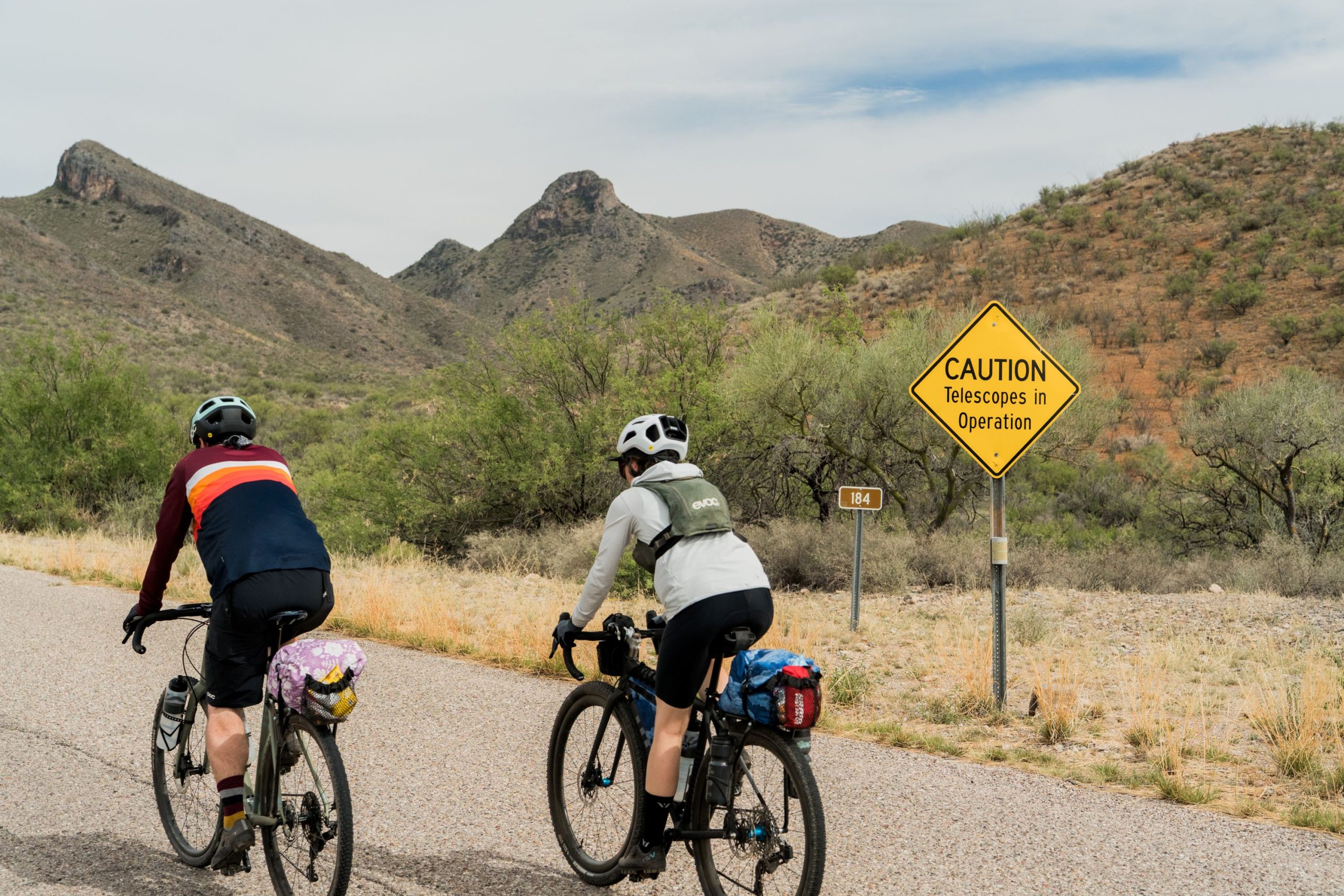
After breakfast, and a swift honorary lap around the telescope building, we hare down the access road, stop for goodbyes and proper coffee with our newfound friends, and get back onto the road.
No one’s in the mood for a return journey on the dirt trails, and the more direct route is on the highway, which turns out to be this trip’s last, glorious gift. On a gentle downhill, in the first rays of the morning sun, we take our hands off the bars, crank up the tunes and simply cruise. We don’t turn our pedals, slow down or see a sign of human life for an hour.
The word ‘epic’ gets thrown around a lot, and I’m generally opposed to hyperbole and exaggeration. But I’m not sure there’s another more suitable word. It’s not possible to ride into space just yet. Until it is, this will do just fine.


