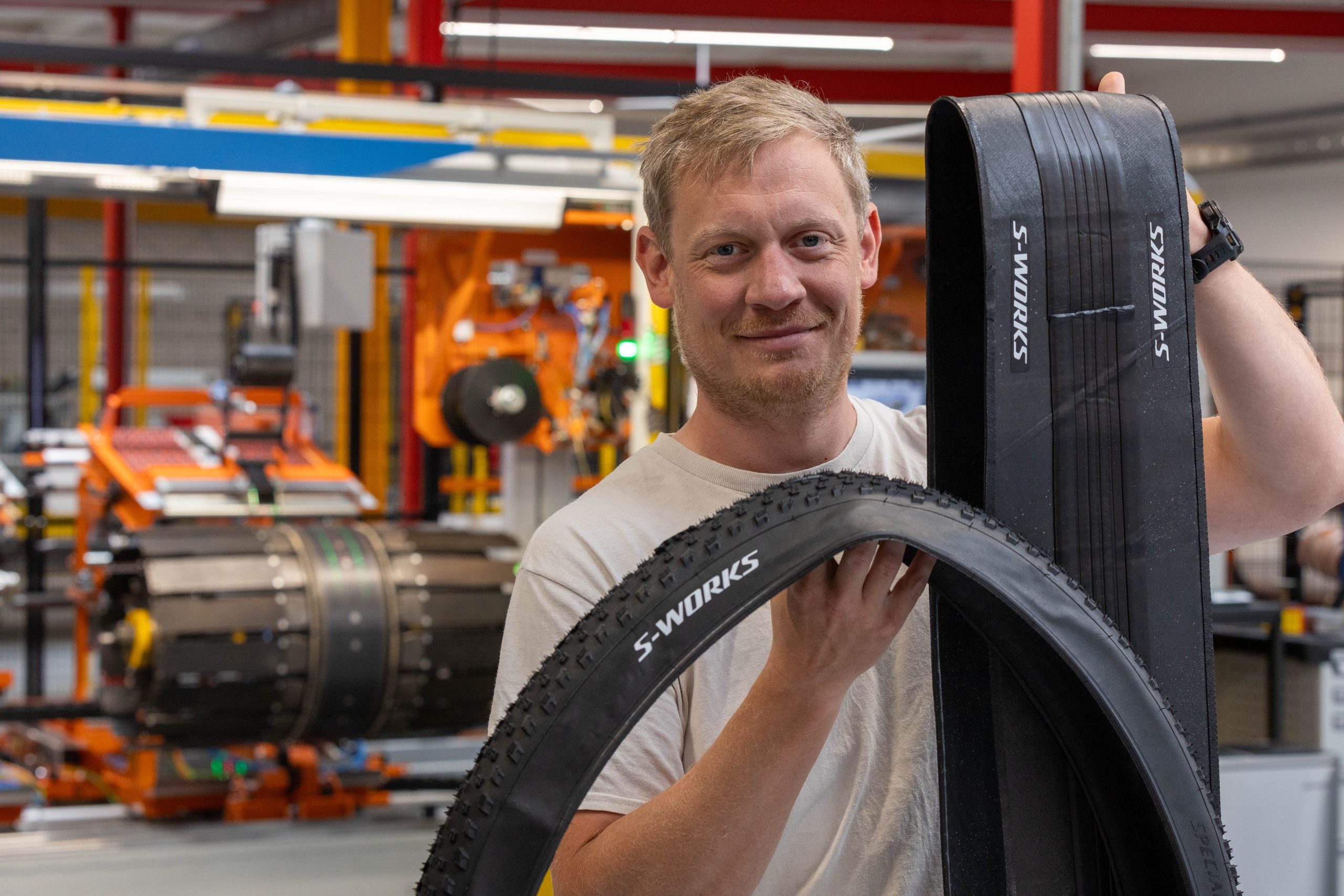
I didn’t expect a tyre factory to be more like a medical lab than a dark, broody industrial works. But upon visiting Specialized’s S-Works tyre facility in Germany, the vibe was very much more scientific precision than heavy industry.
Following up on Rob’s visit to the factory last year, where he delved into how the company can create very specific tyres for its athletes in next to no time, I’m here to have my own tour of the facility and perhaps even make my own tyre.
Creating a tyre isn’t as simple as bunging some rubber in a mould and heating it up under pressure. There’s a chunk of R&D that goes into the materials, processes and components that make up the black stuff.
Time to mix it up
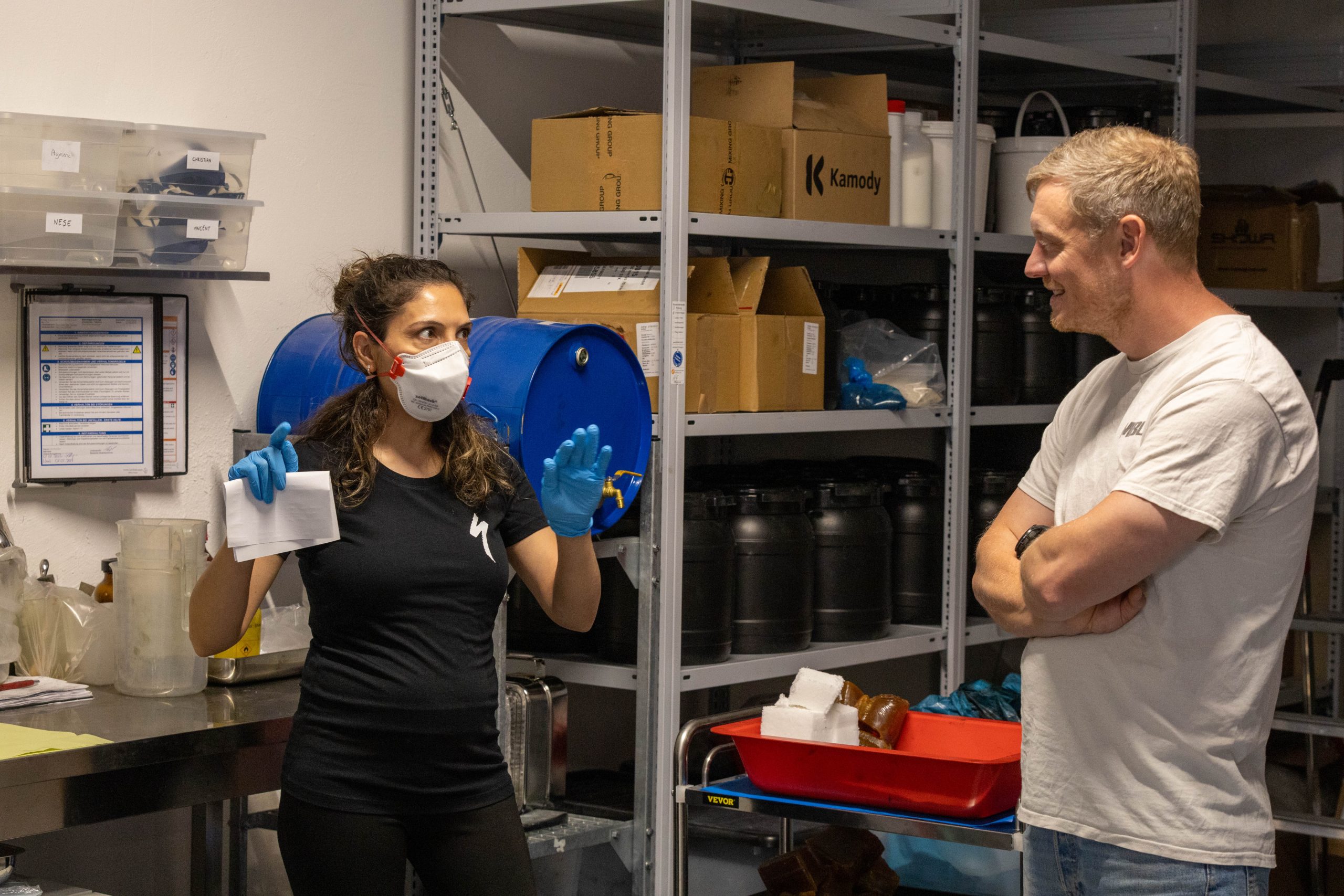
While tread patterns are generated on computer in the first instance, it’s at the mixing machines where this high-end facility, designed to prototype new tyres and build those used by Specialized’s world-class athletes, creates its compound rubbers.
The mixing room is Neşe Kaynak's domain, and it's her job to find the perfect recipe of rubbers, silicones and other chemicals to do the job at hand. That might be a tyre designed to last only a few hundred kilometres of road at a blistering pace, or one that’s built to guide Finn Iles down a wet Mont-Sainte-Anne rock garden.
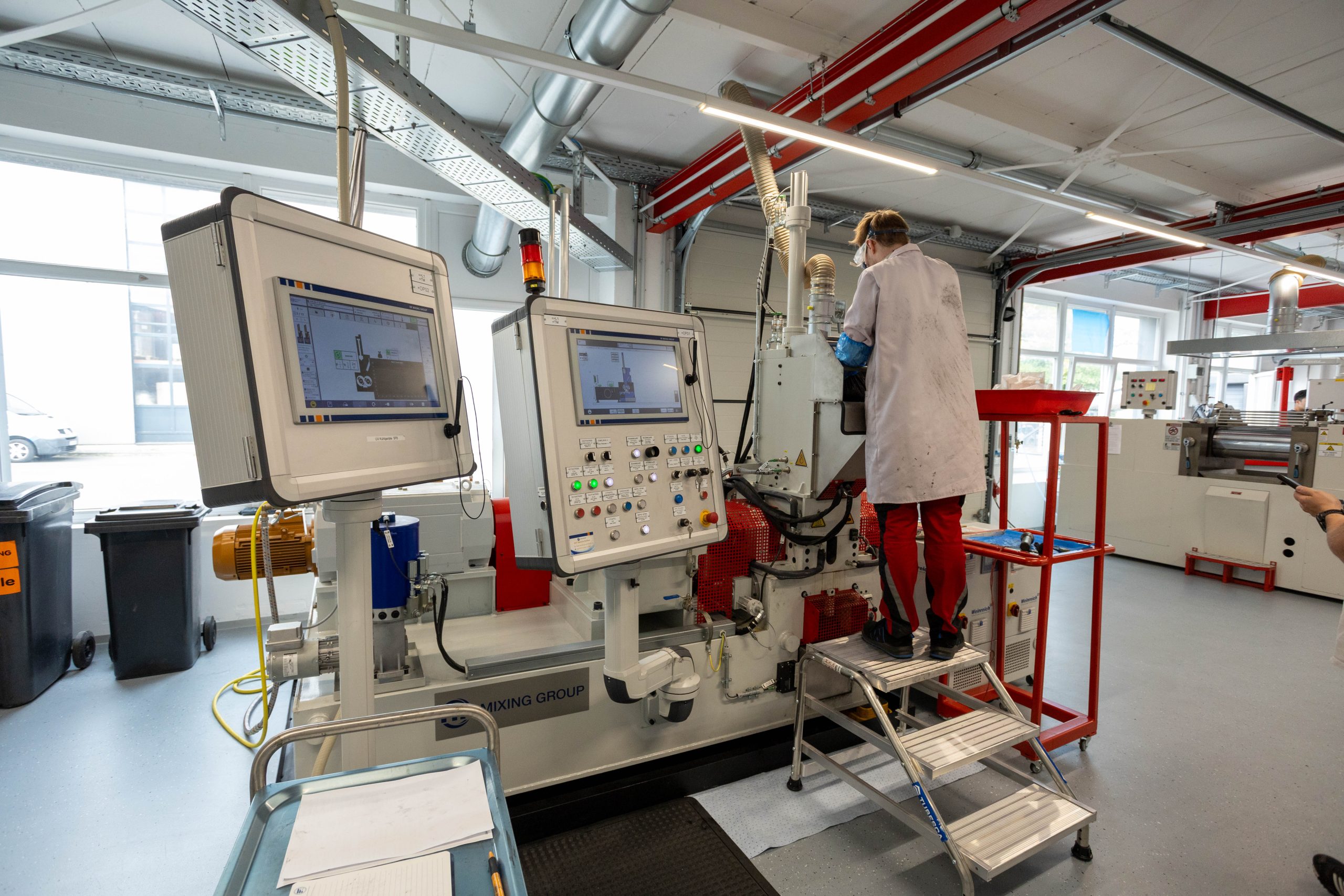
Clearly, I’m not going to be shown the recipe for XC racer Sina Frei’s S-Works Air Trak tyre that I’ll be ‘helping’ build today, but I am allowed to collect the compounds, and chuck the raw ingredients into a highly sophisticated mixing machine where the order of mixing, temperature, speed and pressure of the materials is carefully metered out and measured.
Even at this stage, a change in one parameter can impact on performance, so it’s all recorded in detail.
After a final squeeze between a pair of rollers to ensure the mix is truly mixed, samples are sent to the lab to get tested for their properties.
Tested to the nth degree
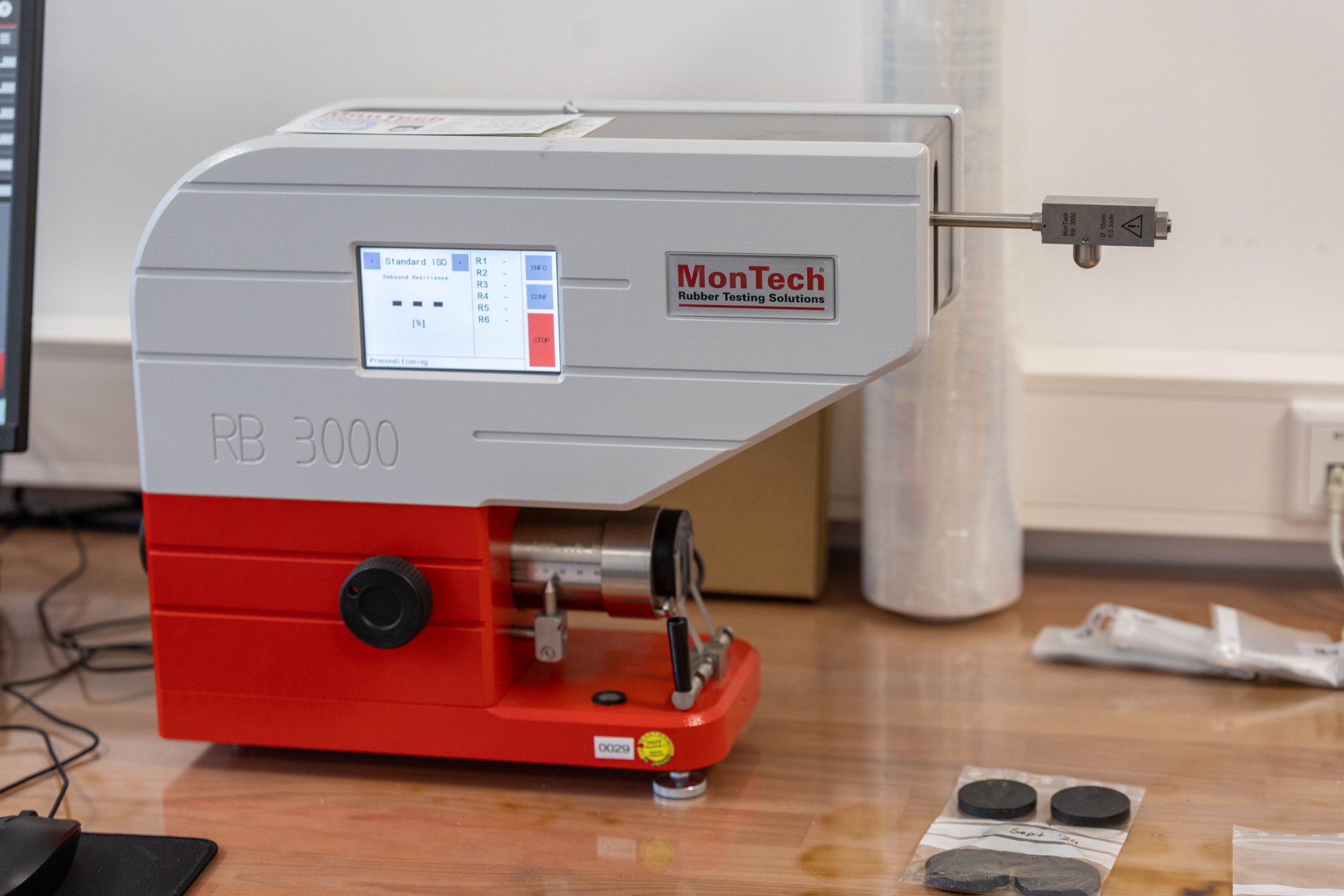
The tensile strength, rebound properties and the hardness of the rubber are tested, all of which play a part in the tyre’s performance.
For example, the rebound of the rubber is key to grip. A rubber that rebounds quickly is less in contact with the ground than one that rebounds slower. The quicker-rebounding rubber should roll faster, but the slower ‘stickier’ rubber will be more grippy.
Given the rebound properties are to some extent independent of the hardness, it's possible to have a harder rubber that’s grippier on the ground than a softer one.
Start the build
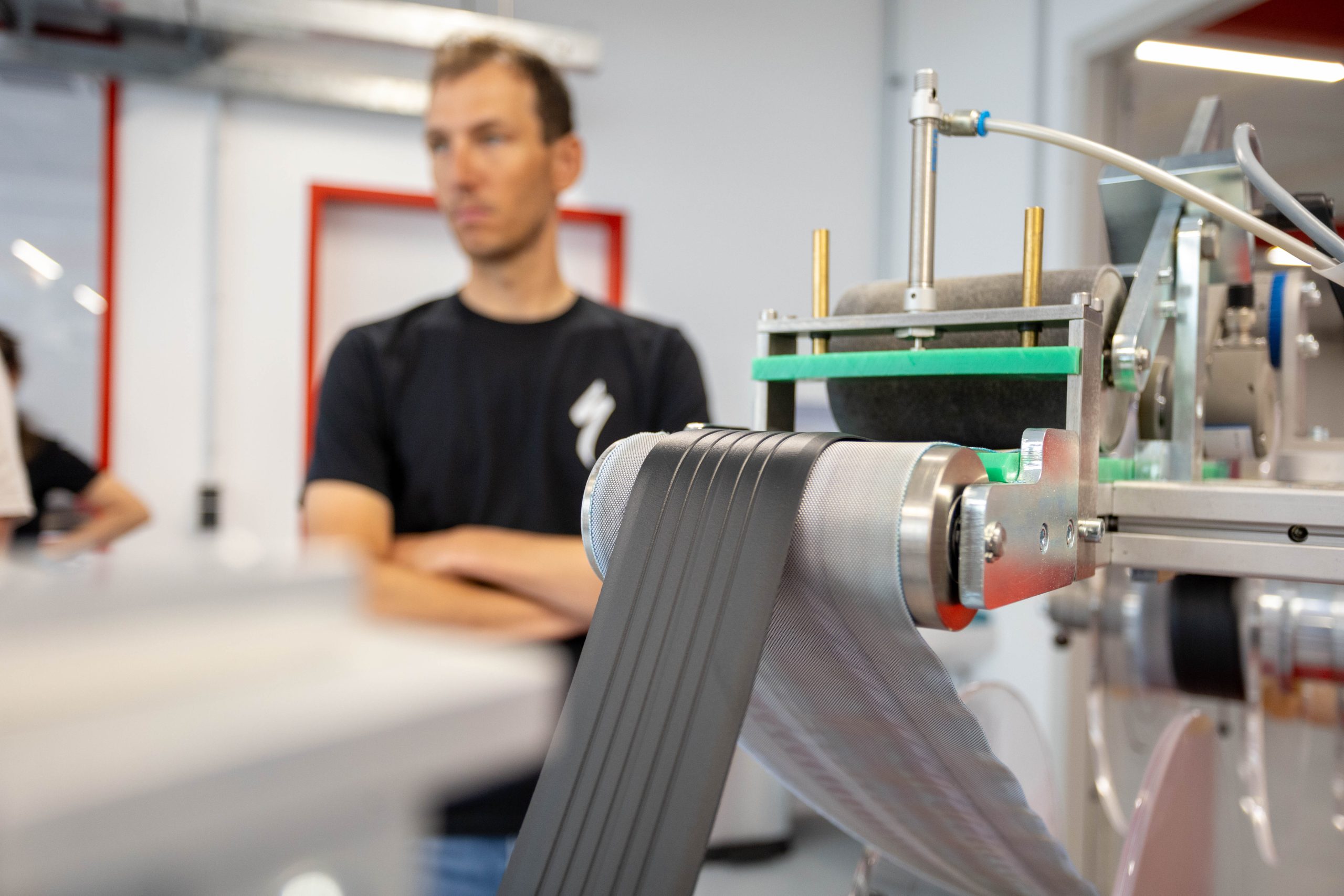
With the rubber sorted, it’s softened down and forced through a die on the extrusion machine.
This lays the grippy rubber on a bed, which is then rolled up ready for use later. It comes out in a stream of unbroken ridges across the width of the tread. When the tyre is later placed into the mould, these ridges will become the tread blocks themselves.
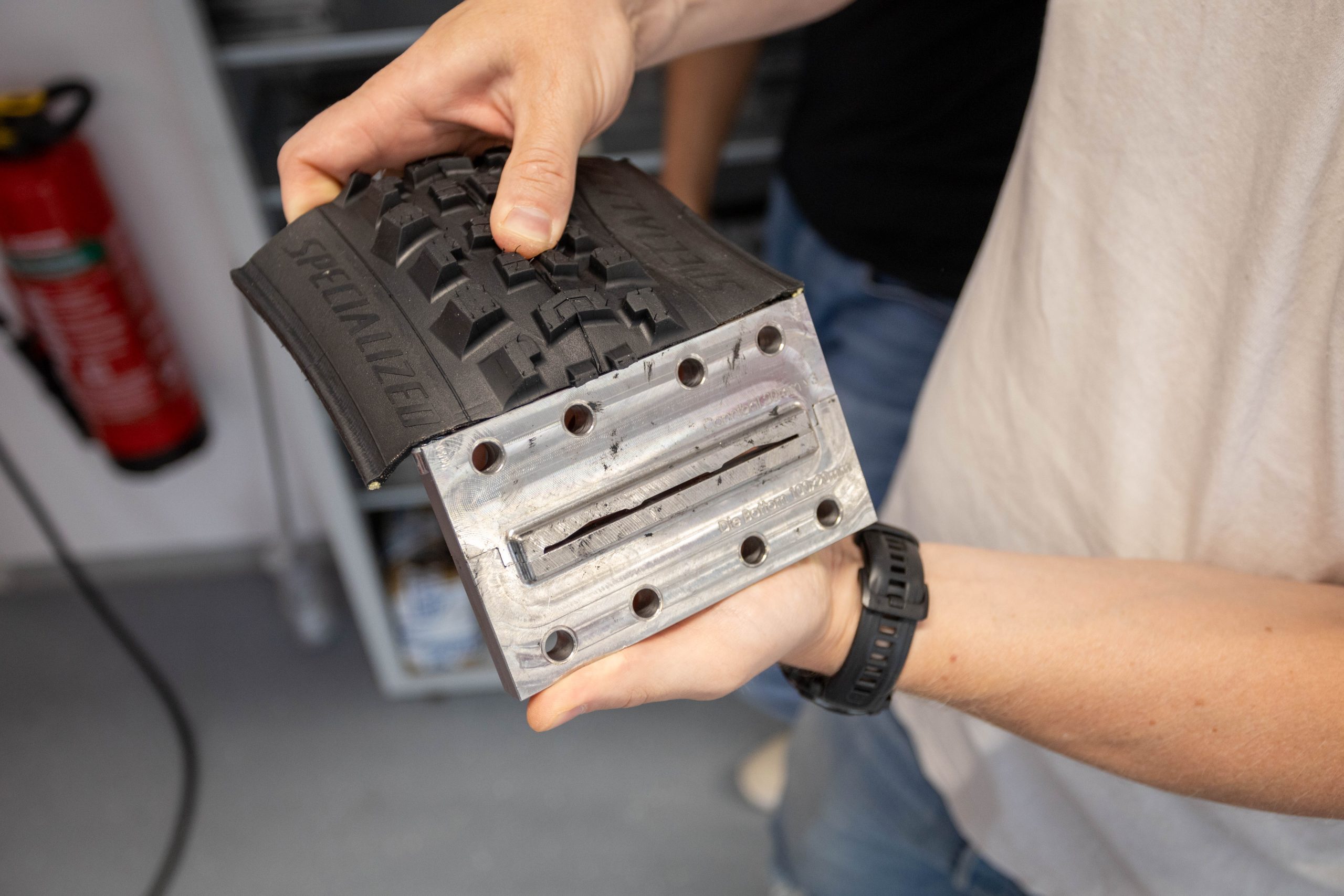
Concurrently, the carcass of the tyre is being constructed on the cutting machine.
Rubberised sheets of threaded ply are fed through a machine that cuts the tyre carcass’ body. The angle at which the cutting arm is mounted dictates the angle at which the ply sits across the tyre.
While traditional plies may sit at around 50 degrees to the bead, Specialized has been developing its radial range of tyres.
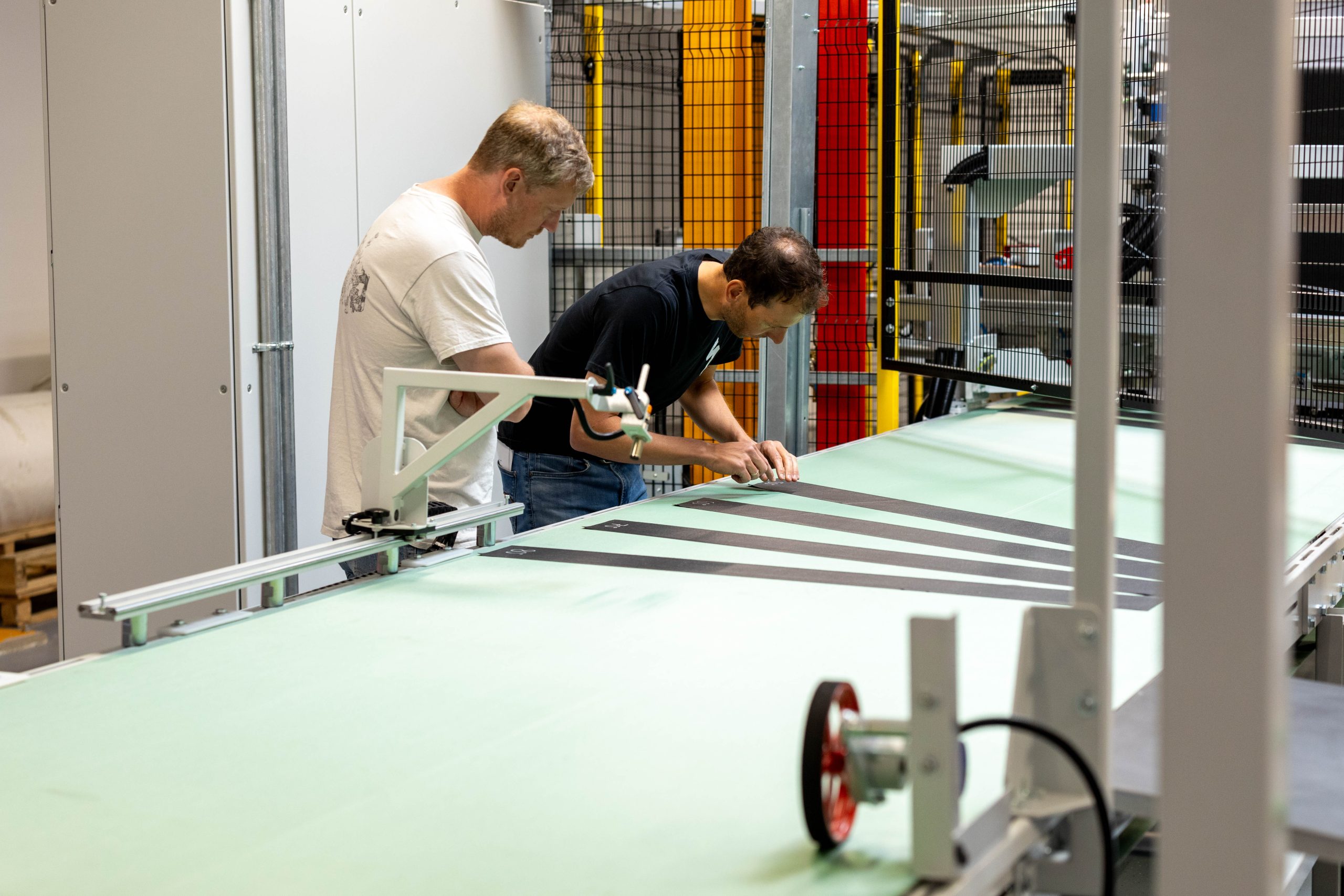
These have the threads in the ply sitting more bead-to-bead than traditional tyres, with Specialized settling on around a 70-degree angle.
This, the brand says, gives the best blend of radial compliance and traditional stability.
Unique machines
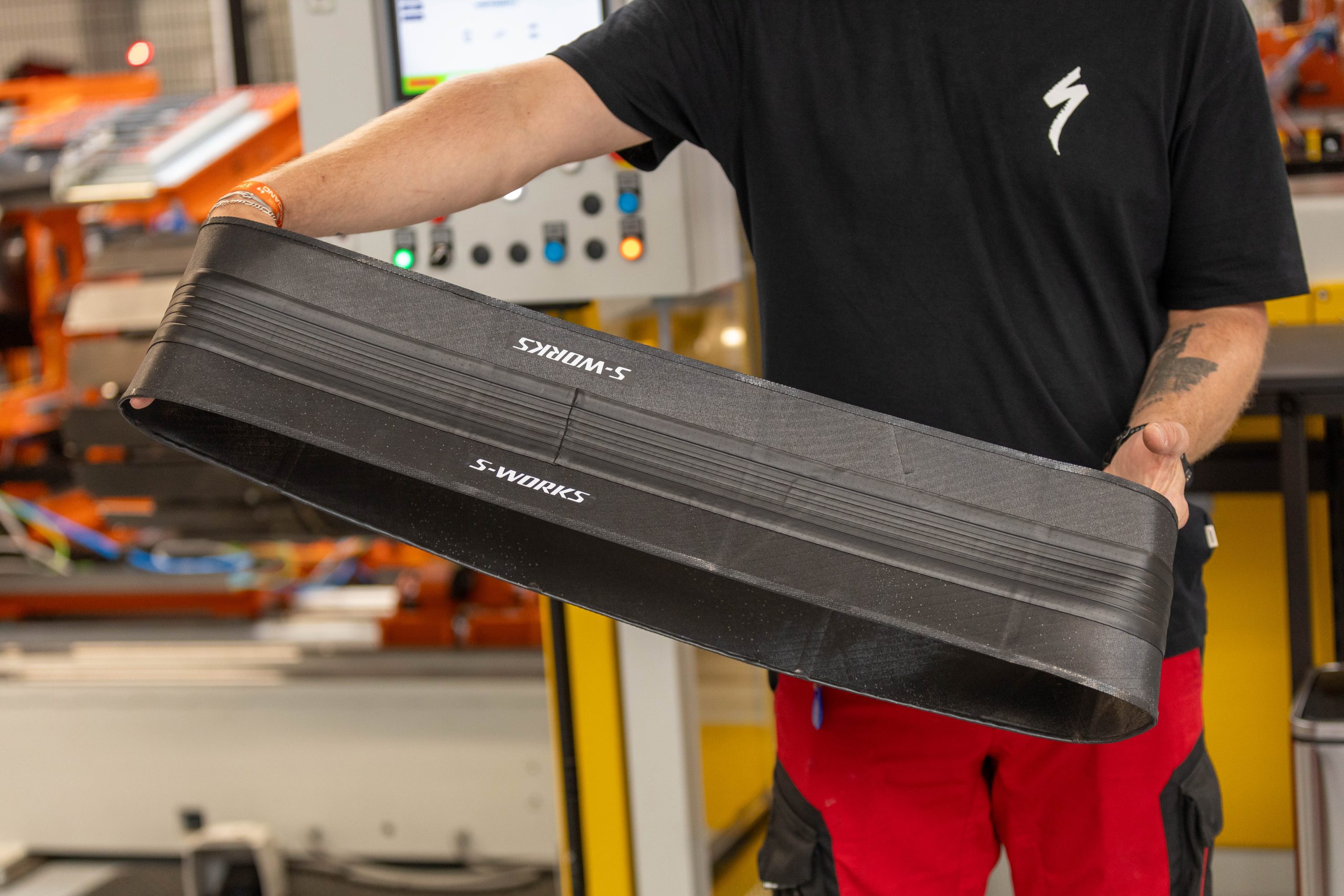
From here, the two halves of the tyre are joined, to create the ‘green tyre’.
Specialized has a one-of-a-kind machine to do this.
Each individual element – from the tread to the carcass and the bead and hot-patches, is fed over a multi-pronged spinning barrel, which stretches and folds the elements together to form the basis of the finished tyre.
Various steps whirr and clank, while different elements are fed over the barrel by hand or machine.
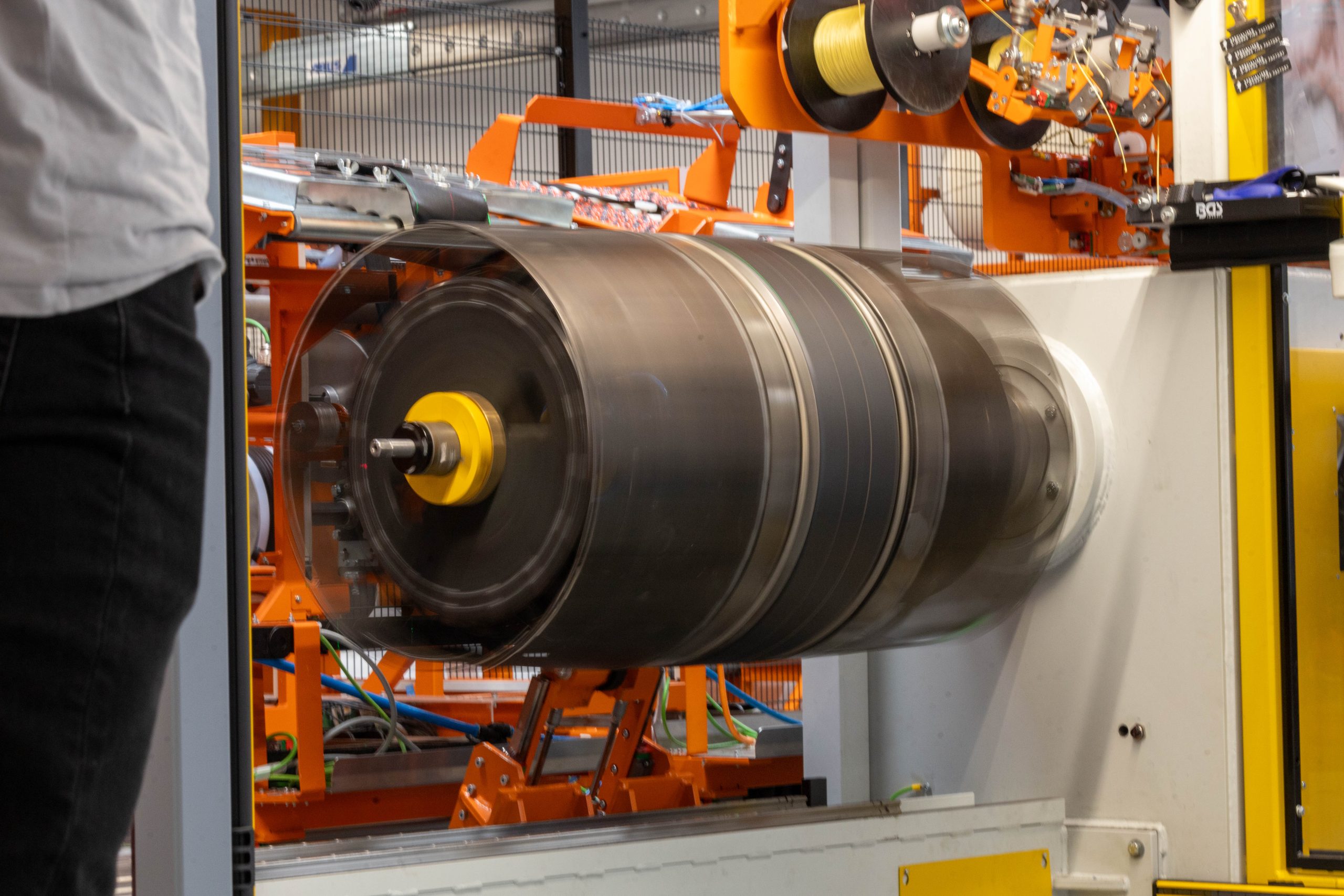
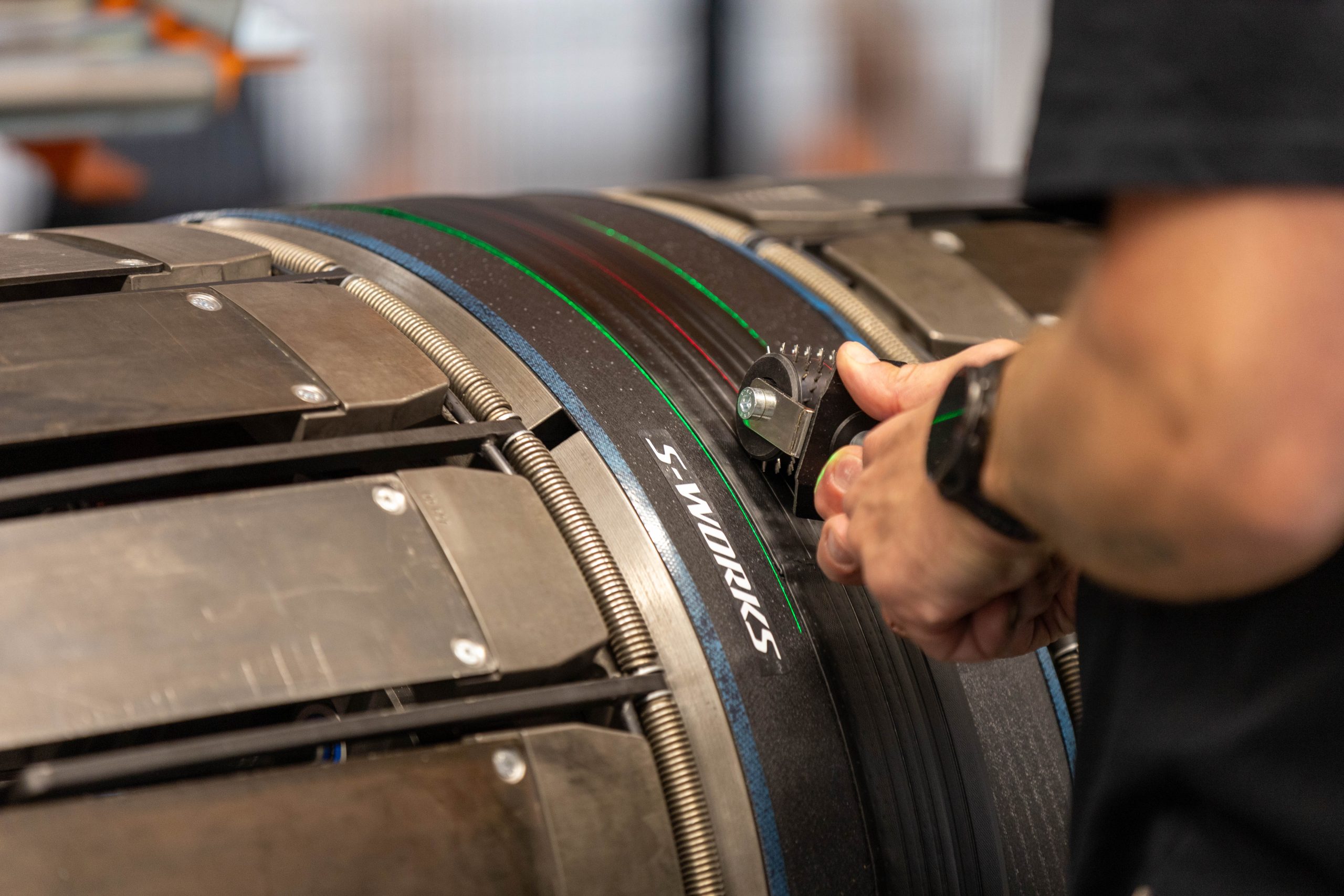
Counterintuitively, one of the key processes is to puncture the whole body with a spiked roller, ensuring the numerous layers of material have no air bubbles within them.
The process takes a pro around three minutes, but it took me over 20.
The result is the green tyre, which is plastic in nature – this means that while it holds itself together, it can be torn apart. The next process sets the various elements together, and we finally see what the tyre’s tread is going to look like.
Into the oven
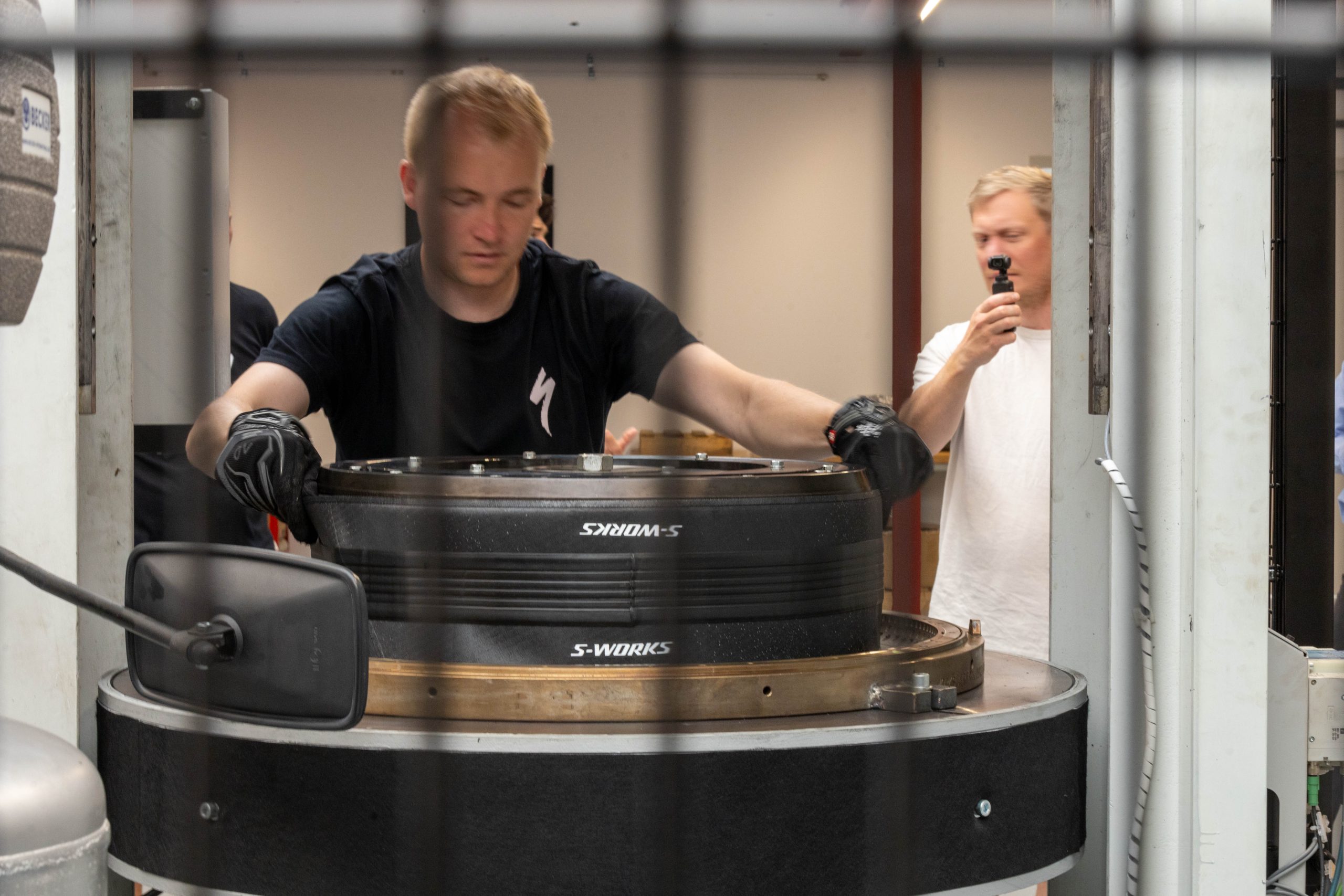
Eight minutes of heat and pressure are what separates the green Air Trak from a fully formed Air Trak.
The vulcanising process effectively melts and squashes all the elements of the tyre together into one complete part that is no longer plastic, but elastic.
Inside the mould, there’s a negative print of the tyre's tread, into which the rubber along the extruded is are forced, creating the blocks that give the grip.
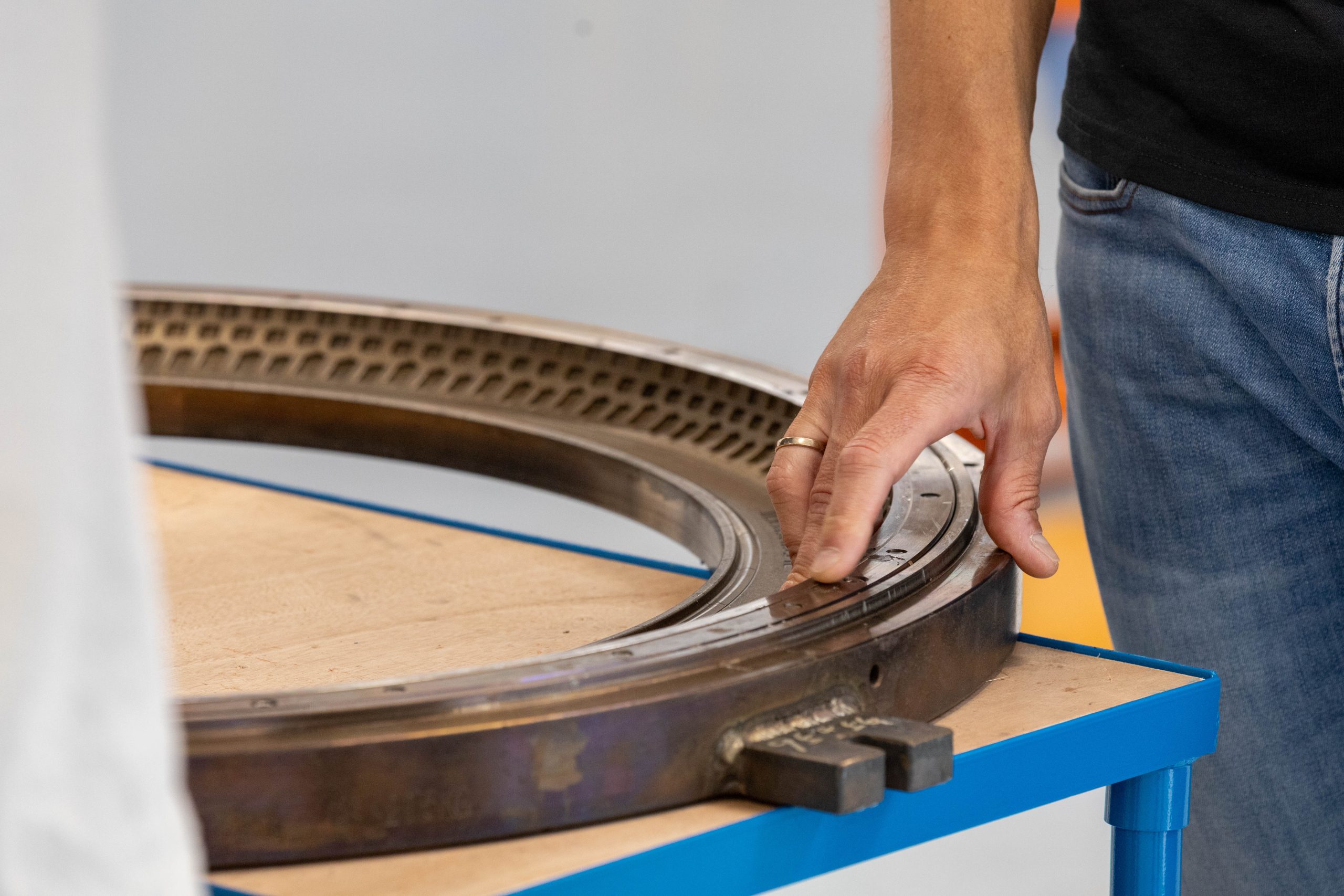
These steel moulds are highly valuable and take specialist manufacturers many, many hours to construct.
With a burst of steam, the press lifts, revealing the finished tyre. A quick finishing process to remove slithers of excess rubber, and the tyre is ready to be packaged up, or fitted to a race bike.