Smart rear lights with built-in traffic detecting radars have become ever more popular over the last few years, with new models from the likes of Lezyne, Magicshine, BBB and Bryton.
The two biggest players in this emerging area are one of the first brands to market, Garmin, and home training behemoth Wahoo.
We've pitched Garmin's highly regarded RTL515 against Wahoo's Elemnt Trackr Radar.
The Garmin Varia RTL515 was released in 2020. The compact radar/light design, using Garmin’s radar tech with a powerful light and wide range field of view, is still a powerful performer five years on.
Wahoo’s entry into the rear-light radar space is feature-packed, with an intelligent light with twin LEDs, a translucent casing for great all-around visibility and long run times. The Trackr Radar looks to be a serious rival to Garmin.
These two lights are closely matched but, based on my testing, Garmin takes the win by delivering better radar performance – after all, that is a key feature. The Wahoo Elemnt Trackr Radar provides excellent lighting performance and superior runtimes, though, so let's get into the detail.
Garmin Varia RTL515 vs Wahoo Elemnt Trackr Radar setup

The RTL515 is simple to set up; simply turn it on and hold the power button until the small LED flashes purple. Then, pair it to your head unit or your phone (to enable use with the Garmin Varia App). It will also form a light network with a Garmin head unit.
That means you can control the light settings via your head unit, simply scrolling through the modes using the power button. You can also configure settings for the light through the app.
The radar settings can be altered through the app, too, specifying which side of the screen you want the radar graphic and whether you want colour overlays.
The screen will change to red with a feathered red border on the whole screen if a vehicle is approaching quickly. It’s all very simple to work out. The RTL515 comes with a comprehensive manual, something that Wahoo has omitted, and online support, which Wahoo also offers.
The Trackr Radar needs to be paired with Wahoo’s app to complete the initial setup of light modes and then to any GPS head unit for on-bike use. Unlike Garmin, the Wahoo app doesn’t have the ability to display radar readings on the fly, meaning the Trackr can only be used with a head unit.
Setup is simple enough, although it took a couple of app relaunches to get it to recognise the Bluetooth signal from the Trackr Radar. The app handles firmware updates, too.
Like the Garmin RTL515, the Trackr Radar also communicates via ANT+, enabling you to set up a light network on a compatible head unit. That means on-the-fly light controls at your fingertips. Like the RTL515, you can scroll through light modes via the unit’s power button.
Garmin Varia RTL515 vs Wahoo Elemnt Trackr Radar fitting

The RTL515 uses Garmin’s quarter-turn fitment to attach the light to the mount bracket. The bracket uses simple bands to wrap around the seatpost. The mount bracket comes with soft inserts to fit round and aero posts. It’s simple and easy to fit, using Garmin’s standard fitting – something it didn’t do with the RTL715 radar/light/camera. This means there are lots of optional mounts available for seat-rail fitments.
The bracket is secure and stable, provided you use one of the rubber inserts. On a bike with an oversized 31.6mm seatpost, I tried running the RTL515 without the insert (because it was a tight fit). I found hitting potholes or speed bumps could shake the unit enough to make it disconnect from the head unit, signalling an error for a second or two before reconnecting.
Wahoo's large bracket creates a smooth, flush fit with the light itself.
The bracket comes with three soft rubber inserts – one for round/aero posts, one for D-shaped posts and one for flat back edges.
The light connects via what at first glance appears to be a quarter-turn mount shifted 90 degrees. However, in use, it's ever so slightly larger at the tabs than some mounts. This means it doesn’t fit into every other mount, leaving something of a gap if you want to fit the light directly to a saddle-rail mount instead of the standard bracket.
That won’t be an issue for most, unless you ride a particularly small bike with a little exposed seatpost. Here, the bracket could clash with your bike. Hopefully, Wahoo will introduce other mount options.
Garmin Varia RTL515 vs Wahoo Elemnt Trackr Radar performance
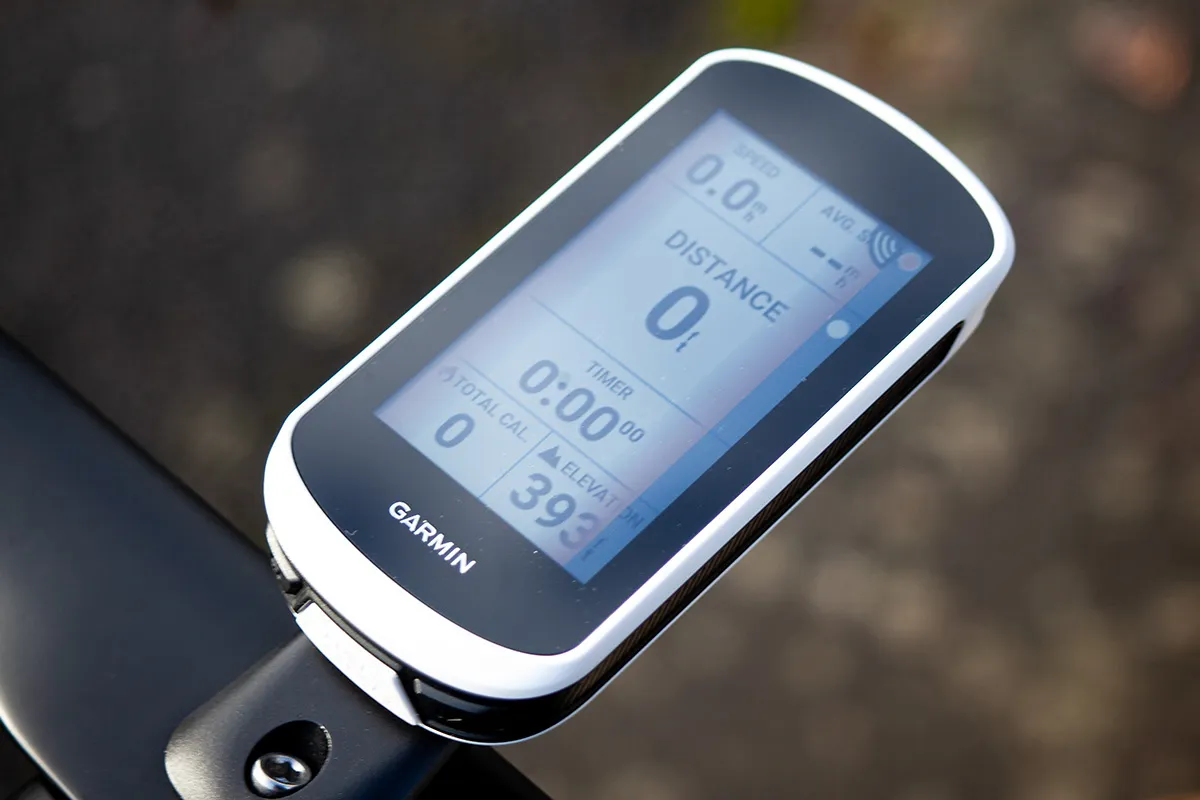
The RTL515 is an excellent radar and a decent bike light. Its wide field is particularly good for twisting rural roads, which made up a large part of my test loops. It meant the Garmin picked up plenty of upcoming vehicles that were completely out of view.
Compared to the Wahoo, it picked up vehicles a little sooner, although we're talking very small margins. Because of its wide field, approaching vehicles never got to a dead spot – something that happened occasionally with the Wahoo unit.
While the radar functionality is still the gold standard for rear lights, the RTL515 is starting to show its age. Firstly, the charge port is Micro-USB, when nearly all small electrical items have switched over to USB-C. The included Micro-USB to USB cable is fine for mains charging, but very few laptops now have a USB port; non-mains charging will mean buying another cable.
I’ve tested the RTL515 and Wahoo using Hammerhead's latest Karoo bike computer to make things as fair as possible. I have used both the RTL515 and Trackr Radar with Garmin’s Edge 850, too.
The light itself has all the usual modes – full, two flash modes and a low-light constant (peloton) mode. It lacks some of the Wahoo’s smarter functionality, including a braking light and intelligent illumination (dimming to 50% if it doesn’t sense any vehicles behind).
Therefore, Wahoo scores highly for run time. The Garmin is much more modest with its maximum run time of 16 hours compared to Wahoo’s 20+ hours.
The Trackr Radar is an excellent light, with a multitude of modes to match Garmin's, lots of smart control to preserve battery life and good safety options.
The light uses a focused lens LED for its brightest element. That’s complemented by a second LED at the unit's base, behind a translucent casing that offers excellent side visibility alongside the more focused lens. You can configure the light to dim automatically when it doesn’t have an approaching vehicle in its radar. In the Wahoo app, you can set the amount of time before it starts to dim.
The light also doubles as a brake light, ramping up the brightness as you slow, another excellent safety-enhancing measure.
The Wahoo’s runtime is vastly superior to the Garmin's because of these power-saving settings. That’s a good thing if you’re a forgetful charger of your accessories.
When it comes to radar performance, the Trackr is a close match for the Garmin, bar a couple of exceptions. On twisting single-lane rural roads, the Wahoo picked up approaching vehicles a little slower – only by a second or so, but it was noticeable on repeated rides testing the units back-to-back.
I also found that when particularly annoying drivers were tailgating me, sitting out towards the middle of the road, looking to overtake, the Wahoo would lose the radar signal, and my head unit wouldn’t show a vehicle behind. It happened rarely, and because the approaching car had been showing right up until they were (too) close, I was never surprised.
However, I could see occasions when it might take you by surprise. This underlines that a radar is a safety aid, and not an excuse not to check over your shoulder when looking to make a turn.
Specifications
Garmin Varia RTL515
SQUIRREL_TEXT_13086413
- Pros: Excellent radar performance; can be used without a head unit
- Cons: Micro-USB port; run times can’t match the Wahoo
- Size: 40x99x62mm (including mount)
- Lens: 32mm round rear-facing lens, 16x111mm side lights, reflective band
- Water resistance: IPX7 (submerged 1m for 30mins)
- Radar field of view: 50 degrees, 140m
- Port: Micro-USB charge port
- Charge time: 3 hours from a mains adaptor, 5hrs from a computer USB port
- Run time: 16hrs night flash mode (29 lumens), 6hrs in day flash mode (63 lumens), 8hrs in peloton mode (low steady, 8 lumens), 6hrs in solid mode (20 lumens)
- Weight: 106.1g (including mount)
- Price: £169.99 / $199.99 / €199.99 / AU$369
SQUIRREL_13086413
Wahoo Elemnt Trackr Radar
SQUIRREL_TEXT_13211646
- Pros: Excellent light; smart settings; great visibility; good radar performance
- Cons: Can only be used with a head unit; bulky bracket; an occasional blind spot
- Size: 37.5x90x81mm (including mount)
- Lens: 19x18mm square lens, with second light at the base; translucent faceplate also illuminates, 5mm-deep full-length side lights
- Water resistance: IPX7 (submerged 1m for 30mins)
- Radar view: 35 degrees, 150m range
- Port: USB-C charge port
- Charge time: 4 hours mains
- Run time: Low flash 20hrs (18 lumens), high flash 15hrs (53 lumens), low steady 15hrs (10 lumens), high steady 10hrs (21 lumens)
- Weight: 101.2g including mount
- Price: £179.99 / $199.99 / €199.99 / AU$349.95
SQUIRREL_13211646
Garmin Varia RTL515 vs Wahoo Elemnt Trackr Radar bottom line
The RTL515 remains the best in class for radar functionality; it senses quicker, doesn’t have any dead spots and I didn’t experience any false readings throughout my testing.
Its simple setup, and the fact it can be used without a head unit and through Garmin’s own app are bonuses, as is the versatile mount. However, as a light, it can’t match the smart tech Wahoo has brought to the new Elemnt Trackr Radar.
Wahoo’s first attempt at a radar is a fine debut. The performance of the light is excellent; its smart functions, exceptional runtime and quick charging are compelling reasons to buy. The mounting bracket is secure and stable, although somewhat bulky and not ideal for smaller frames.
Its radar performance is strong, reacting to approaching vehicles quickly and accurately, although it's not quite a match for Garmin’s wider field of view, with the narrower focus of the Trackr Radar showing an occasional blind spot.
Although the RTL515 is showing its age, its key feature – the radar – is better than Wahoo’s. That said, Wahoo’s light and runtimes are far superior.
It's a very close run thing because neither is perfect, but the Garmin has the edge thanks to its radar performance and lower price.