Despite cross-country bikes becoming ever more capable and fun to ride, there’s still a place in the market for short-travel trail or downcountry bikes.
Whatever it is you prefer to call them, these bikes often offer up a similar amount of suspension travel to their XC counterparts, feel almost as sprightly and efficient on the trail, but come with a burlier, longer-travel fork and tougher kit.
The Forbidden Reya and Santa Cruz Tallboy are incredible examples of this type of bike. While the Reya is Forbidden’s first foray into this genre, the Tallboy is on its sixth generation after launching in 2009 and was a bike that paved the way for others like it.
It’s quite the change for the Californian brand, which has ditched its tried-and-trusted VPP suspension platform in favour of a four-bar setup – a first for a non-eMTB from Santa Cruz. It has also bumped travel at the rear up to 130mm.
The Reya, on the other hand, has 120mm travel and geometry that wouldn’t look out of place on a longer-travel trail bike. Of course, it’s built by Forbidden, so while it’s designed to tick off the miles comfortably, it’s able to get rowdy and be chucked about when the time comes.
So, which of these bikes is best – the rejuvenated classic or the new kid on the block?
Introducing the bikes
Santa Cruz Tallboy XT Di2
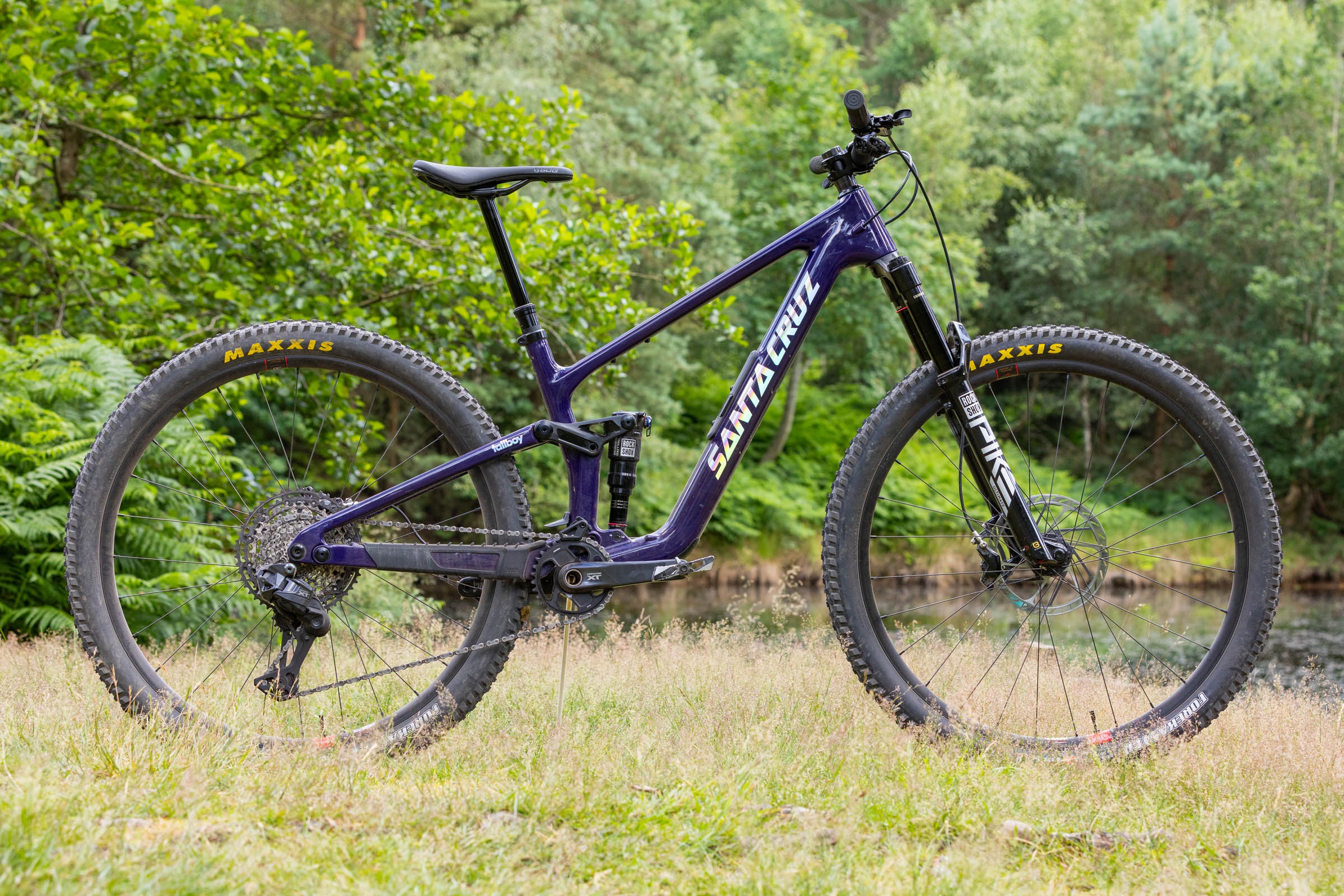
The Tallboy's 130mm rear-wheel travel is matched with a 140mm fork. This build is shod with Shimano’s latest XT Di2 wireless gearing, Reserve wheels and SRAM Motive Silver brakes.
The Tallboy comes in six sizes (XS-XXL), four builds and a frameset option.
Santa Cruz Tallboy XT Di2 specifications
- Frame: Carbon CC, 130mm travel
- Sizes: XS, S, M*, L, XL, XXL
- Fork: RockShox Pike Ultimate, 140mm travel
- Shock: RockShox Deluxe Ultimate
- Drivetrain: Shimano Deore XT M8250 Di2 derailleur and shifter, Shimano Deore XT M8200 cassette and cranks, Shimano Deore XT M8000 chain
- Wheelset: Reserve 30 SL AL rims on DT Swiss 350 (fr) and DT Swiss 350 DEG DF (r)
- Tyres: Maxxis Forekaster 3C MaxxTerra EXO 29x2.4in
- Brakes: SRAM Motive Silver (200mm/180mm rotors)
- Bar/stem/grips: OneUp Components Carbon, 760mm (medium) / Santa Cruz CNC, 40mm / Santa Cruz House Grips
- Seatpost/saddle: OneUp Components dropper, 180mm (medium) / SDG Bel Air 3
- Weight: 13.51kg (medium, without pedals)
- Price: £6,999 / $7,499 / €7,999
SQUIRREL_14010602
Forbidden Reya Tier 2
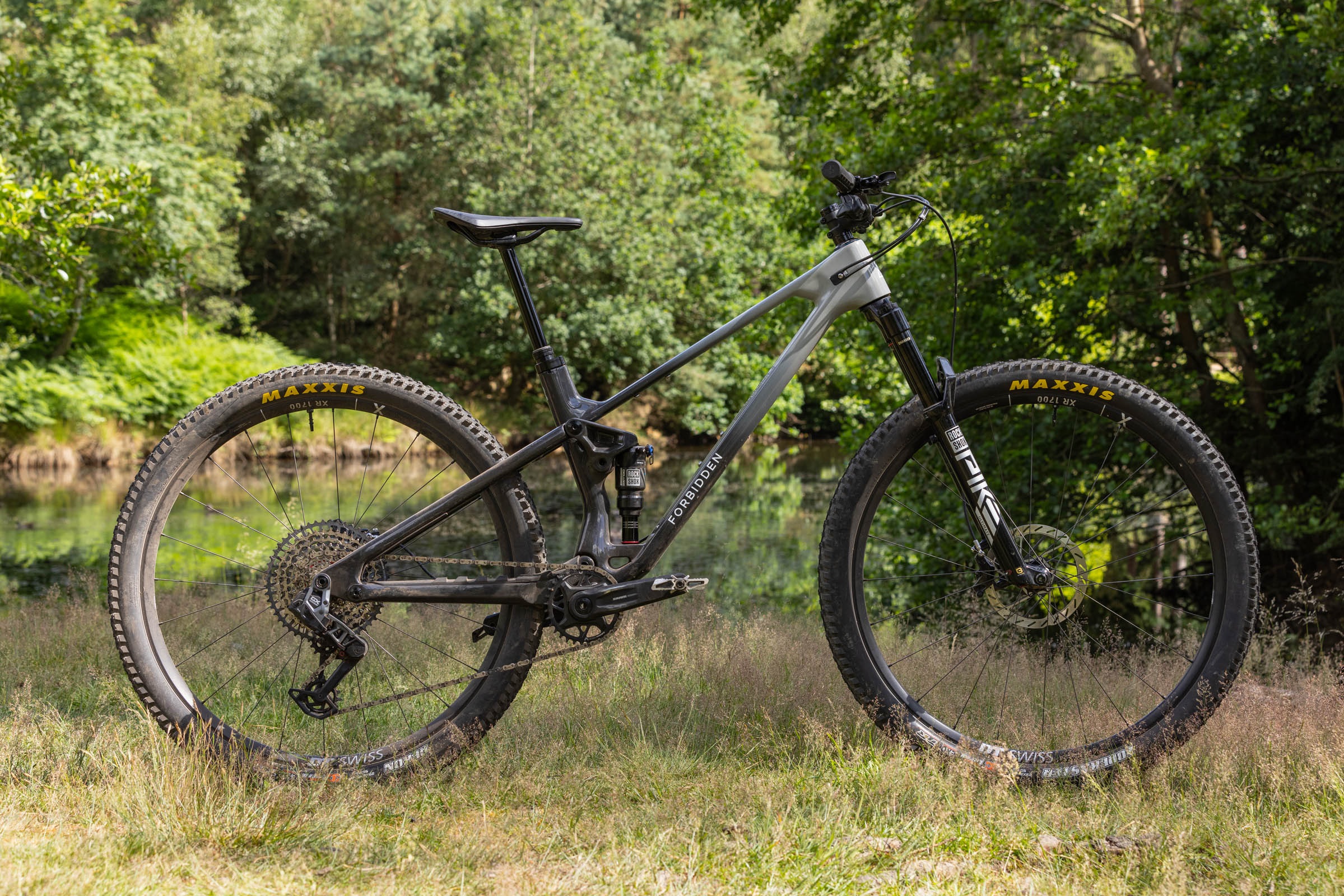
Unlike the other full-suspension bikes in Forbidden's line-up, the Reya doesn’t use a high-pivot suspension system, helping to keep things lighter and a little simpler. There’s 120mm of rear-wheel travel and proportional geometry, along with a sleek carbon frame.
Forbidden’s Tier 2 build uses Ultimate-level RockShox suspension at the front and rear, SRAM Motive Silver brakes and SRAM’s GX Eagle Transmission gearing. Forbidden offers four frame sizes (S1-S4), three builds and a frame-only option.
Forbidden Reya Tier 2 specifications
- Frame: Carbon, 120mm travel
- Sizes: S1, S2*, S3, S4
- Fork: RockShox Pike Ultimate, 130mm travel
- Shock: RockShox Deluxe Ultimate
- Drivetrain: SRAM GX Eagle Transmission
- Wheelset: DT Swiss 1700 rims on DT Swiss 350 Spline hubs
- Tyres: Maxxis Forekaster 3C MaxxTerra EXO 29x2.4in (fr) / Maxxis Rekon 3C MaxxTerra EXO 29x24in (r)
- Brakes: SRAM Motive Silver (180mm rotors)
- Bar/stem/grips: OneUp Components Alloy, 800mm / BikeYoke Barkeeper, 45mm / Forbidden
- Seatpost/saddle: OneUp Components dropper, 180mm (medium) / Fizik Terra Ridon X5
- Weight: 13.23kg (S2, without pedals)
- Price: £7,299 / $7,699 / €8,399
How do the Santa Cruz Tallboy XT Di2 and Forbidden Reya Tier 2 compare?
Many short-travel trail bikes, especially those around the 120-130mm mark, started life as cross-country bikes, jacked up with a longer-stroke shock, bigger fork and tougher tyres. While those were fun to ride, they still felt compromised. Then came the likes of the Transition Spur – a dedicated downcountry bike that could properly rip.
Building bikes from the ground up reduces the risk of any negative traits or geometry compromises, and it’s the approach Forbidden and Santa Cruz have taken. The Tallboy and Reya are closely matched, not just in terms of numbers, but in suspension design too.
We’ve seen multiple brands go with a flex stay at the rear rather than adding additional pivots on the seatstay or chainstay. This helps reduce weight, complexity and maintenance. However, both North American brands have shirked this, instead choosing to go down the more complex route of adding chainstay pivots. Why?
According to Owen Pemberton, founder, owner and design engineer at Forbidden: “The decision to not use a flex stay was based primarily on us believing that adding an undamped spring into a well-damped and designed suspension platform wouldn't give the ride characteristics we felt Reya needed.”
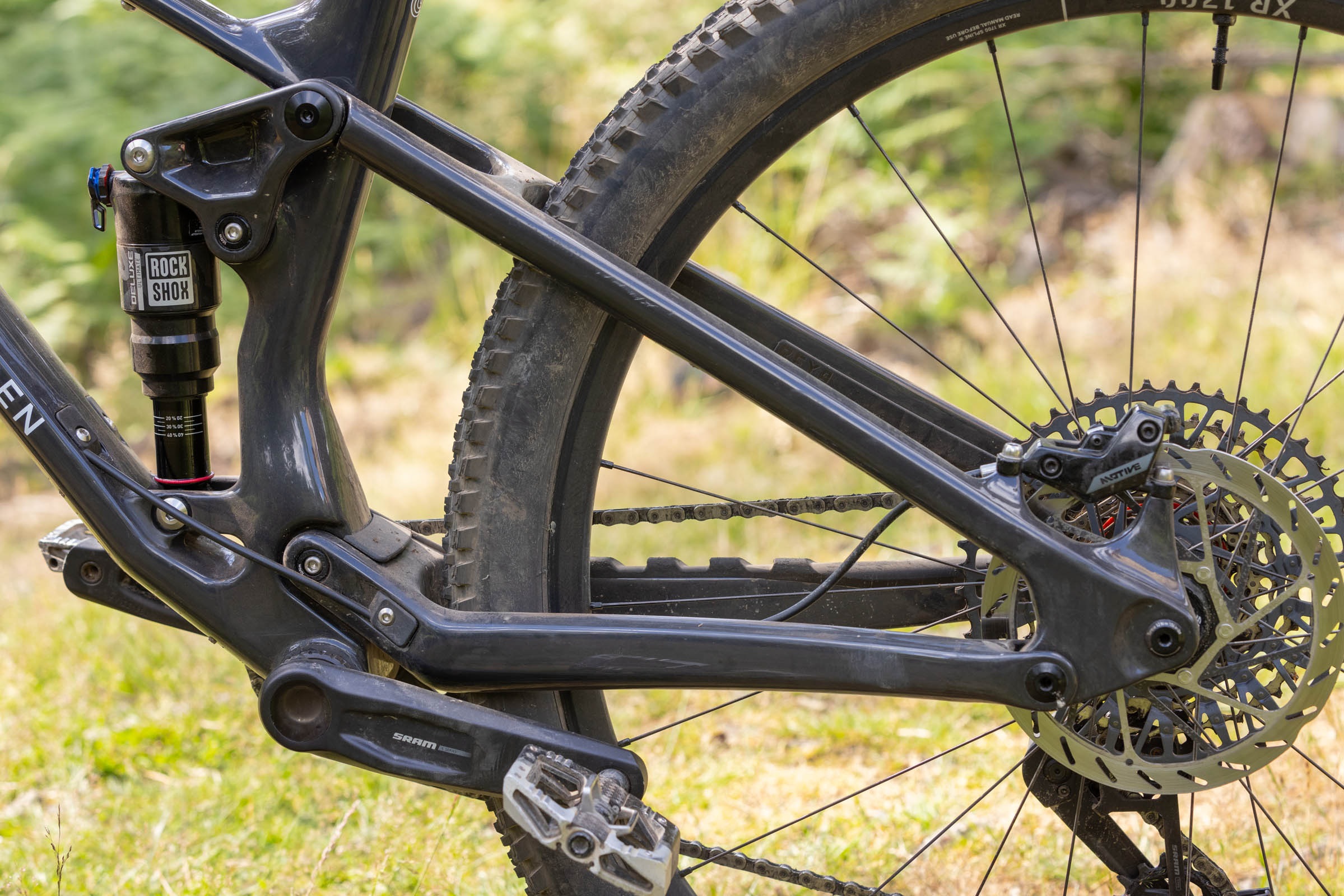
Similarly, Josh Kissner, product director at Santa Cruz, says flex-stay architecture is “quite finicky”. He goes on to explain: “The four-bar design is versatile and we were able to fine-tune the kinematics to get what we wanted.”
Aside from the Reya dishing out 120mm of travel compared to the Tallboy’s 130mm, both are largely similar when it comes to geometry. That’s partly down to the fact that the Tallboy has a flip chip, enabling you to tweak head and seat tube angles by 0.3°, and shift the bottom bracket and reach by 3mm.
And while both brands offer proportional sizing that sees the rear centre (effective chainstay length) grow as frame sizes get bigger, the Reya’s do so in a more pronounced fashion, jumping around 15mm per size across the four frames on offer.
The S2 tested here has a rear centre of 435mm. Santa Cruz does things slightly differently and keeps the rear centre the same length (435.5mm in the low setting) on sizes XS to M, before growing a total of 6mm across the large to XXL sizes.
I measured both head angles to be suitably slack at 64.8°, while seat tube angles were steep (with the saddle set to my preferred height) and knocking on 78° for both bikes.
Reach is closely matched too, with the Tallboy (in the low setting) coming in at 452mm, while the Reya’s is 455mm. The Reya measures a touch lower at the bottom bracket, at 327mm compared to the 330mm height of the Tallboy.
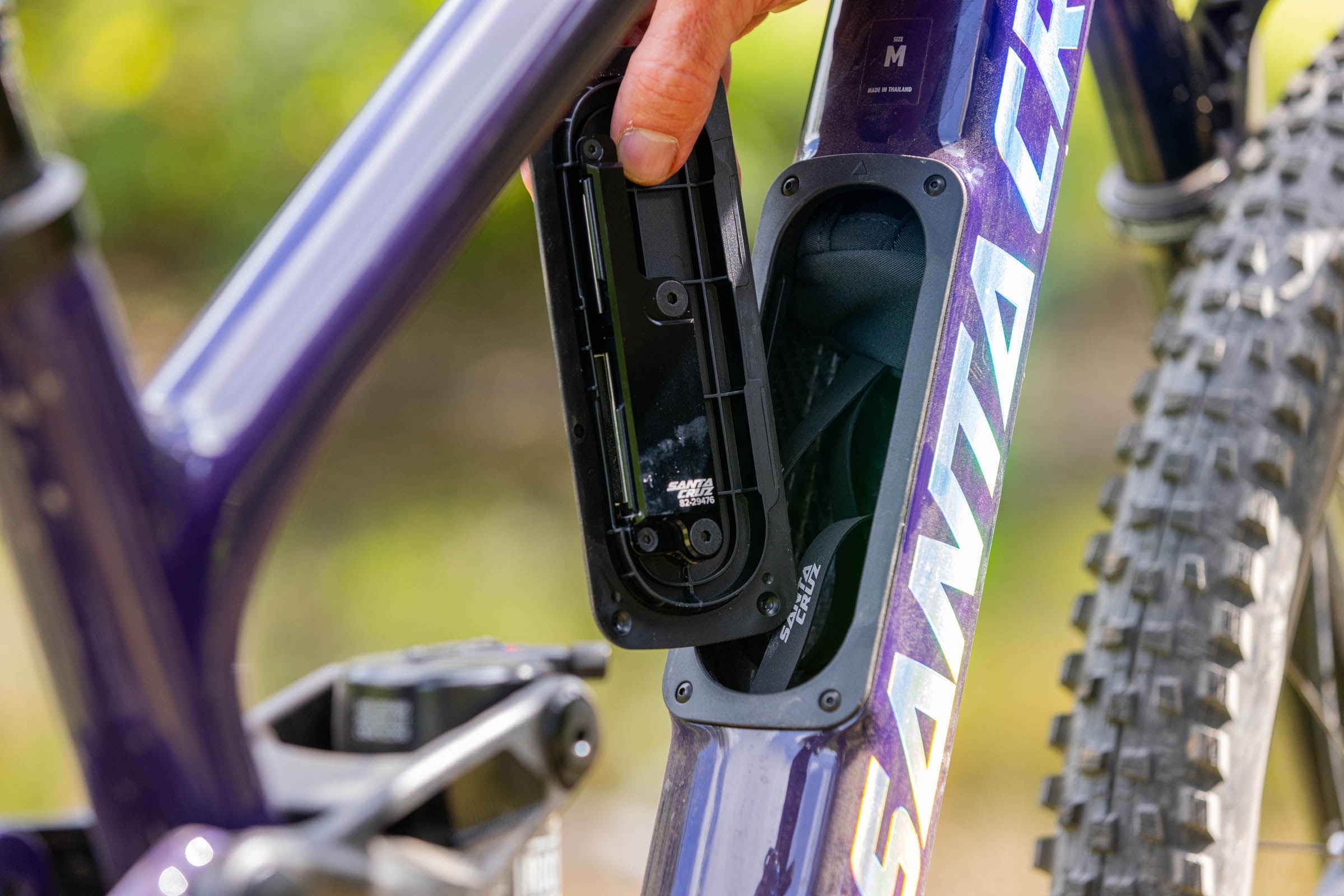
Features-wise, Forbidden has done a bang-up job with the cable porting, which is bolted in place and is secure and neat. Like the Tallboy, the Reya gets space for a bottle and gear-mounting bosses under the top tube. If you like frame storage, though, the Tallboy offers the updated Glovebox V2, delivering down-tube space to stash essentials.
Spec-tacular
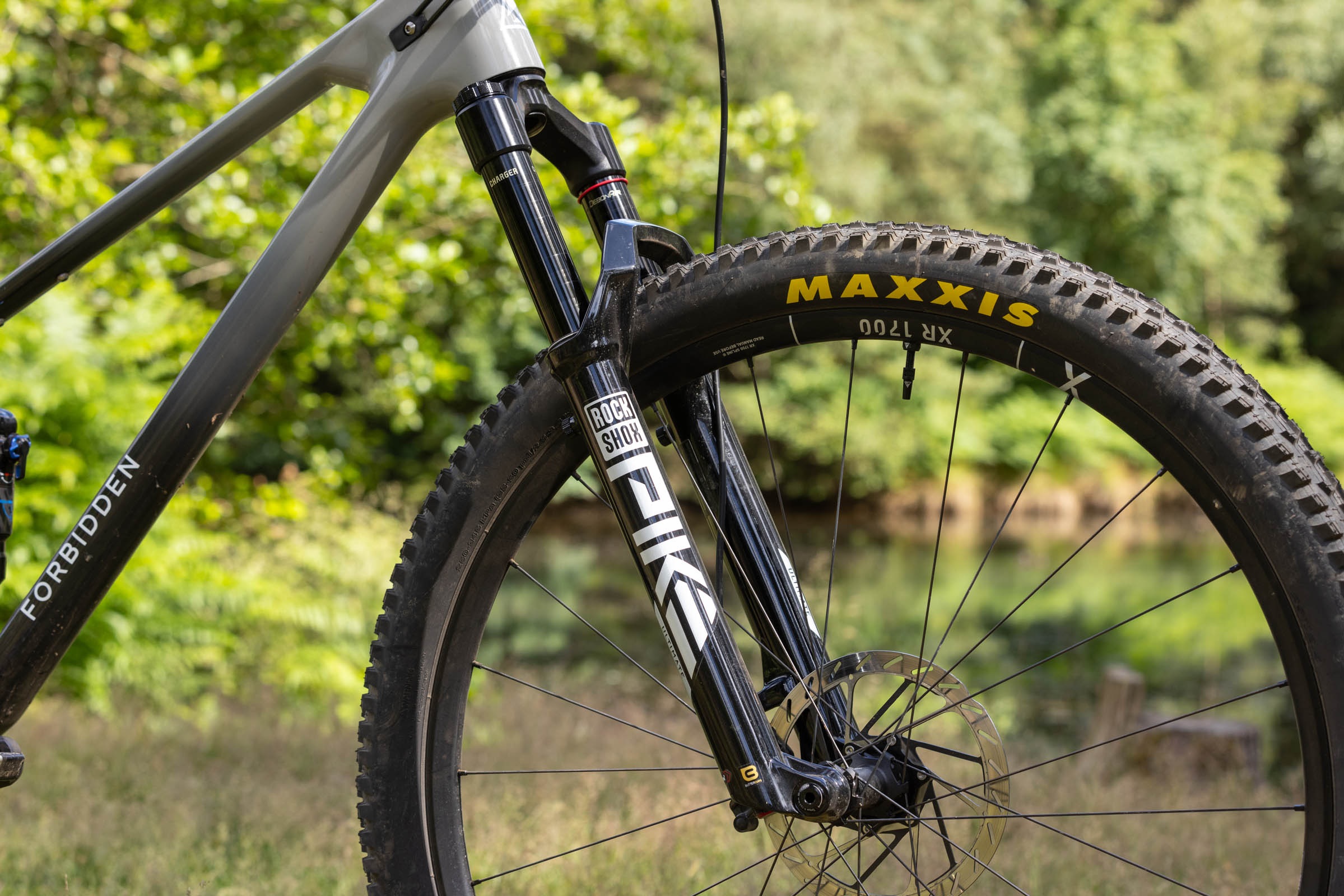
Both the Tallboy and Reya share a number of key components and are closely matched on the trail. For starters, you’ll find a RockShox Pike Ultimate fork and Deluxe Ultimate shock on both, although the Tallboy’s fork pumps out 140mm rather than 130mm of travel.
The four-piston Motive Silver brakes are the same, too, although Santa Cruz has gone for a bigger 200mm front rotor to boost power compared to the 180mm rotor you’ll find on the Forbidden. Both bikes have a OneUp Components dropper and bar, although only the cheaper Tallboy can boast carbon versions.
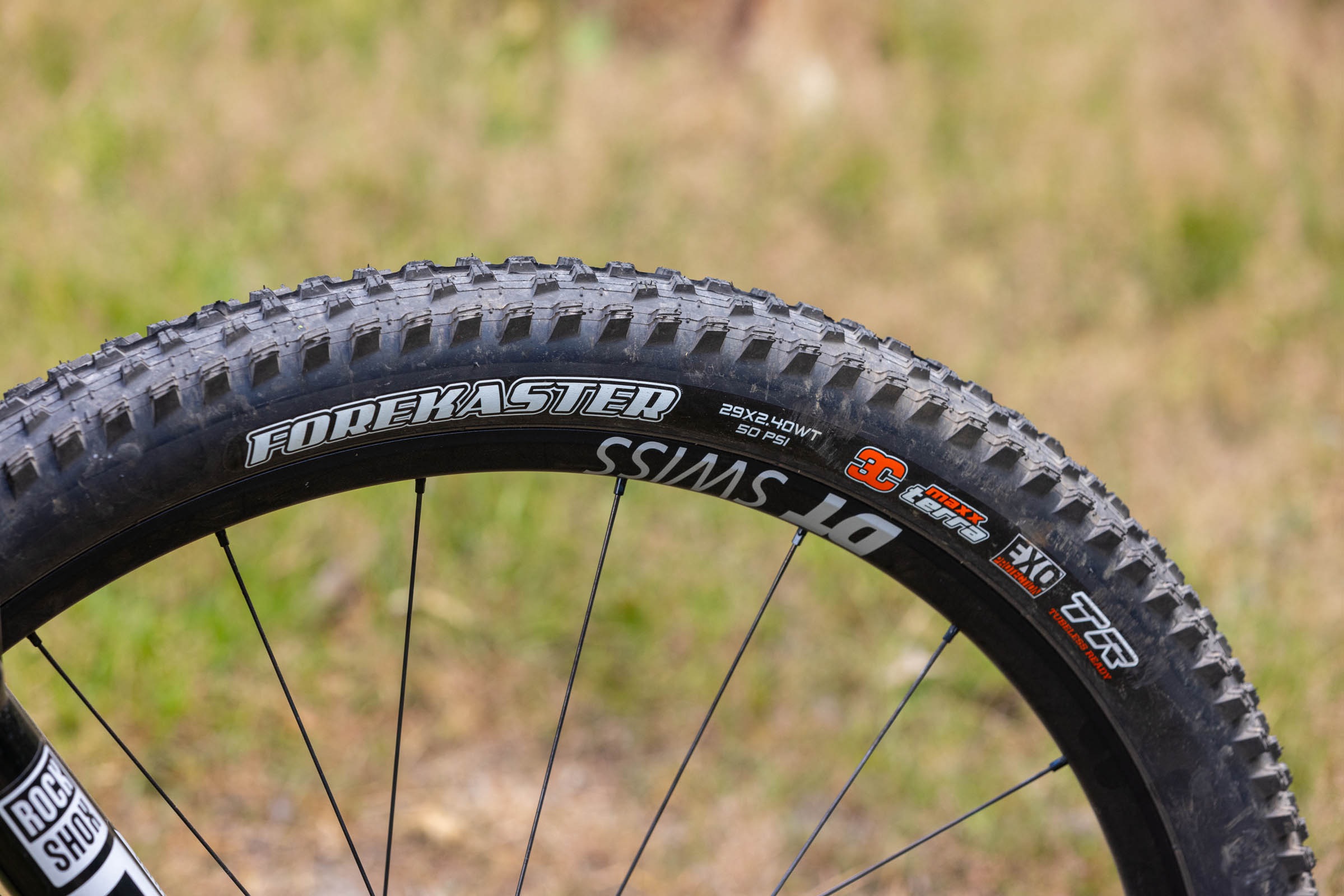
When it comes to the all-important tyre spec, things remain tight, thanks to the Maxxis Forekaster 3C MaxxTerra EXO up front. The Tallboy uses an identical tyre at the rear, while the Reya has the Rekon, which feels as if it rolls a little faster. These wrap around DT Swiss 1700 alloy rims on 350 hubs.
Santa Cruz uses its Reserve 30 SL AL rims on DT Swiss 350 hubs, too, but includes DT’s latest DEG DF (Degrees of Freedom) freehub, enabling riders to tune pick-up and potentially filter out feedback through the pedals.
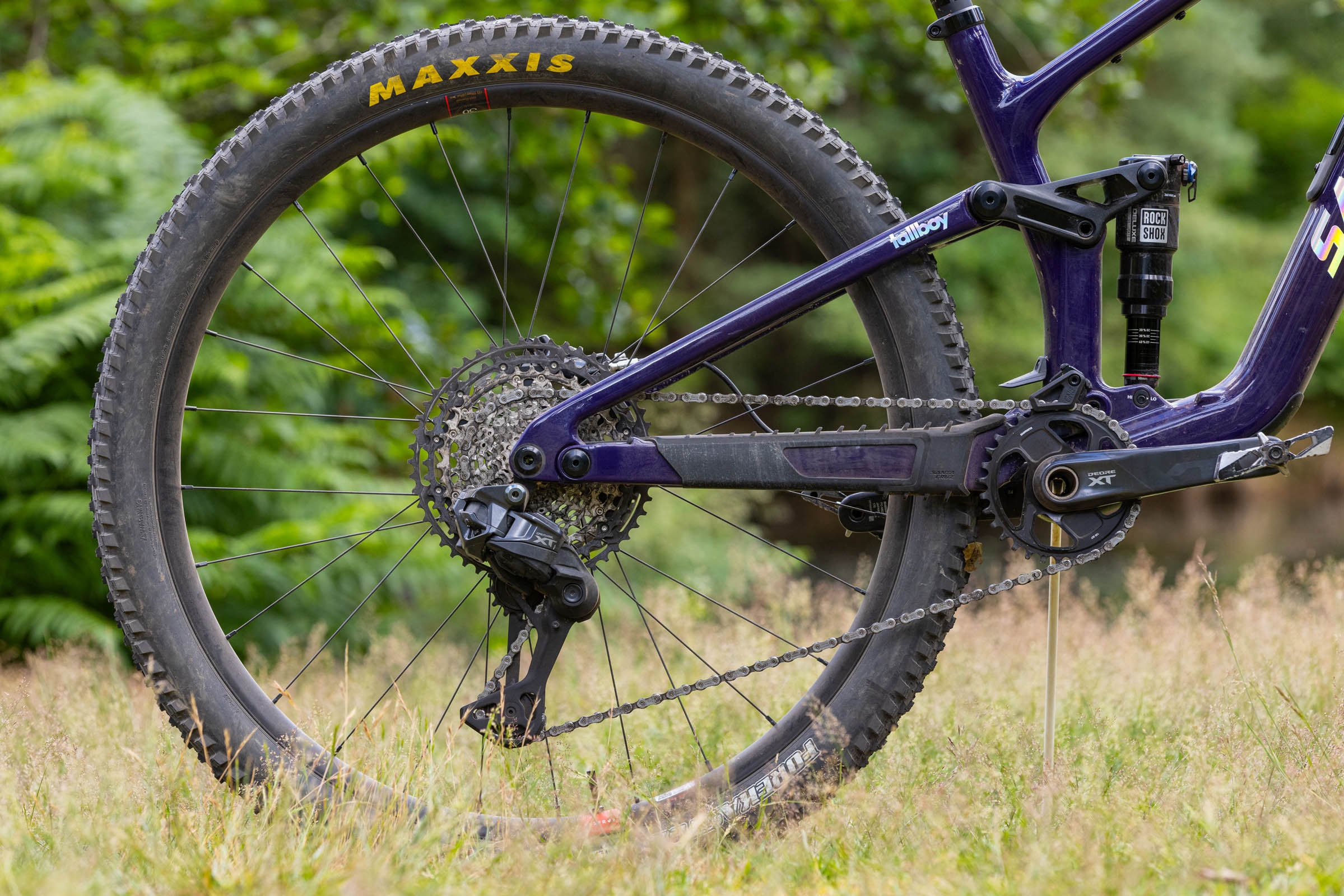
While Santa Cruz has included Shimano’s latest wireless XT Di2 gearing on the Tallboy, Forbidden has opted for SRAM’s GX Eagle Transmission. A nice touch here is the use of the shorter 165mm cranks on the Reya – something I can really get behind, even if they’re the cheaper S1000 variant, not GX.
The 170mm Shimano cranks on the Tallboy work just fine, but with a low bottom bracket, I'd appreciate shorter cranks.
Eager beavers
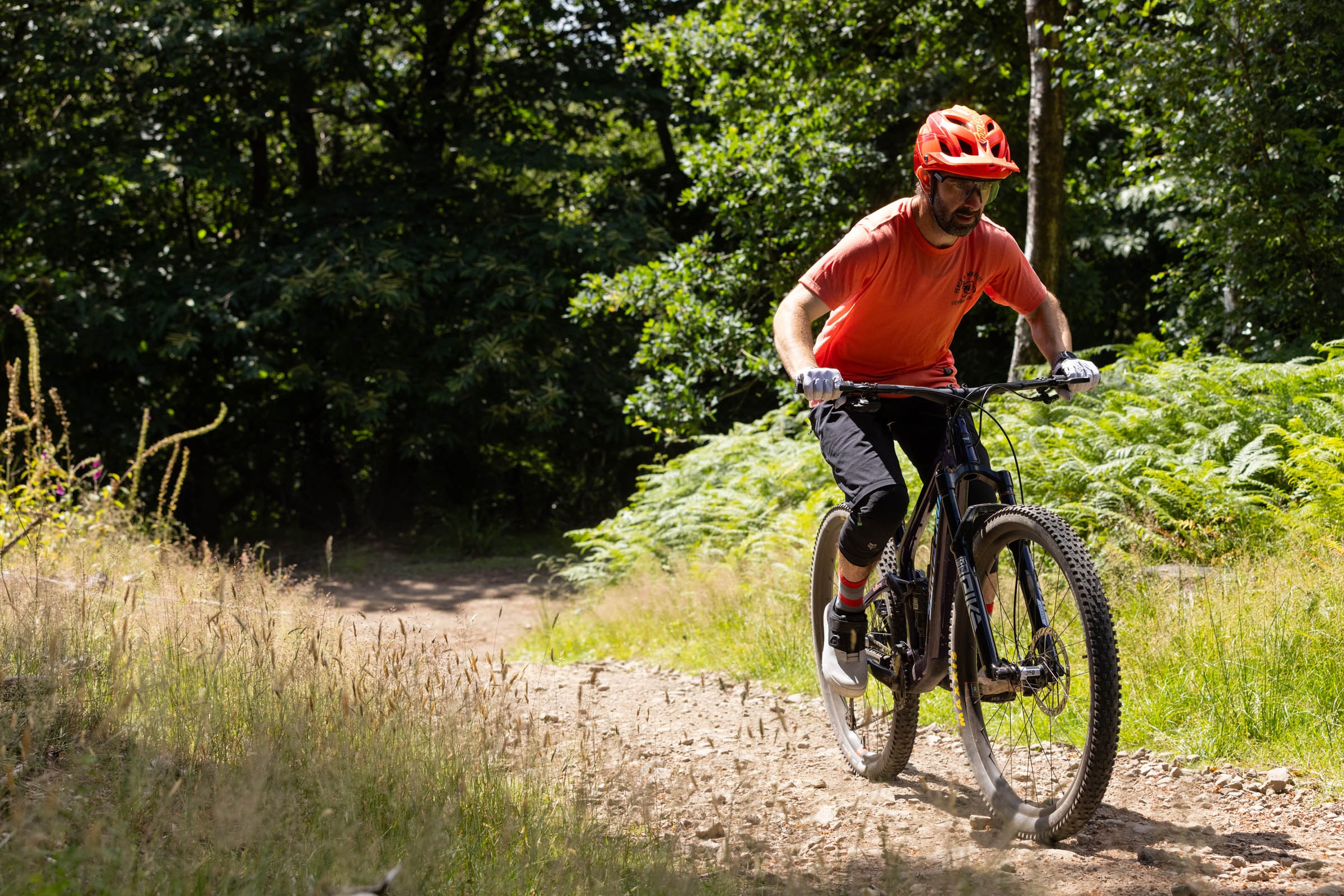
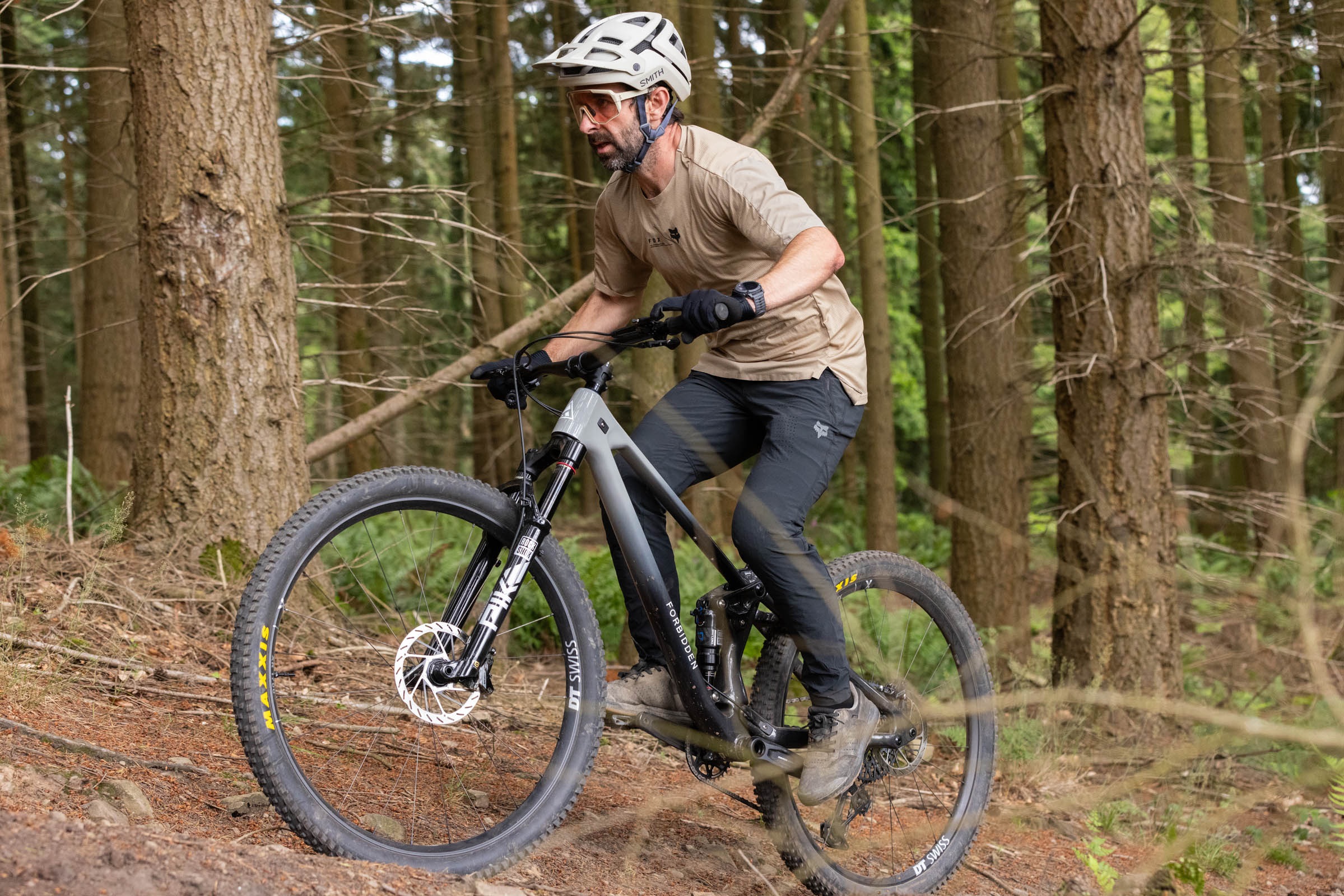
From the off, both bikes feel fast, capable and, more than anything else, fun. The back end of the Reya flutters in and out of its travel with little effort needed to get it moving. That means you sink into that 120mm of travel easily. This in turn delivers plenty of rear-wheel traction on loose surfaces, although it means when you start piling on the power, the back end of the bike bobs a little.
On smooth inclines, this isn’t immediately obvious, but if the gradient kicks up and your cadence slows or you’re forced out of the saddle, things don’t feel quite as efficient as they do on the Tallboy. That’s not to say the Reya is sluggish or slow when pointed uphill, but it doesn’t feel quite as sprightly as the Tallboy. It remains calmer and more under sustained power, even on really steep sections where I’d find myself perched on the front of the saddle.
On one particularly steep, twisty ascent, I could feel the back end of the Reya squatting deeper into its travel as I pushed slowly on the pedals. This in turn would rake out the front end, which at times made placing the front wheel between the roots and stumps I was navigating a touch trickier – it required a little more concentration on my part.
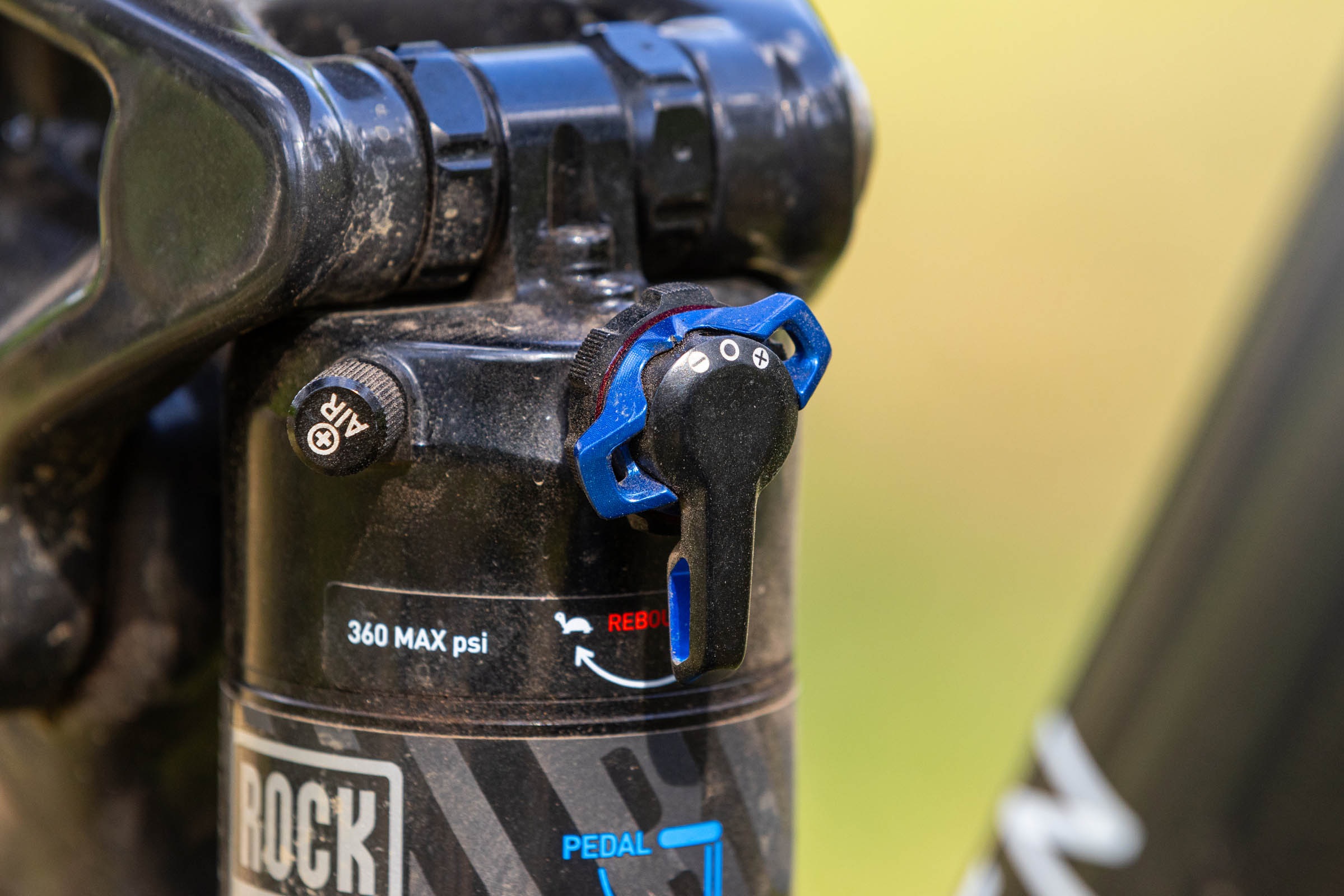
Of course, there’s no reason why you can’t flick the compression lever on the Reya’s shock (or fit a lockout because there’s routing in the frame to do so), but I never bothered, which goes to show that this is a minor efficiency niggle rather than anything more serious.
Reducing the sag by increasing the shock pressure on the Reya helped to counter this. Although I started with 32 per cent sag out back, I ended up closer to 28 per cent. This change helps in climbing situations without hindering the sensitivity noticeably.
There are three low-speed compression-damping adjustments to play around with on the shock, too. I found the middle position offered the best feel overall.
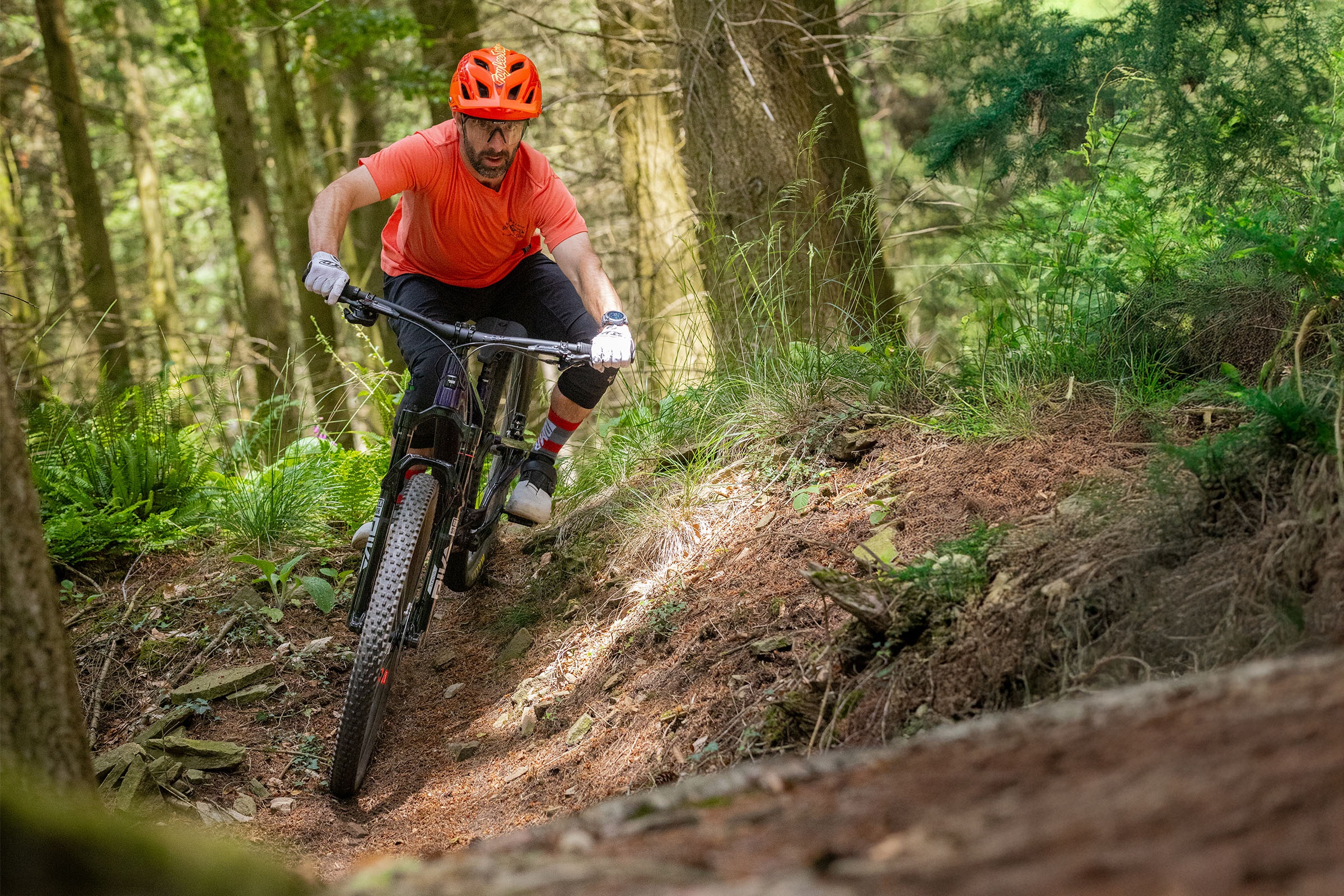
Despite the extra travel, the Tallboy has more pep in its step. The difference isn’t significant, but there’s something that feels zippier when you push on the pedals. And because it seems to sit higher in the travel, the seat tube angle is better maintained, holding you further up and forward to maximise each crank revolution.
But don’t be fooled, the rear end of the Tallboy – although not quite as sensitive or eager to move as the Reya – is still supple, and works more than well enough when called on, keeping the tyre gripping or helping move the rear wheel up and over rock steps or roots. Shorter cranks would help on awkward, chunky climbs, though, to help keep the pedals turning.
Meandering mileage
These bikes aren’t all about going up or down. At some point, you’ll hit a trail-centre traverse or meandering piece of singletrack that asks even more from these intrepid all-rounders.
Thanks to those fast-rolling tyres, the Tallboy gets up to speed quickly and with relative ease. With the freehub purring away as you coast between turns or features, pace is maintained easily if you time the pumps and backside gaps with precision.
It’s reactive and lively, too, meaning quick changes of direction or popping onto the rear wheel to manual through a section doesn’t require massive efforts or huge inputs. There’s a balance to it that helps make things feel well-supported but predictable. In short, this bike is easy to set up and ride fast, and masses of fun.
The Reya rolls through sections just as fast, but the feel is a little different. The frame is taut and responsive to inputs – whether that’s loading the bike into turns or when getting on the pedals – with a little more in the way of feedback to the rider. That feedback is softened and muted, so even on long, rocky high-speed traverses it never feels harsh.
It helps that the back end of the bike is so supple, soaking up the chatter brilliantly. And, like the Tallboy, on flatter sections where it’s hard to get the pedal strokes in, the Reya holds speed incredibly well. Get it up to speed and it just keeps going.
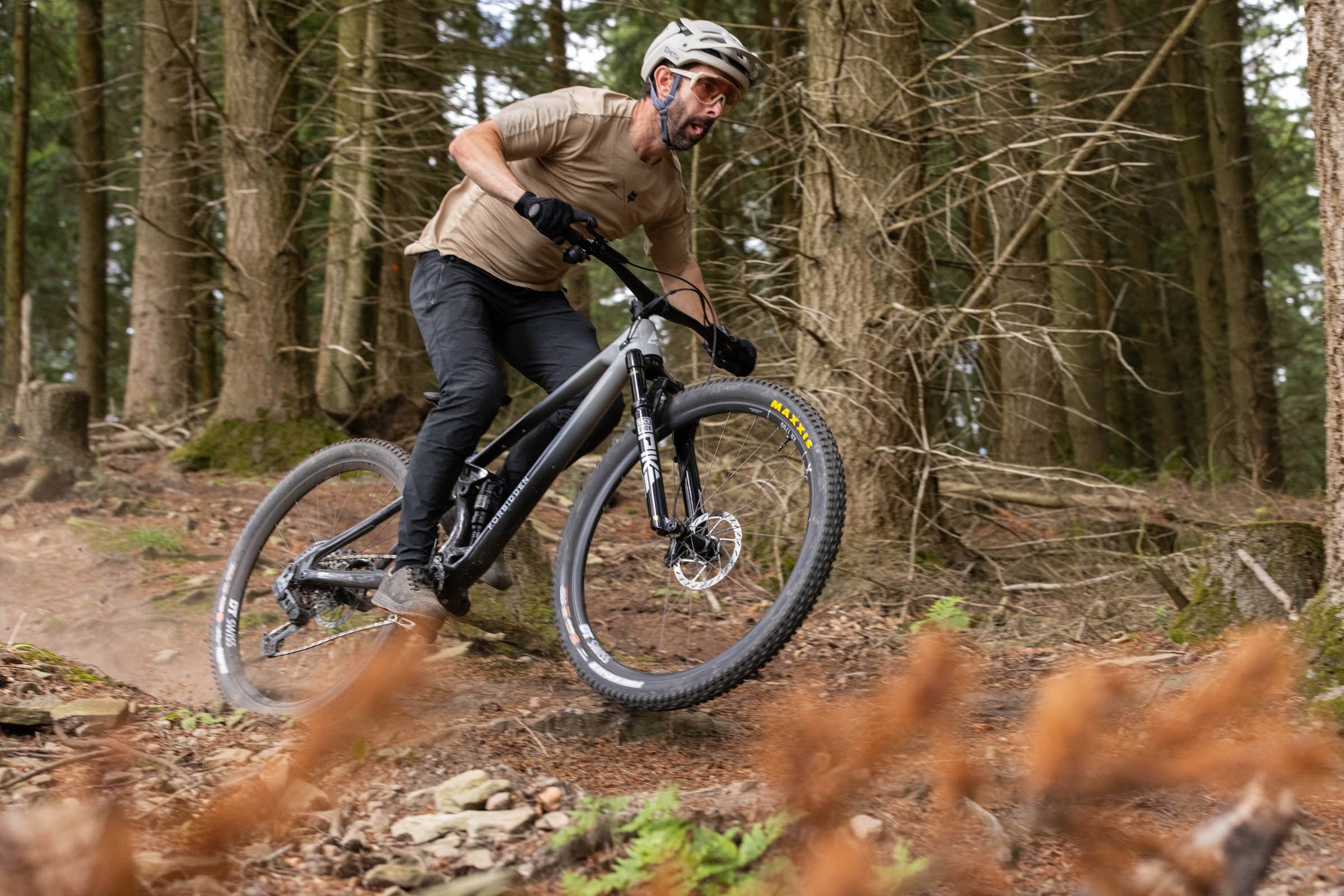
The Forekaster tyres on the Tallboy and the front of the Reya are incredible all-rounders and some of my favourite XC/trail rubber.
Grip is impressive and predictable across a variety of terrain, yet they seem to roll almost effortlessly, limiting compromise and making them an excellent choice for bikes such as these. They also improve how these bikes corner.
When the trail tightens up, the performance is very close. Both offer support that enables you to pump through built-up turns or ruts, enough traction on looser, flatter surfaces, plus a level of agility and nimbleness you’ll usually only find on lightweight XC rigs. It’s just that these two are a little more stout and confident as the speed picks up.
Broadening bandwidth
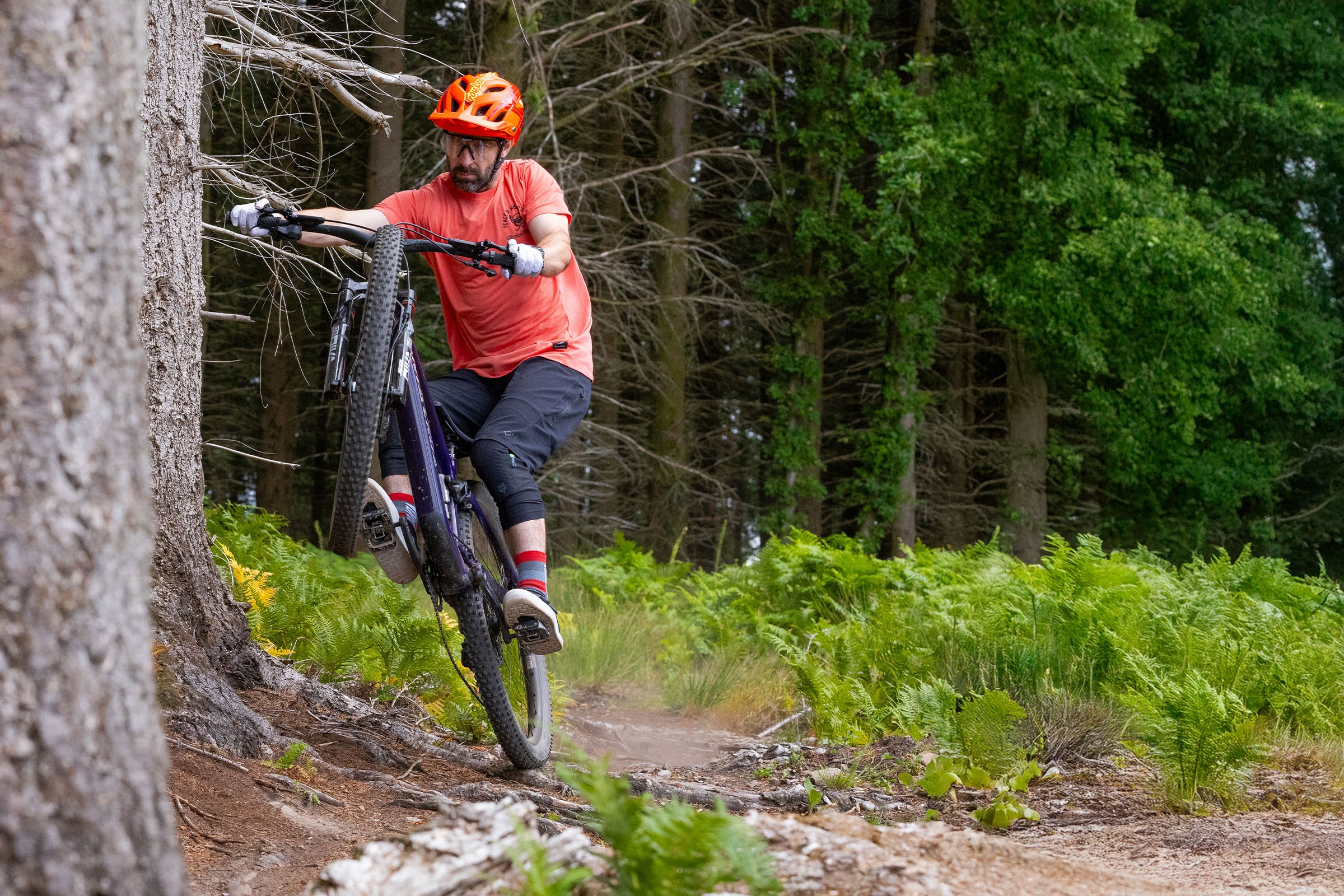
That said, the Tallboy feels more trail-bike oriented. When things start to get dicier, the Santa Cruz simply rides as though it has a wider margin for error. That means despite the travel difference being only 10mm at either end, the Tallboy doesn’t need to be ridden as precisely at times, with a little left in reserve for those moments when you’re on the edge of control.
The Reya is still one hell of a machine when pointed downhill, and can be ridden ridiculously fast for a 120mm-travel bike, but it’s not as capable as Forbidden’s 130mm, high-pivot trail bike, the Druid.
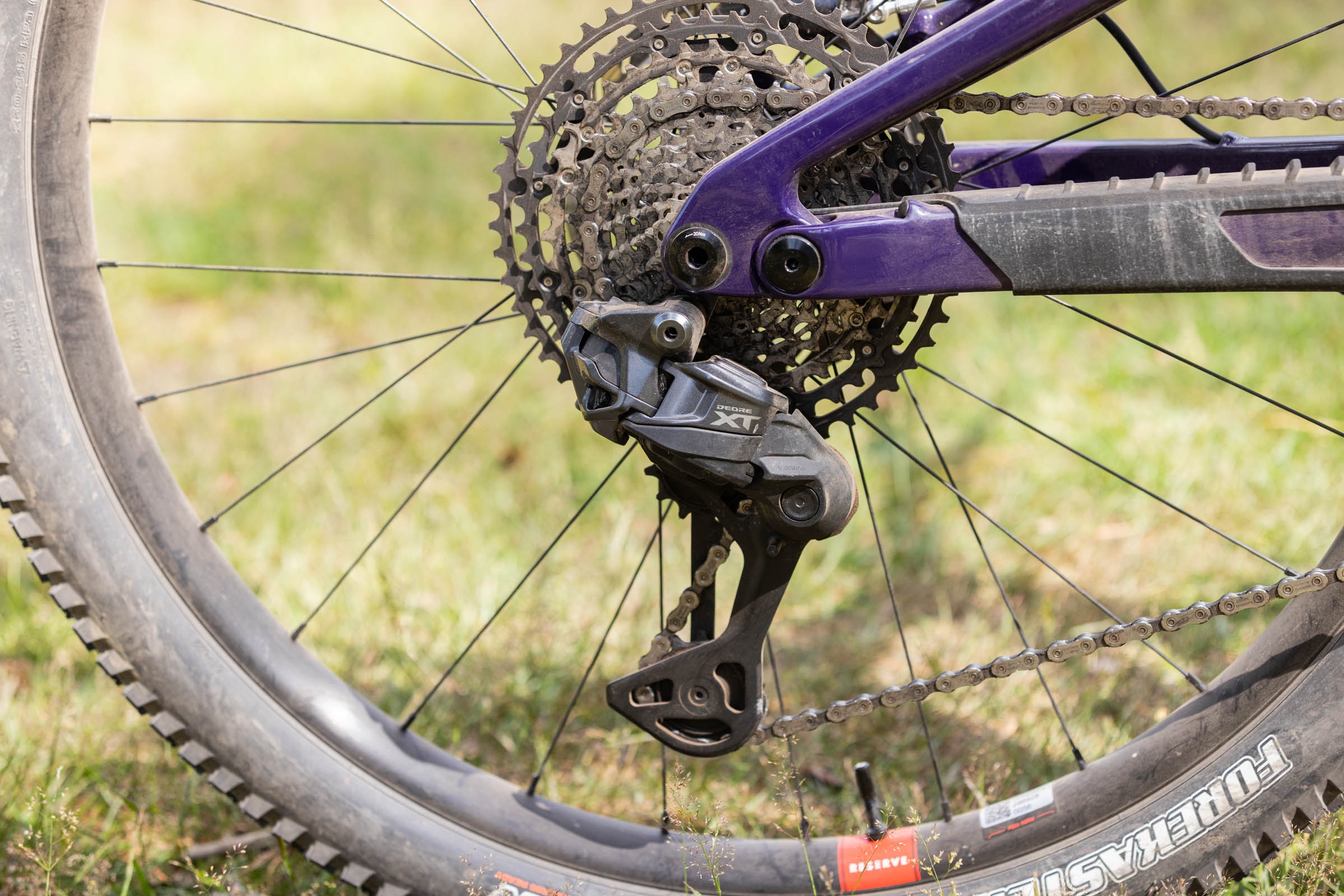
It’s not all plain sailing, though. On rougher, rooty trails or steppy, beaten-up trail-centre descents, the Tallboy’s Shimano XT Di2 rear derailleur clatters about noisily, to the point where it can be a little off-putting until you become accustomed to the noise.
This is in contrast to the SRAM GX Eagle Transmission unit fitted to the Reya which, along with the rest of the build, helps to create an almost silent setup, with only the odd bit of cable-on-cable rattle when you start battering through things.
In reality, the noise from the Shimano derailleur on the Tallboy isn’t the end of the world, because Santa Cruz offers a cheaper (£6,299) build with SRAM’s GX Eagle Transmission gearing.
On steeper, longer trails, while both bikes deliver a solid ride position thanks to their similar geometry and composed suspension feel, although the brakes are identical, the bigger rotor on the front of the Tallboy adds extra bite and power. It’s a minor difference I mainly noticed on wetter days on the hill, but if I were to keep the Reya for longer, upping the front rotor size would be something I’d consider early on.
How I tested – short-travel trail bikes
Since these bikes are designed for getting in the miles, lapping trail centres and almost everything in between, I ensured I rode a vast array of trail types. This spanned winding singletrack to rough and ready trail centres, as well as faster bike-park laps, jump trails and natural off-piste descents in my local forest.
Bikes were ridden back-to-back in order to highlight differences as easily as possible. Once set up, the Tallboy remained the same throughout testing. I decreased the Reya’s sag from 32% to 30%, but that was it.
Santa Cruz Tallboy XT Di2 vs Forbidden Reya Tier 2 bottom line
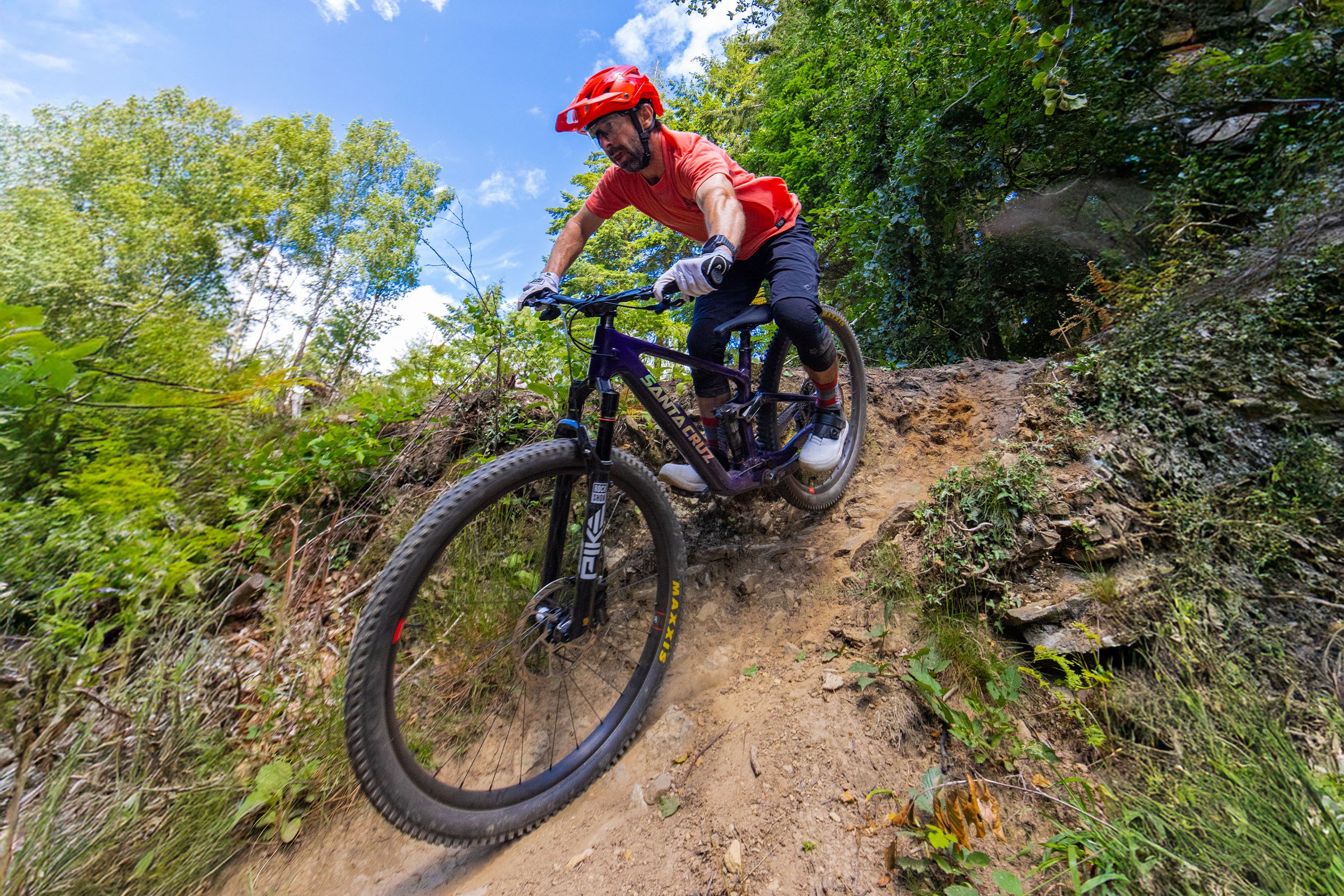
We ask a serious amount of bikes such as the Reya and Tallboy. Not only do they need to be hellishly efficient and easy to clock up the miles on, they also need suspension that’ll handle the hits with composure and geometry that boosts rider confidence when things start to get challenging.
The components need to balance weight with durability, the tyres should roll fast but still grip. It’s a tall order, so which of these two shines brightest when all is said and done?
Both are superb bikes. The Reya’s super-supple 120mm of rear-wheel travel is incredibly well-delivered, boosts traction when you need it to, yet offers support and progression when you push on. The geometry suits me well, and the muted, composed ride and the way in which it carries speed resets expectations when it comes to what I expect from a 120mm-travel bike.
The Tallboy does all of those things just as well. In fact, when it comes to climbing and taking on flatter sections of trail, it feels more urgent and keener to keep moving. While it can’t quite match the stealthiness of the Reya thanks to the Shimano derailleur, the way in which it deploys the 130mm of travel offers a little extra buffer, making it a touch harder to reach its limits.
That means the Tallboy provides plenty of trail-bike qualities without relinquishing any of that XC efficiency. For me, that makes it the winner.