
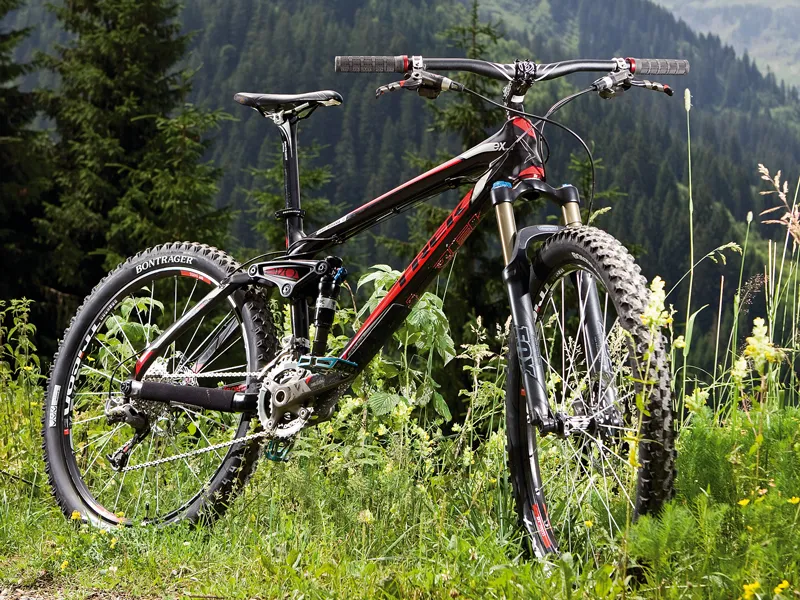
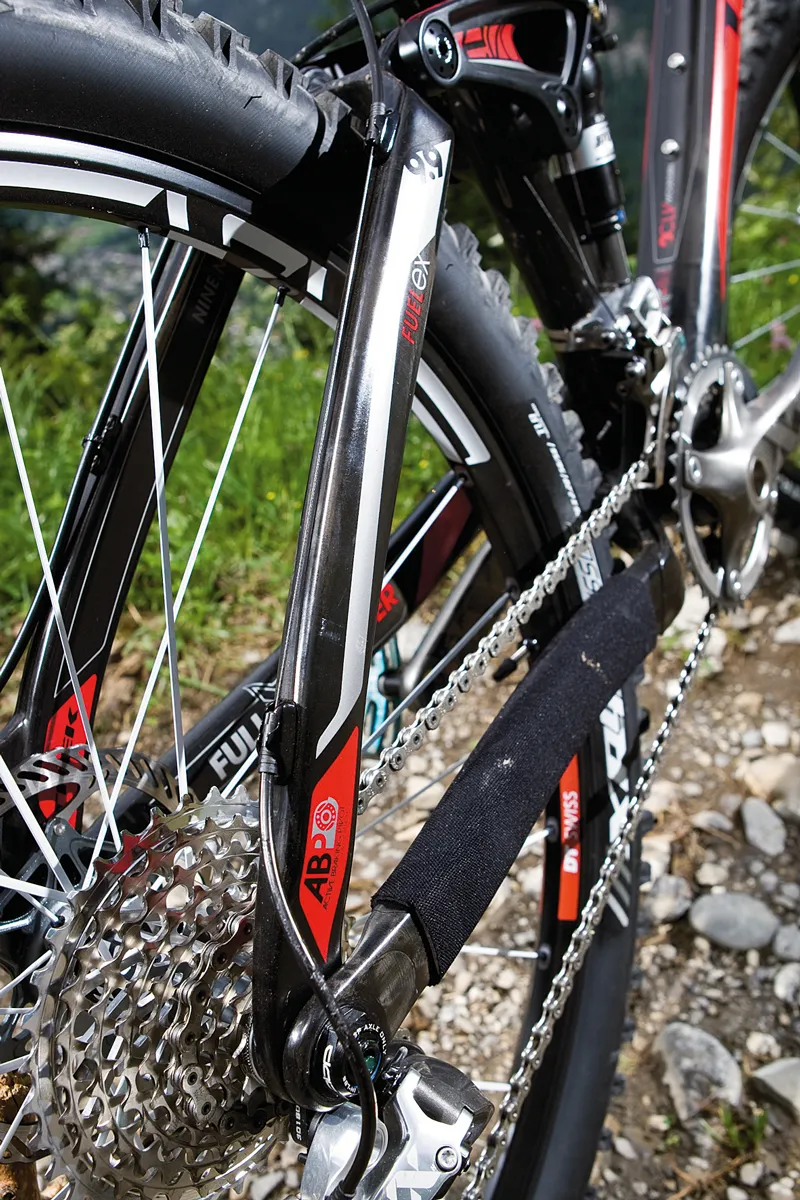
The Fuel EX has an excellent reputation, not least because the last incarnation was voted What Mountain Bike magazine's Trail Bike of the Year. That gave Trek a challenge for 2011: to deliver meaningful improvements without changing the winning formula too much.
We often hear riders grumbling about the niches they’re expected to neatly occupy, which makes the 2011 Fuel EX all the more refreshing. It’s staggeringly versatile, performing brilliantly over a huge range of trails and styles – it takes us back to the days when there was only one kind of mountain bike. The only negative is the price tag, but the bikes in the cheaper lower end of the range have most of the same benefits.
Ride & handling: If your budget will stand it, this lightweight trail flyer will repay you in spades
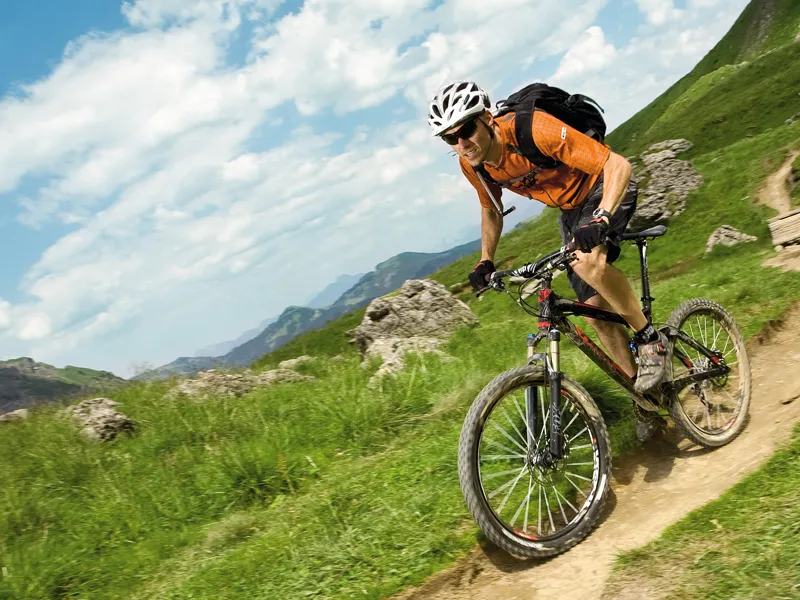
We rode the 9.9 on a wide variety of trails around Chatel in the French Alps, going from classic Alpine singletrack to loose, rocky paths and downhill courses. We’re not going to pretend every little refinement made a clearly identifiable difference, but the lighter weight was definitely noticeable.
All but the keenest cross-country whippets would consider this to be a race-weight bike, yet the thoroughly sorted suspension and true-tracking chassis give it the poise and confidence to be ridden in the style of a far meatier mount.
Zeroing in on the suspension, we suspect it will attract oft-used terms such as ‘bottomless’. What you need to know is that it performs beyond its stated travel – you have to push hard to overface it. You get plenty of warning that things are getting hairy, but if you press on, you’ll find capability in reserve.
Trek have pulled off the neat trick of getting the EX to run deep into its travel when circumstances demand, while keeping something back for emergencies without resorting to a harsh ramp-up. Meanwhile, the DRCV dual air chamber shock continues to be a winner.
On the steepest trails, you might find yourself wishing for something more relaxed, but everywhere else the Fuel EX's reassuringly neutral handling gets the job done. After years of 3x9 gearing, 2x10 on a trail bike takes a bit of getting used to, though.
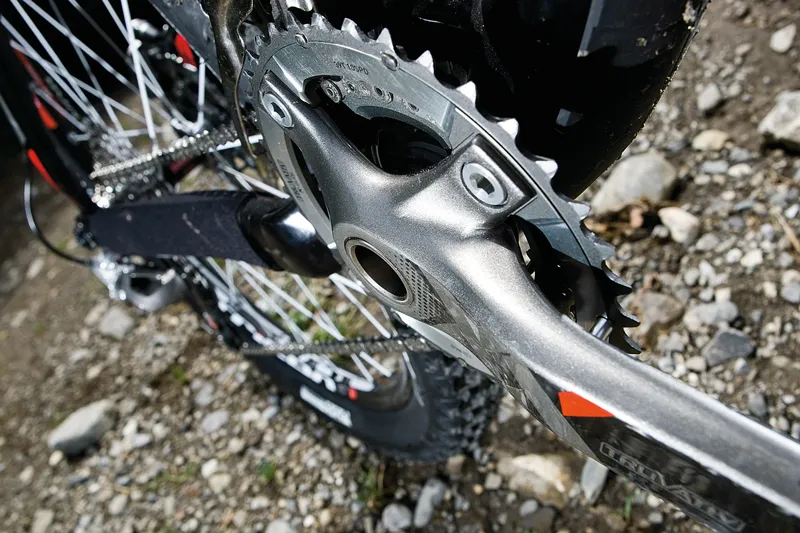
The SRAM XX 42/28 tooth chainset is rather like doing without that middle ring you used to be in 90 percent of the time. It worked well on Alpine up or down trails, but you’ll find yourself switching rings more frequently on undulating paths.
Frame: Incremental changes for 2011 improve an already excellent chassis
Changes to the Fuel EX for 2011 are evolutionary, not revolutionary. At first glance, there’s little to distinguish the new EX 9.9 from the EX 8, but look more closely and you’ll notice some crucial tweaks. First up is the introduction of carbon fibre seat and chainstays.
This means the 9.9 now has a full-carbon frame, shedding 100g from its predecessor’s already light weight. You’ll still find aluminium stays on lower-end models, though. Other frame changes have been made in the interests of strength and stiffness.
One of the big concerns that some riders have about carbon fibre frames is their resistance to impact damage – after all, it’s far from unusual for rocks to fly up from the front wheel and clout your down tube. Although that’s unlikely to result in serious damage, Trek have still addressed the concern with a twin protection strategy.
The first line of defence is the moulded polymer Carbon Armor pad that covers the lower half of the down tube to the bottom bracket. It’s fairly thin, but the material is dense enough to distribute point impacts across a wider area. The real secret weapon, though, is Trek’s new OCLV Mountain Carbon material, as found in the 9.9’s main triangle and seatstays.
It’s a new layup specifically designed to have high impact resistance. In Trek’s testing, which involves dropping a pointed anvil to simulate a 30mph rock strike, Mountain Carbon shrugged off hits that ruined regular carbon and aluminium.
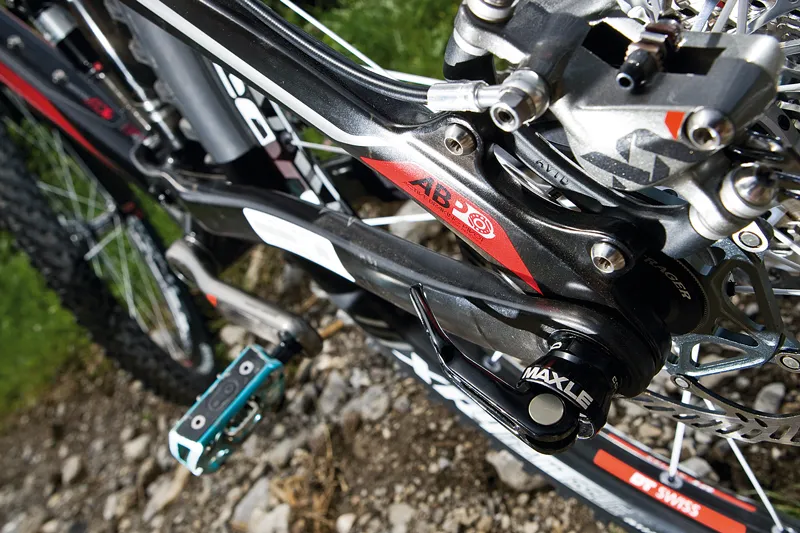
The other notable change is a shift to a 142x12mm through-axle back end, using a RockShox Maxle Lite axle for fast wheel changes. Trek’s Active Braking Pivot (ABP) tech is still in place, but the 142x12mm implementation is called ABP Convert.
If you want to use a conventional wheel, the dropouts can be quickly switched for 135x9mm items, included with the bike. Trek make big claims for the stiffness improvements of ABP Convert – the phrase “40 percent stiffer than a conventional open-ended dropout” appeared in our technical presentation about 90 times, although it’s a subtle difference at best.
Equipment: Top-end spec, including SRAM XX, DT Swiss wheels and Fox suspension
The switch to a through-axle back end has had a knock-on effect on the spec. We’re used to Bontrager wheels on Trek bikes, but the top four Fuel EX models use DT Swiss. The 9.9 has XM 1550 hoops, which are tubeless compatible and light but not floppy.
Bontrager get the lion’s share of spec elsewhere, taking care of tyres, bar, stem, seatpost and saddle. The running gear is SRAM XX, which pushes beyond the Fuel EX's original cross-country racing brief – it’s found on the top-end longer-travel Trek Remedy too.
A custom two-port piston and shim stack inside the Fox F32 FIT fork is claimed to provide quicker bump response and more stability. This is the work of Trek’s suspension engineer Jose Gonzalez. The lighter frame and spec changes mean the EX 9.9 drops the best part of 2lb. Weight loss comes at a cost, though: a mighty £6,000 price tag.
