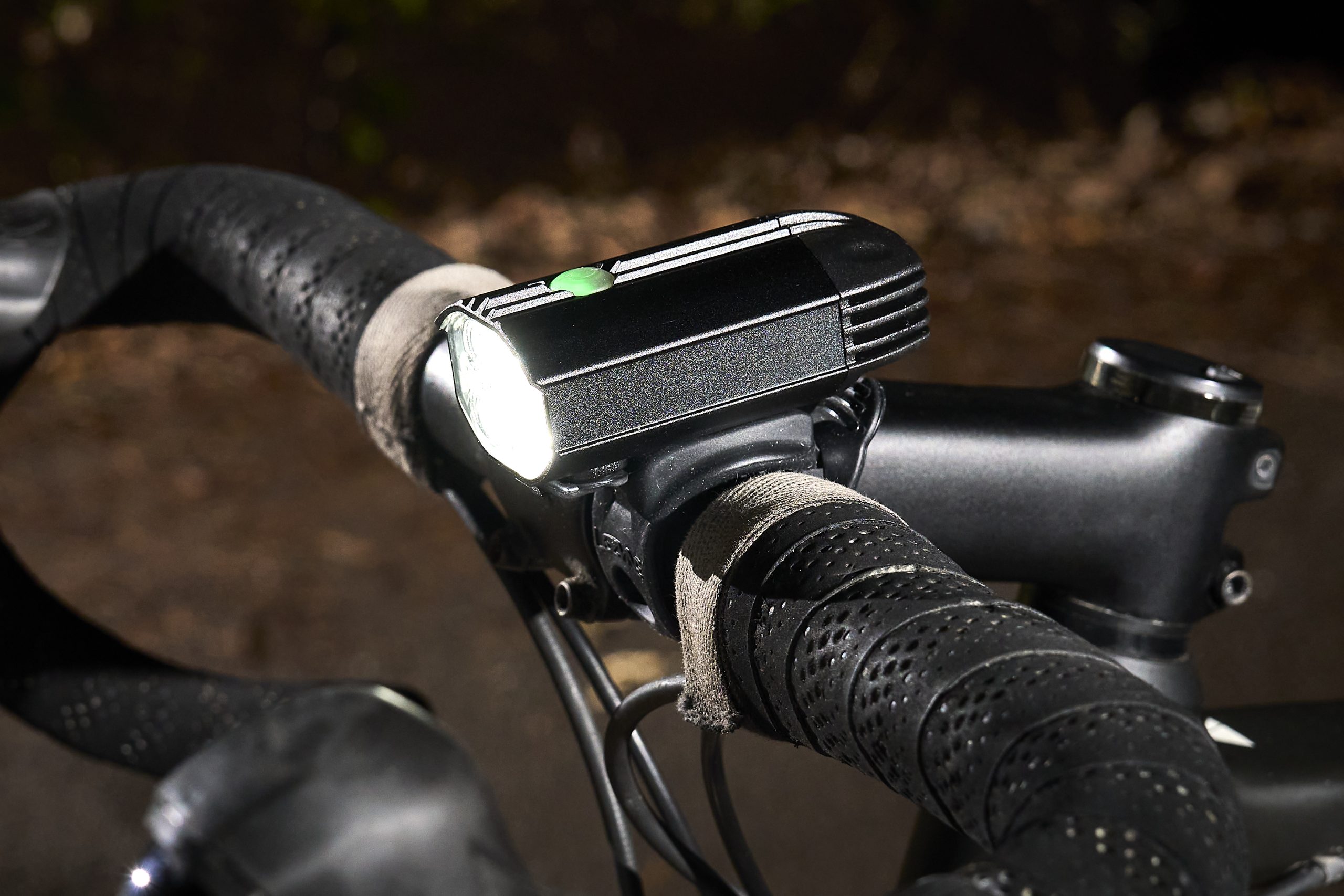
The Lezyne Fusion Drive 500+ and KTV Drive Pro+ light set offers good all-round performance for its power and size, as long as the front light is charged regularly.
I achieved a burn time of 1hr 30mins in my top-output burndown test, before the Fusion Drive 500+ powered down into its 100-lumen economy static mode for a final 25 minutes.
The battery life on full power is fine, but the economy mode isn’t a lot of use – instead, I’d recommend switching to the 100-lumen pulse mode for around three times the battery life and the benefit of the more striking pulsing output.
Of course, you can use the 250-lumen ‘enduro’ static mode, but that’s not enough to see by in the dark without riding very slowly.
For many, this will reduce the utility of this light set to primary be-seen duty, with occasional use lighting the road ahead when riding after dark.
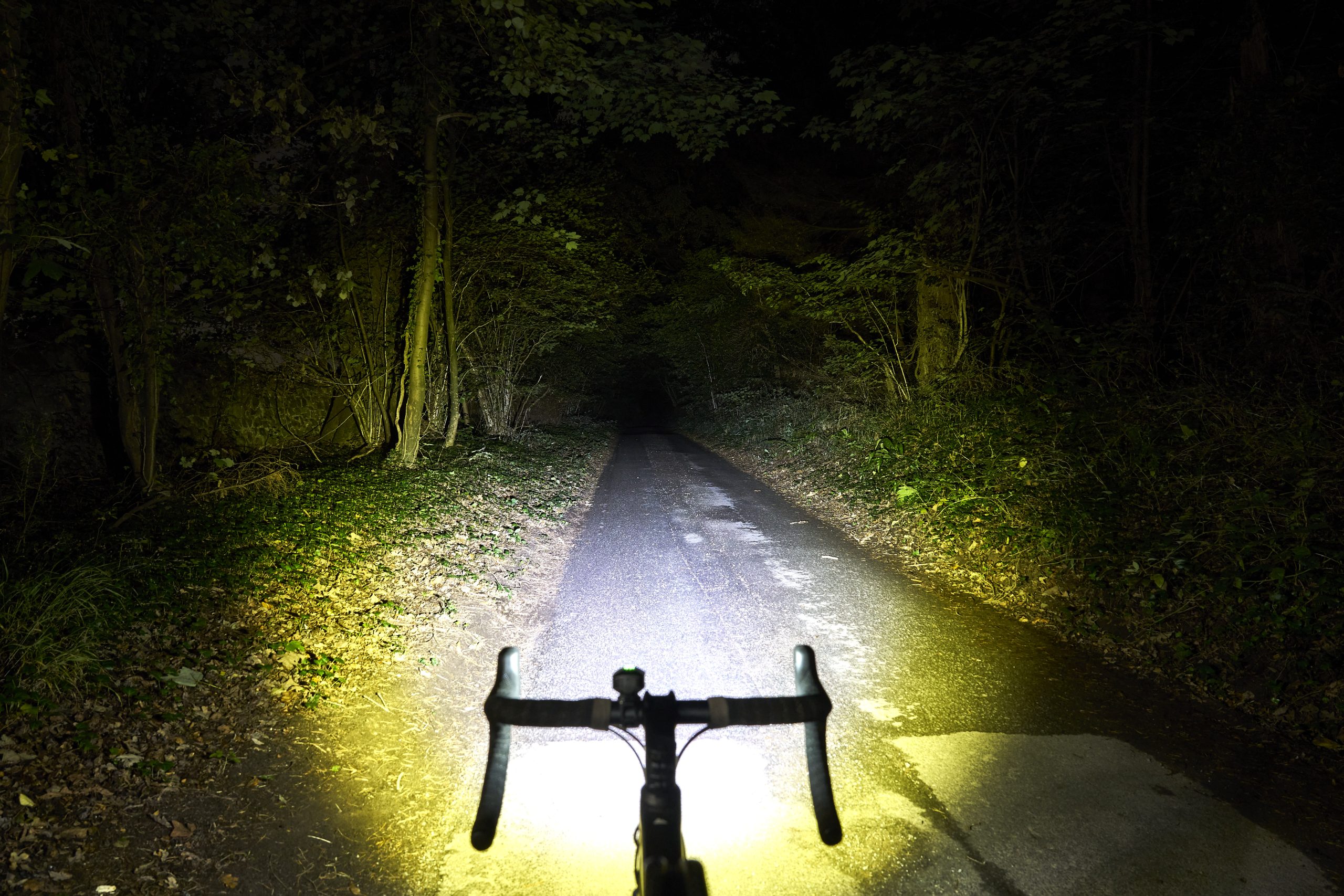
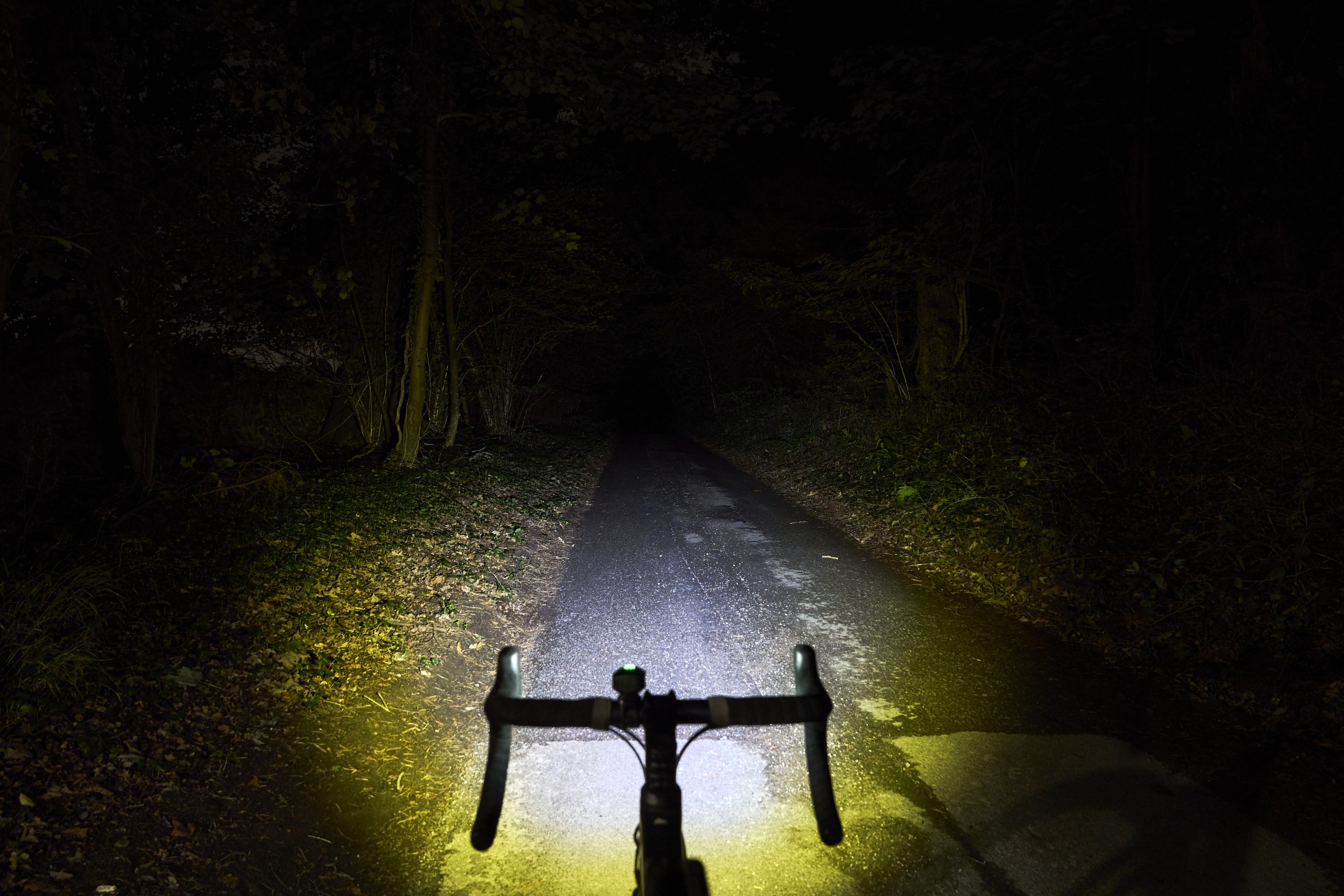
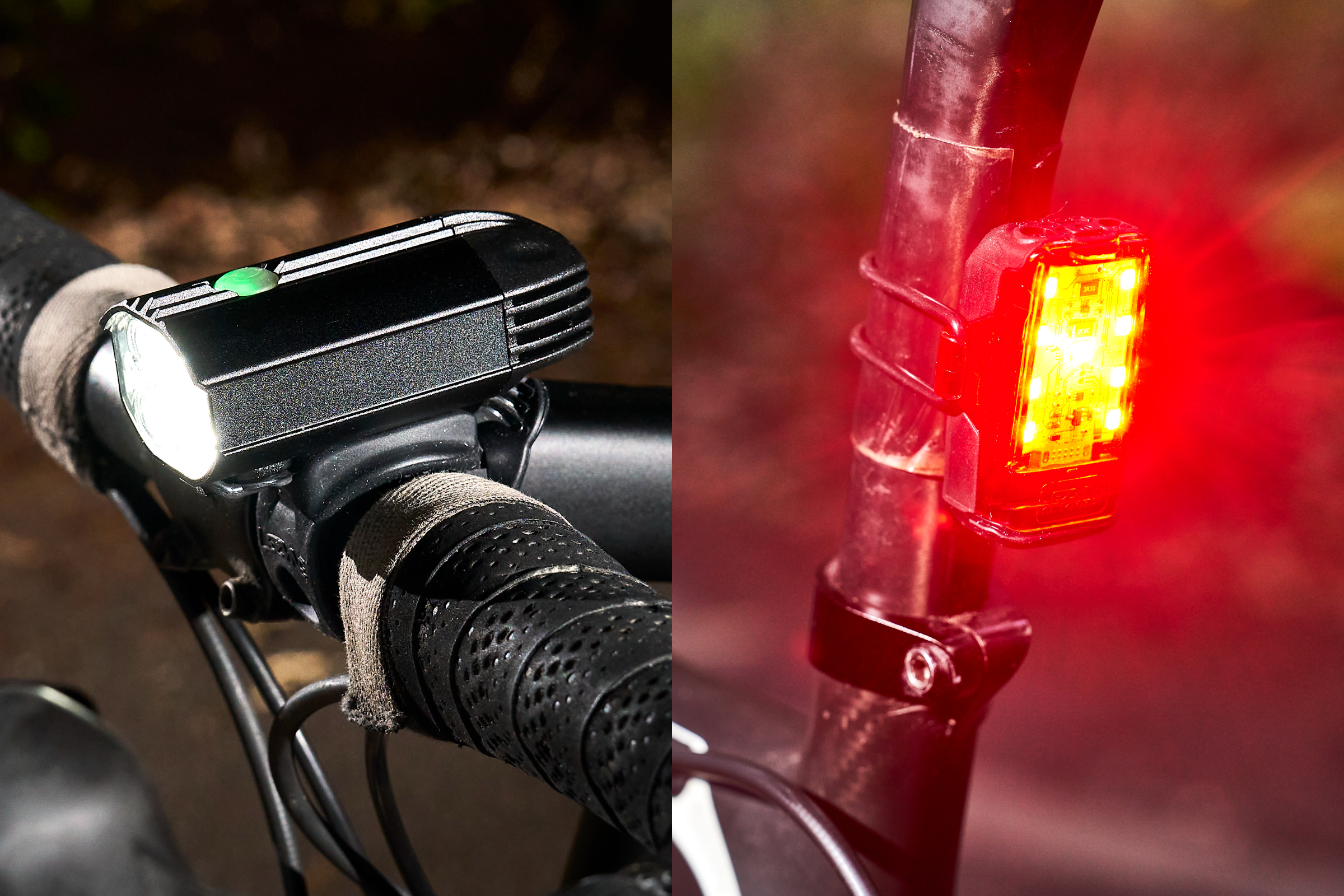
Used in the 500-lumen ‘blast’ mode, the beam is strong and even enough to see by riding at around 25km/h, and there’s some useful peripheral spread to the beam.
The beam’s extreme edge has an odd yellow-ish tinge to it, which may help reduce glare but makes picking out some road hazards slightly more tricky with only 500 lumens to play with.
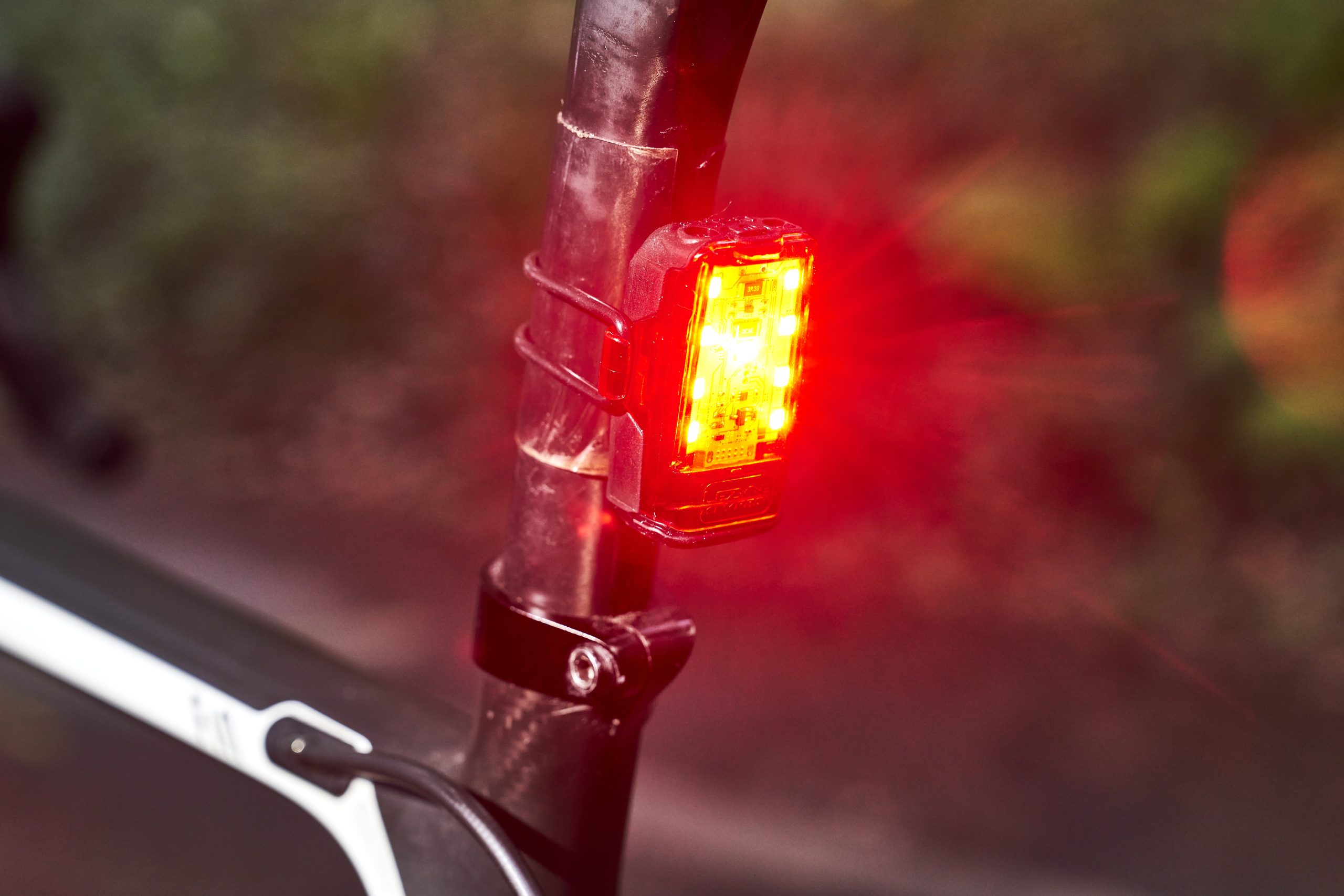
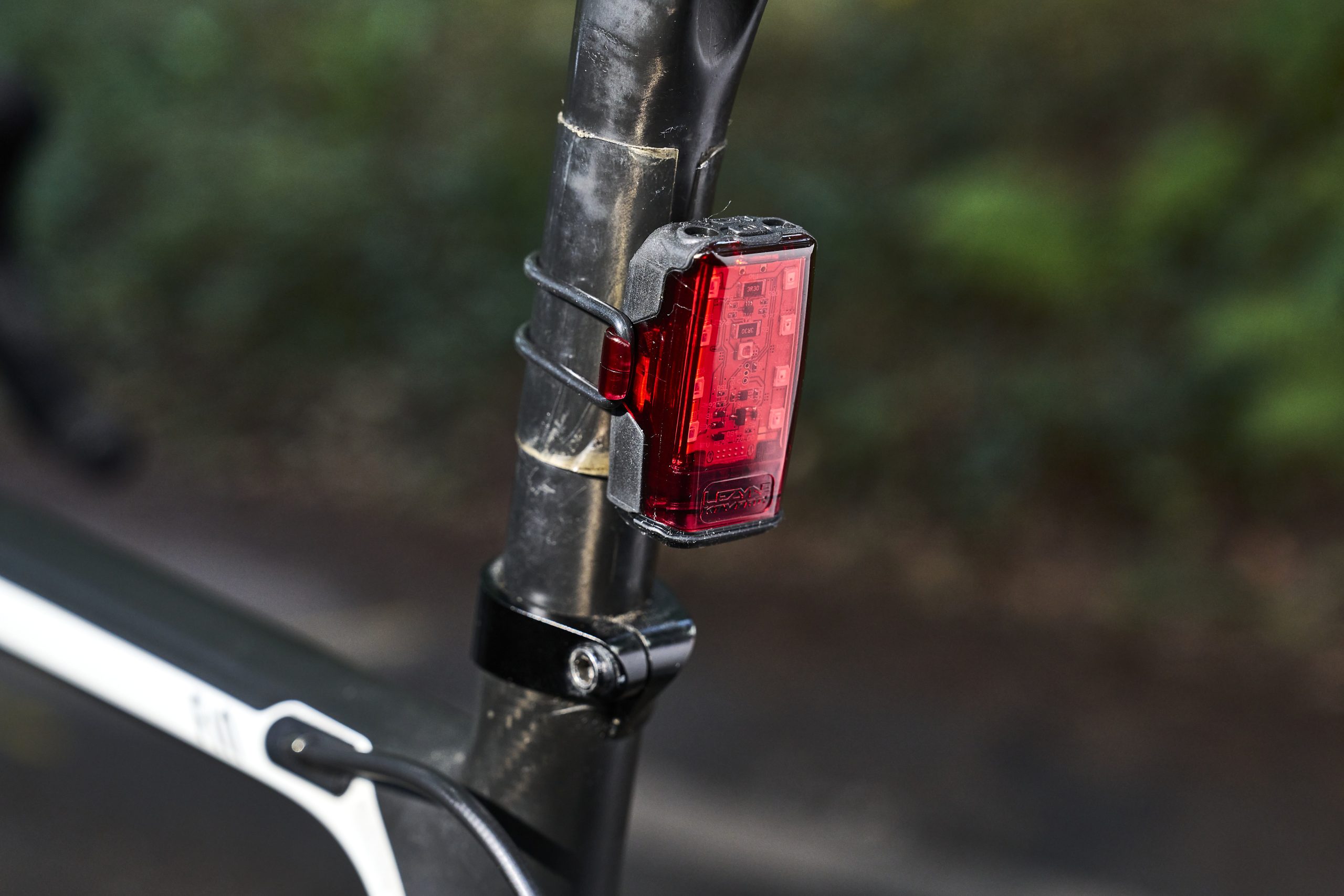
The rear KTV Drive Pro+ light is the high point of this set, with a punchy 150-lumen output and some striking modes to choose from. Lezyne’s KTV line has been refreshed recently with this new flat-faced design, and the nine LEDs are used well to give the impression of a single block of light.
It managed 3hrs 45mins in my burndown test, flicking down into a low-power setting at 1hr 35mins. You can still access more powerful modes if you want the extra brightness for a short stint.
Happily, cycling through modes on both lights is easy and intuitive – a long press for on or off, while the lights cycle through modes with single short presses. It’s hard to go wrong, and the onboard mode memory is helpful when you want to switch on and go (assuming you were in your favoured mode to begin with).
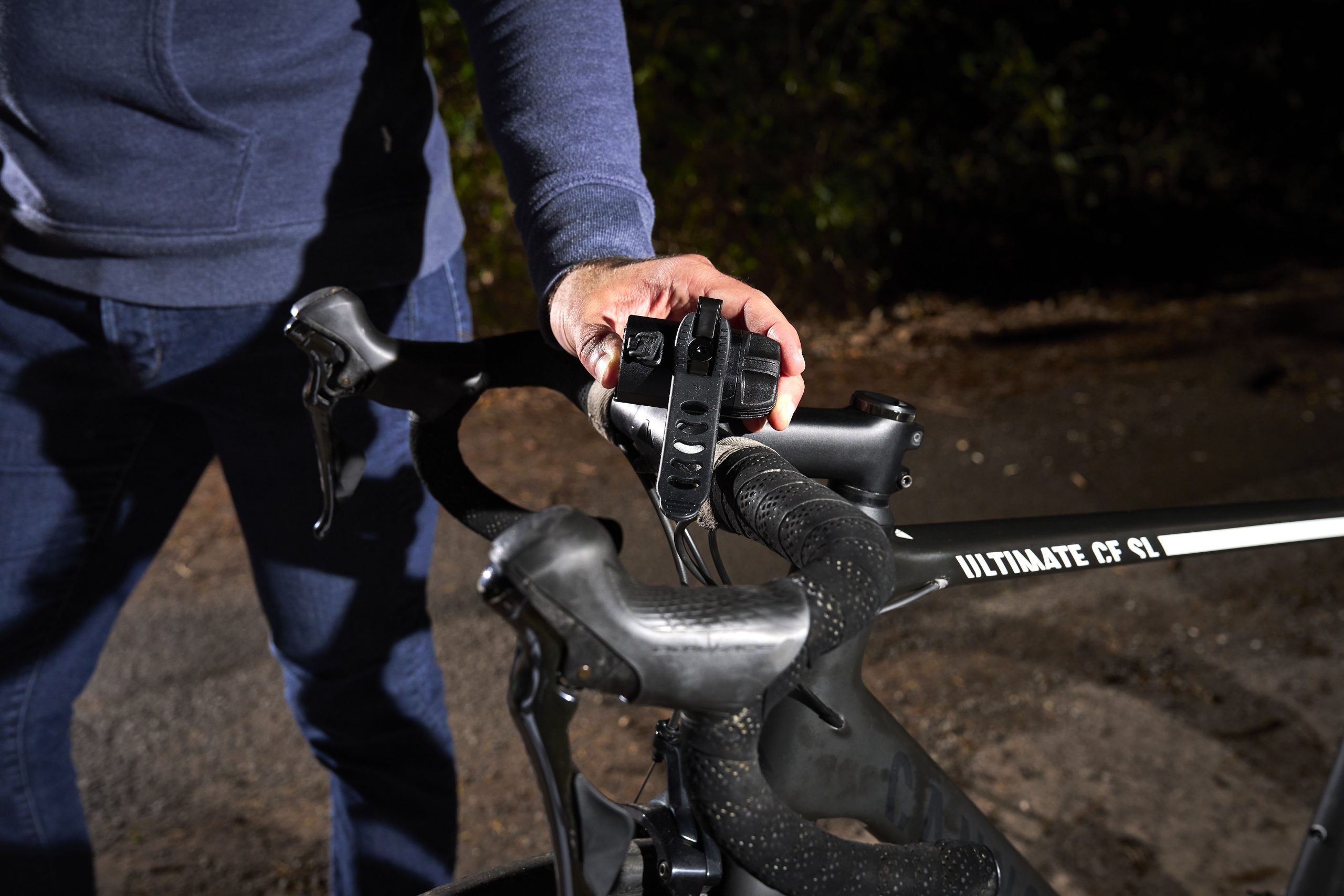
Fitting and removing the lights for charging is incredibly easy, with the bracket screwed onto the front light and the rear attaching to the seatpost using elastic bands.
The front light bracket is designed for a standard round handlebar, but if you have an aero cockpit, it’s very unlikely you’ll be able to get it to point you need, while the band is too short.
Lezyne sells a Go-Pro mount adaptor to fit the front light under an out-front computer mount, but it’s worth bearing in mind the LEDs are designed to be used the correct way up, even if the beam is well-balanced.
The front light’s USB-C port is housed under the leading edge of the body, protected by a rubber cap. In theory, this could come detached because it’s simply hooked onto the light with an open edge, but I’ve not suffered this problem with any recent Lezyne front light I’ve tested.
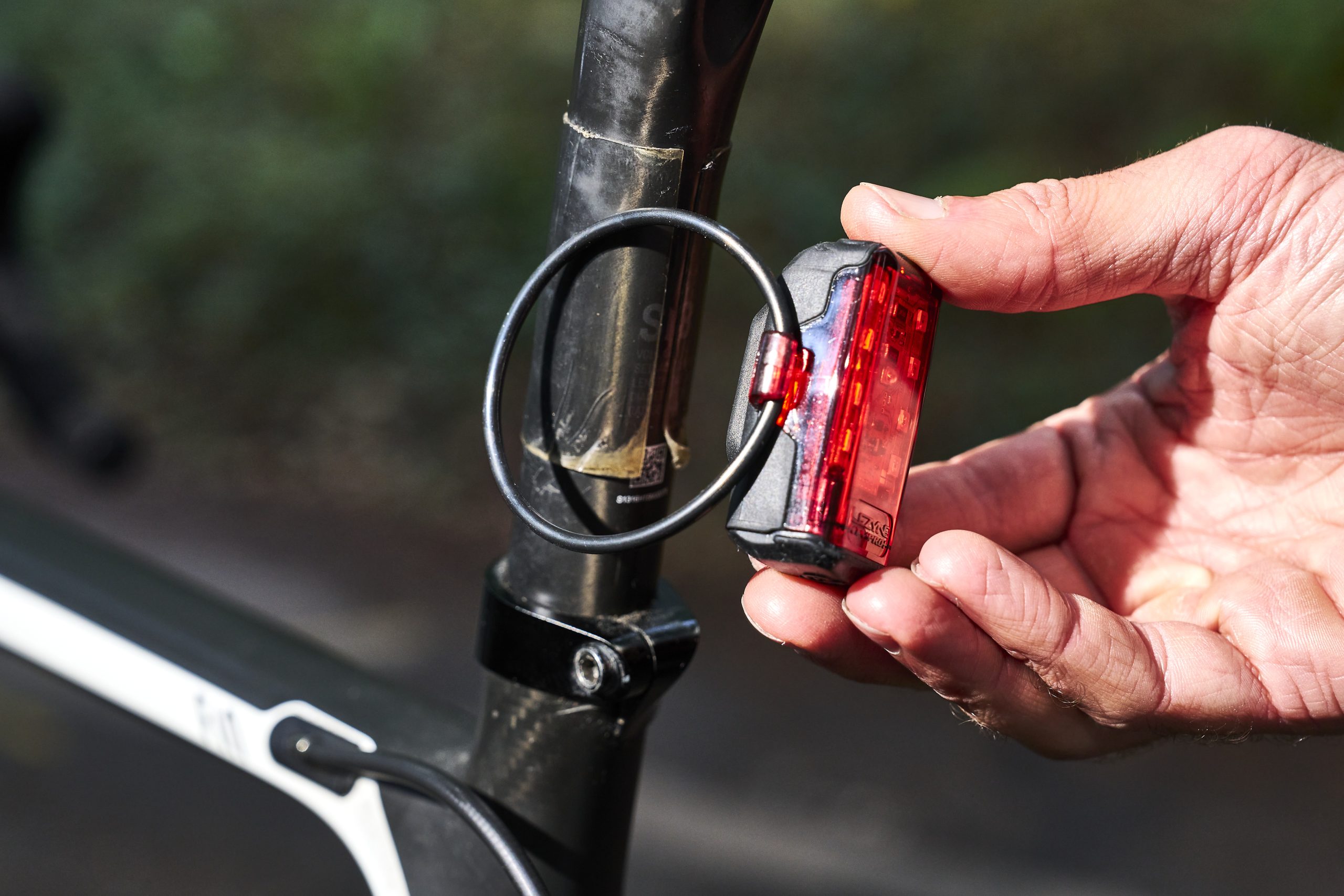
The rear light’s USB-C port is housed on the underside, but it’s well sealed by a rubber cover, which is captive to the light body.
How we tested
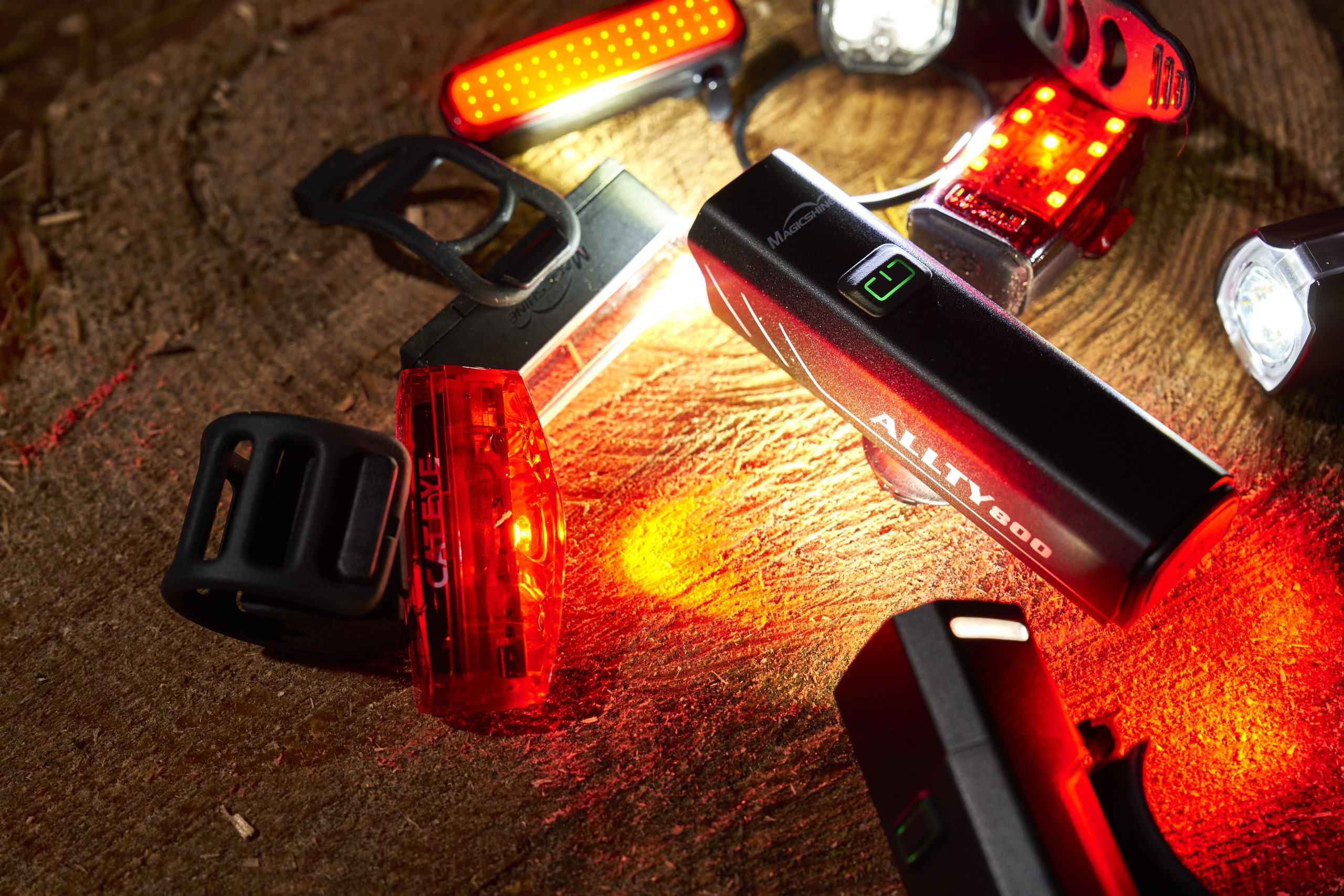
I tested these bike light sets using two local test loops over the course of nearly two months – one largely street-lit, criss-crossing through a local urban area, and another almost exclusively un-lit on country back lanes. Both were ridden at night (meaning some late starts and early mornings), while I also used each light set for local rides during the day.
I also ran a battery burn-down test – discharging the lights from empty on their most powerful setting. This gives a good indication of the minimum battery life you can expect and flags when power-save modes kick in.
In my experience of testing over 100 lights, there’s usually a small discrepancy in burn times from one unit of the same light to the next, so my figures are intended as indications, rather than guarantees.
All front lights featured at least a 500-lumen maximum output and each set costs under £100.
Light sets tested
- Lezyne Fusion Drive 500+ / KTV Drive Pro+
- Magicshine Allty 800 v2 / Seemee 50 v2
- BBB NanoStrike 700i / Signal 80
- Ravemen FR500 / CL01 Pro (LS07)
- Moon Rigel Lite / Helix Lite
- Giant Recon HL 600 / Recon TL 200
- Cateye AMPP 500S / Viz 150
- Sigma Buster 800 / RL 150
- Knog Blinder Pro 700 / Plus
Lezyne doesn’t supply any charging cables with the set, so you’ll need a USB-C cable. Lezyne is not the only brand to do this, citing eco-friendliness, but it’s fair to want the lights in question priced accordingly.
Happily, £75 is a fair asking price for the performance on offer here. The Giant Recon HL600 / TL200 set is priced similarly, but delivers a bit more power, while the sets from Magicshine (£69.99), Cateye (£64.99) and Moon (£69.99) are all cheaper.
Lezyne Fusion Drive 500+ and KTV Drive Pro+ light set bottom line
The Lezyne Fusion Drive 500+ and KTV Drive Pro+ light set delivers good performance for a fair price, with an especially strong rear light the highlight.
Those who want a bit more night-riding time may be better off with a more powerful or longer-lasting front light, but otherwise this is a solid option that has proven easy to live with.