Absolute Black says it has identified why removing material from disc brake rotors can have “a profound effect on braking performance”.
The company released its first Center Lock disc rotor, the Raven, way back in 2012. Absolute Black says the 95g rotor “attracted attention for its exceptionally low weight” and that it has continued to ask how much material can be removed from a rotor without compromising braking performance.
Now, more than a decade on, it says it has found the answer thanks to the development of its Graphen brake pads: “What initially looked like ordinary uneven wear turned out to reveal something much more fundamental about the way holes are distributed across a rotor's friction surface.”
Hot spots
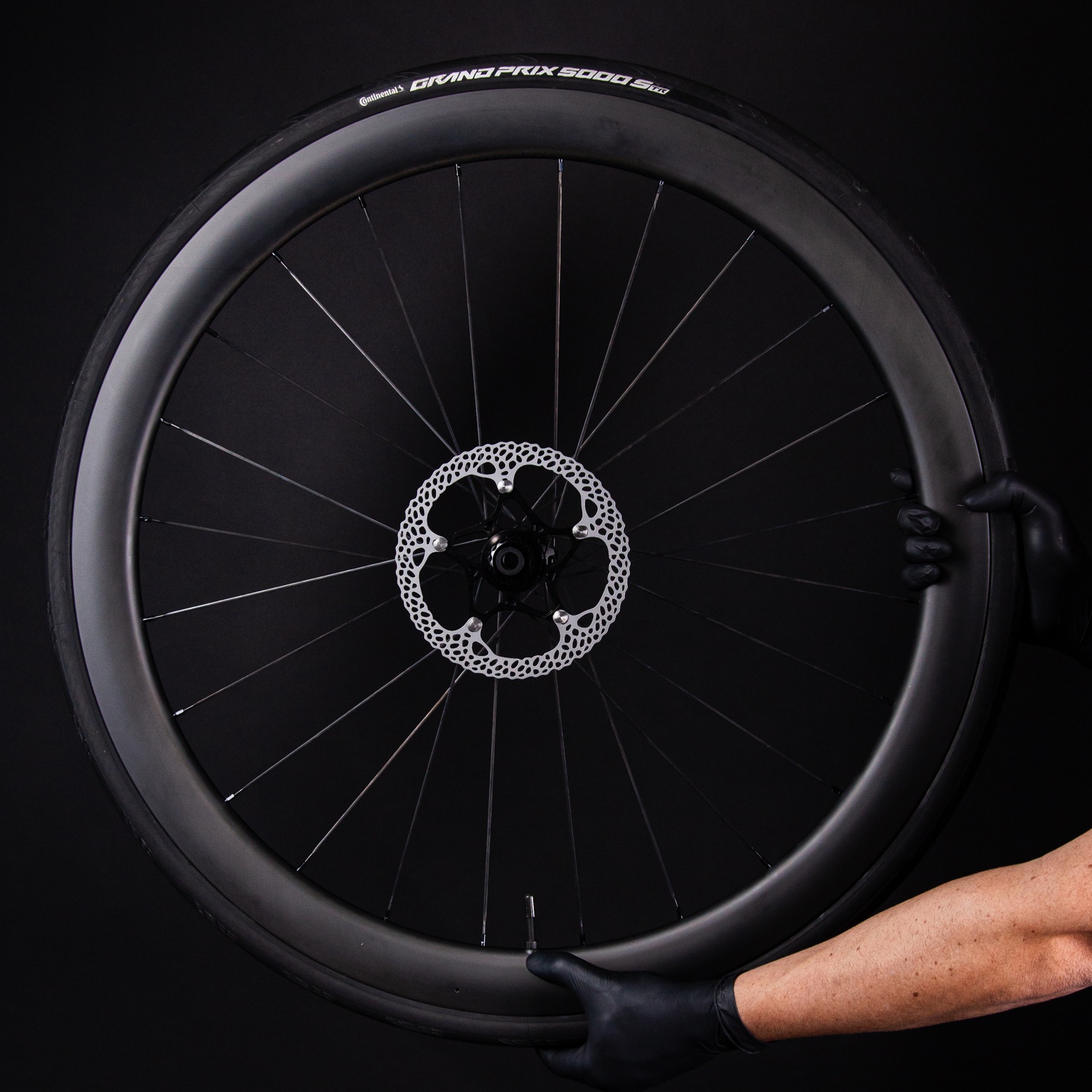
Absolute Black says removing material from a rotor in the wrong places means “braking performance can deteriorate dramatically, especially as temperature rises”. It says this is because the lack of material means there is less surface area available to absorb and dissipate heat.
Testing of the Graphen pads revealed that localised overheating was caused by the uneven distribution of material across the height of a rotor’s brake track.
“A brake pad applies pressure across the entire track. But if one narrow circumferential path contains substantially less steel than the paths immediately beside it, that area has less material available to absorb and dissipate the heat generated through friction. It therefore becomes thermally overloaded relative to its neighbour,” Absolute Black says.
This can lead to a feedback loop. The excessive temperature can result in glazing on parts of your brake pad. This means you apply more lever force when braking, which accelerates the problem.
What’s the solution?
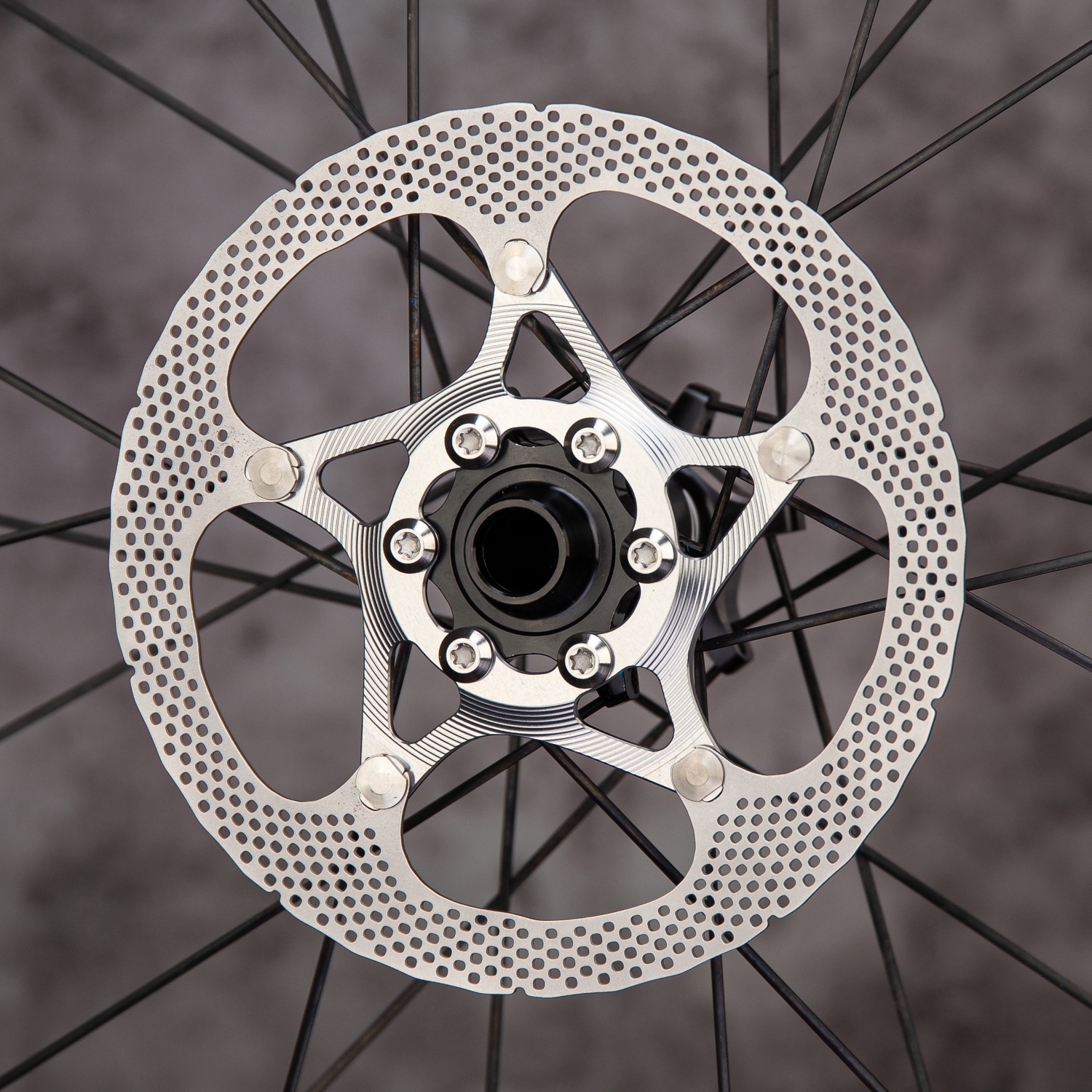
According to Absolute Black, the solution to this problem is to make sure every circumferential path across a braking track has as close to the same total length of steel as possible.
This is something it considered for its latest Raven SL and GT disc brake rotors, launched on 7 September.
If you track the amount of braking material across the diameter of the rotor, Absolute Black says the ideal braking surface will be as horizontal as possible – excluding “unavoidable structural limits”.
“More continuous material is required around the outer perimeter of the rotor for structural integrity and where the friction track transitions into the load-bearing arms,” it says.
This means a graph of the braking material would rise at the narrowest and widest circumferences.
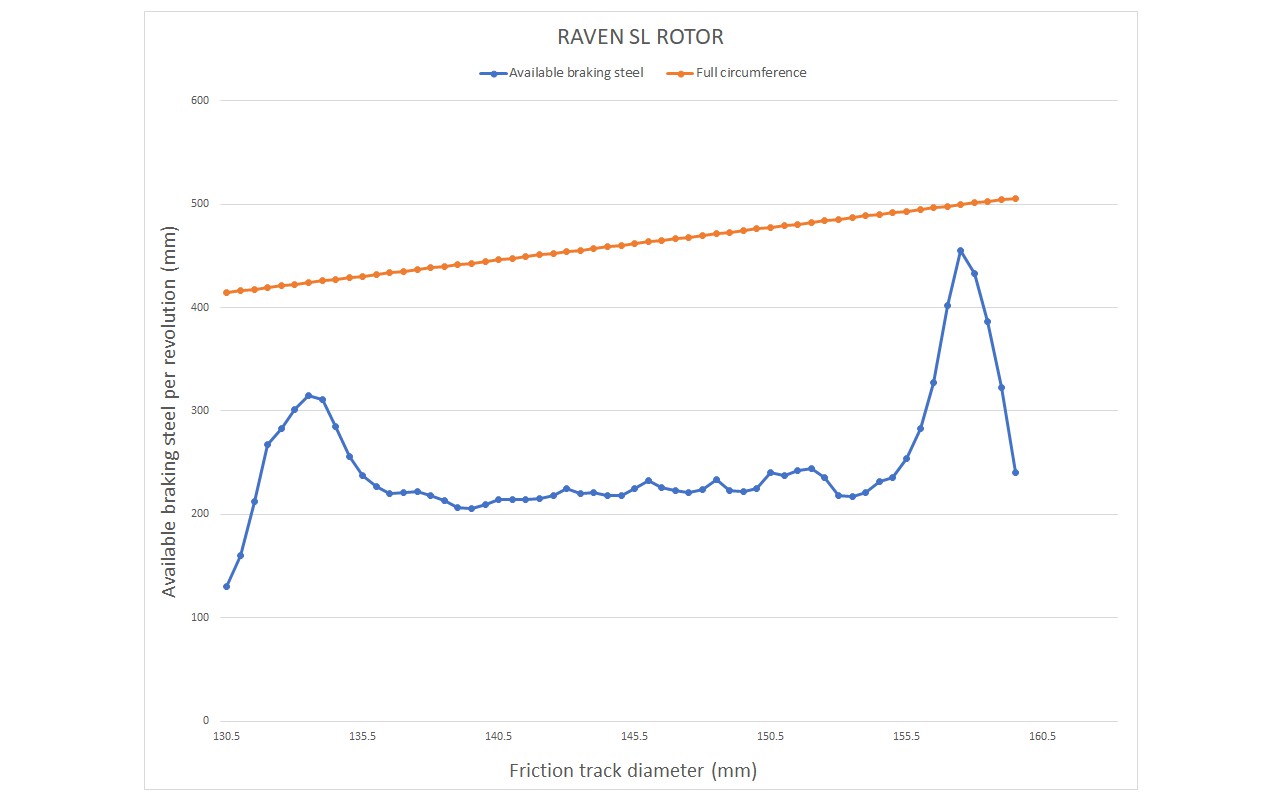
To achieve this, Absolute Black says it developed a dedicated software to identify where there is too much or too little material.
The result is its new disc brake rotors have lots of small perforations, which produce less “disturbance” in that ideal horizontal line than large holes.
The Raven GT is said to take this idea the furthest with 500 perforations. As a result, the GT rotor is said to suit “more demanding and prolonged braking”, whereas the SL has fewer and larger perforations in a bid to save weight. A Raven SL 160mm Center Lock rotor weighs 94g, which is 14g less than its GT equivalent.
Absolute Black Raven vs Shimano Dura-Ace performance
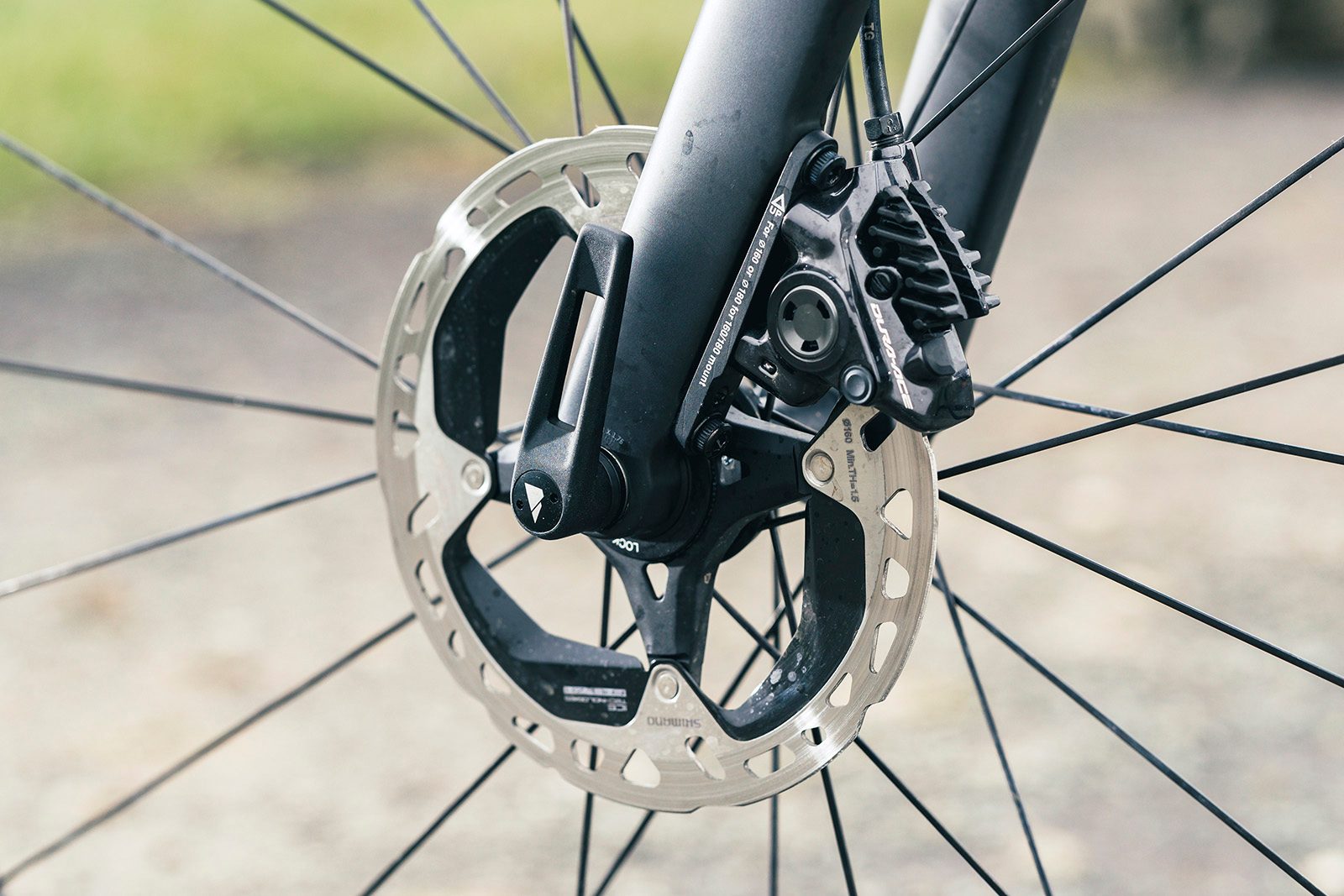
So what impact does this approach have on braking performance? Absolute Black says the German bicycle testing lab EFBE Prüftechnik GmbH conducted independent testing into the new Raven rotor and a Shimano Dura-Ace rotor for comparison.
A heat-resistance test showed the Absolute Black rotor dissipated 92.7Wh of braking energy, while the Shimano rotor recorded 92.9Wh. Absolute Black says the “near-indentical” result is interesting due to the different approaches to thermal management.
“Shimano uses its Ice Technology approach, while Raven relies on a stainless-steel friction track, full-floating construction and carefully controlled perforation geometry,” it says.
After bedding in, the Raven with Graphen pads generated 241Nm of brake torque with 140N of lever force. The Shimano Dura-Ace combination generated 211Nm at 140 N.
This suggests the new Absolute Black rotors could slow you down quicker. But, at £129, they are double the price of the Dura-Ace rotors.