My hands are shaking, breathing is heavy and blood has dripped all over the floor of my home office-turned-pain cave.
While it might sound like a murder scene, I’m approaching the end of an at-home lactate test, and this next pinprick will reveal whether it’s time to call it a day or ramp up the intensity another 15 watts.
The 45-minute test hasn’t been a stress-free experience thanks to the need to take my own blood samples and the odd contaminated reading.
Despite this, it’s been less intensive than a run-of-the-mill functional threshold power (FTP) ramp test and will allegedly provide me with much more accurate training zones.
But can a handheld lactate analyser bought online and a test run by someone with a single science GCSE (A, if you’re wondering) really compete with a lab-grade assessment in terms of precision? And if I’m basing my training zones on faulty data, could I end up further away from my performance goals?
Before we get into that though, it’s worth exploring why I’m willingly lancetting my finger on a Saturday morning in the first place.
On the threshold
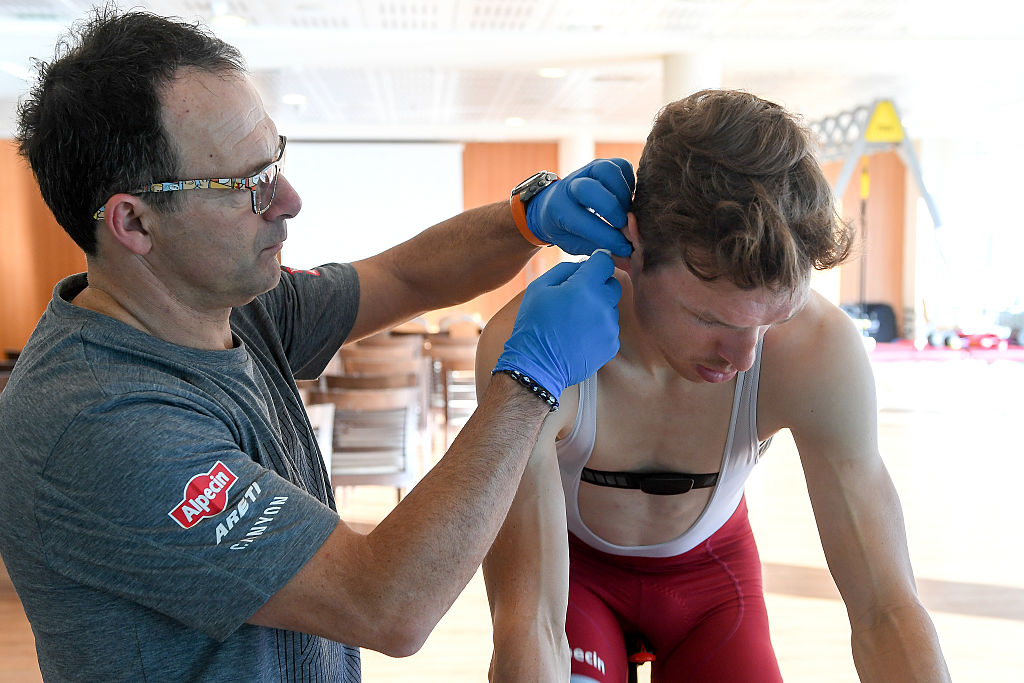
Lactate testing is big business in professional cycling, where riders regularly have their blood lactate levels analysed during training to ensure they’re riding at the correct intensity.
“Blood lactate is an energy source,” explains exercise physiologist Toby Helder. “People have been speaking about it the wrong way for years as a bad thing, but it’s not necessarily a bad thing.
"It essentially gets shuttled around the body, and, as you’re going through the intensity levels, you can no longer break it down for energy, so then it starts circulating.
“The reason we're measuring it is because it correlates strongly with hydrogen ions and other factors, which is what we now think creates fatigue in the body. You can't really measure the hydrogen ions and all the other stuff as easily, so that's why we measure blood lactate.”
Another metric to track in addition to heart rate, power and RPE (rate of perceived exertion), lactate is able to show the tipping point of the body’s energy systems, from primarily fat to relying more on carbohydrates for anaerobic (without oxygen) energy production.
These tipping points are called your lactate thresholds (LT1 and LT2), but because they don’t rise linearly with intensity and are completely individual, there’s no precise one-size-fits-all approach to calculating it without a test.
Even then it’s a rough range, and can vary between five and 10 watts on different days anyway, according to Helder.
Getting tested
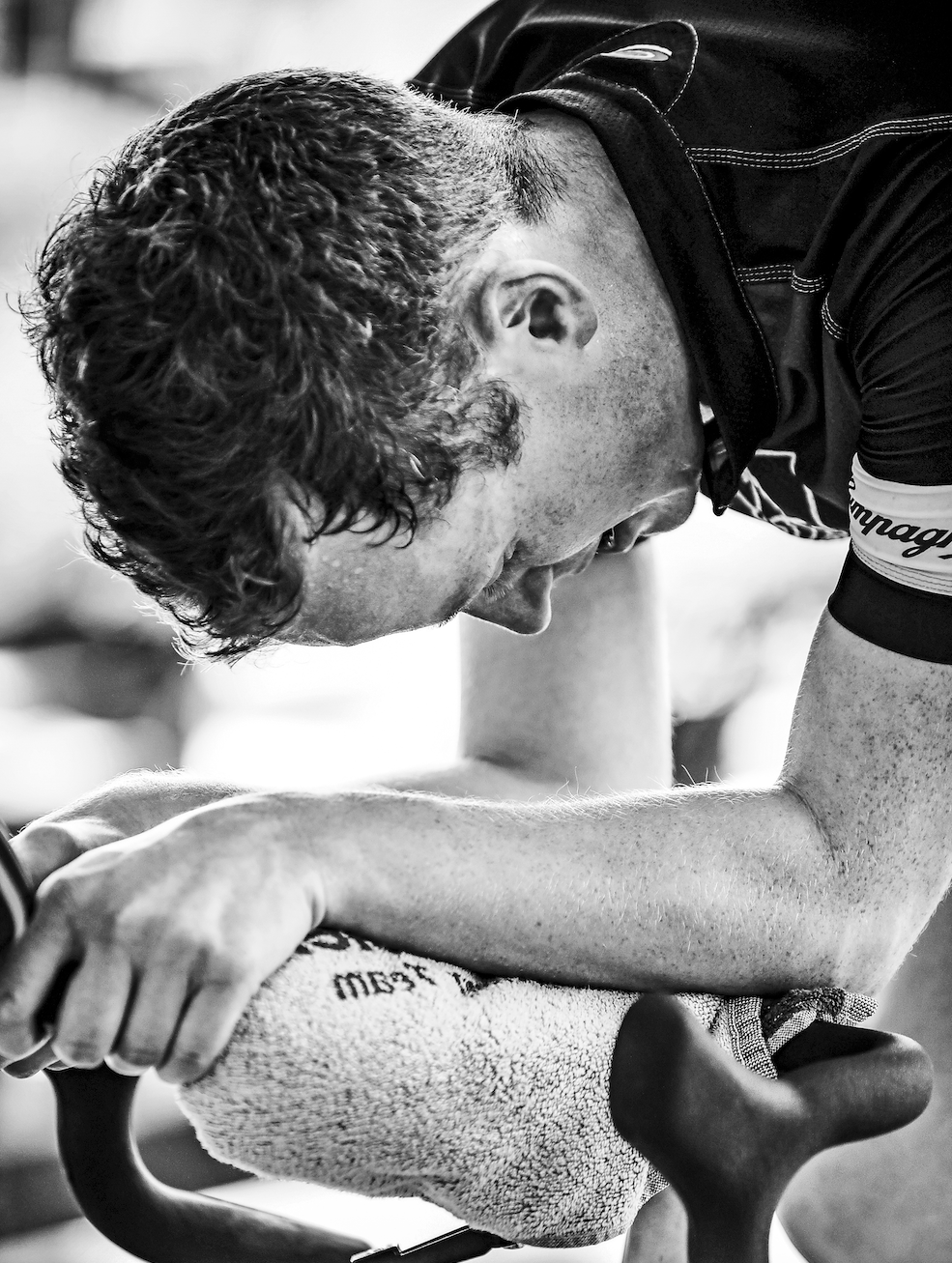
Before I test my levels at home, I need a gold-standard baseline, so I head down to St Mary’s University’s Sports and Health Service’s physiological profile lab for a lactate profile test.
After my weight, resting heart rate and blood lactate are taken, I complete a step-test on a Wattbike, starting at an easy intensity before ramping up gradually by 15 watts at four-minute intervals.
At the end of each step, Helder takes my rate of perceived exertion (RPE), heart rate and a blood sample from my middle finger, which is run through an analyser to find out my blood lactate reading (in mmol/L).
Initially, the test feels like an easy spin, but as the intensity starts to creep towards my FTP, the legs begin to feel heavy.
At this point in a VO2 max or FTP test, it’s time to grit your teeth and dig in, but on returning from the analyser, my blood lactate is now over 4 mmol/L and Helder is happy he has all the data he needs, so I'm able to call it quits before things get really difficult.
After plugging my results into a piece of software over a post-test coffee, he is able to show me my curve, and plot my three training zones and the accompanying heart rate and power.
“There are different models of training zones. Generally, you’ve got three, which is the minimum, or there are five or eight.
"The three is based on below lactate threshold one, between lactate threshold one and two, and then two and above – that's essentially anaerobic.
"As you progress through the power, you start to break down fats a little less easily, and then more carbs. It becomes a bit harder.
“Your first lactate threshold is essentially when it starts to have that initial rise and can no longer be sustained. Lactate two is trickier – what we tend to say is it’s the second point at which it is unsustained, so you should shoot up again.”
My line starts at 1.25 mmol/L before reducing down – “this generally means you're starting to move through the motions, your metabolism is kicking in and you're buffering lactate” – before there are two shifts in the curve’s angle.
Helder’s report suggests my LT1 is at 205 watts, while LT2 follows at 240. The former is the tipping point between easy and aerobic efforts, whereas the latter is the maximal lactate steady state (MLSS) – when lactate clearance matches lactate production. This is what I should be able to hold for an hour’s time trial.
This might sound similar to FTP. And that’s because, in theory, it is. The much-touted metric can be tested at home with an all-out 20-minute effort or ramp test on a turbo trainer, and training zones can then be set by taking 95% of average power.
The reality though is that FTP and LT2 don’t always align – FTP is an estimated proxy, whereas LT2 is the exact physiological point. “There is definitely added accuracy,” says Helder. “FTP is one number and it's also estimated.”
Other than its sub-maximal nature, this is where the real benefits of a lactate test start to emerge. My most up-to-date FTP before undertaking my lab test was 270 – 30 watts higher than my actual MLSS.

Applied to training zones using the much-employed calculation devised by Dr Andrew Coggan, it could mean I’ve been training harder than I should have been at high-intensity efforts.
Conversely, if you use my actual MLSS in an FTP power training zone calculator, my top of zone 2 work (the mythical training intensity favoured by Tadej Pogačar and where you get physiological improvements such as better endurance and fat metabolism) might not have been hard enough.
Thanks to the lactate test revealing my LT1 and LT2, I now have a much more personalised understanding of my fitness, enabling an individualised training approach, rather than basing future workouts around a one-size-fits-all calculation that could lead to under or over-training.
But will my at-home test reveal similar findings? Or throw out data that’s ultimately inaccurate?
Solo sampling
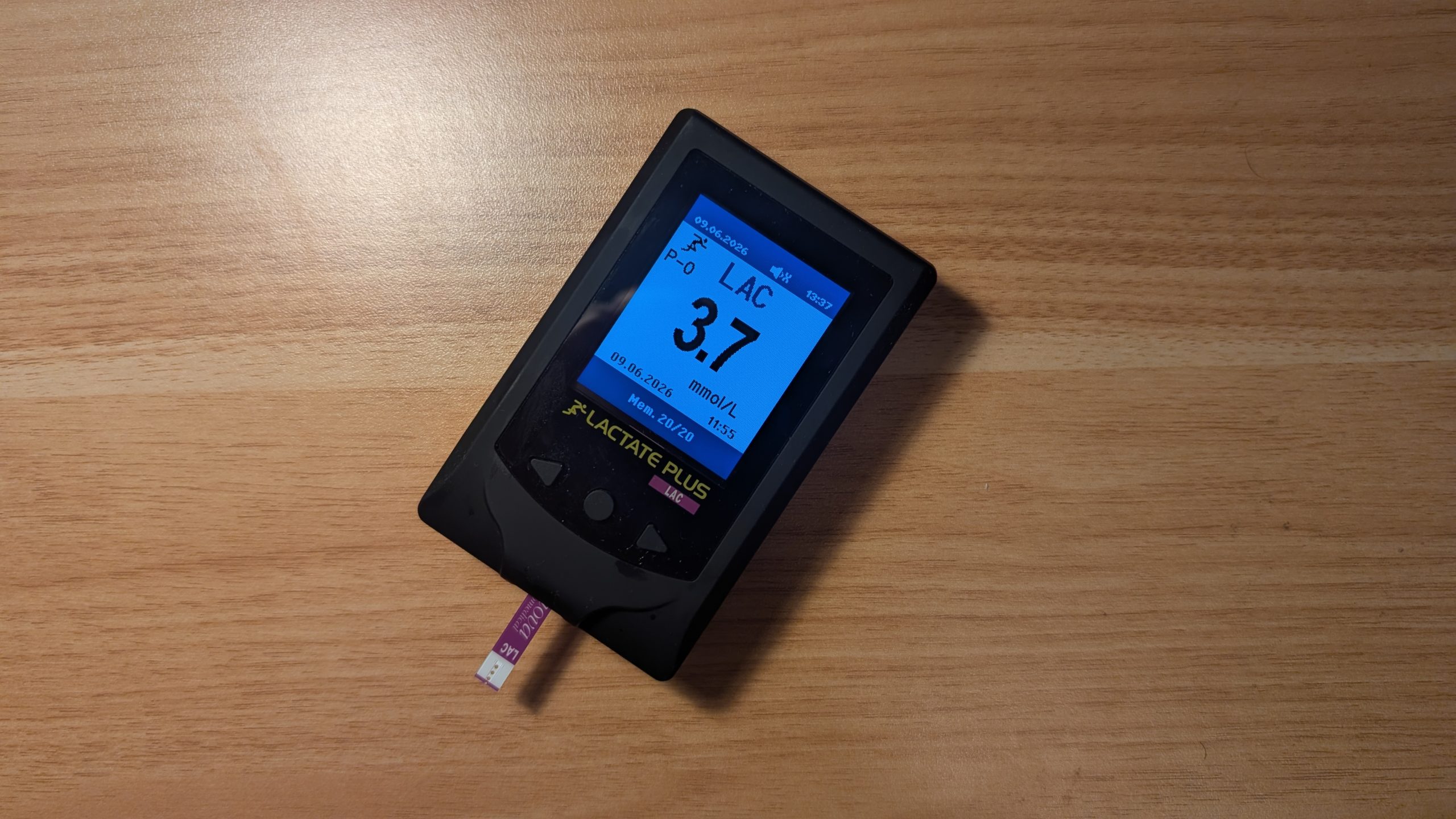
After weeks of scouring AliExpress, I decide to swerve the too-good-to-be-true deals and invest more than £350 in a Lactate Plus meter (a lactate analyser is for life, not just for this article I tell myself as I input my card details).
Now ready to recreate my lab test, I create a workout in Zwift, get my lancets and alcohol wipes and lay out all the testing strips I’ll need (and a few spare) to get over 4 mmol/L.
At the end of my first step, it’s clear this isn’t going to be as seamless as in the lab. Stopping to take my first reading (clean finger with alcohol wipe, lancet, wipe first blood with paper towel, take sample, wait 13 seconds for result), I get an error code for a contaminated sample, meaning I have to repeat the above steps again.
The second reading gets the green light, but I’m starting to worry that I haven’t put enough test strips out (which, at more than £1.50 a pop, means things could start getting expensive, too).
The next few steps continue without a hitch and I start to find a rhythm. My numbers seem to have shifted slightly since the lab test, too. In fact, at one point after they've started to rise, there's a marginal decrease.
But as the intensity ramps up slowly, my breathing begins to become more laboured and it’s hard to keep my hand steady when taking a sample.
Reaching the point where I stopped in the lab, disaster strikes again with another contaminated test. Scrambling around for an additional lancet and test strip, there’s a prolonged delay in taking my second reading. When it finally comes through, I still haven’t gone above 4 mmol/L, so I ramp things up one more time.
Fortunately, it’s just one more step before I can wrap things up, and I fire my at-home readings over to Helder to get his thoughts.
“The curve looks very similar between the two tests, with lactate being buffered at a very similar point, if anything, slightly better in the second test (curve going down rather than to the right),” he says.
He adds that the delayed samples could have affected the results, while the marginal decrease also stood out.
“It would be unusual for blood lactate to drop, even slightly, during an incremental lactate test once values are beginning to rise.”
Read between the lines
On the surface, the two tests and their curves look fairly similar (especially if you remove the anomaly of a decrease), showing that an at-home test can provide similar results to one conducted in a lab.
The big difference, though, is the analysis, and understanding the data well enough to say definitively where LT1 and LT2 occur on the curve, and therefore how to set training zones.
“If you're a sports scientist, you know where the lactate thresholds are – you've seen a lot of data,” says Helder. “Recreational athletes haven't seen that, so they have no advice around where those thresholds are.”
And this is where the potential dangers arise. Set your thresholds too high and it could result in overreaching.
“I don't think many recreational riders do the correct amount of hours [in the right threshold zones], but if you're trying to push 10-plus hours in the wrong zone, you're going to create cumulative fatigue and overuse injuries in different areas.”
Helder adds that the opposite is also true: “If you're trying to push your lactate threshold higher, you need to be working a bit above it – you need to stimulate the mitochondria, enzymes and everything to be buffering what's coming out to make sure your systems are being used efficiently.
"But if it's wrong and you're not stimulating it much, you could be getting aerobically fit at low intensities, and then as soon as someone throws a high wattage, you haven't been used to it.”
At-home lactate tests have their place, but require guidance and advice to truly maximise their ability to personalise your training.
So, while a useful tool to check you’re riding at the correct intensities, for lactate threshold setting and training zone recommendations, it’s best to leave it to the experts.