Maxxis has added the new Minion DHX to its gravity tyre range and introduced a new downhill casing developed to offer more support without sacrificing compliance over rough ground.
The Minion DHX is aimed at dry-conditions downhill racing, bike-park use and aggressive eMTB riding. It launches alongside the updated casing, which will also feature across selected versions of the Minion DHR II, Assegai, High Roller III and Dissector.
UK pricing is £79.99.
- Read more: Maxxis mountain bike tyres buyer's guide: deciphering the Maxxis XC, trail and enduro range
What is the Maxxis Minion DHX?
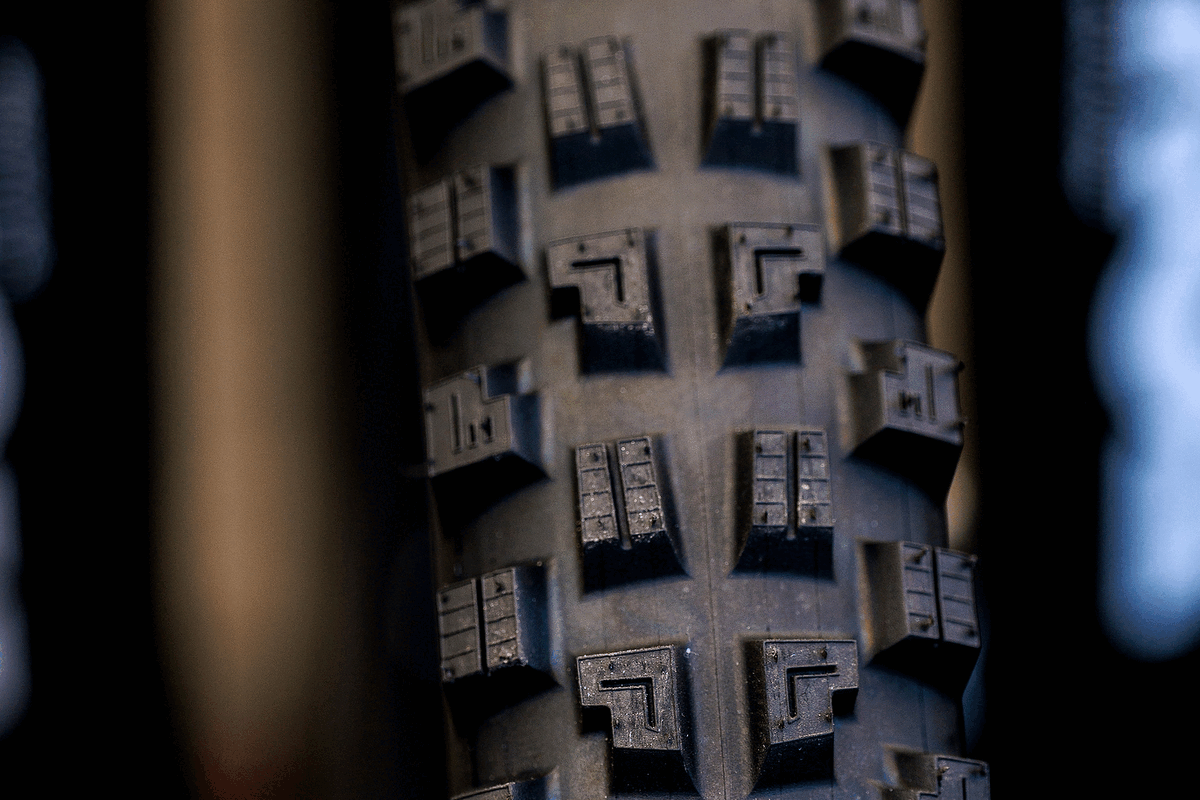
The DHX joins the long-running Minion family as a front or rear tyre for fast, high-load riding.
Its tread uses reinforced shoulder knobs designed to resist folding at the base when the tyre is pushed hard through turns. Shallow sipes enable the tread surface to deform against the ground without taking too much support away from the knobs.
Maxxis has also worked on the transition from the central tread to the shoulder blocks, aiming to give the DHX a more predictable feel as the bike leans over.
The brand claims it offers similar rolling speed and braking performance to the Minion DHR II, but with more stability and cornering support.
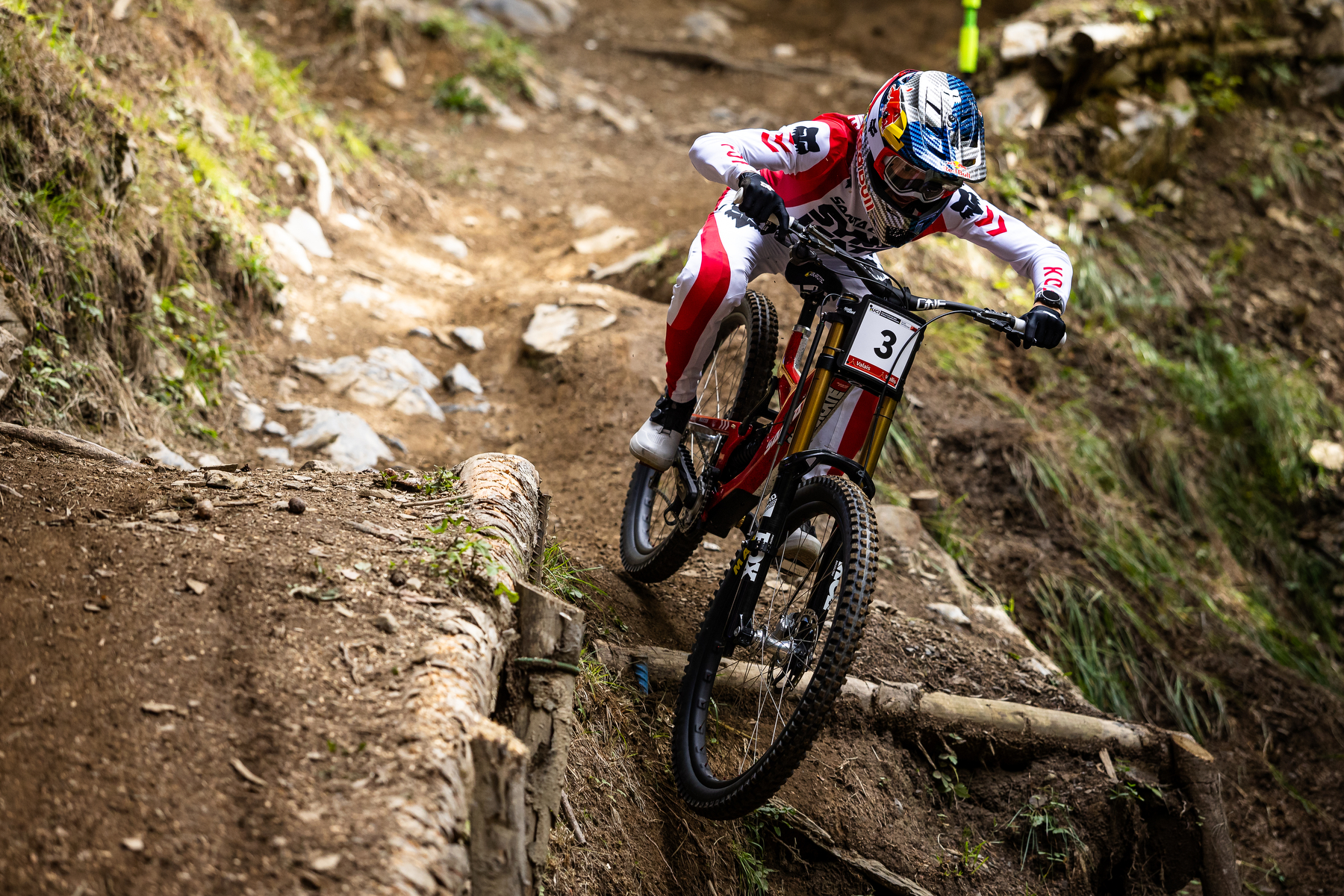
Although it is only now being released to the public, the DHX has already seen major racing use. Maxxis says Jackson Goldstone rode it to victory at the 2025 World Championships in Champéry and the Mont-Sainte-Anne World Cup, while Luca Shaw won on it at Loudenvielle this year.
The initial range includes 29x2.5in and 27.5x2.5in versions, using 3C MaxxGrip rubber. Both have a dual-ply 2x120 TPI construction, are tubeless-ready and carry an E50 rating.
Claimed weights are 1,550g for the 29in tyre and 1,454g for the 27.5in version. MaxxTerra versions in both sizes are due in the third quarter of 2026.
What has changed inside the casing?
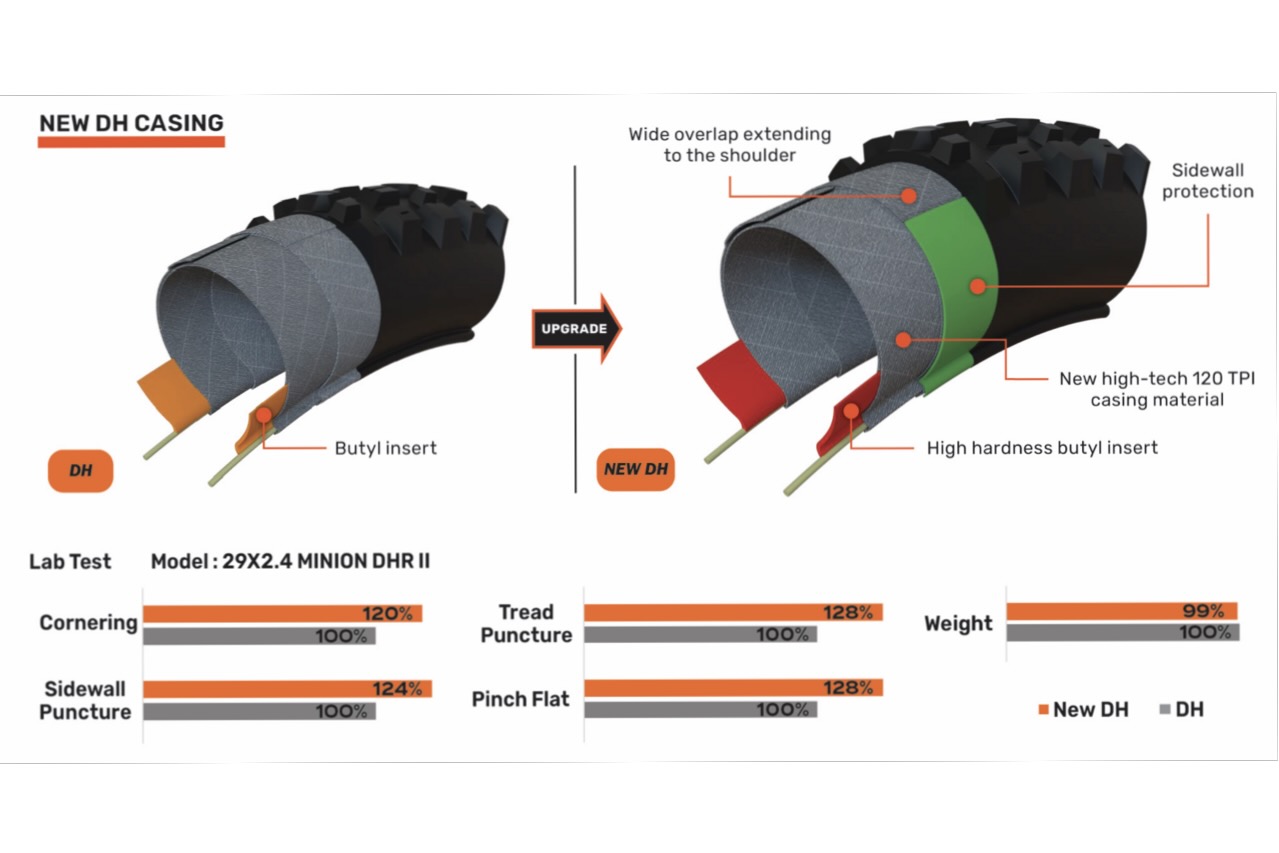
Maxxis says the new construction has been in development for several years and was raced throughout the 2025 World Cup season by its supported teams.
The new DH casing construction includes a harder butyl insert around the bead, new 120 TPI casing material replacing the current dual-ply 60 TPI material, added sidewall protection and a wider overlap extending towards the shoulder.
The aim is to create what Maxxis calls progressive casing stiffness. The tyre should remain compliant over smaller rocks and roots, then provide more support as cornering and impact loads increase.
According to Maxxis, the extra support enables riders to run around 2 to 3psi less pressure than with its previous DH casing. Lower pressure should help the tyre conform to uneven ground and slow its rebound after impacts, giving the bike a calmer feel through rough sections.
The brand also claims improved protection against punctures and pinch flats, while keeping weight close to the outgoing construction.
In Maxxis’ own lab testing on a 29x2.4in Minion DHR II, the new casing produced 20 per cent more cornering support, 24 per cent better sidewall puncture resistance and 28 per cent improvements in both tread-puncture and pinch-flat resistance.
Which tyres get the new casing?
The first wave includes MaxxGrip versions of the Minion DHX, DHR II, Assegai and High Roller III. MaxxTerra DHR II options are also listed, with more MaxxTerra models, additional Assegai sizes and a 27.5x2.4in Dissector expected later in 2026.
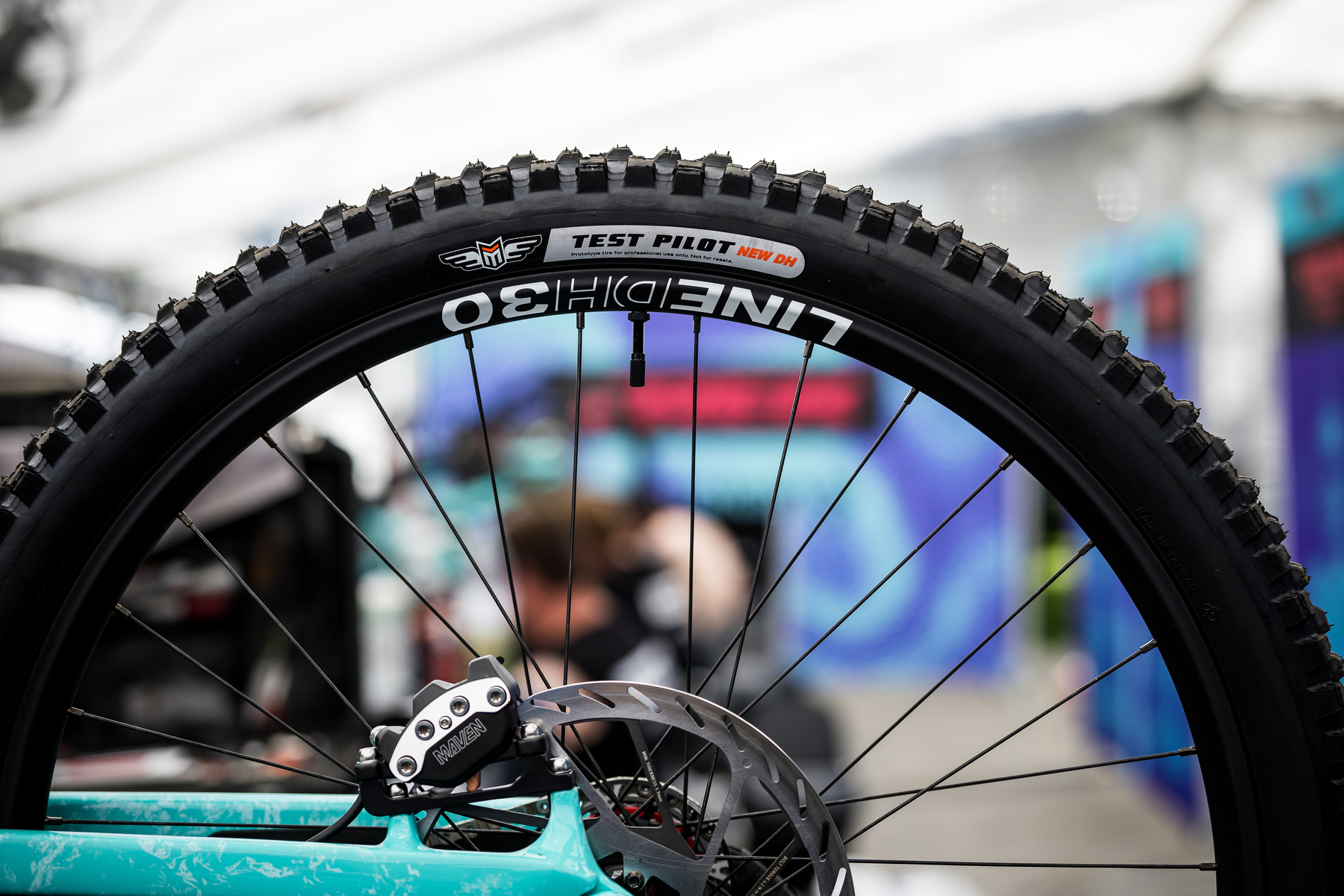
Tyres using the new construction will carry a New DH casing decal on the packaging and a matching badge on the sidewall.