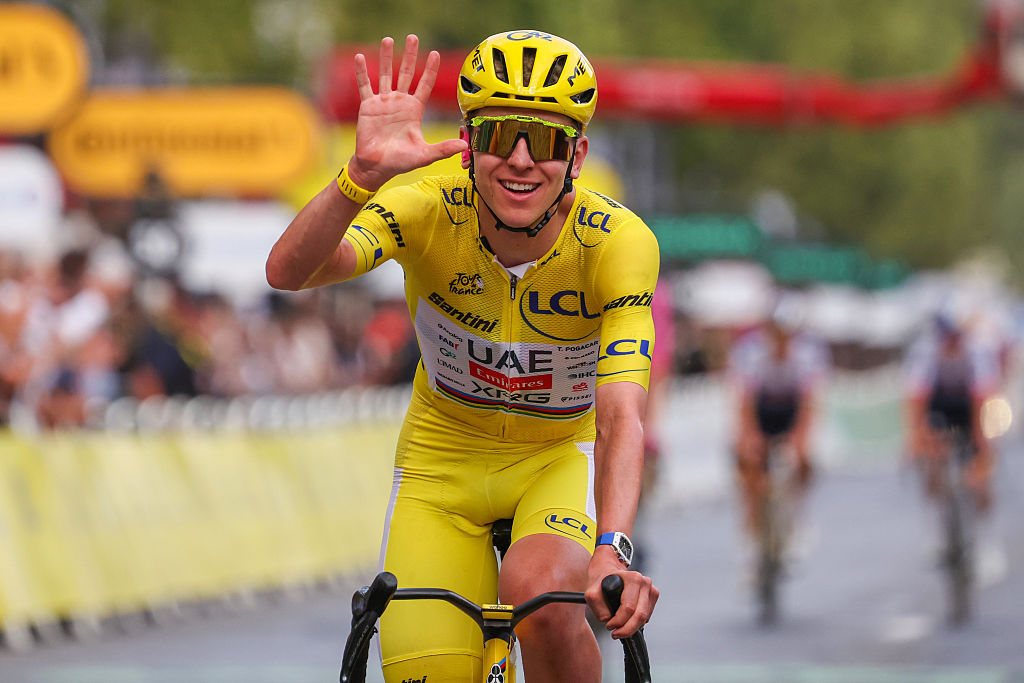
Tadej Pogačar’s fifth Tour de France win in July was his most dominant yet and the imposing frame of the Slovenian in full flight is a long way from some of the worryingly slender torsos in the general classification mix of 20 years ago.
However, given that Pogačar is a once-in-a-generation talent – allied to the fact that the typical yellow jersey winner through history must, in their build, balance climbing prowess with an all-round talent that will power them through time trials – does the same apply to the peloton at large?
Are Tour de France climbers bigger than they used to be? Is muscle something to run towards, not away from, in 2026? And if so, why?
“Cycling has always been a sport packed with many body types,” says James Spragg, coach and sport scientist with Tudor Pro Cycling.
“I remember growing up and watching a Tour de France where Magnus Bäckstedt [a mooted 90kg-plus, making him one of the heaviest riders to complete the Tour] was part of a breakaway with a diminutive Colombian rider.
“There are extreme physiques in cycling, but while overall the riders are probably as lean as they’ve ever been, they are carrying more muscle mass.”
Specific guidance
Mikel Zabala is professor of cycling and science at Granada University in Spain. His coaching palmares includes working with the likes of Alejandro Valverde and Nairo Quintana at Movistar. More recently, he’s developed Juan Ayuso and Carlos Rodriguez at the Spanish federation.
Zabala might be biased, but he sees the integration of sport science and increased support staff as critical to where professional cycling and professional cyclists’ body types are today.
“Around 15 years ago, and after the cases that did serious damage to cycling’s credibility, teams started to invest more in coaches and exercise physiologists,” he explains. “They were the new, clean agents of modern cycling.”
Zabala says this adoption of cutting-edge ideas, much of it stemming from university research, plus the advent of usable software, meant experts could make sense of the growing amount of data emanating from power meters and heart-rate monitors. The coaches and support staff could safely direct their protagonists based on research.
“Along with Team Sky we started using science in search of gains,” says Zabala. “Teams realised they had to do things better, so in came more coaches and out went bad doctors.
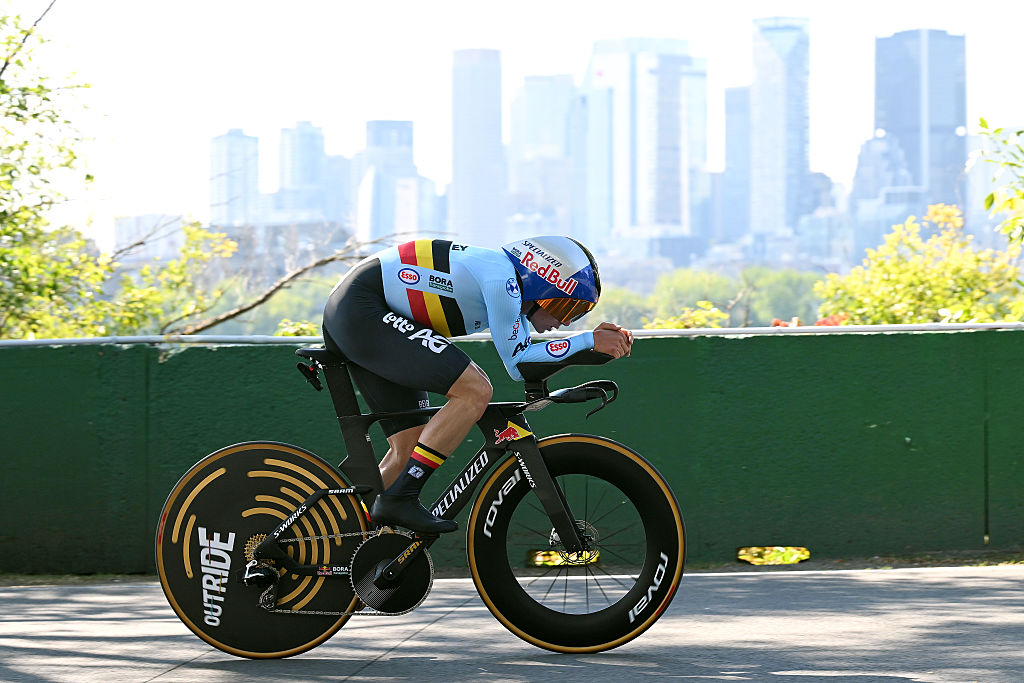
“Ultimately, coaches, plus the later recruitment of aerodynamicists, performance engineers and data scientists, meant riders’ improvements were monitored safely and is one reason why behind the increasing speeds of the peloton.”
Show of strength
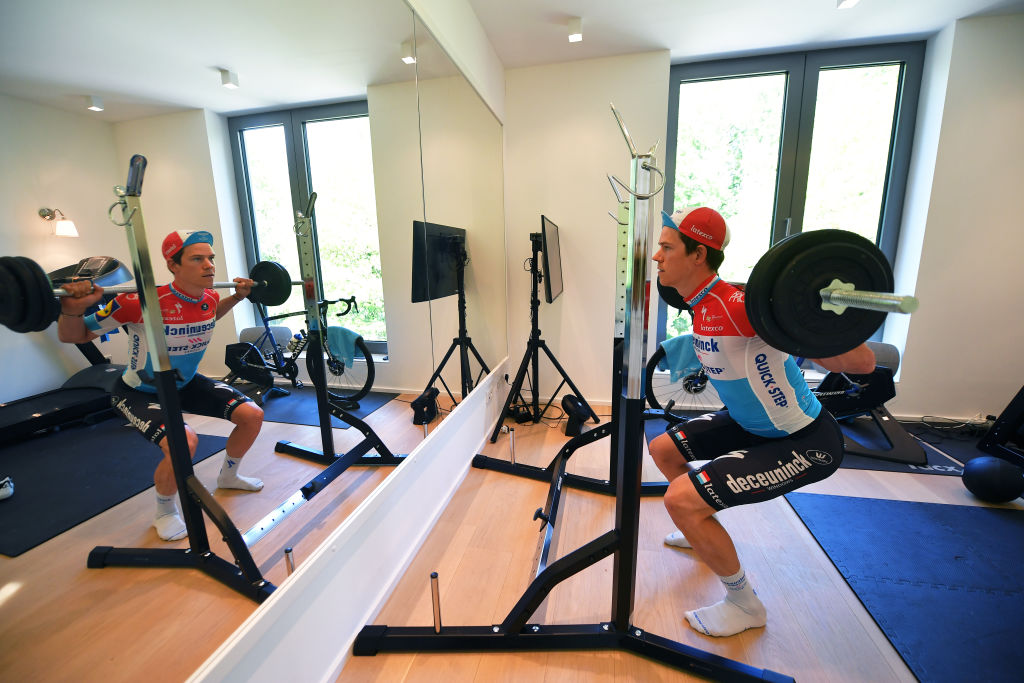
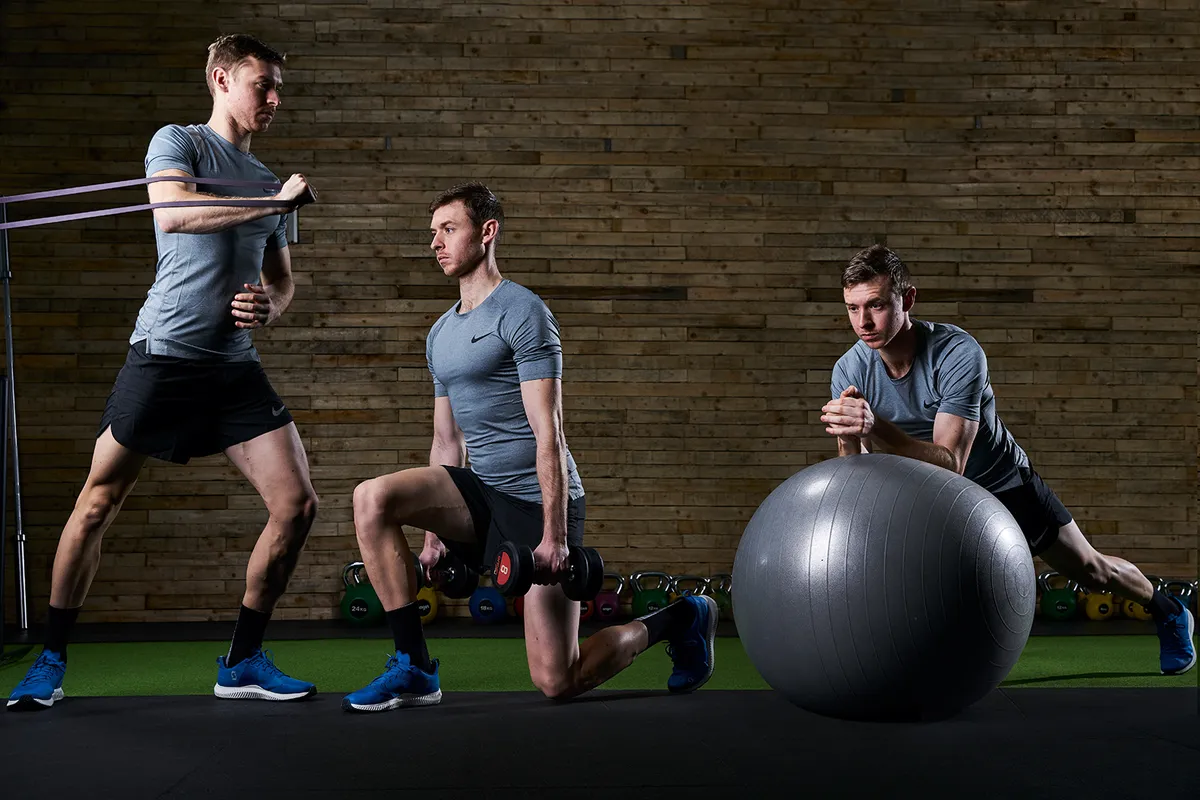
One of the big changes has been in strength work. “In the past, cyclists were scared of gym work because they thought it’d lead to too much muscle mass, equating to more weight to carry up the mountains,” says Zabala.
“In fact, when I joined Movistar in 2013, none of the riders were doing strength work. We changed all that, drawing on the work of Bent Ronnestad and his colleagues from Norway.”
In 2010, Ronnestad, who’s currently head of exercise physiology at Tom Pidcock’s Pinarello Q36.5 team, discovered that 12 weeks of heavy strength training – four lower-body exercises comprising three sets of four to 10 repetitions – twice weekly significantly improved leg strength in well-trained cyclists compared with endurance training alone.
Another Ronnestad study a year later showed that strength training also reduced physiological strain during prolonged cycling and increased subsequent 5-minute power from 371 to 400 watts. Importantly, the studies also suggested that strength training improved fatigue resistance.
“Riders who strength-trained boosted durability, which is a hot topic in cycling right now,” says Zabala. “After around three hours of racing, we could see positive differences between those that combined strength and normal riding over those that didn’t. They simply didn’t deteriorate as fast.”
Zabala says it wasn’t an instant panacea, with many riders’ performance suffering from the additional strength work. “That changed when we started using velocity-based resistance training.”
This form of training uses a sensor to monitor speed during strength exercises to control load and training intensity. Cyclists can stop or reduce sets when bar speed drops significantly, limiting unnecessary fatigue.
This approach helps maintain power output, improves strength and neuromuscular qualities, and may support better recovery.
“Strength training has been a silent revolution in cycling,” says Zabala.
Spragg agrees. “It used to be something riders did a little bit of it in the winter. Now, we periodise it, so it’s all-year round, though obviously not at stage races like the Tour de France.
“How much strength training a rider undertakes and the specific gym workload [reps, sets…] is influenced by their role.
"You’ll find sprinters, seeking that real explosive edge, might do more than a climber. But yes, an acceptance of strength work is clearly beneficial for muscle development.”
Ride evolution
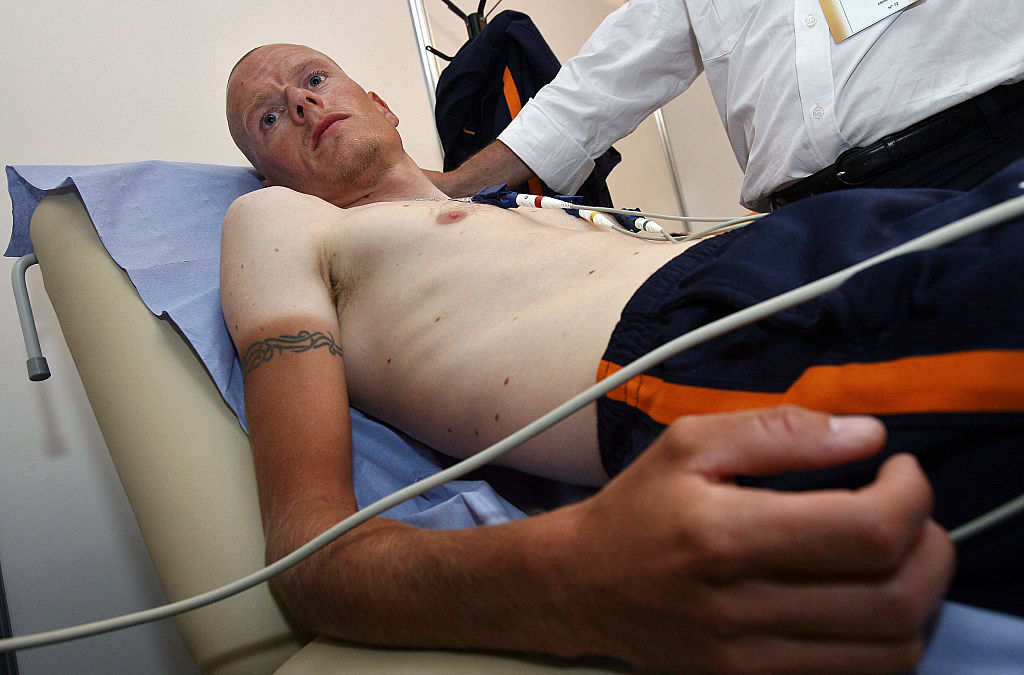
“In the past, training was based far more on volume,” says Zabala. “This could lead to some riders being too skinny.”
What changed? Whereas now power meters and computers dictate the intensity and duration of nearly every session, in the past the tools simply didn’t exist for such prescribed efforts.
So instead of, say, a TrainingPeaks ride aiming for a training stress core of 238 and including four 12-minute efforts at 105% of functional threshold power, their diary would read simply: ‘170km, mountains, good legs’. That resulted in a ‘more is more’ ethos, leading to muscle loss.
INSCYD (pronounced inside), a performance software tool used in the pro peloton, is arguably the epitome of modern-day training.
Created by German pro coach Sebastian Weber, who has worked with the likes of Peter Sagan and Tony Martin, it reveals what’s going on inside the body, not just the power numbers produced. It enables coaches to prescribe highly specific training strategies, beyond classical power zone sessions.
Since he started coaching elite riders in 2002, Weber says the base intensity of rides has also grown.
“This has come down to more targeted training, which often makes sessions more intense albeit perhaps shorter than days gone by,” he says. It’s another explanation for both a change in muscularity and the speed of the pack.
Fuelling the thoroughbreds
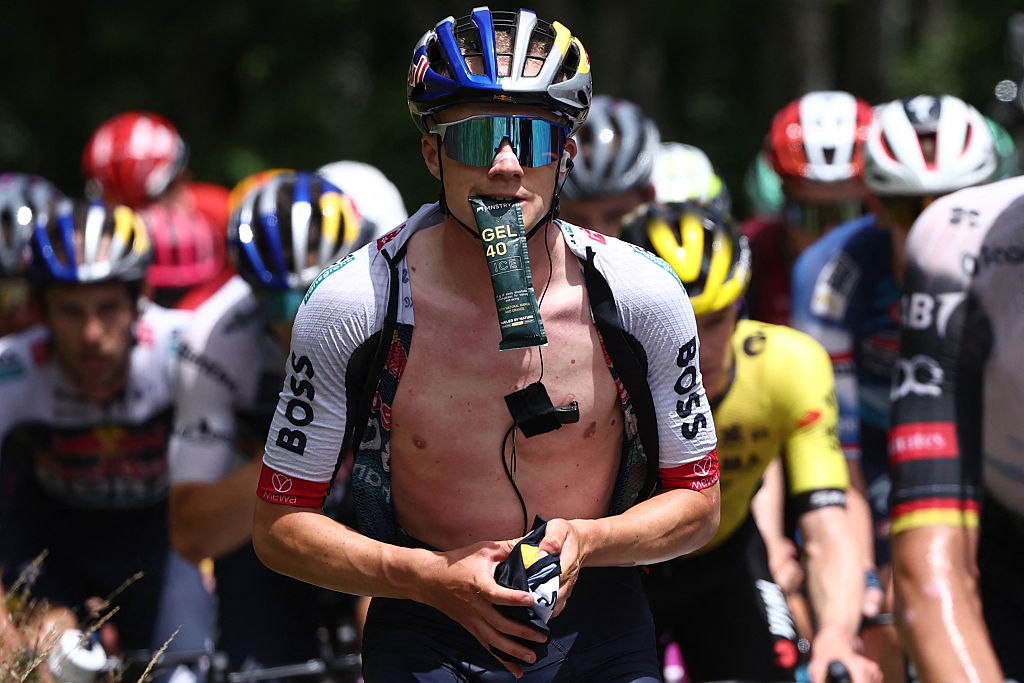
“When I started working at the elite level, I’d work with Italian teams whose ethos around ‘hitting race weight’ was, if you have pounds to lose, just eat an apple,” says Weber.
“Thankfully that has changed. We know you can safely reduce bodyweight while preserving muscle mass.”
How riders fuel has been transformed both on and off the bike that, adds Spragg, has resulted in positive changes in overall body composition.
“Basically, riders aren’t in calorie deficit to the degree they were years ago, meaning you don’t start eating muscle.”
Countless features have been written on the super-charged peloton fuelled by consuming up to 160g of carbohydrates per hour on the bike.
More gastro-friendly formulations, a greater understanding of fuelling on the fly and gut training are seen as reasons why riders now regularly consume far more than the previously accepted limit of around 90g an hour.
But occupying fewer column inches despite its significant impact on shape and speed is the periodisation of nutrition.
This involves adjusting a rider’s food and nutrient intake according to their training demands, recovery needs and competition schedule.
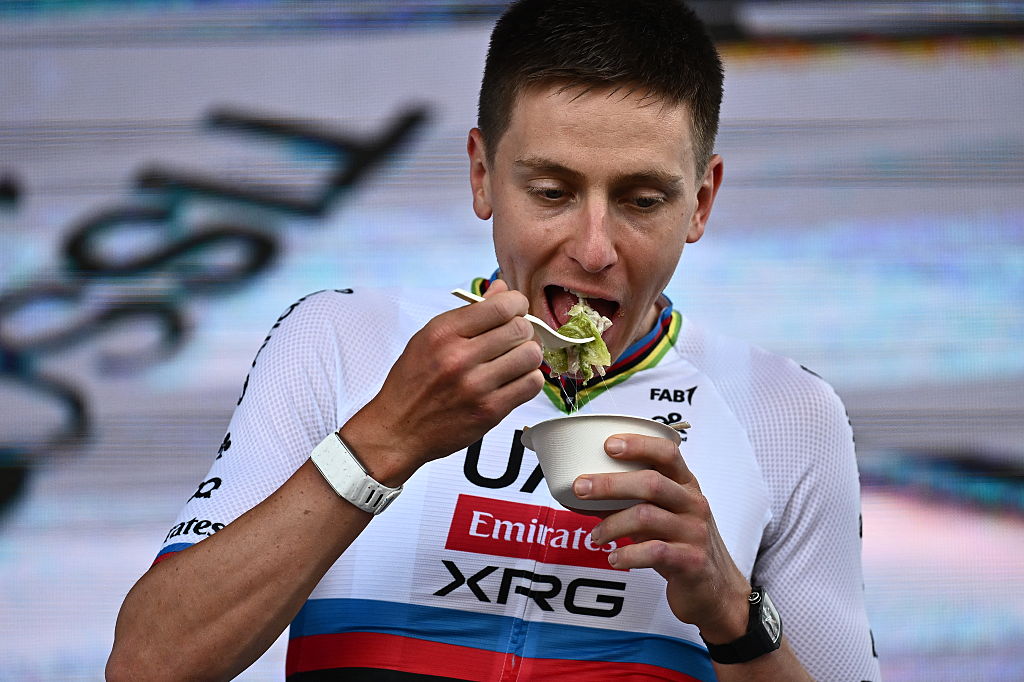
Take carbohydrate, where intake is generally increased before and during high-intensity or long-duration sessions, while easier recovery days require less.
This approach enables cyclists to fuel for the required workload, supporting training quality while helping to manage body composition and reduce the risk of low energy availability.
Technology has played a part in implementing this periodised model, which is particularly useful when a rider’s training at home and not on training camps or races where they are fuelled by team chefs.
“We work with Hexis,” says Spragg. Hexis is an increasingly popular food app that uses a traffic-light system to inform the rider whether they’re underfuelled, overfuelled or spot on.
It reveals the macronutrient breakdown of everything a rider eats to guide carbohydrate, protein and fat intake.
It links with TrainingPeaks, so the rider can integrate kilojoules-burnt information into their daily nutritional equation.
Rapid recovery
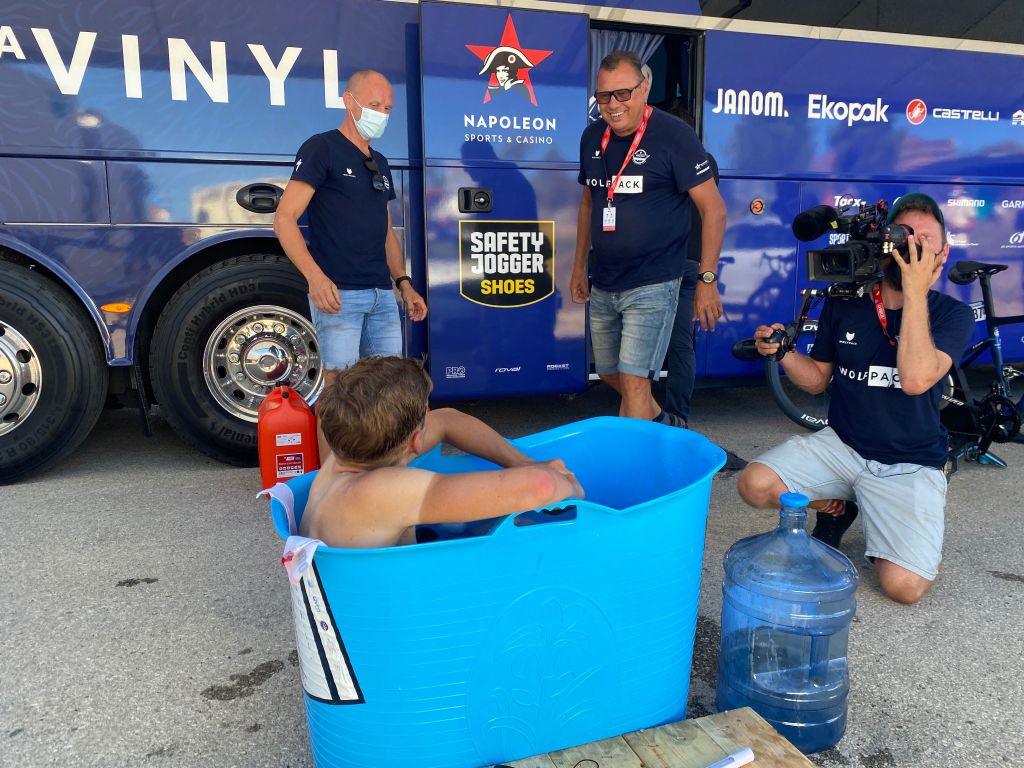
Insufficient recovery can send a rider spiralling. They overreach and, in more severe cases, overtrain. Inadequate recovery combined with high training loads can also contribute to low energy availability, where the body isn’t receiving enough energy to support both exercise and normal physiological functions.
The result? Unintentional weight loss and becoming noticeably leaner, plus persistent tiredness, a drop in strength and irritability.
Thankfully, a greater focus on what a rider does between sessions aims to cut the chances of overtraining and boost repair and rebuild.
Cold-water immersion; mobility work; active recovery rides; carbohydrate-and-protein replenishment, kickstarted by a post-ride shake; compression garments… they’re scientifically proven methods used in the professional peloton to accelerate recovery.
There’s also the old-school but massively effective massage and, in 2026, nothing gets more focus than sleep.
“We have mattresses from our partner Elite Beds,” says Spragg. “Each rider tried out several mattresses during pre-season where the Elite team came over to our Switzerland base and set up their different mattresses in the garage.
“At the races, we also use dehumidifiers to purify the air, plus we use air-conditioning units and set the riders’ rooms to around 16 to 18°C and 40 to 50% humidity.
"If we can do that, we’ll then recommend they have a hot shower before bed. That slightly elevates core body temperature.
"When they then hit their bed, it begins to fall again and it’s this that can help kickstart sleep. We also have blackout blinds, though they’re rarely needed.”
Spragg says they use the great sleep-inhibiter, caffeine, but judiciously. “We look at a rider’s role and target for that stage,” he says.
“If they’re going for GC and it’s a time trial, it’s likely they’ll have caffeine. If we have a sprinter and it’s a climbing stage that’s not too brutal, meaning they can comfortably sit in the grupetto and make the time cut, they won’t.
"They don’t need to optimise performance that day and we know caffeine could affect their sleep. Recovery really does help a rider race better and hopefully fend off illness.”