SQUIRREL_14092699
The Thule RoundTrip MTB case is built for riders who travel regularly with their mountain bikes and want a worry-free travel experience. You'll need to be happy to pay £749.99 / $999.95 / €849.95 for that peace of mind, though.
The case blends a solid, wheeled base with a semi-structured upper and numerous internal features built to ensure your bike arrives at its destination safely.
While initially a little complex to work out, the bike-loading system makes packing and unpacking a bike a quick affair once you’ve got the gist of it. From car park to oversized luggage belt, the case is a breeze to use in airports, too.
However, the case is priced at a premium, and its structure adds weight, so heavier bikes might not come in below airline weight limits.
3 key things you need to know about the Thule RoundTrip MTB
- Easy to pack, with integrated workstand
- More than adequate protection for mountain bikes
- Expensive and heavy
Safe and secure
The key thing with any bike box you’re packing your pride and joy into is whether it’ll be safe on the other side. After 15 months of travelling with various bikes in this case, I’m yet to have any issues.
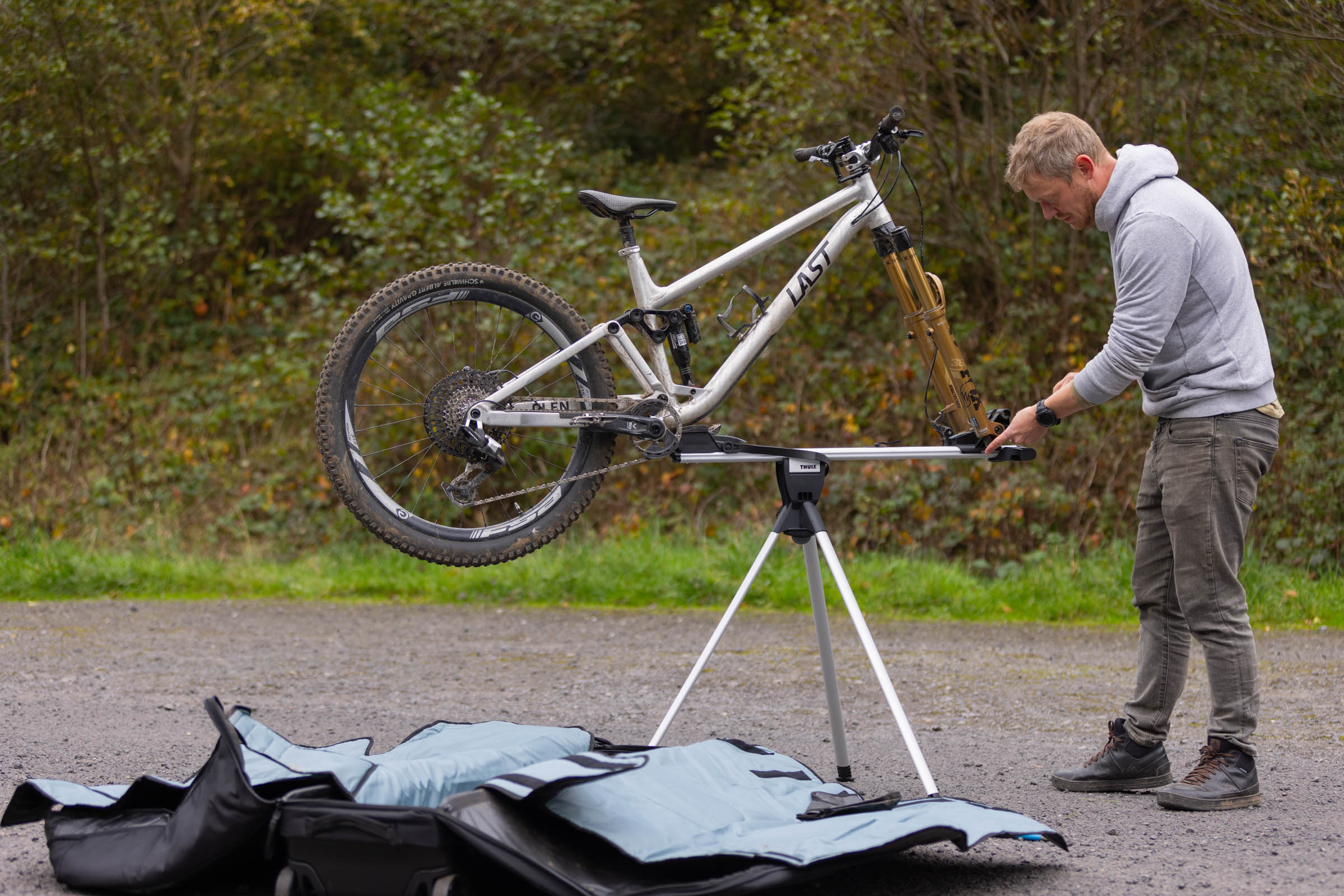
The solid base holds a racking system, into which your bike's fork is bolted, while a sturdy strap loops over the base of the down tube. The bike sits far enough into the base that derailleurs are protected, even when still attached. However, longer bikes will need to have the rear derailleur removed to ensure there’s enough space lengthways for the bike to fit.
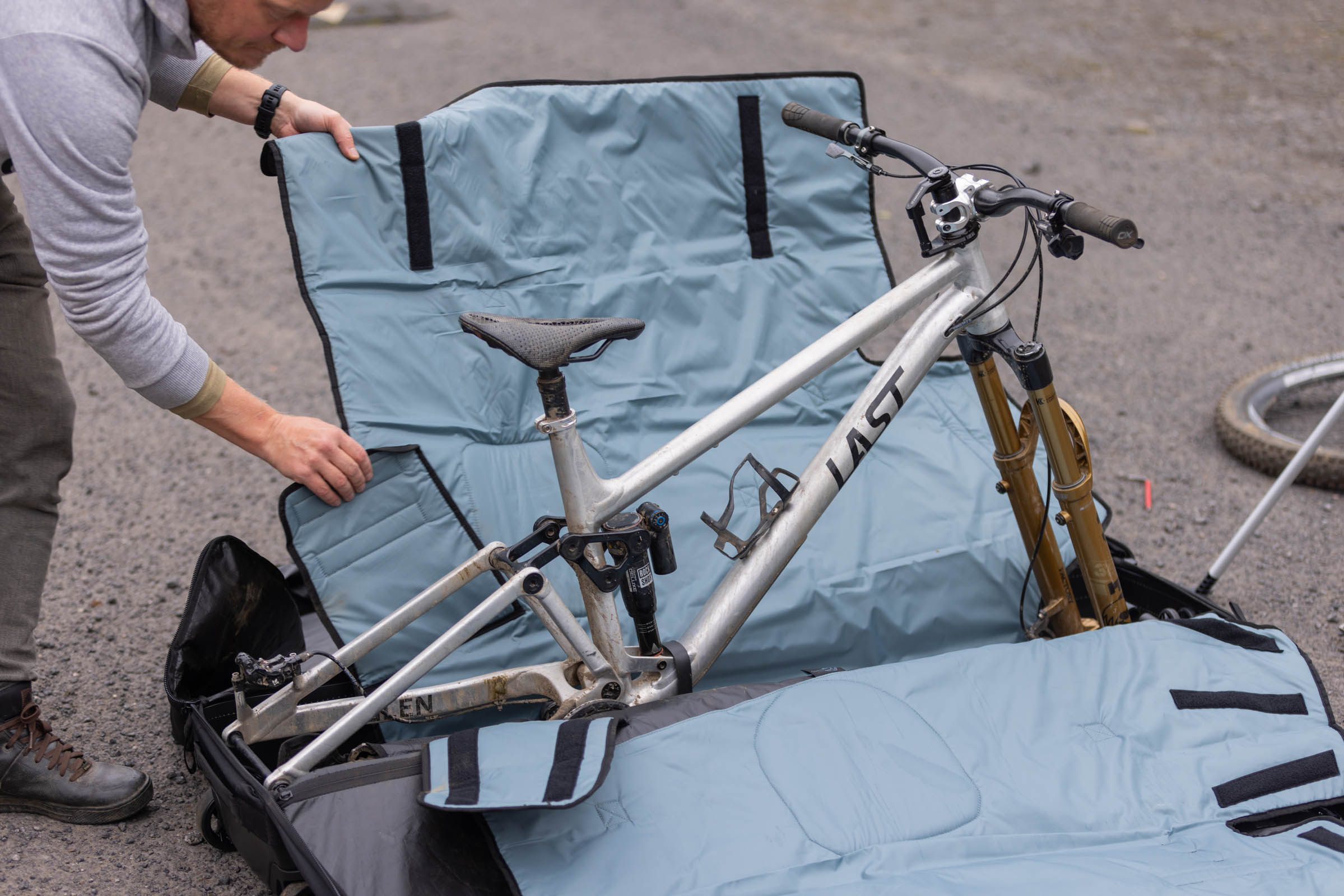
Internal padded panels then wrap around the frame, securing it in place. Three alloy D-section tubes that otherwise double up as the legs of the workstand are then threaded into these baffles, adding structure.
The panels have Velcro loops to hold the handlebar (once removed from the stem), as well as broad cups into which the rotors are dropped – you don’t need to remove them from your wheels.
I would fit brake pad spacers in the calipers to prevent the pistons popping out if the levers get squeezed in the box, because there’s not always masses of room, especially if there are short hoses/gear cables between the internal panel and the hard plastic base.
If I'm packing a bike with electronic derailleurs, I remove the battery to prevent draining it during transit.
The sturdy semi-structured walls, which include a 5mm sheet of corrugated polypropylene, complete the structure.
After numerous trips, there’s some wear and tear to the material and scuffing to the base. It only takes one sharp edge to puncture any non-hard case after all. But the wear is neither excessive nor impacts performance.
Pack it up, pack it in
The first couple of times I packed a bike in the box, it took me a while because there’s a process and set of instructions to follow. Doing so, though, ensures your bike is packed properly.
Once the wheels are removed, the internal rack is loaded onto its three legs and the bike secured to it. There’s a three-way insert that holds 15x110mm Boost, 15x100mm, 20x110mm, 12x100mm and 9mm QR front axles. This is perhaps the fiddliest job involved.
A strap secures the frame to the rear end of the rack, looping over the down tube in front of the bottom bracket. The loop is long, but I struggled for length on my Lauf Elja XC bike – it has a particularly bulky down tube architecture, and I’ve had no issues with more regular-shaped bikes.
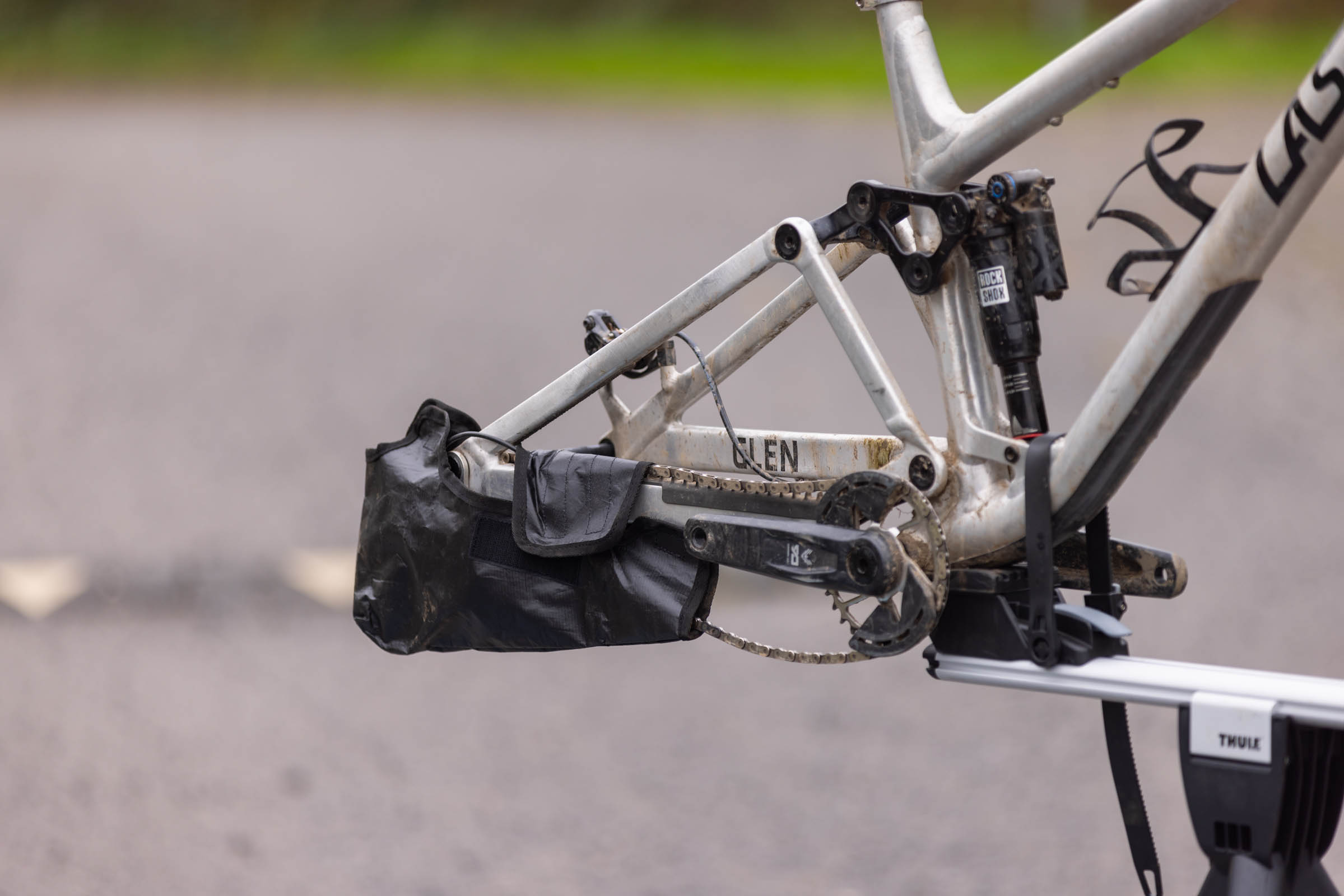
A foam pad sits under the BB to protect the frame. There’s a sleeve included into which the derailleur and chain are wrapped.
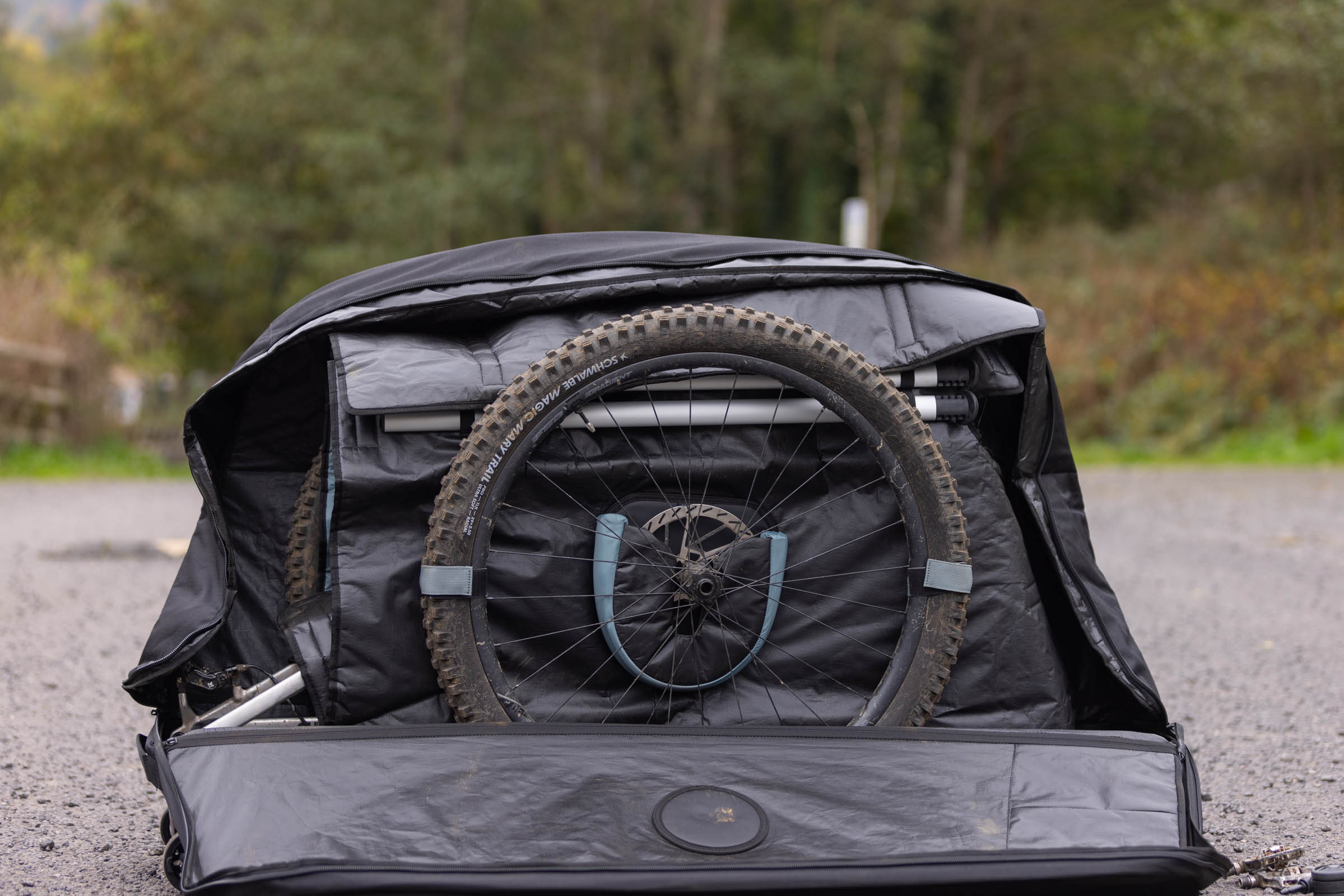
Once the internal rack has been removed from the three-legged base, it’s clipped into the base of the case, enhancing sturdiness. Then it’s a case of wrapping the bike in its panels, removing the bar and securing it and the wheels in place.
The process is reversed at the other end, and the rack, on its legs, acts as a handy travel workstand. With a bit of practice, I’ve got the process down to around 10 minutes.
It’s worth working out the balance point of the bike when on the workstand because it’s not as stable as a full workshop workstand.
Easy to live with
Once you’re packed up and confident your bike is secure, you’ve still got to get about with the case.
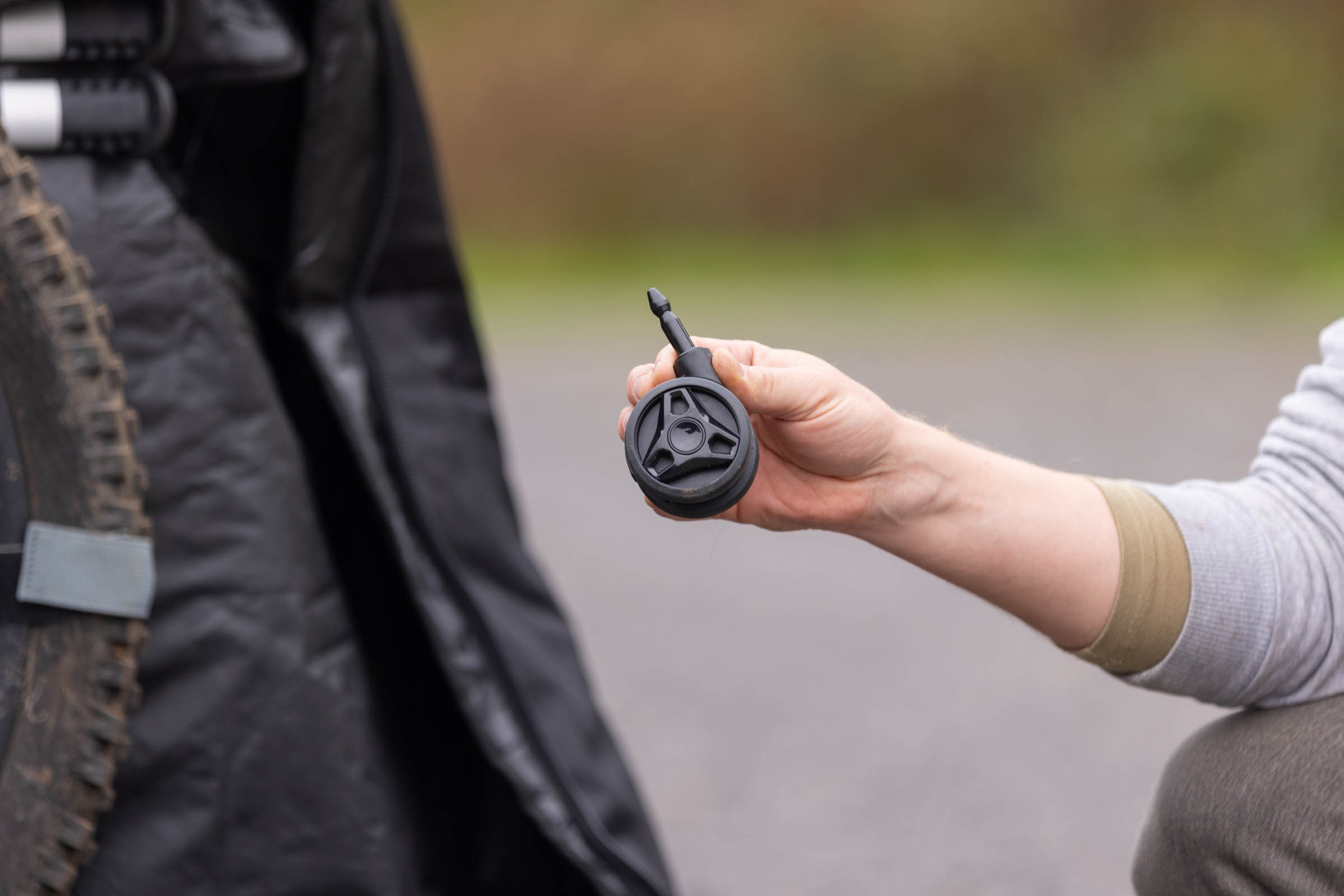
The base has a pair of wheels at the rear, which roll fairly well on typical airport and car park surfaces. They’re not as big in diameter as those on the latest Evoc bike bag, but they roll well.
At the front, a detachable wheel clips into the base, meaning you don’t need to lift the front of the case to get around. It rotates in its socket, so steers fairly easily, although it occasionally gets a little stuck.
The front wheel should be removed (and located in another internal socket) for travel, but when I’ve forgotten to do so, it’s always been there at the other end.
The base occasionally bottoms out when pulling over kerbs or changes in surface angle because the wheels don’t stick out far from the base. There’s enough structure to the case that you can rest hand luggage on the top as you pull it around via the comfortable yet low-profile handles.
When storing it away, the case folds into itself, while exterior straps ensure it doesn’t unfurl.
Get your measurements done
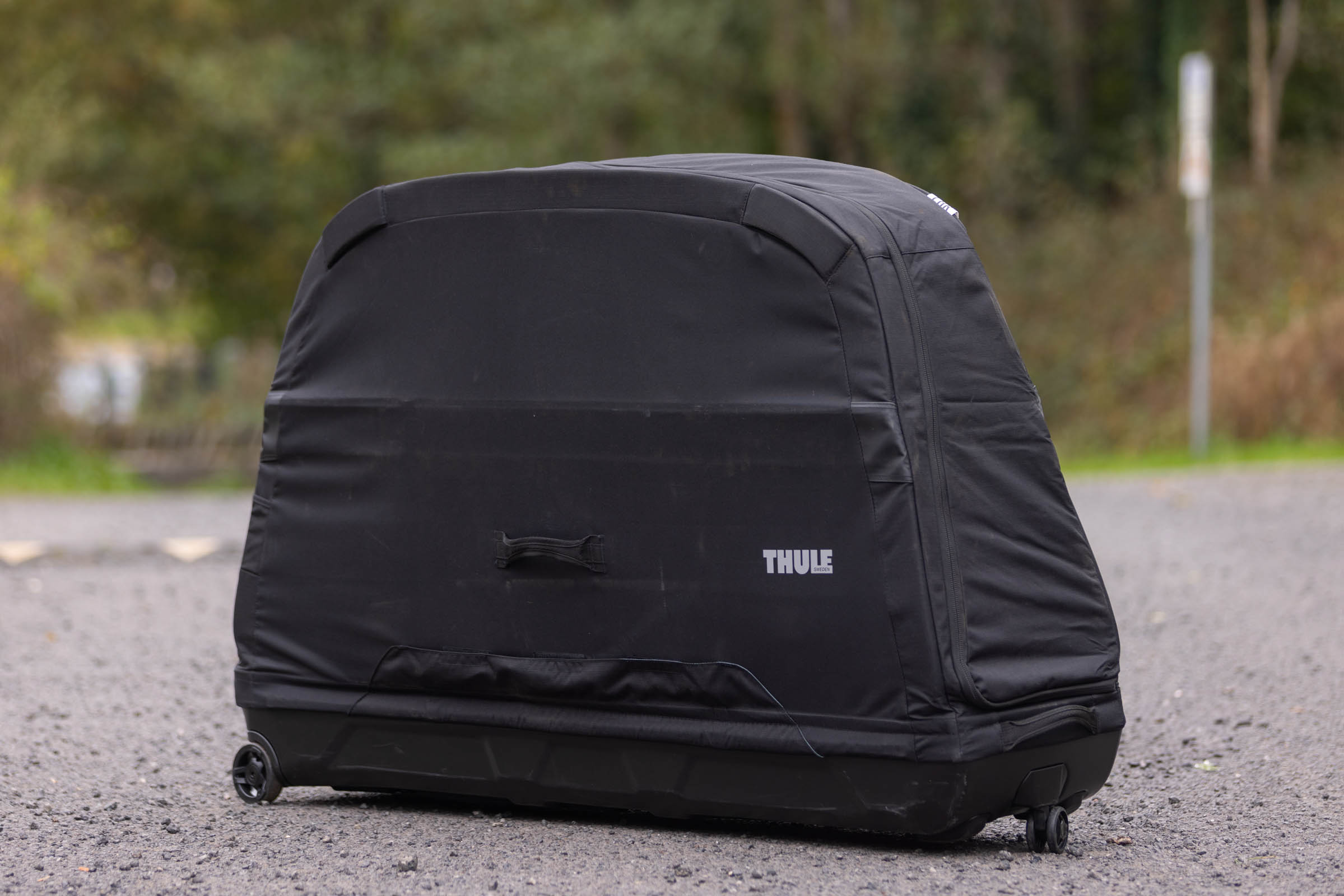
My experience is that most bikes fit inside the box easily enough. The biggest bike I've used is a 150/160mm trail/enduro bike.
That bike had a 1,286mm wheelbase, just within the 1,300mm maximum specced by Thule, and did not necessitate removing the rear derailleur. The 1,448mm front-centre put the BB right at the back of the internal rack’s foam support, but it was just about OK.
The stack of that bike is 643mm with a moderately healthy dose of spacers under the stem – there were no height issues to the top of the bag.
Of note, though, is that the weight of the case is 14kg. The above 150mm bike weighs 16kg, so combined there’s only 2kg wriggle room within the standard maximum weight allowed in an aircraft hold.
As such, additional items such as tools, spare parts and clothing generally need to be taken in additional luggage. This makes it around 5kg heavier than Evoc’s Bike Bag Pro (£750 / $1,000 / €795).
Thule RoundTrip MTB key spec
- 14kg weight
- 1,300mm wheelbase maximum
- No extra packing materials needed
- Every axle standard catered for
Thule RoundTrip MTB bottom line
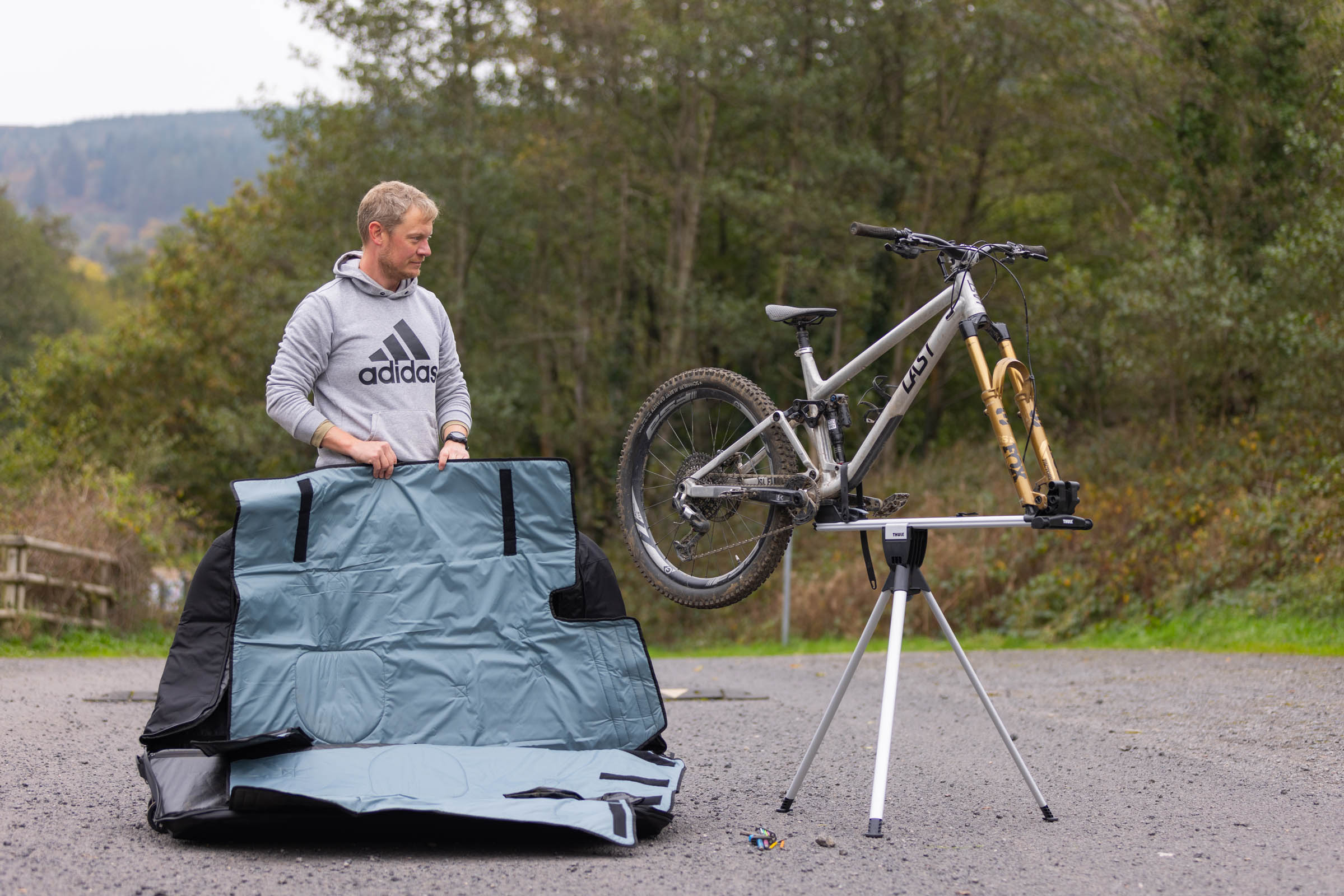
The combination of ample protection, ease of packing and unpacking, and excellent handling means Thule’s RoundTrip MTB bike travel case impressed during testing. I have had no concerns wrapping my pride and joy in it, and giving it to the baggage handlers.
It is heavy, though, which may limit owners of more burly bikes, or those who like to stuff their bike bags with extra kit. At £749.99, it’s one of the more expensive options on the market.
That said, if the weight works for you, it’s one of the best ways to get your bike from home turf to foreign soil.
SQUIRREL_14092699