SQUIRREL_14126669
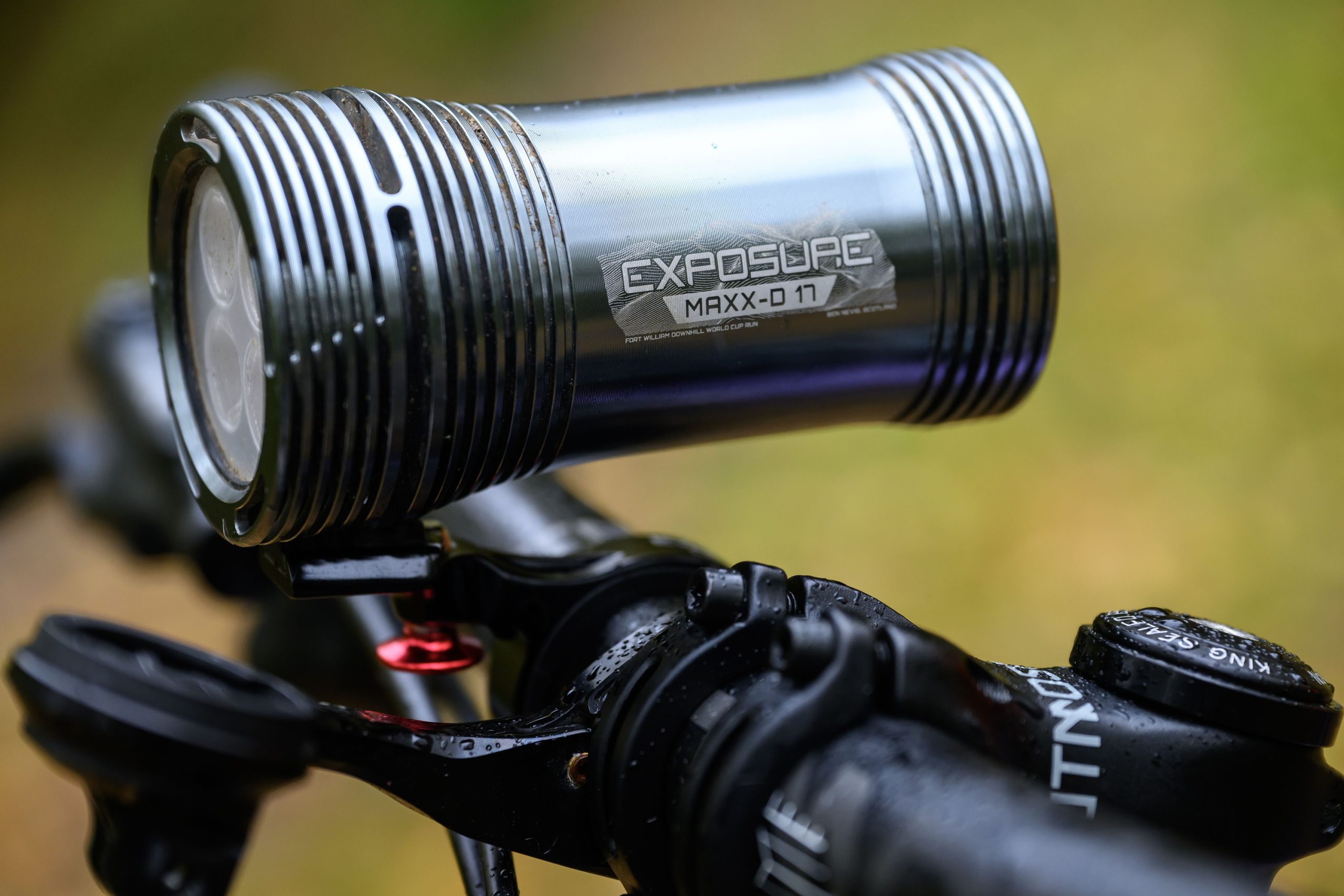
The MaXx-D Mk17 is the second-tier front light in Exposure’s off-road light range with Reflex Technology, sitting below the Six Pack Mk15.
It can kick out up to 3,000 lumens, bumping up to a whopping 4,850 in Reflex mode (50 lumens brighter than its Mk16 predecessor) on full power.
The light now comes with USB-C charging, a widespread feature that’s been rolled out across Exposure’s 2026 front-light range – something many riders, myself included, had been yearning for.
The MaXx-D Mk17 has proven an excellent light in testing, comfortably getting me through three ultra-endurance races and a 600km audax. The non-standard charge port that used to be a niggle is no more, but the bar clamp continues to be a little fiddly and the Reflex mode is on the subtle side.
Exposure MaXx-D Mk17 front light – what you need to know
- Made from machined 6063 aluminium with four white LEDs.
- The new USB-C charge port replaces the 4x1.7mm 5V DC connector of old, with charge times claimed to be 66 per cent faster.
- ‘Power Bank’ mode means you can charge devices straight from the light.
- Comes with Exposure’s new OSD+ Screen, which is 70 per cent bigger.
- Uses the brand’s Reflex 2.0 Technology, which automatically changes the light’s output according to the speed and terrain.
- Seven programs to choose between, with 17 modes in total.
- Claimed IP67 water resistance, up from the IP65 rating of the Mk16.
- Weighs 327g on my scales – 2g lighter than claimed.
Exposure MaXx-D Mk17 front light performance
I tested the MaXx-D Mk17 for over a year on a variety of road, gravel and mountain bike rides.
It’s been my front light of choice for three ultra-endurance races – Across Andes, Race Around Rwanda and Basajaun – with Race Around Rwanda the longest of those at 1,000km with in excess of 19,000m elevation.
I also relied on the light for the Bryan Chapman Memorial – a 609km road audax from the bottom to the top of Wales and back again. While Exposure has a dedicated array of road lights, I’m happy to compromise with the MaxX-D’s portlier weight for its longer battery life on dimmer settings.
Illumination is excellent on both the road and trails, with an impressive beam reach that throws plenty of light ahead of you. While I wasn’t able to ride off-road with quite the same urgency as I would in the daytime, I could see technical features with plenty of warning, whether that was off-piste or on dedicated trails. That importantly included a tarantula on a Chilean climb.
The beam shape is well concentrated on the trail, without leaving any abrupt edges and with no distracting hotspots.
Of course, you could also use a helmet-mounted light if you want extra firepower on the trail, but the MaXx-D Mk17 more than fits the bill as a standalone light for riding at night.

The light proved particularly invaluable on Race Around Rwanda because I only had 12 hours of daylight. Some of the remote trails I had to negotiate were very rough and rocky, and peppered with crudely constructed wooden bridges that would wedge your front wheel and send you flying over the bar if you weren’t careful.
The battery life is excellent and easy to read from the new colour screen – and you can switch modes or programs if you find you want to prolong it on longer rides. On my ultra-races, I was able to get the best part of two nights out of the light, but I’d always charge it whenever I had an opportunity.
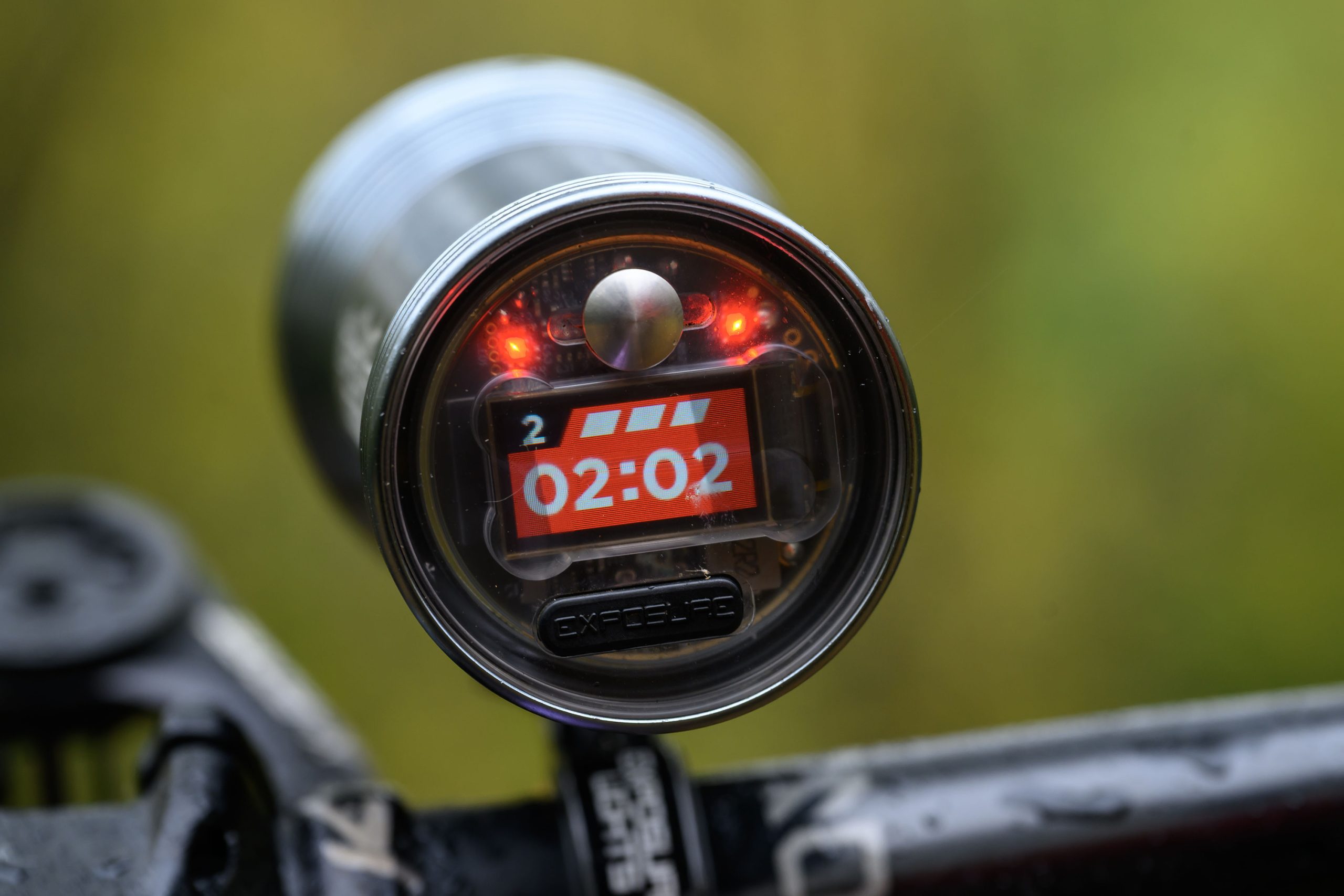
I particularly appreciated the fact that it’s now quicker to charge, although it still takes a while – it took 3hrs 44mins to fully recharge the light from empty (quicker than Exposure's four-hour claim).
I experimented using most of the modes throughout the year, but ended up settling on the fixed-lumen modes for the majority of my testing. The changes in lumen output in the Reflex 2.0 modes are quite subtle, although I noticed the light brightening while braking hard.
What’s more, the Reflex modes are very thirsty on the battery, and I wanted to prolong the light’s life on my longer rides.
Moreover, the light only offers low and high modes when using the Reflex function, and when I had to turn it onto the low mode on the road to avoid dazzling car drivers, I found the brightness a little too dim.
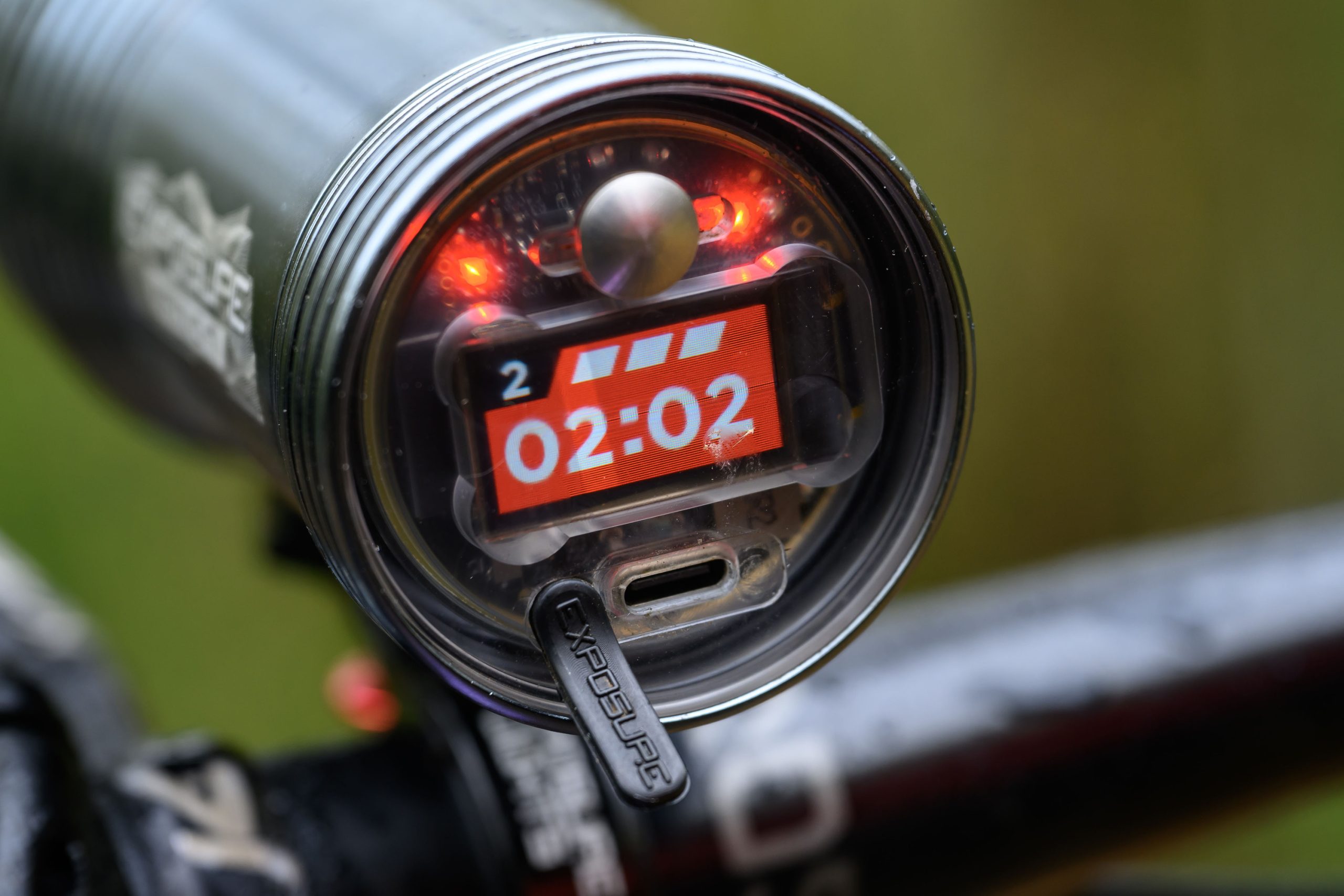
Switching between the various modes is intuitive, by pressing the ‘Function’ button to cycle between the two or three modes available on each program, which are then displayed on the colour screen.
Changing between programs is less straightforward, and not something you can perform on the move.
With the light turned off, you hold the ‘Function’ button down until you see an icon of a timer with a cog. You then repeatedly press the Function button to cycle through the programs, before stopping at the one you want.
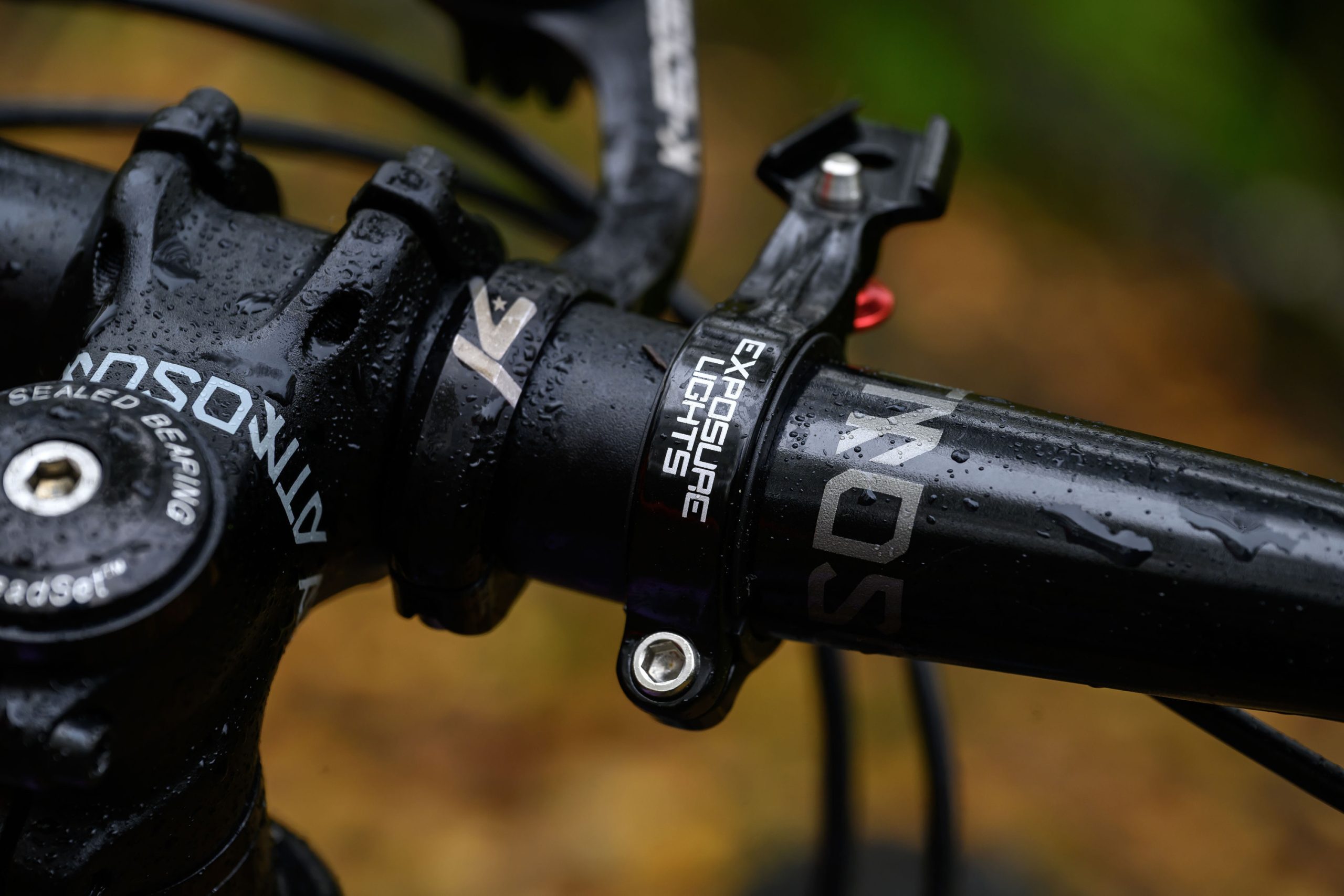
Exposure continues to rely on its bar clamp, comprising four pieces: two parts to the mount body, a 4mm hex bolt and an appropriate handlebar shim. The two pieces that make up the main mount body slot together using a jigsaw-style fitting, which can be fiddly to lock into place while simultaneously trying to hold the mount around the handlebar.
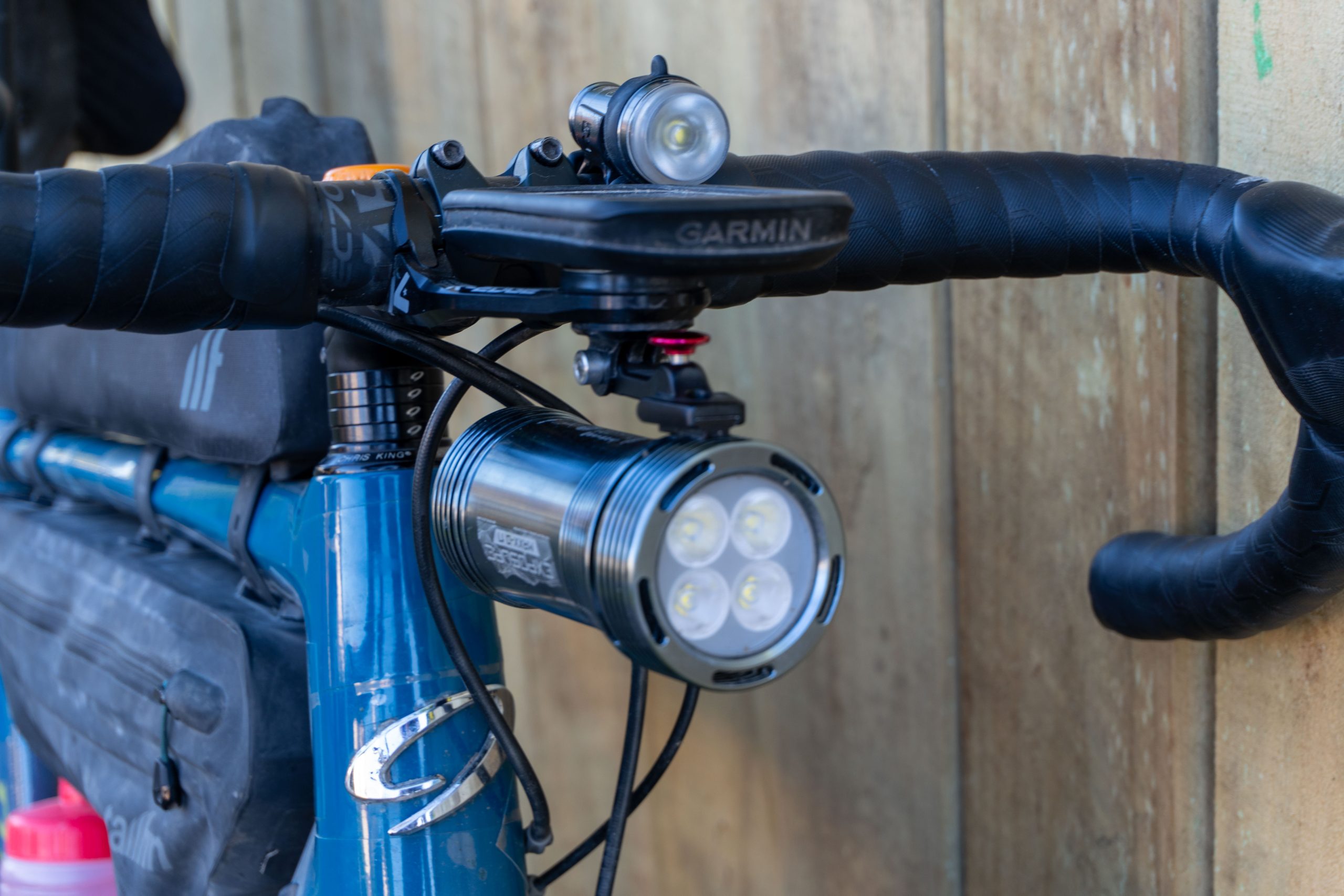
I preferred to mount the light on my K-Edge Combo Mount using Exposure’s dedicated ‘GoPro Mount to Exposure cleat’ (£18) because it gives you more handlebar real estate and doesn’t interfere with a bike computer’s screen.
Like previous Exposure lights I’ve tested, the red button (which is unchanged) that holds the light in its mount is prone to freezing, which can be deeply irritating.
I performed a run-time test using the High mode on Program 4, which Exposure says should last for two hours.
The light lasted for 2hrs 41mins before going into ‘Reserve’ mode – at that point, the light said it had two minutes remaining. It then lasted another 1hr 37mins before fully dying, which should be more than enough to get you home.
Finally, there’s no getting away from the fact the MaXx-D Mk17 is a pricey light. It’s over three times the price of Magicshine’s Ray 3000 at £139.99 / $159.99 / €159.90 and significantly more costly than Niterider’s Lumina Max 2500 at £220 / $199.99 / €230.
However, the MaXx-D Mk17 is capable of brighter outputs, has an all-metal construction and I can confidently say from experience Exposure lights last a very long time – my MaXx-D Mk13 is still going strong after more than six years.
Exposure MaXx-D Mk17 front light bottom line
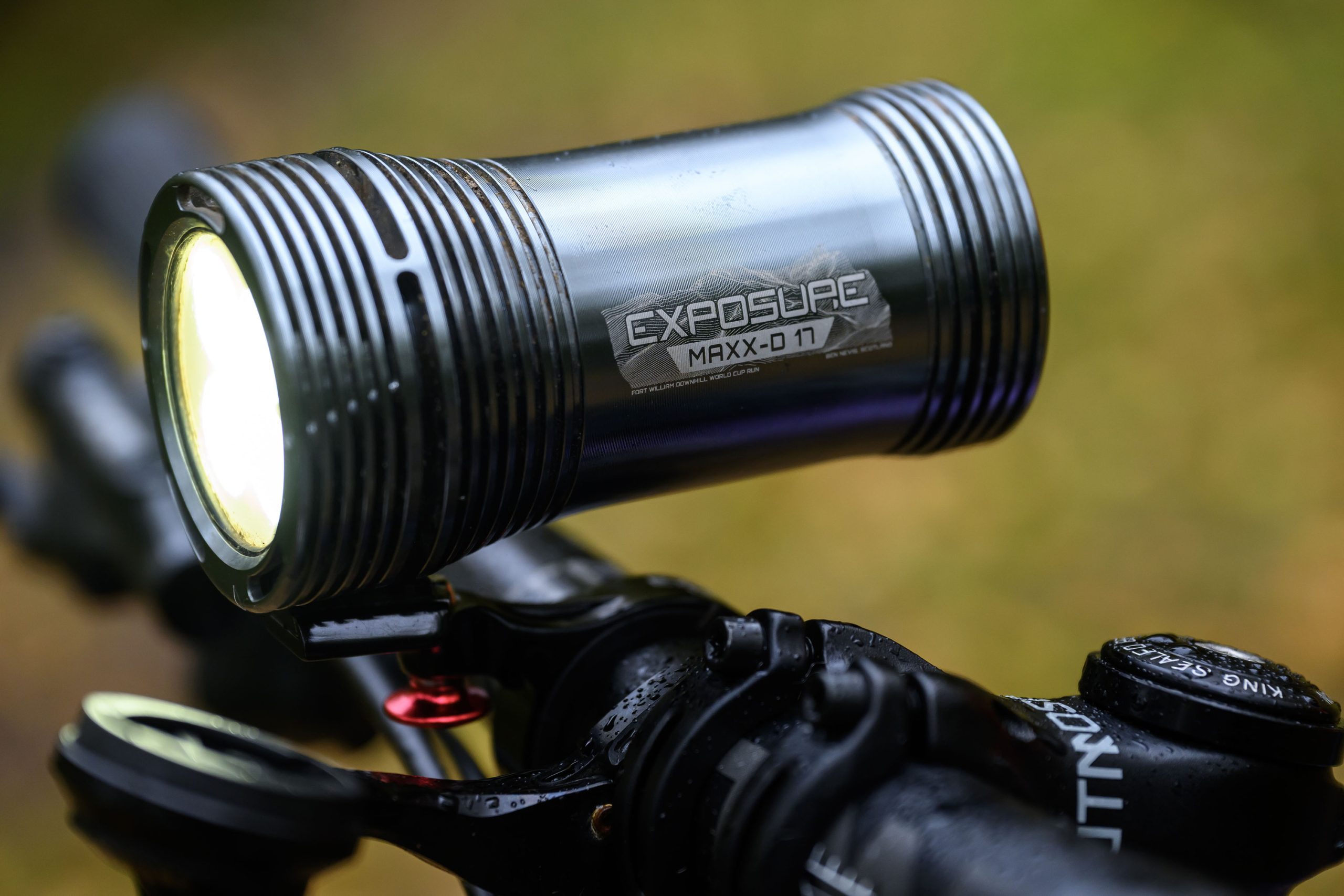
The MaXx-D Mk17 does nothing to diminish Exposure’s excellent reputation, with the reassuringly robust build quality you’d expect from the brand.
It performs brilliantly on- and off-road, and the USB-C charging, faster recharge time and bigger display are all worthwhile benefits over the Mk16.
I just wish there was a slightly easier solution than that fiddly bar mount and that the Reflex modes were more noticeable and not as thirsty on battery life, but that’s a small price to pay for what is close to a class-leading front light.
Product
| Brand | Exposure |
| Price | A$510.00, €470.00, £470.00, $510.00 |
| Weight | 327g |
| br_whatWeTested | N/A |
Features
| Light type | front |
| Remote switch | no |
| Integrated battery | yes |
| Features |
4 x White XPL2(W3) LEDs, IP67 rating, 16,000 mAh Li-Ion battery, Anodised 6063 Aluminium |
| Output (lumens) | 3000 |
SQUIRREL_14126669