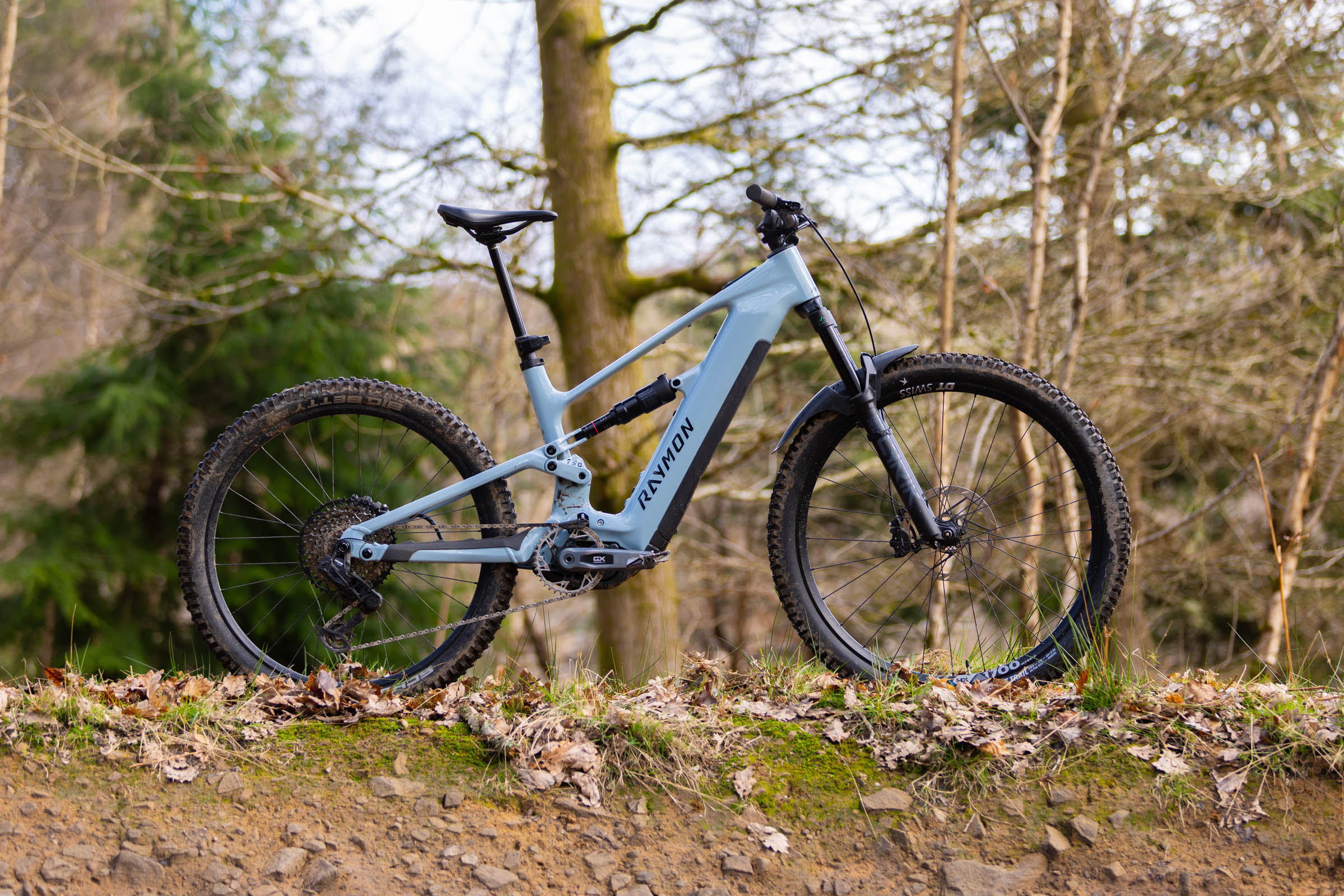
Raymon is a German brand founded in 2012. The Ravor is its full-power ‘all-mountain’ eMTB, designed for aggressive trail riding and long days out.
It uses Yamaha’s latest PW-X4 motor, with a maximum 100Nm of torque and 800W of peak power, paired with a large 840Wh battery.
Rolling on a mixed-wheel setup (29in front, 650b rear) and delivering 150mm of travel at each end, it should be able to handle everything from steep, technical climbs to bike-park descents and all the fun and flow in between.
Out on the trail, the Ravor quickly reveals itself as a balanced performer with natural-feeling motor assistance and predictable handling, although some suspension limitations scupper its performance as the pace increases.
For certain scenarios
One of the first things noticeable on the Ravor is how low everything feels – apart from its 25kg weight. However, the bike hides its heft well on the trail.
The combination of a low-rise (20mm) handlebar, a modest 629mm stack height (on the medium size) and 150mm of fork travel makes the front end feel as though it’s on the verge of being too low for this aggro trail bike’s intended use.
I had to use all the stem spacers available to raise the bar to achieve a position that felt comfortable enough to start pushing the Ravor Ultra on descents and see what it was capable of.
Some easy fixes would be fitting a higher-rise bar (from £30) and extending the fork travel to 160mm, by fitting a longer air-spring shaft assembly (approximately £50).
Fortunately, the bottom bracket is also slammed, at a measured 330mm. This helped me feel I wasn’t being thrown out of the front of the bike on the downs. It also makes the Ravor feel settled and predictable in corners, so I could carve confidently through both flat and supported turns.
However, it’s on the limit of being too low. On trails with deep ruts, through dug-out berms and on technical climbs, I had to position my pedals accurately to avoid clipping them or dragging my shoes in the dirt.
The geometry puzzle
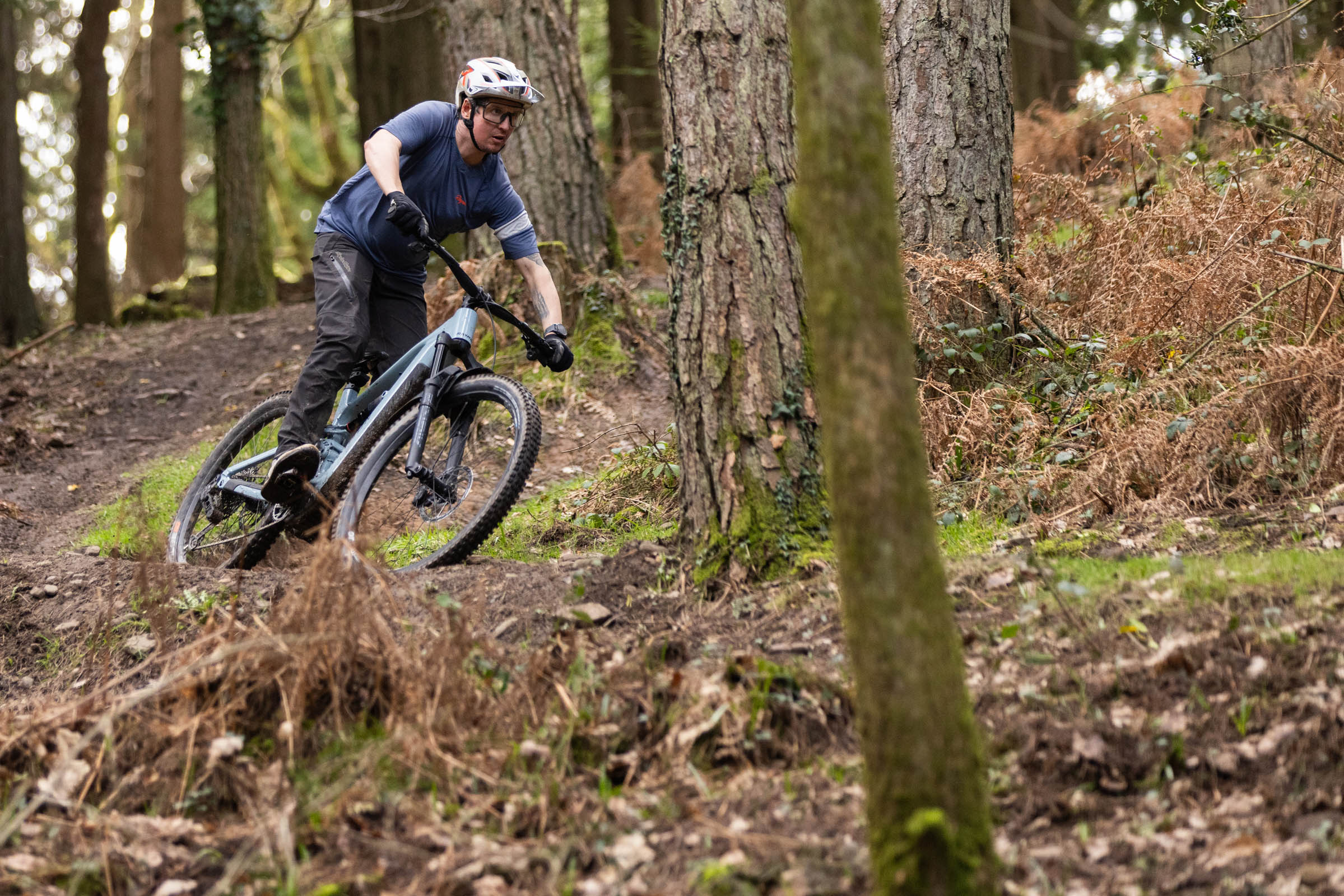
Considering its weight, the Ravor feels impressively nimble and manoeuvrable. That low BB and the not-super-slack 64.7º head angle help give it some sharpness in the corners.
The front end feels eager to dive into turns – especially because there’s already plenty of weight over it, thanks to the low bar height – and it’s easy to pick a line, commit to it and follow it accurately, particularly if the trail isn’t too steep.
Another benefit of the low BB is that it makes it easier to muscle the bike from one corner to the next.
The Raymon also feels settled, thanks to its weight and its 460mm chainstay length. While this is relatively long, it doesn’t hold the bike back or turn it into a cumbersome sled. It instead balances the front end’s sharpness with composure, helping to generate stability and grip through multiple consecutive turns.
This bike is a blast through corners, especially where the suspension doesn’t have to work too hard. Mellow singletrack, flow trails and simple tech sections highlight its handling strengths. Once the trail gets steeper, however, that low bar height diminishes confidence in the front end and the suspension starts to feel lacklustre.
The suspension compromise
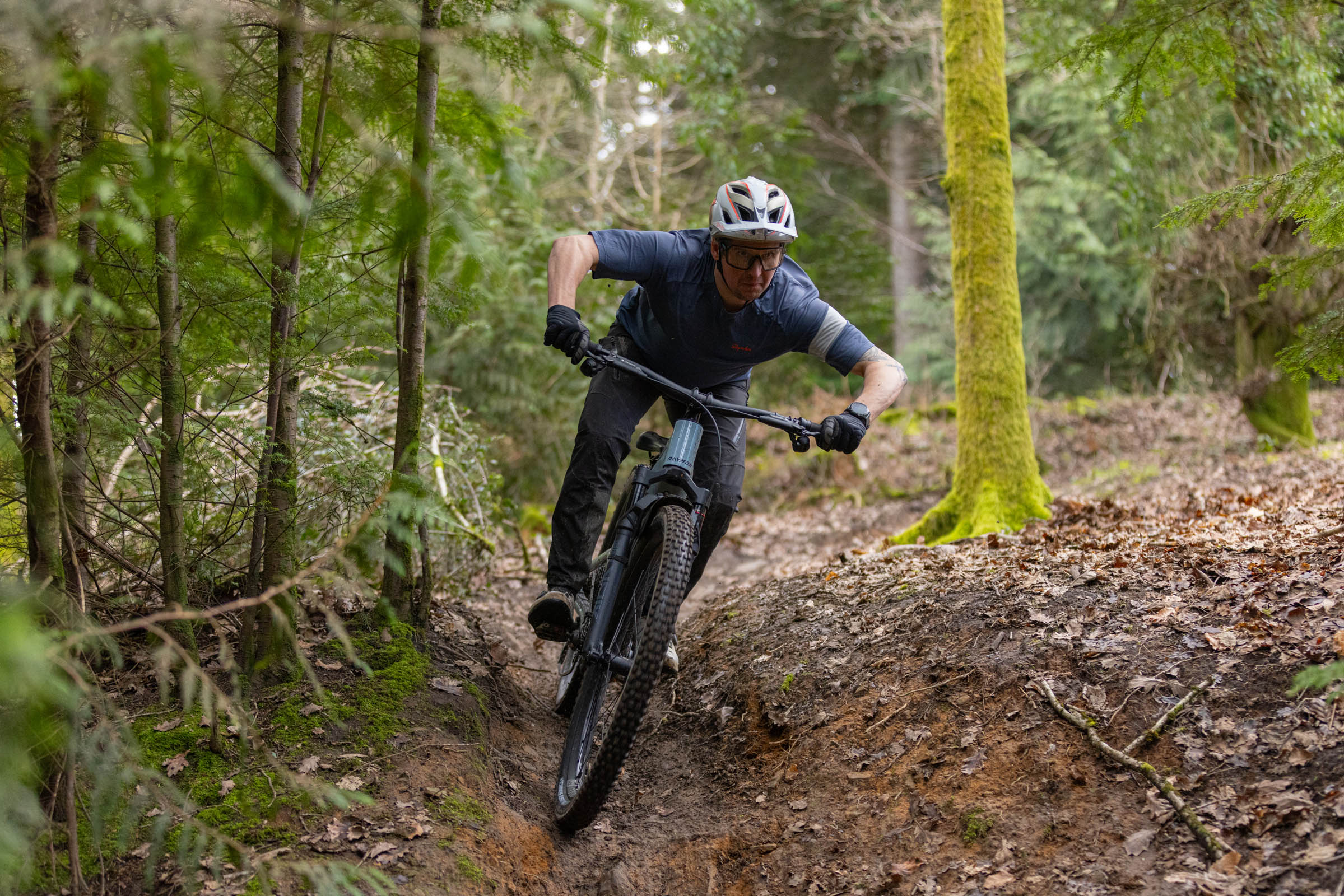
The Ravor Ultra is specced with some impressive kit. However, the RockShox Lyrik fork and Deluxe shock are undoubtedly the weak points in the bike’s build.
Both are Select-level units with less refined damping than the brand’s Select+ or Ultimate kit.
On tamer terrain, they handle modest inputs well, providing enough support to deal with compressions and cornering loads.
Their sensitivity also helps the tyres maintain contact over small bumps and the typical rubble found at rough trail centres and on worn ‘natural’ tracks.
Where they struggle is dealing with higher-speed square-edged hits – think rattling through roots, tagging rocks and pushing through braking bumps.
Here, the damping tends to spike, transferring harshness through your hands and feet, and unsettling the bike. This often resulted in reduced traction, causing the bike to get knocked slightly off-line or forcing me to brake more heavily, which only exacerbated the problem.
The suspension can be upgraded, and the chassis and handling characteristics make the bike worthy of investment. But it’s certainly the limiting factor that interrupts the Ravor Ultra’s trail flow once the terrain gets rougher.
It’s worth noting that this is an issue with the suspension and not with the frame stiffness – when loading the bike through higher lean angles, it feels surefooted without being harsh.
Yamaha’s contribution
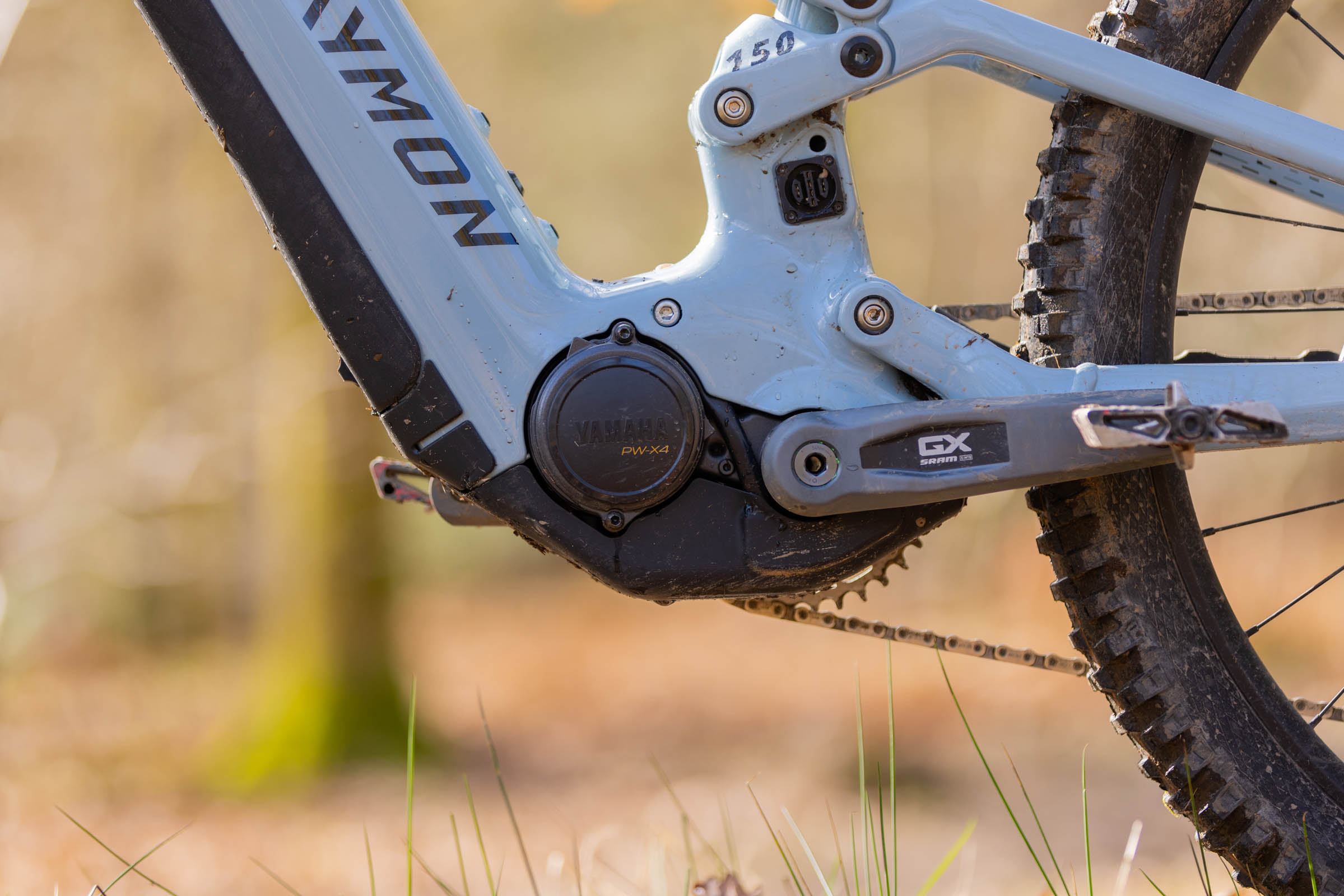
With a long history in motorcycles, you might expect MTBers to be excited to see what Yamaha can bring to the table. But it has been making ebike motors for years, without much take-up from bike brands, other than Giant/Liv.
The PW-X4 system could change that. With 100Nm of torque (in Boost mode) and 800W of peak power, it outclasses Shimano’s EP801 drive unit (85Nm, 600W), on paper, and is on a par with Bosch’s Performance Line CX (100Nm, 750W).
However, it falls slightly short of Specialized’s S-Works and standard 3.1 motors (111Nm, 850W and 105Nm, 810W) and DJI’s Avinox M1 (105Nm, 1,000W), in terms of outright grunt.
On the trail, it performs well, but isn’t class-leading in any one area. I also experienced a couple of issues with it during testing.
First, I couldn’t get the bike to pair with Yamaha’s app, despite following the instructions on Raymon’s website. I decided to leave the system in its five factory modes, rather than spend more time trying to connect it. Yamaha is expected to release a new PW-Link app in “spring/summer 2026”, which should hopefully improve things.
The second issue was noise – there’s a noticeable whine from the motor. Thankfully, this doesn’t become louder in higher-power modes, but it means you can’t ride particularly quietly in the lower assistance settings.
There was also a small amount of knocking on descents – something other motor brands have largely managed to reduce with their latest systems.
Where the PW-X4 works best is its low-cadence torque delivery. Maximum torque arrives at around 70rpm, which suits mountain biking well. On technical climbs, where spinning the cranks quickly isn’t always possible, support is strong and consistent.
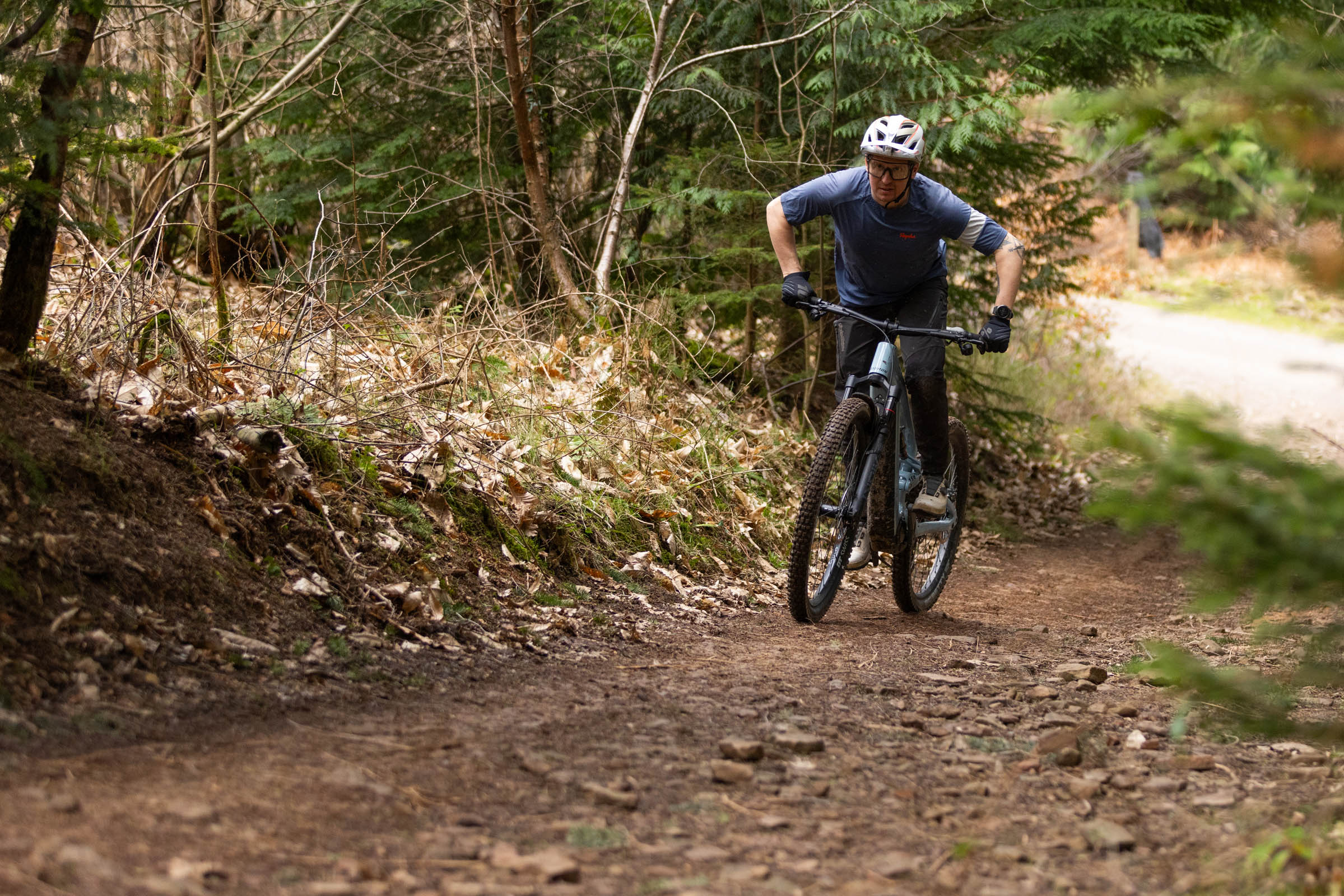
Combined with the Ravor’s long chainstays and low front end, this means it climbs well. The front wheel stays planted, while the rear finds plenty of traction.
The motor offers 360% maximum assistance. In simple terms, if you produce 100W, it can add up to 360W. That’s similar to Bosch and Shimano’s systems (both 400%), although it can’t compete with DJI (800%).
Paired with the 840Wh battery, range is impressive. On 1,000m-elevation test loops covering 21km, I finished with around half the battery remaining, when riding mostly in the third and fourth assistance modes.
Overall, the PW-X4 is a solid motor, even if it isn’t the strongest or quietest system out there. Long-term reliability will determine how it stands up against its rivals, though.
The complete package
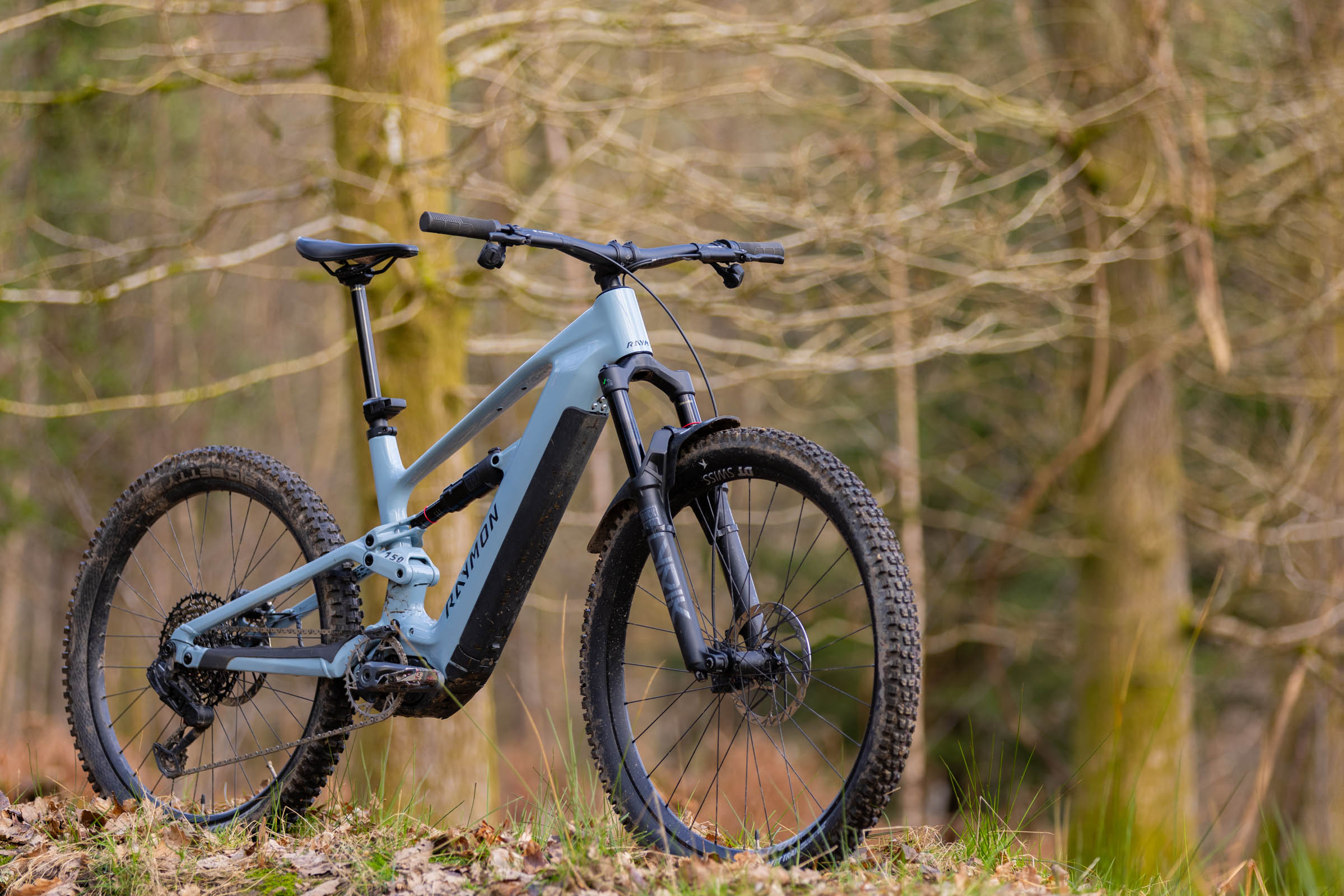
Outside of the suspension, the Ravor Ultra has a solid specification. The wireless SRAM GX Eagle AXS Transmission (with S1000 derailleur and non-series XS-1270 cassette) works well despite the significant power going through the drivetrain.
The Maven Base brakes deliver plenty of stopping power. Although they lack adjustability, their outright performance is impressive.
I tested the medium-size Ravor, which came with a 200mm RockShox Reverb AXS wireless dropper post. For me, at 173cm, this was a bit too much drop.
The radial Schwalbe Albert Trail Pro ADDIX Ultra Soft 29x2.4in front tyre performed very well.
I had more mixed results with the (non-radial) Big Betty Super Trail ADDIX Soft at the rear, though. While it offered excellent traction on climbs, it exhibited some casing squirm under high loads on descents.
Various Raymon-branded components finish off the build. While everything works well, nothing stands out as particularly premium, but that’s understandable for a sub-£5,000 electric mountain bike. The bike I tested is priced at €4,799.
Raymon Ravor Ultra bottom line
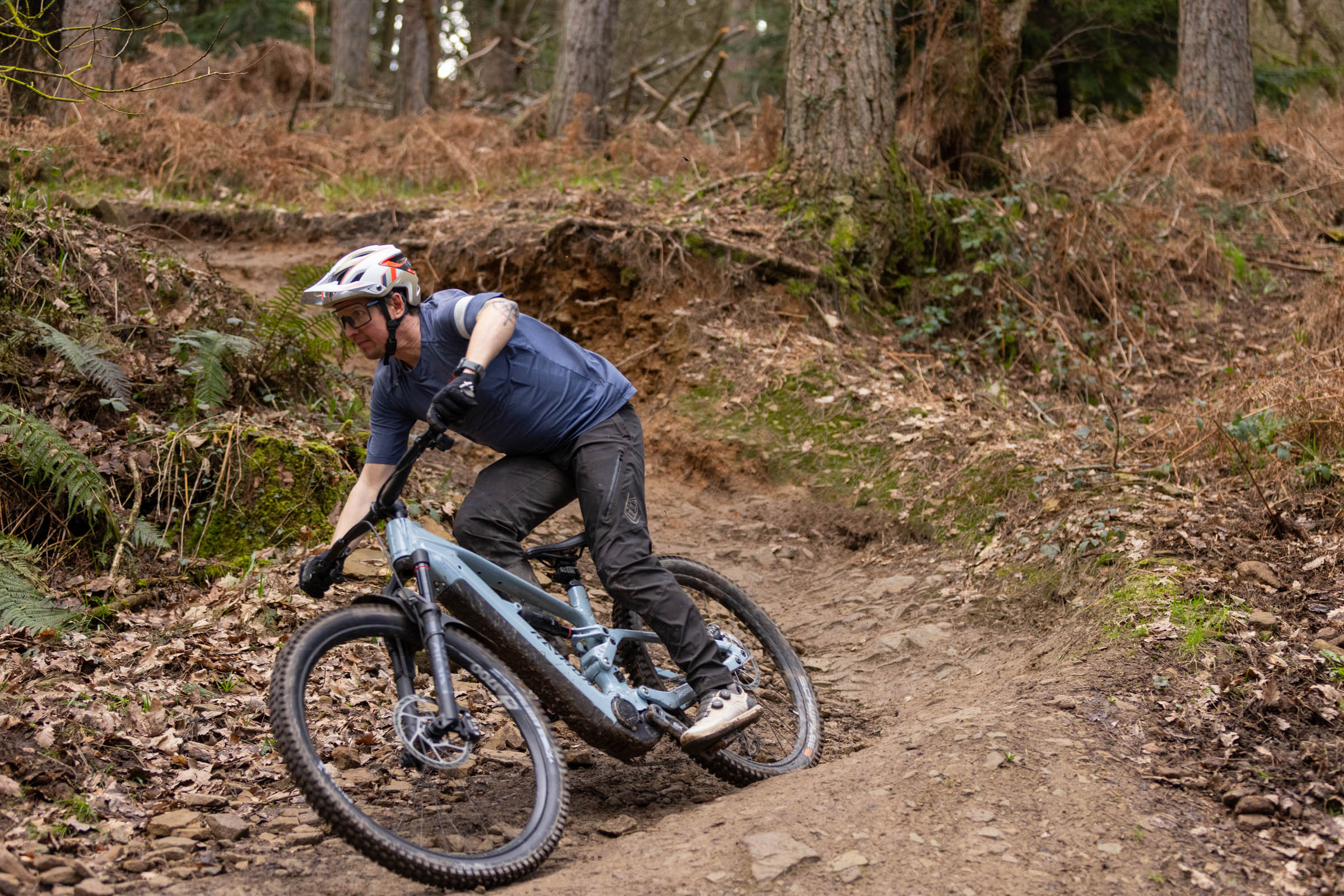
Raymon’s Ravor Ultra is a capable and well-balanced eMTB that thrives on flowing trails, technical climbs and long days in the saddle. Its low centre of gravity, long chainstays and stable chassis create predictable handling that rewards confident cornering and delivers impressive climbing traction.
Yamaha’s PW-X4 motor provides smooth assistance and excellent low-cadence torque, while the large 840Wh battery offers genuinely strong range. However, the low front end, and underwhelming fork and shock hold the bike back when the trails become steeper and rougher.
Upgrade the suspension and tweak the cockpit setup, and the Ravor Ultra could become a far more rounded and capable aggressive trail machine.
Product
| Price | €4799.00 |
| Weight | 25.00kg |
Features
| Fork | RockShox Lyrik Select, 150mm travel |
| Stem | Raymon |
| Frame | Carbon fibre mainframe, aluminium alloy rear triangle |
| Motor | Yamaha PW-X4 motor, 840Wh removable battery |
| Tyres | Schwalbe Albert Trail Pro ADDIX Ultra Soft 29x2.4in (f) and Schwalbe Big Betty Super Trail ADDIX Soft 27.5x2.6in |
| Brakes | RAM Maven Base |
| Saddle | Raymon 143 VM Fit |
| Wheels | DT Swiss HX 1700 |
| Seatpost | RockShox Reverb AXS |
| Rear shock | RockShox Deluxe Select |