Auckland Cycle Works’ Marra is a long-travel enduro (and DH-fork compatible) machine, with a steel frame and a suspension system designed using Lego, not computers.
It’s the brainchild of Gary Ewing, based in Bishop Auckland in north-east England, hence the company’s name. He was inspired to design the KOLARP (Kind Of Like A Rear Pivot) linkage while chatting with Mike Hall, the round-the-world cyclist who died after being hit by a car in Australia in 2017.
This high-pivot system differs from other suspension designs by moving the instant centre (virtual pivot point) from just ahead of the chainring to inside the rear wheel.
In doing so, braking performance is said to be improved vastly.
Downhill demon
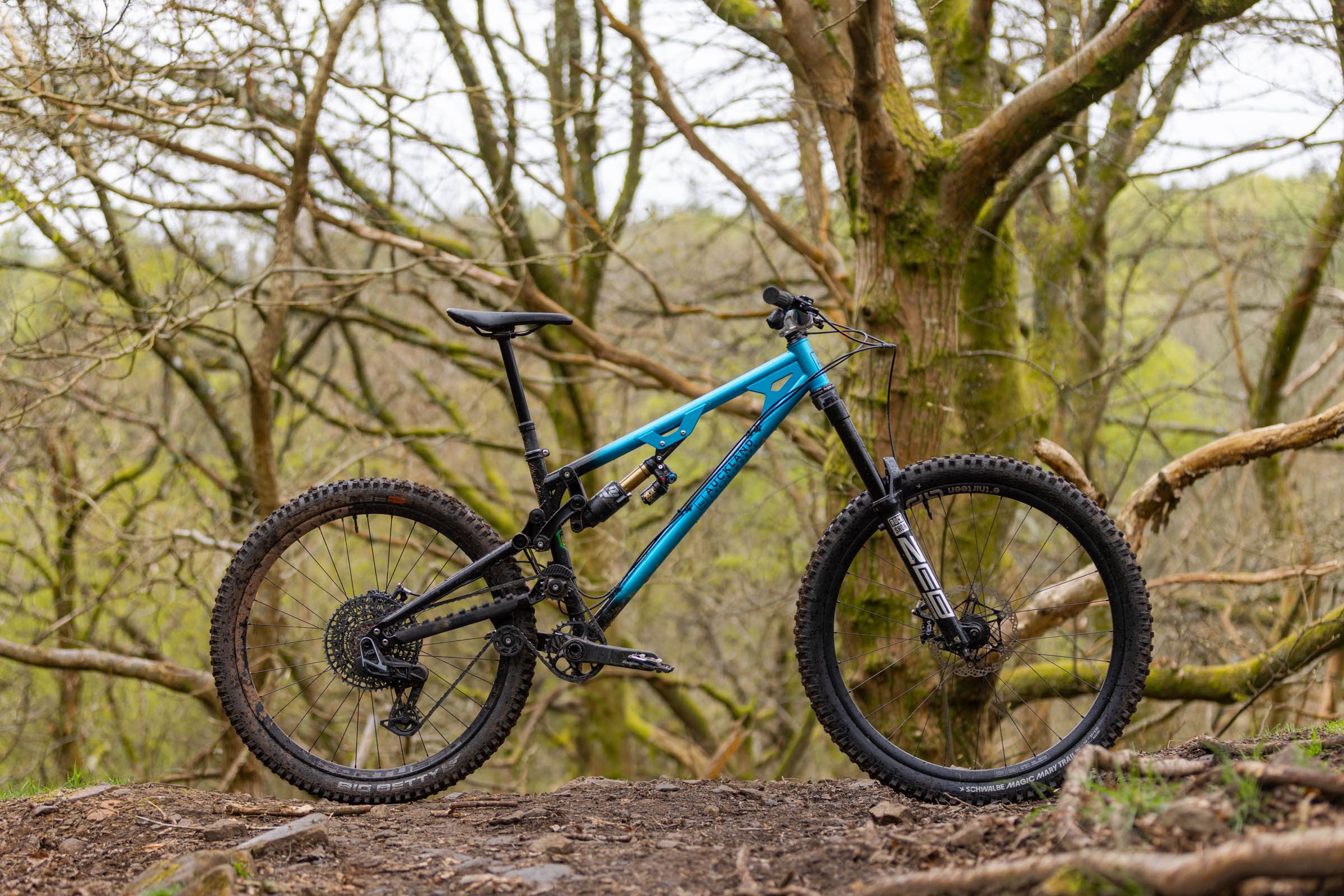
With 180mm of travel at each end (in the standard configuration) and mixed wheel sizes (29in front, 27.5in rear), the Marra’s strengths are focused on the descents.
The custom build I tested arrived with some burly components. While no featherweight at 17.6kg (size large), it’s not as heavy as you might expect a steel behemoth with so much travel to be.
As such, the Marra is a capable climber, although unsurprisingly not the most energetic-feeling.
There’s a hint of movement from the shock, but the bike sits at its sag point and doesn’t wallow below it, even on the steepest pitches. This means the geometry is well-maintained, keeping you perched nicely over the cranks, and with the bottom bracket (BB) high enough that pedal strikes on more technical climbs weren’t an issue during testing.
With that little bit of movement and some chunky tyres, rear-wheel traction is very good, so when you’re winching up steep, loose and steppy tracks, you can keep the power going without it slipping out.
A 29in rear wheel would roll better over steps, where the smaller hoop can hook up a little, but that’s more of a side note rather than a downfall of this mullet-only frame.
Most notable on these steeper pitches is the grumbly drivetrain in the lowest gear. The Marra uses all of a standard-length chain, and with two idler pulleys for it to wrap around – one on the lower link, just above the main pivot, and the other on the chainstay – it pulls the derailleur cage very close to the lower idler.
The result is there’s a lot of bend in the chain between the derailleur and idler. This makes pedalling feel a little rough, impacting on efficiency, and hampers shifting performance in the cassette’s easiest gears.
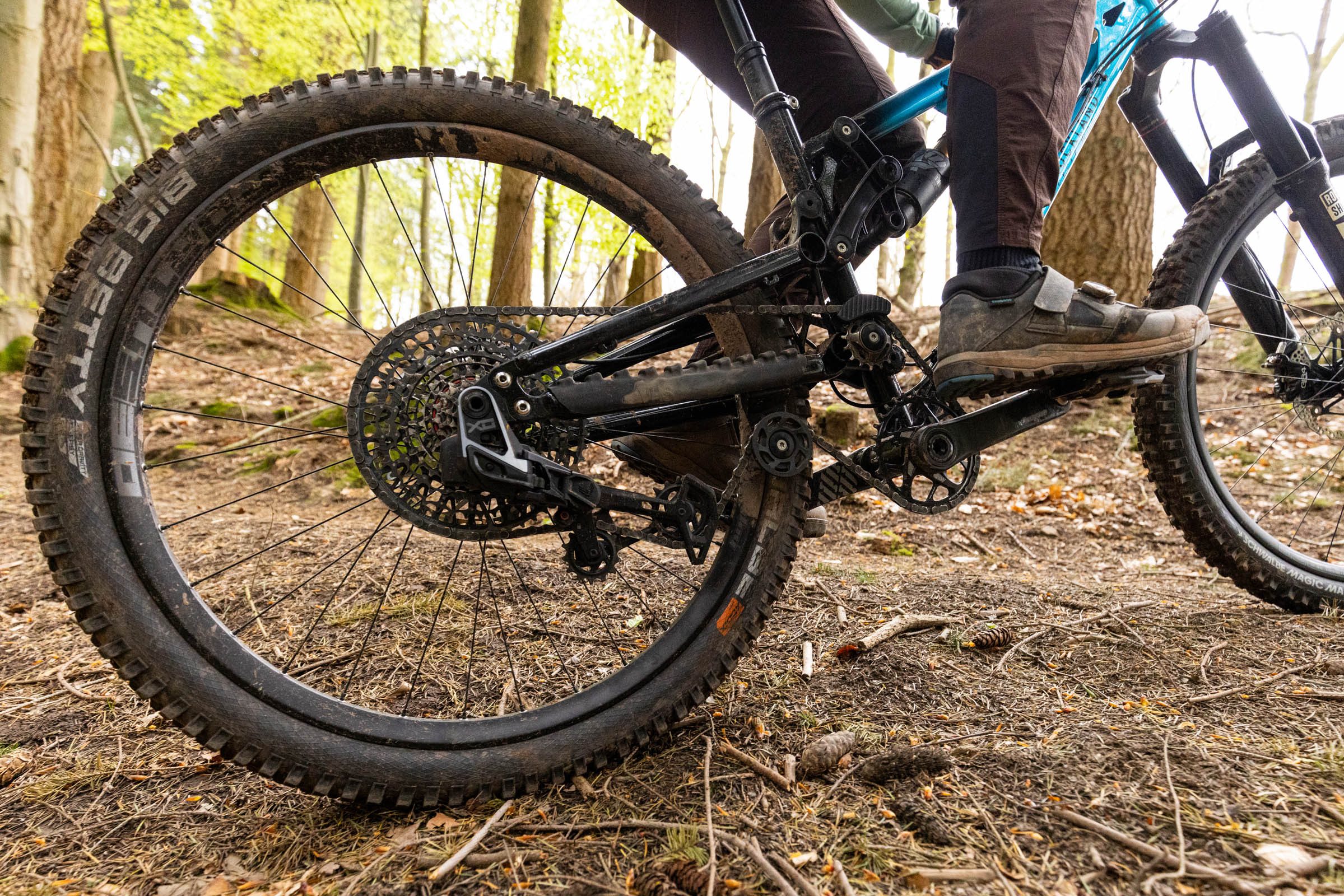
Ewing says this is something that may be modified for future iterations of the Marra. However, it’s a compromise he’s willing to accept to maximise the descending performance.
On gentler inclines, the Marra works best if you’re sat down. As with any full-suspension bike, and more so with longer-travel ones such as this, if you stand up and mash at the pedals, the bike sinks much deeper into its stroke and sucks your power.
Proportionally, my test bike’s 624mm effective top-tube length felt good in the saddle, with the 78.5º seat tube angle (at my 730mm saddle height) spot on.
I tested the bike mostly in the standard 440mm chainstay setting, with +/- 6mm flip chips supplied. On the steepest pitches, the longer chip offered more stability and control, and meant the bike was even less likely to loop out.
Gravity takes hold
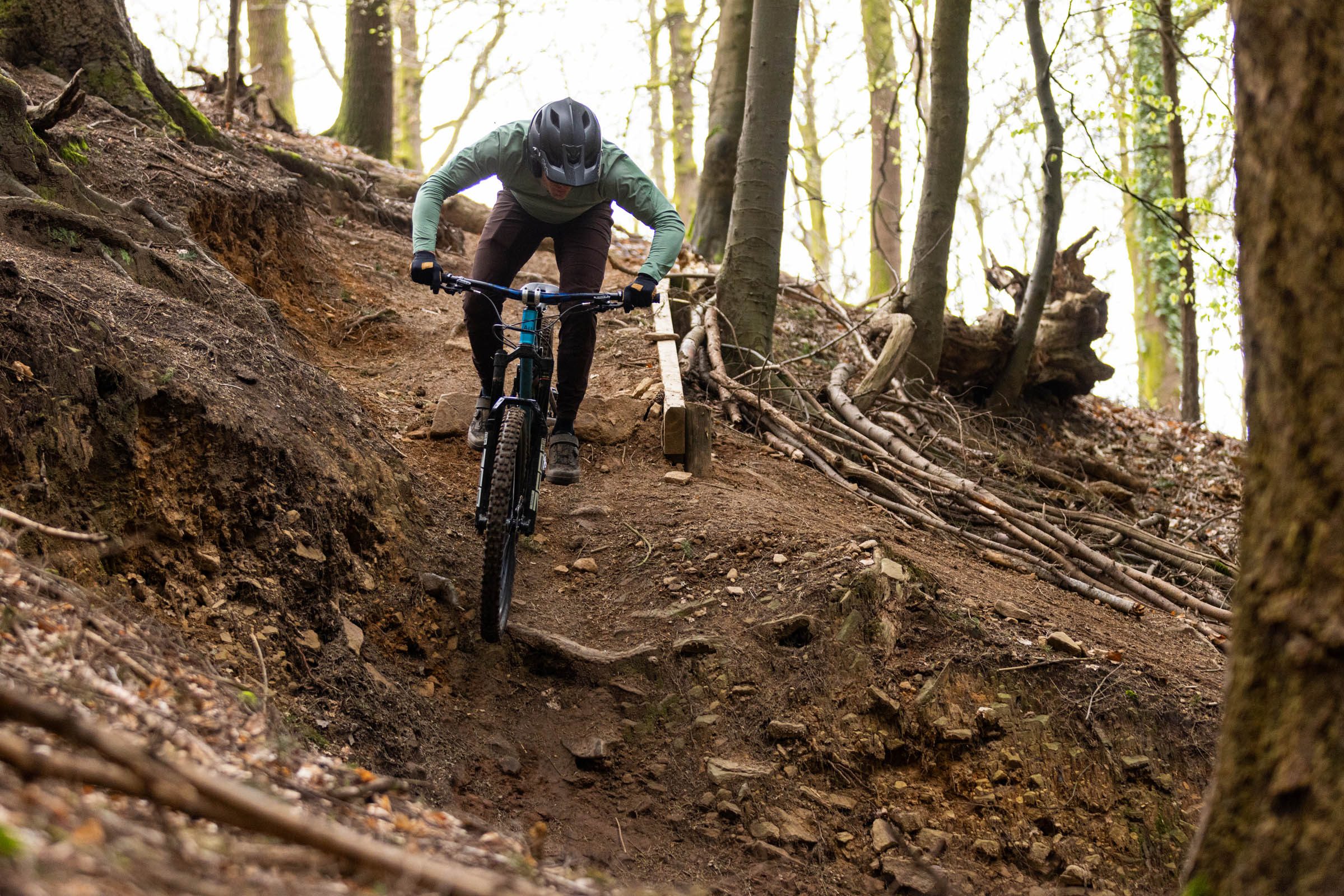
Of course, the fun stuff comes on the descents, where the Marra shines. The suspension’s axle path is initially rearward, before going near-vertical from around the sag point. In its early travel, the bike flutters nicely over smaller bumps. It then sits comfortably in its active mid-stroke for a lot of the time, before the shock’s air spring ramps up to deal with the biggest hits.
When you’re in this mid-stroke portion of the travel, the KOLARP system provides good levels of support through which to push on the lips of jumps or, if you’re on more rolling trails, to generate speed through pumping. It also gives a very smooth feel when landing.
The vertical axle path and the positioning of the two idlers means the bike’s wheelbase doesn’t extend (there’s zero chain growth throughout the travel), keeping its fore-aft balance nice and predictable.
Let’s slow things down
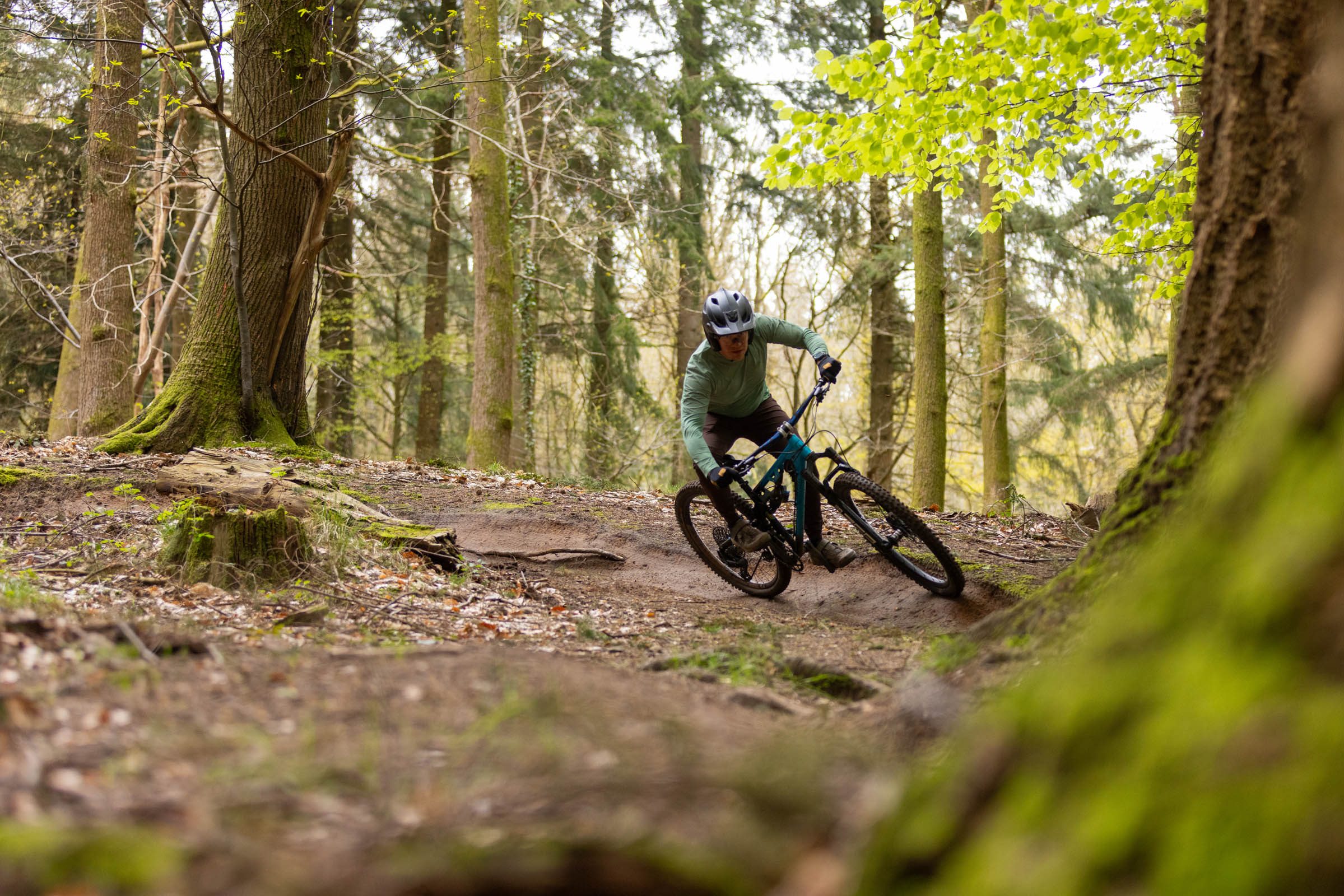
Auckland’s claim that the KOLARP system excels during braking seems to hold up. The linkage is designed to push the rear wheel into the ground when you’re on the anchors, while still keeping the suspension active enough to deal with undulations.
Braking is only effective when the wheel isn’t locked up, and pushing the tyre into the ground increases traction, helping to avoid this.
In addition, braking seems to help keep the bike propped up in its travel, so even when you’re hammering down technical sections, it tends to sit in that active mid-stroke, which keeps it feeling calm and composed on fast, rough terrain.
The Marra still rides well on twistier tracks. It’s a big, long and slack bike that’s got a bit of heft to it, but the 440mm chainstays (in its stock setting) help keep it feeling pretty agile. This is aided by the smaller rear wheel, which helps the bike dip and drop into corners with relative ease. Despite its 350mm BB height, which is pretty tall, the Marra doesn’t feel awkward or unwieldy.
The steel front triangle provides plenty of steering precision without feeling harsh or stiff – the flex characteristics of the bike feel pretty spot-on. You can still barrel your way through a rock garden knowing exactly where the front wheel is going to go, without being pinged offline, and it largely deals confidently with off-camber root beds.
While the Marra feels stable and precise on slow-speed tech, it comes alive on faster trails, where it can be popped and pinged from line to line, and slung from side to side through loaded turns.
Unconventional methods
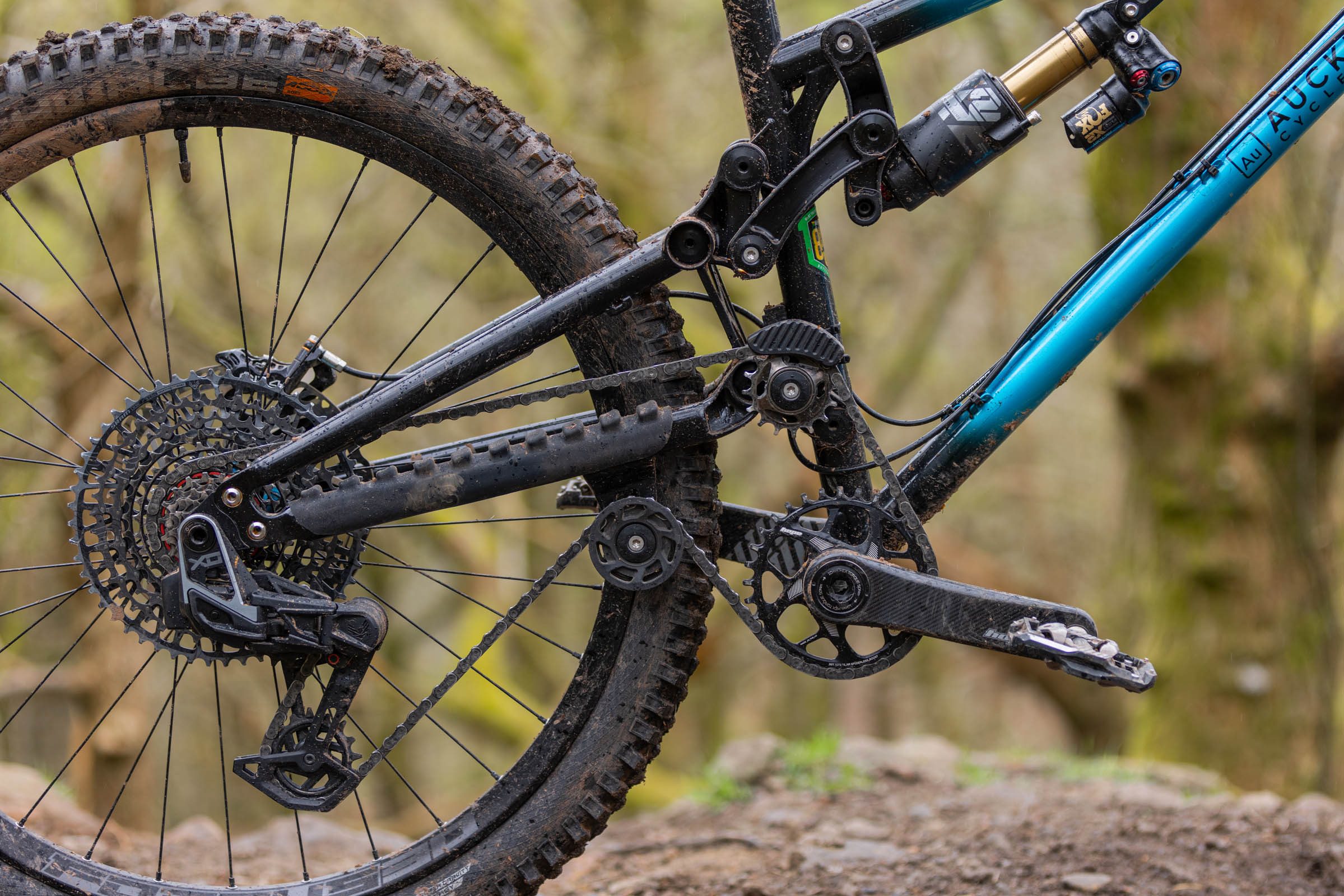
There’s a lot going on with the Marra frame, both in terms of design and customisation. Ewing used Lego to design the KOLARP linkage because he felt the major suspension software used by most MTB brands had in-built assumptions regarding how bikes can and should work.
He felt there was more to explore when it came to braking performance, and the software wasn’t able to compute his ideas with enough accuracy.
The instant centre (IC) is the point the rear-wheel axle pivots around. On a single-pivot bike, its location is obvious – it’s where the main pivot sits. But on any design where there’s one or more secondary pivots between this and the rear axle, the IC changes position as the suspension compresses.
It almost always moves within an area in front of and above the chainring, rising higher on a high-pivot bike. But the KOLARP IC is located within the rear wheel, and it’s this that Ewing says gives the Marra its top braking characteristics.
When you hit the anchors, the IC moves backwards, effectively extending the length of the swingarm, increasing the shock’s leverage and keeping it active.
As the suspension compresses, the chainstays effectively rotate around a point along their length, with the rearward portion moving up and the forward section moving down.
Custom details
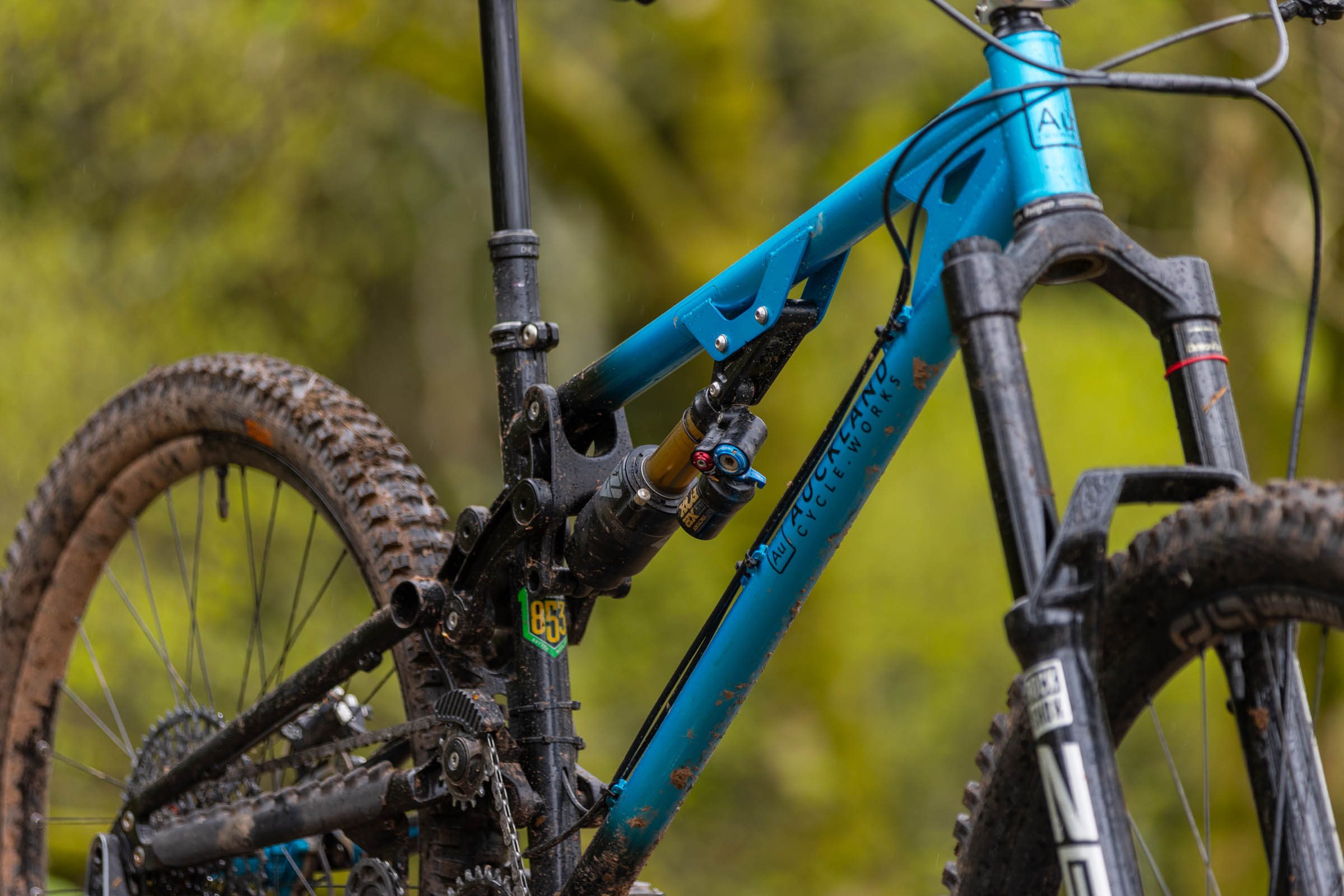
The Marra is a bespoke frame, hence the high price and limited availability. Buyers can customise the paintjob and the geometry (stack, reach and head angle).
On top, there are the three chainstay-length options. The dropout chips slightly alter the travel of the frame, with the longer chainstay setting giving a touch more travel, and vice versa. A little further geometry adjustment is available by moving the main shock mount forwards and back.
I found setup took a little trial and error to get the best out of the Marra. Initially, it felt a little dead, but I got there after making a few tweaks to the damping and ensuring the shock sag was within the recommended, lower-than-usual 16 to 17mm range.
Auckland Cycle Works Marra bottom line
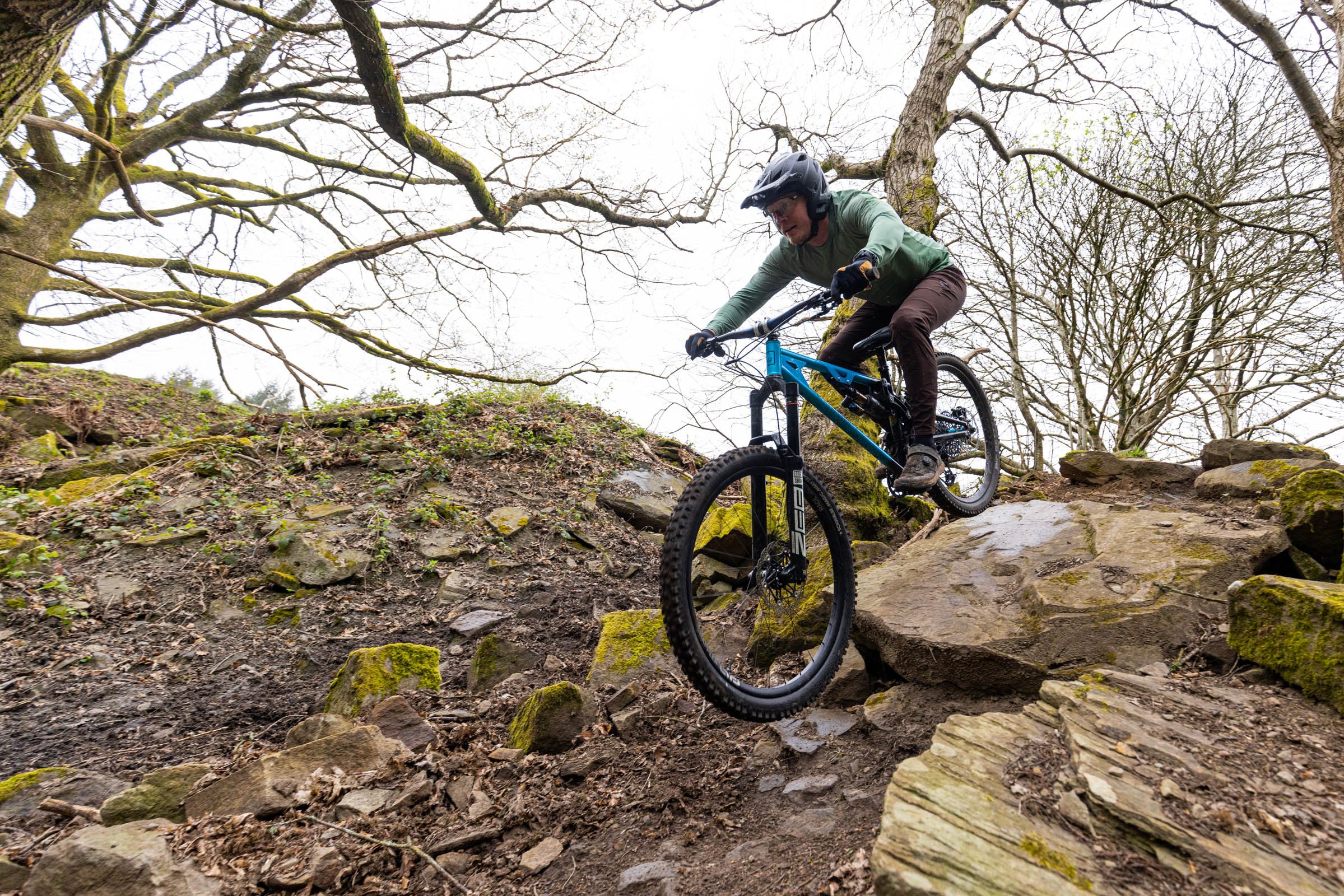
The Marra is an intriguing bike, packed full of design quirks that make it stand out from the crowd. Fortunately, they’re not gimmicks, because it’s a very fast bike on the trail.
The performance under braking is impressive, but it’s no one-trick pony, and in pretty much any descending scenario, the Auckland is heaps of fun.
It’s expensive at £5,600, its climbing performance won’t win you any KOMs and it deserves someone invested in setup and maintenance to get the best out of it. But if you’re willing to put the time in and dig deep, the Marra will certainly reward you on the descents.
Product
| Price | £5600.00 |
| Weight | 17.60kg |
Features
| Fork | RockShox ZEB Ultimate |
| Stem | Hope TR, 35mm |
| Frame | Reynolds 853 chromoly steel |
| Tyres | Schwalbe Magic Mary Radial Ultra Soft, Big Betty Super Gravity Soft |
| Brakes | Hope EVO GR4 |
| Cranks | Hope carbon |
| Saddle | Ergon SM Comp Men |
| Wheels | e*thirteen EN 29 Carbon (f) and Hope Fortus 30 |
| Seatpost | OneUp V3 |
| Handlebar | e*thirteen Race Carbon |
| Rear shock | Fox Float X2 Factory |