The most impressive thing about Shimano’s new 12-speed Deore drivetrain is how difficult it is to upset.
Single shifts aren’t electronically instant, but they’re quick enough that I never found myself waiting for a gear. More importantly, they’re predictable. Press the paddle and the requested shift happens.
I tried to make life difficult for the derailleur, clicking four or five shifts one way before immediately asking for another two or three in the opposite direction. The chain may need roughly a pedal revolution to finish sorting itself out, but it lands consistently on the right gear without skipping, getting trapped or crunching across the cassette.
That became particularly noticeable on fast, undulating trails. Exiting a high-speed section and rapidly needing three easier gears for a slow corner or short climb doesn’t require much thought. Hit the shifter, keep pedalling and the drivetrain sorts itself out.
Three key things you need to know
- Shifting remains smooth and accurate even when changing gear under considerable pedalling load
- Shadow ES gives the derailleur a tucked-in, out-of-the-way profile and strong chain control without the traditional Shadow+ clutch
- The £389.95 derailleur, cassette, shifter, chain and crank combination performs far better than its position in Shimano’s line-up might suggest
The 10-51t Hyperglide+ cassette shifts well across its full range, too. Shifting onto the 51t sprocket is clean and dropping away from it causes no hesitation. I also like Shimano’s cog spacing compared to many rival 12-speed cassettes.
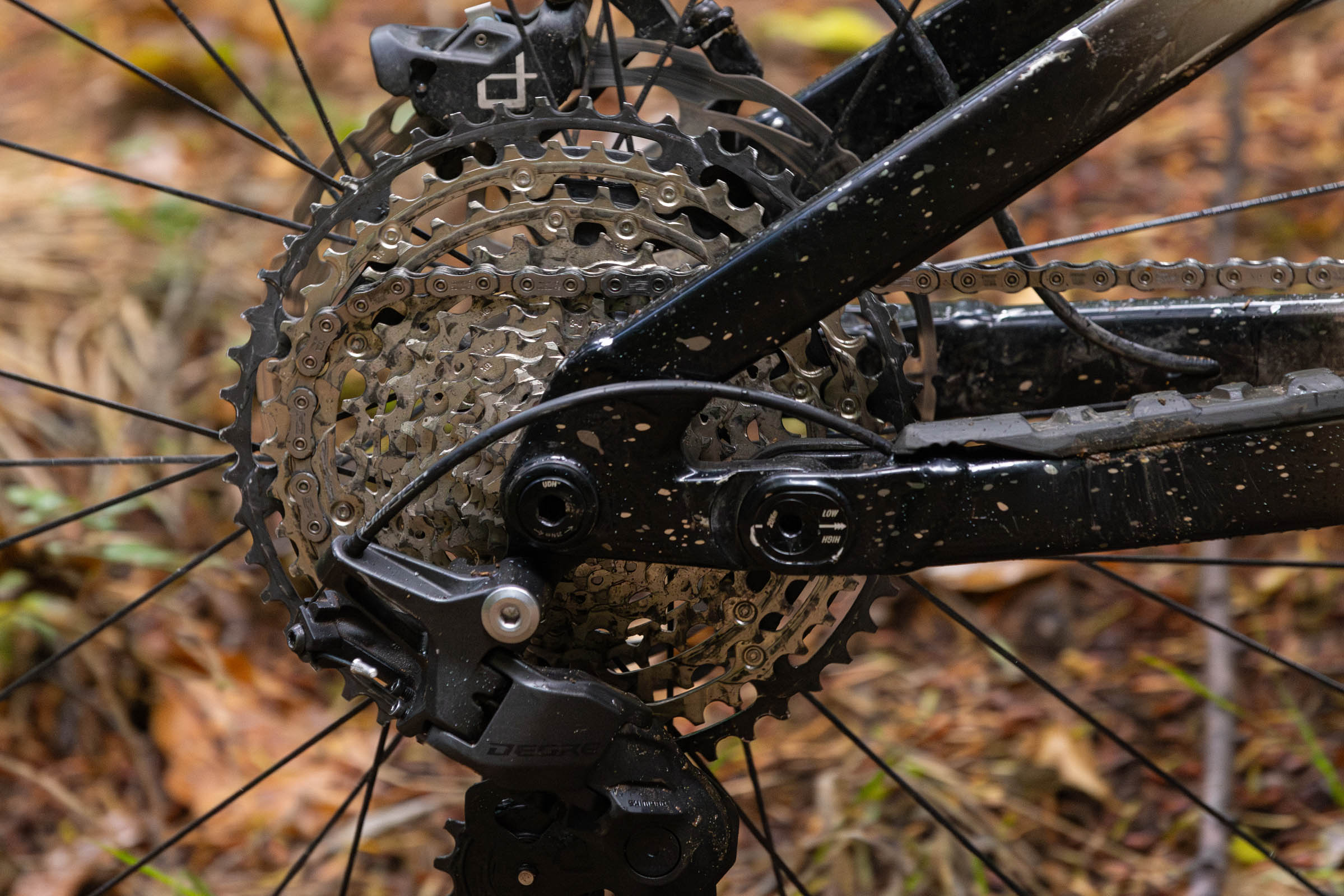
The jumps between gears feel well judged, making it easier to hold a steady cadence on long climbs rather than repeatedly finding yourself between gears. It’s a small detail, but one that makes the drivetrain feel more natural to pedal for extended periods.
I found the middle of the cassette slightly more sensitive to cable tension during setup, particularly gears five through seven, but once indexed correctly, the drivetrain runs smoothly.
Upshifts into harder gears have a little more clunk than downshifts. Neither direction is harsh, though, and once the chain has settled onto its sprocket, the drivetrain is impressively smooth and quiet.
What is Deore M7200/M6200?
Shimano’s latest mechanical Deore range mixes M7200 and M6200 component numbers, which may confuse riders used to ‘M7xxx’ denoting Shimano’s SLX range.
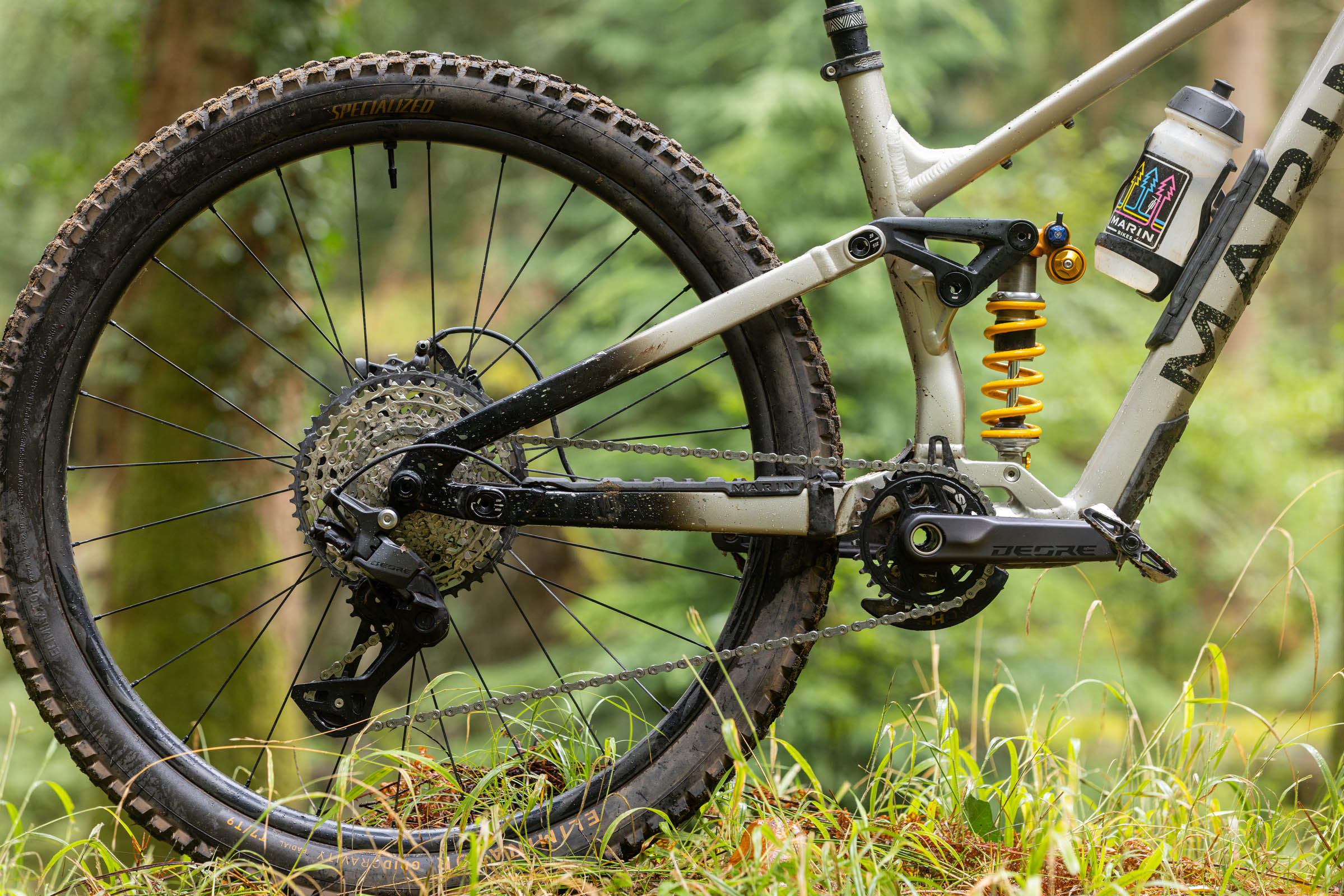
Deore M7200 sits at the upper end of the new family, including the Deore RD-M7200 Shadow ES derailleur (£79.99, 430g) and CS-M7200 10-51t Hyperglide+ cassette (£134.99, 510g).
The M7200 cassette uses steel sprockets apart from its aluminium 51t cog, while the cheaper M6200 cassette is steel throughout. Both offer the same 10-51t, 510 per cent range, with M7200 trading some material for a better balance of weight and strength.
The shifter and crankset retain M6200 numbering. The Deore SL-M6200 shifter (£39.99, 129g) uses Shimano’s revised Rapidfire Plus layout, while the Deore FC-M6200 crankset (£99.99, 735g) uses a two-piece Hollowtech II design with a 24mm steel axle. It comes in 165, 170 and 175mm lengths with 30 or 32t steel chainrings.
The cheaper Deore RD-M6200 derailleur keeps the older Shadow RD+ layout, so despite the numbering, M7200 isn’t SLX. It’s the higher-spec version of Shimano’s new mechanical Deore drivetrain.
Better when you're stamping on the pedals

Under-load shifting is where Deore really starts punching above its price.
On steep climbs, I could continue applying moderate power and shift either way across the cassette without drama. Increasing the load didn’t expose it, either.
Even deliberately pressing hard through the cranks while grabbing several easier gears failed to produce the crunching, skipping or slipping I was seeking to provoke.
There was no need to soften my pedal stroke before asking for a lower gear. That’s a significant advantage when a climb suddenly steepens or a technical feature forces you to change gear later than planned.
You don’t enjoy the almost disconnected sensation of the best electronic groupsets, but neither do you receive a nasty mechanical reminder through the pedals. Shimano's Hyperglide+ tooth profiling is designed specifically to maintain shifting under load and, in this instance, the performance backs up the claim.
It's one of those areas where the Deore badge starts to feel slightly misleading. In a blind test, judging only the smoothness and accuracy of the drivetrain once it’s in gear, I’d struggle to place it this far down Shimano's range.
The shifter gives the game away
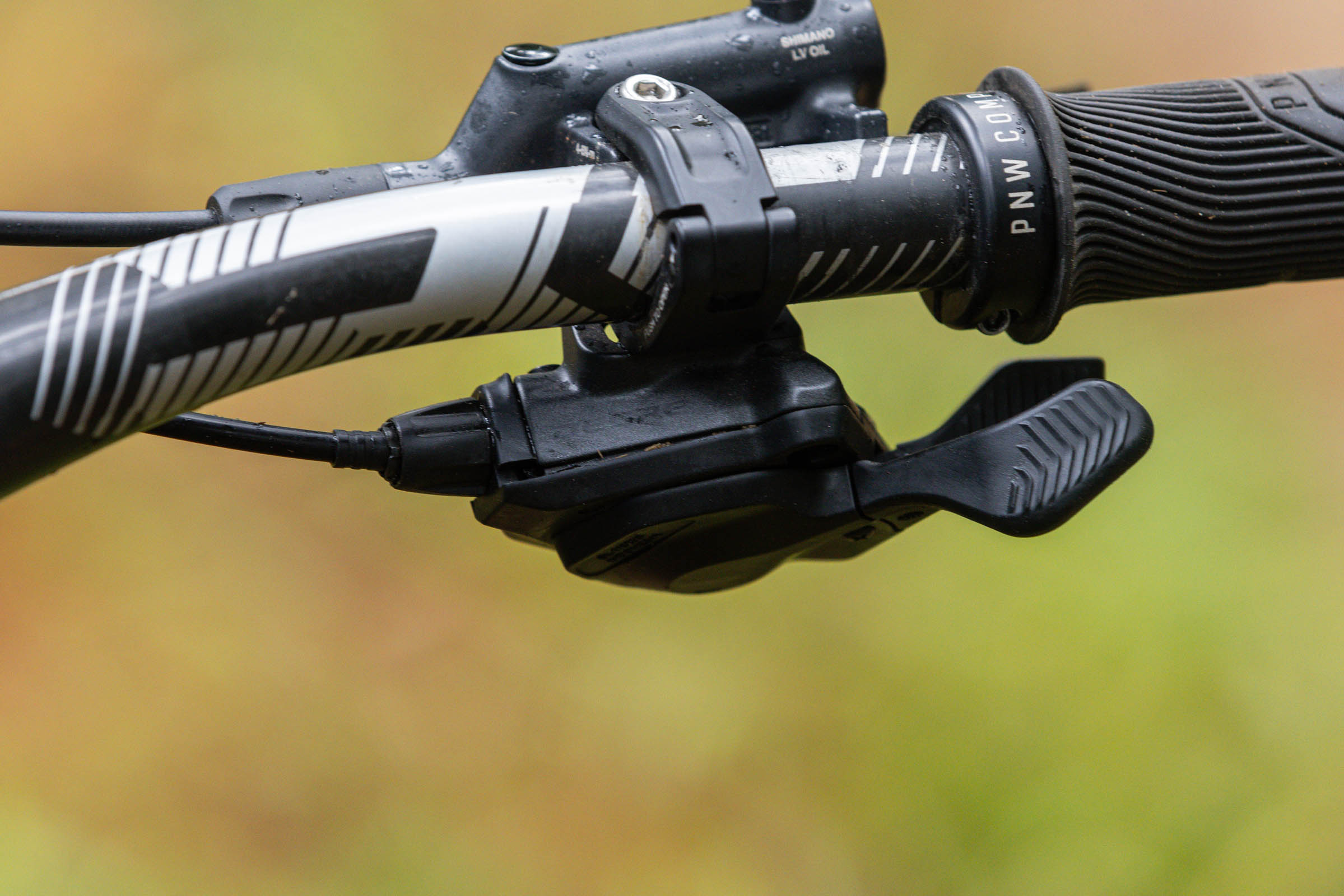
The SL-M6200 shifter is less convincing when you’re examining it in the car park.
Its plastics have a cheap, slightly tacky quality and don’t provide the robust feel you get from a more expensive Shimano unit. It’s the part of the drivetrain that most obviously reveals where money has been saved.
Its ergonomics are much harder to criticise, though.
There’s a generous adjustment range and I could place both paddles exactly where I wanted them relative to the brake lever. Neither required a change in hand position to reach and the primary paddle remained accessible while braking.
The lever shape and throw work particularly well. One downshift is easy to select, but reaching deeper into the stroke for two or three shifts doesn’t force an exaggerated thumb movement. The action is crisp with a positive click and there's little ambiguity about whether you've requested a gear.
The cheaper material remains noticeable when cruising along or grinding up a climb. When I was concentrating on riding quickly, I stopped caring about it almost immediately.
Quiet enough, but not silent
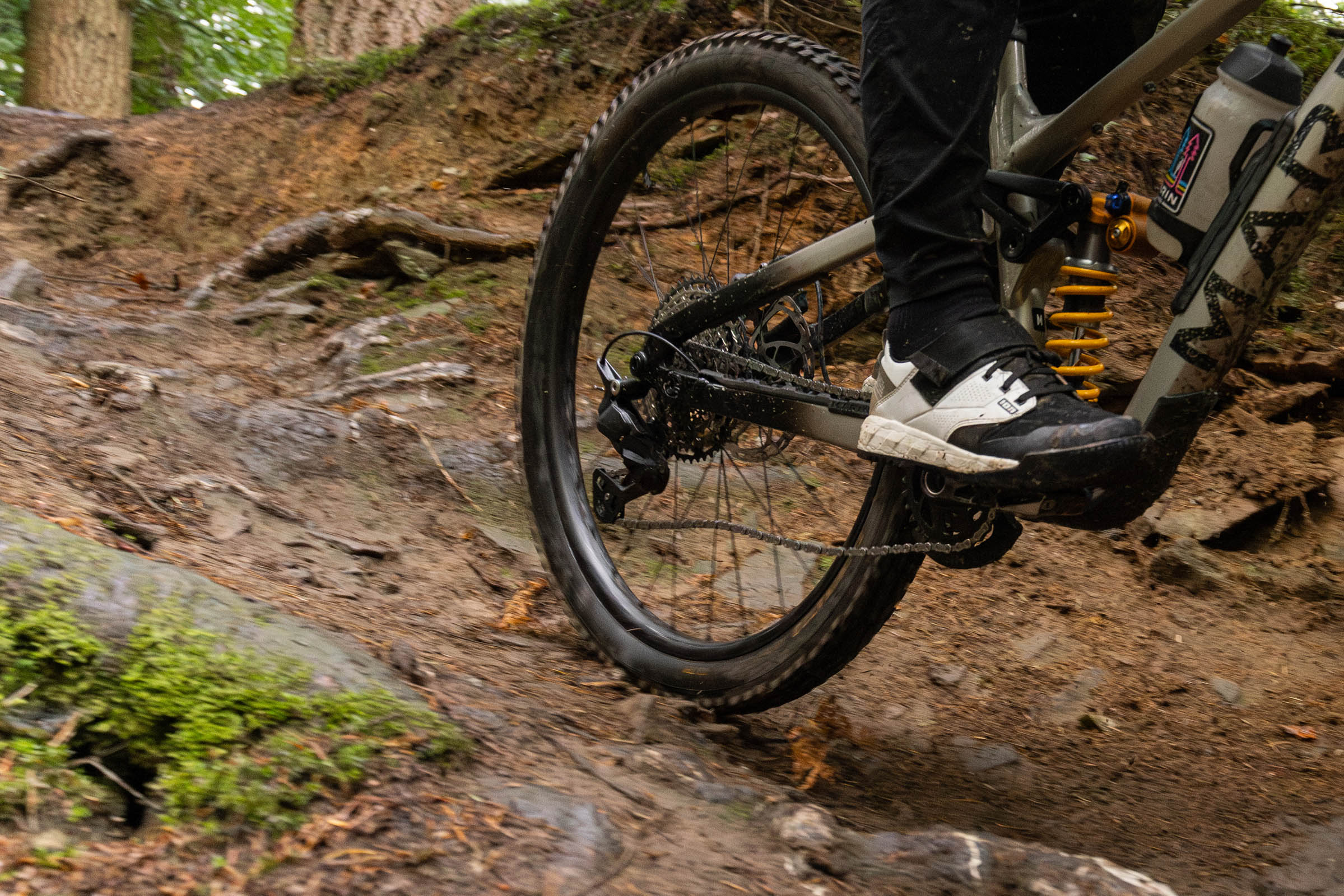
Shadow ES brings much of the architecture Shimano introduced on its newer premium derailleurs to Deore. The M7200 derailleur uses a wider link structure, steel pulley cage and wedge-shaped profile intended to keep more of the mechanism out of harm's way.
It certainly sits neatly against the bike. I didn’t strike the derailleur during testing, so I can’t make any claims about how well it would survive a solid rock hit. Its more tucked-in position should reduce exposure, though, and the fact it survived a tough period of riding without collecting a mark isn’t a bad start.
Chain control is good rather than completely silent. On green and blue trails, I barely noticed the drivetrain. Start hammering rough downhill tracks in the smaller cassette sprockets and some knocking becomes audible, though.
There were no loud bangs and I experienced no ghost shifting or chain skipping through repeated rough impacts. SRAM Transmission remains quieter when the terrain becomes particularly violent, but the Deore noise never became distracting.
I noticed occasional chain vibration associated with some chain suck around the 30t steel chainring. It wasn’t enough to affect shifting, although it’s something I’d keep an eye on during a longer-term test.
Simple, but setup still matters
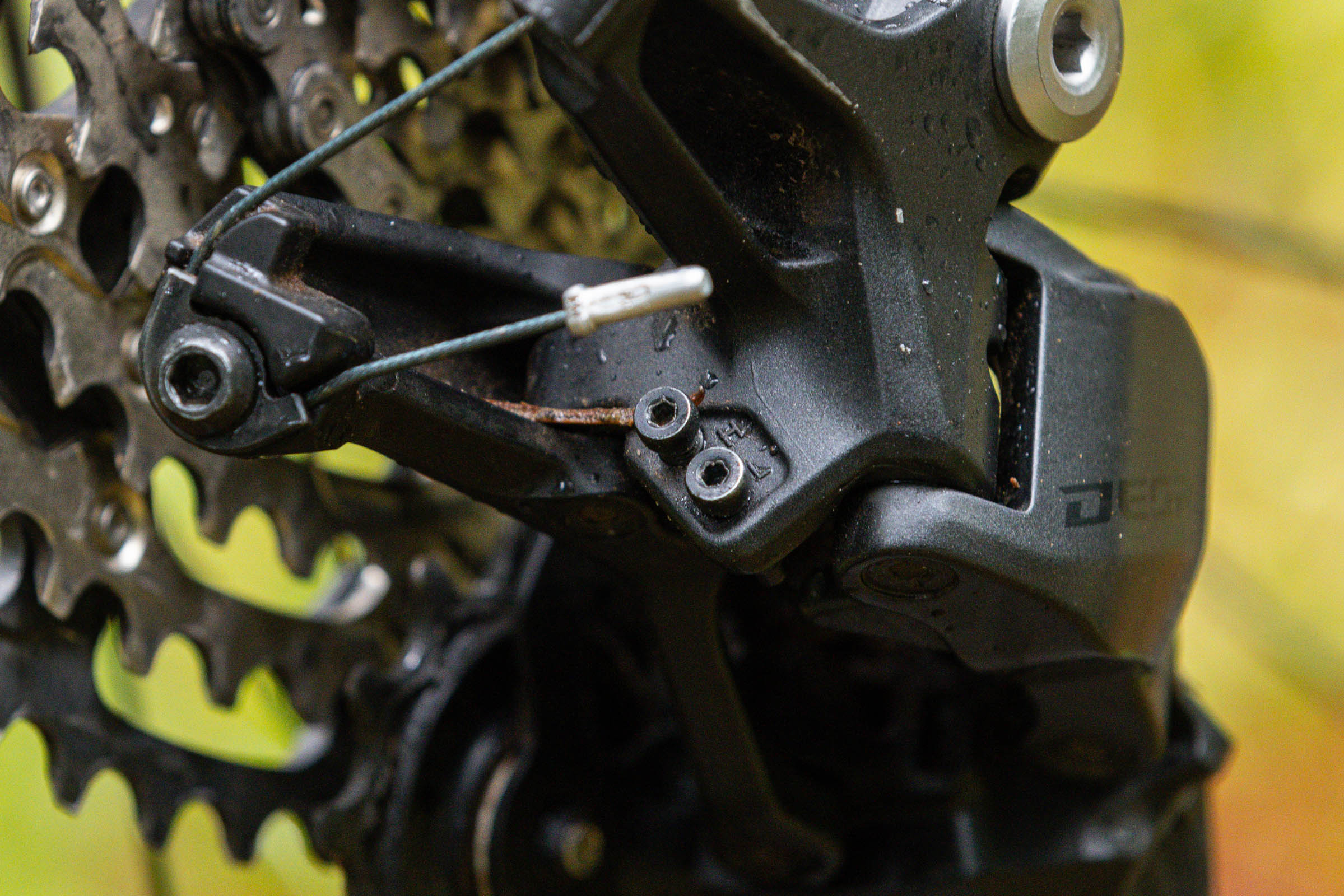
Installation is mostly straightforward. The derailleur is easy to mount, its limit adjustments are accessible and Shimano provides clear markings to help establish the correct B-tension.
Cable routing through the shifter is neat and securing the cable at the derailleur is simple. The cassette was the exception and proved fiddlier to install, taking more patience to get everything located correctly.
I also had one problem during testing when the outer cable and ferrule pulled a couple of millimetres out of their seating at the derailleur. That changed the effective cable tension and caused several frustrating hours of tension and indexing adjustments before I spotted the real cause.
Once reseated, normal service resumed and the drivetrain didn't subsequently drift out of adjustment.
That experience sums up both sides of a mechanical drivetrain quite neatly. A cable can create problems an electronic system simply doesn't encounter, but the eventual fix required no diagnostics, firmware or replacement electronics.
How we tested
I fitted the drivetrain to a Marin Alpine Trail XR with 29in wheels and 160mm of rear-wheel travel. Rides took in a mix of trail-centre loops, bike-park laps and off-piste enduro rides.
Testing concentrated on shift accuracy, shifting under high pedalling loads and the derailleur’s ability to cope with rapid changes across the cassette. I fired multiple shifts in opposite directions, changed gear while climbing hard and rode rough downhill trails in the smaller sprockets to test chain control.
Conditions were predominantly dry and dusty, so I wasn't able to assess prolonged wet-weather performance. The derailleur also avoided any direct rock impacts during the test, which means its claimed impact resistance wasn't tested destructively.
Shimano Deore M7200/M6200 bottom line
Deore M7200/M6200 makes a strong argument that most of us don't need to spend more on a mountain bike drivetrain.
It isn’t the lightest option, the shifter feels cheaper than the performance it delivers and SRAM Transmission remains quieter when you’re smashing through very rough terrain. Those compromises are easy to identify.
What matters more is how reliably it changes gear. M7200 is accurate, dependable and remarkably composed when asked to shift under heavy load. Even deliberately frantic inputs failed to confuse it, while the shifter’s excellent ergonomics make accessing those gears easy.
For riders chasing minimum weight, wireless technology or the nicest materials, more expensive drivetrains will still hold obvious appeal. Bikes are emotional purchases after all.
For anyone approaching the decision more pragmatically, Deore M7200 is difficult to argue against. It gives you excellent shifting, straightforward mechanical servicing and parts priced at a level that makes more sense for components that will eventually wear out.
It’s less Tesla Model S Plaid and more Toyota Hilux. For an MTB drivetrain, that may be exactly what you need.
Shimano Deore M7200 key spec
- RD-M7200-SGS 12-speed Shadow ES rear derailleur: 430g, £79.99
- CS-M7200 10-51t 12-speed Hyperglide+ cassette: 510g, £134.99
- SL-M6200 Rapidfire Plus mechanical shifter: 129g, £39.99
- FC-M6200 crankset: 735g, £99.99
- CN-M7100 SLX/105 HG+ 12-speed chain, 126 links: 249g, £34.99
- Cassette range: 10-51t, 510 per cent
- Cassette construction: steel sprockets with an aluminium 51t sprocket
- Freehub standard: Micro Spline
- Tested chainline: 55mm
- Tested chainring: 30t steel
- Crank lengths available: 165, 170 and 175mm
- Chainring options: 30 or 32t
- Tested weight - cranks, derailleur, shifter, cassette, chain: 2,053g
- Total price: £389.95