SQUIRREL_13987701
The Schwalbe Romy Trail Pro Radial is designed for riders who spend more time threading through natural singletrack than smashing bike-park turns.
I tested it in a 29x2.5in size as a front tyre. Its Trail Pro Radial casing, Soft compound and Apex sidewall protection are intended to bring some of the grip and comfort benefits of radial construction to a lighter, more versatile trail tyre.
Where the Romy stands out is in how settled it feels on broken ground. The casing helps the tyre mould itself to rough surfaces, giving it a smoother, more connected feel than many conventional trail tyres, especially when grip is inconsistent or the trail is awkward rather than fast and manicured.
The compromise is that setup matters more than usual. Run too soft, the casing can move around under load, so it needs more pressure than you might expect to keep it feeling controlled. That makes it less suited to aggressive berm-slapping or heavy enduro use than its calm ride feel might first suggest.
At £74.99, the Romy Trail Pro Radial is expensive, especially for a trail-focused tyre. However, for riders who value comfort, traction and predictability on natural technical trails, it is an interesting middle ground between a fast trail tyre and a heavier enduro option.
It is not the most supportive tyre of the group I tested, but it makes a strong case for radial construction on trail bikes.
What is a radial tyre?
In a conventional MTB tyre, the threads of rubber (plies) in the casing cross at roughly 45° angles, creating a stiff, supportive structure. Because the tread and sidewalls are closely linked, the whole carcass can resist impacts well. However, this makes the tyre less supple and reduces grip.
A true radial tyre has plies that run much closer to 90°, from bead to bead. This enables the casing to flex more locally, so the tread can deform around surface imperfections, increasing the contact patch and keeping it better connected to the ground.
The challenge is keeping enough sidewall support, steering precision and rolling speed, which is why the plies in ‘radial’ MTB tyres tend to be positioned slightly more diagonally.
Trail feel and grip
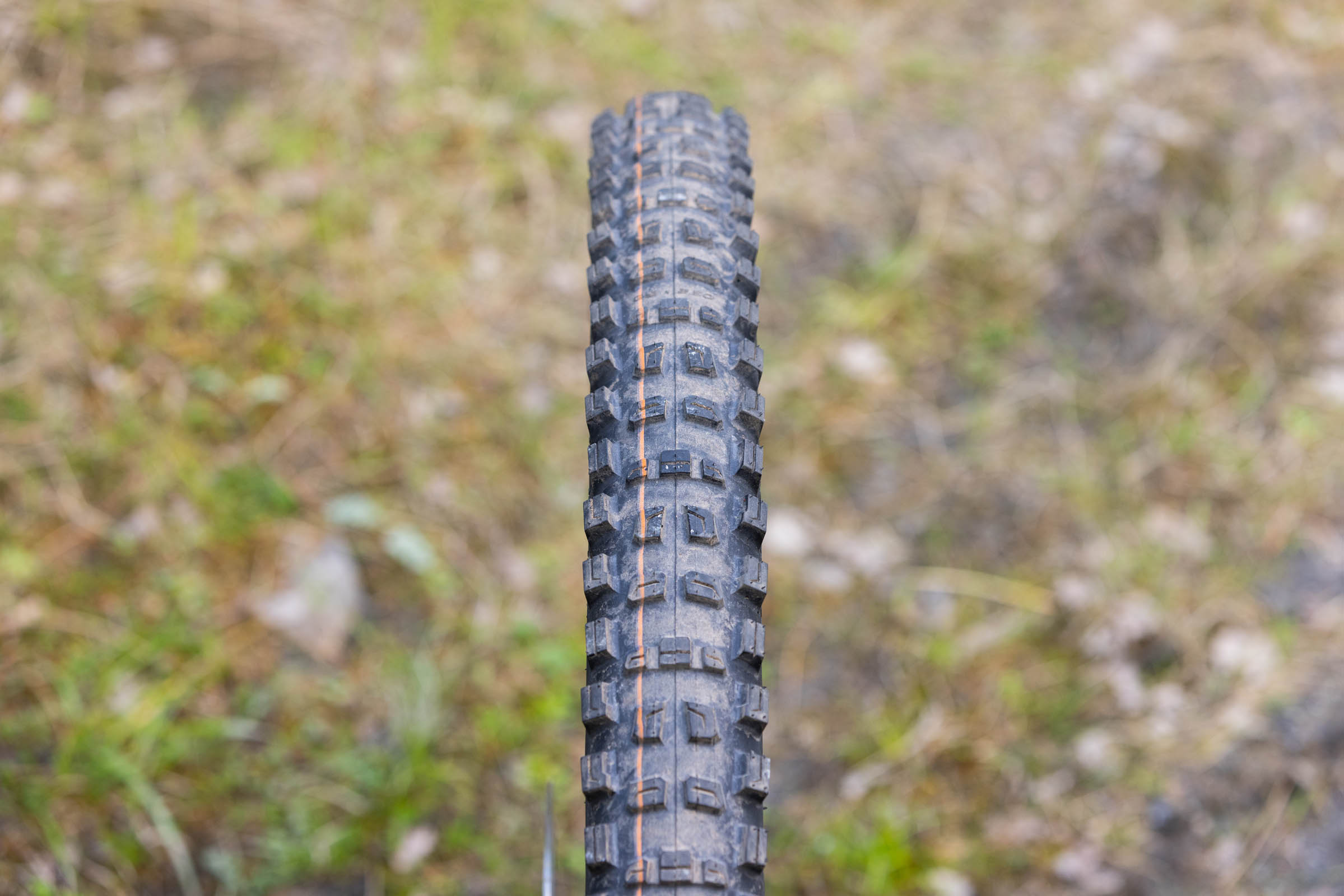
On the trail, the Romy Trail makes most sense on natural technical terrain.
Over roots, embedded rocks and broken singletrack, it has a calm, damped feel that takes the sting out of repeated impacts without feeling dead or overly draggy.
Compared to a Maxxis 3C MaxxTerra EXO or EXO+ trail tyre, the Romy feels less 'pingy' and more settled when the ground gets rough, but also a little less lively when pedalling on smoother sections.
The Soft rubber feels more controlled than expected, almost as if the casing is making it behave like a tackier compound when the ground gets rough.
Grip is impressive for the tread depth. The centre blocks give solid braking bite, while the rounded profile helps the tyre move progressively onto its edge knobs so it doesn’t flop over or snap away without warning. On off-cambers, where grip can disappear quickly, that predictability is worth a lot.
Setup and rolling speed
Tricky setup is the main issue here. I normally run 22psi up front, but with the Romy Trail I ended up at 26psi. Below that, the casing movement was too obvious.
Under rebound, the tyre could feel as if it was deflecting sideways rather than pulling itself back into shape. That made me cautious when pushing hard. This means the Romy Trail is better suited to natural tech than aggro trail riding.
It’s excellent when picking through roots, rocks and cambers, but less convincing when ripping around berms or loaded hard through compressions. It has more comfort and grip than a typical trail casing, but less locked-in support than a heavier enduro or DH tyre.
Rolling speed feels acceptable, not fast. On smooth climbs, there’s a penalty to be paid for the extra grip and comfort. This is less obvious on rougher ascents because the tyre smooths the trail and helps maintain momentum.
Riders coming from faster trail tyres may notice the extra drag, but those used to softer enduro rubber should find the Romy Trail a useful, if expensive, middle ground that balances grip, comfort and heft.
How I tested | Radial tyres
I tested three radial tyres to find out if MTB’s latest trend really does deliver more grip.
I tested all three tyres on a 130mm-travel trail bike, an enduro bike with 160mm of travel and a 24kg full-power eMTB, matching each set to the riding it is most likely to face.
Conditions ranged from dry to intermediate, with some greasy sections mixed in. The test loops included roots, embedded rocks, hardpack, loose turns, off-cambers, berms, braking bumps and rough natural singletrack.
I adjusted pressures to find each tyre’s best working window, and focused on testing their cornering predictability, casing stability, braking grip, rolling resistance, comfort, impact damping and traction on technical climbs.
Tyres on test
- Schwalbe Romy Trail Pro Radial
- Specialized Butcher Grid Gravity Radial T9
- Nutrak/Vee Attack HPL Full 40 RAD Core
Schwalbe Romy Trail Pro Radial bottom line
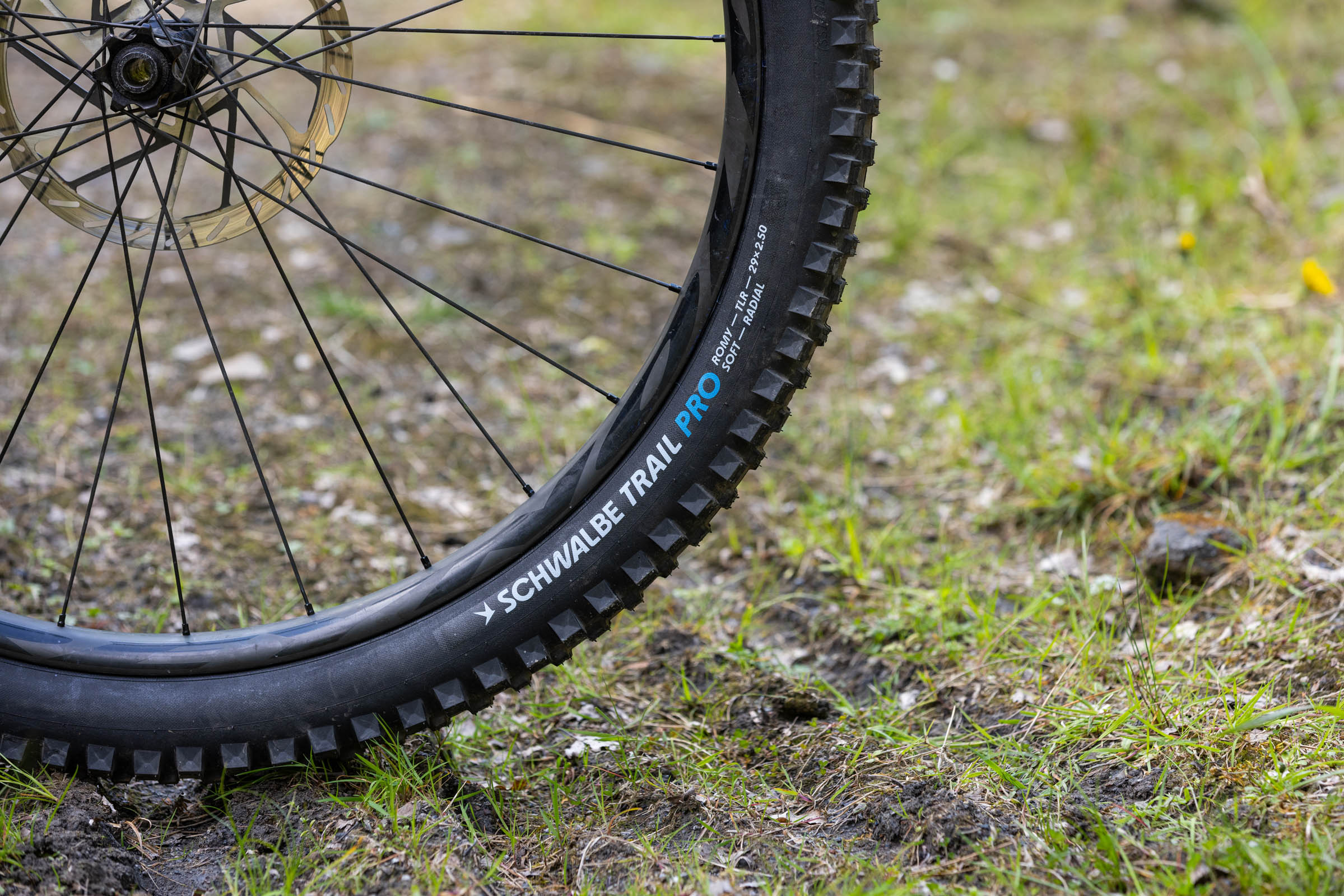
The Schwalbe Romy Trail Pro Radial is the most natural trail-bike fit of the radial tyres I tested. Its radial casing helps the tread stay connected to roots, rocks and broken ground, giving it a smoother, calmer and grippier feel than many traditional trail tyres.
That makes it excellent for natural technical riding, where comfort and predictable traction matter more than outright support.
The catch is setup sensitivity: run too soft, the casing can move around when pushed hard. At £74.99, the Schwalbe tyre is expensive, but it will suit riders wanting extra grip and comfort from a premium trail tyre.
SQUIRREL_13987701