SRAM’s updated Maven B1 Ultimate brakes offer a lighter lever feel, while retaining the same top-end power as the previous iteration.
According to SRAM, some riders struggled with the punchy brake feel of the original, saying too much effort was needed during the initial lever pull.
The update to the SwingLink cam mechanism and lever seen on these latest Maven B1 brakes rectifies that and they can be retrofitted onto the original stoppers, should you wish.
On the trail, the Maven B1 delivers as promised. The lever is far lighter during that initial pull, while the power builds progressively and is easier to manage.
They’re still top stoppers, with masses of braking grunt on offer and letting you stop almost instantly. What's more, they’ll handle lengthy descents with a predictable, consistent performance time after time.
SRAM Maven B1 Ultimate need to know
- Despite the lighter lever feel, braking power is the same as the original Mavens
- Old Mavens can be tuned using the ‘Lever Tuning Kit’ if you want a lighter lever feel
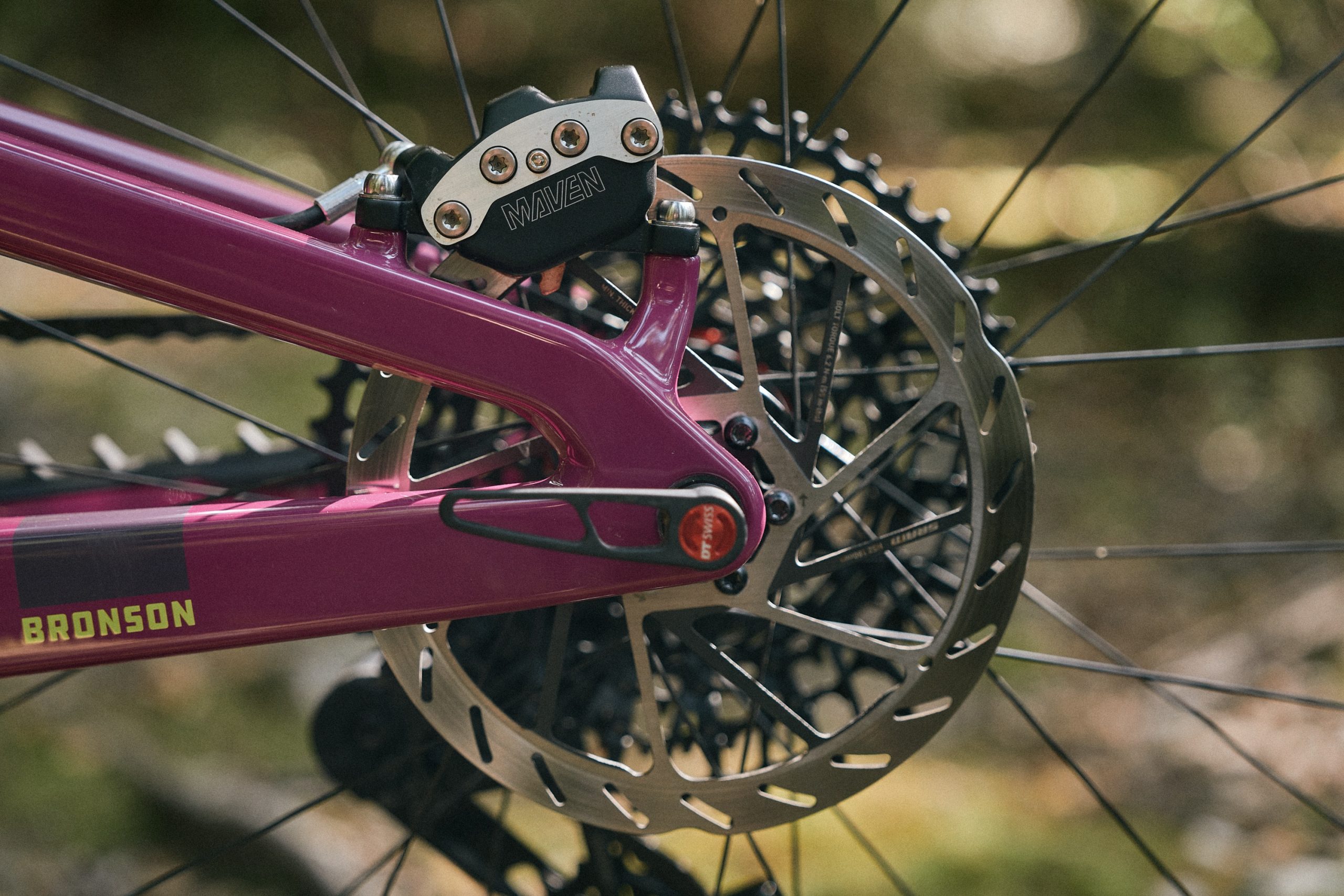
- Two of the four pistons have been re-sized (now all pistons are 18mm in diameter)
Controllable, easy-to-access power
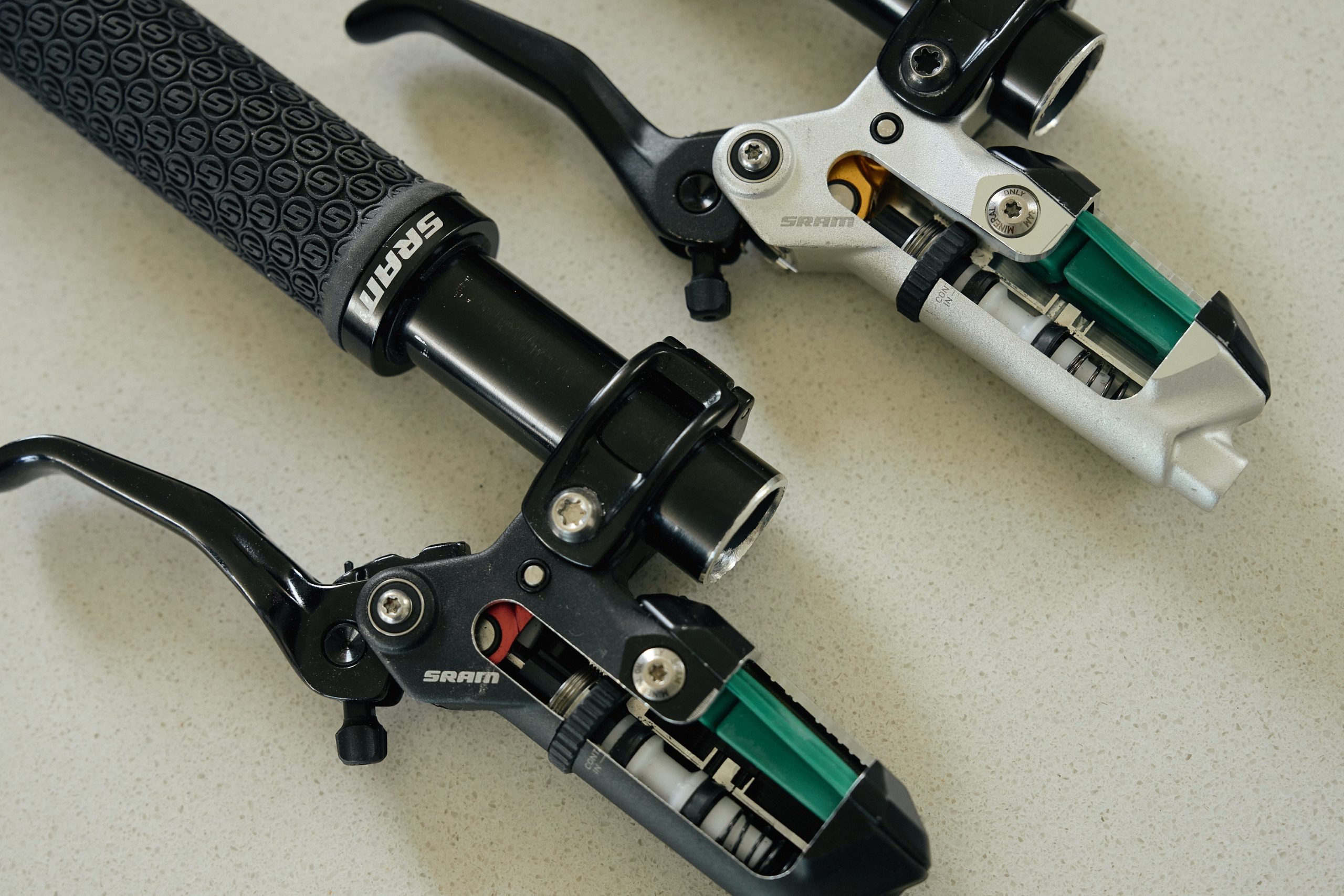
By redesigning the SwingLink cam and lever, and manipulating the hydraulic and mechanical ratios, SRAM has created a much lighter lever feel. There’s still loads of top-end power, although the revised leverage rate means you only tap into that later in the stroke – the aim being to create more predictability.
The previous-generation Maven A1 required a little more force during the initial pull to get them moving. The heavier breakaway force wasn’t to everyone’s liking, while the power hit early, causing some riders to struggle with braking control and unintentionally lock their wheels up, until they got used to them.
I really liked the punchy power of the Maven A1s and didn’t struggle with the lever feel. In fact, I still like how those brakes feel. That early peak power always felt reassuringly welcome when hammering down hideously steep trails on big-travel bikes. Yes, they took a little while to get used to, but they felt incredible.
The new brakes still have that massive power, you just access it later in the stroke – not dissimilar to the older SRAM Codes or the new Motives, for example. That said, neither can match these when it comes to outright stopping force.

That means the Maven B1s aren’t as grabby as the A1 brakes. They’re more natural and intuitive to use from the get-go and as a result, predictable, too.
Some riders found the early spike in power on the Maven A1 brakes could cause their wheel to skid, especially on wet, slippy rocks, until you mastered power application. There’s very little adaptation needed with the B1 version.
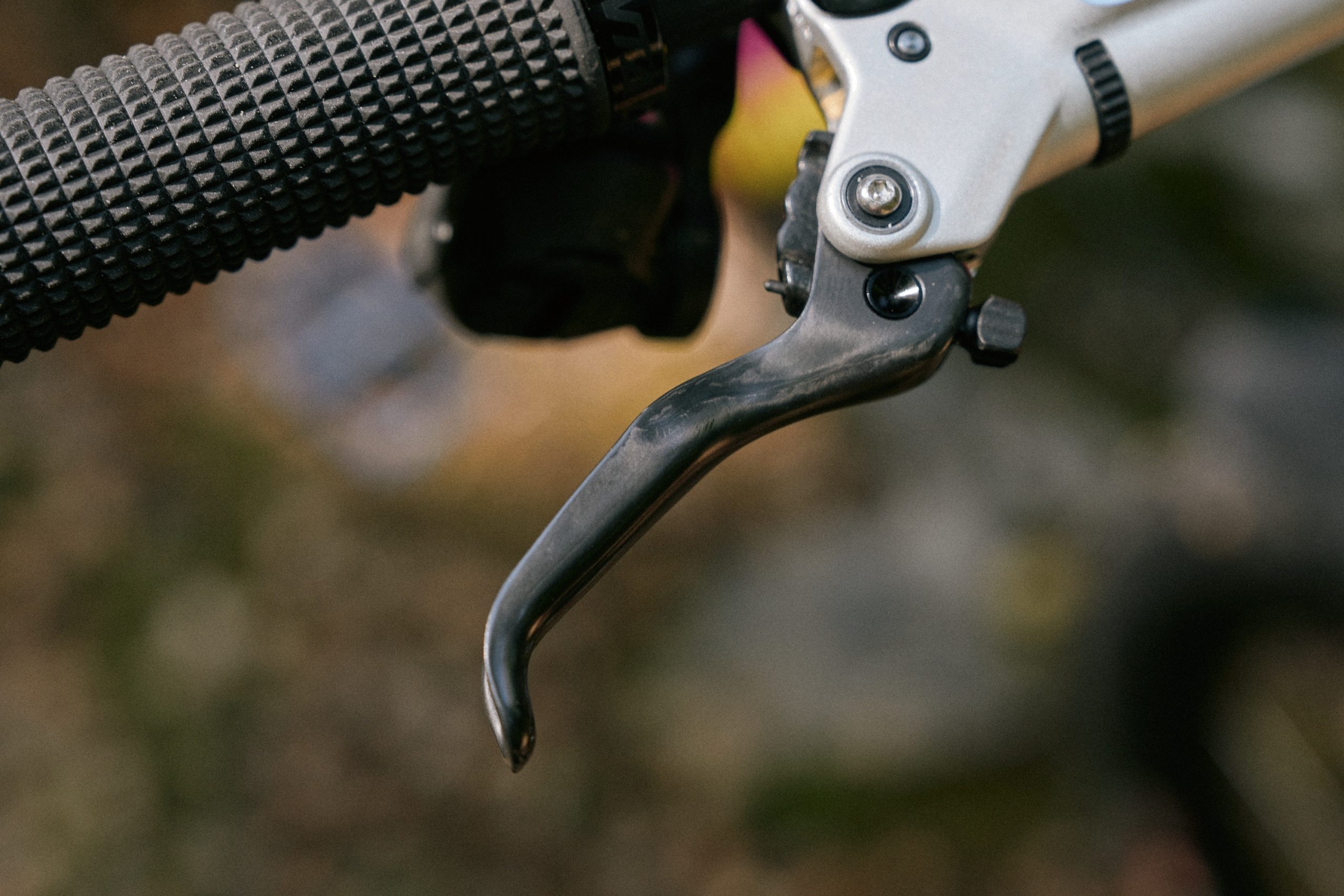
Pull on the lever and you can feel the power build progressively until hitting its peak later in the stroke. This makes controlling and modulating it easier. They have less of an on/off feel and don’t require quite the same level of finessing.
The setup window for the Maven B1 Ultimate brakes feels a little wider, too.
As a rider who likes his brakes to have a short lever throw and to bite quite early, the Maven A1s required a little more fiddling with the reach and contact point adjuster to get them feeling just so. With the Maven B1s and the revised, more linear power progression, I haven't had to be quite as rigorous, finding a happy lever reach and bite point without quite as much fiddling.
As a result, coupled with the new lever feel, the Maven B1s will suit a broader range of riders. They still offer that top-end power when you need it, but with a more intuitive and predictable delivery.
Lighter lever, fresher hands
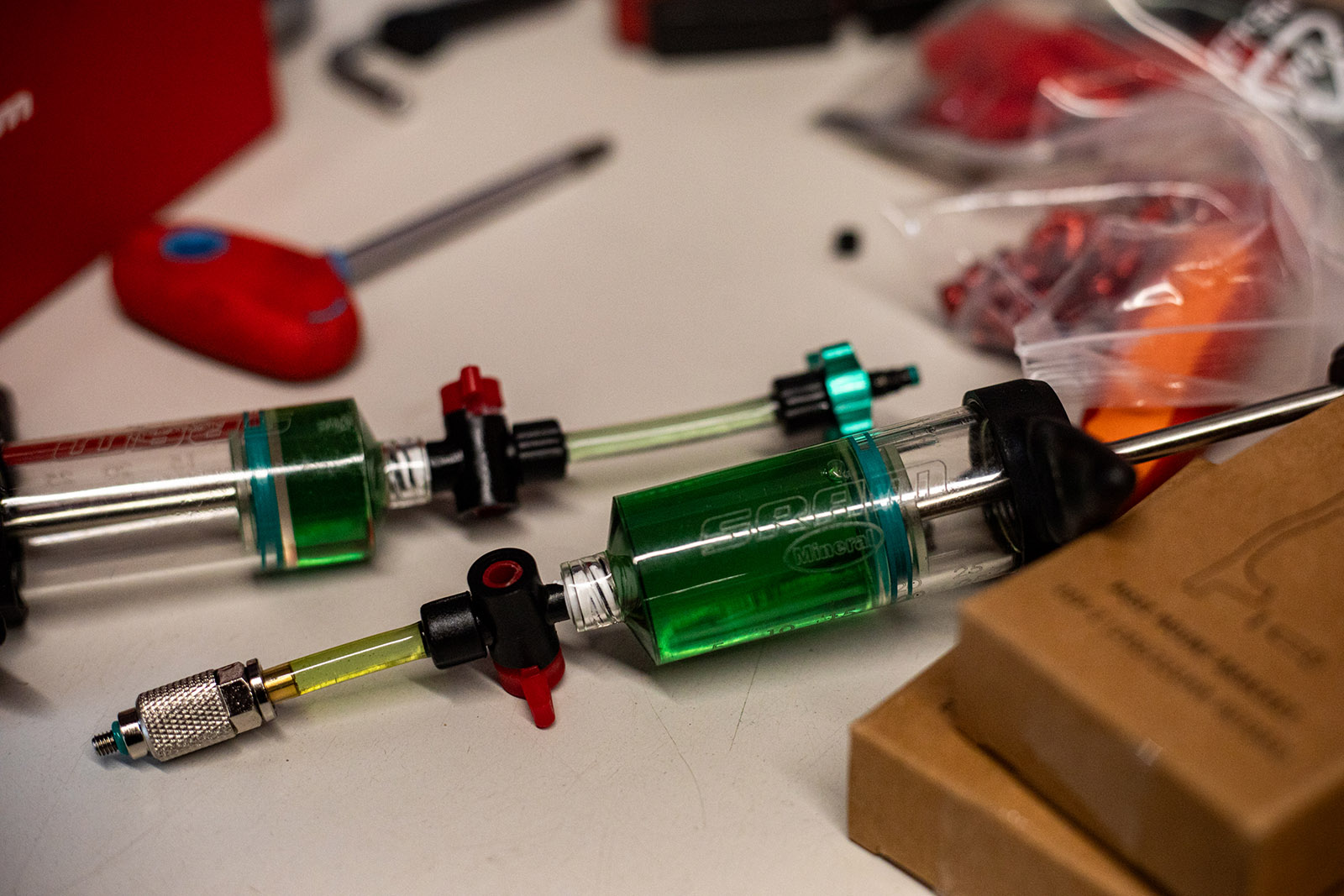
Early in testing, the front brake required a lever bleed (this is the same process as the original Mavens and requires mineral fluid, just as before), to address a slight wander in the bite point. I’ve found even though the Mavens can feel decently consistent in the car park or when riding smooth trails, hit something rougher – especially if those hits are repeated and high-frequency – you’ll soon work out if there is any air in the system.
Bleeding fixed it and I’ve since had no issues. Moreover, that consistency has spanned every condition I’ve ridden in, from bone dry and dusty, through to cold, wet and muddy. There’s little in the way of noise, too, even when they’re totally drenched.
Some conditions will have them squawking on occasion, but only if it’s properly foul weather. Once they get some heat into them and you’re moving, any initial noise seems to disappear quickly.
There was no noticeable pump or fade either. Even on long, steep tracks riddled with braking bumps that forced me to drag my brakes more than I wanted to, they remained sharp and consistent in terms of feel.

Not only have the Maven B1s been consistent throughout testing, that light lever feel keeps your hands feeling fresher for long.
One issue cited by those that didn’t get on with the Maven A1 was the higher breakaway force at the start of the lever pull was tiring their hands out on longer trails.
The changes made to the leverage on the Maven B1 brakes should help rectify this.
In my experience, riding blind down some lengthy tracks that surround the Queenstown Bikepark in New Zealand, I needed all the help I could get. Thankfully, I was able to haul on the anchors and come to a controlled stop, time and time again at the end of each trail.
But, if you miss some of that abrupt, instant power offered by the A1, switching the standard organic pads for SRAM’s sintered equivalents makes a real difference. There’s also the option of upping the rotor size.
Because the leverage curve and power progression has been changed now, I think a switch to a bigger rotor wouldn’t need as much adaptation as it might have done on the original brakes, making it a great way to boost power even further – ideal if you’re a bigger rider or riding a heavy eMTB.
Tweaking ratios
In order for SRAM to deliver the lighter lever feel but produce the same overall power, it not only had to change the shape of the SwingLink cam and lever itself, but it also needed to manipulate the hydraulic ratio.
While the Maven A1 caliper used a pair of 18mm pistons alongside two 19.5mm pistons, the Maven B1 caliper, like the cheaper Maven Base brake, uses four 18mm pistons.
Combined with the change to the lever and cam, this sees it deliver the same top-end power.
The Maven B1s still use mineral oil and the same bleeding process (including the piston massage) to get the most out of them.
If you have a set of the original Maven A1 brakes (excluding the Base model), you can buy a lever-tuning kit from SRAM to alter the lever feel and make it a little lighter. That’ll set you back £105 / $109 / €120 (carbon lever kit), £85 / $89 / €95 (CNC forged alu lever kit), or £65 / $69 / €75 (alu lever kit).
How I tested the SRAM Maven B1 Ultimate brakes

I’ve been testing the Maven B1 Ultimate brakes for close to six months, riding through the tail-end of the UK winter and into the start of summer.
As well as riding my local trails around England’s South West and in Wales, I put them through their paces on the trails around Queenstown, New Zealand - widely considered some of the best, most demanding trails on the planet.
This has meant I’ve lapped a variety of trails, with everything from rough, high-speed bikepark laps through to long, steep, highly-technical natural trails, and in a wide variety of weather conditions.
SRAM Maven B1 Ultimate brakes bottom line

The Maven B1 Ultimate brakes offer a lighter lever action and easy-to-modulate power, enabling you to control your speed, no matter the trail.
With a good bleed, they’re impressively consistent and handle heat well on long descents. They’re also predictable, and that power feels easy to control.
Some, like me, may miss the original feel of the Maven A1s, but the latest iteration offers just as much grunt but with a different feel that delivers on the hill, whether you’re hammering a downhill run or picking your way down a technical singletrack section.
Overall, the updates equate to a brake that’ll work for a broader range of riders, which is always a plus.