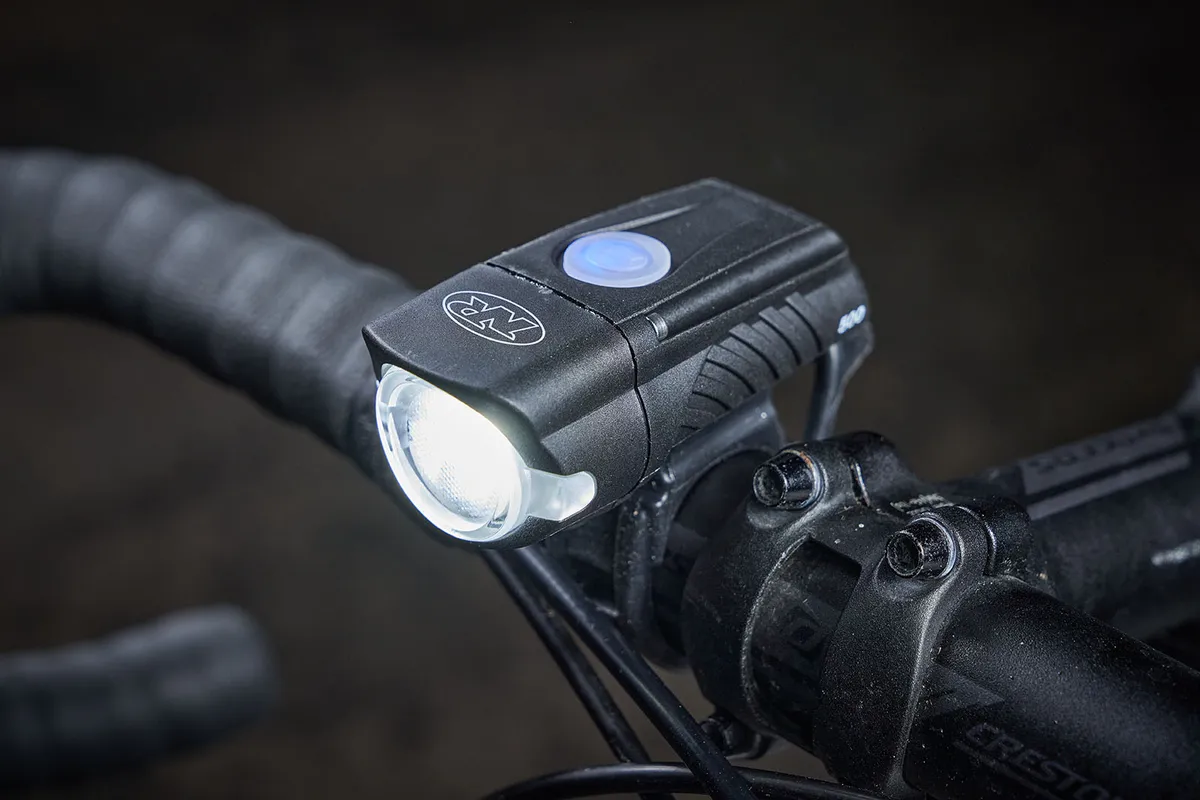
Smart bike lights take conventional illumination up a notch, by incorporating intelligent technology that aims to improve your safety when cycling on the road after dark.
Many of these lights use motion-sensing technology. They respond to changes in your speed and even the speed of traffic behind you, to increase your visibility on the road.
Rearview radar lights, a sub-category of smart bike lights, even link to compatible GPS head units to warn of vehicles approaching from behind, showing their speed and relative position.
Editor's note: this list was updated on 14 January 2026 with our recent high-scoring reviews, including the Garmin Varia RTL515, Moon Helix Sense 450, Ravemen TR250 and Wahoo Elemnt Trackr Radar.
How do smart bike lights work?
While different models work in different ways and have varying features, smart bike lights are generally designed to interact with your other smart devices, acting as motion-sensing warning systems or responding to what’s happening on the road.
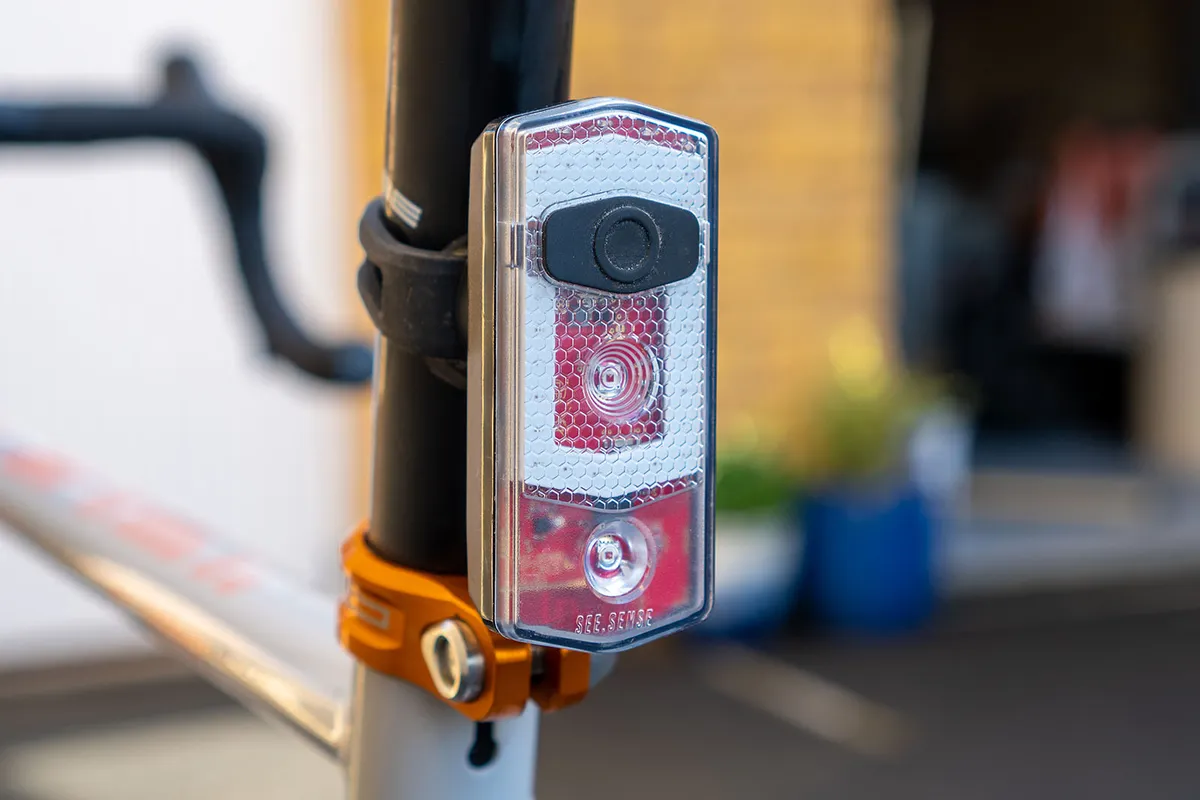
For example, the See.Sense Icon rear light will flash faster and brighter when drivers approach and while you’re braking. It will also send you a smartphone notification if someone tries to steal your bike.
Another example of a smart bike light is the Garmin Varia front light, which communicates with your Garmin Edge bike computer to project light further ahead as your speed increases.
Like the Icon, Garmin’s Varia rear bike light gets brighter as drivers approach behind you. It also has an in-built camera that will save video clips if it detects an incident such as a crash.
Smart bike light pros and cons

Pros
Smart bike lights cost significantly more than the best cheap bike lights. So, what benefits do they offer?
A shared feature of smart lights is their automatic brightness and power output, as well as light modes (constant beam, flashing, etc).
By increasing its output and utilising a more attention-grabbing light mode, a smart light can increase your visibility in crucial situations, such as in traffic or when approaching a junction.
As well as increasing visibility, smart lights can also be more efficient than their non-smart counterparts. According to manufacturer See.Sense, by delivering a brighter light output only when it’s really needed, a smart light uses its battery more efficiently, conserving power and increasing battery life.
Cons
An obvious barrier to owning smart lights is their cost. Another downside is the extra complications involved in setting them up.
While standard bike lights simply need to be charged and mounted to your bike, smart lights will need to be paired to your phone or bike computer in order to deliver their smart function.
However, while they tend to be a pricier investment and require more effort to set up, they’re worth considering if safety is your top priority.
So, should you use them for your cycling?
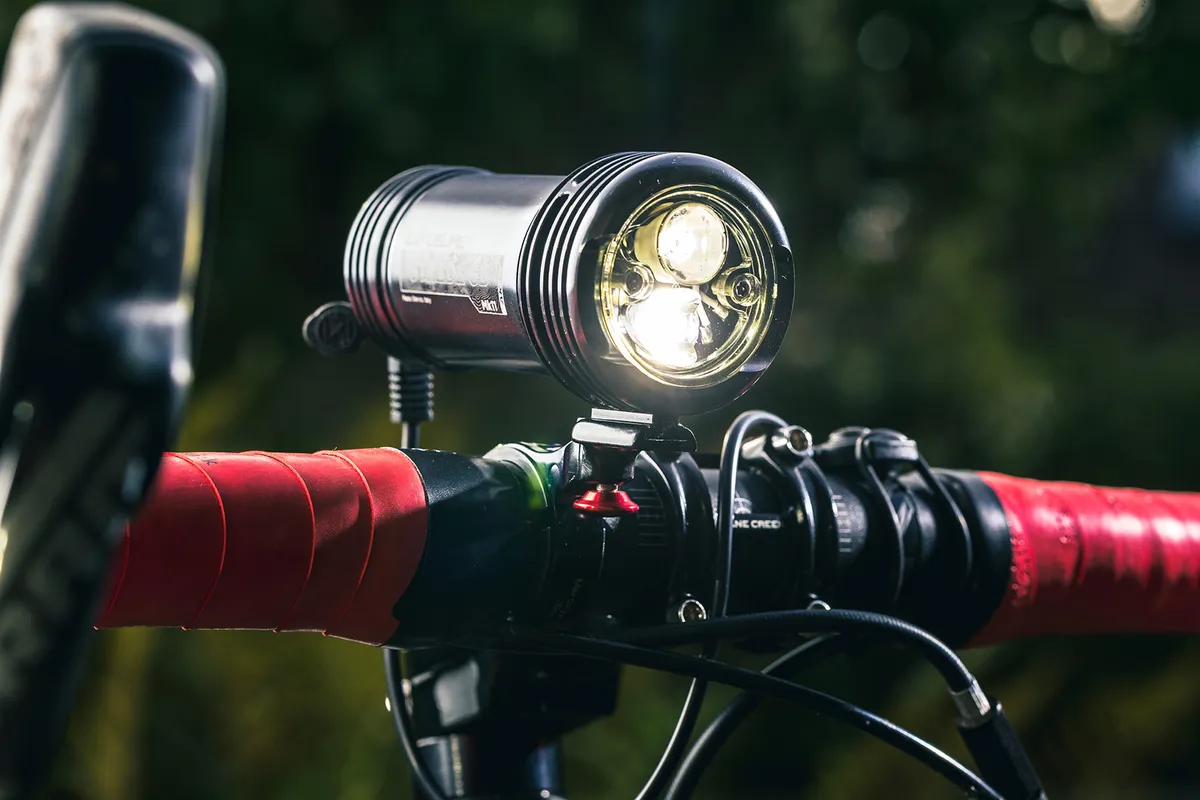
If a lot of your saddle time falls in the darker hours of the day, a decent set of bike lights is a must.
If you want to go one step further and benefit from even more visibility and comparably efficient battery life, we’d recommend smart bike lights.
We’ve compiled our reviews below to give you an overview of the options available.
The best smart bike lights we’ve reviewed
Bontrager Ion 200 RT and Flare RT (front/rear set)
SQUIRREL_TEXT_13111571
- £90 / $120 as tested
- Pros: Uncomplicated design; bright output; good head-unit connectivity
- Cons: Front light not suitable for fast night riding; micro-USB port soon to be outdated
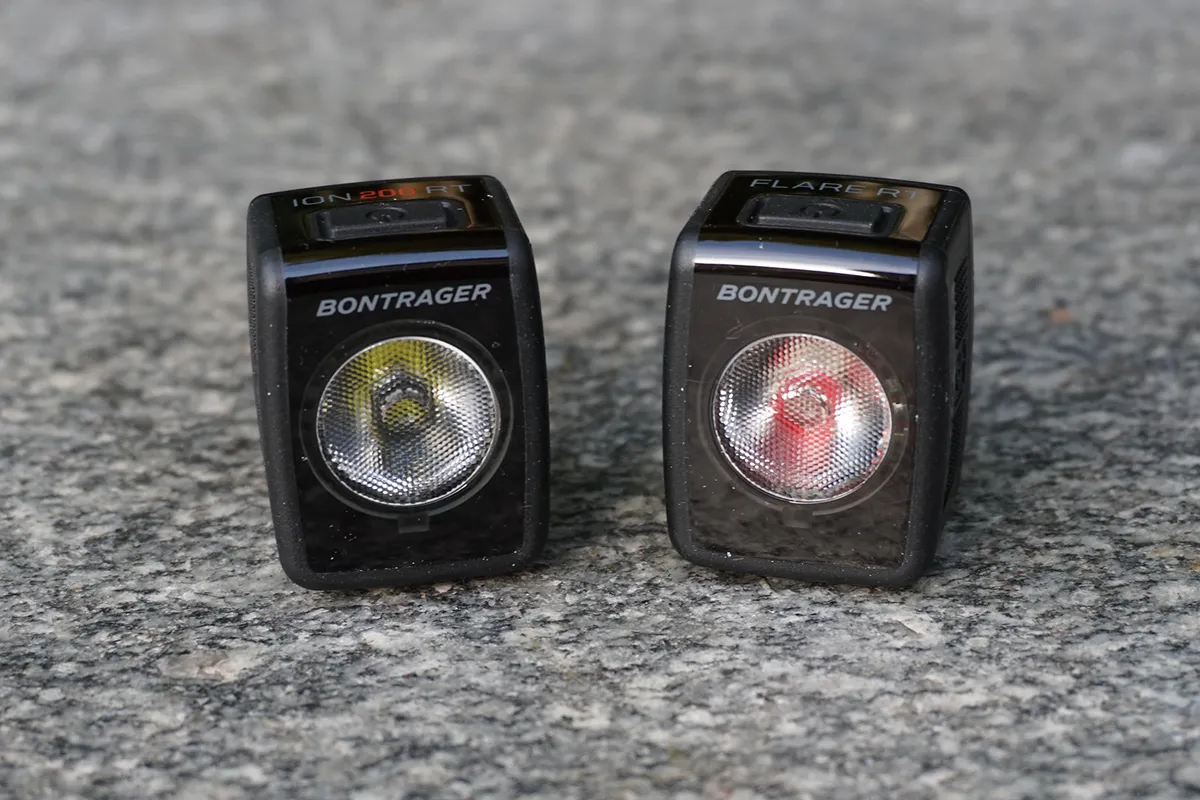
These cube-shaped Bontrager lights are compact but bright – the front puts out 200 lumens and the rear 90 lumens, with both lights offering flashing, constant and constant/flashing modes.
Each has an ambient light sensor to adjust brightness and you can hook them up via ANT+ with a Garmin cycle computer for auto-on when you start to ride and to swap between modes.
- Read more: Bontrager Ion 200 RT and Flare RT review
SQUIRREL_13111571
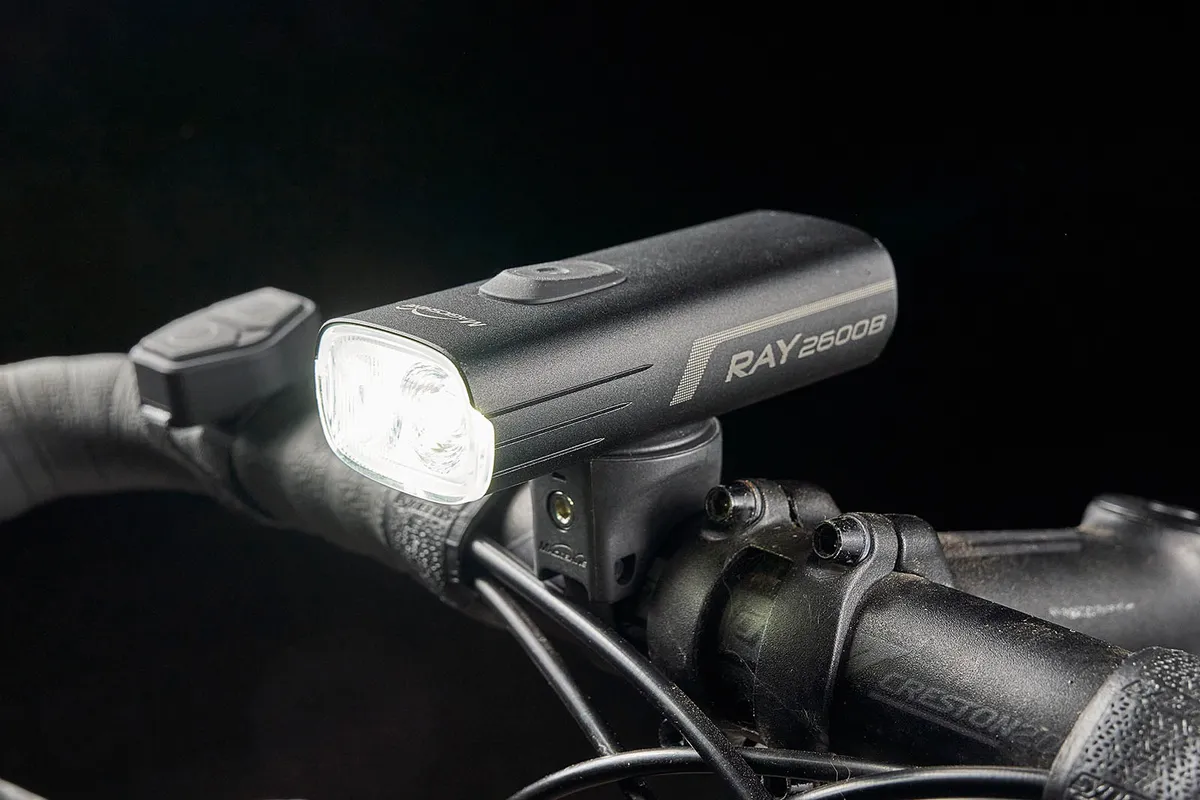
Magicshine Ray 2600B Smart Remote
SQUIRREL_TEXT_13122123
- $159.99 as tested
- Pros: Bright output; clever sensors
- Cons: Glitchy pairing app
The Magicshine Ray 2600B Smart Remote Bike Light is powerful, with auto-dimming technology and a dual-beam pattern forming a great light for night riding at a competitive price.
It also has a vibration sensor, which turns the light off automatically if you pause your ride to save battery.
Unfortunately, we found the companion app to be slightly glitchy when pairing the light, which you need to do to unlock various features and customise the modes.
- Read more: Magicshine Ray 2600B Smart Remote review
SQUIRREL_13122123
Exposure Blaze Mk3 Reakt + Peloton
SQUIRREL_TEXT_13122131

- £130 / $143 / €130 as tested
- Pros: Focused light; premium construction
- Cons: Proprietary charging port
The Exposure Blaze Mk3 Reakt + Peloton impresses with a focused spot of light and premium construction.
It also packs some smart features, like the Reakt mode, which combines a brake and ambient light sensor.
Slow down and it will up its output to 150 lumens, warning other road users behind you. Peloton mode, the Blaze’s second smart feature, dims the light when it senses a light behind to avoid dazzling other riders.
SQUIRREL_13122131
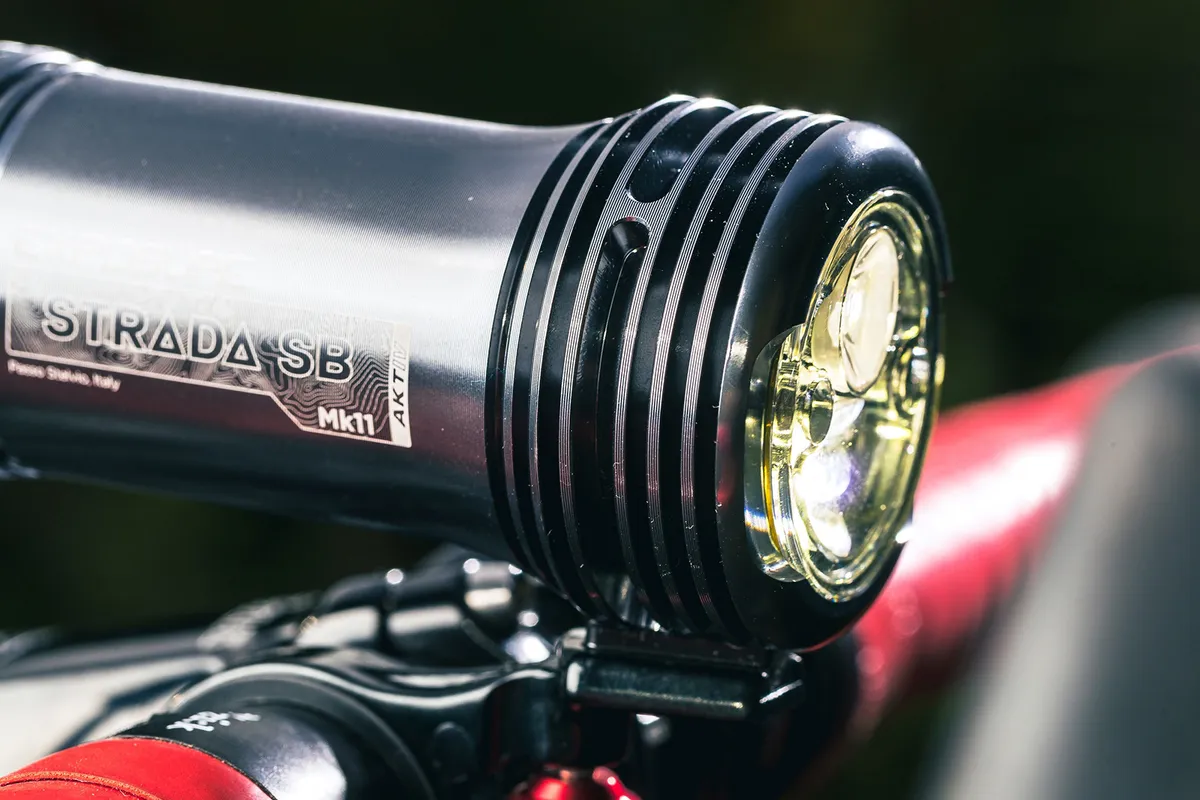
Exposure Strada Mk11 SB AKTiv
SQUIRREL_TEXT_13122125
- £335 / $420 / AU$590 as tested
- Pros: Well-designed; high-tech; high-performance illuminator
- Cons: Fiddly setup and expensive
Exposure has been making high-performance, high-tech lights in the UK for over a decade.
The Strada has been updated since we reviewed this model, but the older headlight is still packed with great smart features. For example, it can detect oncoming traffic, which automatically dips the beam – a useful feature with such high output.
The light also detects if you've mounted it above or below the bar and adjusts the beam pattern to the different orientations.
However, the setup for the alloy mount is somewhat fiddly and the beam patterns, which are selected with the light off, mean you have to go through the process again if you don't like the result.
- Read more: Exposure Strada Mk11 SB AKTiv review
SQUIRREL_13122125
Garmin Varia RTL515
SQUIRREL_TEXT_13086413

- £169.99 / $199.99 / €199.99 / AU$369 as tested
- Pros: Great radar performance; can be used without a head unit
- Cons: Micro-USB port; run times could be longer
The Varia RTL515 offers excellent radar performance, for which it remains best in class, and it's simple to use with or without a head unit.
Setting up the device is quick and easy, with the mount proving strong and versatile.
We were less keen on the Varia RTL515's micro-USB port, and the run times aren't as long as other devices with similar functionality.
- Read more: Garmin Varia RTL515 review
SQUIRREL_13086413
Moon Helix Sense 450
SQUIRREL_TEXT_13122132

- £59.99 / $69.90 as tested
- Pros: Brake light function; good visibility; plenty of functions
- Cons: Features can be baffling
The Moon Helix Sense 450 has a wealth of features that can be confusing to navigate. However, once you’ve found your preferred settings, it’s an excellent taillight.
It shares its design with the Helix Max, in terms of features and looks, except it has an additional brake-sensing function and a boosted power output of 450 lumens.
If the device senses daylight, it will switch automatically into its brightest daytime flash mode to ensure you're seen.
SQUIRREL_TEXT_13122132
Ravemen TR250
SQUIRREL_TEXT_13383904

- £49.99 / $39.95 / €39.95 as tested
- Pros: Braking function; auto-on; good mounting options
- Cons: Unpredictable runtimes
The Ravemen TR250 succeeds the TR200, offering a brighter 250-lumen output along with upgraded features.
Battery life, however, is listed at 18.5 hours, down from the TR200’s 26, reflecting both the higher brightness and updated runtime calculations.
The brake sensor is accurate, only triggering under strong deceleration, and there are plenty of flashing sequences to keep you seen.
The auto-on function has been made less sensitive, helping prevent accidental activation.
Three secure mounting options are included, with the seatpost mount enabling angle adjustment.
A USB-A to USB-C cable is provided, and despite the performance boost, Ravemen has kept the price unchanged, delivering solid value.
SQUIRREL_13383904
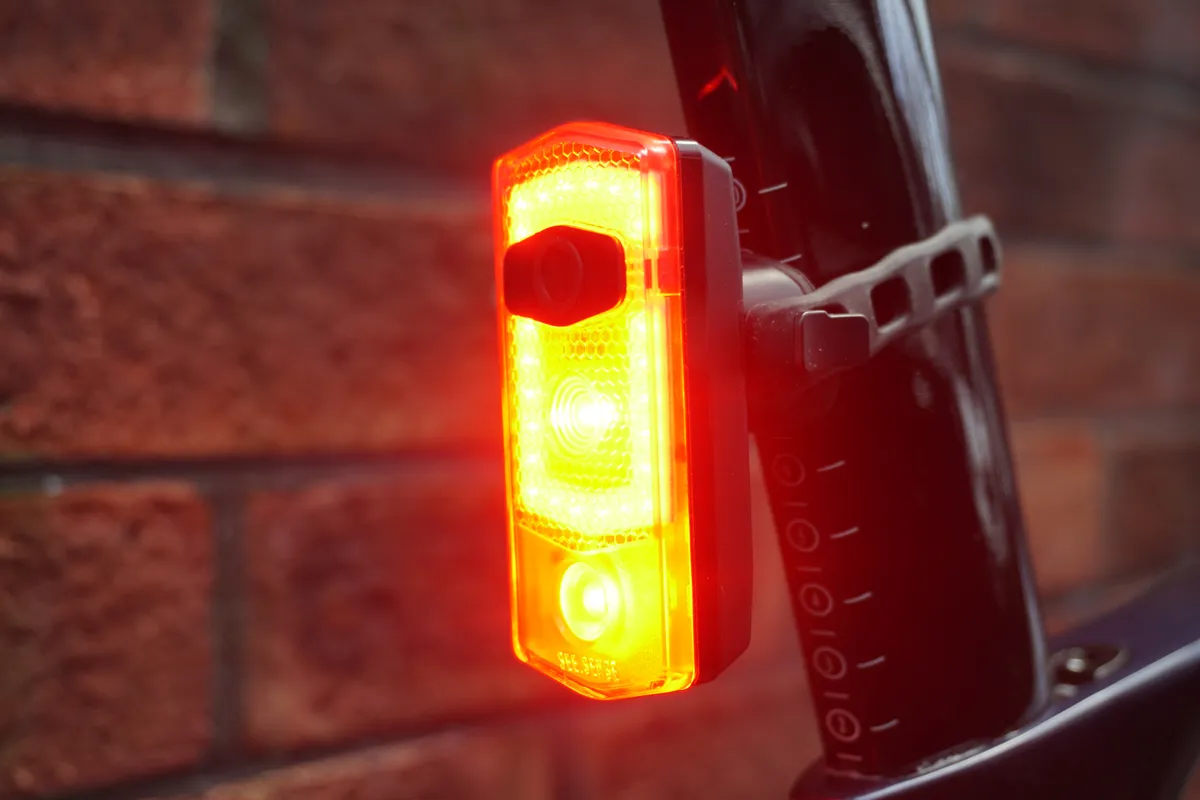
See.Sense Icon 3
- £100 / $120 / €115 as tested
- Pros: High brightness and reactivity
- Cons: Can be unpredictable; battery drains quickly in full static mode
The See.Sense Icon 3 combines a bright 350-lumen output with built-in reactivity for changing conditions.
There’s also a theft alarm, which notifies you via your phone if your bike has been moved (say, for example, if you’re in a coffee shop with the bike outside and in Bluetooth range).
Overall, the See.Sense Icon 3 is a high-quality unit, which puts out an enormous amount of light. However, the modes aren’t always totally predictable and the tendency for the static mode to crank up to full brightness can reduce battery life.
- Read more: See.Sense Icon review
Wahoo Elemnt Trackr Radar
SQUIRREL_TEXT_13211646

- £179.99 / $199.99 / €199.99 / AU$349.95 as tested
- Pros: Great illumination; clever settings; good visibility; decent radar performance
- Cons: Only works with a head unit; bracket could be neater; an occasional blind spot
The Elemnt Trackr Radar has excellent illumination that offers impressive visibility from the rear.
We found the radar performance decent; however, we encountered the occasional blind spot in testing.
The unit is very neat, and there are plenty of smart settings to customise the experience.
One downside is the light requires a head unit to display radar data. We also disliked the bulky bracket.
- Read more: Wahoo Elemnt Trackr Radar review
SQUIRREL_13211646
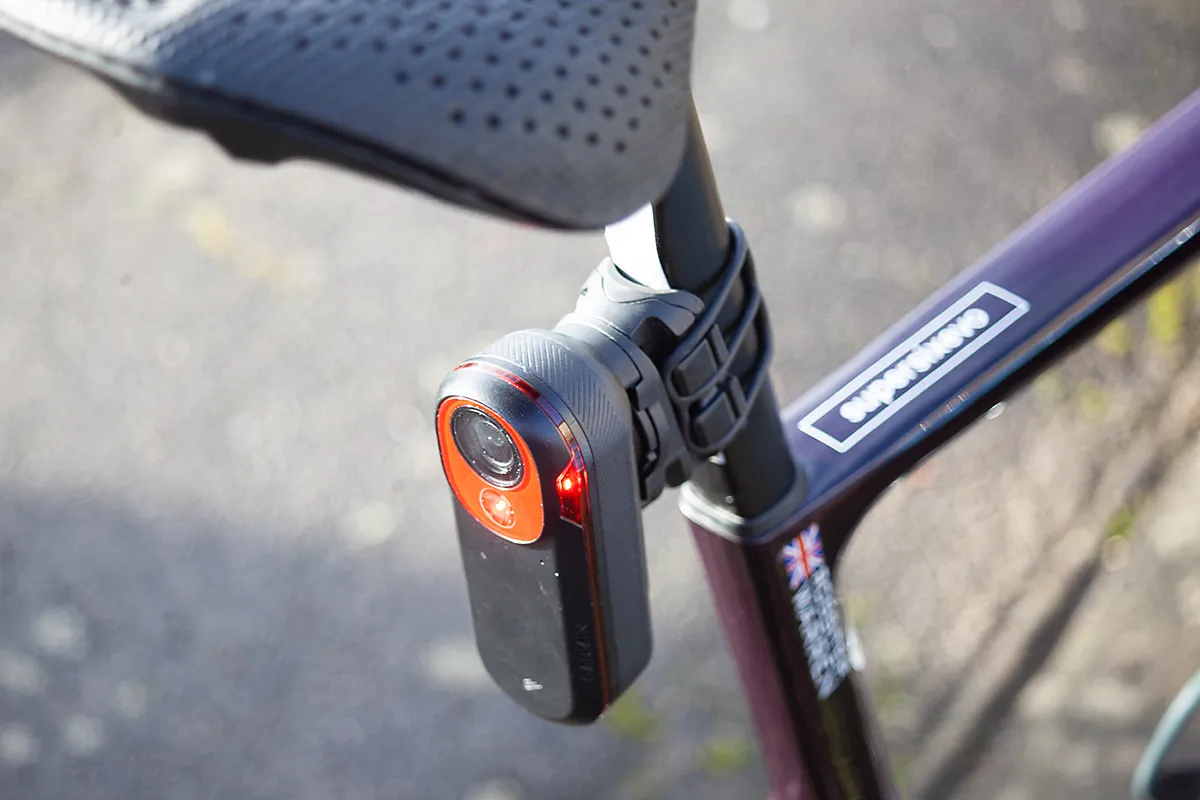
Garmin Varia RCT715
SQUIRREL_TEXT_13089906
- £350 / $400 / €400 as tested
- Pros: Useful radar function; powerful light; decent camera
- Cons: Post-ride app functionality is poor; expensive
Garmin’s Varia is an on-bike radar system that detects approaching vehicles from up to 140 metres behind you. This is said to improve rearward awareness on the road, while the linked light responds to increase your visibility. It also has a high-definition camera, making it an incident-recording device too.
The light is bright and has a good number of useful settings. The radar functionality remains useful and is a meaningful aid to your awareness on the road. While the recording quality is good, this is more of an incident-recording device rather than an all-in-one action camera
However, the way in which the app and unit handle recorded footage leaves something to be desired. Hopefully, Garmin can improve and address this in later updates.
- Read more: Garmin Varia RCT715 review
SQUIRREL_13089906