Canyon has presented its vision for the future of cycling tech, using the brand’s return to the Eurobike show to unveil four concept innovations designed to enhance rider safety and speed.
The future-tech showcase includes:
- A concept road bike with an integrated computer to “transform safety from being reactive to predictive”
- A connected helmet with a heads-up display and audio cues
- V2X connectivity safety technology that could “save lives and reduce road traffic incidents”
- An aero mountain bike that offers free speed for off-road riders
“At Eurobike 2026, we are presenting a vision where performance, safety and intelligence are no longer separate categories or restricted to a particular type of riding,” says Chad Manuell, says Canyon’s chief technology officer, with the brand’s concepts covering urban and road riding, as well as XC mountain bike racing.
Canyon’s goal is to redefine what riders expect from a modern bike, Manuell continues, helping them to focus on “the purity of the ride”.
Let’s take a closer look.
Concept road bike with integrated bike computer
Cyclists are constantly having to multitask, avoiding hazards and staying alert to traffic as well as navigating, monitoring their performance, and staying with other riders in their group, all while enjoying the ride.
Canyon wants to simplify the riding experience by using smart technology in this Canyon Predict concept bike to integrate a wide range of data, and provide a single source for rider information – all in the name of safety.
“Road cycling needs a safety revolution,” says Canyon’s head of connected hardware, Mazen Jrab. “We are transforming safety from being reactive to predictive.”
While there’s an increasing amount of tech available to make road riding safer and faster, there can be limited connectivity between different devices. Canyon’s Predict road bike concept intends to link it all together to provide more effective hazard alerts for riders.
“We looked at how far the automotive industry has come with active safety and driver assistance, and then we looked at the bicycle. There was an enormous disconnect,” says Canyon’s head of design, Fedja Delic.
“Road cycling needs a safety revolution. We are transforming safety from being reactive to predictive"
Mazen Jrab
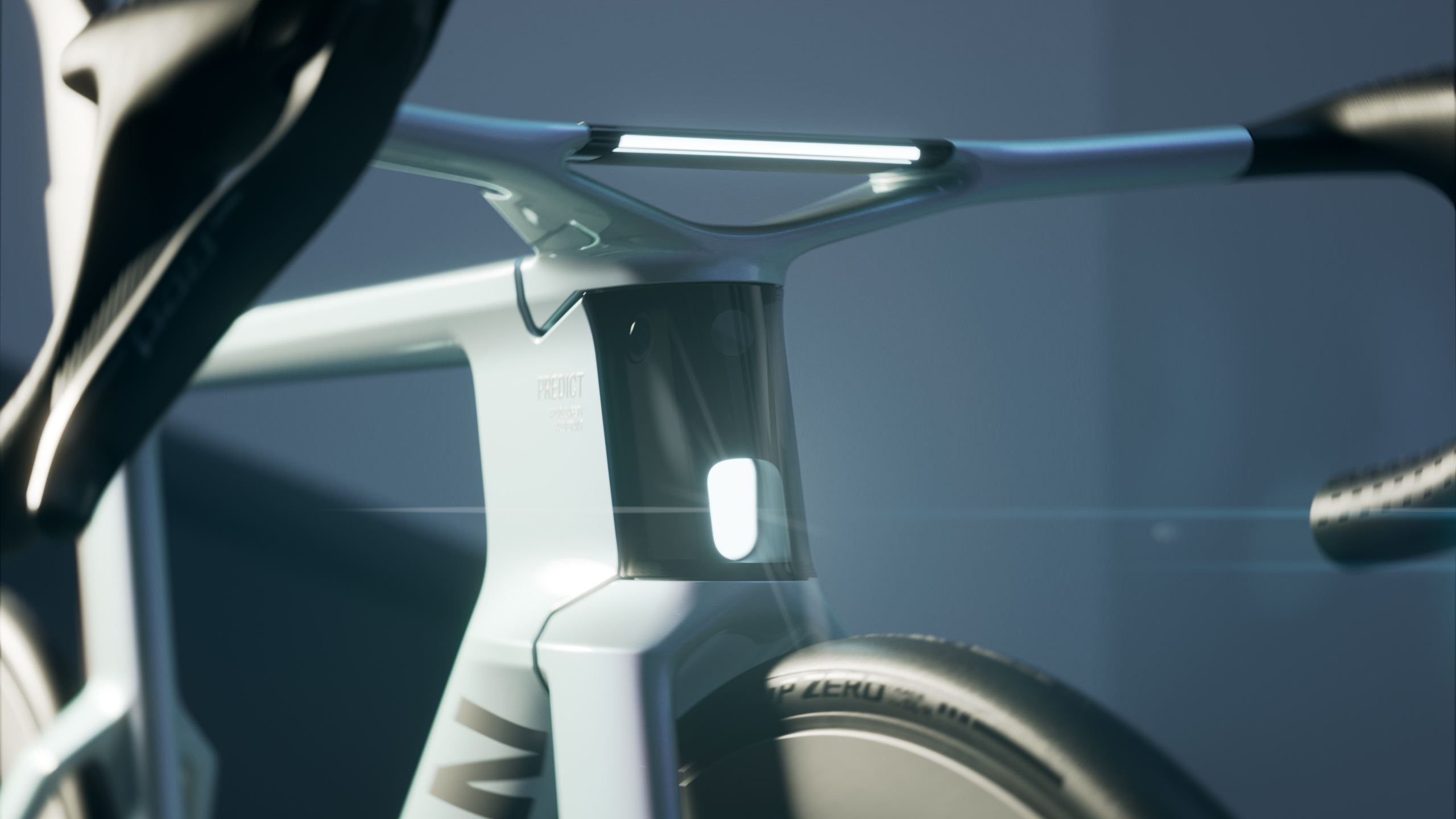
At the heart of Canyon’s concept is an on-board computer, which takes feeds from radars, wearable devices, tyre pressure sensors, cameras and aerodynamic monitors. This uses AI to predict potential hazards and alert the rider.
“Canyon Predict didn’t come from an abstract market analysis or a corporate strategy,” adds Delic. “It grew out of a deeply personal, collective understanding of our own vulnerability on the road and to protect the community we are so proudly a part of.”
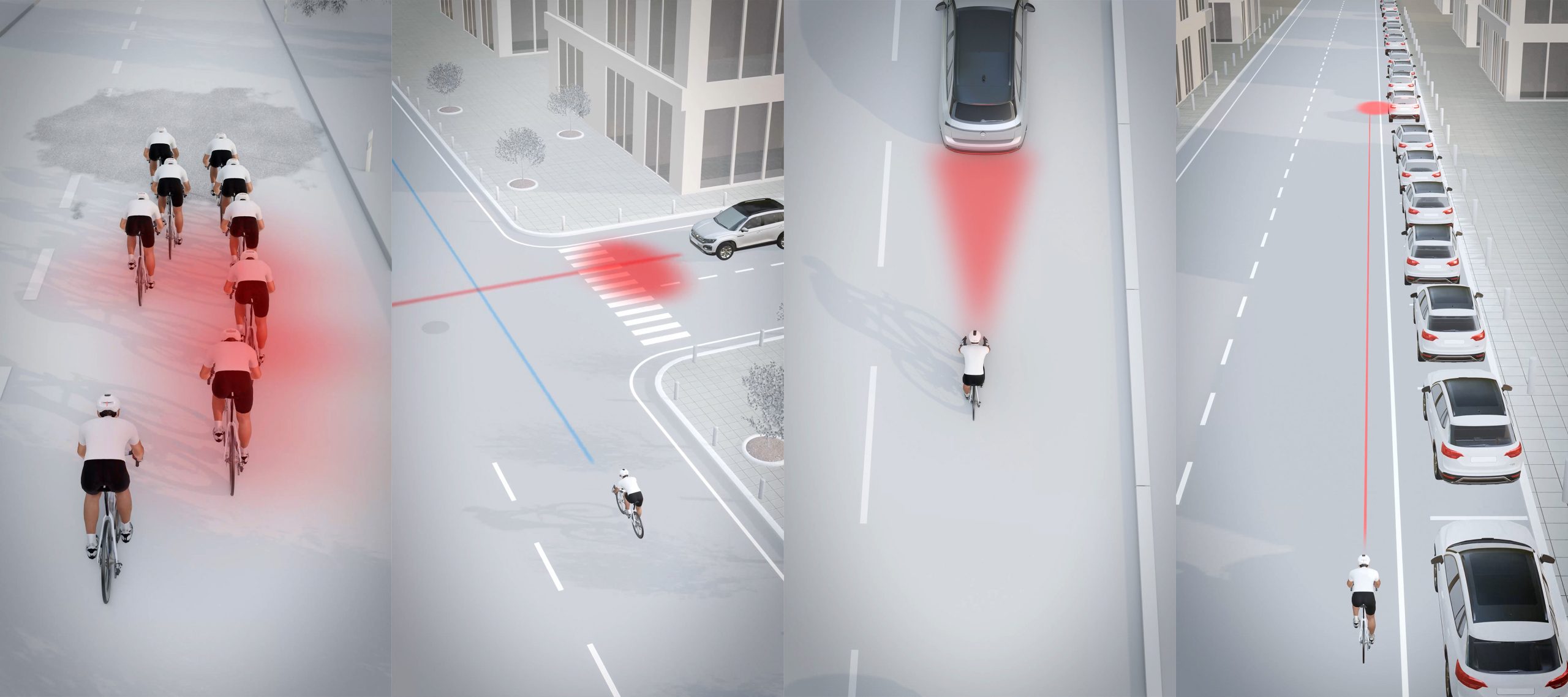
Canyon sees a network effect too, where community intelligence is shared within groups of riders and broadcast to other devices, enhancing safety for the whole group.
“Our goal is not to remove the thrill of performance, but to eliminate the anxiety of the unknown,” says Delic.
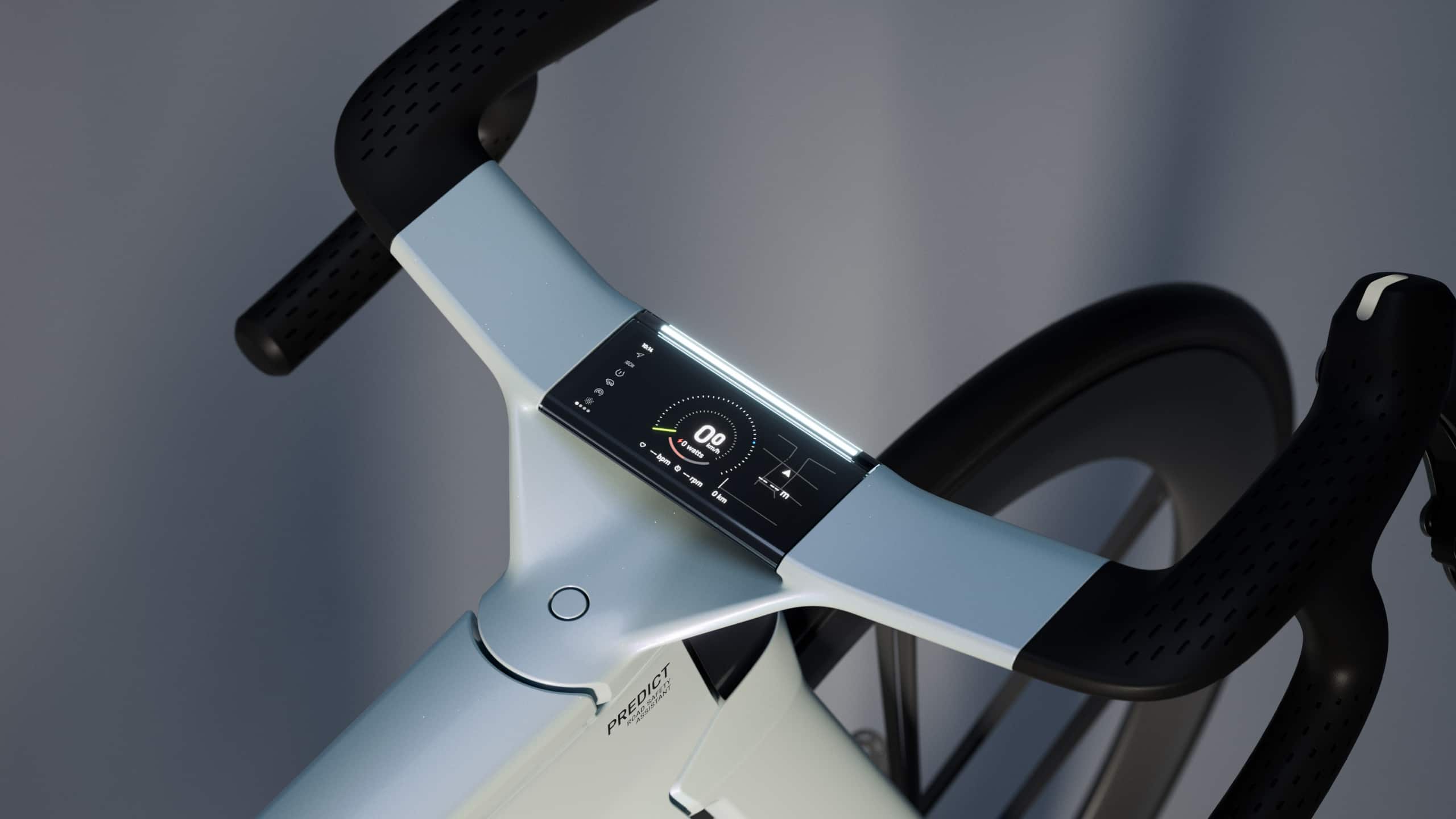
The brand has built a sophisticated display into the concept bike’s cockpit, providing one-point availability of the data collected by the sensors and hazard alerts. Indicator warning lights in the brake hoods provide further prompts and the system is controlled using buttons built into the sides of the hoods.
Canyon has integrated motion sensors into the wheel hubs too, as a feed to the on-board computer, and is working with DT Swiss on development of the concept. Canyon even envisages a dropper post that can be manually activated to lower the rider’s centre of gravity in high-risk situations.
Connected helmet with a heads-up display and audio cues
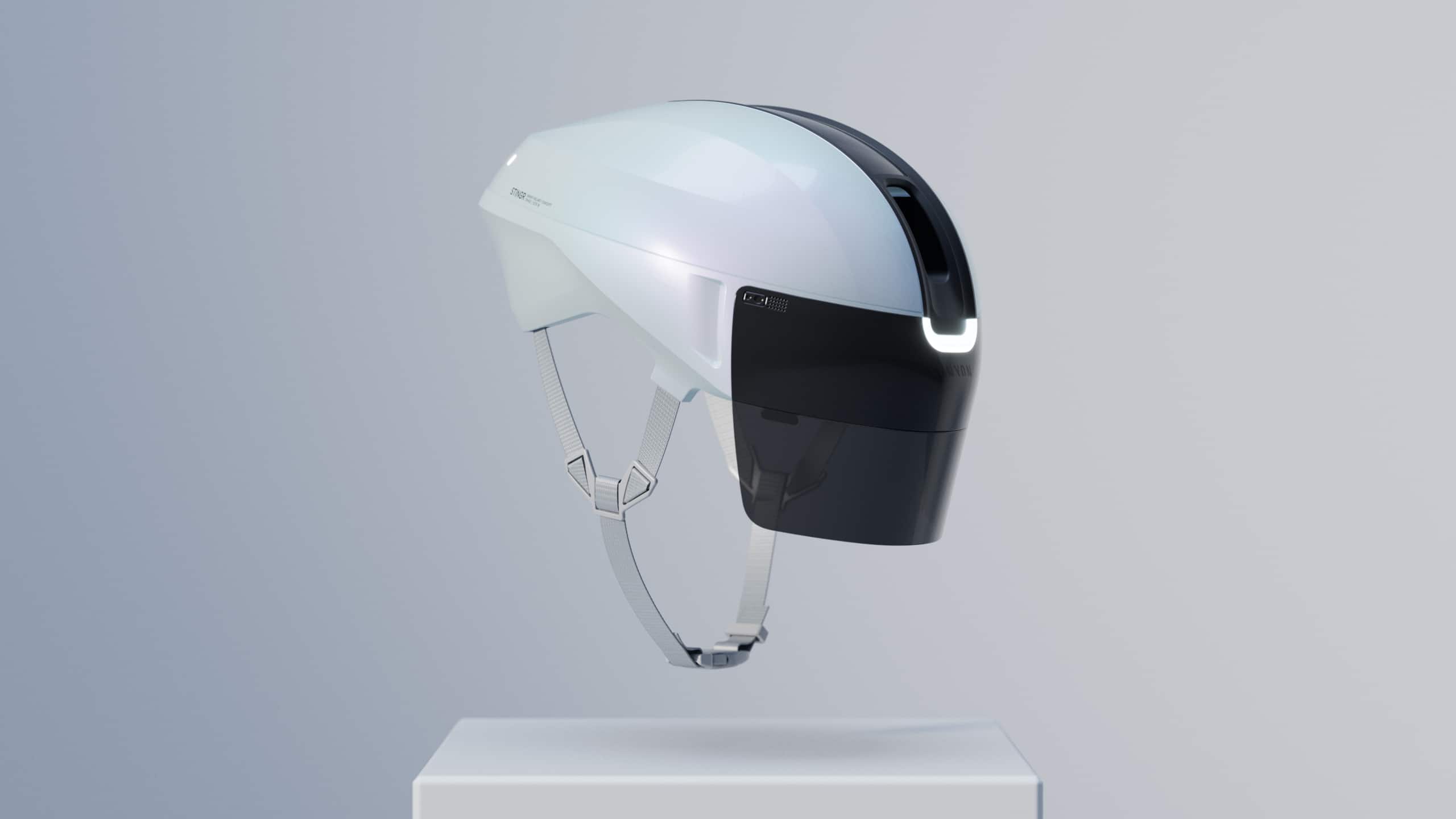
The concept extends beyond the bike too, feeding Canyon’s connected helmet. Central to this is a heads-up display built into the helmet’s integrated, retractable visor, plus back-up audio cues and hands-free control, so you can keep your hands on the bars.
As with the bike’s on-board computer, the concept helmet can provide alerts to the wearer via data transmitted by other compatible bikes and sensors.
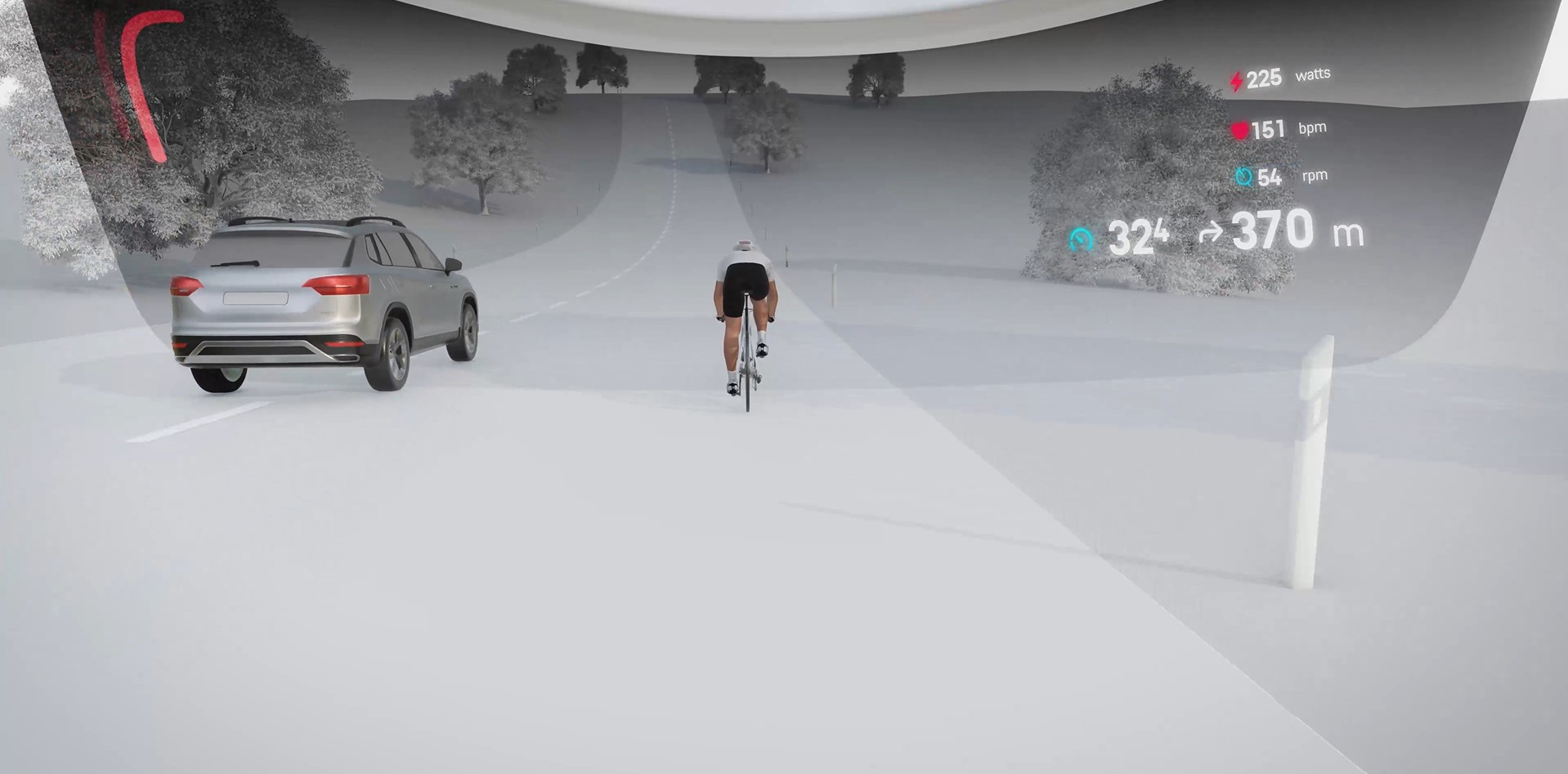
It also provides data from a power meter, heart rate monitor, groupset and more, so it can show typical training metrics as well as safety-related alerts.
Canyon sees a rear light and direction indicators built into the helmet, and a solar panel mounted on its crown to help power the in-built devices.
V2X connectivity to link your bike into the connected road
Car manufacturers are beginning to build V2X connectivity into their vehicles. Standing for 'vehicle to everything', V2X is designed to enable a vehicle to detect another even if the driver does not see it, and also communicates with traffic signals and other road users.
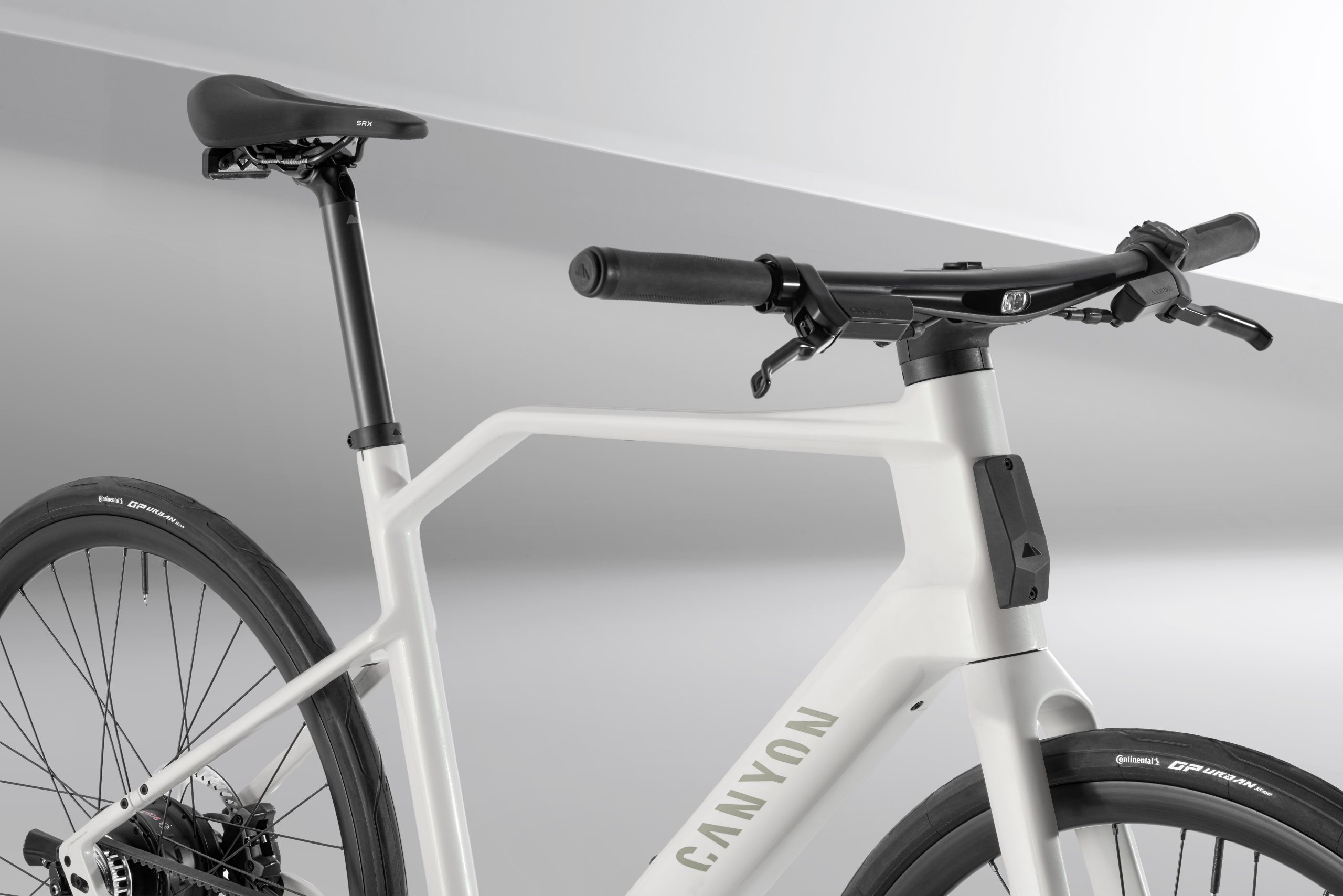
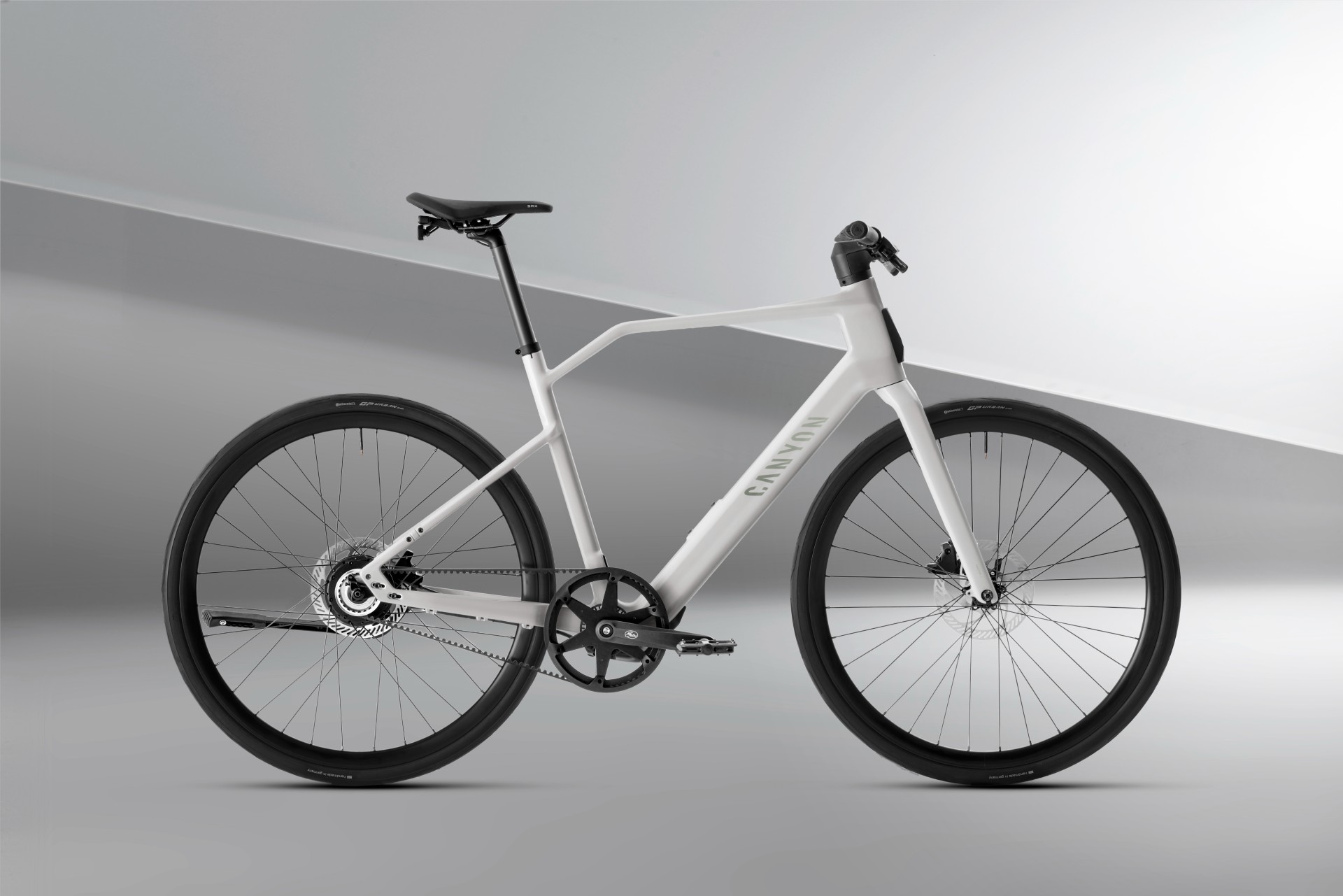
Canyon has worked with Volkswagen on testing the technology integrated in its Roadlite:ON CF urban electric bikes. The tech is now nearly production-ready, showcasing how active safety systems can be built into a top-spec bike without adding extra bulk or awkward looks, although Canyon says it will remain a prototype for now.
Vibrations in the handlebar grips alert the rider to a hidden hazard, Canyon says. At the same time, the driver of a V2X-equipped motor vehicle is alerted to the presence of the cyclist. Compatible city infrastructure could also be set up to allow stop-free passage for cyclists.
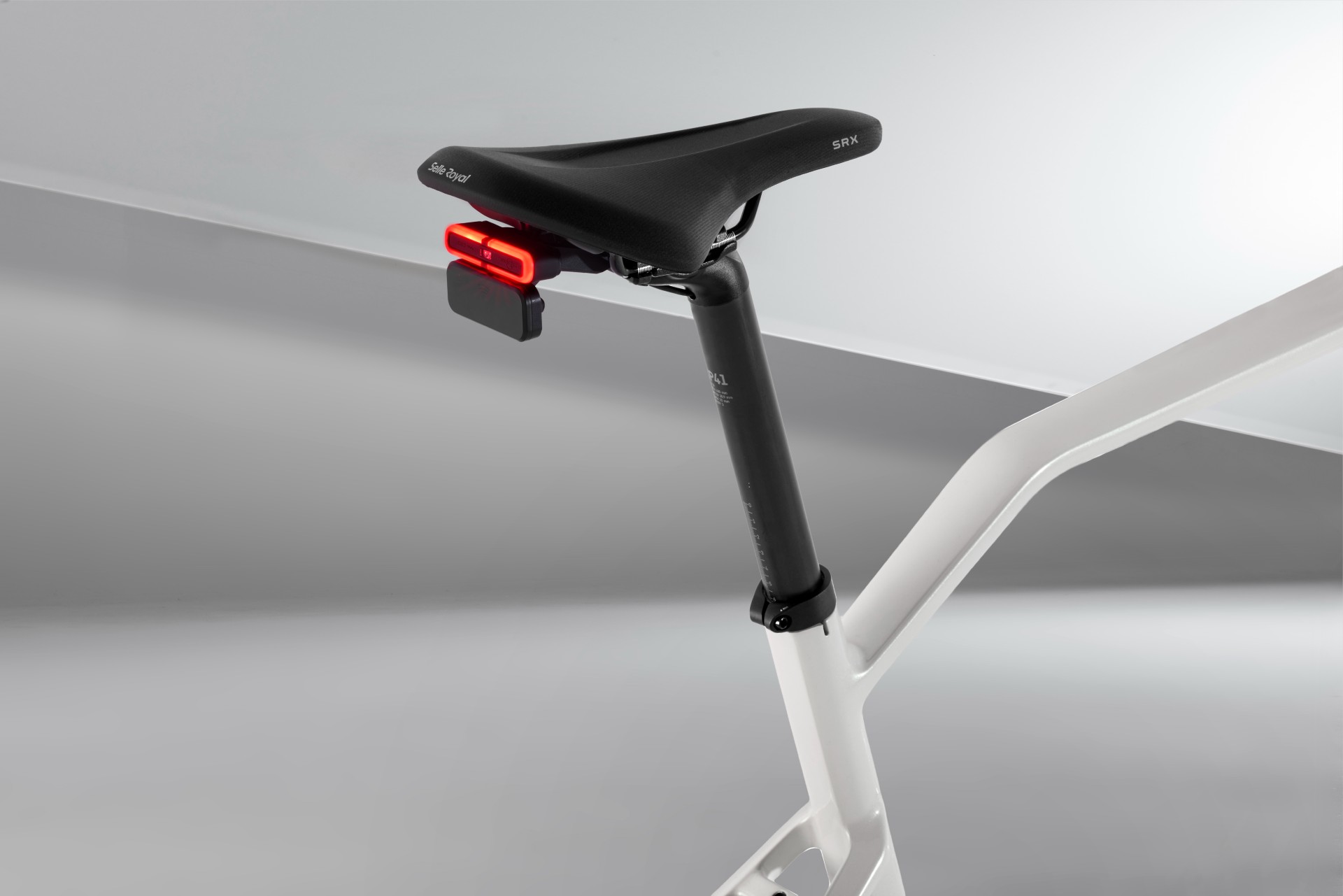
The new Roadlite:ON CF prototype includes a plug-and-play rear radar that fits below the saddle, alerting the rider to approaching vehicles and flashing to alert their drivers too, as well as functioning as a brake light.
“We see it as our responsibility to lead the bicycle industry in advancing this technology – ultimately to save lives and reduce road traffic incidents – and we’re excited to take another step in this journey,” says Jrab.
An aero mountain bike to offer free speed for off-road riders
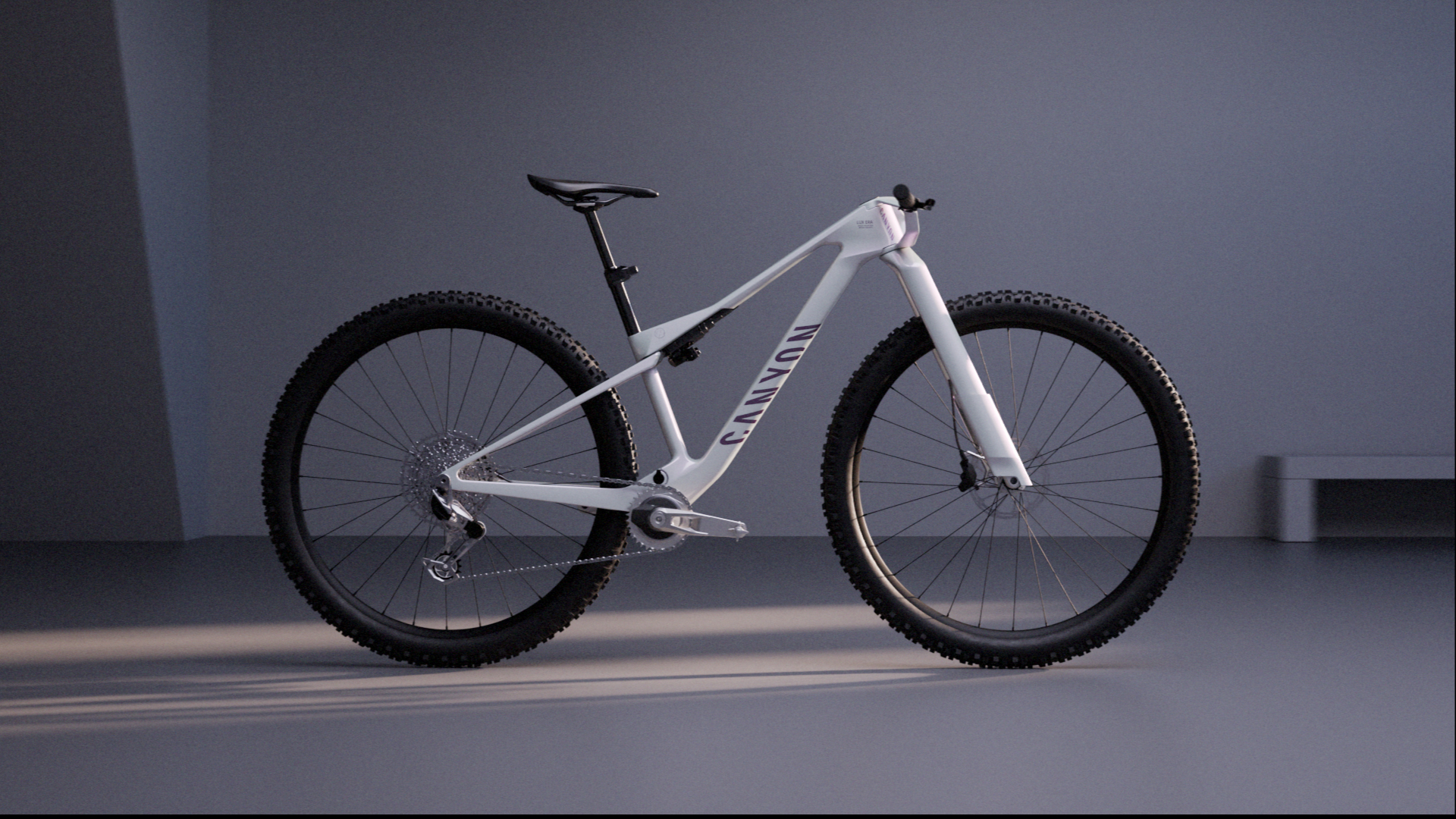
Over the last 20 years, aerodynamics have revolutionised road bike design. But aero thinking is no longer confined to the road and is increasingly a feature of gravel race bikes too.
Now Canyon sees aerodynamics as the next development in XC MTB racing.
Canyon points out that the average speed in XC MTB World Cup races has increased from 18 km/h in 2016 to 24 km/h today, with longer races getting faster too. Winning speeds in the Leadville 100 race average around 29 km/h, while short-course XC races are even faster.
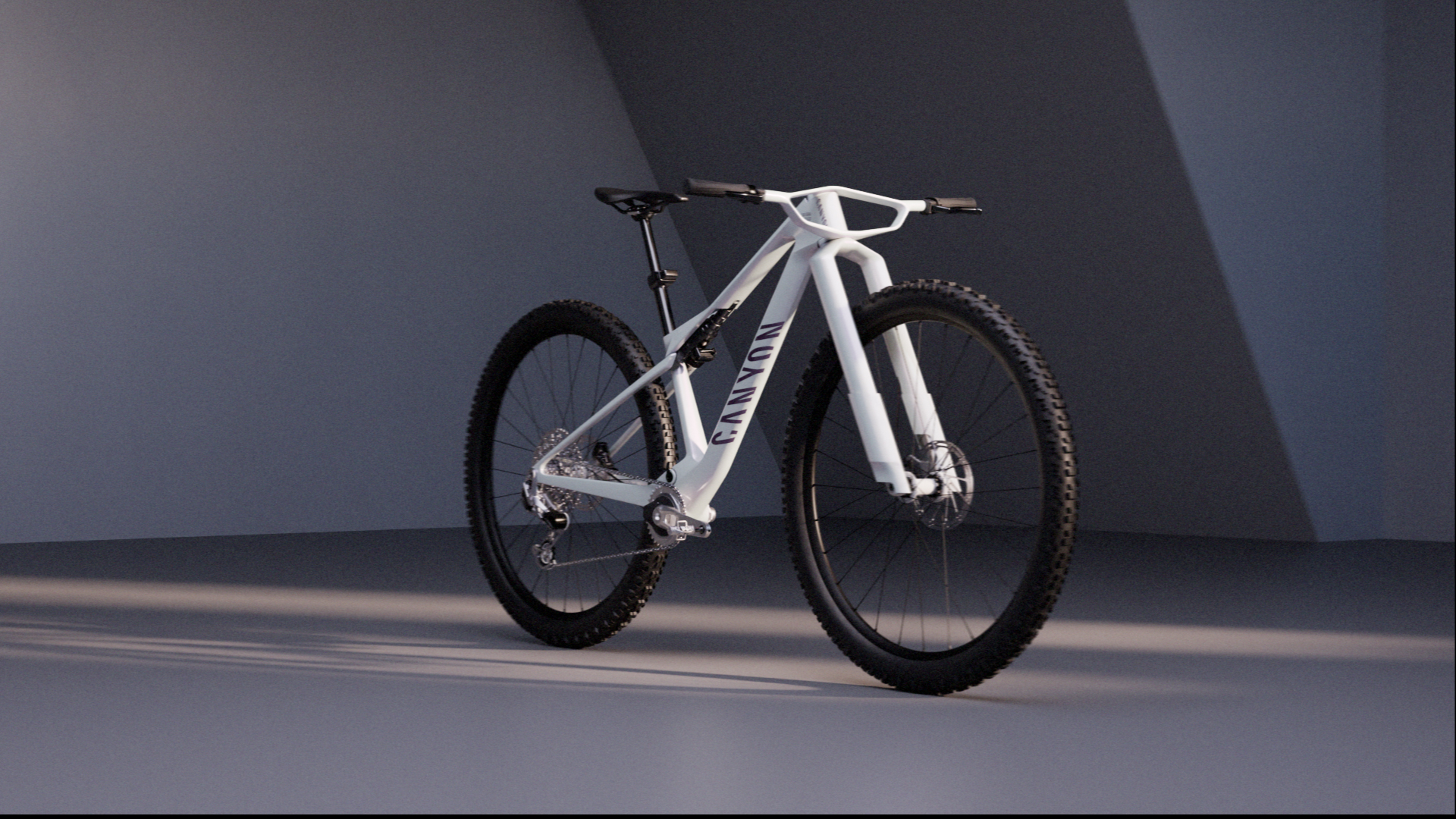
Canyon predicts that the rise of 32-inch wheels will allow riders to maintain even higher speeds, as they can clear smaller obstacles more readily, so aerodynamics will play an increasing part in achieving ever-faster times.
Reducing the rider’s frontal profile is key to winning performance, according to Canyon. Even more than on the road, the greatest proportion of aerodynamic drag is due to the rider, not the bike, due to the more upright ride position on an MTB.
With that in mind, this XC MTB concept has a new patent-pending handlebar design, with an aero cockpit that splits the handlebar’s central part into two aerofoil sections. The head tube has an aero profile with a point to the leading edge to reduce drag. The bike’s display is integrated into the fork top cap, so it doesn’t impact front-end aerodynamics.
Canyon says the design allows riders to get in a more aerodynamic position with greater safety and comfort, allowing for greater speed. Canyon has also used an inverted suspension fork in its design concept, which will also lower drag.
With the 2026 show marking Canyon’s return to Eurobike for the first time since the mid-2010s, the brand is using the occasion to share a blueprint for a faster, safer and all-round more enjoyable riding experience.