At one end of the spectrum, simply heading out on the bike and riding will see you lose weight and improve fitness. Simple.
At the other, if you choose to dive in at the deep end, it can seem impossibly complicated – a labyrinthine network of data and training tools that might be designed to add accuracy and clarity but just confuse you.
As knowledge and gadgets expand in sophistication and accessibility, we have a colossal amount of data about our own performance and health at our disposal. The problem comes in navigating a path through it.
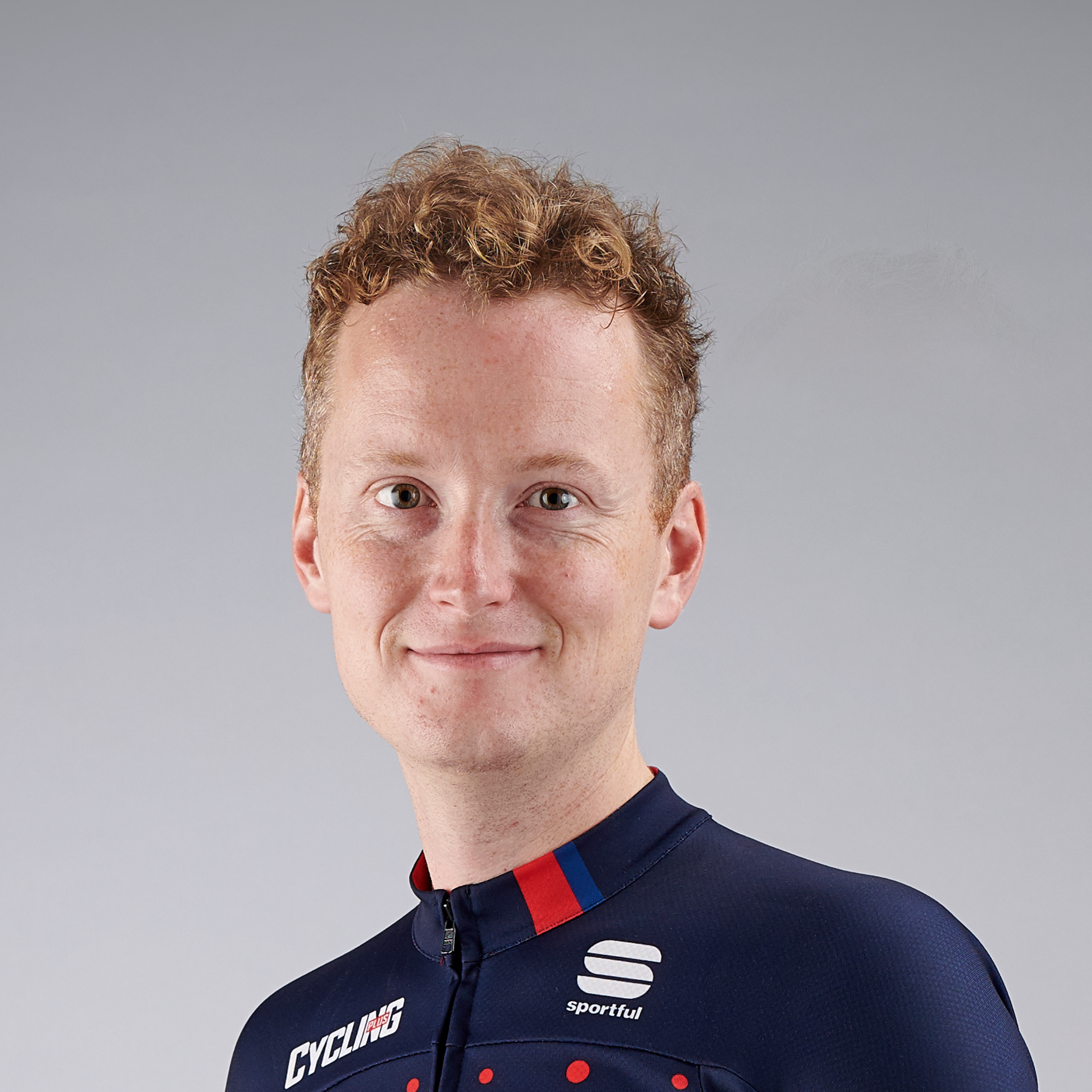
Thankfully, we’ve called in Sebastian Sitko, a sports science professor at the University of Zaragoza and cycling coach, to show us the light.
Sitko, who on top of his academic work coaches professional and amateur cyclists at home in Spain and across the world, recently published in English his training manual, Cycling 2.0: Evidence-based Training for Peak Performance on the Bike, after a successful Spanish-language run.

The book blends cutting-edge research – including those studies Sitko has helped shepherd – with practical advice for elevating your riding to the next level.
Getting there is about doing what’s right for you and avoiding the trapdoors in modern training culture. From an over-load and over-reliance on data, to the erroneous adoption of training ideas unsuitable to your own circumstances, and the pressures of social media in influencing your own performance on the bike, Sitko explains the solutions for cyclists’ biggest training challenges of today.
Mimicking the training methods of professionals can be a huge mistake

Sitko believes many of the mistakes we amateur riders make in emulating the training habits of pro riders boil down to the fact that we’re often time-crunched – and they are not.
Much has been made of the polarised training methods of Tadej Pogacar and the fact he’ll spend 80% of his training at the lower end of his power zones.
“If you train 30 hours a week, you do need to spend most of your time at low intensity, because even if you only spend 20% at high intensity, that’s still six hours a week at least – and that’s huge,” says Sitko.
“This balance doesn’t necessarily translate to the time-crunched cyclist. [To improve] you need to increase your training load over time, so for cyclists short of time, that means [manipulating] rest periods and intensity.”
There’s a better balance to be struck. Don’t be afraid to do more than 20% of your rides above low-intensity zone 2, but equally don’t spend all your time pushing your body to its limit daily on your indoor trainer.
The key is to allow sufficient periods of rest for your body to absorb training and adapt, whether that’s after long endurance rides or high-intensity HIIT sessions.
“I’ve always said that my biggest contribution as a coach is not to tell you when to train, but to tell you when not to train,” says Sitko.
New sports-science discoveries should be listened to but not always applied literally
Sports science is an interesting and well-studied area of research, but the cherry-picking and misinterpreting of data by the individual cyclist is an easy trap to fall into.
First of all, says Sitko, there is the problem of inadequate study size in many sports-science studies. Studies in the medical field are often flush with cash, sponsored by big pharmaceutical firms and powerful private companies.
Money buys them time and resources, enabling them to recruit lots of participants, which adds ballast to any conclusions.
“This isn’t the case in sports science. Most of our work is funded by researchers – I fund many of mine," says Sitko. "The result is, when you want 300 people to test something, you get 25, which makes it hard to find statistical differences that are reliable.”
There’s also the problem of time, he says. In an ideal world you want to follow many athletes over a long period of time – perhaps entire seasons.
But that isn’t a good use of an athlete’s limited time in their sport, which again can restrict numbers and meaningful outcomes.
Extrapolating results of a study is another issue; results, Sitko argues, are often based on averages between groups but, in reality, the effects on any one person can vary hugely.
Applying this to the real world, while on average a training intervention can benefit a group, there are people in the group it might hinder and you may end up being that person.
“There was a study in Spain last year, which compared strength training on and off the bike; seven torque intervals on a hill versus seven off-the-bike squats. The results showed there was no difference in boosting strength between the two protocols.”
Simple. But, due to the lab setting and narrow comparison between on and off-bike strength training, limiting.
“In the real world, nobody goes to the gym, does seven squats and goes home. There are other benefits to strength training in the gym that haven’t been measured, so we should try not to interpret studies literally.”
- Read more: Follow this free strength-training plan twice a week to avoid injury and get stronger on the bike
Making sense of masses of training data

Training tools such as power meters are incredible devices, offering the potential for deep insight into your performance and training readiness. However, in the wrong hands, or with misinterpretation of data, things can spiral quickly.
Pointing to the unreliability of power meters, Sitko says they can give readings up to 3% off true figures, which means you’re basing your efforts on erratic data.
When it comes to reading the data correctly, a coach’s eye for accuracy, in combination with client conversations, can eradicate miscalculations.
“In addition to using these training tools, we should all listen to our bodies much more than we do,” says Sitko. Or, as in Sitko’s example, listen to your coach.
He says that when he uses heart rate variability (HRV) to assess training readiness, he likes to ‘blind’ the cyclist or shield them from the data. HRV looks at fluctuations in heart rhythm to calculate how ready a cyclist is for a training session.
By leaving the result to your coach to decide your workload, you remove the possibility of, for example, doing a hard session when your body isn’t ready to absorb it.
Alternatively, if you don’t have a coach, be honest with yourself: if you feel flat and fatigued, you are flat and fatigued, meaning your immune system’s under threat. Training hard in this scenario only leads to a heavier illness and longer off the bike.
You should also bear in mind that data isn’t set in stone and your ability to hit targets, like functional threshold power (FTP) – a power figure that dictates training load – fluctuates daily, depending on the state of your body and mind.
“We’ve undertaken experiments with pro riders where we had them do three FTP tests in a week, and you can see 25 to 30 watts difference between the tests," Sitko says.
"So, you shouldn’t aspire to be as precise about what the tools tell us to do, because a) you don’t know if you’re precise with your measurement and b) there is day-to-day and week to week variability [in performance]."
Strength work is important at all ages – even if it isn’t the fun, glamorous work

Sitko is an advocate for off-the-bike strength and conditioning work for cyclists of all ages, not just the much-publicised over-40s, who need it for the futureproofing of their health, to ward off detriments such as age-related sarcopenia (muscle loss).
“If only we were taught when we're young strength training is the same as brushing your teeth – that it’s absolutely necessary for you to reach old age in good shape and not wait to strength train until you are old(er),” he says.
That’s the dream. In reality, as a cycling coach, Sitko is paid to deliver immediate results on the bike. You, the recreational rider, no doubt want similar. Therein lies a clash.
“When I tell you to spend three hours at the gym a week, and you only have eight hours available, this is three hours lost from the bike.
"Strictly for your performance, it will be more beneficial if you ride your bike instead of going to the gym. So, it’s a complex issue. If I prioritise your health, you’ll improve less – and I will lose a client.”
However many hours of training you’re doing a week, as a minimum you should be allocating an hour a week for off-bike conditioning, with a particular emphasis on your core – the area that stabilises your body for the pedalling action but isn’t worked strengthened during a ride.
Exercises such as dead bugs (lower back) and split squats (glutes, hip flexors) counter the damaging effects of prolonged sitting on key core muscles.
Don’t believe everything you see on social media

The timelines of the people we follow on our health and social media platforms can often give unrealistic or partial accounts of what they’ve been getting up to on the bike.
Whether that means specific efforts someone has ticked off, Strava segments they’ve smashed or incredible places they’ve been riding, it can leave you with feelings of inadequacy or jealousy – negative emotions that don’t help you in any way.
You might feel you’re not doing enough yourself, or you’re falling behind in your pursuit of a fitness goal – and it’s never healthy.
“The algorithms prioritise everything that is attractive,” insists Sisko. “In reality, cycling endurance training isn’t that attractive. It can be monotonous, where you spend hours riding the same hill in front of your home.”
What we see online, he says, is the “extreme, weird stuff… but at the end of the day, a huge chunk of the work we do that matters isn’t seen. Riding for six hours into the wind on a wet day might not attract visibility, but it still works”.
Cycling 2.0: Evidence-Based Training for Peak Performance on the Bike by Sebastian Sitko is out now and available to buy from his website, sitkotraining.com