
Forget just shaving a second off your local climb next weekend, or getting a decent time in a spring sportive.
Making the best of 12 whole months goes beyond repeating your typical 12-week training plan four times – there are seasonal pitfalls to sidestep, issues of overtraining to avoid and the possibility of making small changes that would be unnoticeable in the short term, but which add up over the course of a year.
In this article, we’re going to look at ways to make your whole year a winner.
An ounce of prevention
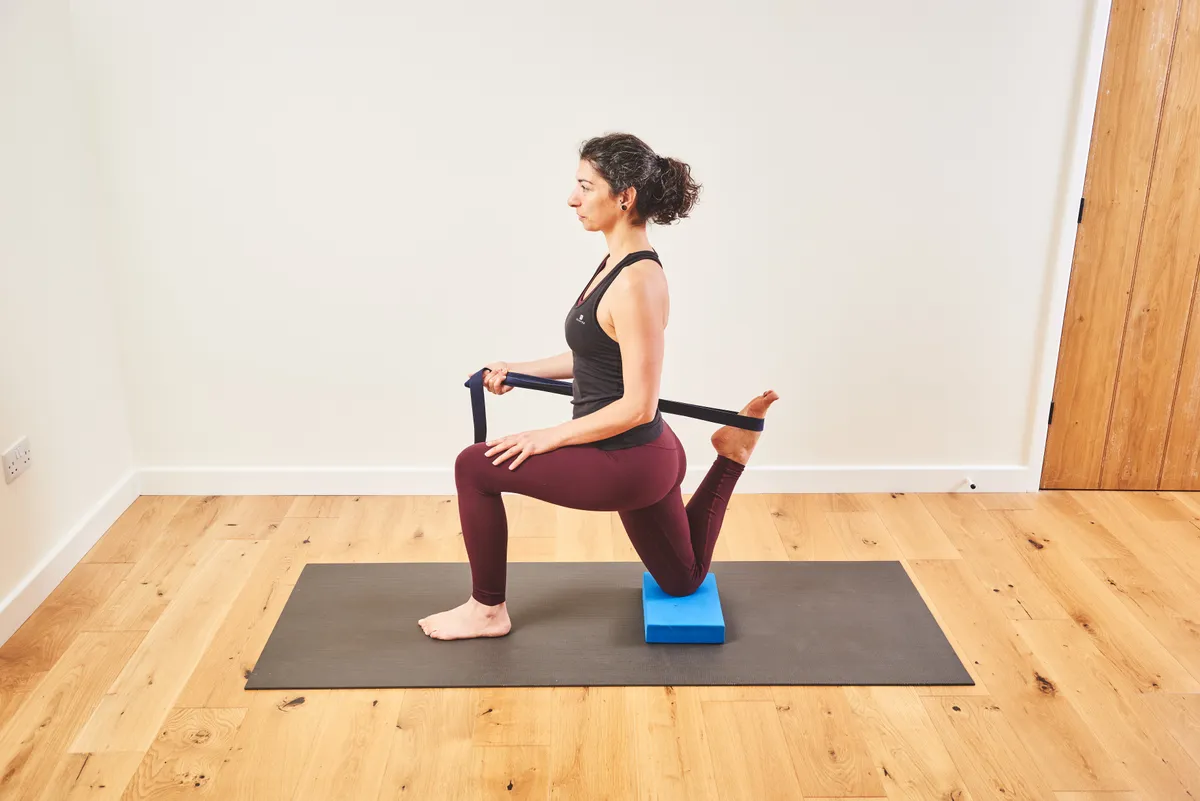
Prehab is a hot topic right now. Taking a small amount of time to correct postural problems and flexibility issues could be a hidden tool for improved year-round performance, according to Paul Hough, sport & exercise physiology lecturer at the University of Westminster.
“On the surface, when you’re doing yoga or basic prehab exercises, it feels like there’s no real gain. But after a while you get benefits in terms of feeling better, moving better and recovering better between sessions," he says.
Most cyclists have a forward shoulder posture from their time in the saddle, and really tight hip flexors. Fixing these takes time and persistence: if you stretch for only a couple of days, you might only get an acute benefit, but if you do it over the long term you'll feel all the benefits, and it will enable you to get further into riding positions.
The rhomboids and rotator cuffs, the upper back muscles, tend to be quite weak in cyclists, so doing exercises such as pull-aparts with a resistance band every day is a good place to start.
“Try holding a resistance band in front of you in an underhand grip (palms upward) and, with your shoulders relaxed and your elbows at your sides, spread your hands apart horizontally so your shoulder blades gently squeeze together.”
Leave Christmas behind

According to Sarah Danaher of SRD Nutrition, it’s unhelpful to beat yourself up about Christmas excess. To start the year flying, if weight loss is your aim, you need to cut calories safely.
Her advice: “Aggressively cutting too many calories, or entire food groups such as carbohydrates, may get you fast results on the scales, but is likely to have a detrimental impact on your cycling performance. Consistently underfeeding your body means you are more likely to get ill, underperform, and become obsessed with food.
It’s okay to feel some hunger, but you shouldn’t be feeling ravenous. Keep protein relatively high to maintain your muscle while losing fat.
Bump up the number of veggies you are having and base the bulk of your carbohydrates around your training sessions, before, after and during if you are going for longer than 90 minutes.
Replace the biscuits and crisps with chicken, tins of fish, eggs, milk, yoghurt and wholegrain carbs such as oats.
Also, have a dry January – cut the alcohol and you’ll significantly cut the empty calories.”
Be realistic

“Your peak fitness usually comes after a period of high-volume, high-intensity training,” says Hough. “But that’s impossible to sustain over 12 months."
"The problem with a year-round approach is you won’t find enough time to recover, which is why most athletes’ training is based around having an off-season, a building-up period, then competition.
"Pros usually use a periodised approach, in which they have times when they’re not looking to be in peak racing form, but they’re building the qualities that underpin that.”
In other words, resting is working, and non-cycling activities help your cycling.
- Read more: What is training periodisation? Why training differently through the year makes you faster
Take care of nutrition

Because there’s so much to think about on the bike, cyclists have a bad habit of looking for shortcuts when they’re off it.
After a day of worrying about Watts, zones and where that taxi thinks it’s going, it’s easy to try to free up some headspace by relying on shiny foil packages to sort out our nutrition.
“A baseline diet where the foundations of good nutrition are firmly in place is fundamental throughout the whole training cycle,” says Danaher.
“The vast majority of good nutrition should come from food, with the use of supplements just being the icing on the cake. This will ensure that you are getting not only the macronutrients like protein, carbohydrates and fats, but also the micronutrients, phytochemicals and fibres that are important for your body to function and perform at a high level.”
Seasonal maladies
Cyclists are particularly susceptible to allergies.
This is partly due to the increased stress riding puts on our respiratory systems, but also because of the seasonal pattern of our sport – allergic reactions are at their lowest between October and January (unless there are mould spores on your Christmas tree), but peak in spring and summer.
Dr Michael Rudenko of the London Allergy and Immunology Centre has some advice: “I’d recommend rinsing your nose with sterile salty water and using the latest generation of antihistamines, none of which have a negative effect on performance.”
Interestingly, he does not recommend Triamcinolone.
Positive additions
In a similar vein to Hough’s prehab suggestions, Danaher has some suggestions for changes that have a longer-term effect.
“There is so much focus on protein and carbohydrates, that vegetable intake in athletes can be woefully low. I cannot emphasise enough how important it is to consistently include vegetables in your diet over the long term," he says.
"Vegetables are not just for losing weight or as a pretty side salad in the summer.
"The micronutrients and phytochemicals found in veg are needed to combat the oxidative stress and inflammatory processes that result from high levels of exercise.
"The fibres in veg are also essential for keeping the gut microbiome healthy.
"Variety and quantity are both important – so lots of different colours, fresh or frozen, and enough to cover at least 1/3 of a plate at mealtimes.”
Changing requirements

While it’s a myth that you need more carbs in winter, it is true that changes of season can affect your nutritional needs, and for a year-long programme to work, you need to keep up with those changes.
“During the winter months, I recommend a vitamin D supplement for all of my athletes, says Danaher.
“Studies indicate that vitamin D deficiency is common among athletes. When researchers correlated vitamin D status with performance measures, they found that there was an association between blood levels of vitamin D and endurance performance.”
Play away
Picking an extra sport is an ideal way to spike your fitness, as well as avoiding training boredom, according to Paul.
“Most cycle training is unloaded, so I would suggest loading the skeleton a bit more – running, and rowing are good. You have to be careful that you build it up very gradually.
"If you just extrapolate your cycling programme into running, your body’s not going to be conditioned for that.
"Pick something you’re likely to stick with, that you’ll enjoy. That sounds obvious, but cyclists can be masochistic – the attitude is: ‘I hate it, but I’m going to do it anyway’ and the satisfaction comes after.
"If you’re not a fan of other types of aerobic exercise, interval training can be really useful because it’s a lot shorter. Doing intervals on the rowing machine, you can get a lot of high-intensity work done in 20 minutes, and it’s a different movement pattern that relies on a lot of the muscles used in cycling.”
Data drift

It’s dangerous to obsess over matching your data from one part of the year to another, especially as the conditions change.
“The summer heat puts extra stress on the body during exercise, ” says Hough. “Your muscles want blood, but your skin wants it too, to cool you down, and getting it to both places drives your heart rate up. You get what we call cardiovascular drift in temperatures above 25°C, as your heart rate starts increasing independently of exercise intensity.”
So your performance parameters will differ from those you logged in lower temperatures. To give yourself an idea of this drift, cross-reference your heart rate against a rate of perceived exertion (RPE) rather than sticking to concrete training zones.
The Borg scale is useful for this and runs from 6-20, so you can multiply your RPE by 10 to get a rough idea of where your heart rate should be.
Holiday blues
Time away with work or family invariably takes a chunk out of your training schedule, often at an unhelpful moment.
When chatting to a variety of coaches, one suggestion for maintaining fitness came up time and again: skipping.
It’s an endurance workout that’s also good for your core strength, can be easily adjusted in intensity to match whatever point you are in your training plan, and, best of all, a skipping rope is easily portable – unlike your bike.
Muscle work

Perhaps cycling’s most neglected training element is the one that Hough recommends most often, because it’s a single addition to the plan that provides many different benefits.
“I’m a big fan of resistance and strength training," he says. "I think that’s a great option for improving muscular-skeletal strength, has a good carryover for the bike. It strengthens all the soft tissues, muscles, tendons andligaments, and improves maximal power.
"There’s also evidence that suggests it helps improve cycling economy, so you need less oxygen for a given power output.”
Deadlifts, with a straight back, hingeing at the waist and a soft knee bend, are ideal for building hip strength and aiding power transfer to the pedals.
You can also incorporate kettle bells into your existing core-strength routine, carrying a bell in relaxed arms while you do your lunges and squats.
Adding weights to your session is a big leap, and it’s safest to do so with some experienced help at hand to spot for you.
- Read more: Follow this free strength-training plan twice a week to avoid injury and get stronger on the bike
Proper paperwork
“In my clinic, the main causes of fatigue are overtraining, under-nutrition, restrictive diets, poor sleep or an underlying medical condition such as anaemia or food intolerance, ” says Danaher.
“Many of these can be fixed or mitigated by diet, but you need to keep a food diary to help identify specific nutrients that may be lacking, so that recommendations for adding or removing anything from the diet can be specific to you. It also has the added effect of making it very obvious what things you can cut out to help with weight loss.”
Address your weaknesses

The systematic improvement of a three-month plan often enables you to ignore small problems.
You're so satisfied with watching your performance rise, you don't think about what's doing the work, and certain specific weaknesses get ignored. According to EF Drapac's director of performance, Tim Kennaugh: "Almost everyone has one leg stronger than the other.
"I give it particular attention once the imbalance gets to a 47:53 ratio, by getting riders to do single-leg riding and single-leg squats. If things don't improve, it's worth seeing a physio for specific gym work."
Try unclipping one leg while on the turbo and, in a medium gear, practise a scraping-the-sole-of-your-shoe motion to pull the pedal backwards and up as you come off the downstroke.
Start by doing three or four repetitions each side for 30 seconds, and gradually building to eight reps for a minute as your muscle and technique develop.
Muscle food
The big fear with resistance training is that you will build muscle and add weight, but Danaher has a basic plan for powering up without bulking up.
“To increase strength with resistance training, you need to provide the muscles with protein foods taken in intervals spread throughout the day. For an 80kg male, this would translate to four portions of good-quality protein, like a chicken breast, a tin of tuna, a high-protein yoghurt or a whey protein shake made with milk.”
Some things are faster than others
According to Rob Kitching, founder of Cycling Power Labs, it’s important to keep as much of your training data as possible so that long-term patterns can be detected.
“It’s common in cyclists to see that the cardiovascular system develops faster than the neuromuscular, so the legs lag behind in development.”
This inability for the legs to keep up with the heart is hard to distinguish from a more traditional training plateau, and good data can help you decide if you need a week off or some weight training.
Eating for wellness

Time lost to illness is the biggest bugbear among the coaches we speak to.
Fortunately, Danaher has some practical dos and don’ts for your immune system.
“Long, hard hours of training depress the immune system for hours after exercise. It seems tempting and harmless to take a high-dose vitamin supplement like Vitamin C.
"Unfortunately, there are concerns that excessive antioxidant intake may impair exercise training adaptations. So, you may be helping your immune system, but reducing the performance gains you’re working so hard for.
"Instead, match your energy intake to expenditure – eating enough calories to cover what your body is using. Make sure you replace the calories that you use up during training. Consume about 50% of your daily energy intake as carbohydrate (low-carb diets have been shown to reduce the immune system).
"Ingesting carbohydrate during prolonged exercise and carbohydrate and protein after exercise reduces the rise in stress hormones and appears to limit the degree of exercise-induced immune depression.
"Ensure an adequate protein intake of 1.2−1.6g per kg of body mass each day. Taking a 1,000 IU/day dose of vitamin D3 from autumn to spring to maintain can be helpful too (vitamin D helps to maintain the immune system). Finally, consider a probiotic if you are ill a lot or doing a lot of travelling.”
Remember real-life stress
Finally, Hough points out that aiming for your best year ever will only pay off if you keep an eye on the rest of your life.
“There’s a saying in sports science: 'stress is stress'.”
If you’ve got a job, a family and responsibilities, that all accumulates stress on the body, and when you add the stress of training load on top of that, it’s going to make recovery even slower, in fact you probably won’t fully recover from your training at all.
It’s all stress. You not only have to periodise around the season, but also around your work and family commitments as well.
A good example is around Christmas, when you’ve got a lot of functions and distractions.
Scheduling a lot of high-volume training is not a great idea for everyone during this period, because with everything else going on, recovering from it will be difficult.
Instead, you want to be looking at shorter, sharper training sessions. That’s the essence of periodisation – not only fitting training in around competition, but also around lifestyle.


