Team Sky popularised sleep as the major recovery tool. Luke Rowe once told this author that “the winner of the Tour is the one who sleeps best”, and they were clearly sleeping like babies with seven wins between 2012 and 2019.
The body repairs muscle tissue during deep sleep, releases growth hormone and restocks glycogen stores.
Studies show that riders who sleep well have better immune function and faster recovery between efforts. In contrast, sleep deprivation can lower power output, impair concentration and increase stress hormones.
It’s why this press release piqued our interest: “Tadej Pogačar’s UAE Team Emirates XRG are searching for a dedicated sleep technician and content creator – known as ‘The Night Shift’ – to travel with the squad across all three 2026 Grand Tours.
"The role will see one person be responsible for installing and calibrating each rider’s Eight Sleep Pod in every hotel room.”
The Eight Sleep Pod is a system that regulates temperature and tracks sleep. It takes the form of a mattress cover linked to a hub that circulates water through built-in channels, and it monitors heart rate, breathing and sleep stages.
“The Pod works across the entire sleep cycle and has been clinically validated to increase deep sleep by up to 34% and improve cardiovascular recovery by up to 15%,” Eight Sleep’s Judith Aldabo says.

We can’t verify those results, but we know that riders’ quality, rather than quantity, of sleep, is hit as the Tour de France rolls on. “Grand Tours are 21 race days,” says Aldabo. “Riders face constant physical stress, travel and reduced recovery windows [and, as it’s turned out for Pogacar and others at this year’s race, middle-of-the-night drugs testing].
“Temperature is the most controllable variable in the sleep environment. Without active temperature regulation, riders are sleeping in hotel rooms that offer no climate control and no consistency, night to night.”
Pod use is light work for the riders, less so for the mobile sleep crew. “It’s a serious operation,” says Aldabo. “The night-shift team travel with the race convoy, transporting and configuring Pods each evening before riders arrive, working in parallel with mechanics and soigneurs. The harder challenge is hotel variability: room layouts, water access – configurations change every night.”
- Read more: Forget VO2 max – a Tour de France cyclist's defining quality is their frightening capacity to suffer
Recipe for success
Carbohydrates have supercharged elite performance in recent times. Where once 90g of carbs per hour – three standard gels – was deemed the ceiling before stomach rumblings kicked in, more than twice that figure is now possible.
“A triathlete I’m working with flew to their nutrition sponsor, Maurten, in Sweden, and they undertook the test we’re offering. We analysed the data afterwards and agreed that, yes, they can take onboard 200g of carbs an hour.”
So says Tim Podlogar, lecturer at Exeter University and Tudor Pro Cycling’s nutrition consultant. The Slovenian is also one of the brains behind nutrition outfit Fuelsync. The test Podlogar refers to aims to elevate on-the-bike feeding through bespoke plans.
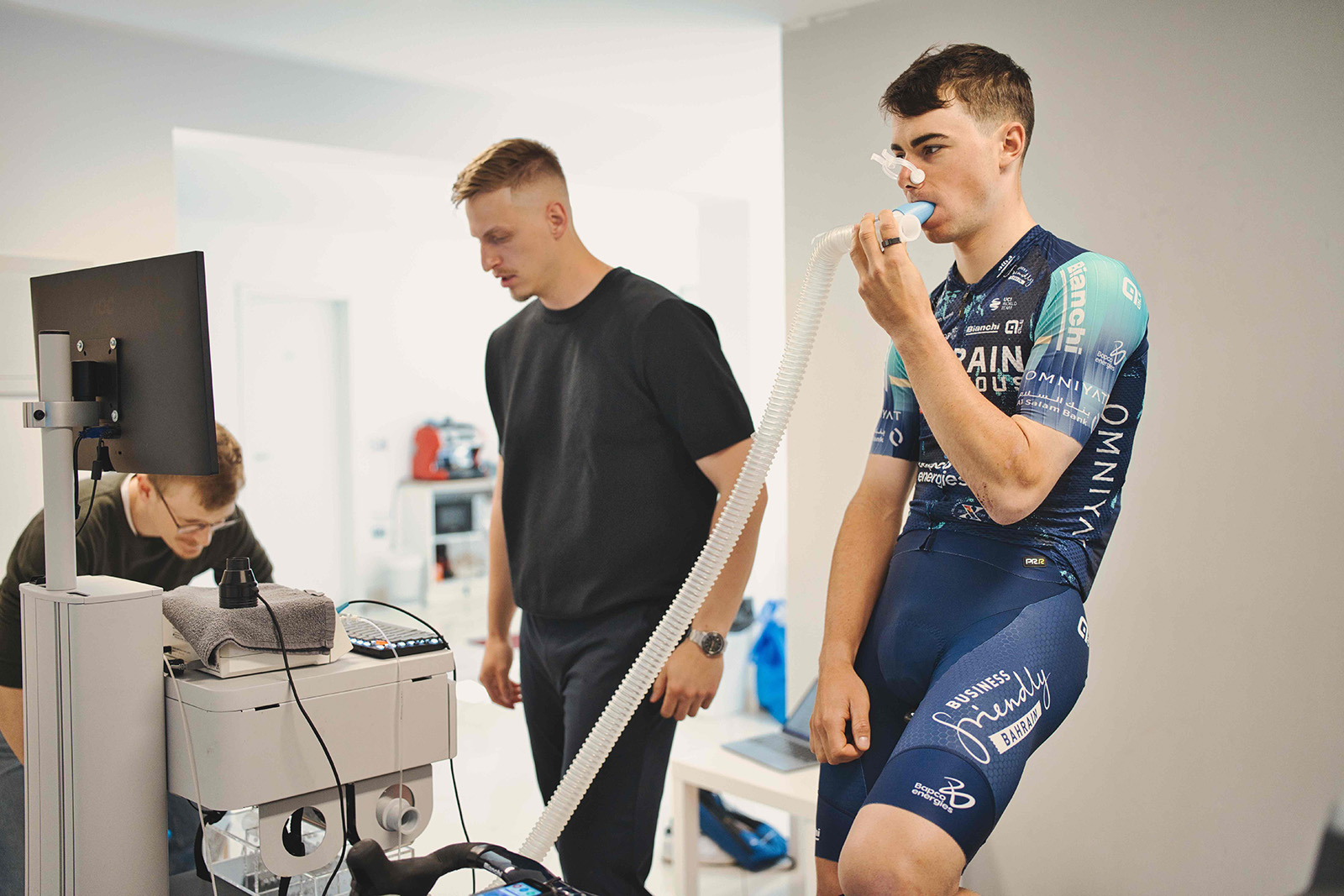
“Riders undertake a test for two-and-a-half hours at a moderate, steady-state intensity that’s just below the first lactate threshold. For elite riders, that’s around 250 to 340W,” Podlogar explains.
“They’ll come into the lab fasted and then take a glucose drink at 15-minute intervals during the test.”
“This isn’t a traditional glucose drink,” adds Podlogar. “We use research-standard carbon-13 stable isotopes (C13). With this, we can measure exactly how much a rider can consume to be their best.”
An explanation: carbohydrates comprise carbon, hydrogen and oxygen. When you burn through carbohydrates for energy, the byproduct is water as sweat, while you breathe out carbon dioxide.
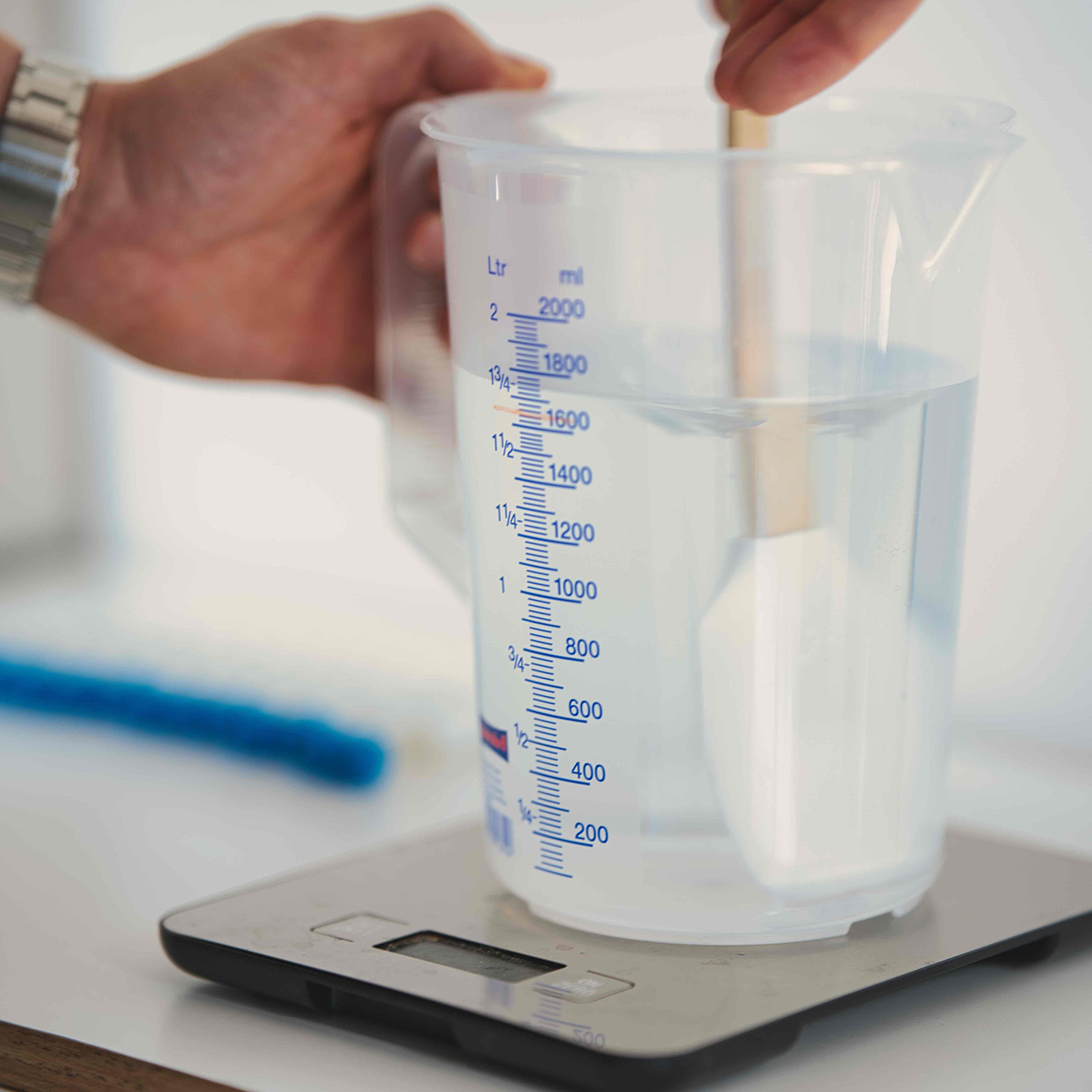
“In nature, carbon occurs naturally in three isotopes,” says Podlogar. “The most common is 12C, which is what you breathe out. It contains six neutrons added to its six protons. It is stable. As is 13C, which has seven neutrons.
"Then you have 14C, which is unstable and reactive. In our test, our drink features 13C. You can then measure this via breath samples during the test, which tells us how much [external] carbohydrate the rider has used. With this, we can then deduce the maximum amount of carbohydrate a rider can take in.”
It’s similar to a VO2 max test, but is focused on metabolism rather than maximal aerobic capacity, and isn’t cheap. The Fuelsync test, which currently takes place at Exeter and Birmingham universities, costs £996, albeit the May launch offer came in at £600.
It’s appropriate for elites and performance-seeking amateur riders, although Podlogar stresses that your ceiling figure is just that – it’s what you should consume during tougher days, not as standard.
Increasing aero accuracy
Remco Evenepoel’s transfer to Red Bull-Bora-hansgrohe is intended to bring Tour glory to the German WorldTour team.
But a British acquisition from the previous year could who also provide long-term success. In 2024, Dan Bigham, former hour-record holder and then performance engineer at Ineos Grenadiers, became head of engineering at his new team and began plotting a path to the top.
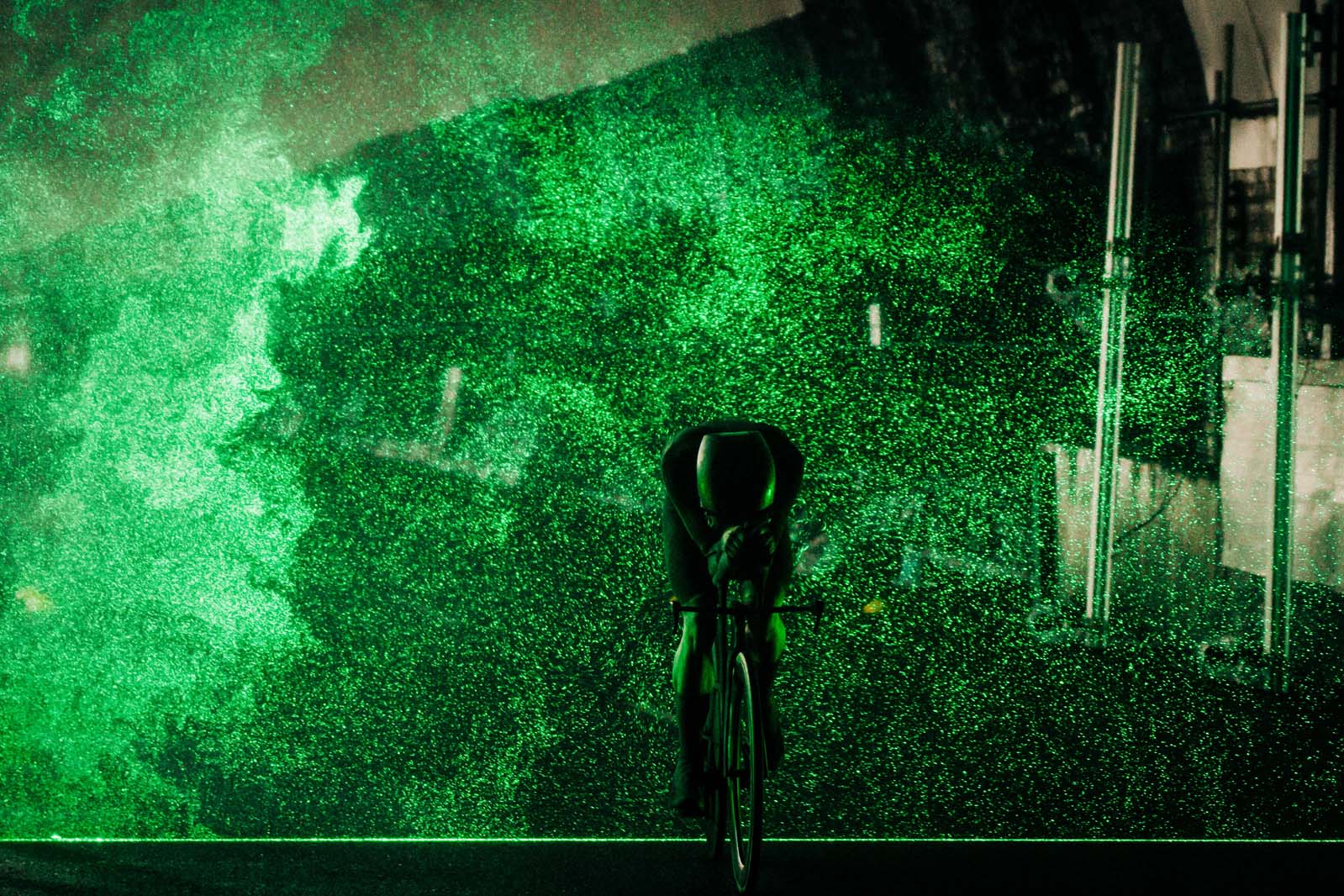
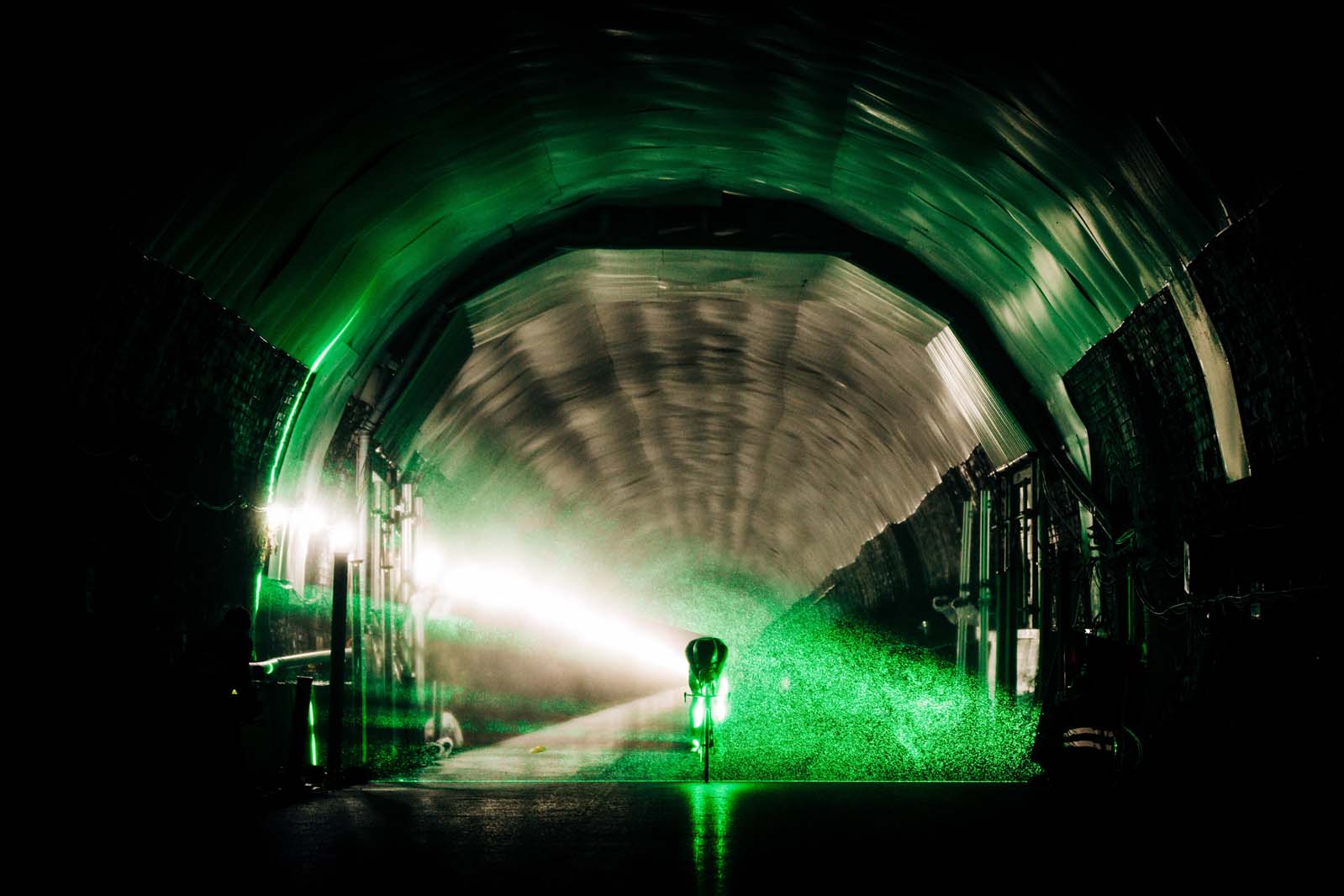
Last year, they became the first (known) team to conduct a Particle Image Velocimetry (PIV) test. We were at Catesby Tunnel in Northamptonshire to witness Bigham undertake more than 100 runs at exactly the same speed, position and line, each time riding through a green sheet of helium bubbles and laser light.
“When I rode through the helium, cameras in the tunnel tracked every single particle,” says Bigham. “They changed based on their velocity.”
In essence, the helium bubbles and laser light made the air become visible. For what reason? Simply put, the PIV test enables you to look beneath the surface of aerodynamics and helps to validate the accuracy of the team’s existing work in wind tunnels and on the track with computational fluid dynamics (CFD).
For the unfamiliar, CFD can be used to model how air flows around a cyclist and their bicycle.
Teams use it to simulate airflow around different body positions and equipment setups, to find ways to reduce drag while preserving power output.
Head-angle adjustments, shoulder shrugging, wheel choice – CFD can be used to optimise every facet of cycling performance.
Which, says Bigham, is only set to increase. “Riders are becoming harder to get hold of. They all go to altitude and aren’t overly inclined to spend back-to-back days aero testing in wind tunnels.
“Yes, we can use mannequins of the riders as substitutes but, ultimately, we want to do more CFD work. We can only do that if we have full confidence in the results, which the PIV test will give us.”
At Catesby, Bigham tapped into the services of measurement specialist LaVision, who brought along the helium, cameras and sensors, while the Catesby Aero Research Facility – a decommissioned railway tunnel – was used for its constant temperature and absence of any external influences.
The PIV test is, says Bigham, up to 10 times more expensive than traditional wind-tunnel testing, but could be worth it if it helps to validate the accuracy of existing drag-saving measuring techniques, albeit he concedes there’s still much work to be done with form-fitting apparel.
“When you break down a skinsuit, it’s a lot of fibres, which CFD sees as lots of cylinders. Throw in the elasticity when you move, and that makes it harder to measure via CFD, which is more at home over smoother surfaces like, say, the carbon shell used in F1.
“That makes analysis by CFD tricky. PIV should give us a better understanding of what simplifications we could make to tighten up the correlation.”
Tale of the taper
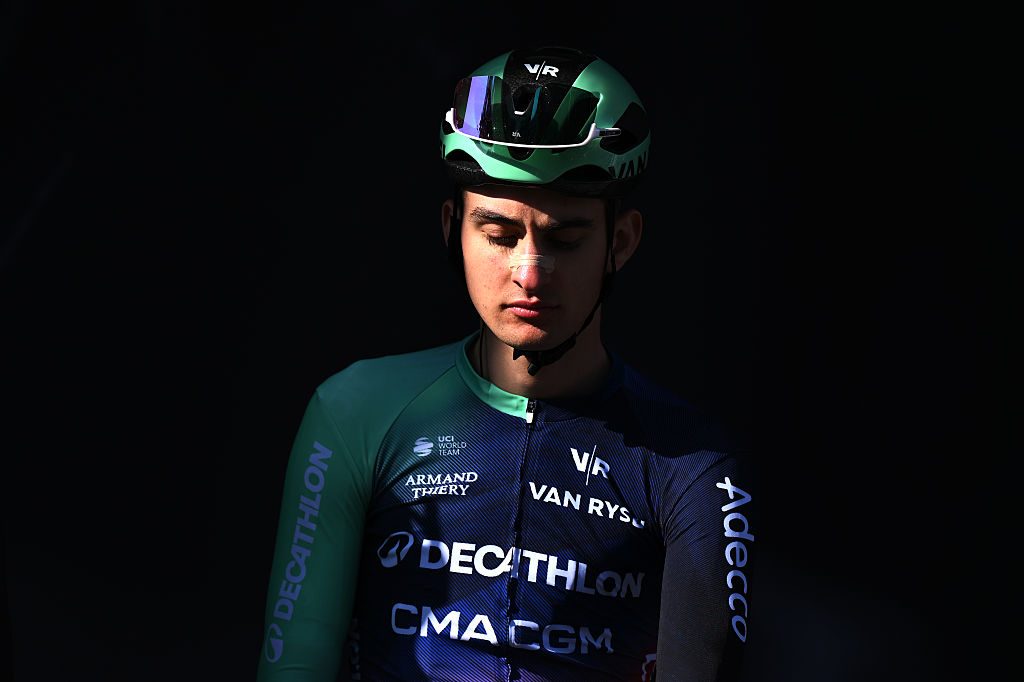
Each of the 184 riders at the 2026 Tour is looking to perform at their peak. Physically, that means tapering. With a week until your main race, you reduce workload volume to flush out fatigue and push through fitness in an effort to hit optimum form. Or do you?
“It’s nuanced but we have a slightly different approach,” says Stephen Barrett, head of coaching at the Decathlon CMA CGM Team.
“Because a Grand Tour is over 21 stages, you don’t want to arrive too fresh. Our riders should possess a big aerobic engine but have the capacity to improve over the course of the three weeks.”
Barrett says that’s especially true of a GC rider such as Paul Seixas, who made his Tour debut this July, rather than a sprinter who might be seeking a sprint victory in the opening week.
“Our taper is certainly subtler than the tales of five-week tapers by the Great Britain track team in times gone by,” says Barrett.
“Our GC and supporting riders would have a ‘down’ week two weeks out, then build things up to start peaking in week two when, historically, the Tour difficulty cranks up.
“That can be a risk, as the first two or three days are usually hectic. But with the Pyrenees coming at the end of week one, that’s when we should start hitting form.”
For the likes of Seixas, that meant a two-month race build-up. “The GC rider would have an altitude camp around eight weeks out, then go to sea level for a few days before heading to the Tour Auvergne-Rhône-Alpes.”
With no Tadej Pogačar or Jonas Vingegaard taking part, Seixas was one of the favourites at this race (he subsequently abandoned on the final stage, after a heavy crash on stage 7).
That’d give him confidence going into another, shorter altitude camp, even if it was affected by the crash.
“Two weeks before the Tour, we then pencil in a recovery week. The week before the Tour is where we ramp up the volume a bit. It’s an inverse of a taper, where you expel residual fatigue during the recovery week before building up again,” says Barrett.
How does he know if Seixas is ready? “That’s where the skill of coaching comes in. Yes, you look at resting heart rate, heart-rate variability and power numbers (two-, four-, six- and eight-minute efforts), but the most important feedback is subjective. You’re constantly asking, do they feel sharp or do they feel a bit sticky?”