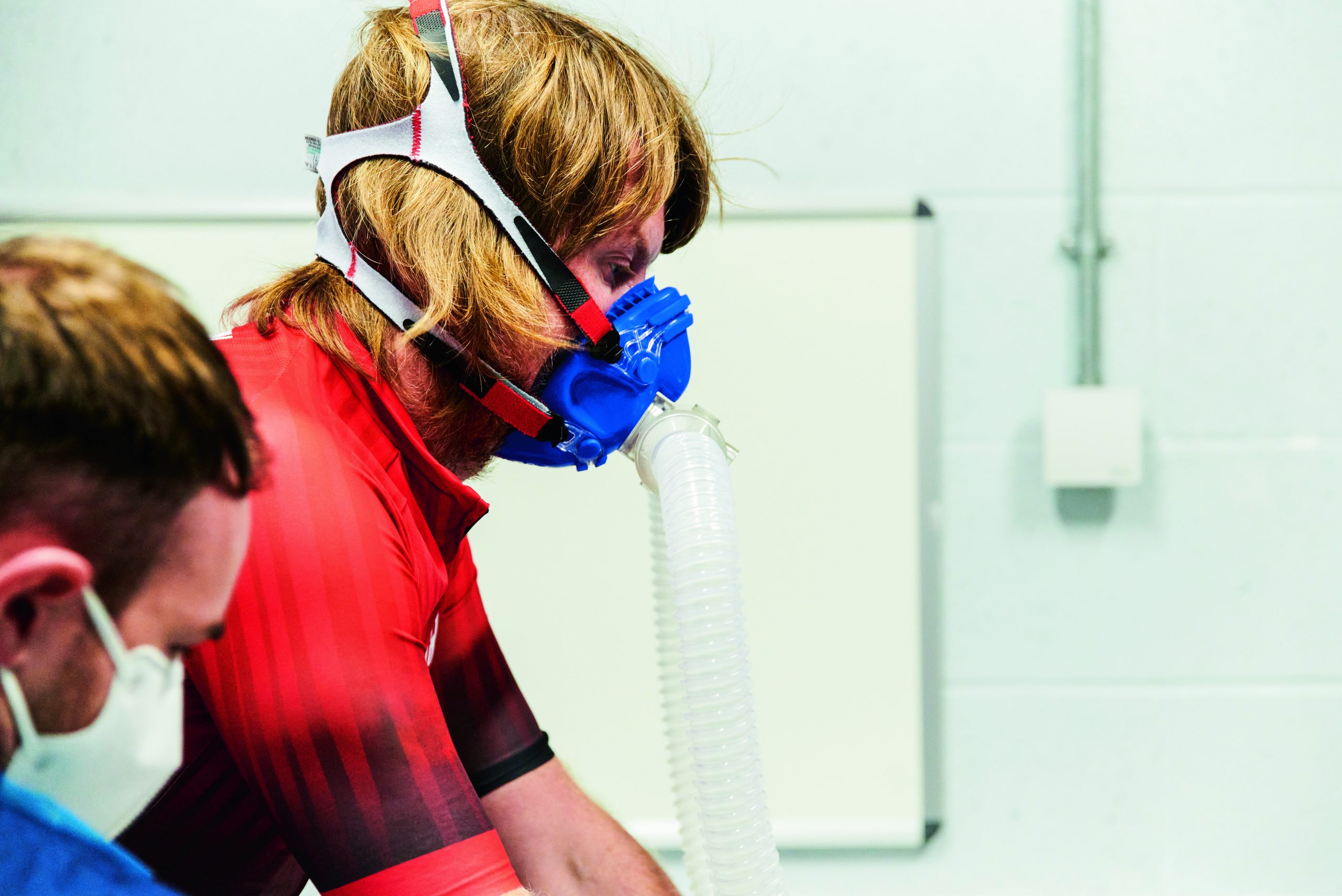
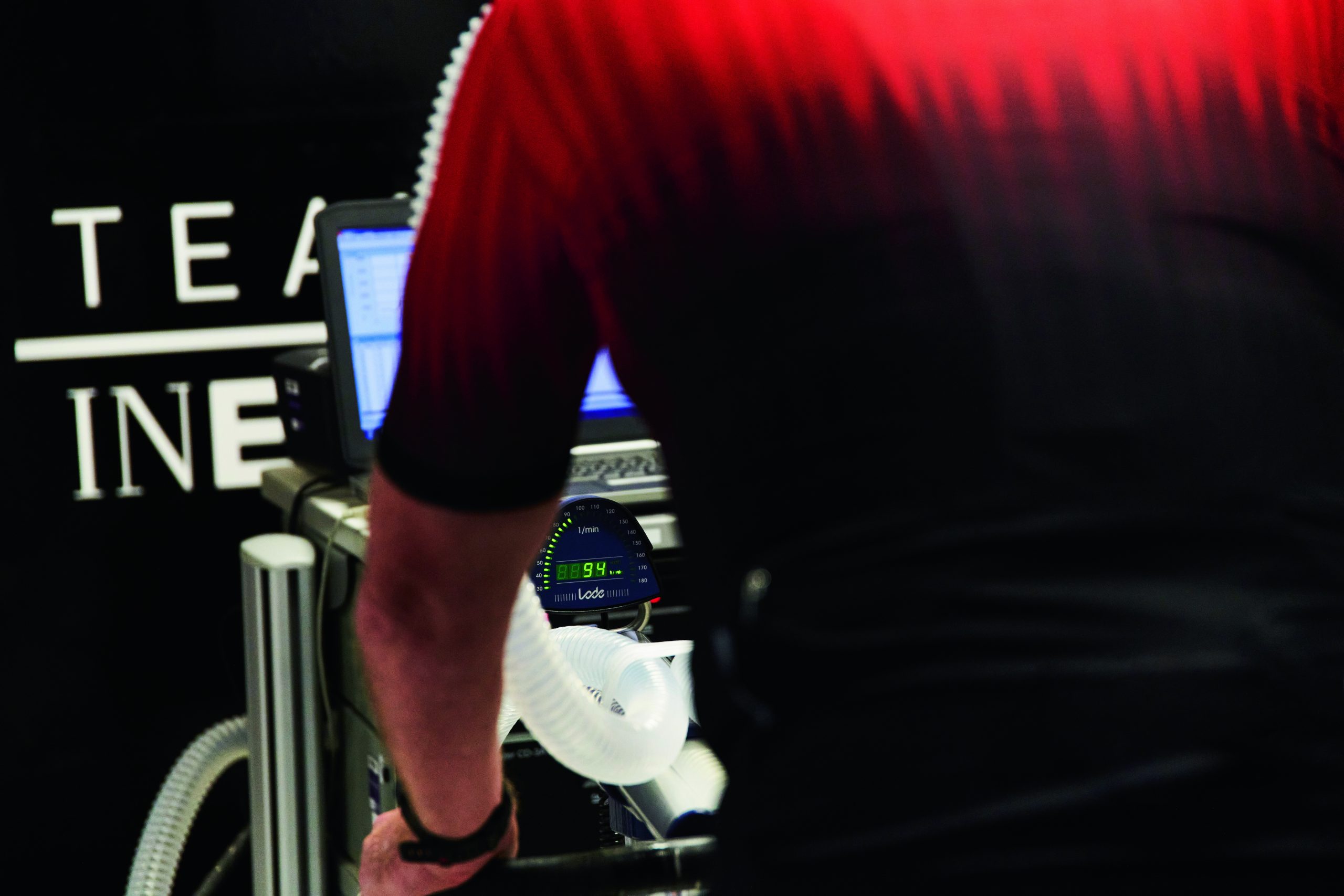
The power ramps up to 400W, and it’s the 13th and final step of the ramp test that lands the knockout blow.
The muscles in my legs feel fit to burst, my pulse hammers inside my gums and I gasp for air through the claustrophobic mask before my cadence grinds to a halt.
Torture over, the stationery bike is adjusted to a featherlight resistance, and I’m able to breathe freely once more, gulping down air as the burn subsides with every crank rotation.
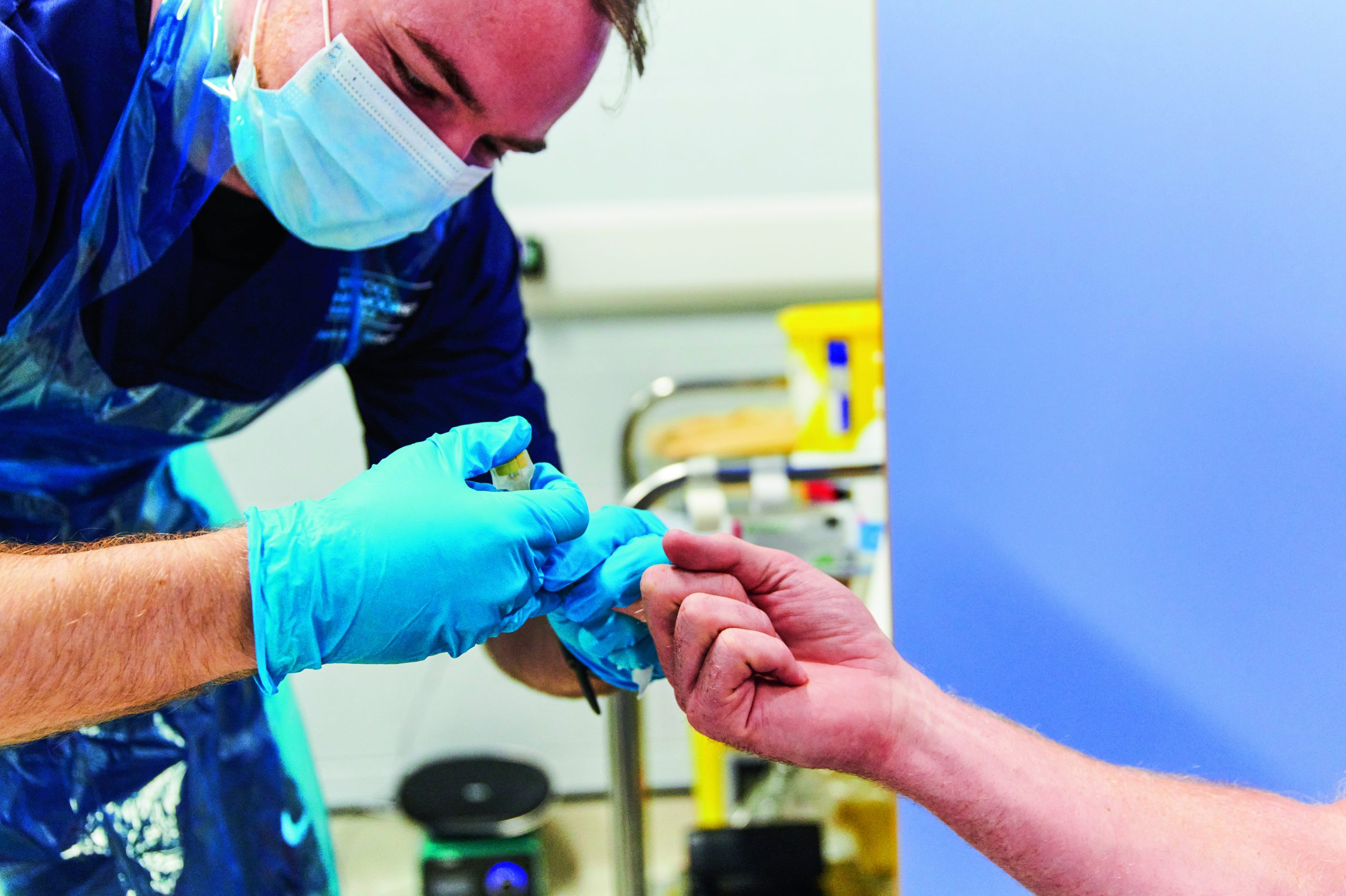
“Your VO2 Max is 68,” says SIGR Human Performance Lab sports scientist Ella Ransley, who has been conducting my morning of examinations, which has also included a lactate threshold test and sweat composition analysis, and will be followed up with a suite of reports including my carbohydrate oxidation rates (how many grams I burn per hour based on set power outputs).
But would all this testing be worth the expense – both physiologically and, at £249.99 a pop, monetarily?
Data overload
Historically, this wealth of testing has been the preserve of the professional peloton (or amateurs with deep enough pockets).
But as performance data has become more affordable and companies such as sports nutrition and hydration specialist Styrkr (which is behind the SIGR lab in Crawley, West Sussex) add such facilities to their offering, it’s never been easier to get a complete picture of your physiological profile.
“We want to be able to bridge the gap between elite-level performance and your average person who likes cycling and wants to understand a bit more about their physiology,” says Ransley.
The insight I’ll gain from my two hours of testing on the outskirts of Gatwick airport won’t just provide a snapshot of my fitness, but can be used to improve my training, too.
Ransley explains the lactate threshold test “gives you an idea of where you should be working to get the most benefits”, with the aim of targeting both metabolic shifts (resting to aerobic and aerobic to anaerobic – ie where your body gets its fuel from) in subsequent training.
I also had two sweat analysers strapped to me during the submaximal session, which “gives you an idea of your fluid losses and your sodium losses, and is really important for anyone doing anything over an hour”.
She adds that a VO2 max test can provide a fitness marker, while the ramp test can indicate your resting metabolic rate and when fuelling switches predominantly from fats to carbohydrates.
A few weeks after my tests, I receive a report detailing all of the above. Split by protocols, it provides training zones based on my lactate thresholds, including heart rate and power output ranges for each, a hydration and electrolyte strategy, a topline summary of my VO2 max and expansive results tables from my VO2 max and carbohydrate oxidation rate tests that could frankly be binary code for all I make of them.
As a multisport athlete with years of structured training under my belt, I’m sure I could attempt to apply the information to my workout schedule with a helping hand from Dr Google and coach ChatGPT. But to get the most out of it, it’s clear I need to seek the help of a real-life professional.
Put to the test
“I value these metrics,” says Liam Holohan, ex-pro cyclist, owner of Holohan Coaching and coach at WorldTour outfit NSN Cycling Team.
“It lets me know what's going on under the hood and informs the decisions that I'm going to make from a training perspective, based on each individual's unique attributes.”
Holohan adds that while some of these metrics can be modelled, the issue of using an algorithm or estimate is that it comes with “questionable validity”.
Ransley agrees, saying “there's nothing more accurate than blood biomarkers.” While many will be familiar with a functional threshold power (FTP) test and base their training zones on that, she suggests having access to personalised lactate thresholds “is really valuable for anyone that’s taking their training a bit more seriously”.
Holohan believes the best time to perform such tests is at the beginning of a training plan, season or when you first start working with a coach – “It’s a great starting point to give you a bit of insight from the athlete in their unique fingerprint”.
While he says there’s “some value” in a one-off test “to get an understanding of where they’re at as well as an idea of their unique physiology to help with the training intervention”, he caveats that the real value comes in repeating the tests.
“Everyone responds differently to a different training stimulus, so I want to know how effective that training stimulus has been for the athlete. The only way to do that is to test and then retest following the intervention or training period.”
Wise investment
Although there’s no set duration between repeating the tests, with “different physiological systems evolving at different rates”, the gap between them is likely to be months.
“If you're trying to improve VO2 max, I wouldn't have you go again the week after and expect to see a substantial change,” says Holohan.
“You have to remember that if you did that test today, tomorrow, or the day after, there's always going to be a small biological variation – the noise of the measurement.
"You want to make sure that when you're going back for that test, you expect to see a gain that's bigger than that noise.”
There’s no avoiding that the costs of repeated testing soon add up. But Holohan argues people aren’t afraid to splash the cash on watts-saving shortcuts such as skinsuits or helmets, when they could be investing in themselves instead.
“Everyone's concentrating on the half a percent rather than on the massive gains that could be had by making the human on the bike better,” he says.
If money is tight though, Holohan suggests undertaking specific tests based on the particular event you’re focused on.
“If you look at two extremes, VO2 max is really important for someone who wants to be good at hill climbing, so that would be a great test geared towards that.
"But if someone's training for L'Étape du Tour, it may be useful to look at substrate utilisation, so you can dial in your fuelling around the event and know how much fat you're oxidising at different wattages to help with the pacing and knowing your mechanical efficiency.”
Practical applications
Results in hand, I’m now able to get personal with my performance training. I’m currently preparing for the Berlin marathon and my weekly workout schedule includes one threshold session on the turbo and another longer first lactate threshold ride for their physiological and low-impact benefits.
Rather than relying on the formula-based outcome of a critical power test, my coach is able to use my lactate threshold results to tailor training zones to my personal physiology.
My zone 2 is bumped up, meaning my longer LT1 rides will actually be hitting the correct power output, hopefully leading to meaningful adaptations rather than spending time at a too-easy intensity.
My threshold efforts are also shifted to a slightly harder output, showing that the critical power-based zones aren’t a one-size-fits-all solution.
The other reports show that my VO2 max has reduced from 75 ml O2/KG/min when I was last tested in October 2023, but because I’m not targeting any short, sharp efforts, I’m not too worried (plus I have the added excuse of becoming a parent in the intervening two-and-a-half years).
It’s also interesting to see that I don’t switch to burning carbs until my heart rate hits 140bpm, which is roughly in line with my LT1.
Holohan adds that if this switch was happening at a much lower intensity, then this is something that could be targeted with the correct training protocol.
“If an athlete is preparing for a gran fondo and is burning a lot of carbs at low intensity with an early rise in lactate, we could place a greater focus on improving that ability in the training plan to better bridge the gap between what's required for the event and where the athlete currently is.”
He’s not so convinced about the practical application of the sweat test, though. “The trouble with that is, unless you're riding in those exact environmental conditions, then it's wrong,” he says.
It’s not only temperature that can impact sweat volume either, and things such as the wind and humidity can influence your body’s response.
“The value in that could be for someone like a Zwift racer who's riding in a similar environment every time, but I would probably do more of a field-based test in the environmental conditions you're going to ride in.”
Appreciate in value
For a penny under £250, the human performance lab was an interesting experience where only the tail end of the VO2 max test could be described as physically challenging.
The results, too, provided a snapshot of my overall fitness in a much more detailed way than any tests I could conduct at home.
The real benefits of lab-based testing, though, come in its application, and the weeks and months of structured, personalised training that follow.
“If you're a casual weekend rider and just want to keep up with your mates on the club run, then maybe it's not necessary for you,” says Holohan.
“But the closer you get to your potential – you're maximising your training hours, working with a reputable coach, following a good plan and good diet – then this could be the next step for you in looking to improve.”
When you throw in additional follow-up tests to check your progress, then the financing of your performance and physiology soon starts to rack up in an already expensive sport.
But the cost of investment to potential gains is one that could prove more fruitful pound-for-pound than any new watt-saving component or clothing.