For cyclists, winter is a vital time – but not always an enjoyable one.
On one hand, it’s a time to lay important foundations for everything we want to achieve and enjoy the following summer.
On the other, it’s often cold, wet and icy, our mood is down, there’s little sunlight and it can feel like a chore to get out and do the work.
We’re also susceptible to more bugs and nasties, largely because they’re circulating more as we spend more time indoors.
Yet, there are many steps we can take to ramp up our immunity at the time of year when we’re most vulnerable, not just in terms of reducing infection but in terms of how we stretch, what we wear, and what we eat and drink.
Cover it up

You have thermoreceptors all over your body – nerve endings that sense temperature, there to deliver immediate feedback to your brain to ensure your thermal protection.
But did you know that applies to your airways too? “Interestingly, your respiratory system (sinuses, mouth, throat and lungs) is like your skin in that it’s directly exposed to the environment because there’s no barrier to the ambient environment,” says Dr Michael Kennedy, associate professor in the faculty of kinesiology at the University of Alberta, who specialises in athlete response to extreme environments.
“That’s why your lungs, like your skin, are particularly vulnerable to cold air conditions; breathing cold air can trigger thermoreceptors in the upper respiratory system that affect your cardiovascular response to exercise.”
Research shows that when you ride at a high intensity, your lungs do a pretty good job of warming and humidifying air.
However, if the temperatures plummet, it affects the lining of your lungs, leading to constriction and respiratory symptoms, such as coughing, a burning throat, wheezing and an overflow of mucus.
“That’s why covering your mouth and nostrils is recommended, as it reduces strain on the respiratory system, which in turn reduces cold-induced exercise bronchoconstriction,” says Kennedy.
“Recent research has also found that maintaining temperature in your nostrils preserves your ability to fight off inhaled viruses.”
Wear something such as a buff or balaclava when it’s cold outside. Or stay indoors and hop on the static bike.
Boost your bacteria
High-intensity efforts can guide you to a new personal best. The sweat, tears and pain can also suppress your immune system, resulting in an upper-respiratory tract infection (URTI) and a spell on the sofa.
This is partly down to a decrease of the amino acid tryptophan (TRP) in the blood, which is broken down for use by the immune system.
If it’s not replenished, your defences weaken and illness is inevitable. But there is a potential solution – probiotics, which have been shown to increase the levels of TRP in the blood.
A team at Innsbruck University examined the effect of probiotic supplementation on cyclists during three months of winter training.
Each rider undertook a ride to exhaustion and a time trial to set baseline TRP levels. Of those, 17 riders then took a daily probiotic, while 16 consumed a placebo. The subjects repeated the test 12 weeks later.
The results showed the probiotic group’s TRP levels remained the same, while the placebo group’s had dropped by 10%.
Importantly, the placebo group displayed symptoms of URTI 2.5 times greater than the probiotic group.
Stretch for safety
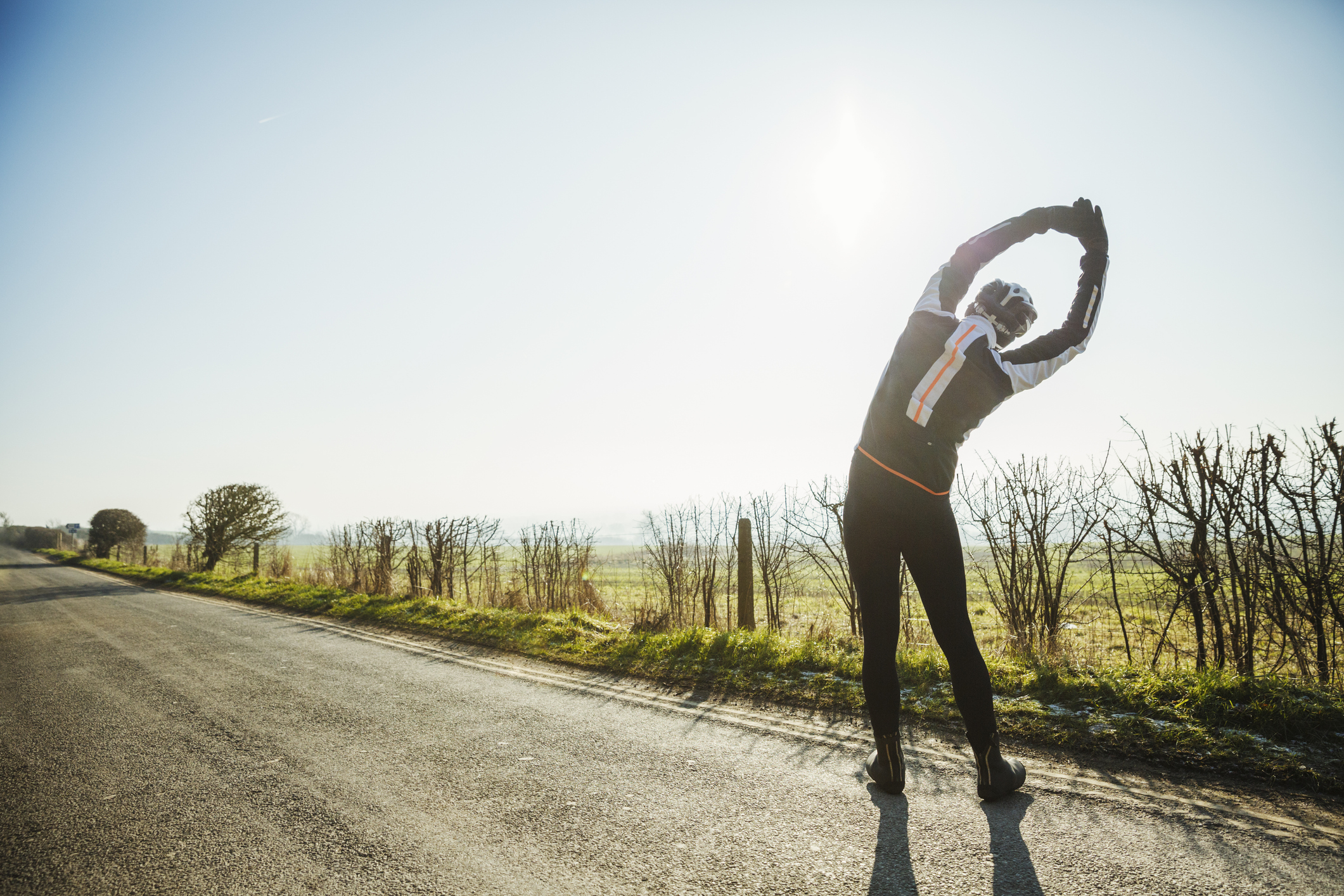
There’s evidence that you should stretch and flex this winter; that’s partly down to your tendons.
These are connective tissues that attach your muscle to bone, and transmit the muscle’s force to the bone to generate movement.
When exposed to cold temperatures, these tissues become less flexible (as do your muscles). This decrease in flexibility can make your tendons more susceptible to tears or strains.
By regularly performing a few basic stretching exercises – especially of your legs and lower back muscles – you’ll stimulate blood flow that will hopefully prevent your creaking tendons from seizing up.
Try a wall quad stretch, which focuses on the quadriceps, hip flexors and spine, as well as opening your chest and shoulder muscles.
Place a thick mat next to a wall. Start on all fours, facing away from the wall. Lift your right leg and place your shin and the top of your foot against the wall and your knee on the mat.
Rest on your fingertips, lift your chest up and step your left foot forwards so that your left shin and thigh are making a 90° angle.
Take five breaths. While you do this, slowly take your hands off the floor and, on an inhale, place them lightly on your left knee. Perform two to four stretches on each leg.
Top up your diet
Nutritional supplementation during winter can support immune function, energy levels and recovery.
Vitamin D helps to keep bones, muscles and teeth healthy. We get it primarily through sun exposure (the body converts it into vitamin D), but because we see less of it in the winter, supplementation can help.
The NHS says all adults “should consider” a 10ug vitamin D supplement per day through autumn and winter, although those more at risk of low levels (eg, frail people who don’t go outside often) are recommended to take it all year.
Ideally, says dietician Claire Pettitt, go for vitamin D3 (cholecalciferol), because that’s the same form we stimulate in our skin through sun exposure.
Fist bump and flush
Before the lengthy enquiry into former British Cycling and Team Sky chief doctor Dr Richard Freeman, he wrote a book.
The Line: Where Sport and Medicine Collide detailed everyday hygiene protocols that he set in place at both organisations.
Takeaways include that you’re just as likely to endure an upper-respiratory tract infection or gastroenteritis from shaking hands with somebody who’s infected as being sneezed on or eating food prepared by the person who’s infected. Fist bumping is back.
You should also keep a lid on it. “If there’s infection in the toilet [more possible during winter] and you flush it with the lid open, you create an aerosol effect, so even if you’ve exited the space by the time that happens, you risk getting it on your toothbrush, so the next time you brush your teeth, you can pick up an infection,” Freeman wrote.
Lidl-Trek rider Tao Geoghegan Hart told us he once had some useful information from an NHS hygiene specialist.
This included that food trays are purportedly 10 times dirtier than your average toilet seat, and in-flight magazines are another infection harbinger. Be warned if you’re heading to a warm-weather training camp this winter.
Cut the booze
If you’re doing ‘dry January’ (taking the first month of the year off the booze), you can sit there smugly, but we all know alcohol isn’t our performance pal.
“As a dietitian, I rarely tell people to cut out foods completely, as all foods have a place in our diets. But the disadvantages of having too much alcohol are well known,” says Pettitt.
“Hangovers aside, alcohol suppresses immune function and interferes with nutrient absorption, as well as impacting sleep quality. All of this hampers recovery and immunity, making us more susceptible to infections.”
How alcohol suppresses the immune system is multi-faceted, but a key detriment is to T-cells. These are a type of white blood cell called lymphocytes that fight germs and protect you from disease.
Alcohol has been shown to reduce the number of T-cells and impair the functioning of those that remain.
Alcohol is also a diuretic, which isn’t great for performance, because just 2% dehydration has been shown to increase core temperature, reduce muscle contraction, hinder carbohydrate absorption and impair decision-making.
You must keep workout hydration up, too. You might think cooler climes will mean reduced fluid loss because of lower sweat rate.
However, this reduction in sweat is countered by losing more body fluid in cooler temperatures due to heat exchange and humidification of air in your lungs. Cool air sucks more surface liquid, which over time contributes to total fluid loss. In short, keep sipping.
Don’t stop
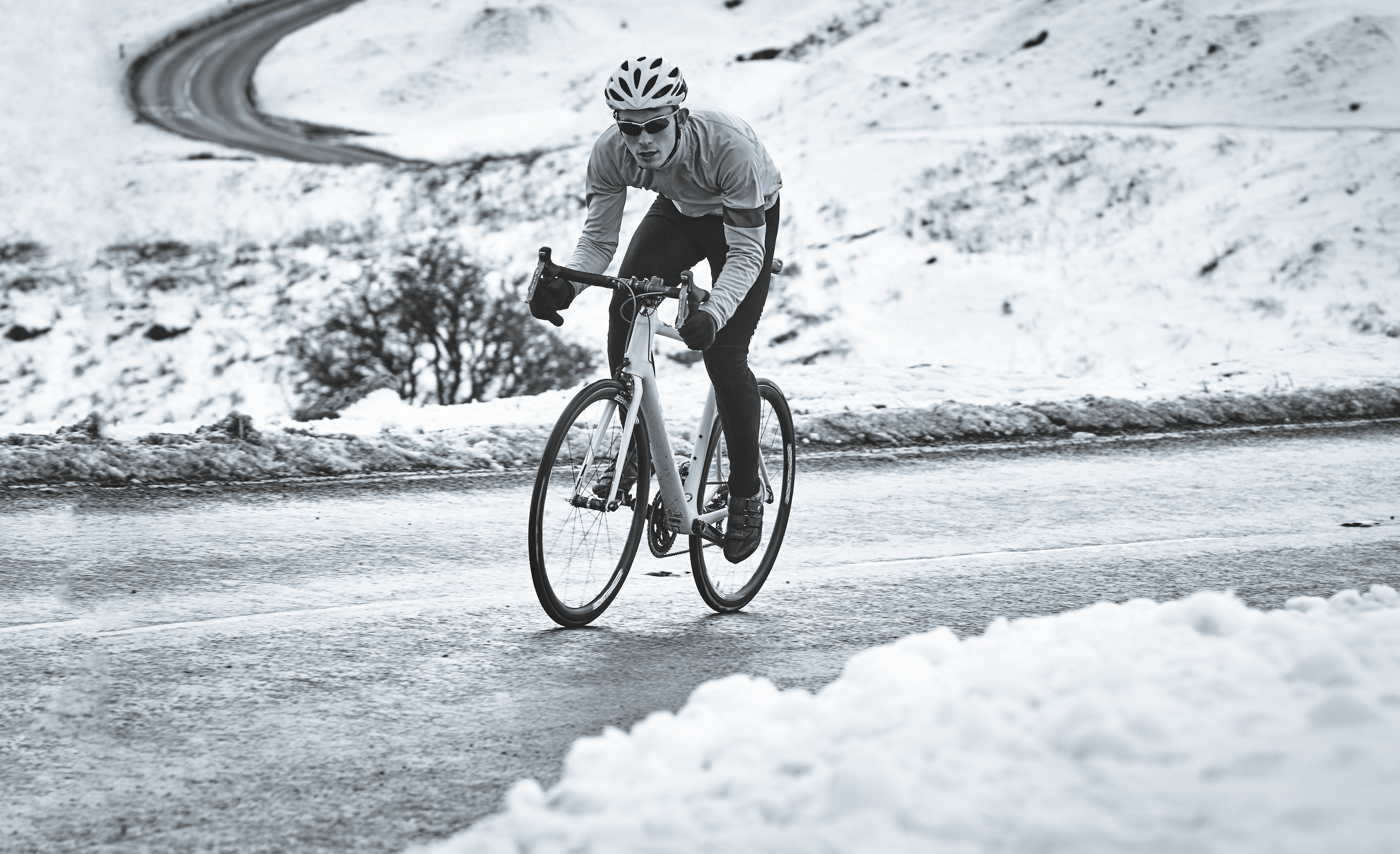
Decided you’ll hang up your bike until spring 2025? Think again. Not only will this upset your mind and mood, it’ll upset your lymphatic system too.
This network of organs, tissues, vessels and nodes plays a vital role in keeping you from falling ill. Take the glands in your neck. These are part of your lymphatic system and contain the white cells you need to fight infection.
They effectively sieve the fluid that passes through them, and when viruses, bacteria or other infections are detected, the white cells get to work killing whatever is attacking the body, or removing damaged cells.
That’s why you get swollen glands with an infection – they’re mobilising your immunity defences. Vital as these functions are, lymphatic traffic is slow on these B-roads because the fluid isn’t pumped by the heart.
Instead, body movement helps to move fluid through the vessels, so riding is helpful in promoting this, particularly the return of lymph (fluid) from the limbs, reducing excess fluid in the tissues and helping to reduce blood pressure.
While intense exercise or cumulative fatigue from overtraining affects the immune system, according to a 2016 study in China, endurance training in athletes improves lymph flow not just during exercise but also at rest.
An American study the same year showed improvement to lymph function in obese individuals. In short, it seems clear that riding improves the function of the lymphatic system and supports immunity, giving you another reason to head out the door.